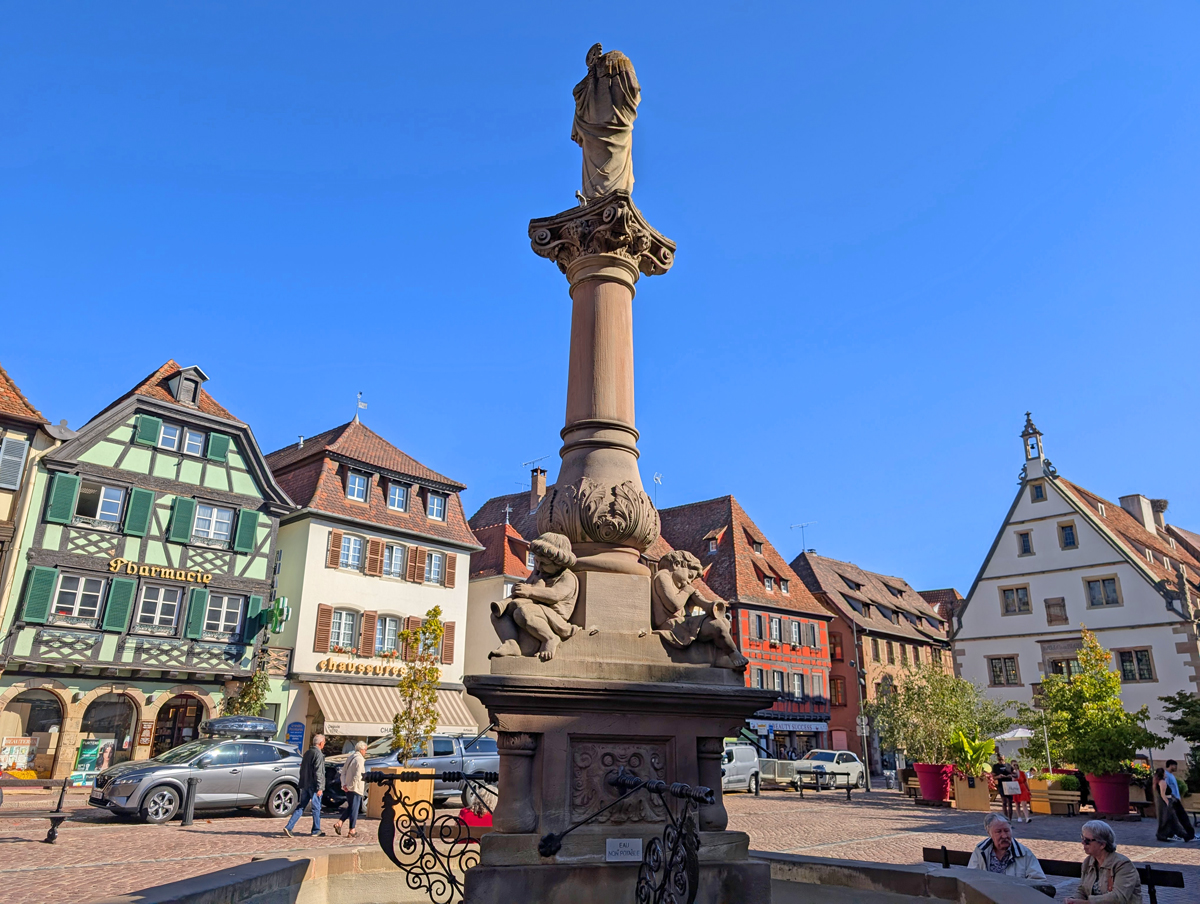
Why Obernai makes for a great day trip from Strasbourg.
Obernai is a small town that’s a 30-minute train ride from Strasbourg. It is incredibly pretty and we were enchanted by it.
All about Obernai and what to do on a day trip in this post. I’ll also give you a couple of eating recommendations.
A very brief history of Obernai
The town had its origins as a Roman crossing point, then a property of the dukes of Alsace, and then later under control of the convents of Hohenburg. It became an official town in 1240: now independent, it grew, built fortifications, and held markets.
The 16th century was a golden age for Obernai. Crafts and wine-growing (for export) prospered. The Renaissance left its architectural mark on a number of buildings including the Hôtel de Ville (Town Hall, built 1523 and 1610), the Halle aux Blés (Corn Market, 1554), the Beffroi – Kapellturm tower and the Puits à Six Seaux well (1579).
Following the Peace of Westphalia treaties in 1648, Louis XIV annexed the towns in the region including Obernai. It became a royal town and lost its autonomy. But it marked another period of prosperity. After the French revolution, Obernai (as with all of Alsace) went back and forth between French and German rule. Today you still hear both French and German in the streets and street signs are in both languages.
Obernai Today
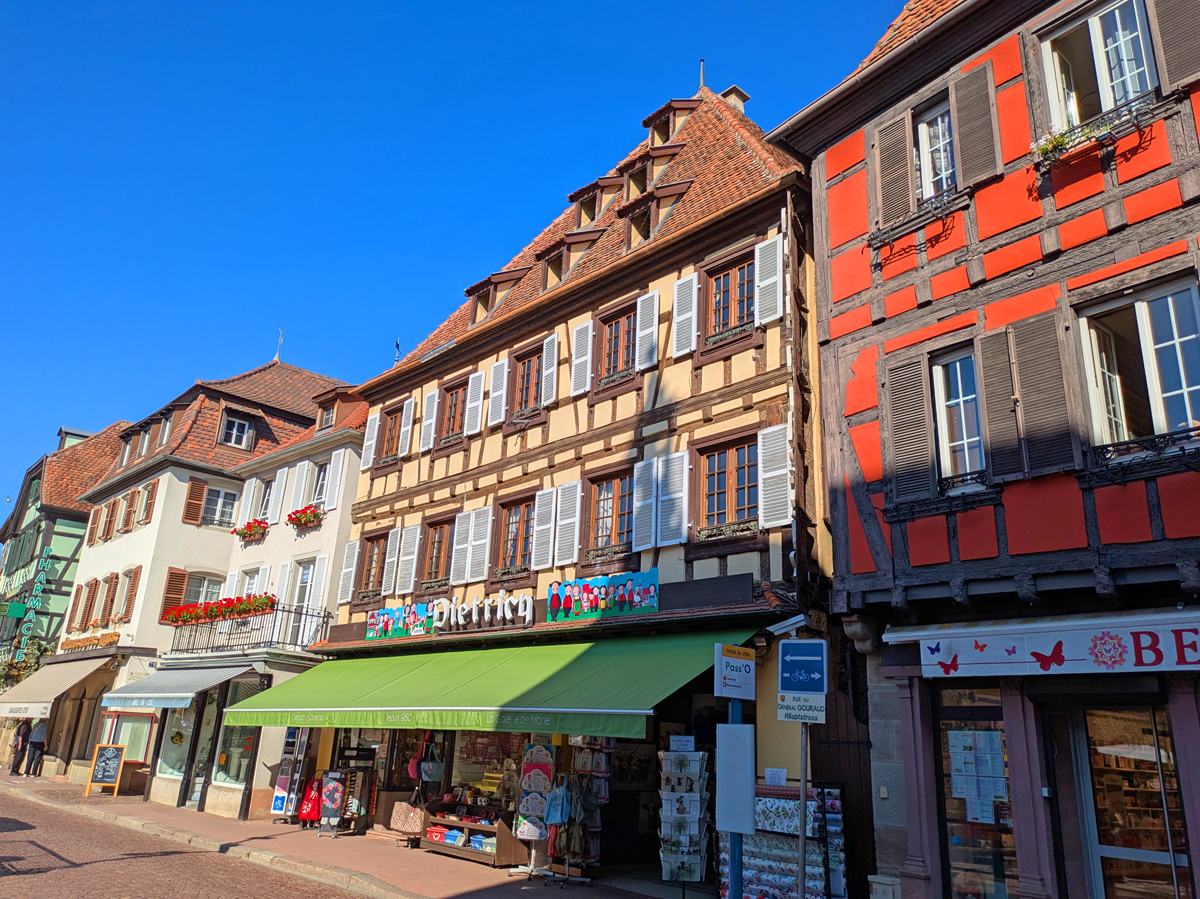
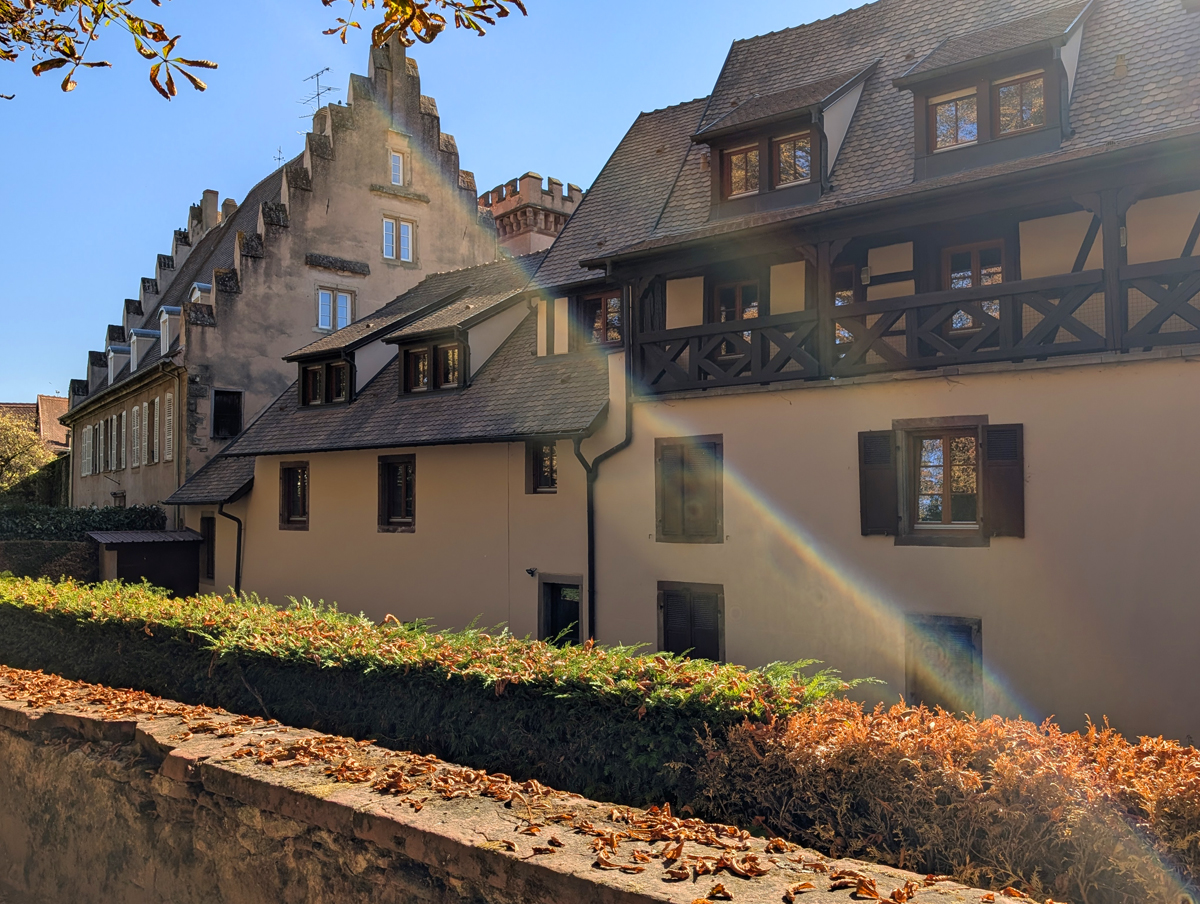
Today Obernai is a quaint little town full of those half-timbered buildings that Alsace is known for. Intertwined among them are some of the town’s historic highlights (as previously mentioned: the Hôtel de Ville, Halle aux Blés, the Beffroi – Kapellturm tower, the Puits à Six Seaux well and the Église Saints Pierre et Paul). Obernai also has ramparts circling the town which are worth seeing.
It’s not a big town: you can probably see all of it’s highlights in 1 to 1 ½ hours. But you might want to stop and have lunch here (as we did) or at least sit somewhere on a terrace…it’s a really atmospheric town and you shouldn’t rush through it.
What to See and Do in Obernai
If coming in by train from Strasbourg: Obernai’s Gare (train station) is about a 10-minute walk from the main square, Place du Marché (Market Square).
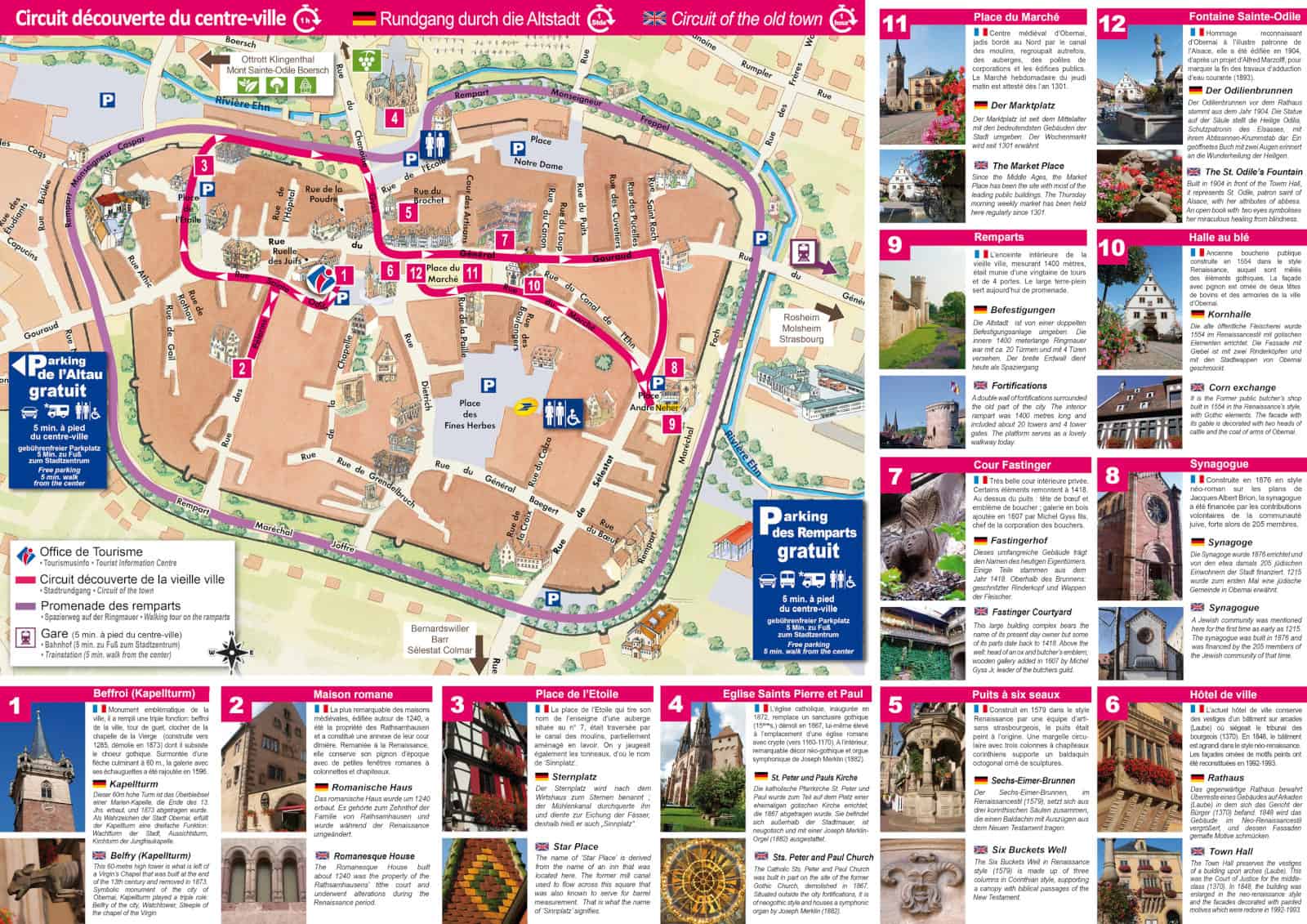
Once at Place du Marché, walk over past the Beffroi – Kapellturm tower to the Tourism office. There you can buy a city map (50 euro cents) OR you can use the map I have below (it’s the same map).
Click for full sized tourist map
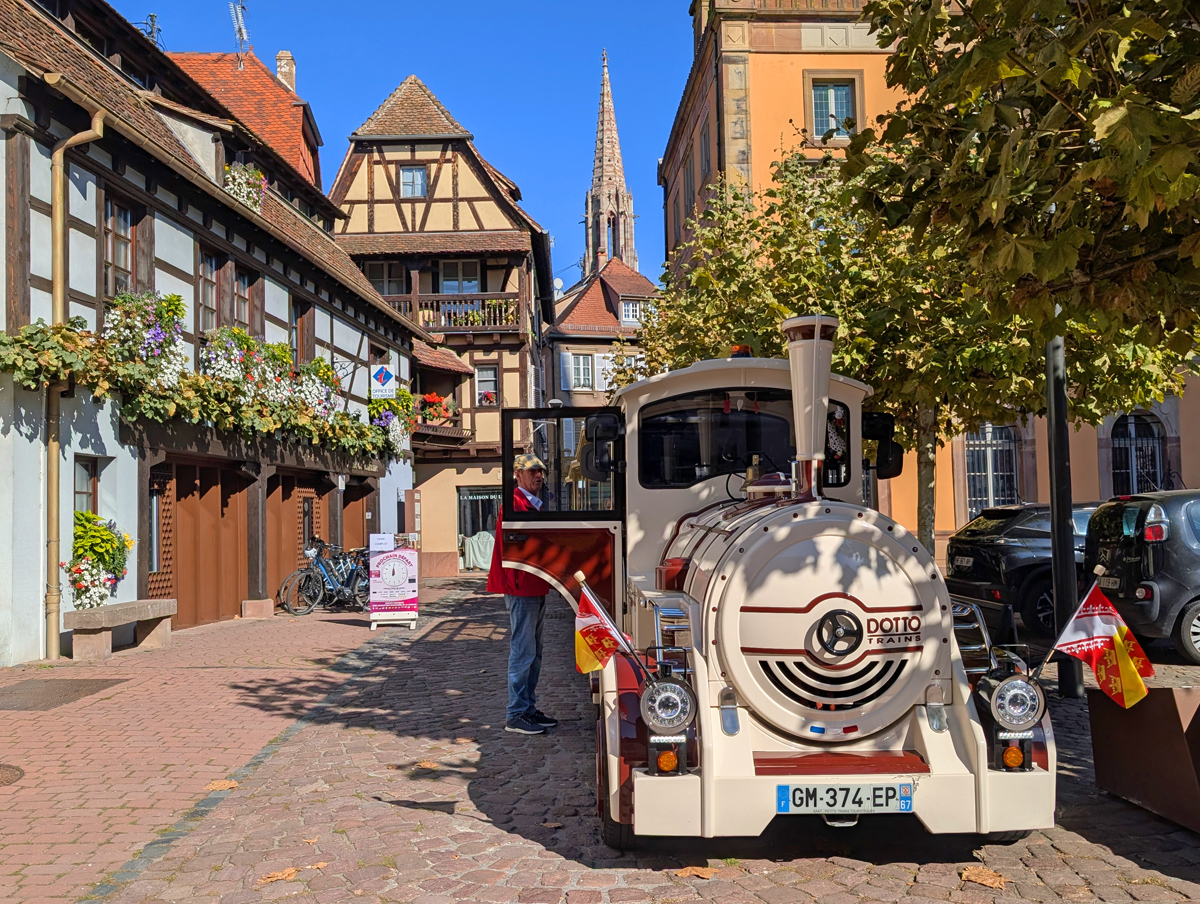
If you wish, they have a little train at the tourist office that makes a tour around town (9 Euros for adults). It actually includes something we didn’t do: a stop at the veterans memorial above town which has great views over Obernai (if you don’t take the train, you can walk up in about 20 minutes).
The City Walking Tour
On the map is a pink-coloured walking route that takes you past all the main sights in town. I cover them below in order (it won’t take long to do this tour, I’d say about 45 minutes):
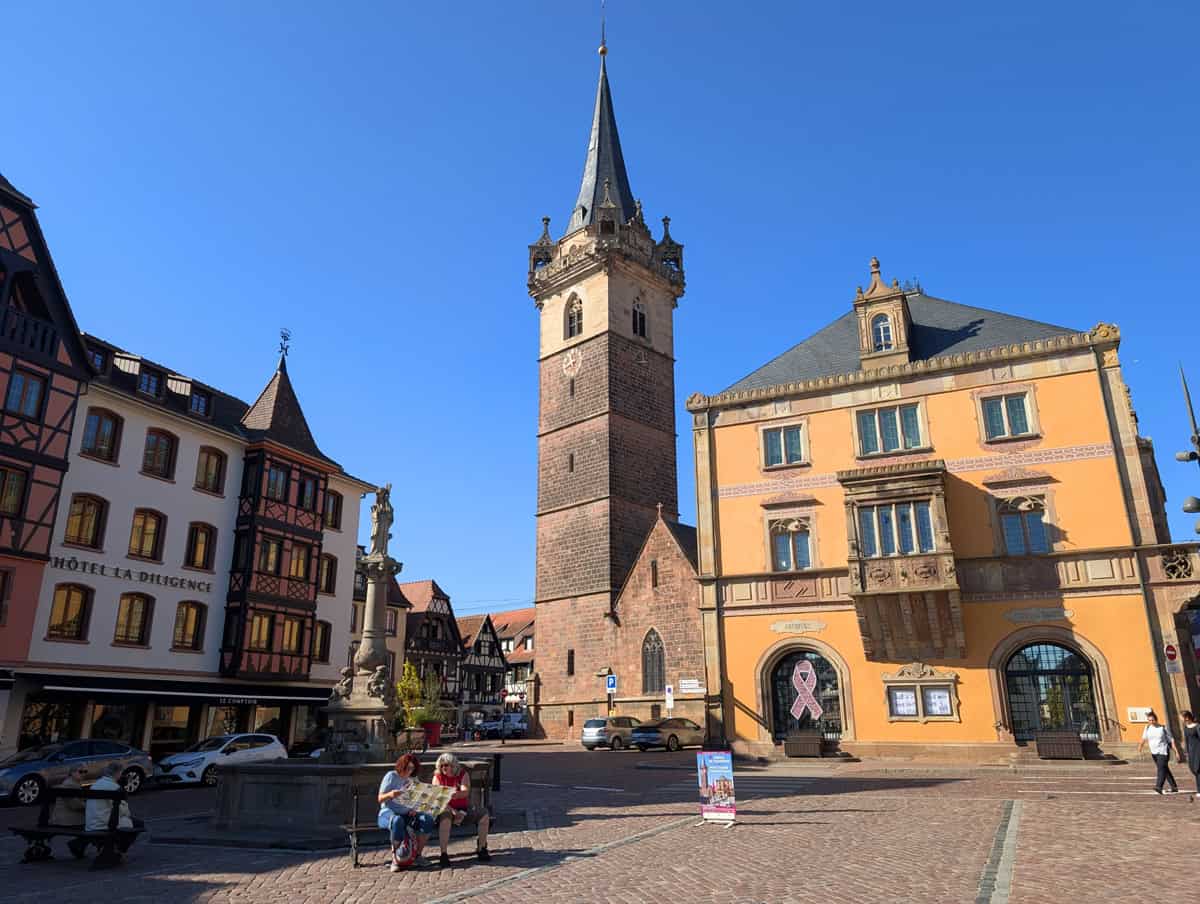
Beffroi – Kapellturm
A 13th century tower that was attached to a chapel (which was removed in the late 1800’s). Unfortunately you are not allowed to climb the tower.
Maison romane
A 13th century mansion. Beautiful building but unfortunately they were doing renovations during our visit.
Place de l’Etoile
A small square with a kid’s carousel, a stream used to run through here. Now you’ll see some of those pretty Alsacian buildings.
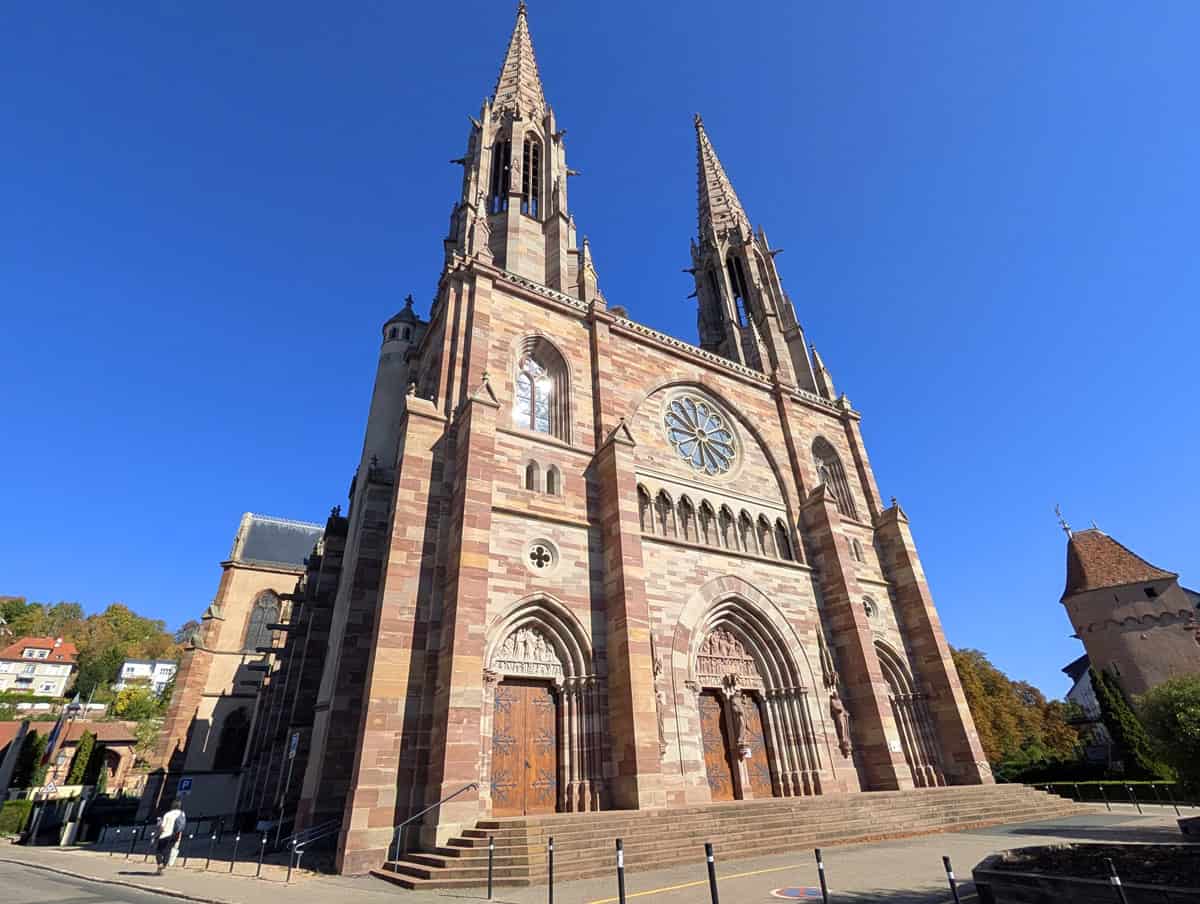
St. Paul and Peter church
Built between 1867 and 1872, it is one of the largest Neo-Gothic churches in Alsace, measuring 75 meters in length. Open daily 9am – 12, 2 – 6 pm but unfortunately, for whatever reason, it was closed when we were there.
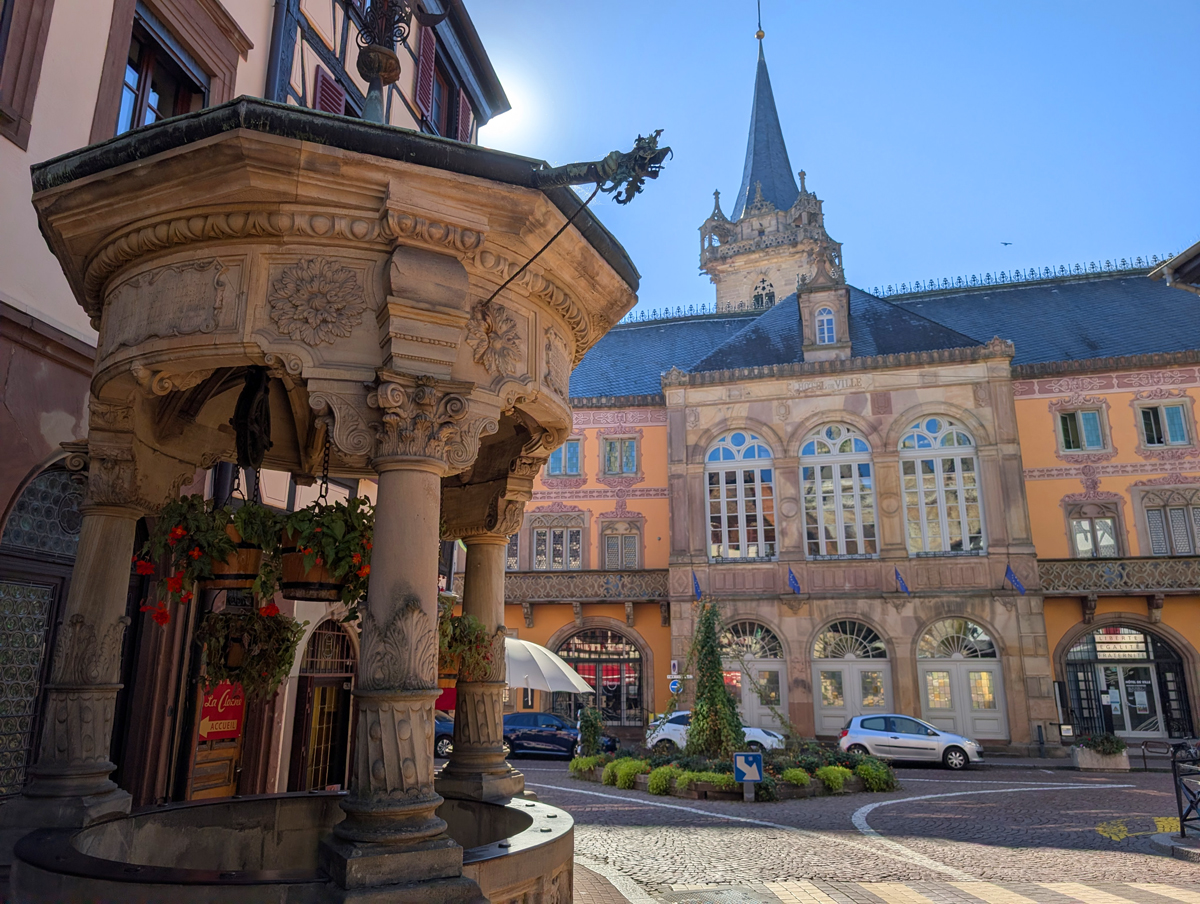
Puits à Six Seaux (6 buckets well)
Built in 1579, an intricate well in Corinthian style.
Town Hall
Originally built in the late 1300’s and later enlarged. It features prominently on the corner of Place du Marché.
Cour fastinger
An old courtyard that you get to through an arch. The courtyard was closed when we were there. Note: the courtyard has a highly rated café called Au Fond de La Cour.
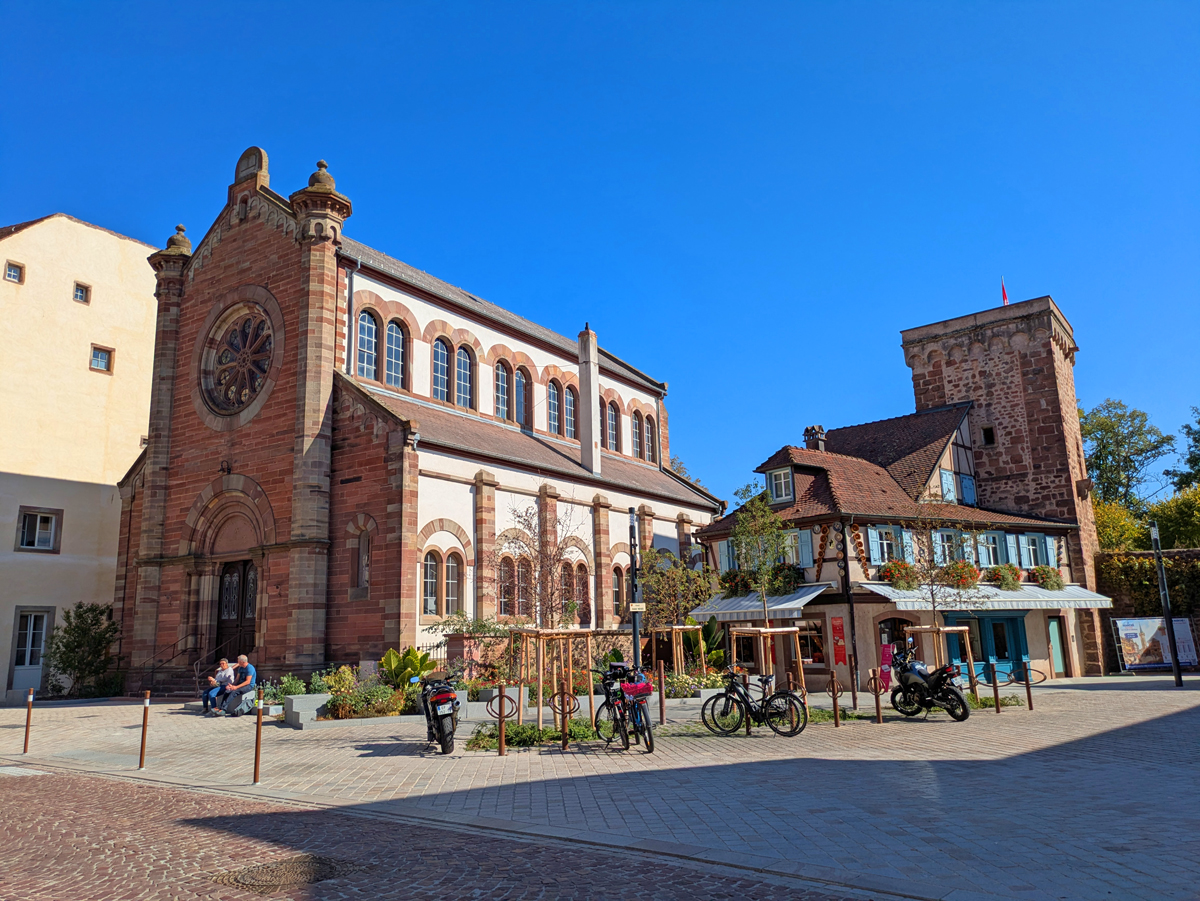
Synagogue
A synagogue built in 1876 financed by the Jewish community. Obernai had one of the oldest Jewish populations in Alsace with records of them being here in 1215. Now there are about 10 to 15 Jewish families living in town.
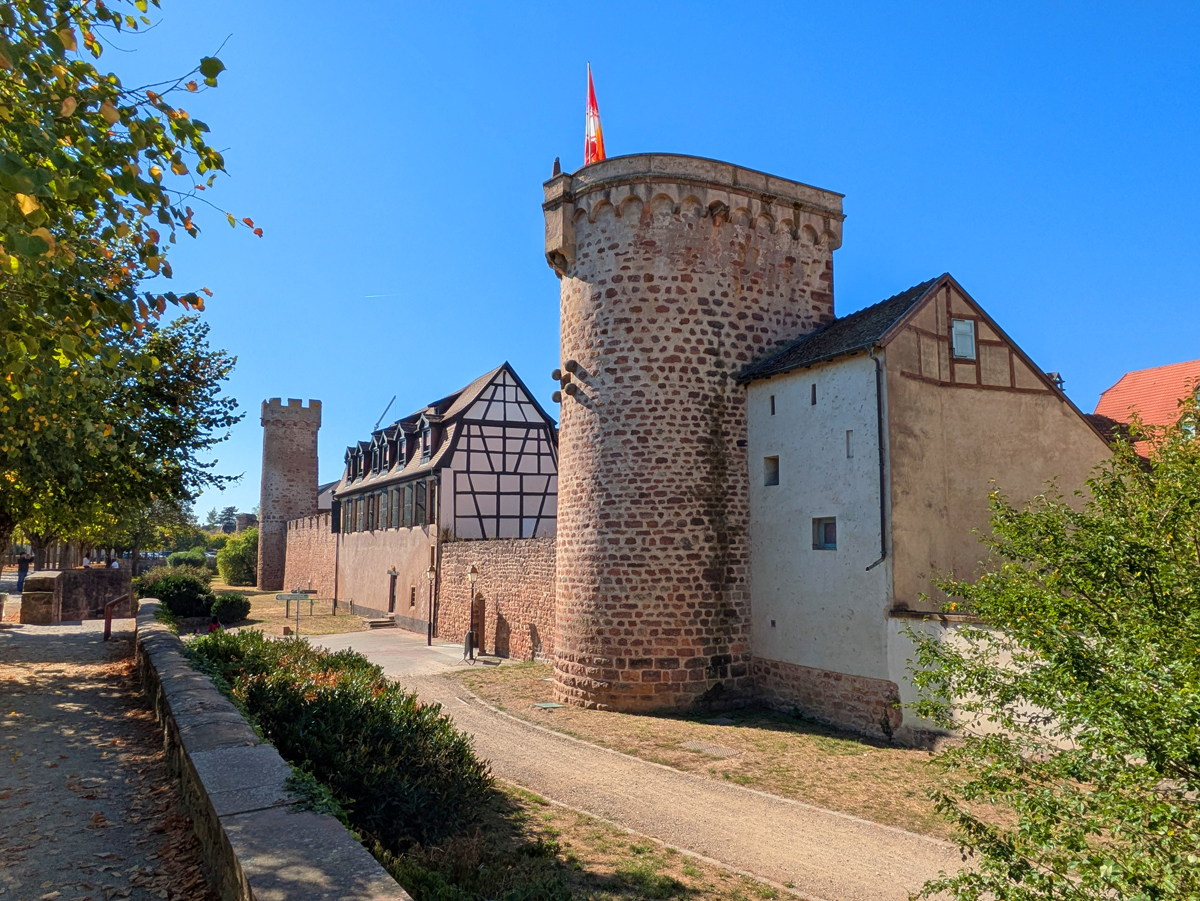
Ramparts
You’ll find ramparts around the town but this section, right behind the synagogue, is the most interesting stretch. There are two walls of fortifications: the inner wall included about 20 towers and 4 tower gates, the outer wall serves as a nice platformed walkway.
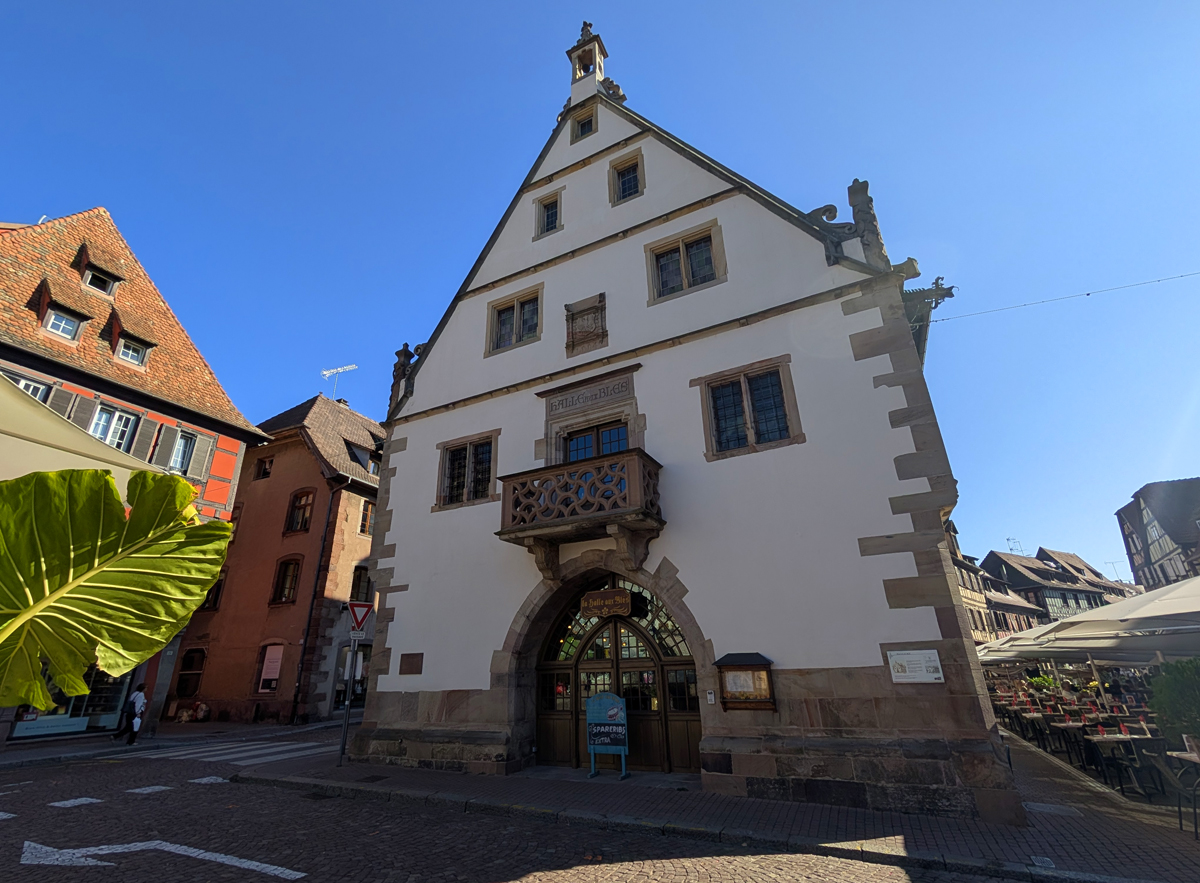
Halle aux Blés
Built in the 1500’s, the beautiful building was the town’s public butcher.
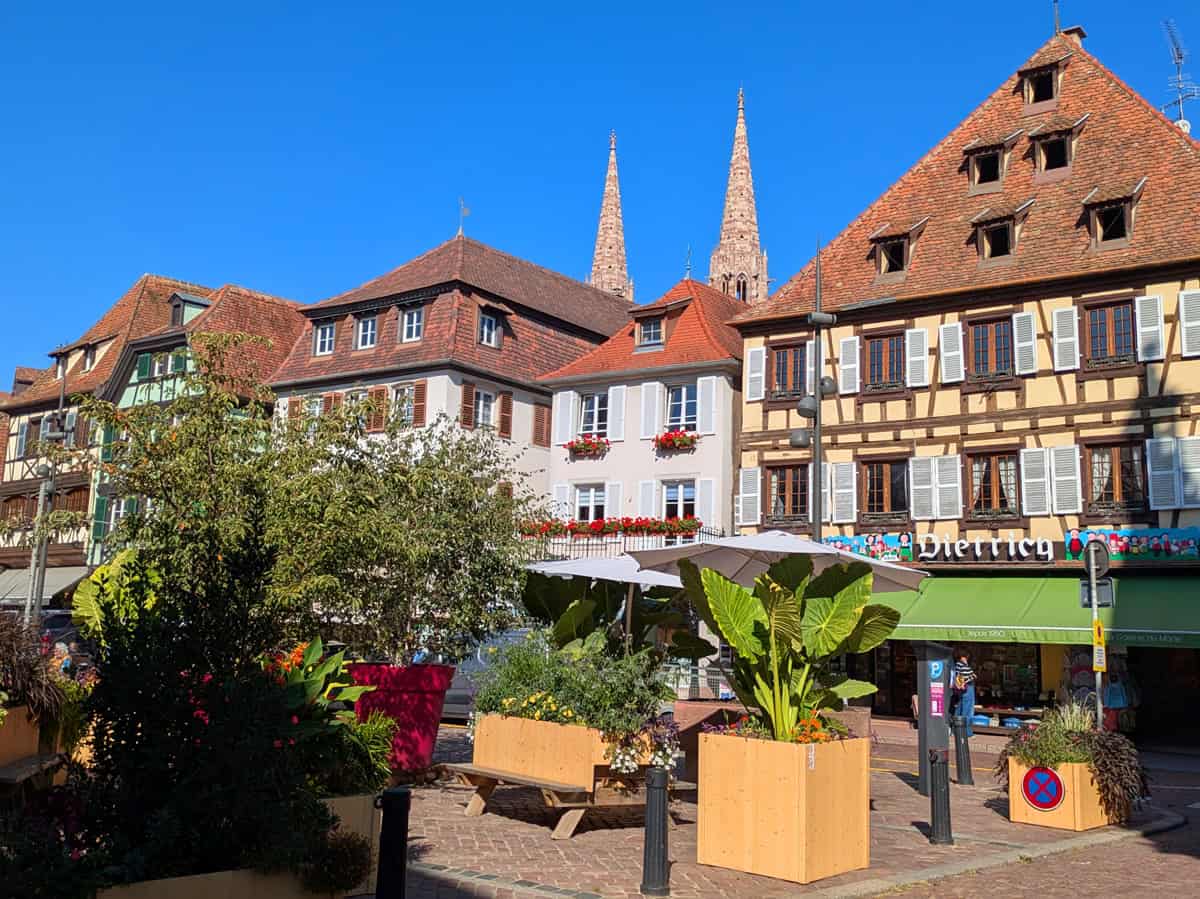
Place du Marché
The walk has brought you back to market Square, the town’s main square. They hold a public market here on Thursdays, a tradition since 1301.
Fontaine Sainte-Odile
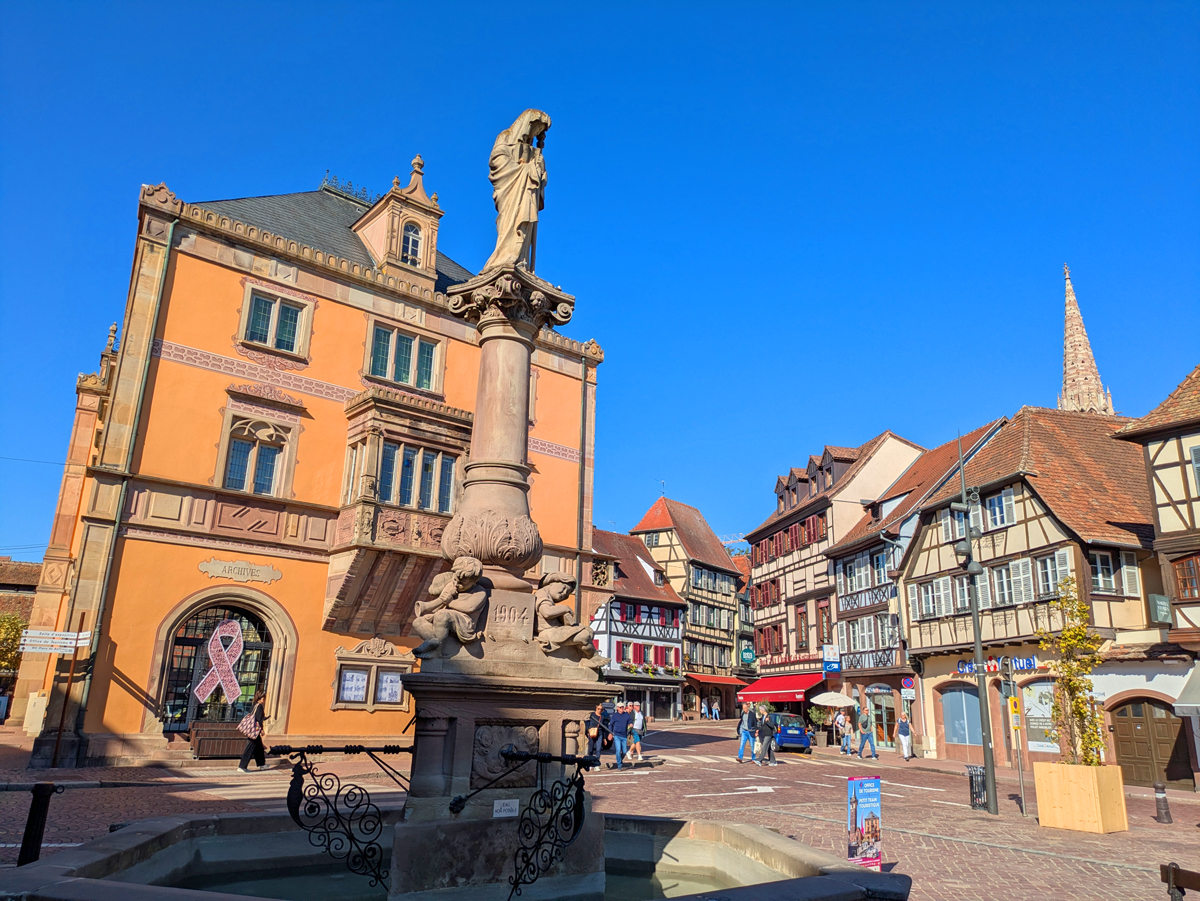
A fountain in Place du Marché dedicated to Sainte-Odile, the patron saint of Alsace.
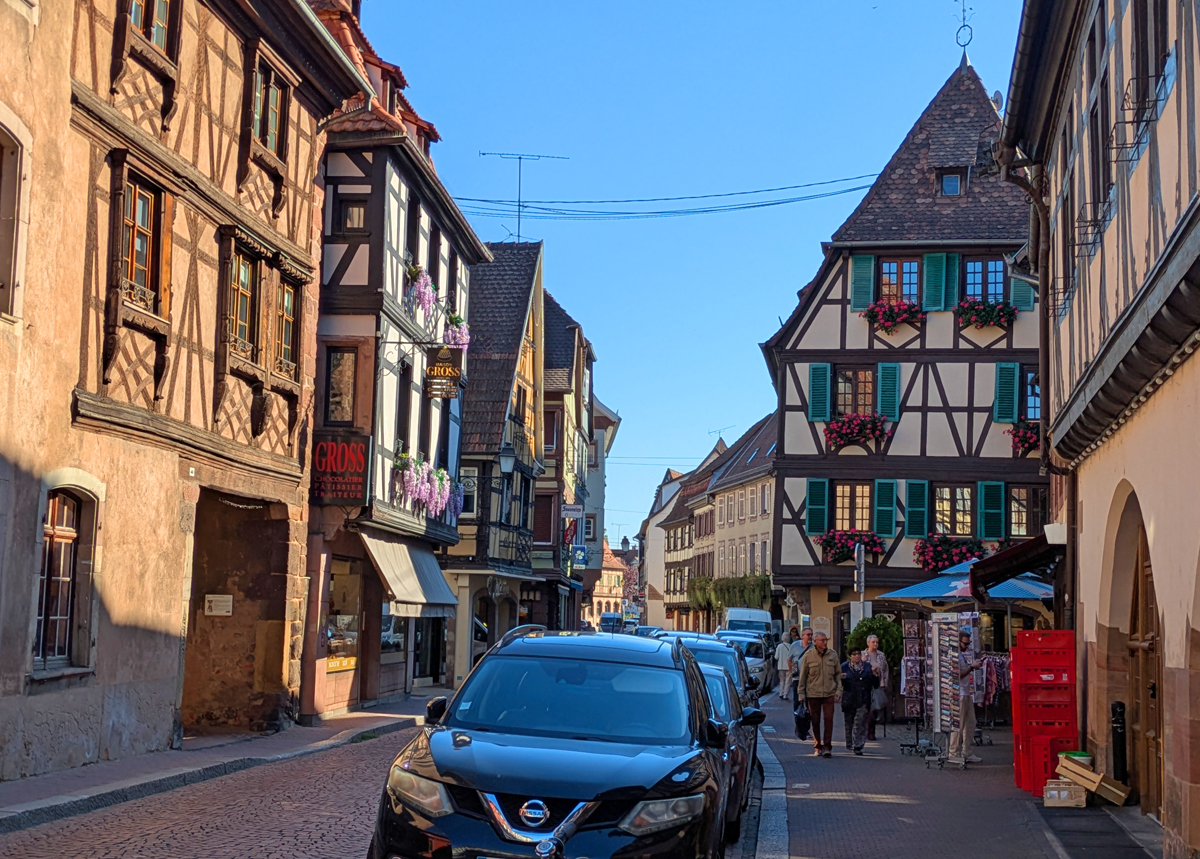
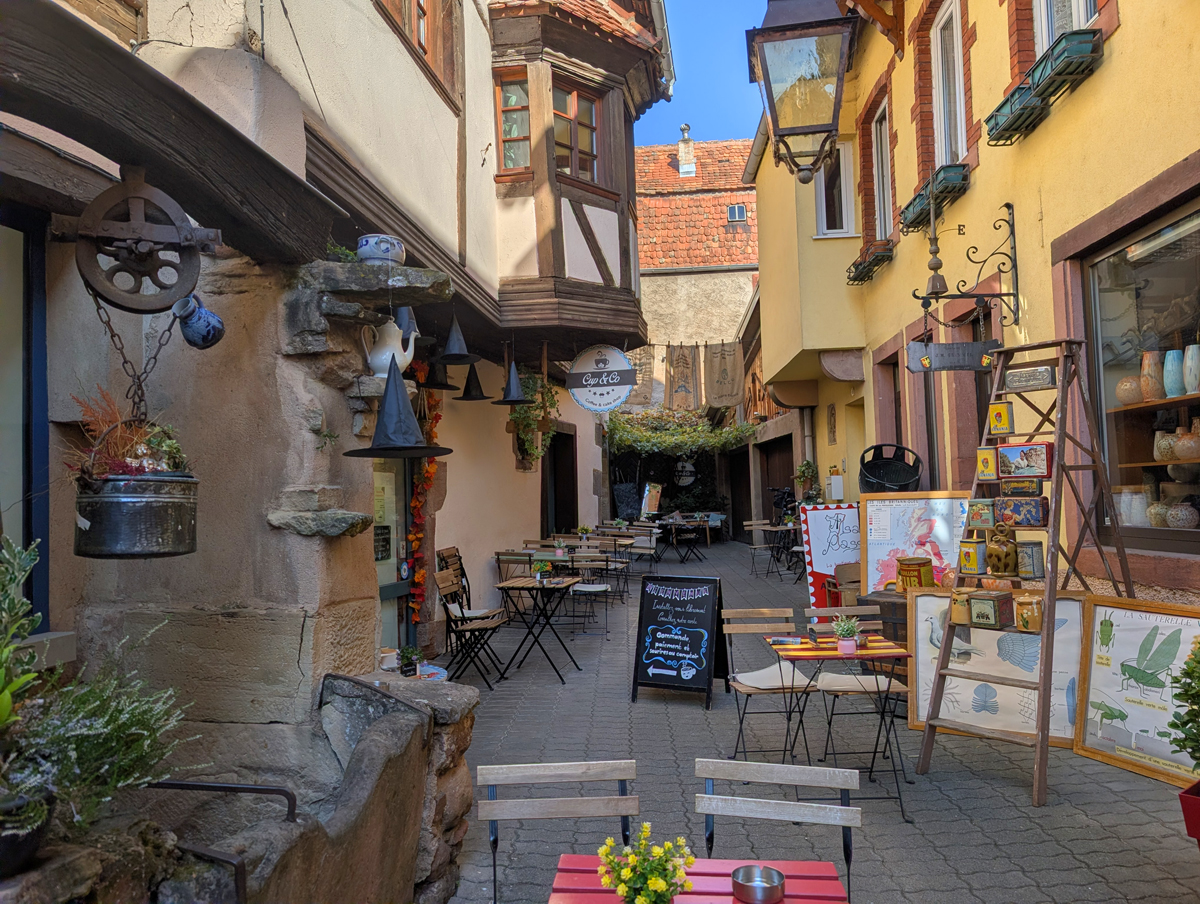
That’s the end of the city’s walking tour. Really, the town is very small and I encourage you to just follow your nose. Walk down Rue de Canal de L’Ehn, see Cour des Artisans and walk along pedestrian Rue du Marché where you’ll find a lot of restaurants.
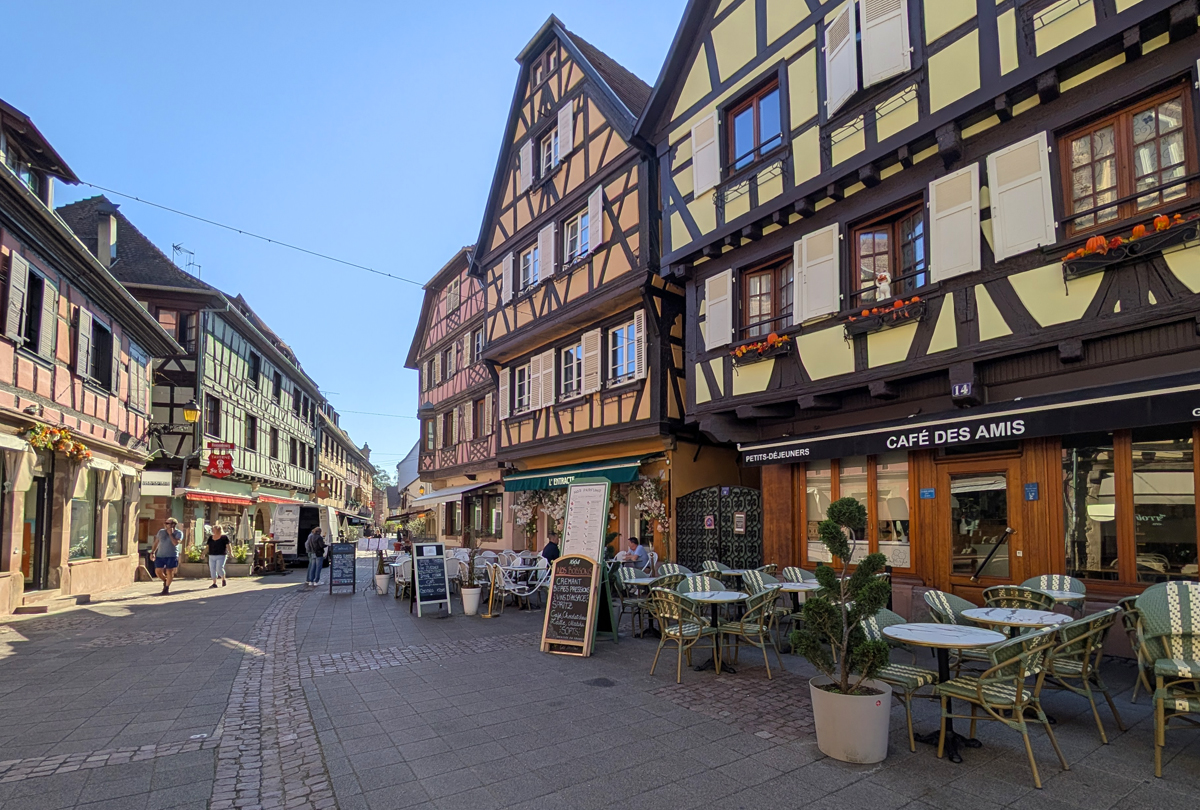
We recommend L’Entracte, a small restaurant with friendly service. A good place to try a traditional tarte flambée (Flammekueche in German). It looks and tastes a bit like pizza but there’s no tomato paste and the crust is flakier.
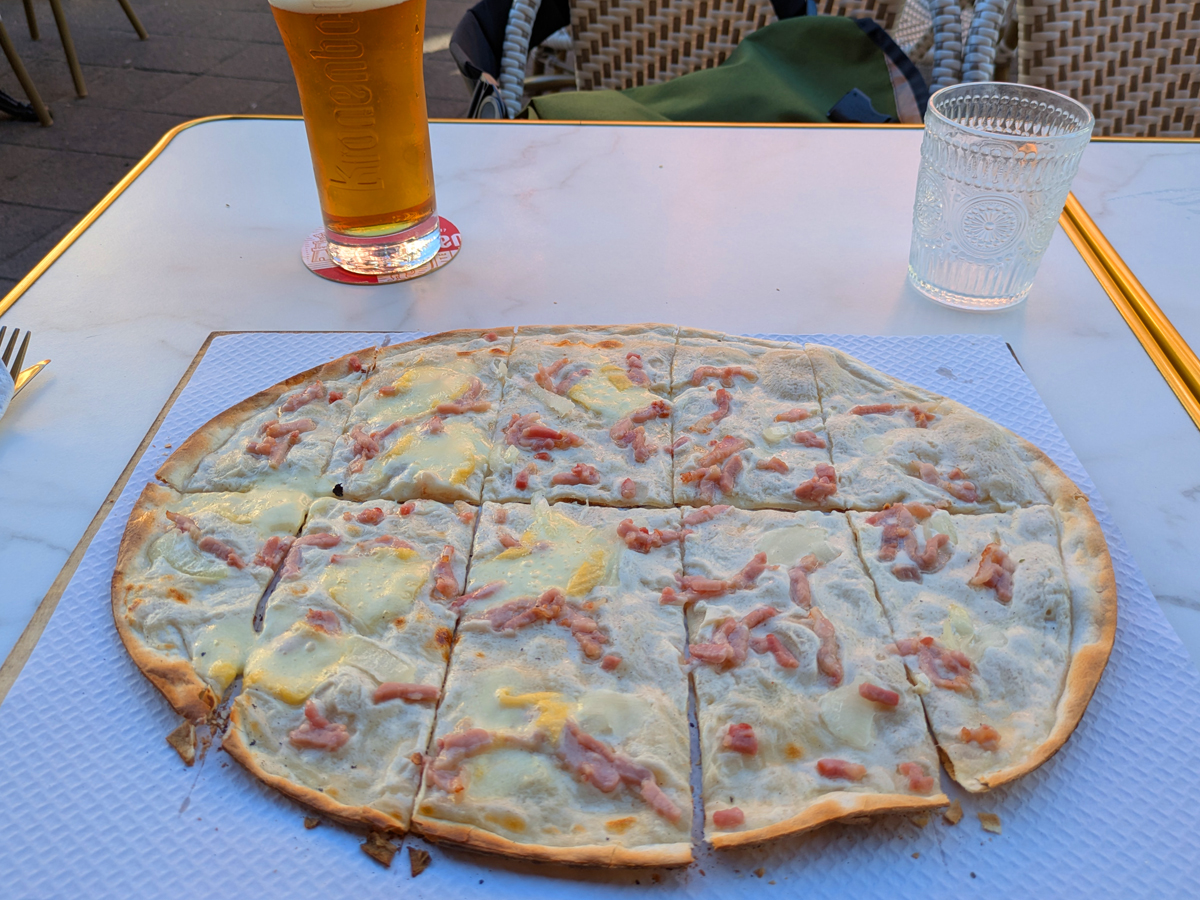
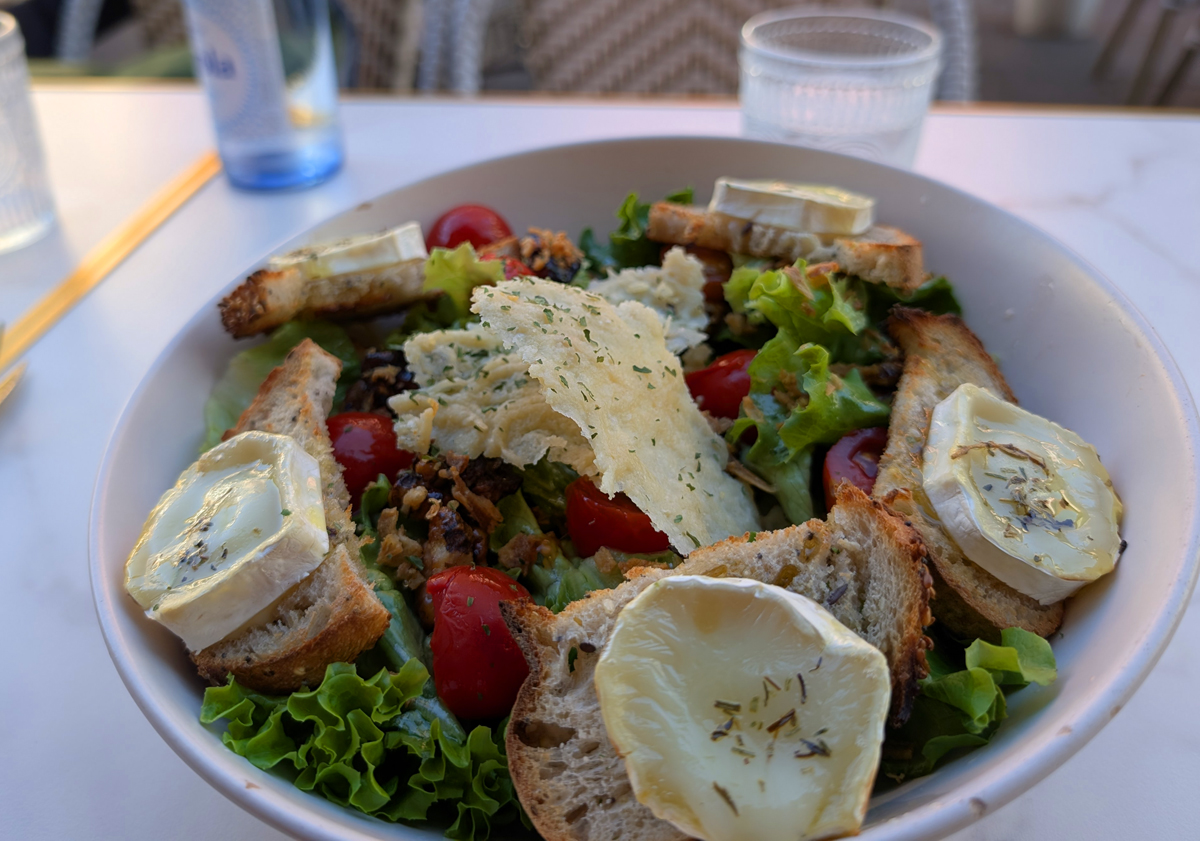
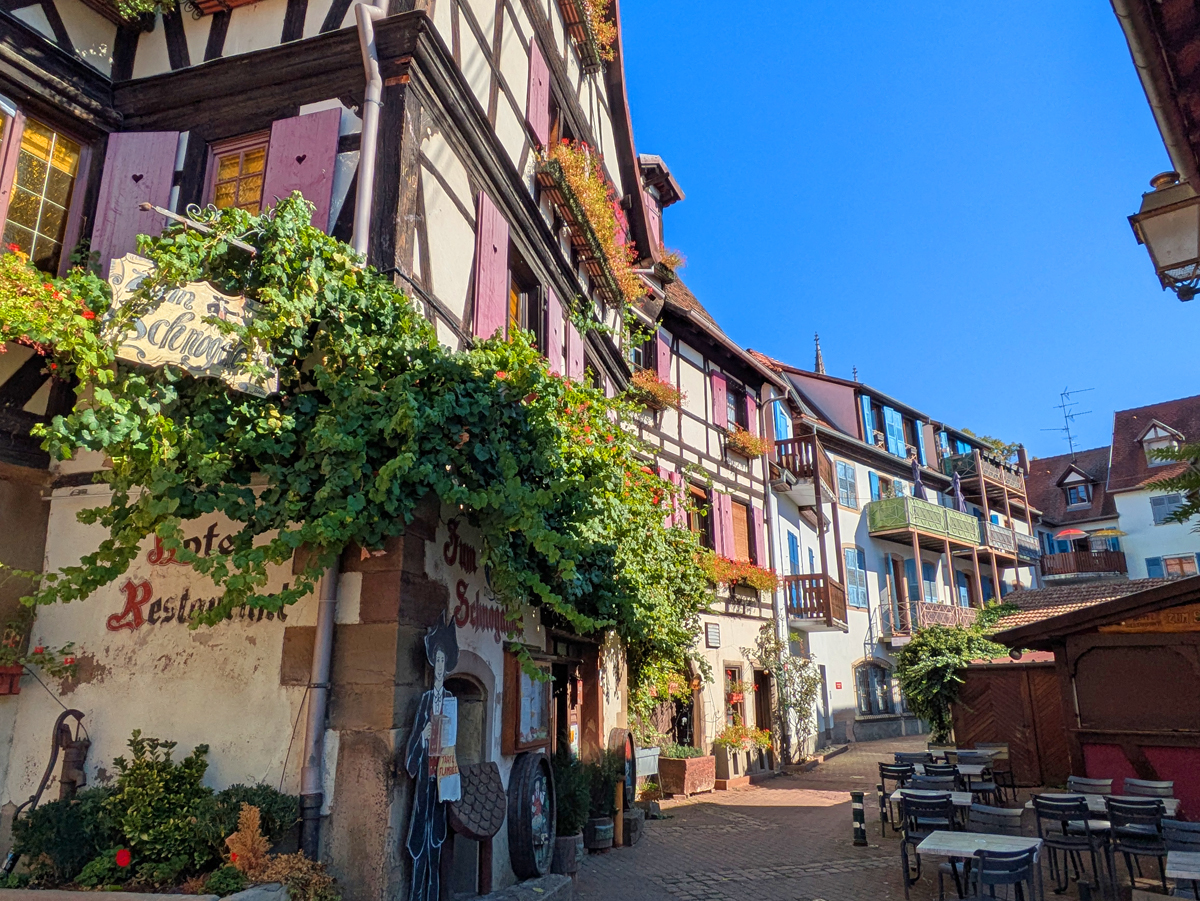
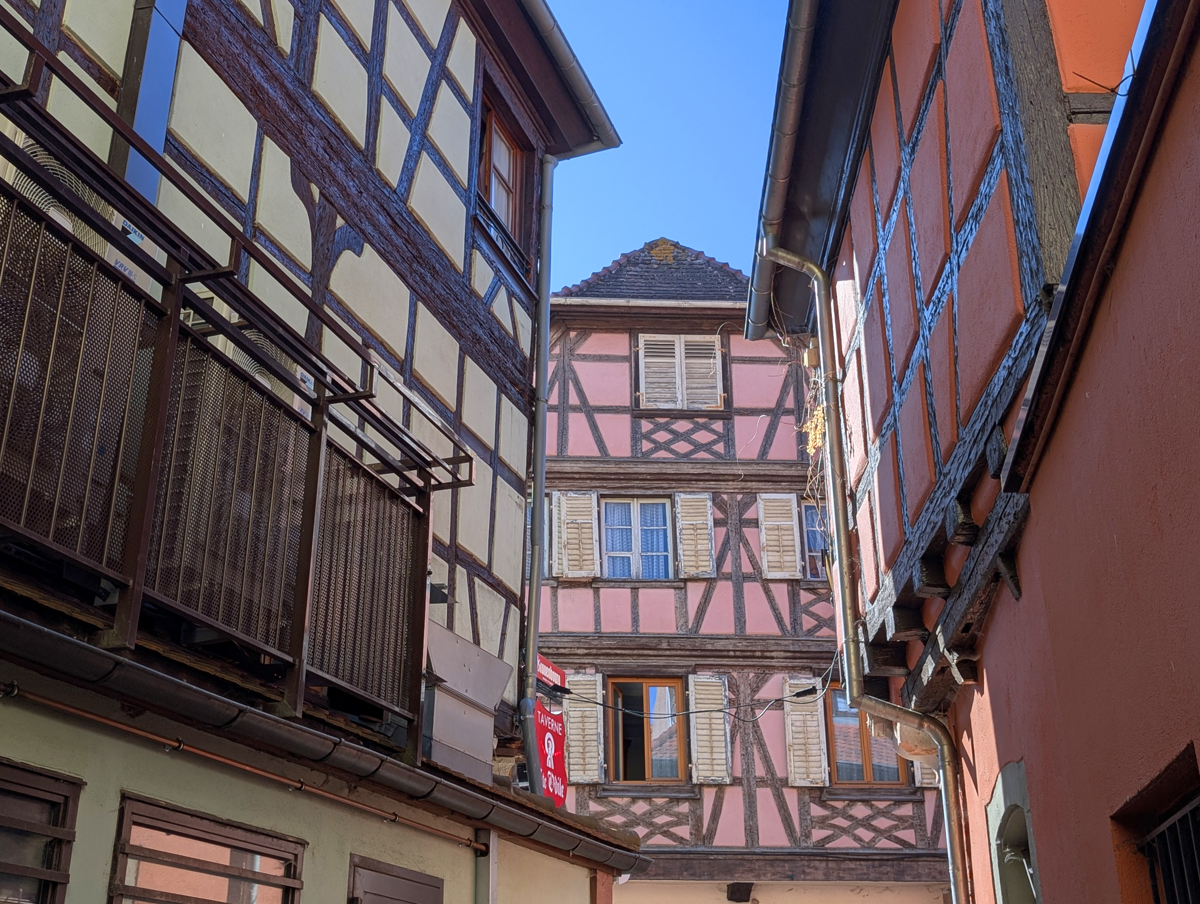
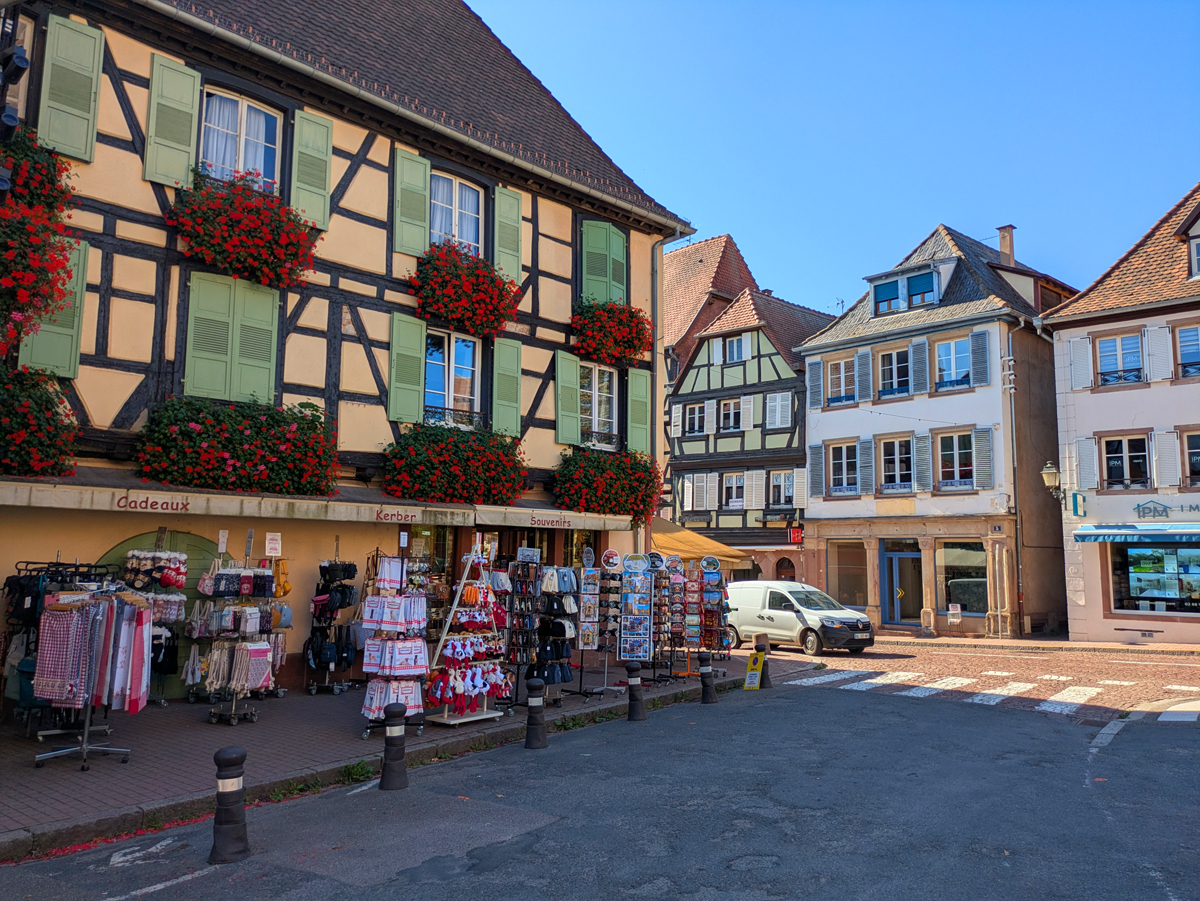
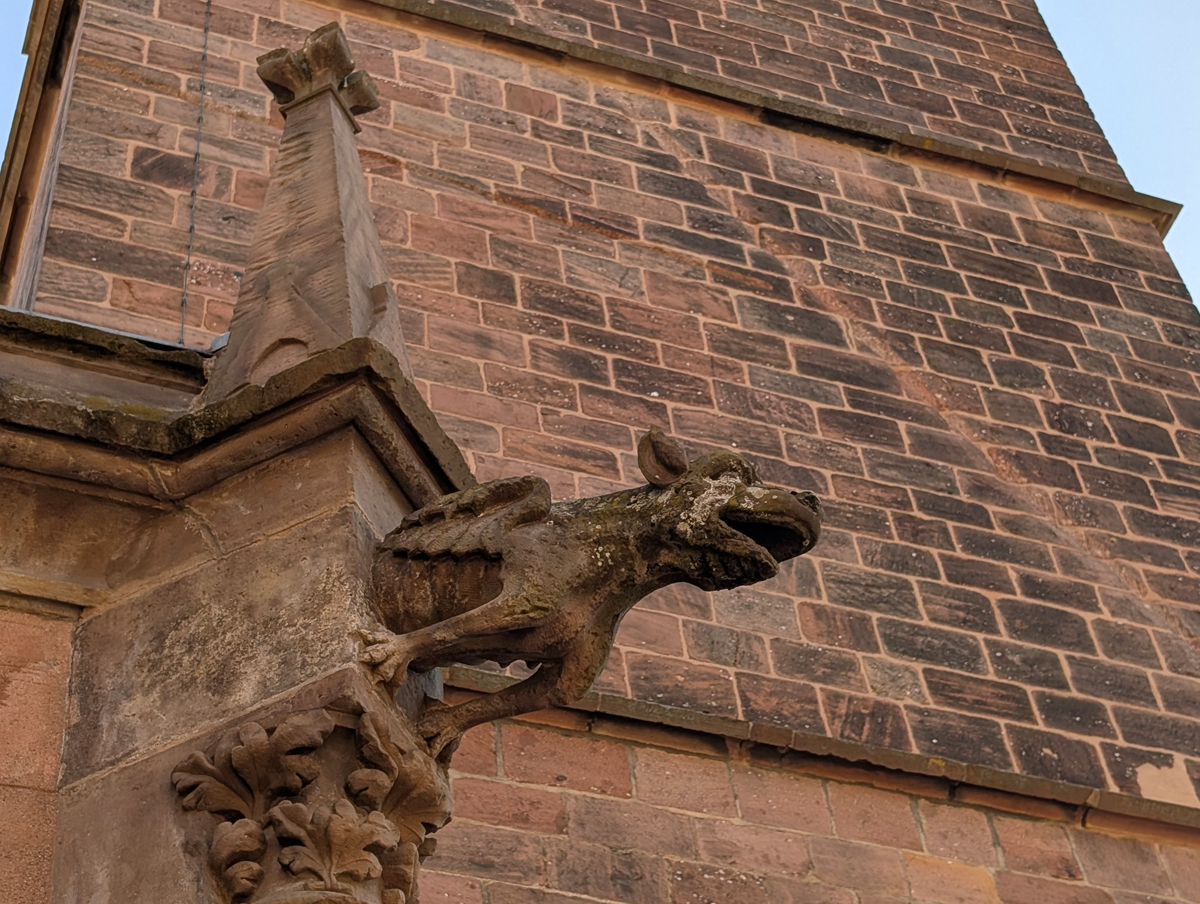
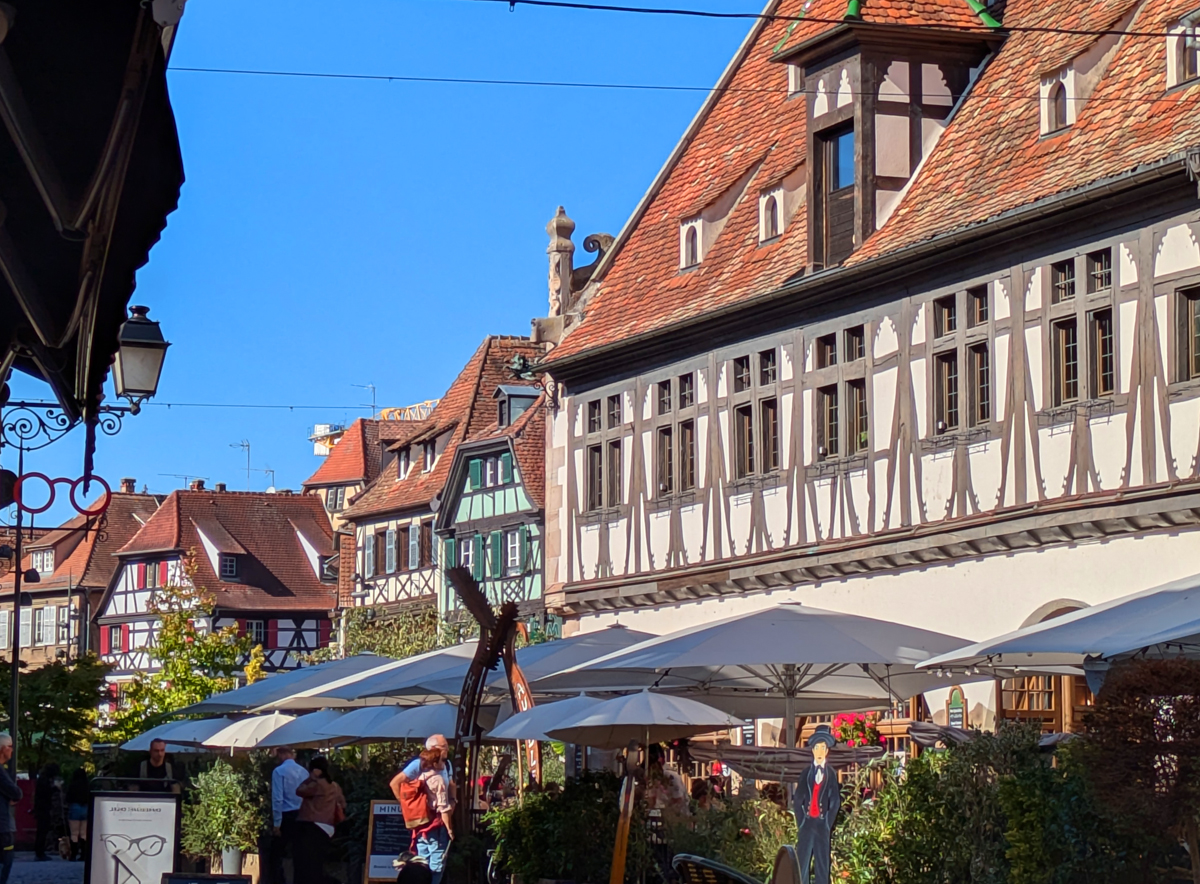
A few more photos of Obernai:
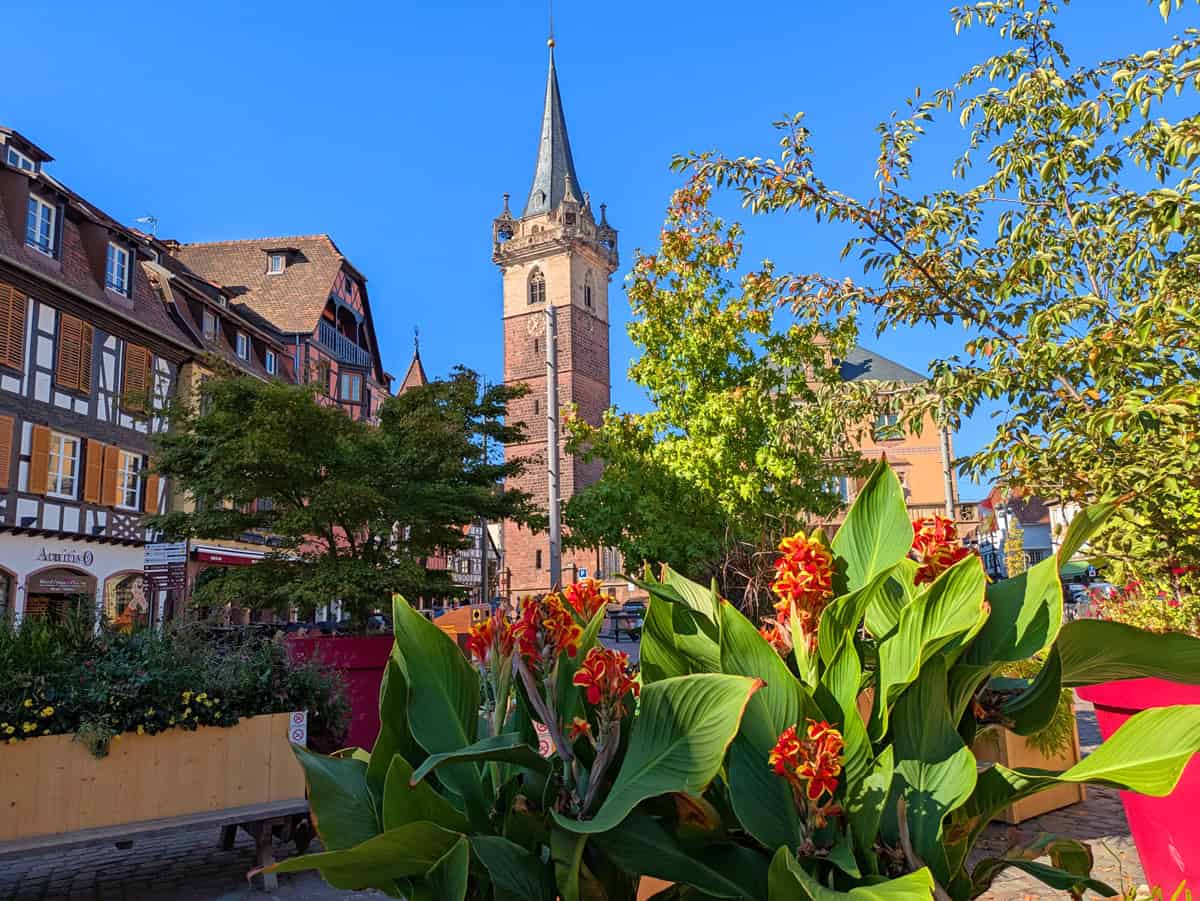
Summing up Obernai
Really, we just loved Obernai as a day trip from Strasbourg. When we arrived late morning, it was almost devoid of tourists. So we walked around appreciating the beautiful buildings and pleasant atmosphere. Very quiet compared to Strasbourg. We sat down for lunch around 1 PM and the town started to get busier. By 2pm the restaurant was full, mostly with German tourists.
A great day trip from Strasbourg that we very much recommend.
Leave a Reply