
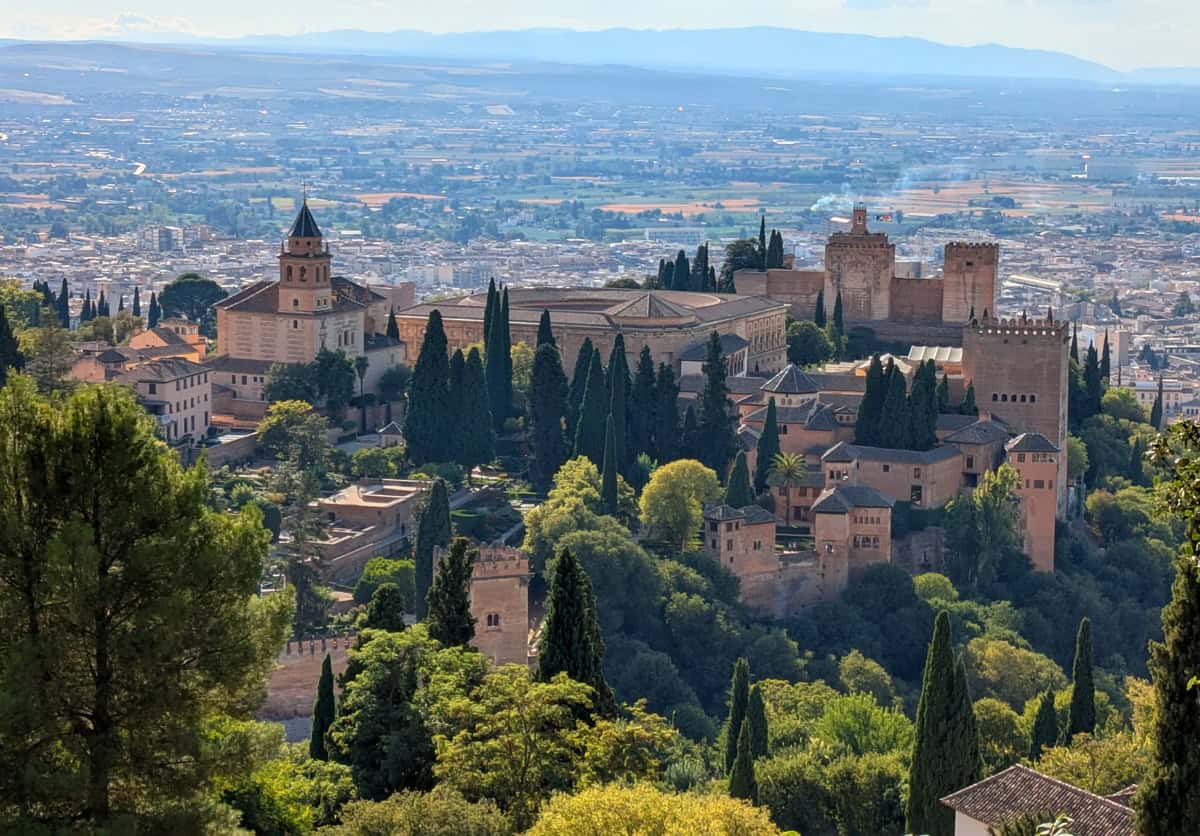
The Best 20 Things to See and Do in Granada (Spain).
We just left Granada after almost 2 years of making the city our home. Granada is an incredible city with lots of great attractions.
So what to see and how to prioritize the highlights? I cover that in this post and also tell you how you can see many of them for FREE.
Note: As you’ll see, I actually cover much more than 20 attractions in this post…
1. The Alhambra
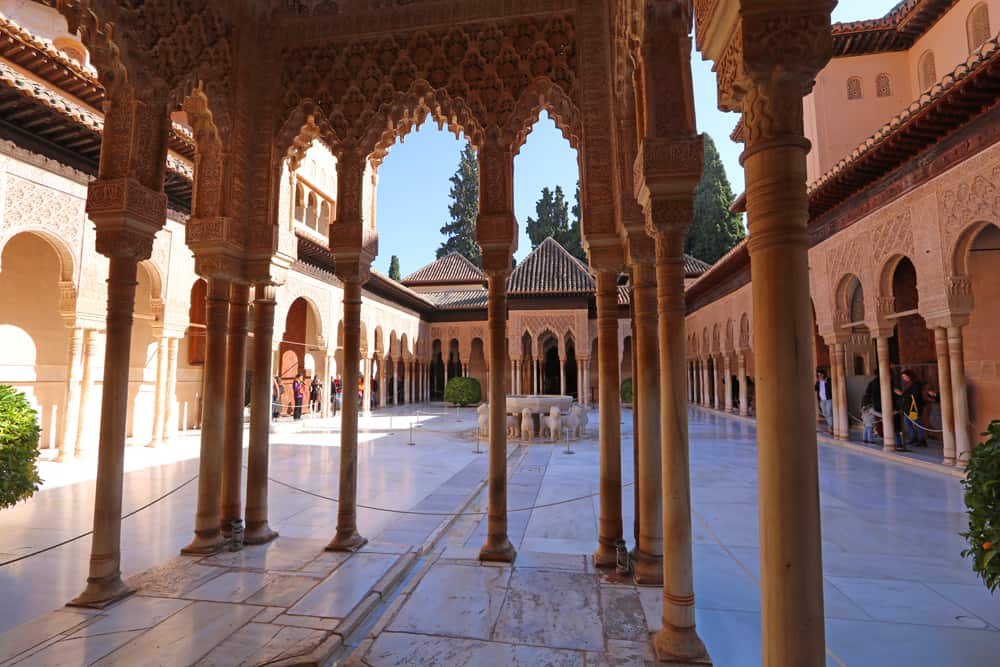
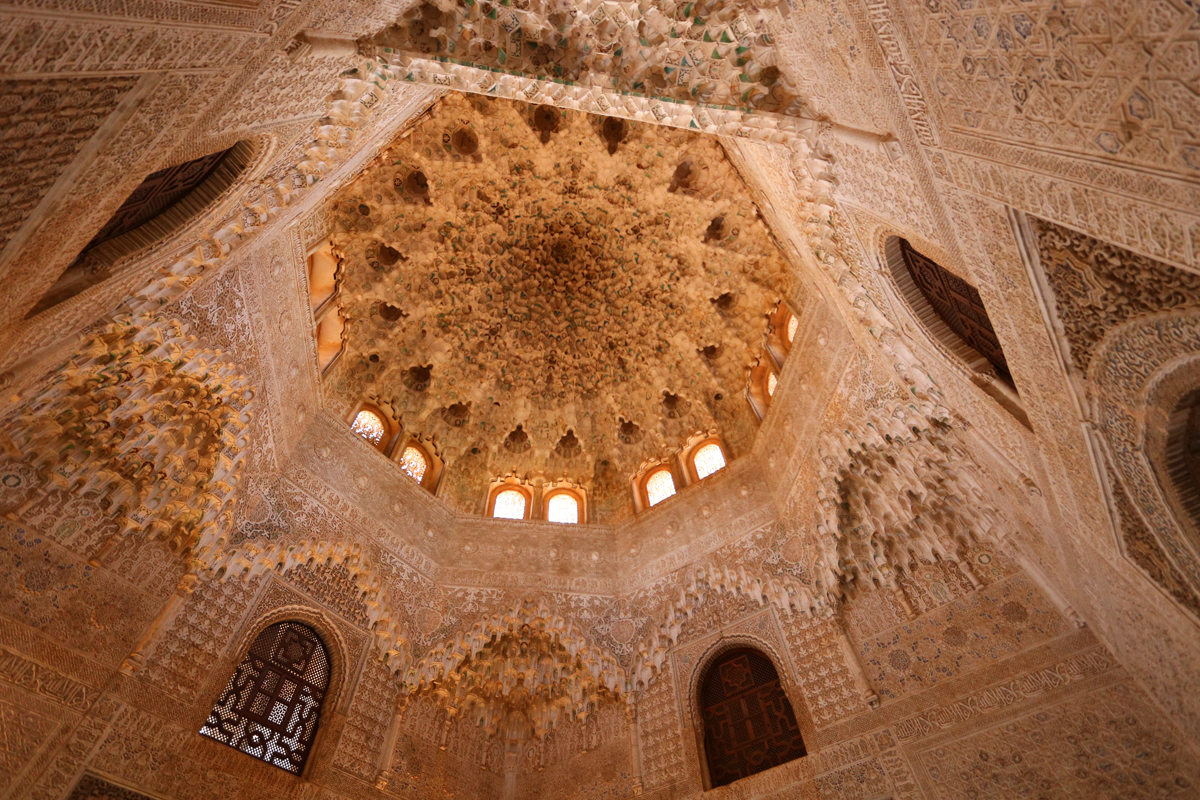
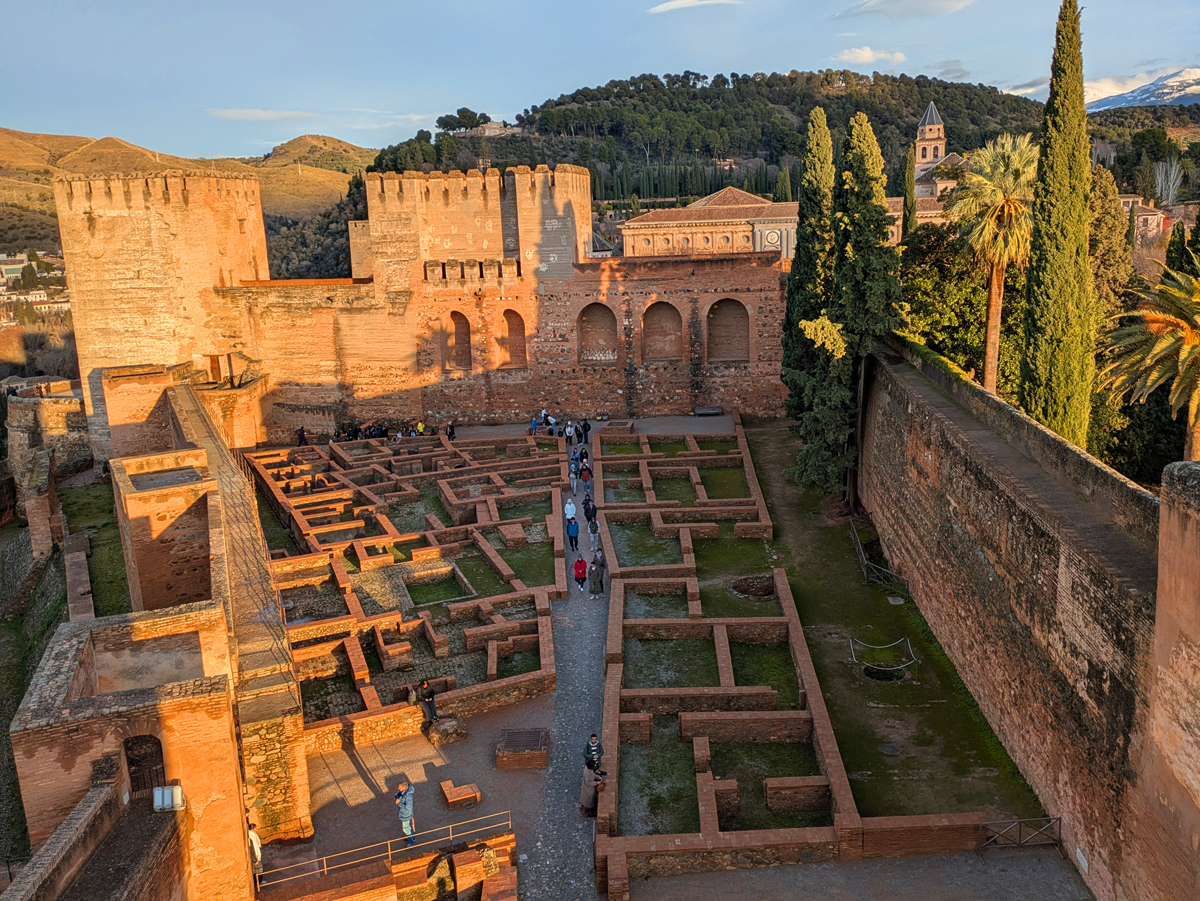
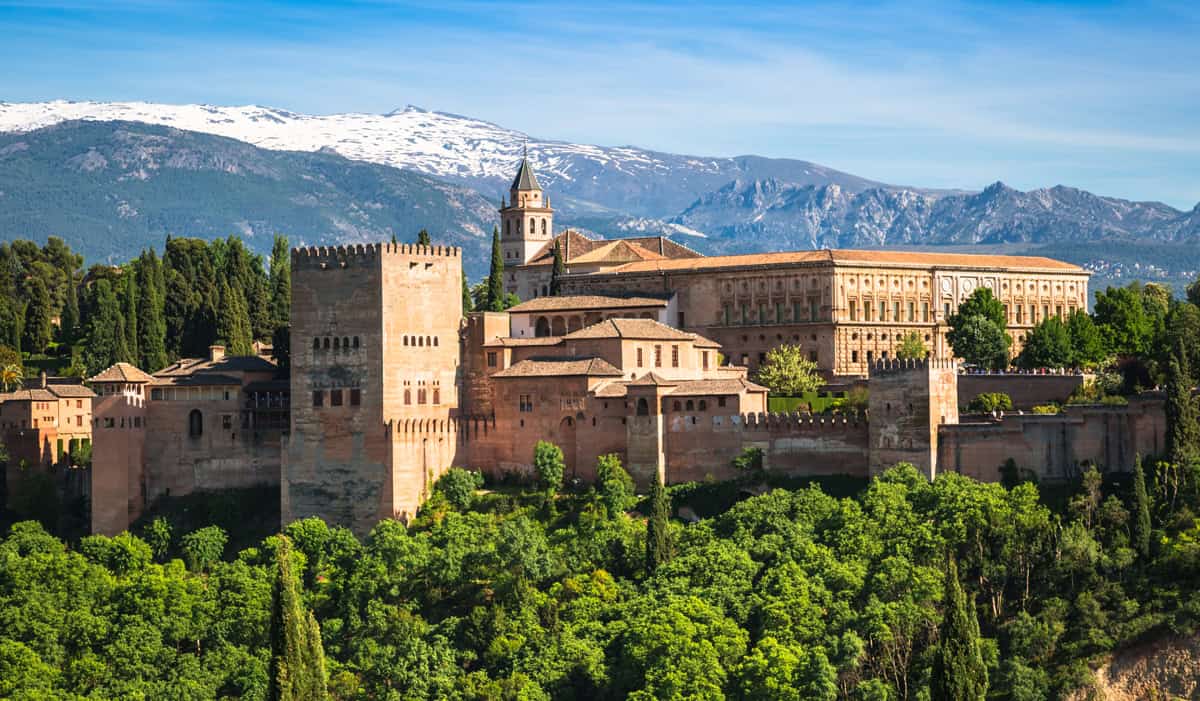
The Alhambra is not only the most famous highlight of Granada, it’s one of Spain’s most visited attractions. It is a UNESCO World Heritage Site.
Built in 1232, the Alhambra was the last stronghold of a Great Muslim empire that at one point included most of Spain and Portugal. In 1492 the Sultan of Granada (head of the Nasrid dynasty) surrendered to the Catholic monarchs Ferdinand II of Aragon and Isabella I of Castile. It would mark the end of over 700 years of Moorish rule on the Iberian peninsula.
You have to book your tickets to the Alhambra weeks in advance, they allow you to see the Nasrid Palaces (incredible), the Alcazaba (the fortress part of the complex), and the Generalife Gardens. But what most people don’t know is that even without tickets, you can wander around the Alhambra and see some sites for free: attractions such as the Palace of Carlos V, the Arab Baths and the church of Santa Maria. It’s totally worth a visit even for that.
A complete guide to the Alhambra here (on Mapping Spain, our Spain-only blog).
2. The Essentials of the Albaicin
The Albaicin is the old Moorish neighbourhood located on the hill across from the Alhambra. It is a UNESCO World Heritage site with lots to see: the area of full of palaces, squares, gardens as well as lots of great viewpoints looking across towards the Alhambra.
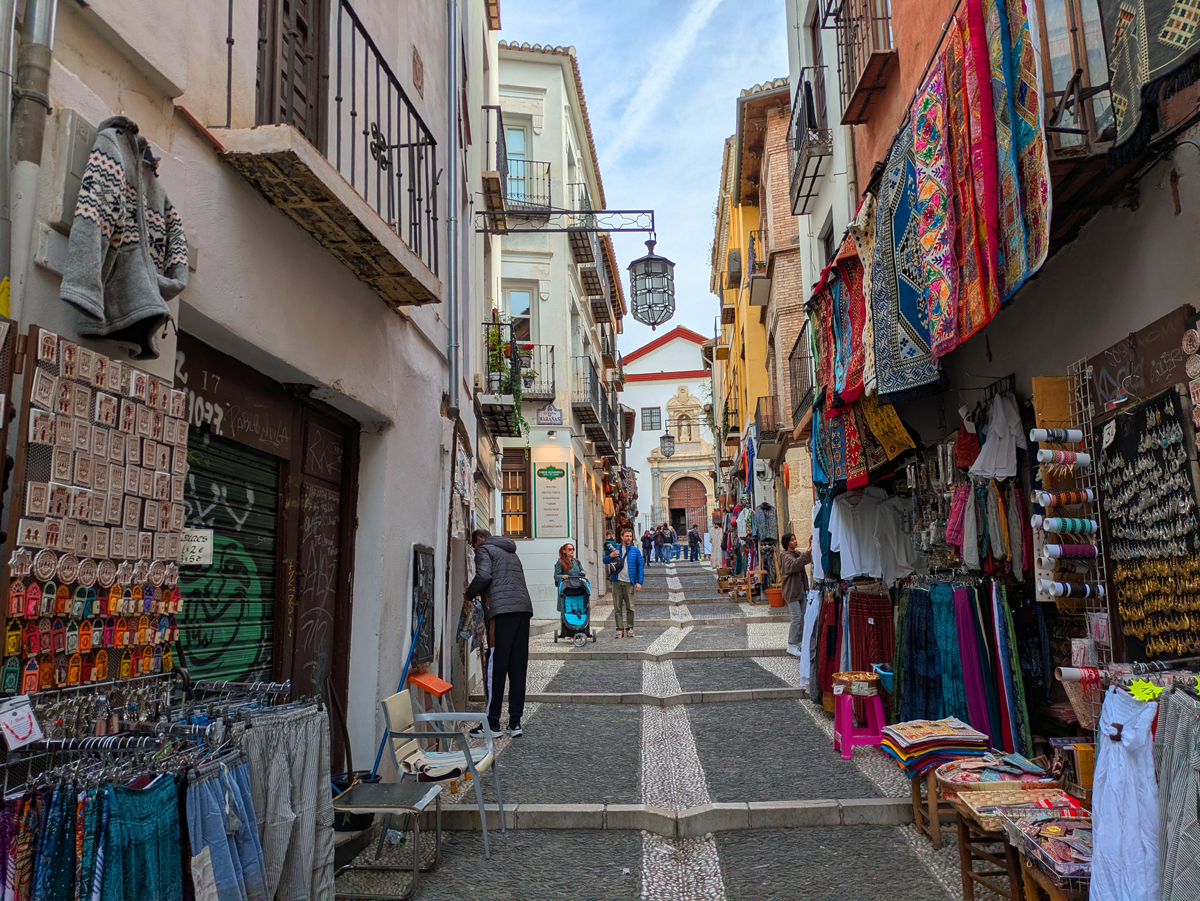
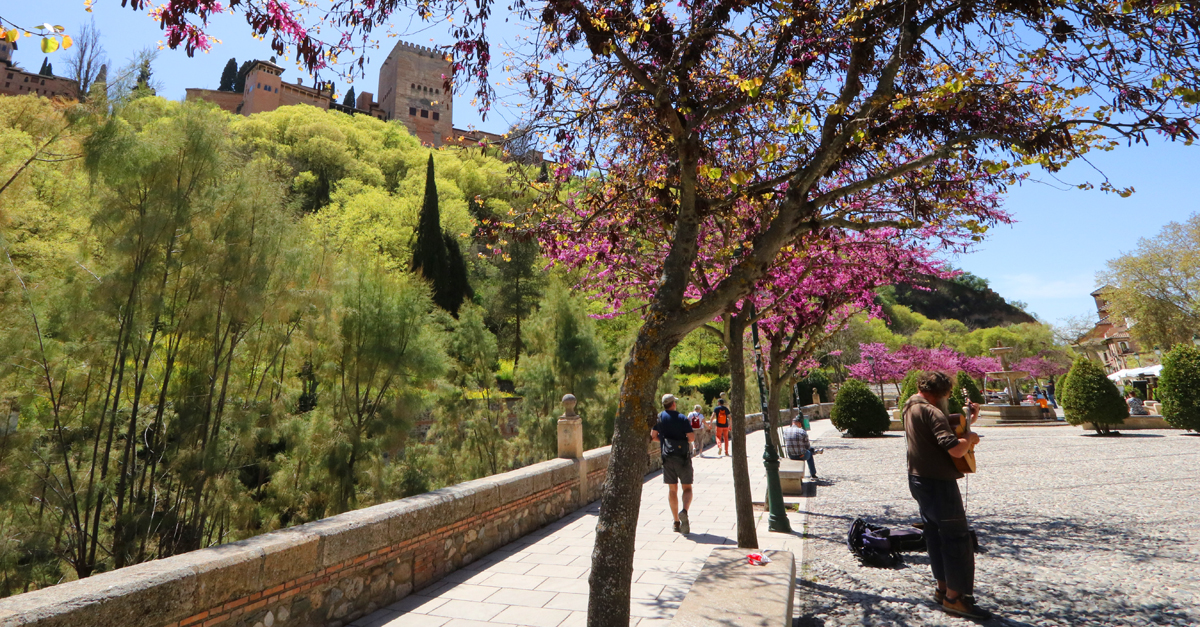
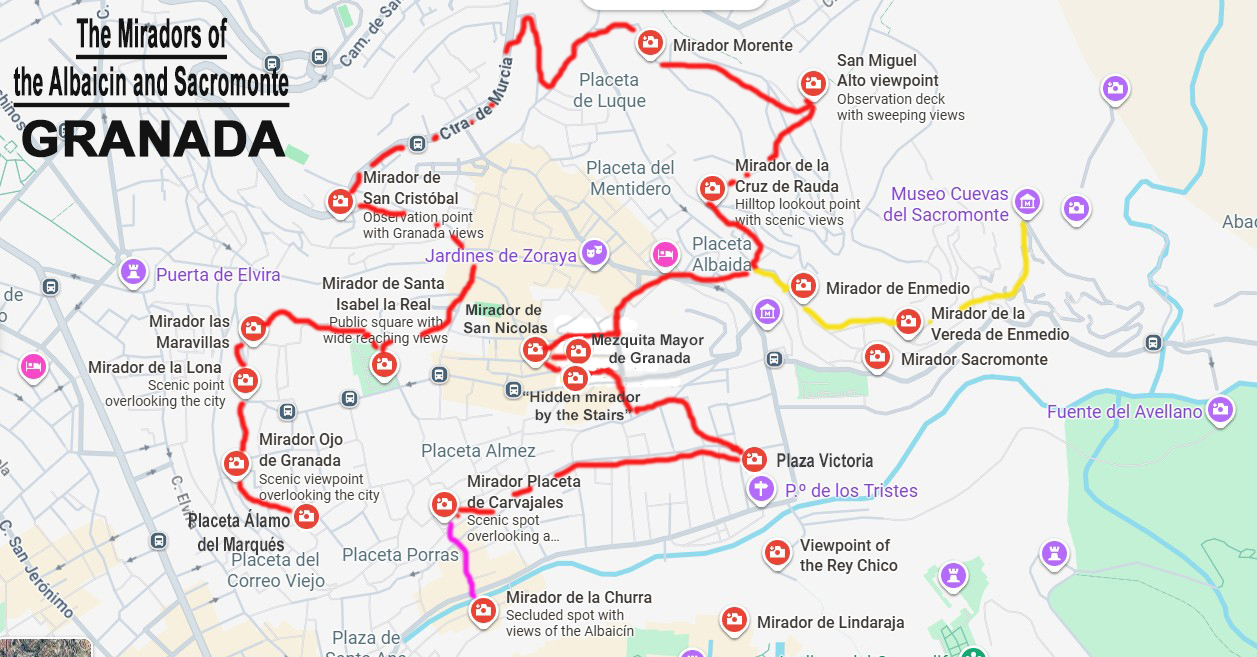
You could spend days exploring the area. This guide on the Albaicin tells you everything you need to know. But if you’re limited on time, I recommend the following: go to Calle Calderería Nueva (known as “little Morocco”) for its Arab vibe. From there continue up Cuesta de San Gregorio, making your way to Mirador San Nicolas (the most famous viewpoint in Granada). Next to the mirador, see the Mosque of Granada (tip: it has the same views as Mirador San Nicolas with less people and a beautiful setting). Make your way back down to Paseo de Los Tristes where you can enjoy views looking up at the Alhambra, then make your way down Carrera del Darro to Plaza Nueva.
The above covers the essentials that you HAVE to see. As I say, if you have more time there’s lots of explore in the Albaicin (I’ll include a few more highlights further below).
3. Granada Cathedral
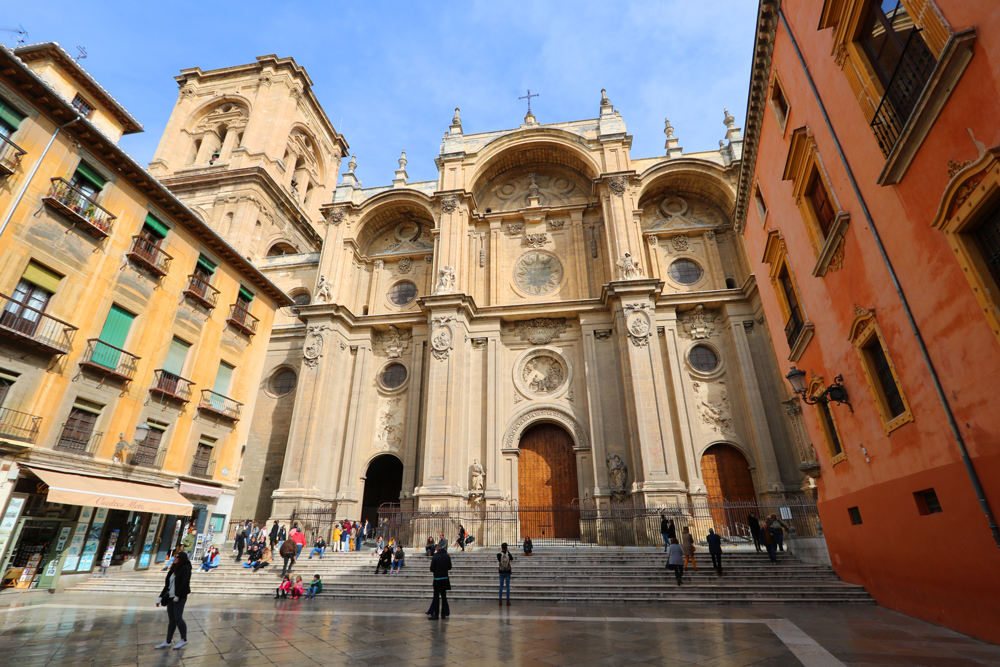
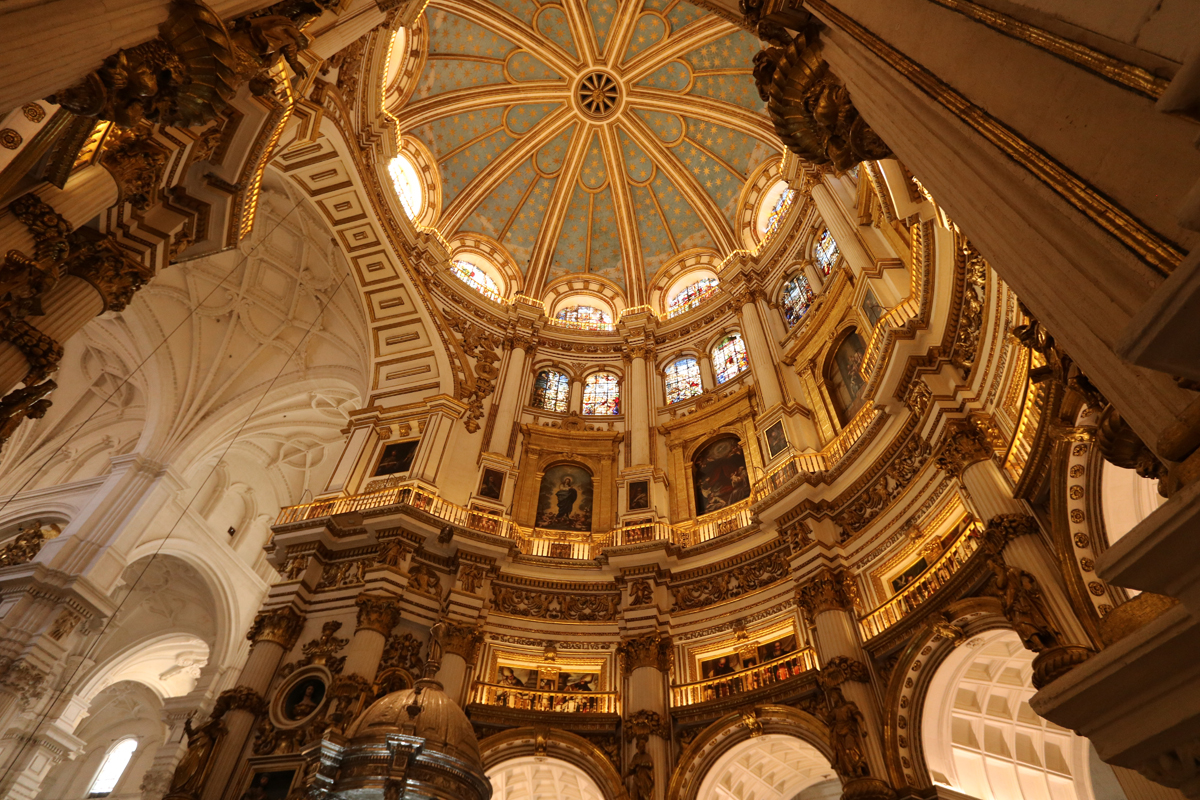
It’s not the most beautiful religious building in Granada (I’ll cover some lesser-known churches and monasteries that surpass it). BUT it is famous: it took 200 years to built and its architect is one of the best-known Spanish architects. The building is an icon of the city. So it is worth a visit. PLUS, if you plan it ahead of time, you can visit Granada Cathedral for FREE.
This post tells you everything you need to know about visiting Granada Cathedral.
4. Royal Chapel
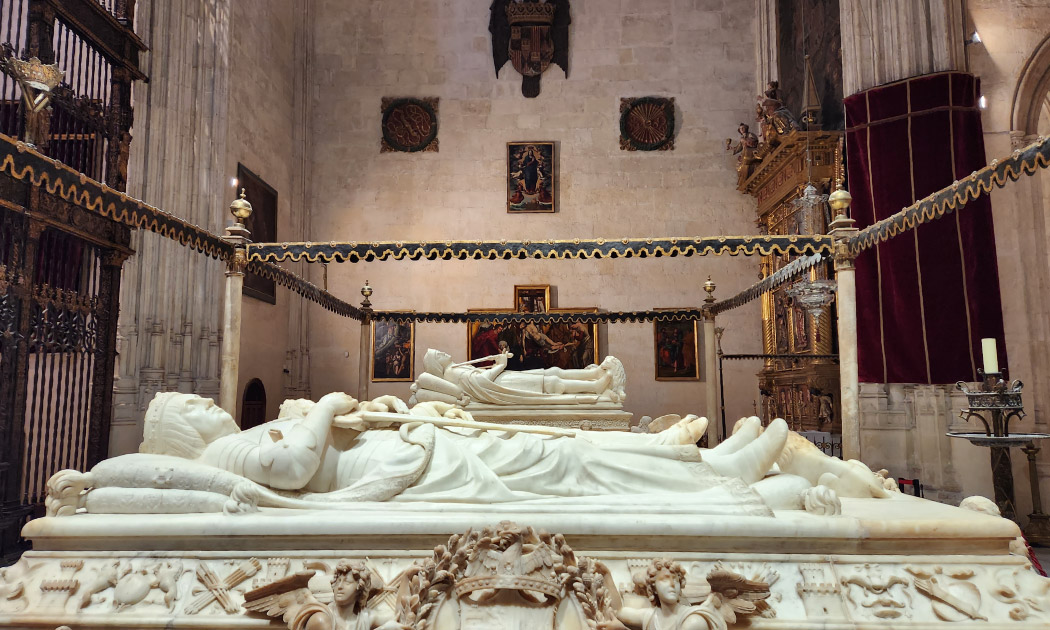
Just around the corner from the Cathedral, the Royal Chapel is one of those highlights that´s so historically significant that it has to be visited. Plus, like the cathedral, you can visit it for free if you plan ahead.
The Royal Chapel holds the remains of the two most consequential figures in Spanish history – the ¨Catholic Monarchs” ie. Queen Isabella of Castile and Ferdinand II of Aragon. Their marriage in 1469 brought about the unification of Spain and led to the end of Islamic rule on the Iberian peninsula in 1492. That same year, they financed Christopher Columbus’s voyages which led to the discovery of the Americas. The discovery of the New World led to Spain being the major power in Europe from the end of the 15th century to the mid-17th century.
All about visiting Granada’s Royal Chapel.
5. Monastery of San Jerónimo
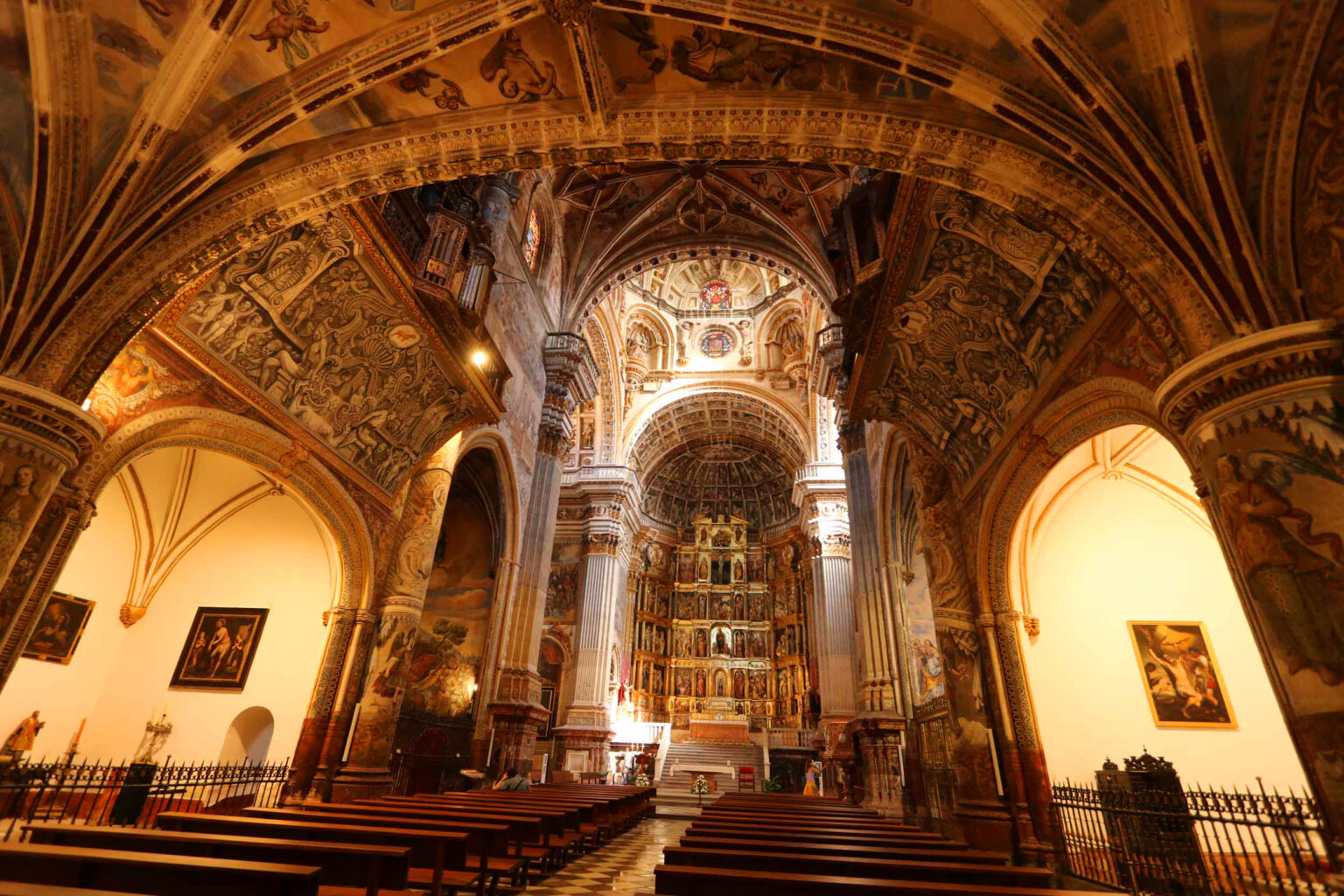
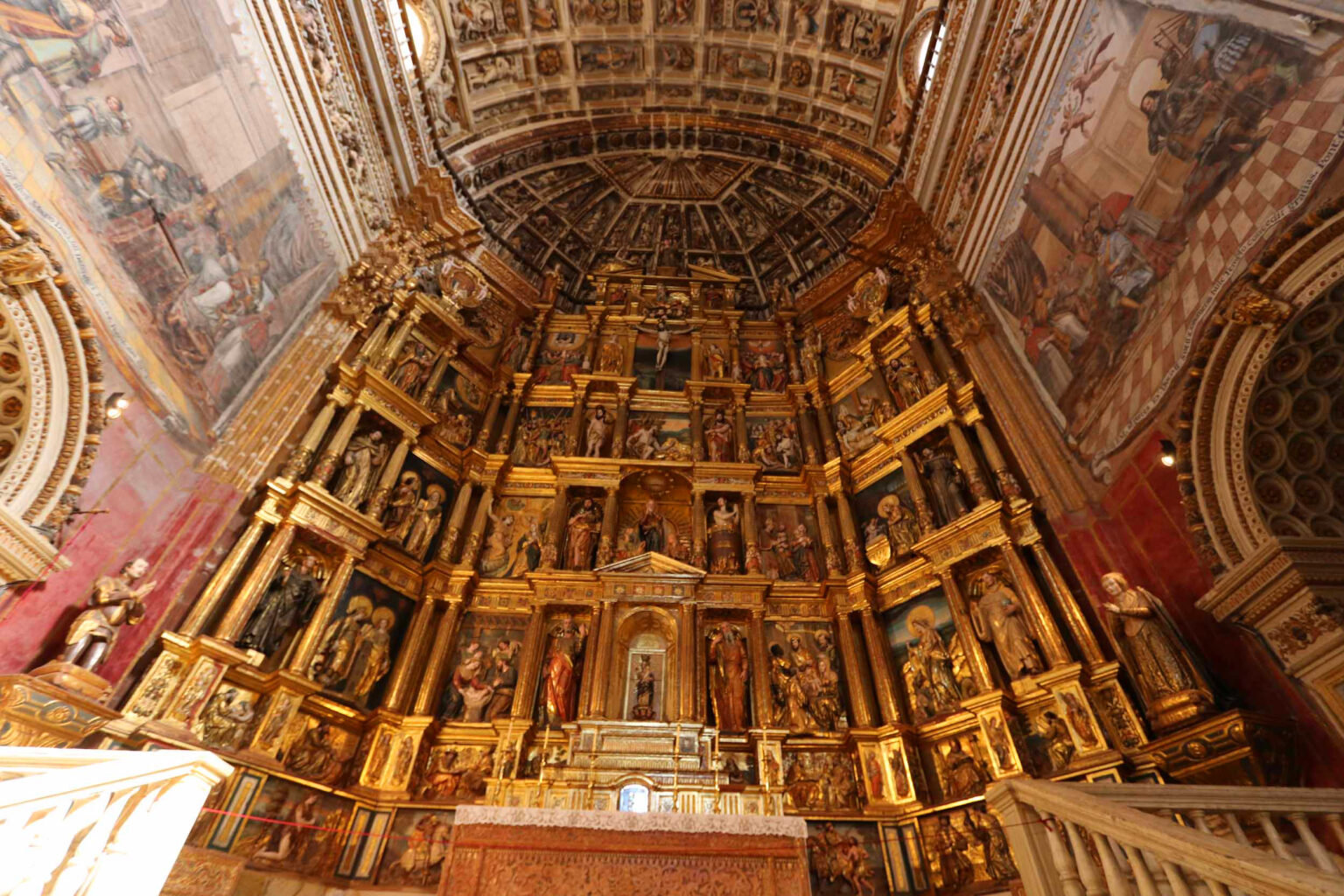
Approved by the Catholic Monarchs (Queen Isabella and Ferdinand II) after the 1492 conquest of Granada, Monasterio de San Jerónimo was built by Diego de Siloé, the same architect who planned the Cathedral.
It is a huge complex, still used by monks of the Order of Saint Jerome. The highlight is the church within the monastery: every inch is decorated by mouldings and art. The Altarpiece is a masterpiece of Spanish Renaissance and Andalusian Mannerism. It was made between 1570 and 1605 by some of Spain’s most famous sculptors and is dedicated to Gonzalo Fernández de Córdoba: the ¨Great Captain¨ who led the capture of Granada and negotiated the surrender of the Moors. He and his wife are buried in a crypt at the base of the steps leading to the altar.
Note: it’s another attraction that you can visit for free. Have a look at my post on the Monasterio de San Jerónimo.
6. Cartuja Monastery
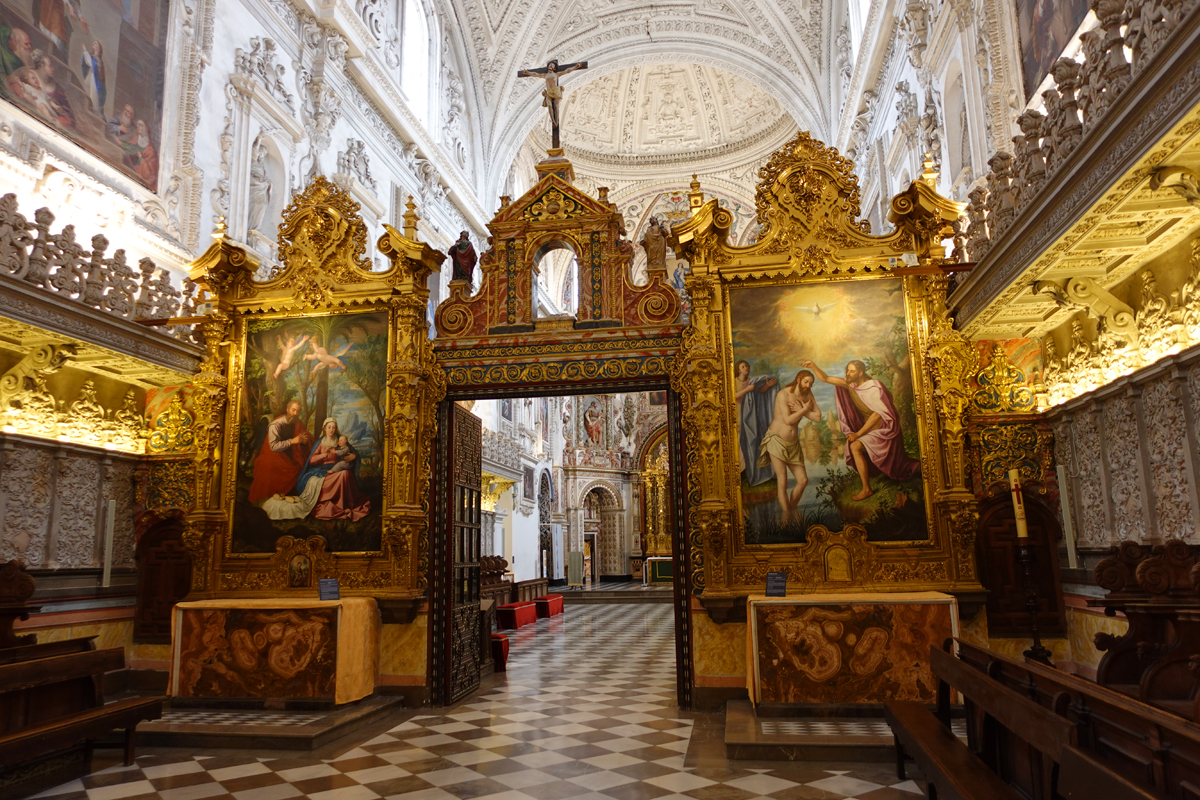
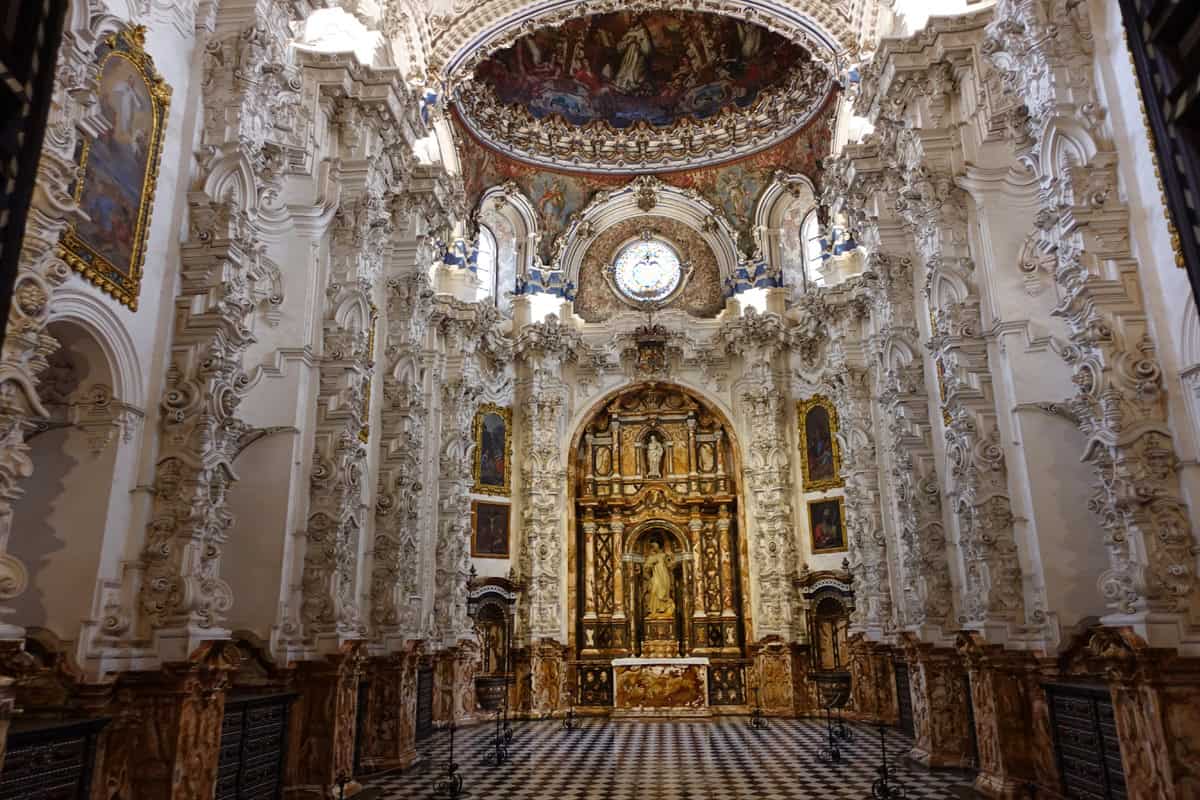
Work started on the Monastery in 1506 and took approximately 300 years to complete. Simple on the outside, the inside is spectacular with works from some of the best Spanish artists of the times.
Note: it’s another attraction that you can visit for free if you plan ahead. Have a look at my post on the Cartuja Monastery.
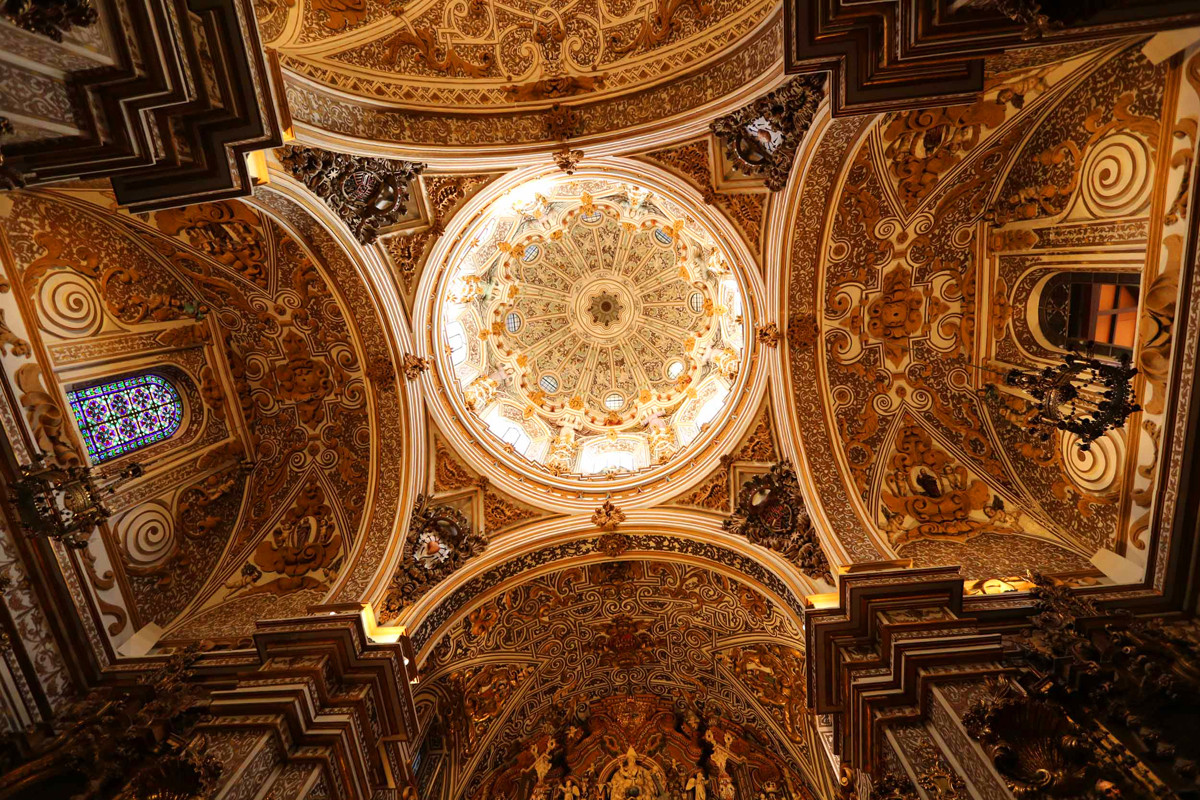
7. The Basilica of San Juan de Dios
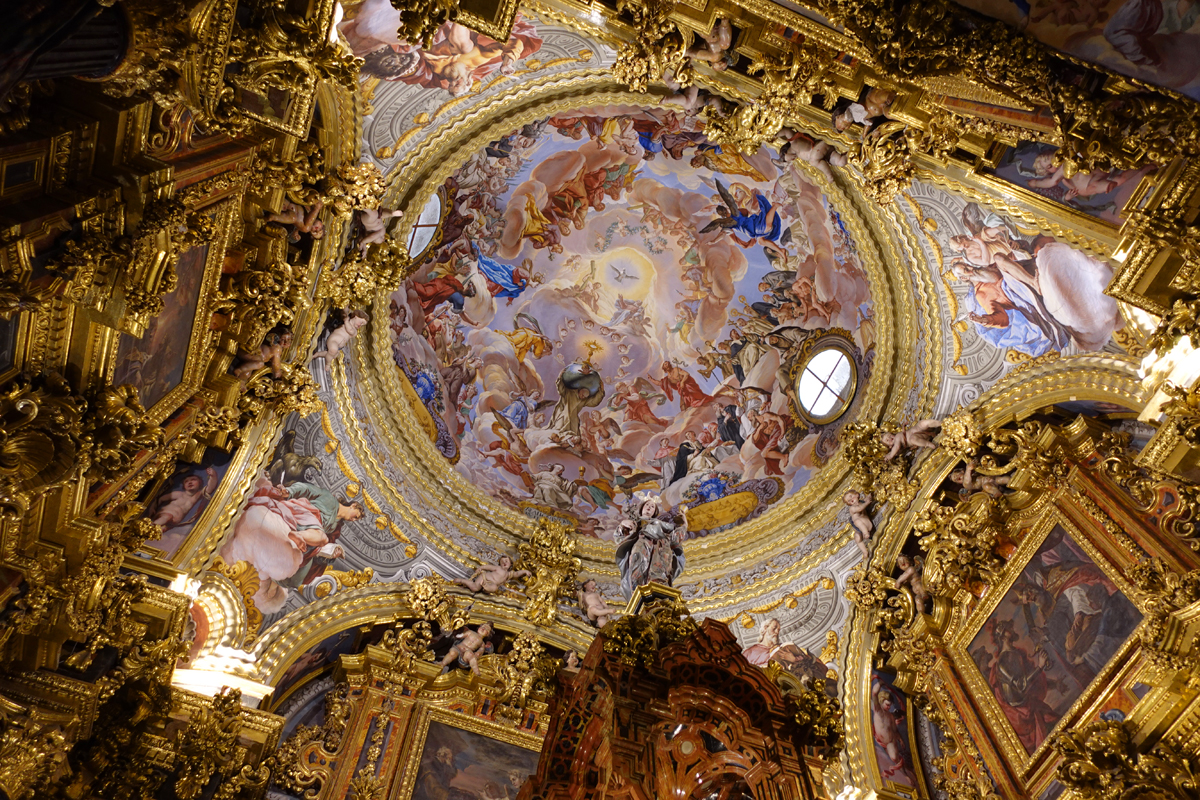
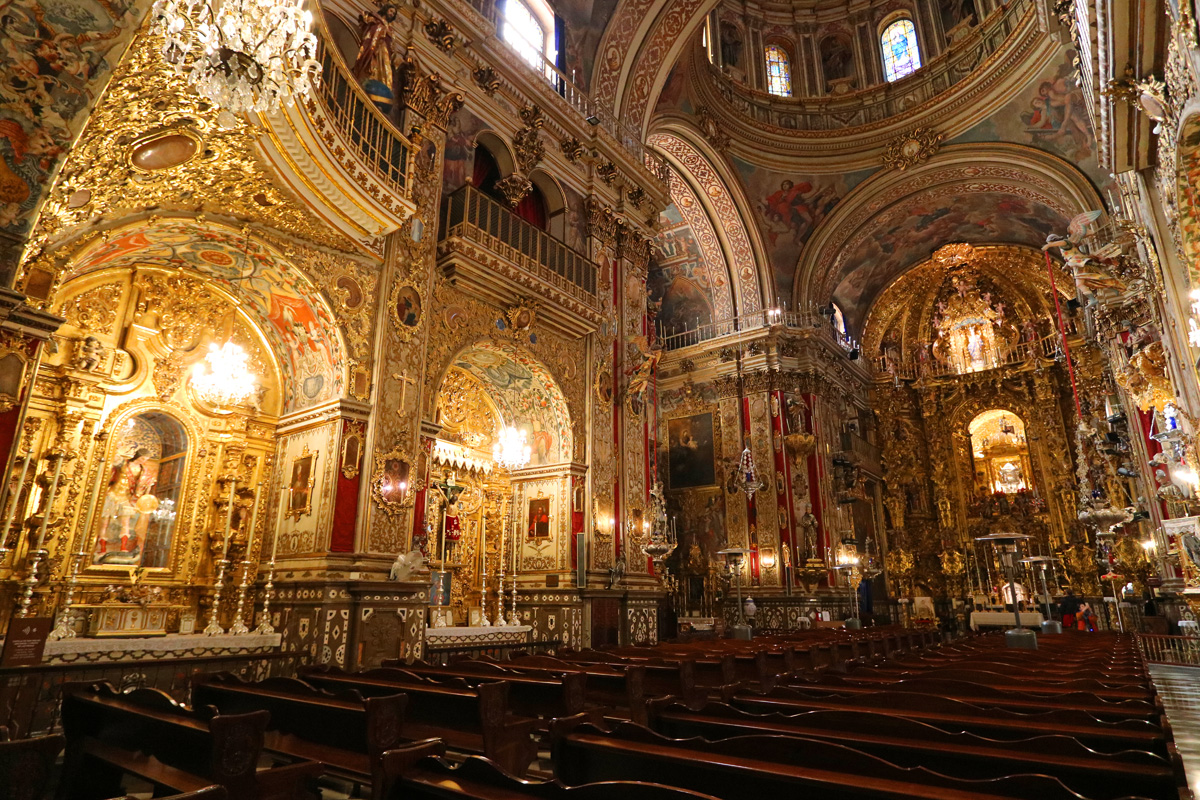
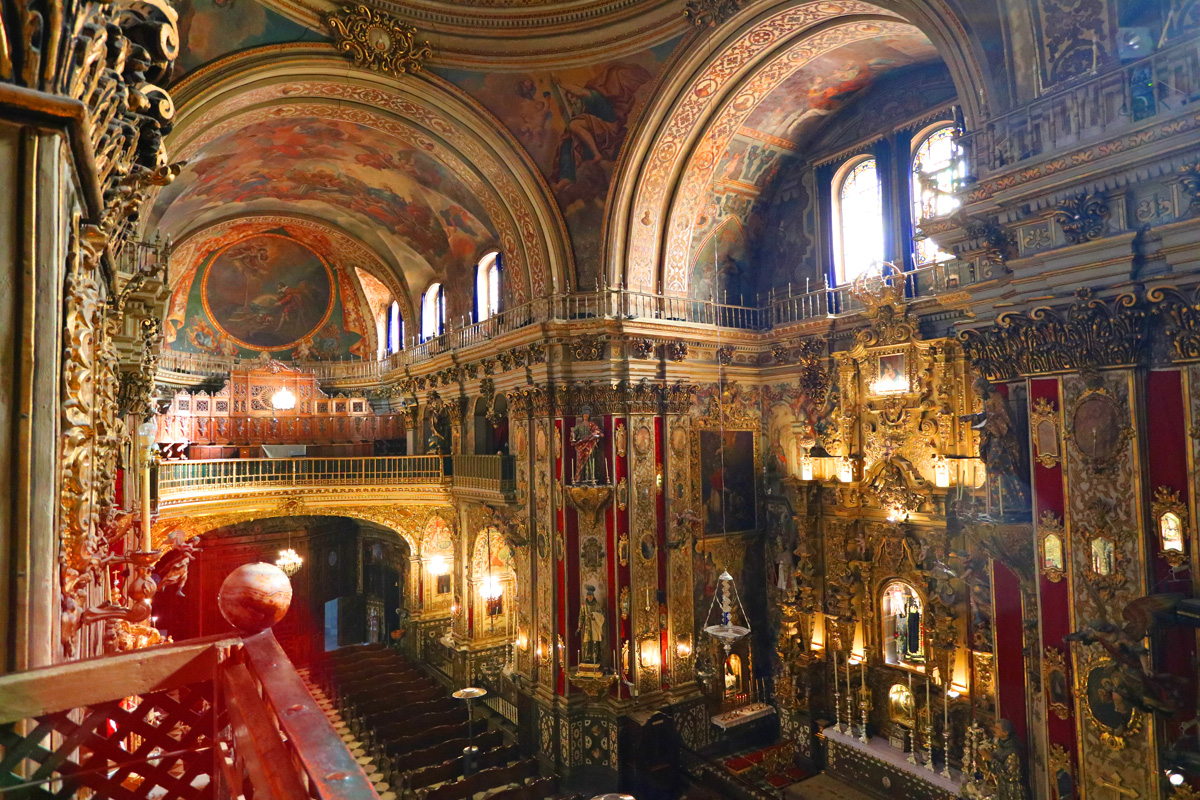
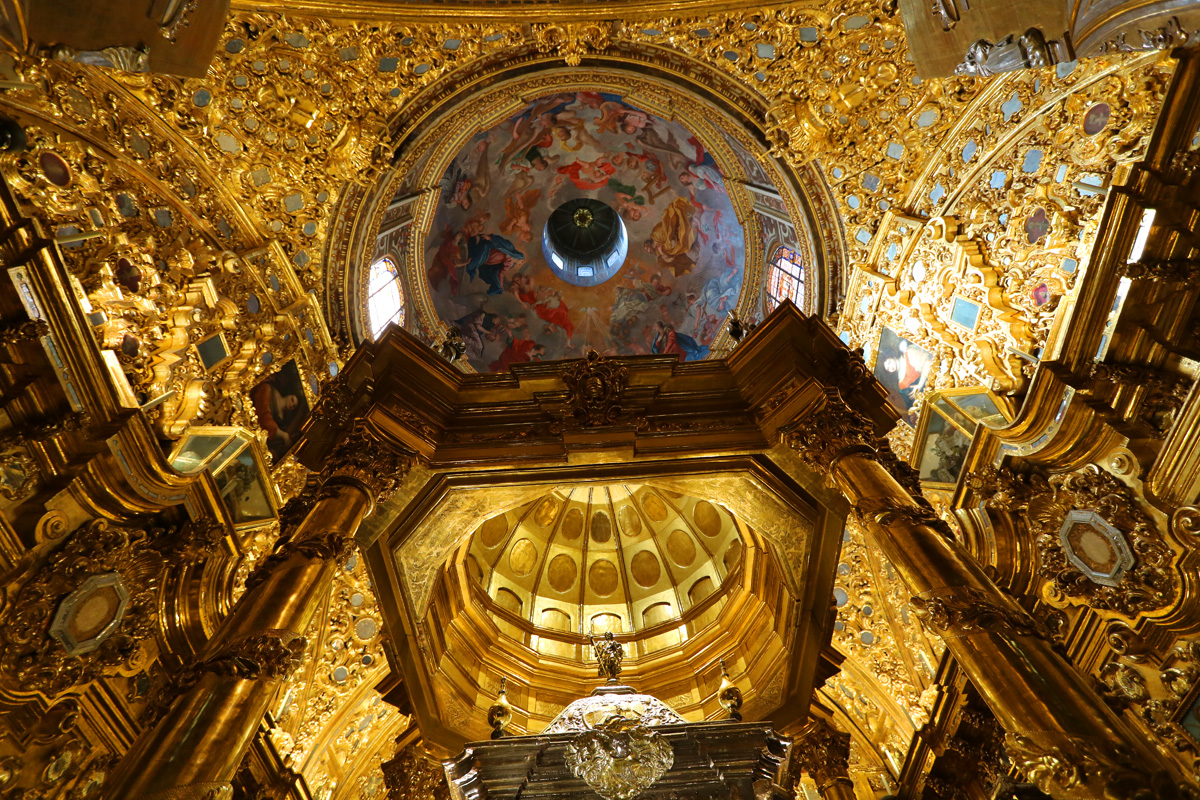
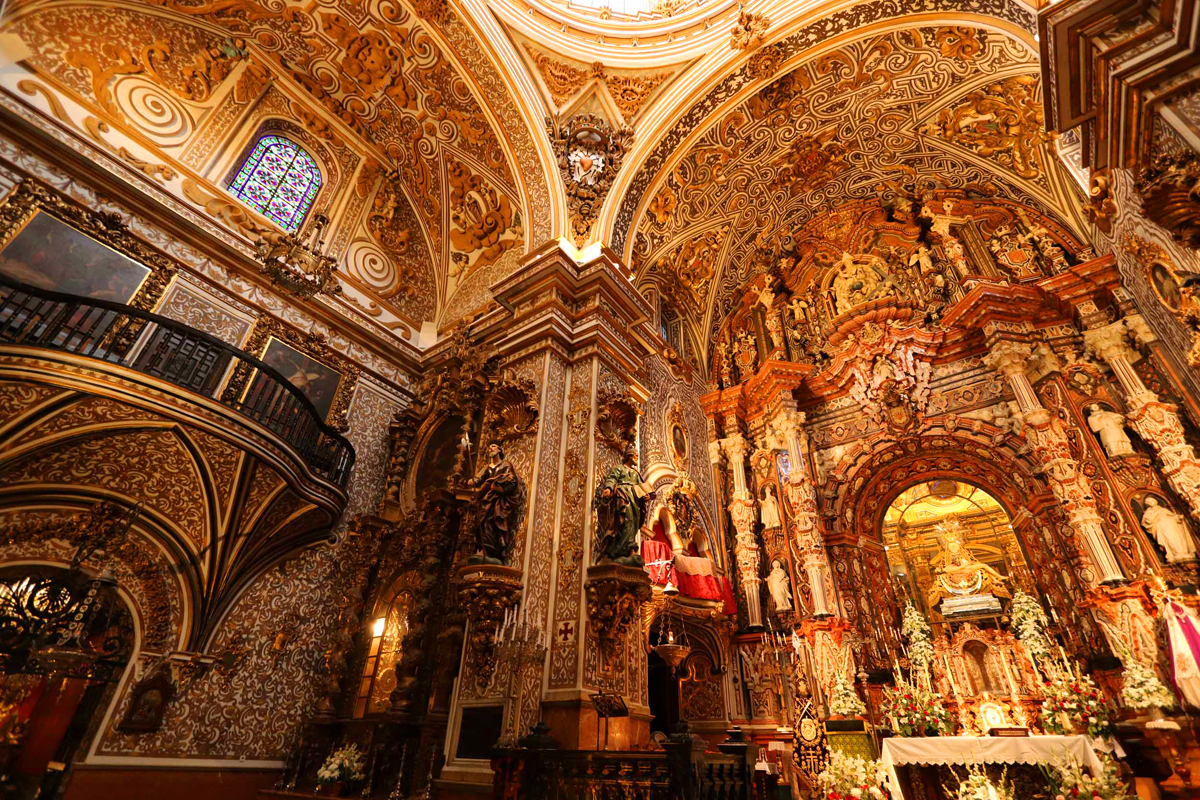
The Basilica was built in the mid-1700’s (1737-1759) at the peak of the Spanish Baroque Period. At the time, there was a lot of gold being brought over from the New World and the builders of this Basilica filled every inch of the Basilica with it. It is filthy in its opulence. From the moment you step into this Basilica you will be gasping with awe. It’s not just the gold (which seems to cover almost everything), it’s the colourful frescos, the marble, the dark wood, the domes and arches and the light streaming through the windows. The beauty is dizzying.
More here on the Basilica of San Juan de Dios (sorry, there’s no way of seeing this one for free).
8. A walk around the Alhambra
The Alhambra isn’t just an incredible historical site, it is also surrounded by nature and a unique microclimate.
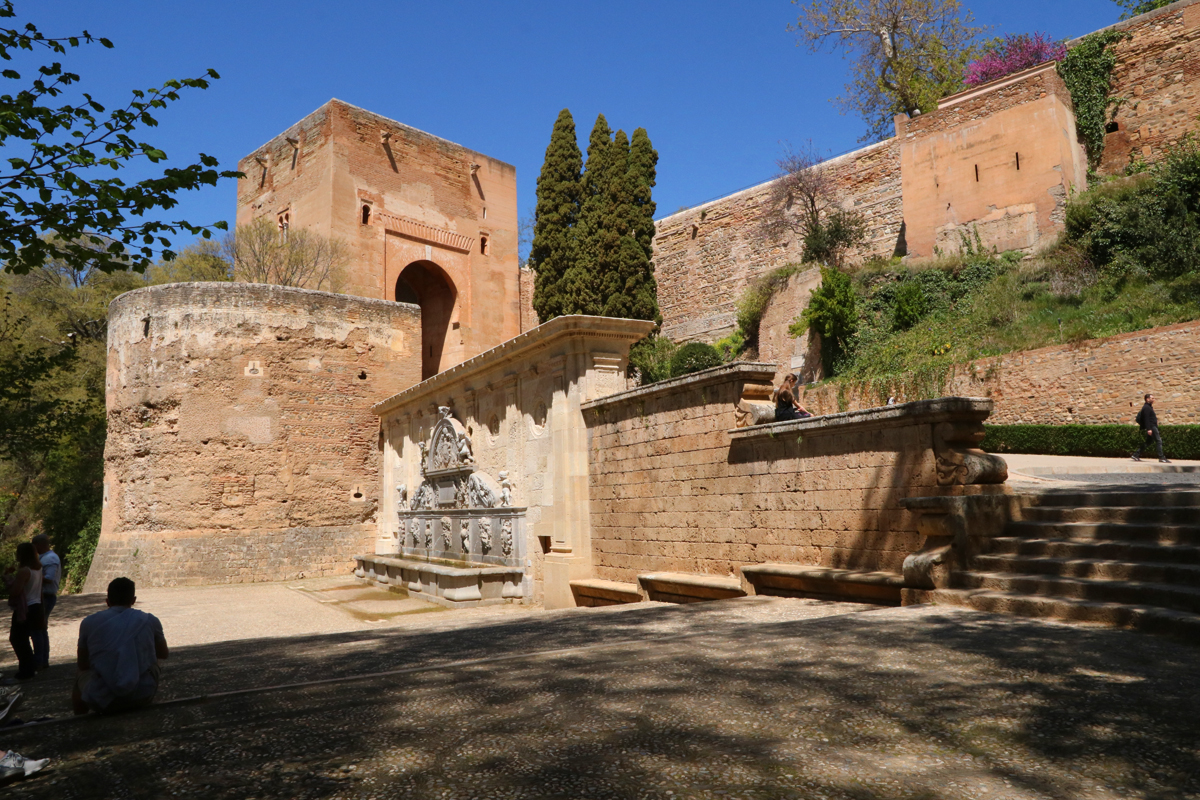
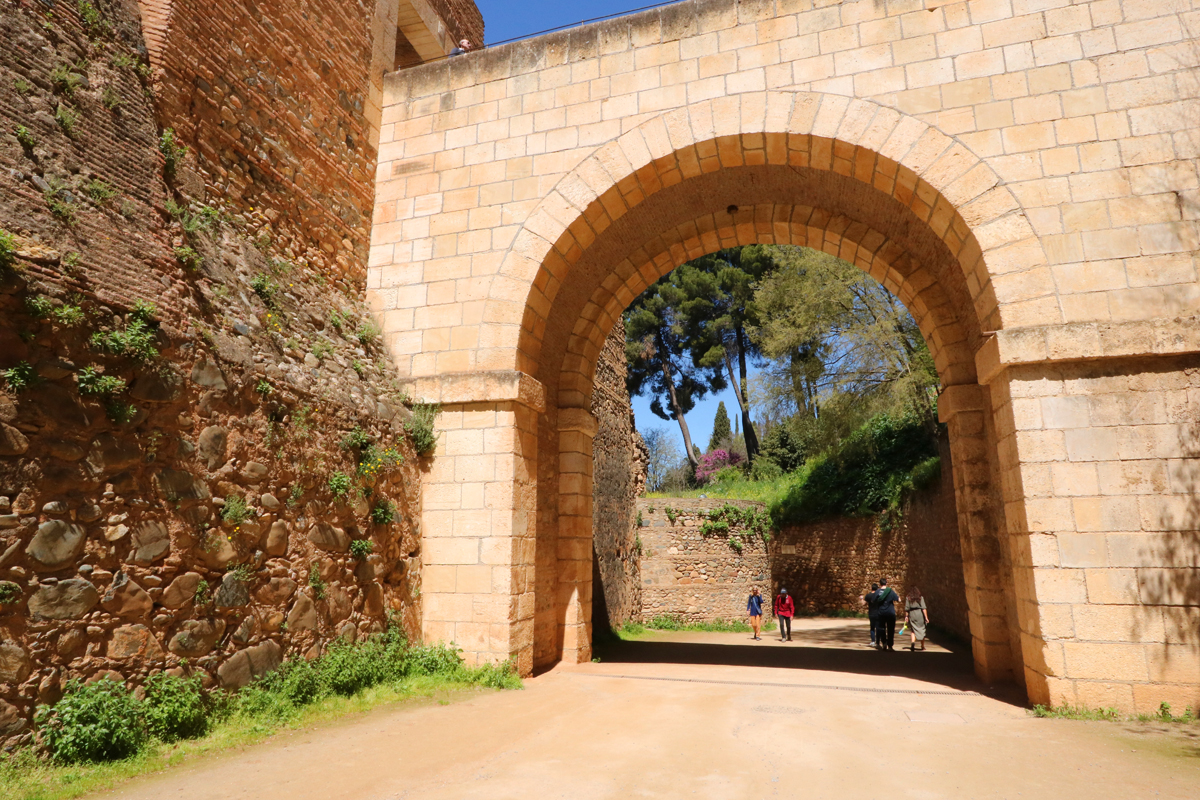
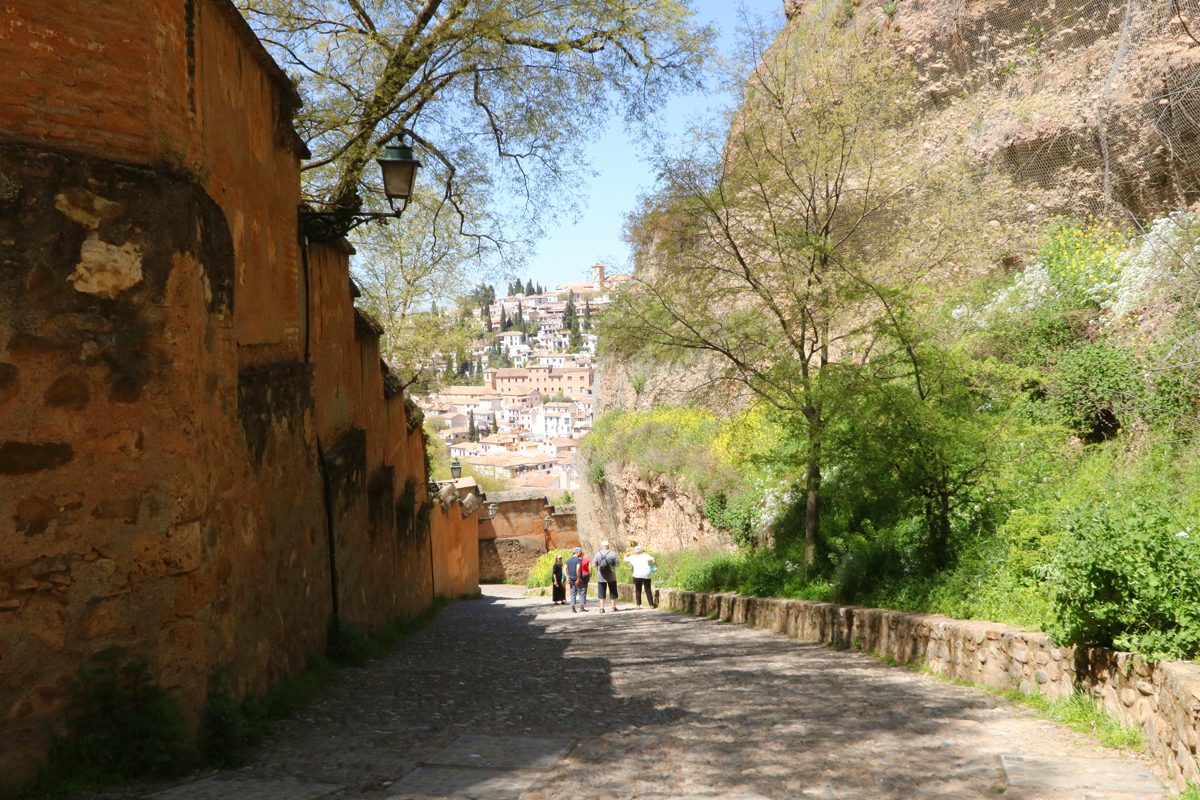
The walk starts at Plaza Nueva in the old town, leads you through the Puerta de las Granadas, past the Puerta de la Justicia and up to the main entrance of the Alhambra. You then descend on the other side of the Alhambra where you have great city views and witness the streams and waterfalls emanating from the Alhambra. It’s one of Granada’s great scenic walks.
A post and video highlighting the walk here.
9. The Sacromonte Caves Museum
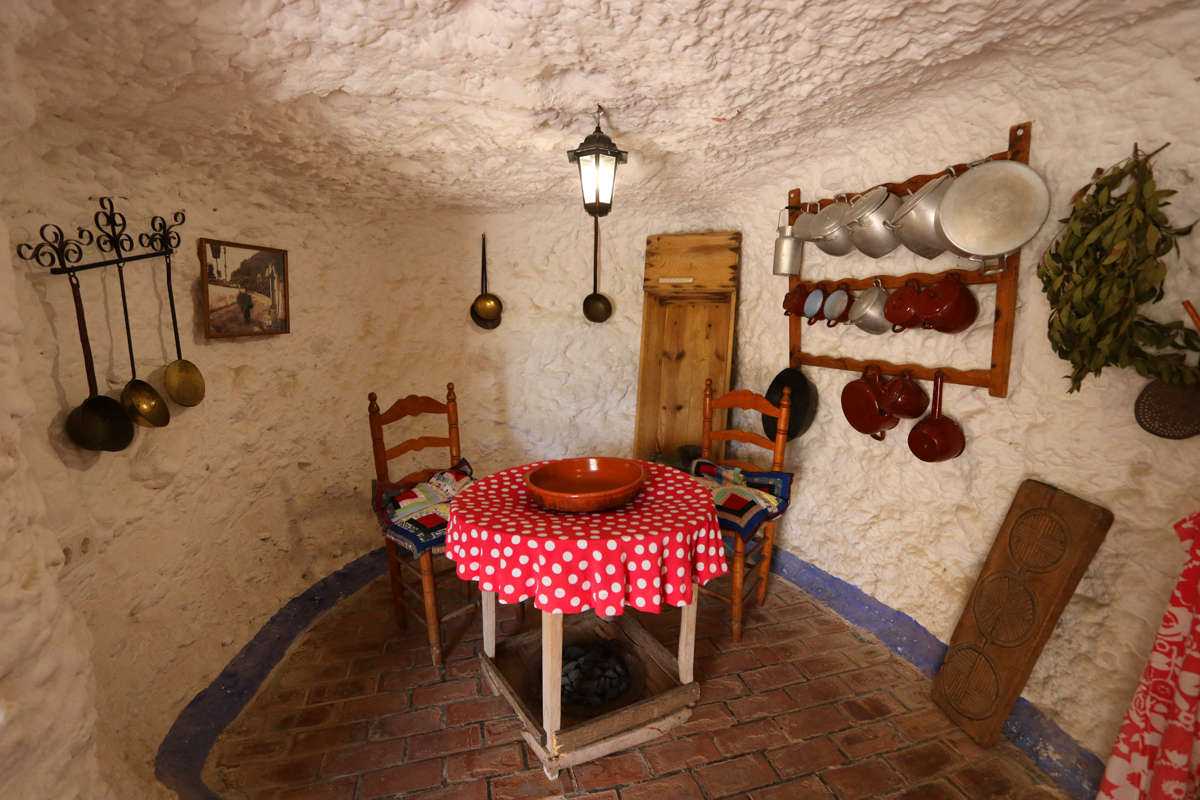
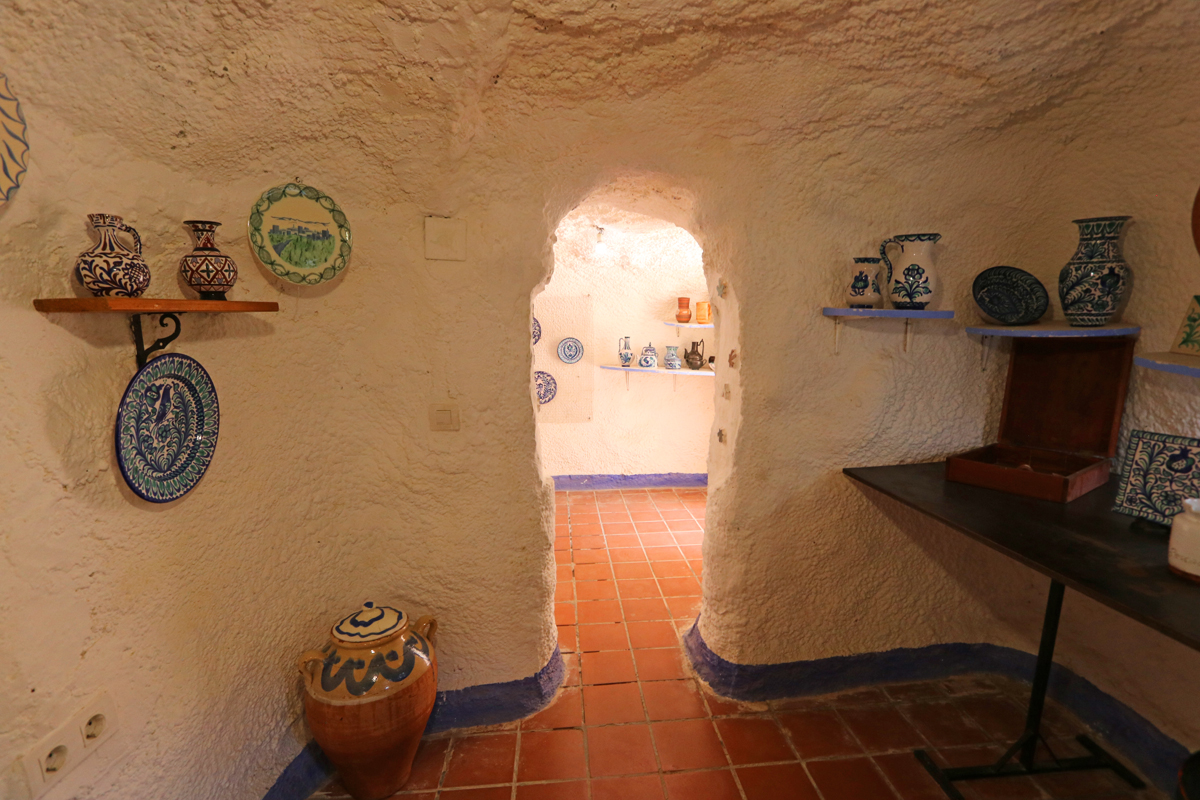
Sacromonte is known as the Gypsy quarter, famous for flamenco (there are lots of live venues where you can see flamenco) and for the caves built into the hill where most of the inhabitants of Sacromonte live.
A highlight of the district is the Sacromonte Caves Museum which is an open-air museum showing you how the Roma lived about 100 years ago. It also has a mirador with great views of the Alhambra across the way.
All about the Sacromonte Caves Museum.
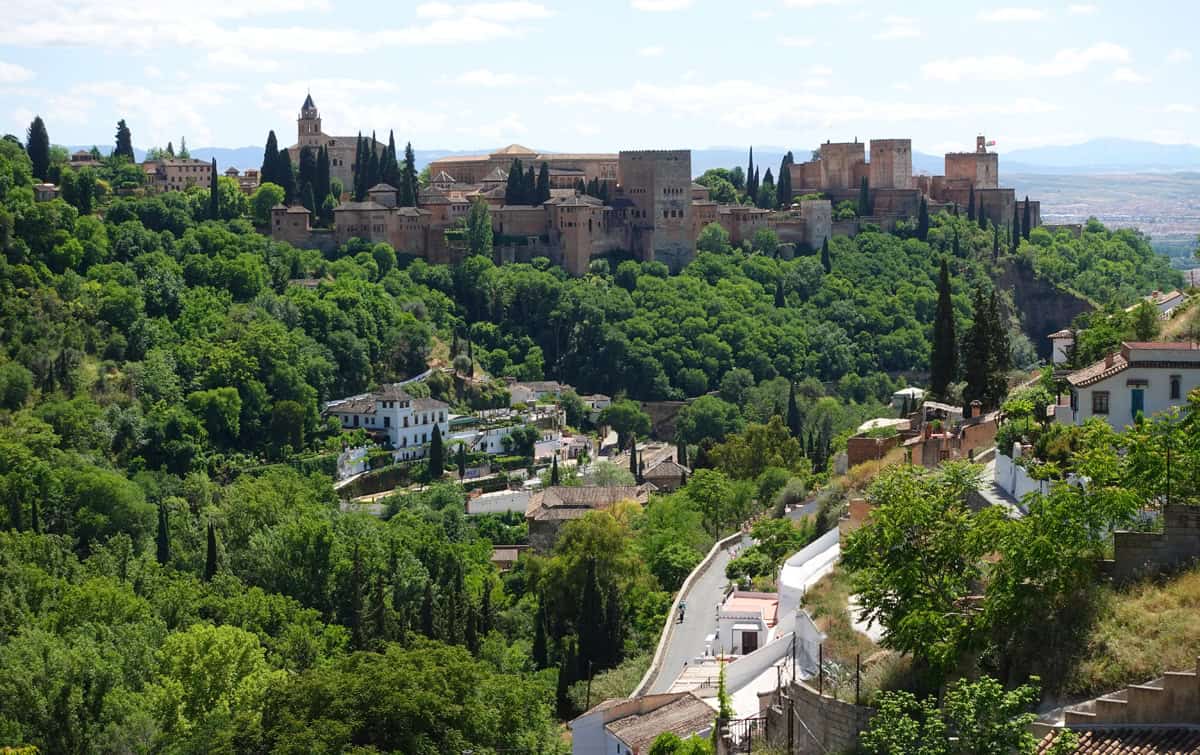
10. Walk the Vereda de Enmedio
After you’ve seen the above Sacromonte Caves Museum, you can take this incredibly scenic lane back towards the Albaicin. It’ll take you about 15 minutes and you’ll have incredibly scenic views the whole way. Most people don’t know about this route (Tour guides do though – you often see tours being led through here, especially around sunset time).
I cover the Vereda de Enmedio in this post.
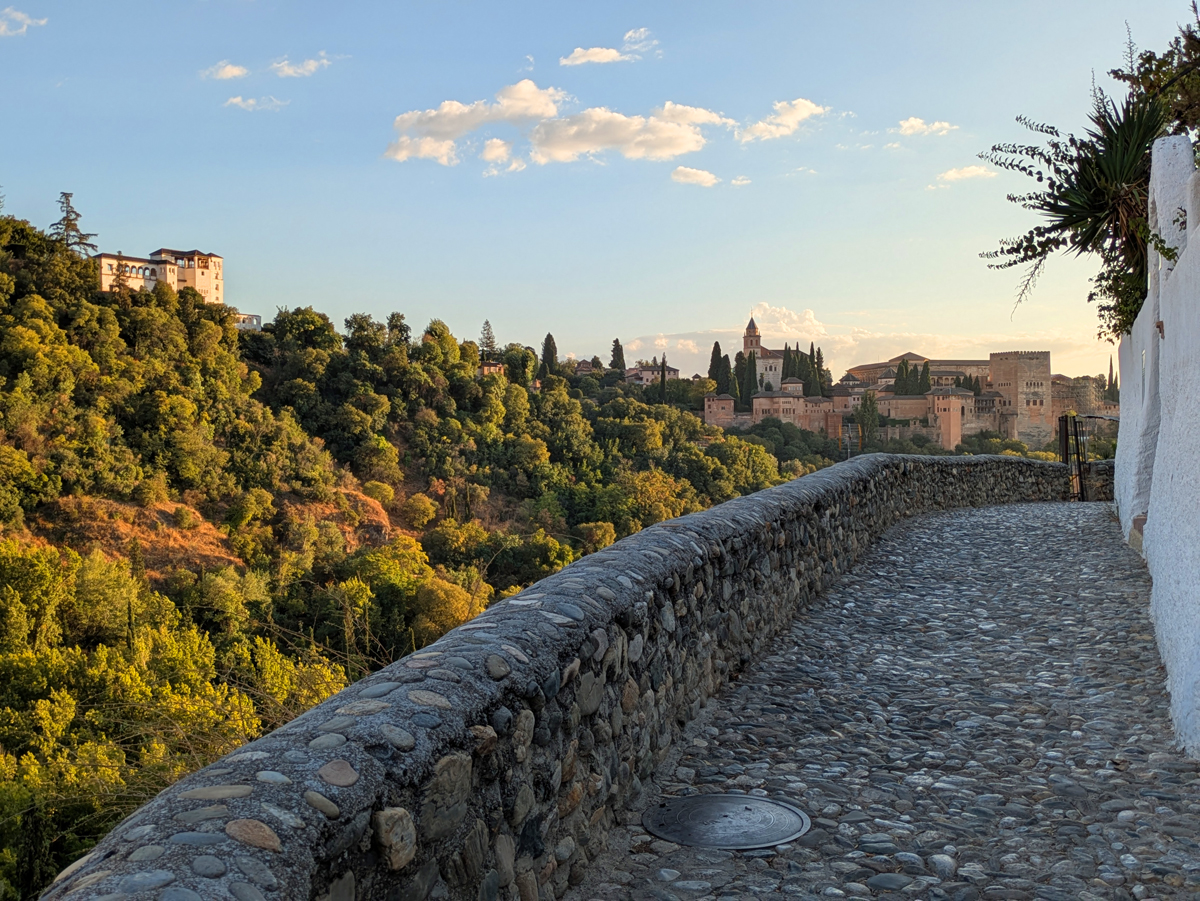
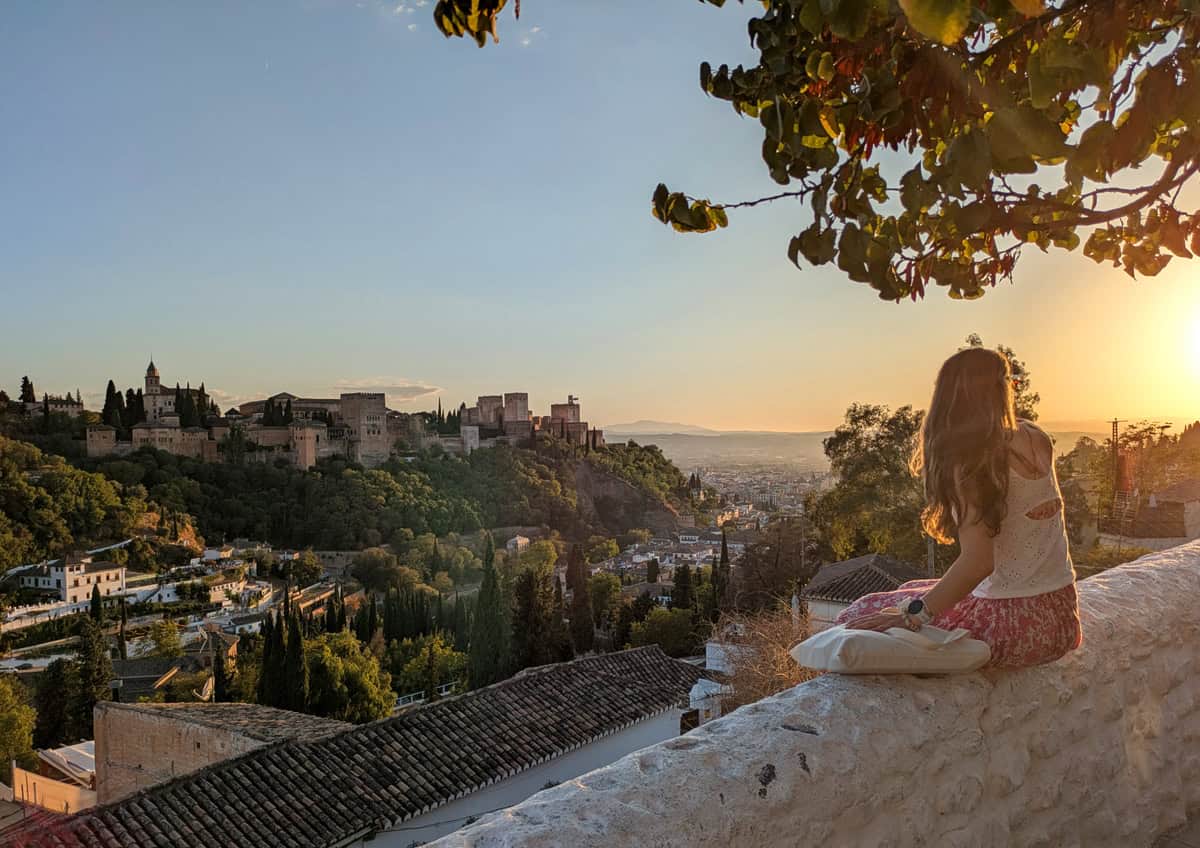
11. Carmen de los Martires
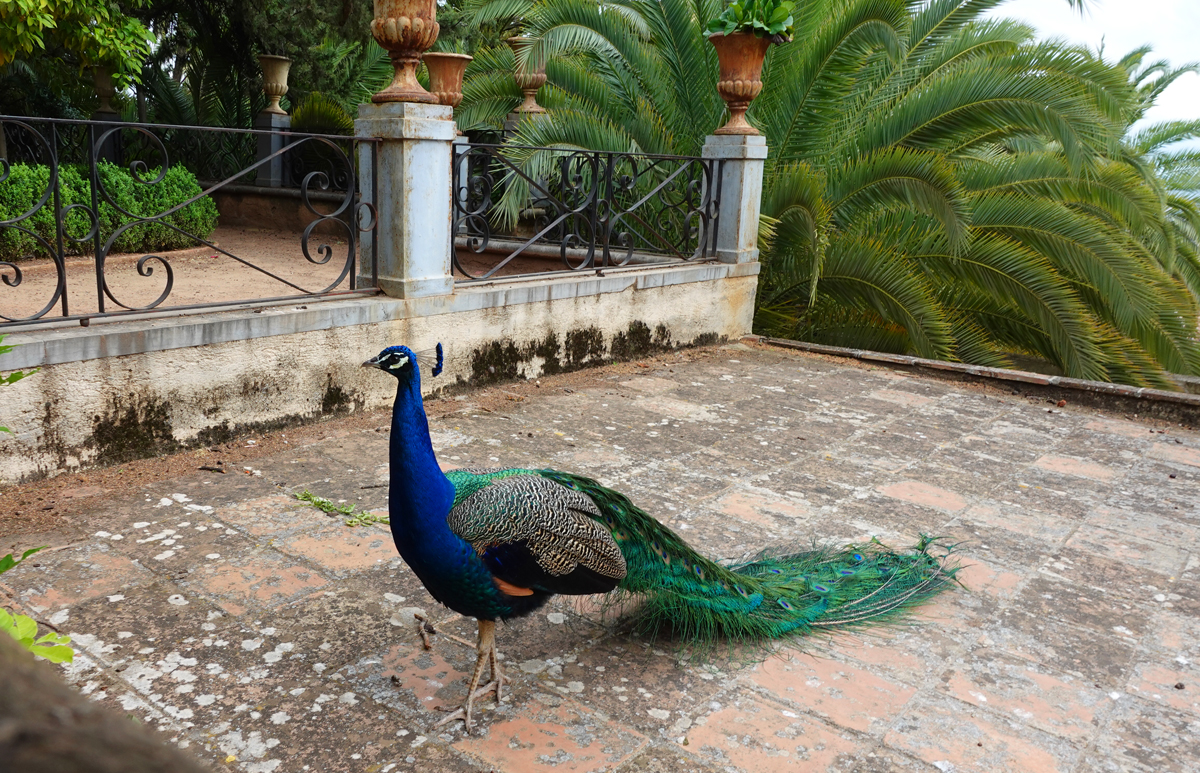
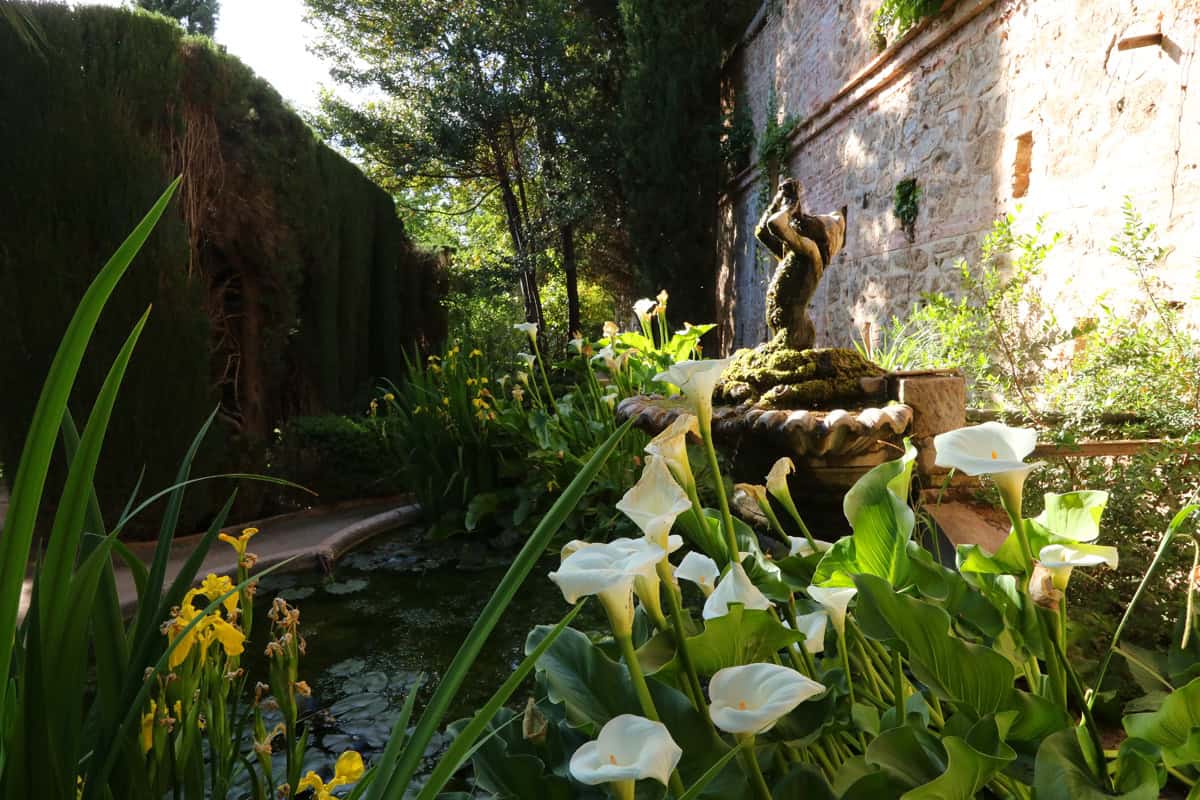
A large, beautiful park overlooking the city. You’ll see pools, colourful peacocks, an old aqueduct, and can visit a 19th century Palace with Mudejar features. The park has 7 hectares of green space featuring fountains, flowers, trees and sculptures. It really is quite impressive and it is FREE. Located about 10 minutes from the Alhambra.
All about Carmen de los Martires.
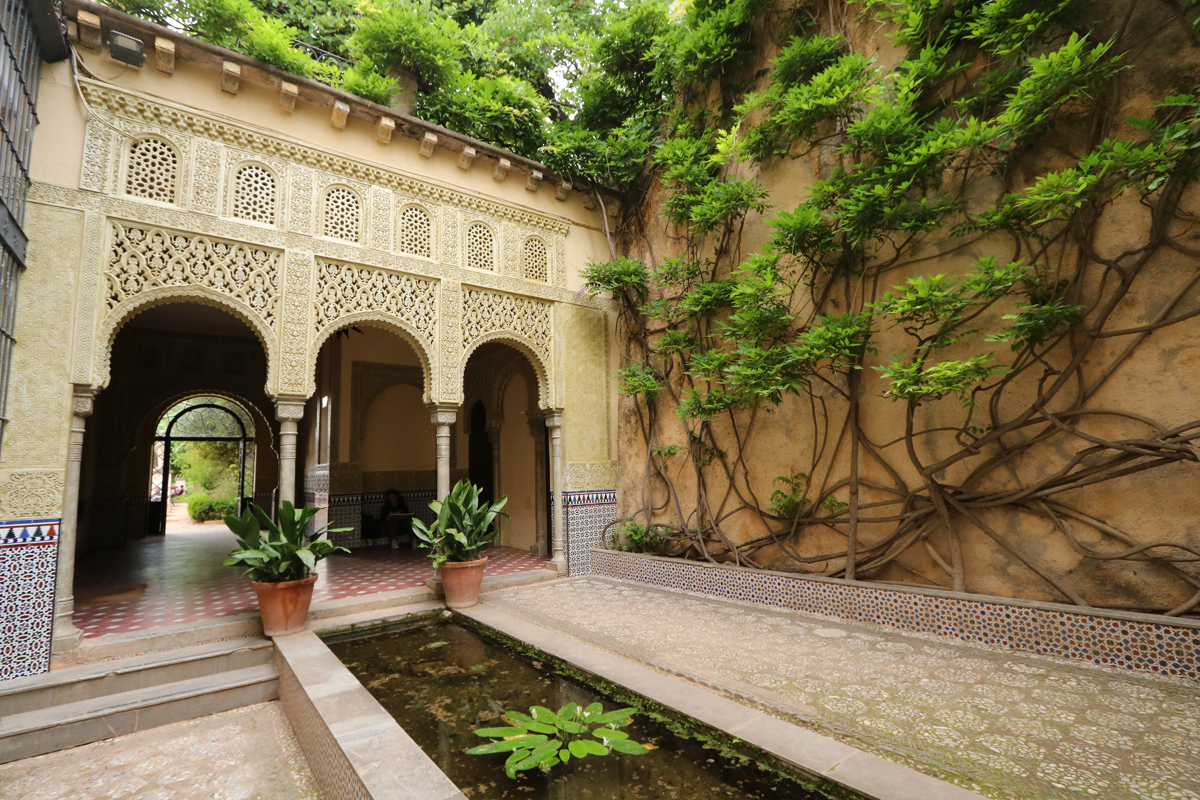
12. Church of Virgen de las Angustias
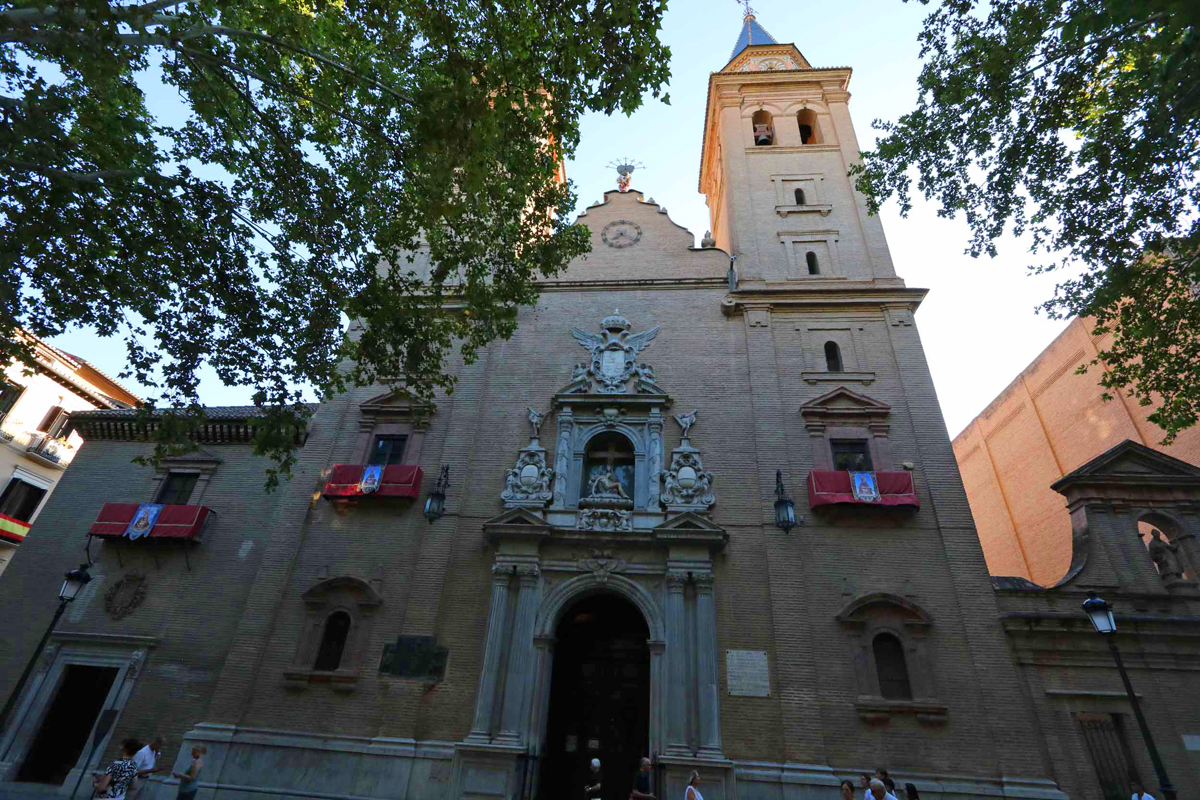
This beautiful basilica (built starting in 1617) is dedicated to Our Lady of Sorrows, patroness of the city. Little known to most visitors, it is one of Granada’s most beautiful religious buildings. It is also free to visit.
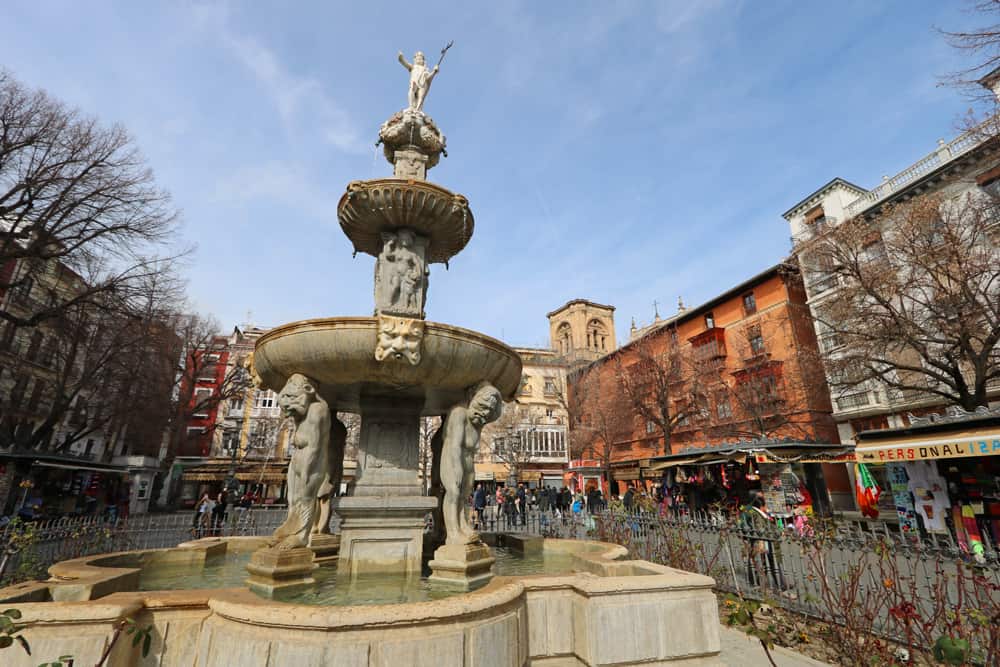
Next to the church are three other attractions of the city: The Carrera de la Virgin (a nice promenade which I call “La Rambla” of Granada), the Fuente de las Granadas (an emblem of the city) and the Roman Bridge (built in the 12th century, possibly over the ruins of a Roman bridge).
13. El Bañuelo
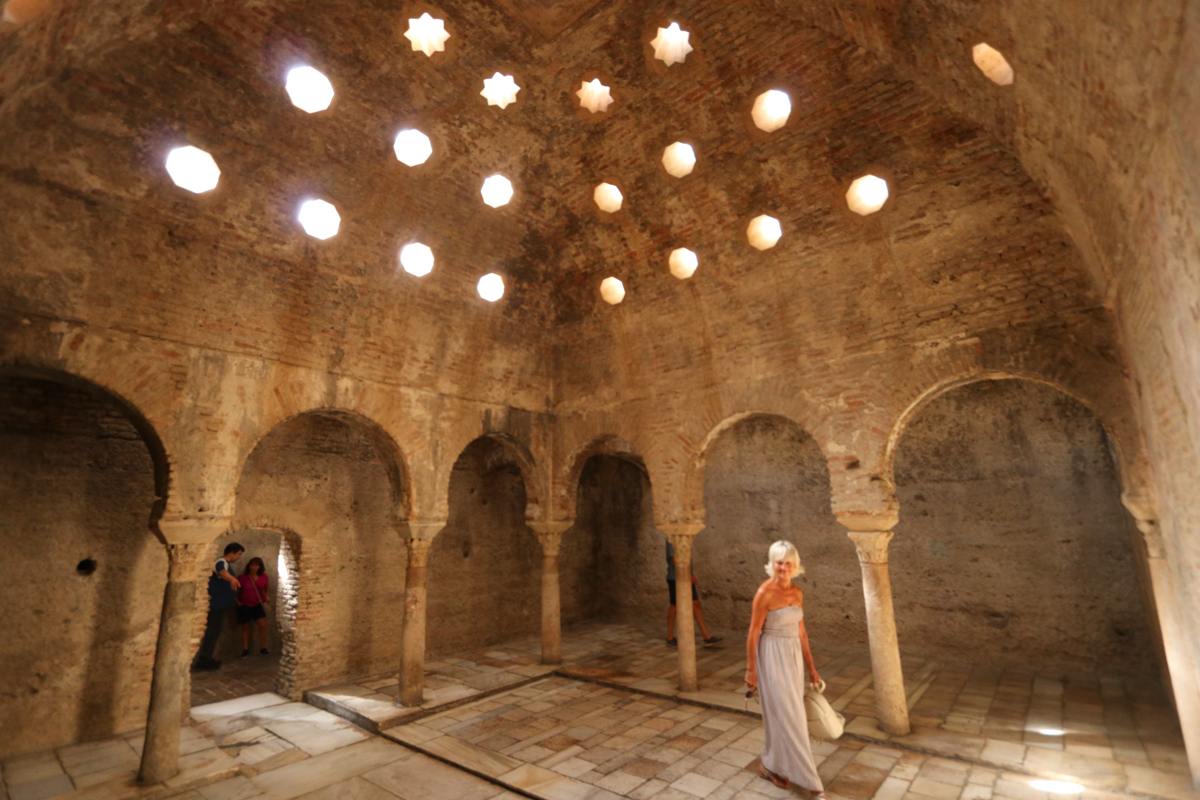
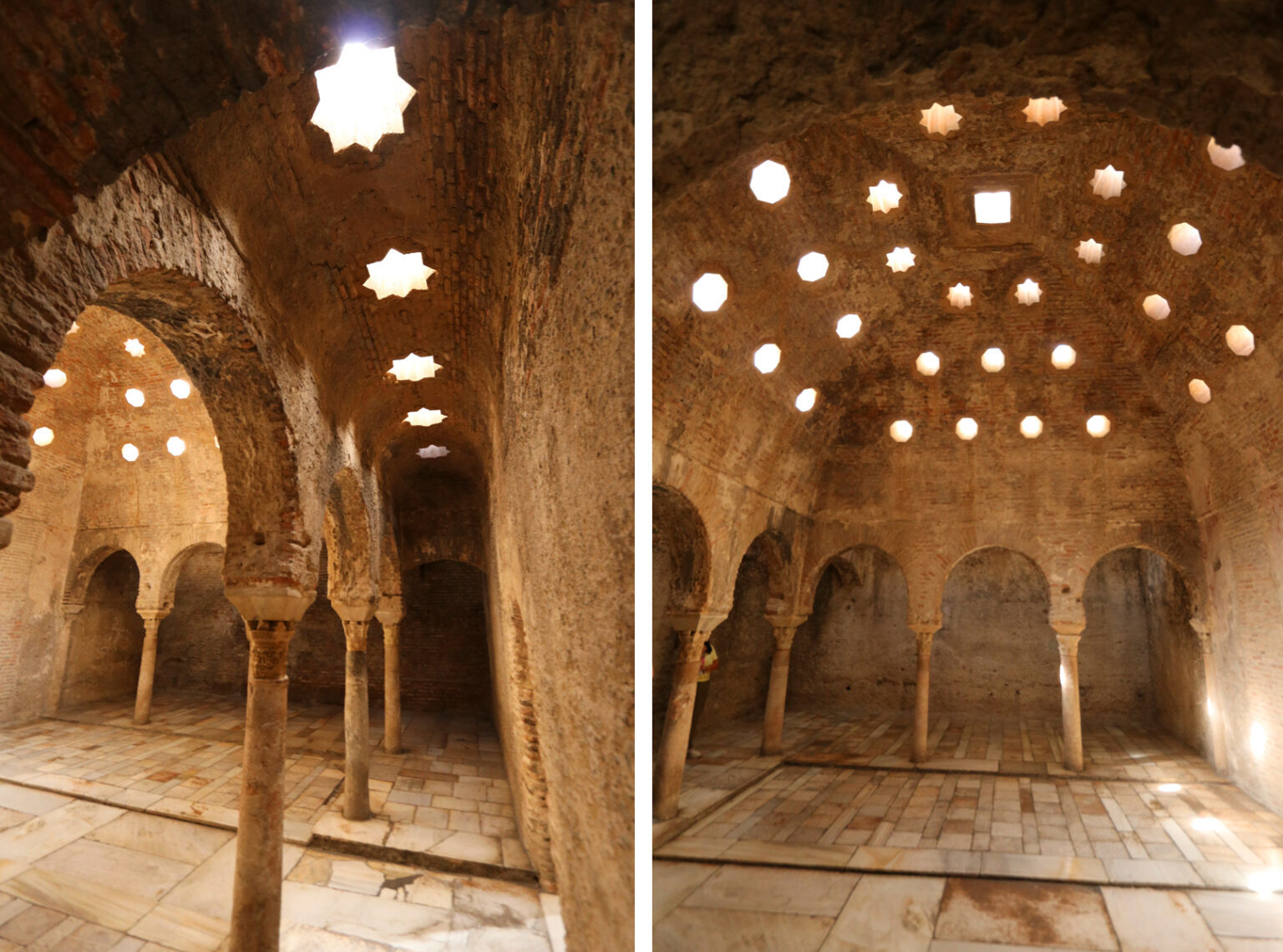
At the bottom of the Albaicin, they are one of the best-preserved Arab baths in Spain, dating back to the 11th century. El Bañuelo is a National Monument and was designated as an Asset of Cultural Interest.
How to visit: El Bañuelo is included as part of 2 package ticket deals. 1) Andalusian Monuments (€ 8.48 / person): includes Dar al-Horra Palace, Corral del Carbón, Horno de Oro and El Bañuelo. 2) the Dobla de Oro package (€ 30.48) which includes the Alhambra, Dar al-Horra Palace, Corral del Carbón, Horno de Oro, Casa Zafra, Casa del Chapiz, Qubba del Cuarto Real de Santo Domingo and El Bañuelo. Note however: you can visit El Bañuelo FREE on Saturdays.
Tip: the ideal time to visit is 12 noon because of the way the light enters into the baths.
14. The walking highlights of the Center
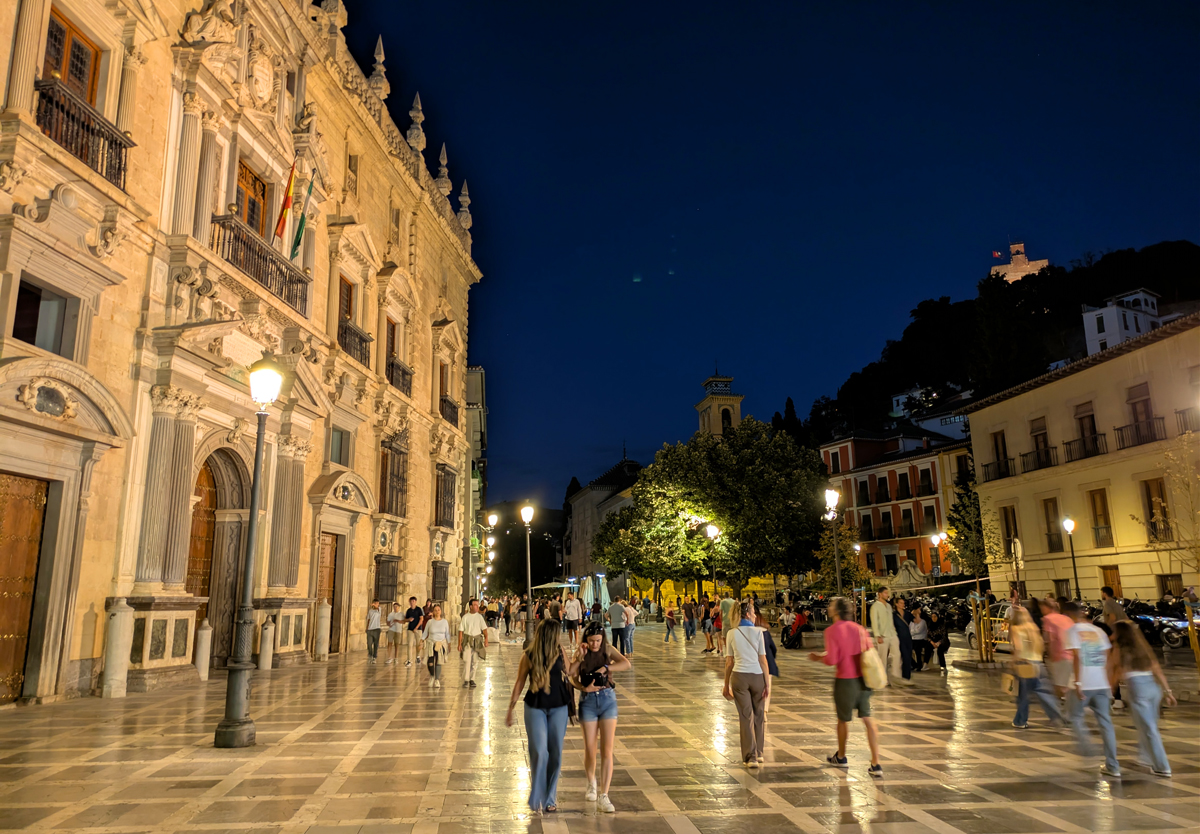
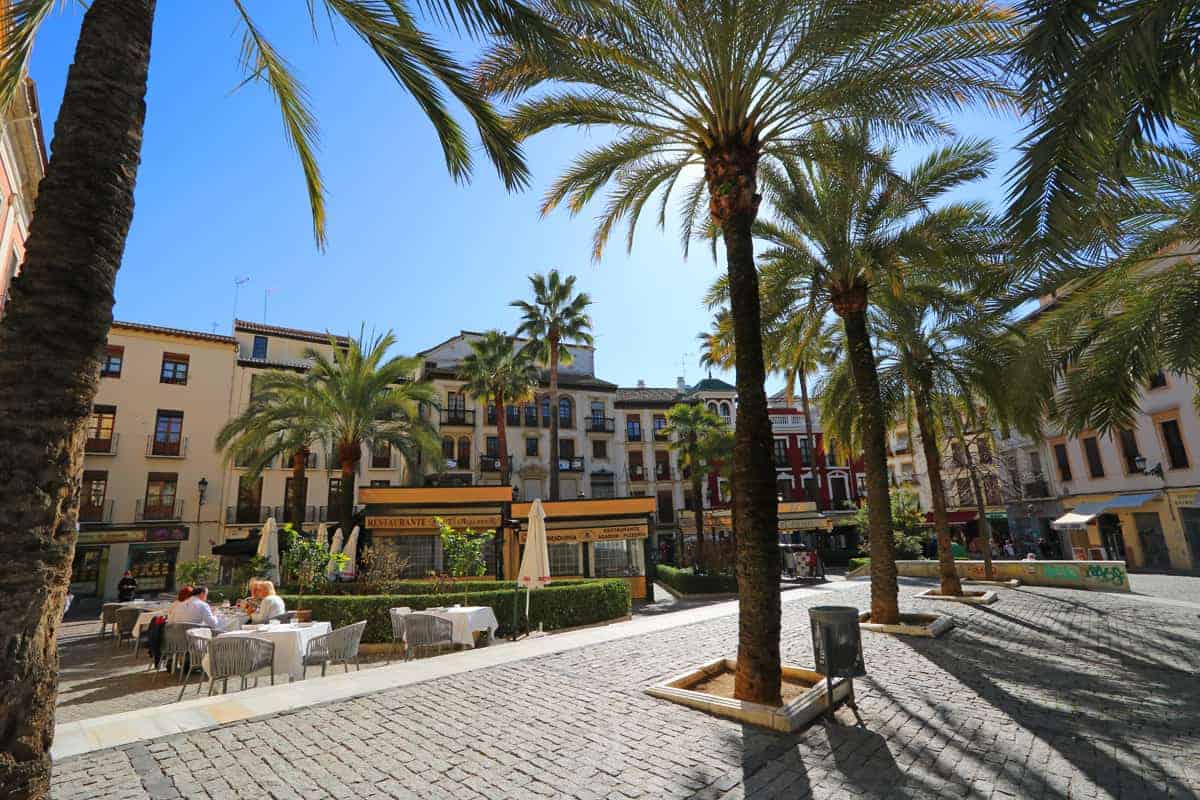
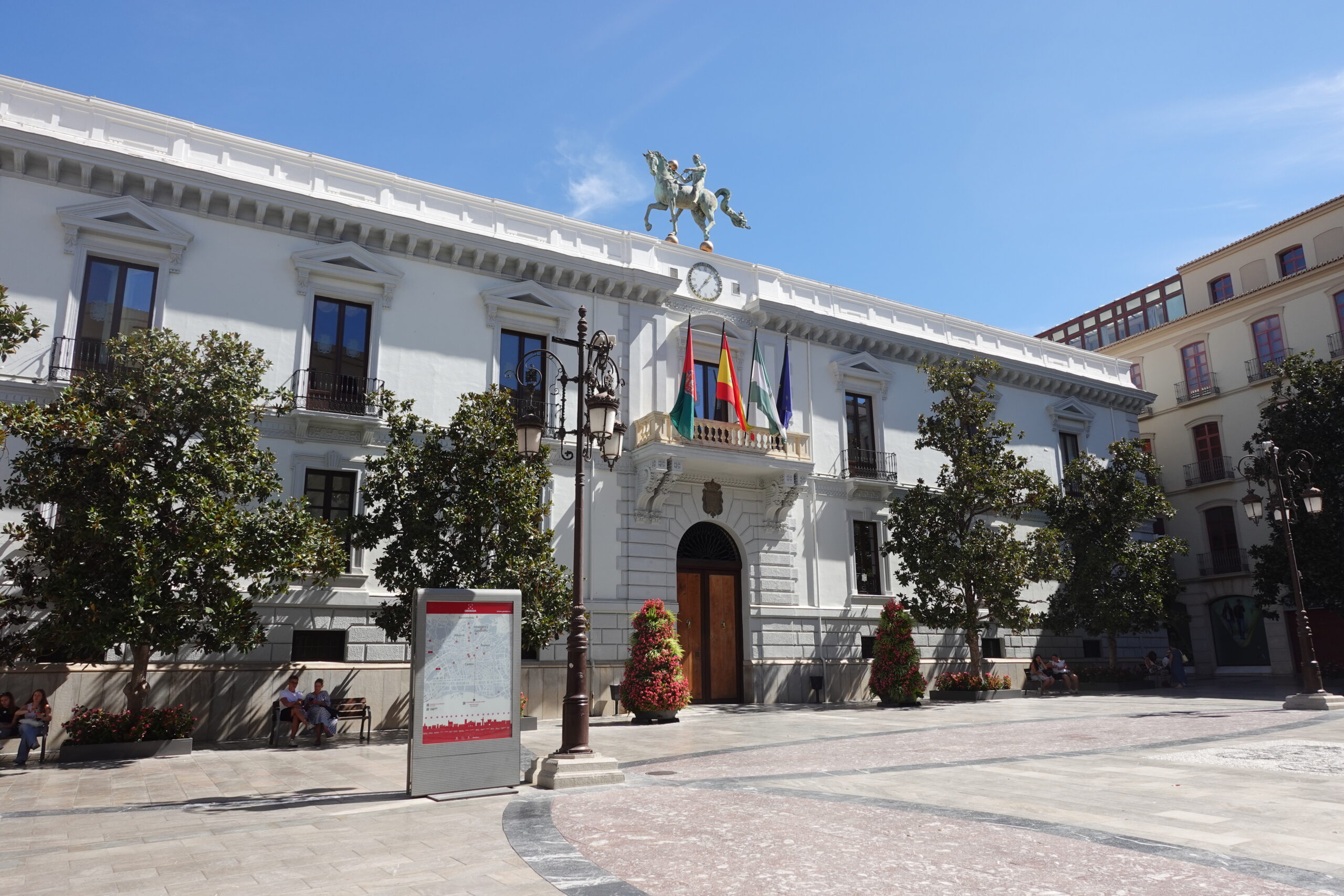
I’ve mentioned the Cathedral; it is the center point of an attractive old town. Suggested itinerary: Cathedral to the Alcaiceria (a Moroccan-type souk that’s popular with visitors). From there Plaza Bib Rambla (a beautiful square highlighted by a fountain), Granada City Hall, El Corral del Carbón, Plaza Isabel Catolica, back towards the Cathedral via the Grand Via, stopping to see the Palacio de la Madraza (impressive outside but you can walk in) and the exterior of the Royal Chapel. Those are the basics and won’t take you long, but if you have more time wander to Plaza de la Romanilla, see the Botanical Garden of the University of Granada and the Convento de la Encarnación de Granada. There’s lots to see but those are the highlights and it’s in a concentrated area.
15. The Best Viewpoints of the Albaicin
The Albaicin is known for its viewpoints, most looking across towards the Alhambra (on a hill across from the Albaicin) but also over the city center. If you are interested in views, you could spend several hours discovering the viewpoints of the Albaicin.
16. Palacio Dar Al-Horra
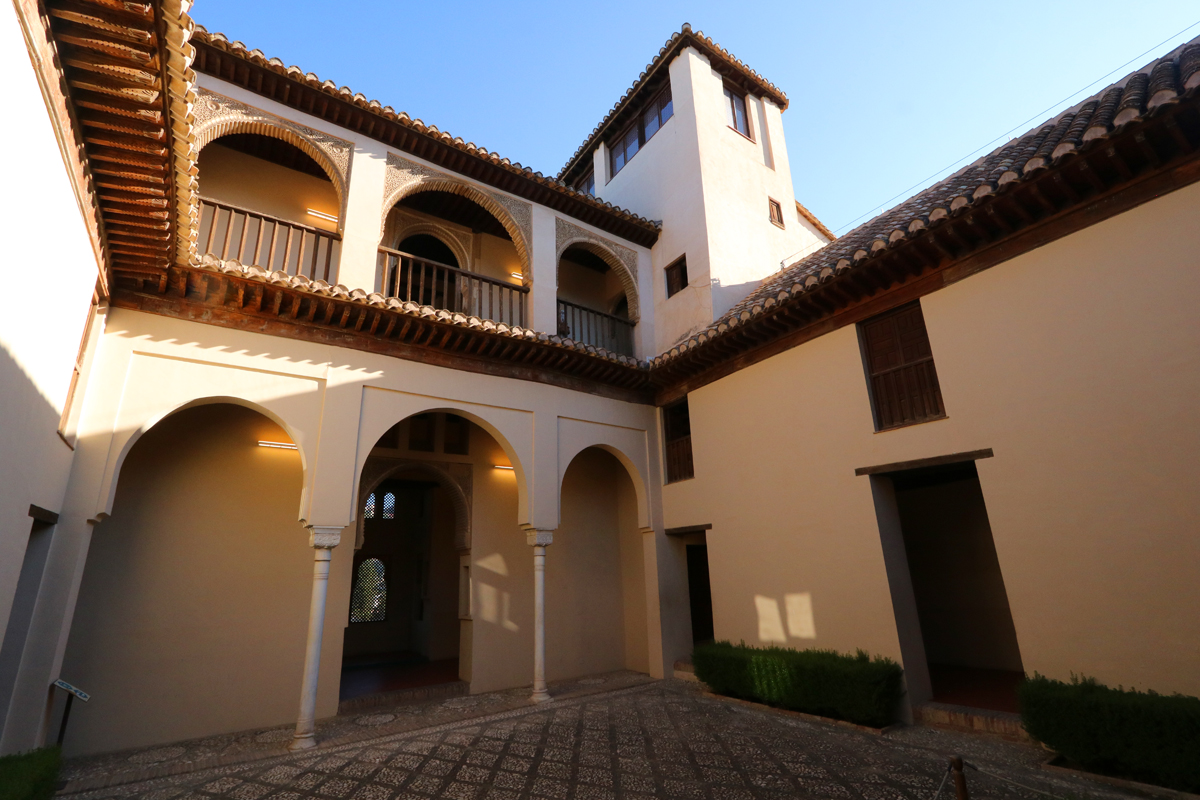
Of all the Moorish-era palaces/houses in Granada (excluding the Alhambra), Palacio Dar al-Horra is the most impressive in my opinion. This palace was built as the residence of the last Nasrid king of Granada. It has 2 floors which include Islamic inscriptions and architecture. Part of what makes it impressive is its location along the old walls of the fortified quarter, its views looking out towards the San Cristobal church on a hill across from the palace.
Note: best seen on Saturdays when it is FREE.
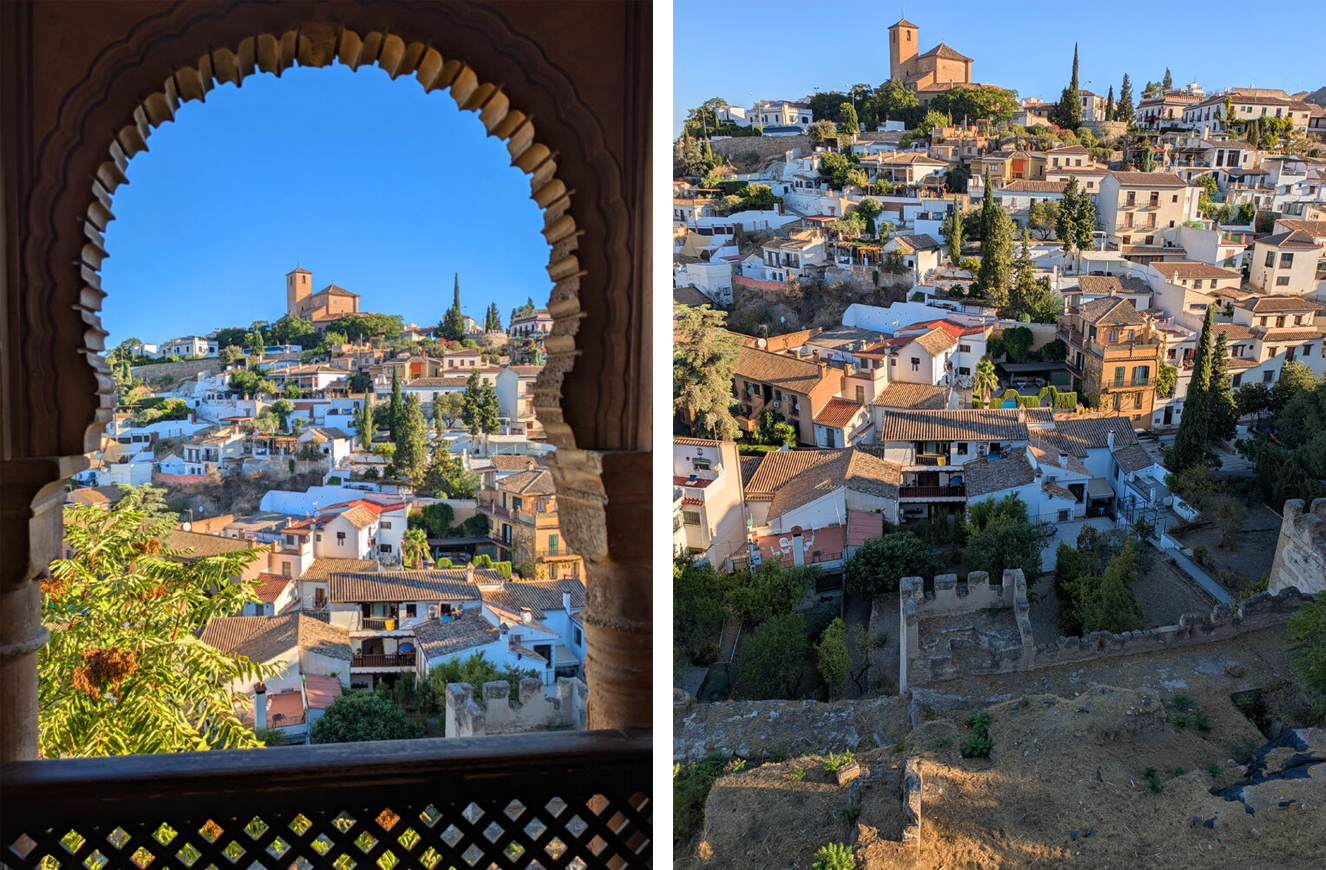
17. Casa del Chapiz
Built in the 1500’s, this “casa” is actually composed of 2 buildings constructed in Mudejar style. But what make Casa del Chapiz remarkable are the beautiful gardens and the views towards the Alhambra. A beautiful, peaceful place.
How to Visit: You can visit and pay by cash (2 Euros in 2026). But you can see it for FREE on Saturdays.
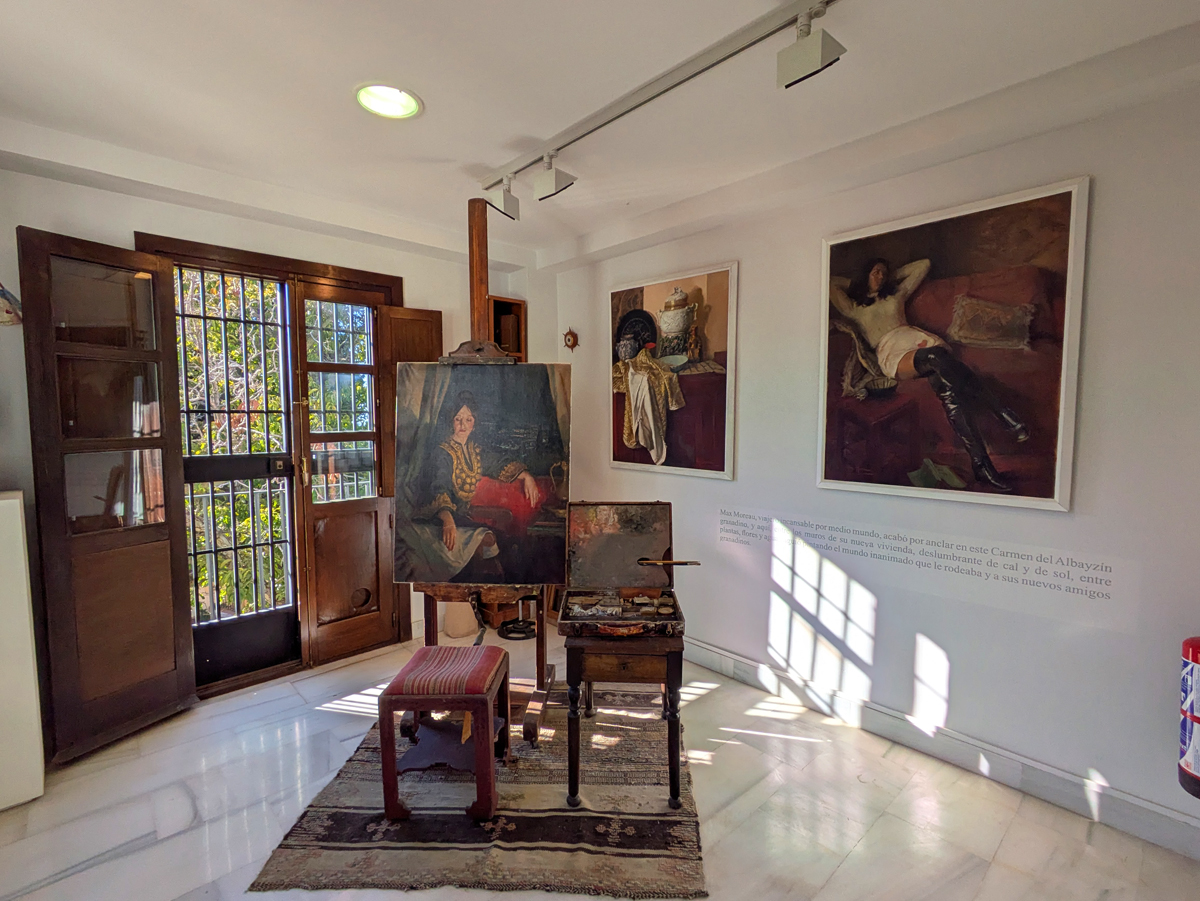
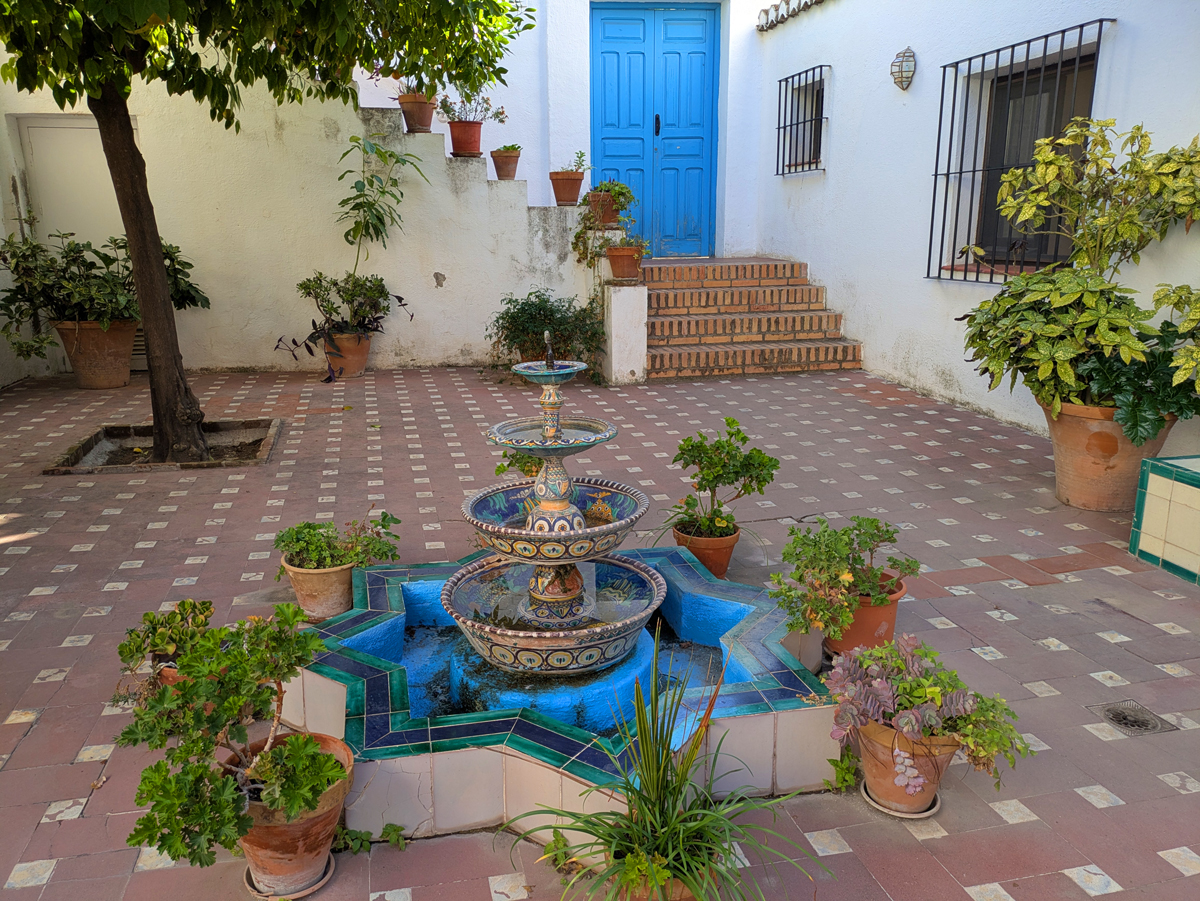
18. Carmen de los Geranios – Casa Museo de Max Moreau
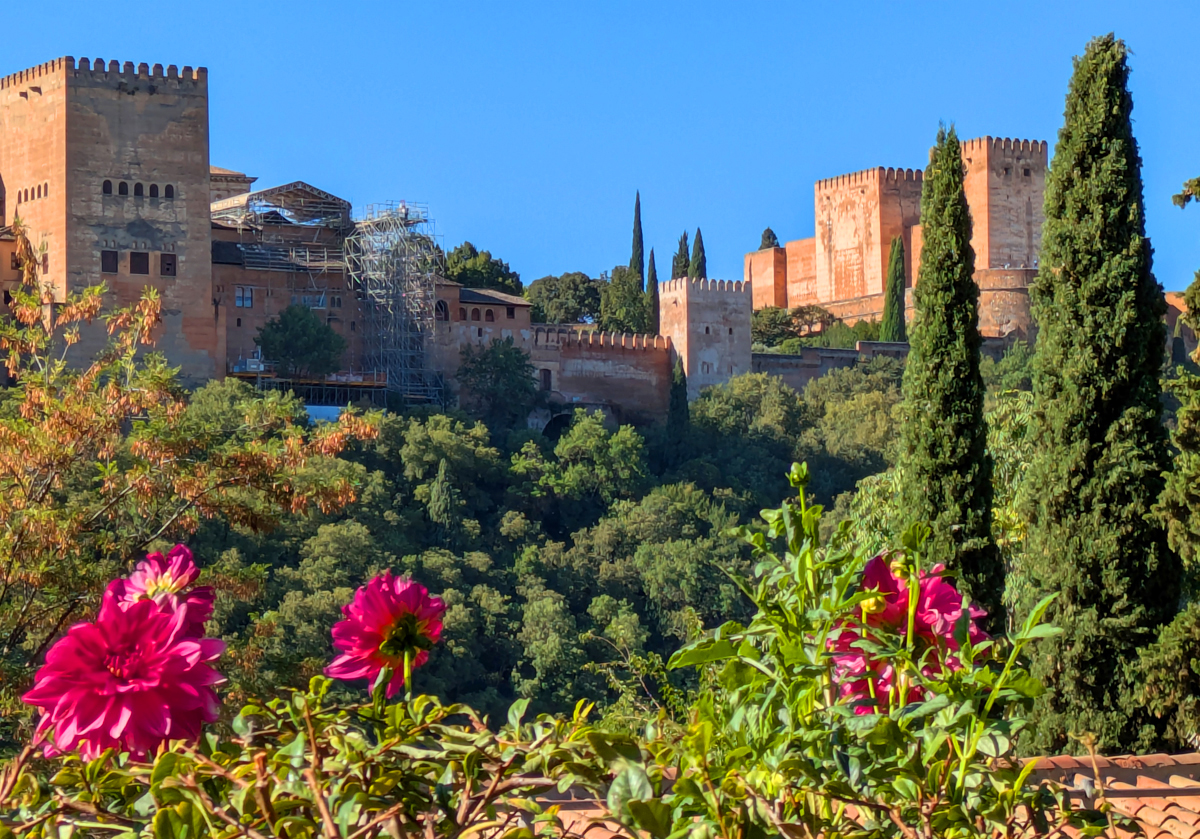
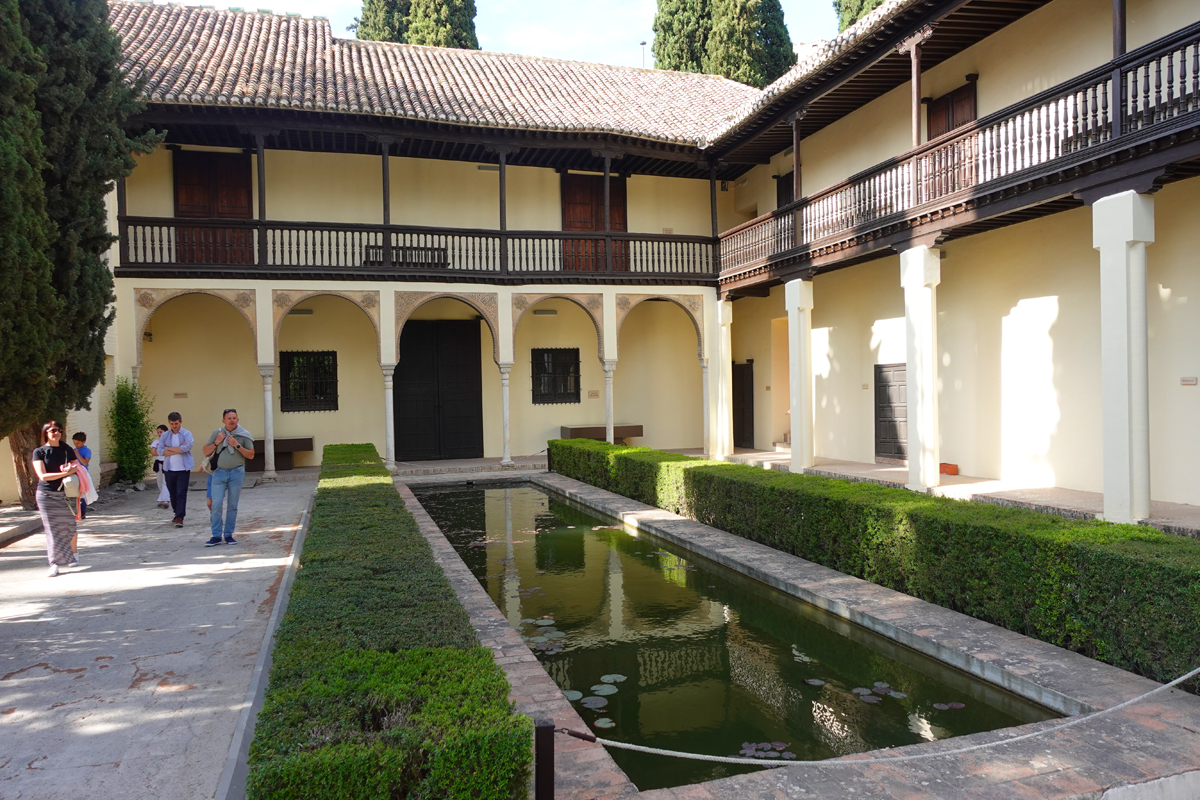
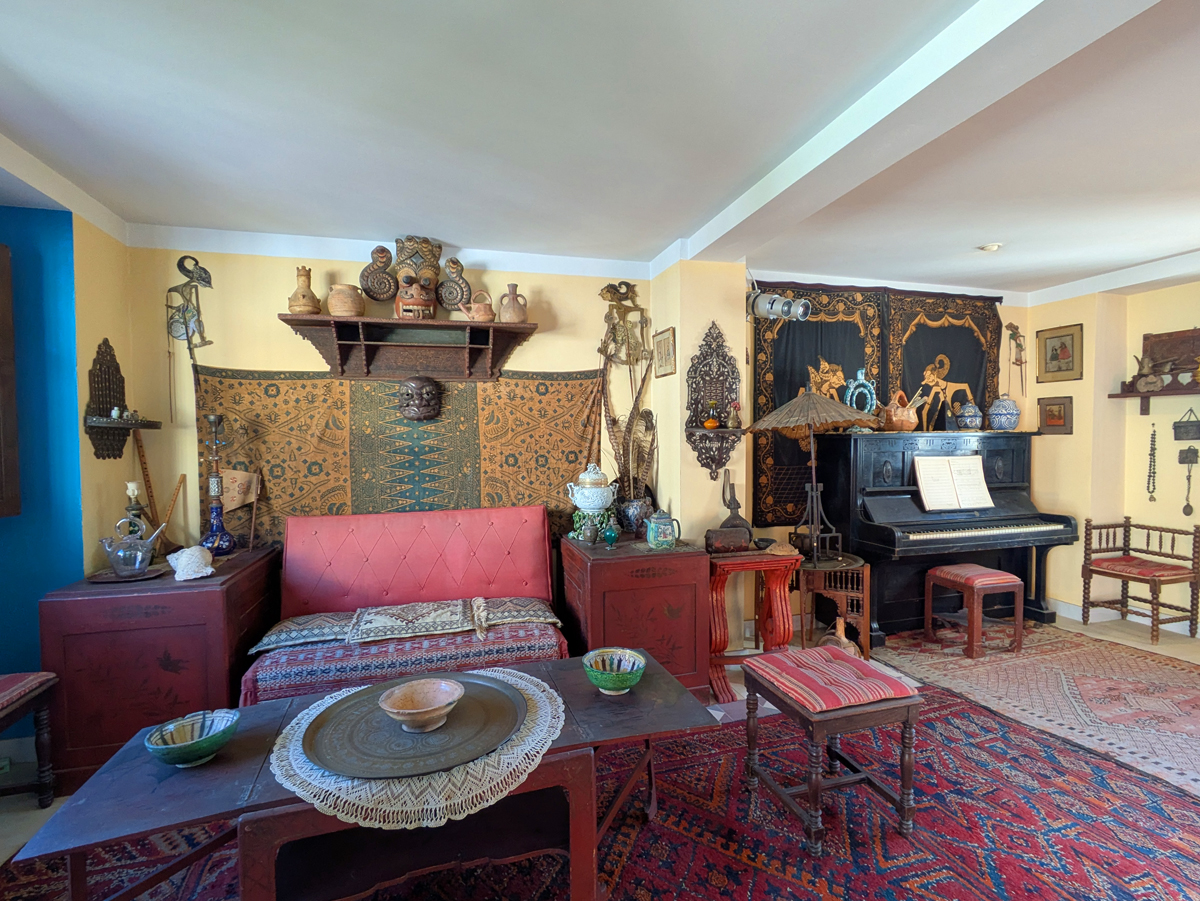
One of the most pleasant surprises in the Albaicin. Just a few minutes away from Mirador San Nicolas are the house and gardens of Max Moreau, a famous Belgian painter (1902 – 1992). Beautiful house, interesting art, a romantic setting and great views. Transports you back in time.
How to Visit: FREE, but if you can leave a little donation it is appreciated.
19. Silla del Moro
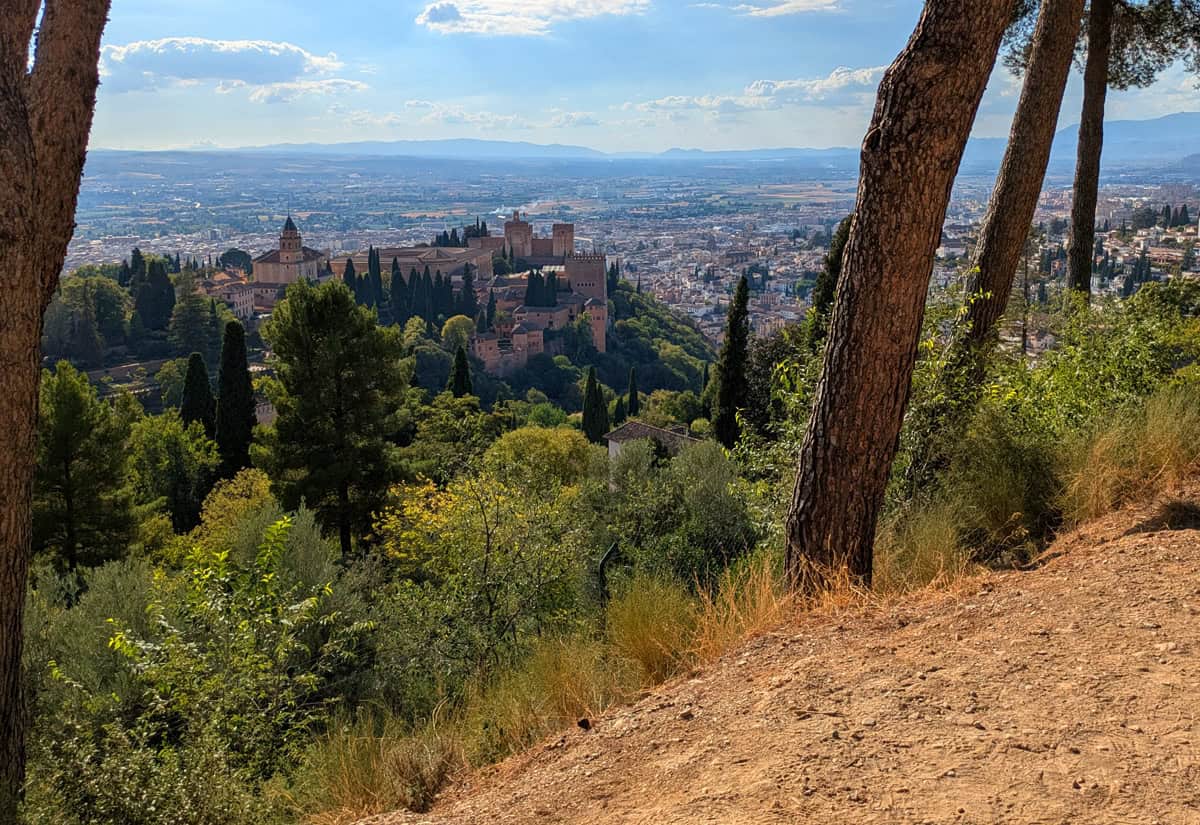
The Silla de Moro, also known as the Moor’s chair (and also known as Saint Helen’s Castle) has a unique perspective – it actually looks down on the Alhambra.
A small castle built in the 13th century, it guarded the Alhambra’s water supply. There’s not much to it now and it is rarely open (just Saturdays and Sunday) but don’t let that bother you…the path leading to the castle has fantastic views of the Alhambra, the city and (if you continue along the path) towards the Abbey of Sacromonte. Few people know about this spot except for locals jogging or walking their dogs.
20. Madraza
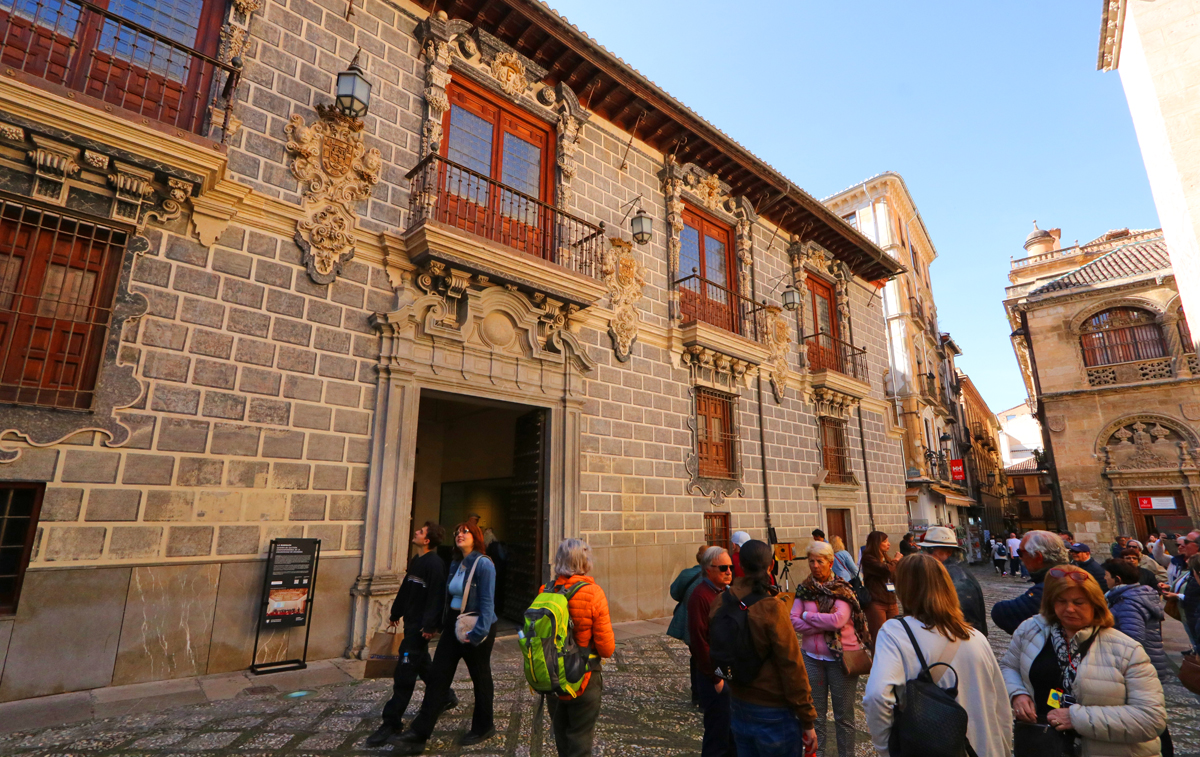
The Madraza of Granada is located in the Palacio de la Madraza (just a few feet from Granada Cathedral). It is today part of the University of Granada.
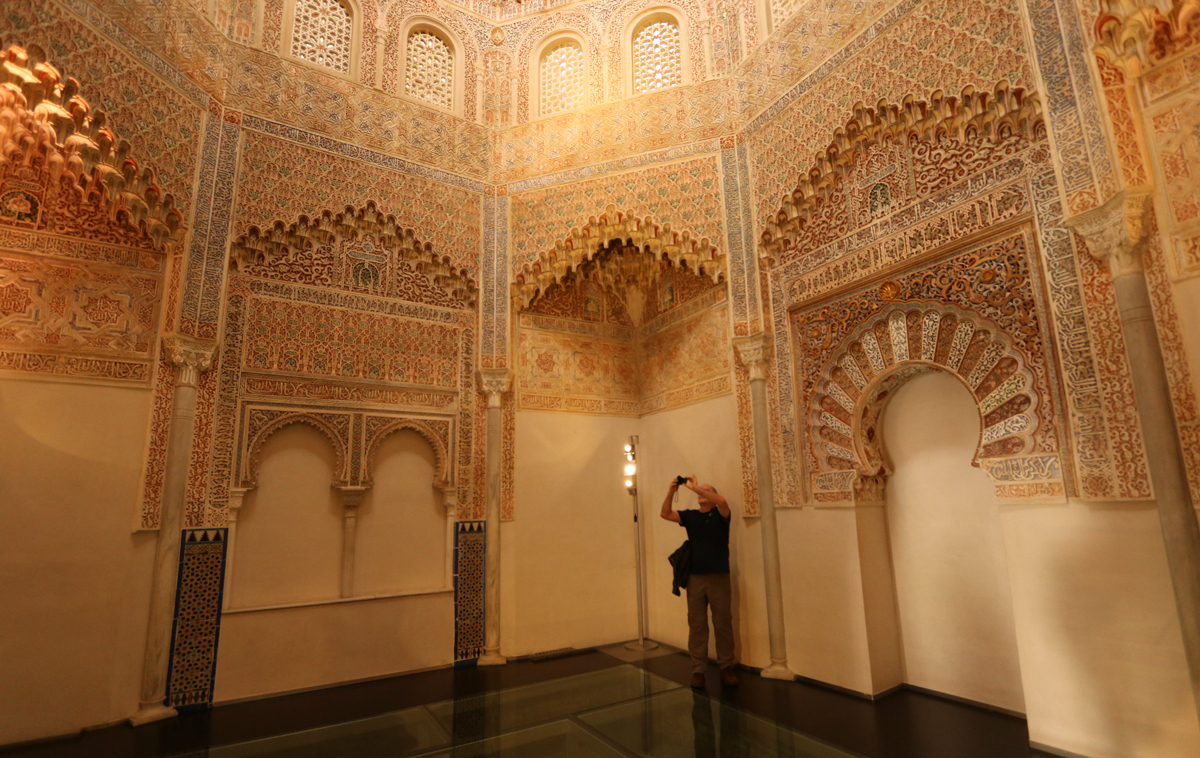
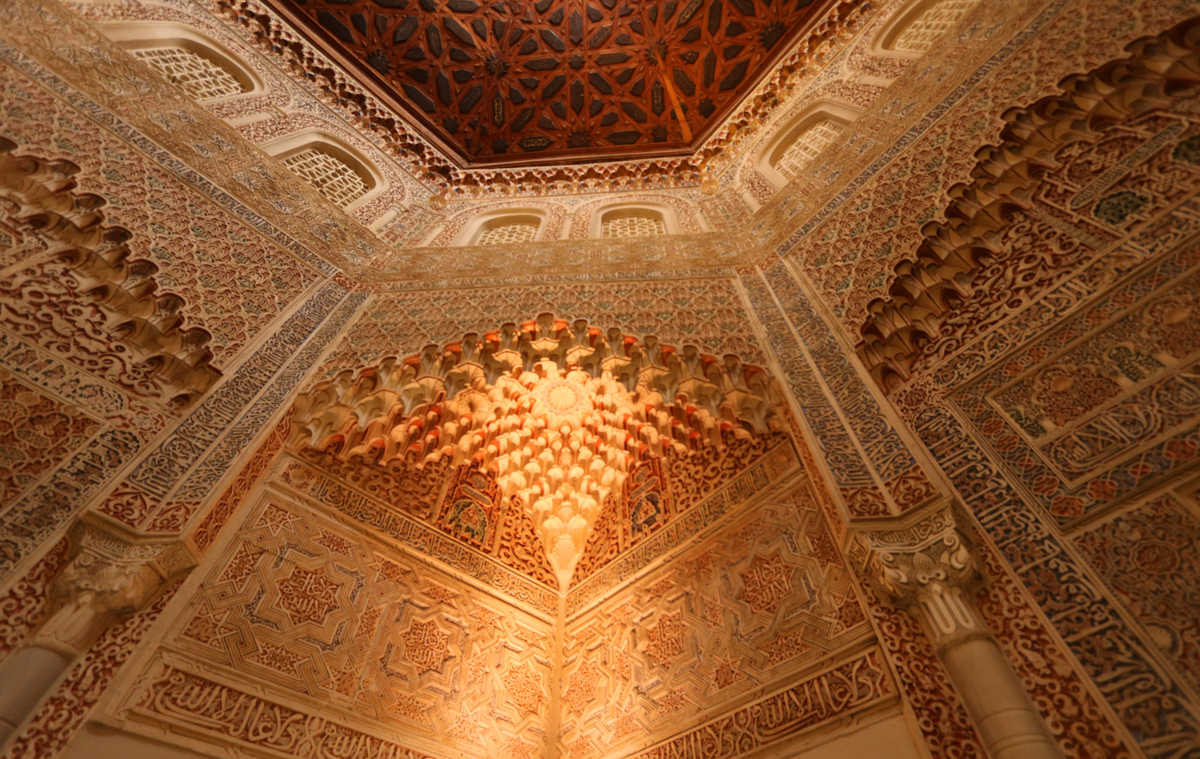
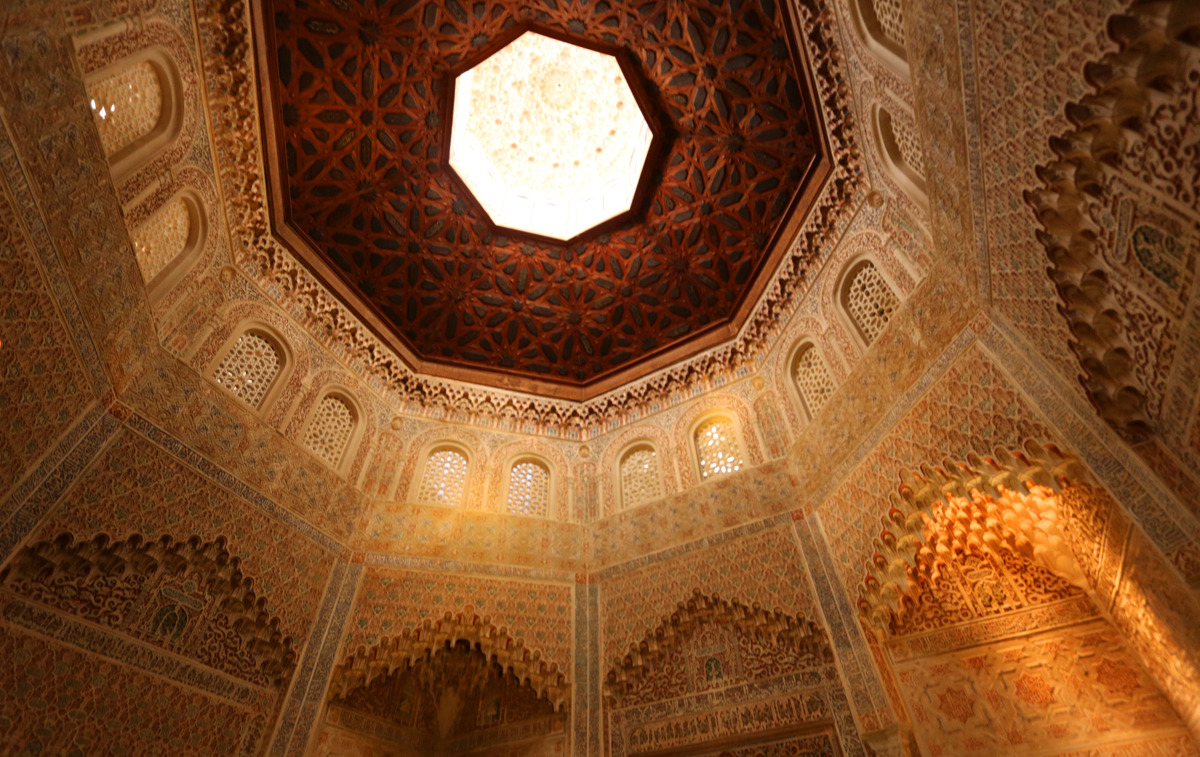
The madrasa was founded in 1349 CE by Yusuf I, the Nasrid emir of Granada at the time. It was the only madrasa known to have been built on the Iberian Peninsula and it operated until 1499. Later, under Catholic rule, the building was mostly demolished and replaced by a Baroque building. In the early 1900’s, parts of the Mihrab were discovered. What you see today is a restored prayer room. It is very impressive. Upstairs, the Sala de los Caballeros is a large room with Mudejar style ceiling.
You can walk into the Palace for free but you won’t be able to enter the prayer room or see the upstairs Sala de los Caballeros without taking a tour. But to do so is easy: go to the information desk and reserve a tour. It might be for the next day (nobody knows about this so there is little demand). When you come for your tour, the guide will show you around and explain the room to you. Lots of people mill about outside the prayer room and ask “can we come in?”. The answer is always “no” if you haven’t booked a tour. So you feel almost like a dignitary being shown around by a guide while other are craning their necks for a look behind a barrier. Something very much worth doing if in Granada.
Related: Seville (Spain): What to See and how to save money
Related: Why you HAVE to Visit Córdoba
Leave a Reply