
Visiting Fontaine-de-Vaucluse (Provence, France).
Fontaine-de-Vaucluse is a tiny town known for one thing – the origins of the Sorgue river. Lying at the base of the Luberon Massif (a mountain range in Central Provence), a spring gushes from deep underground – cold and clear – marking the beginning of the river.
In the 1950’s Jacques Cousteau came here with a submersible submarine to determine the depth of the spring. But he couldn’t find the bottom. Since then further exploration discovered a sandy bed 308 meters underground…but the source of the spring comes from even deeper with a depth that still hasn’t been determined.
It is said that all the rainwater from the Luberon and other surrounding mountains comes out of this one source, making a catchment area of 1100 square km (425 sq. miles). For most of the year all you can see is a deep blue pool of water at the bottom of towering cliffs. But during spring or after very heavy rainfall it lives up to its name (ie “fountain”), with water gushing out at 200m3 (52,000 gallons) every second. It is one of the largest springs in the world.
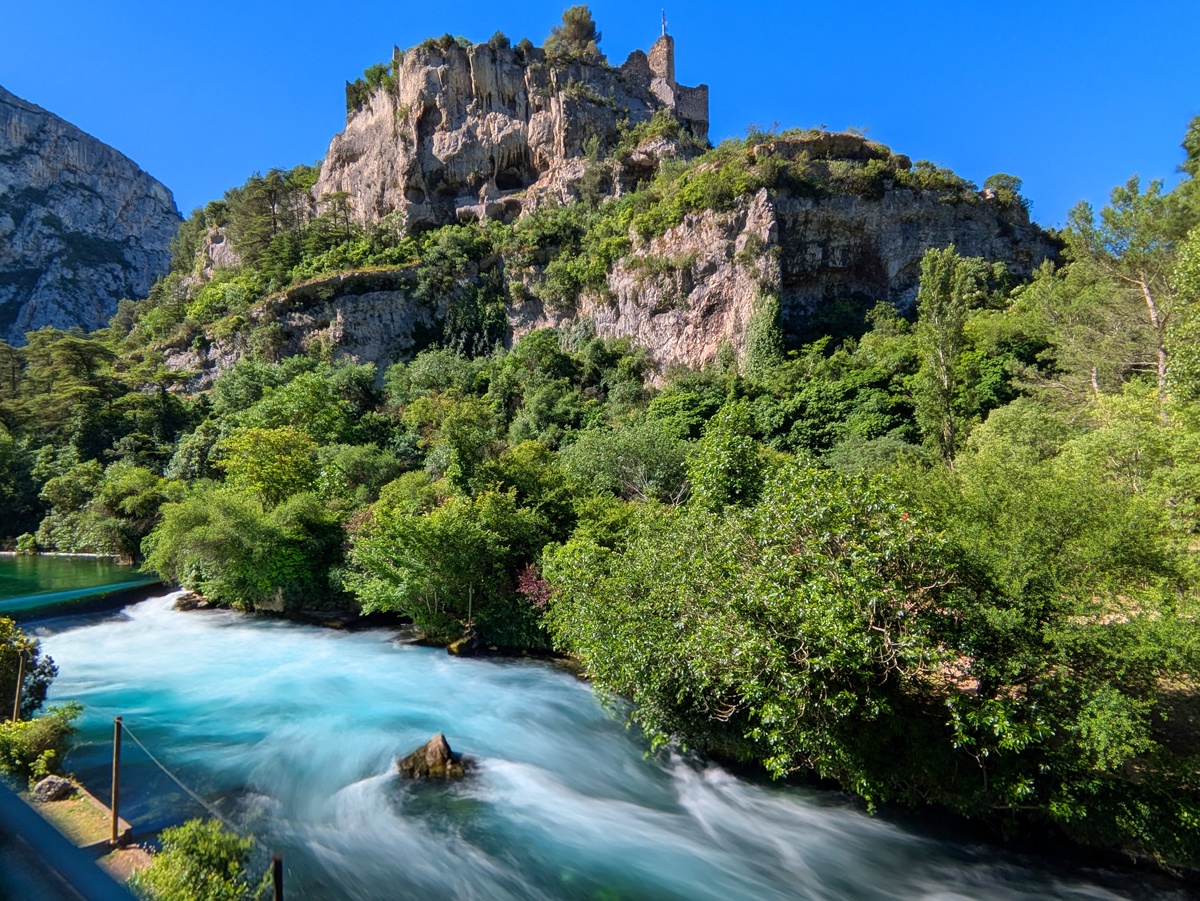
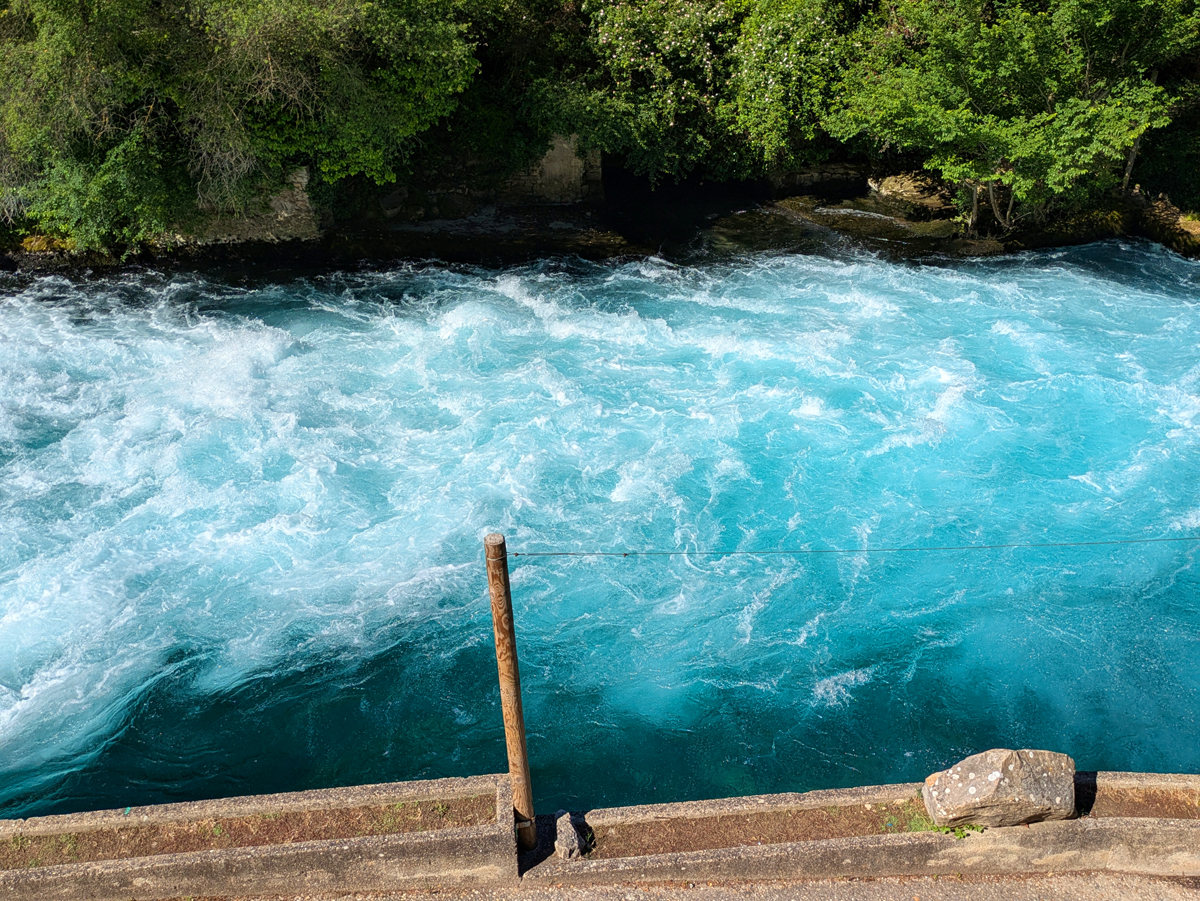
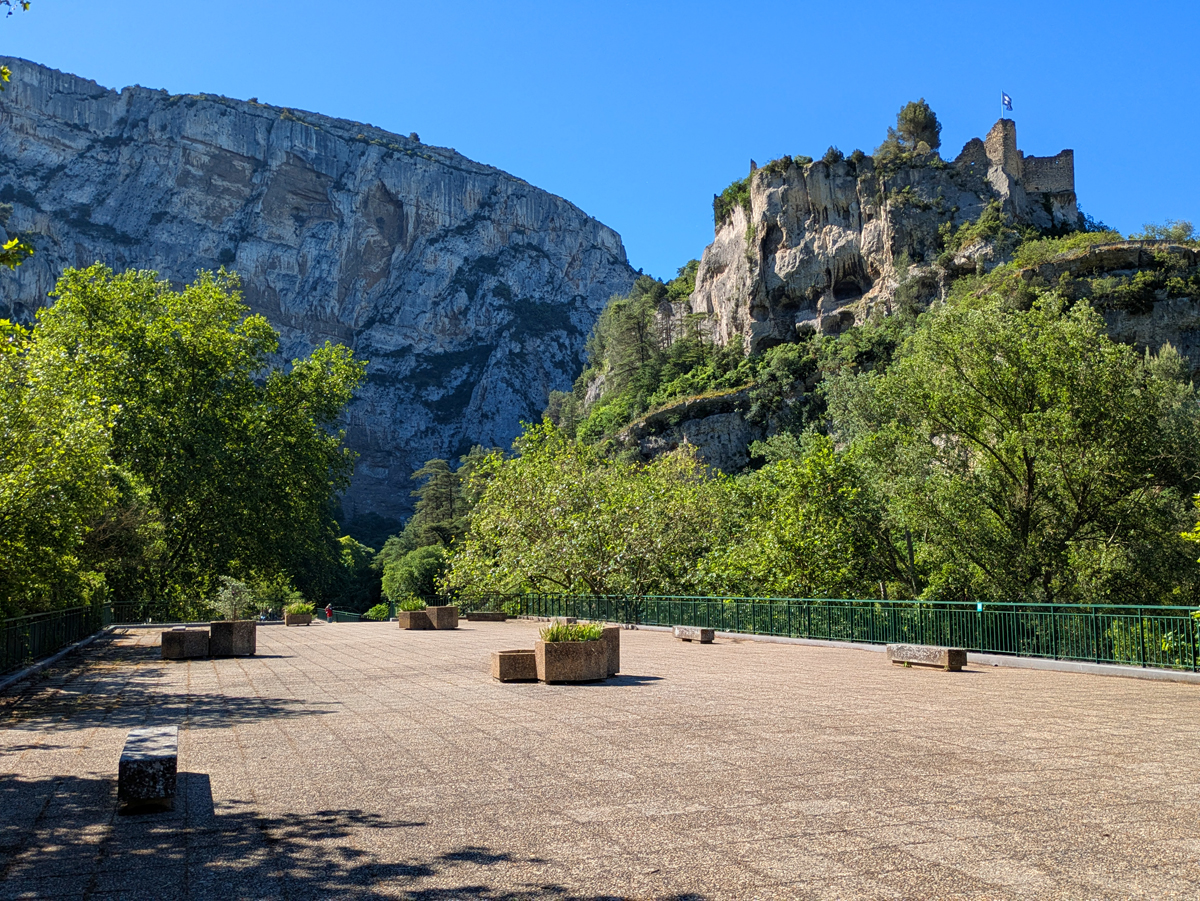
As you’ll see in the photos below, we came during spring which is the ideal time to visit. The flow of water ran fast, the clear water turning a beautiful turquoise and emerald. With a backdrop of cliffs and the ruins from a 12th century castle on a rocky outcrop, the setting is spectacular.
Exploring Fontaine-de-Vaucluse
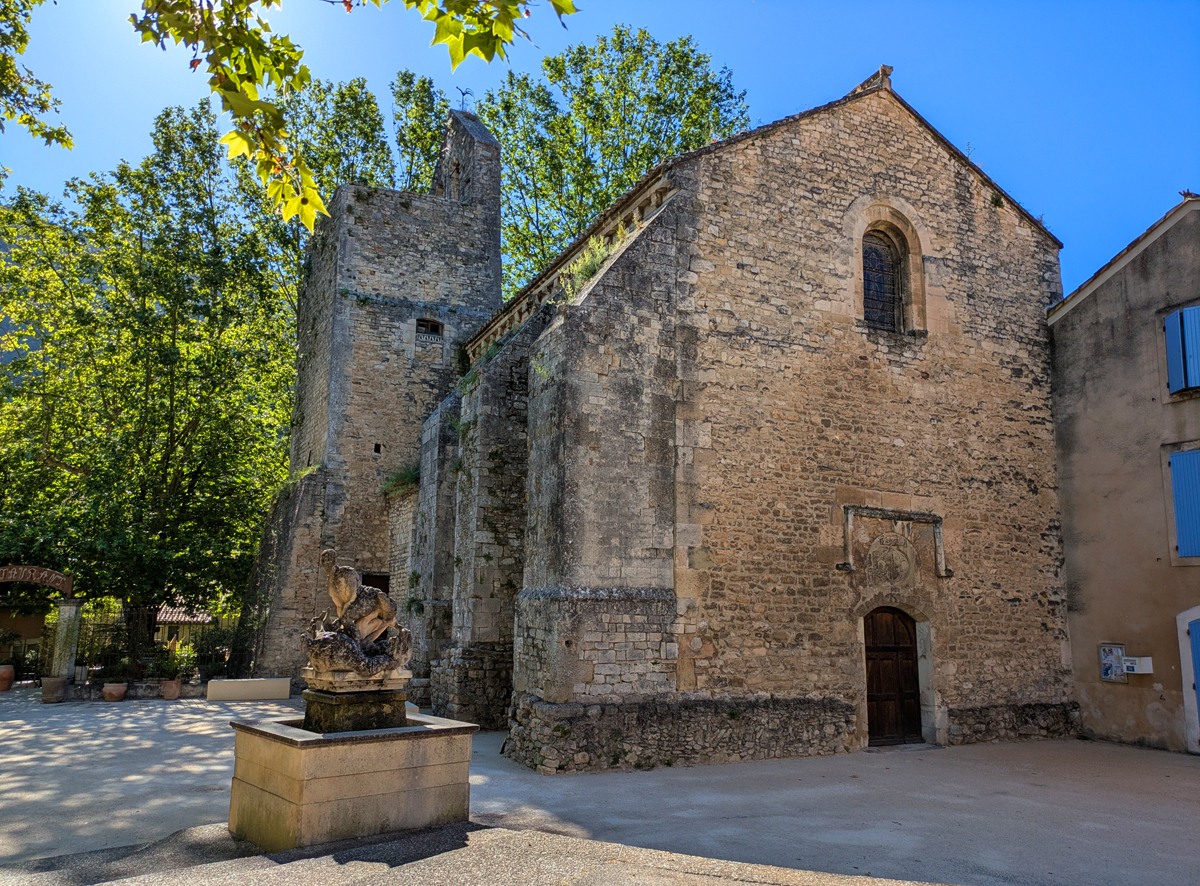
There’s not much to the town, it is tiny. But it is a pretty place with lots of atmosphere. There is a 1000 year-old church (Église Saint-Véran), a paper museum (Moulin a Papier Vallis Clausa) where you can see the old water-wheel pounding pulp to make paper, and a museum dedicated to the Resistance, showing what life here was like under German occupation.
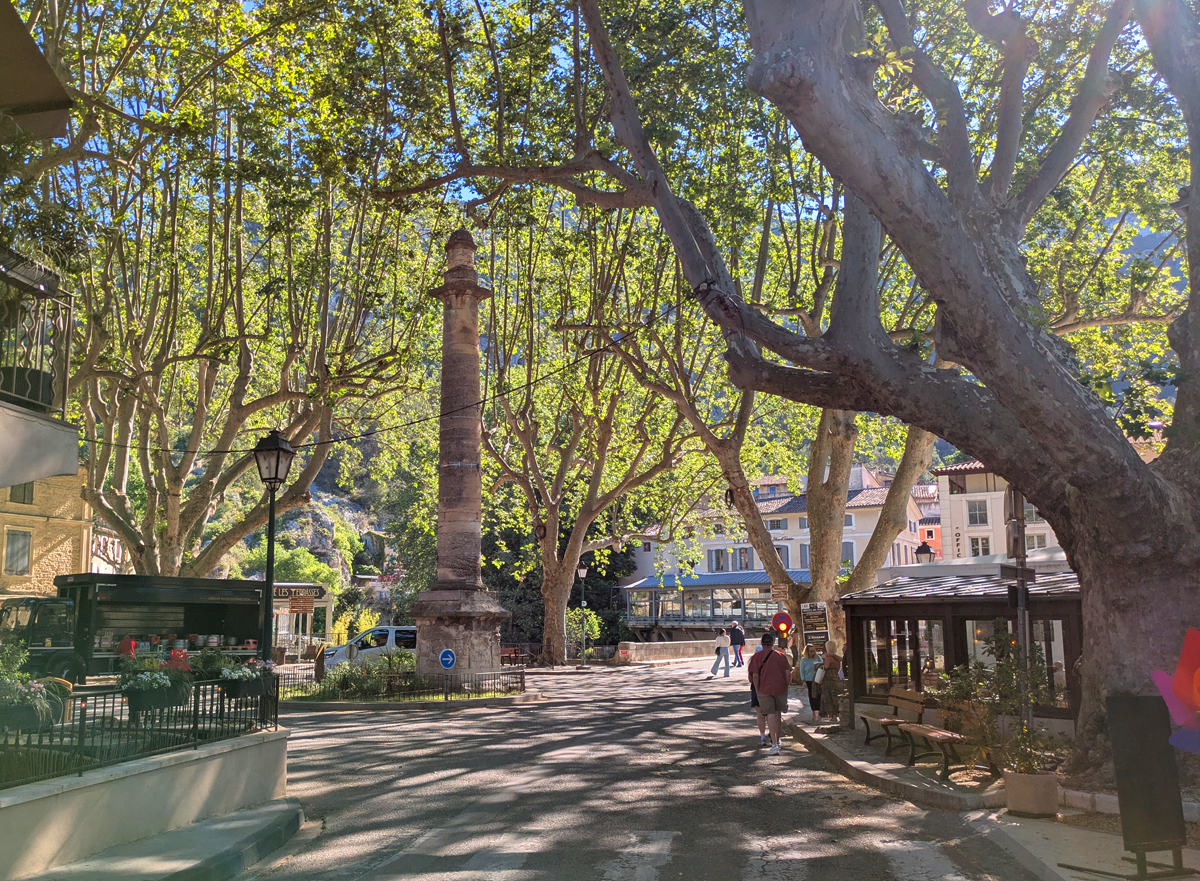
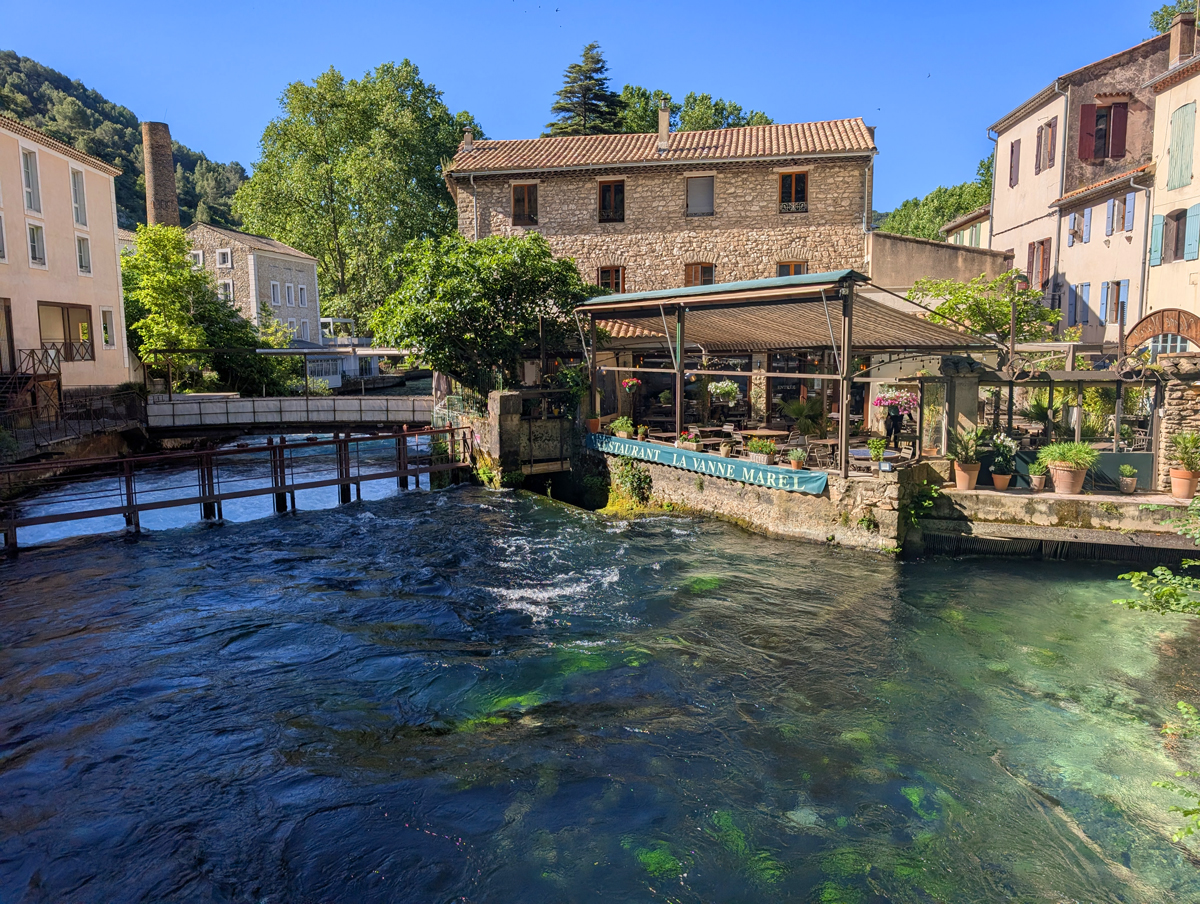
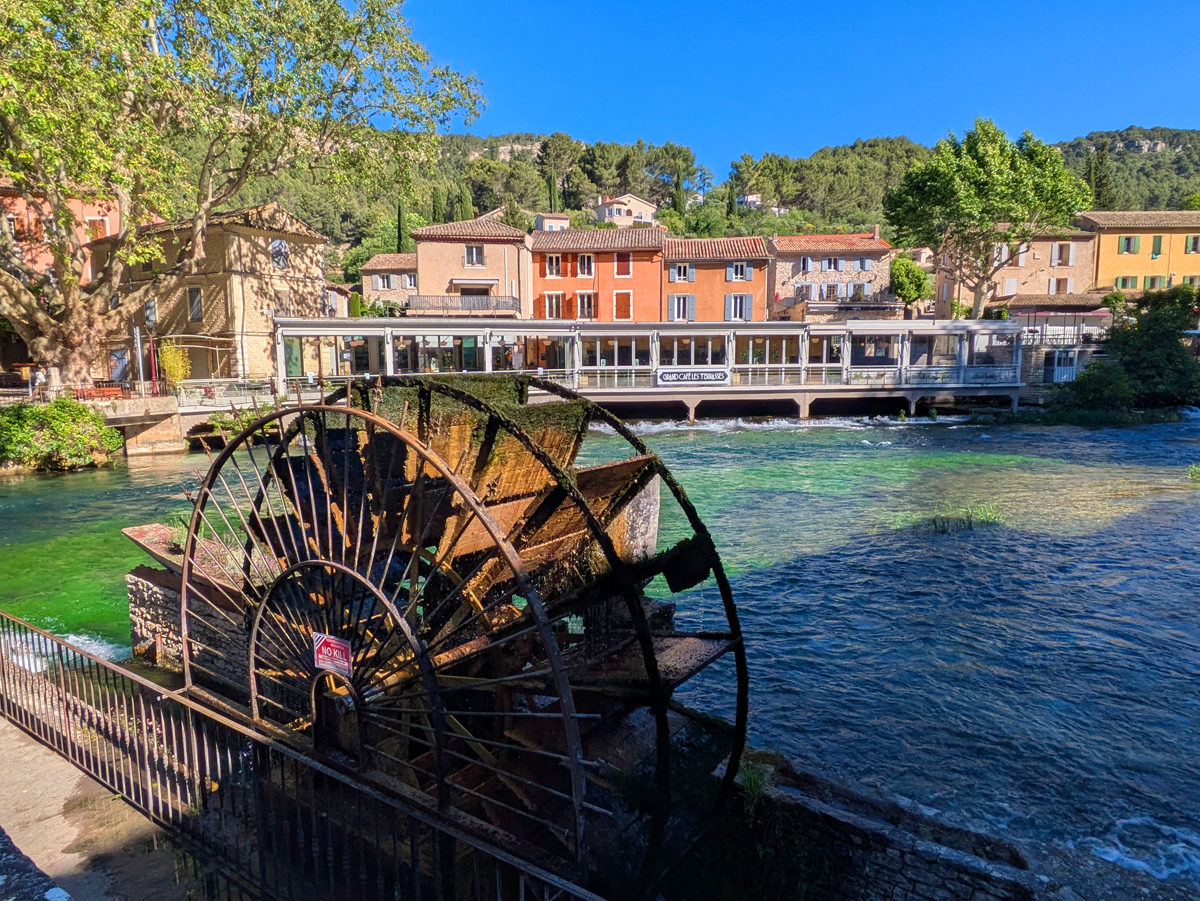
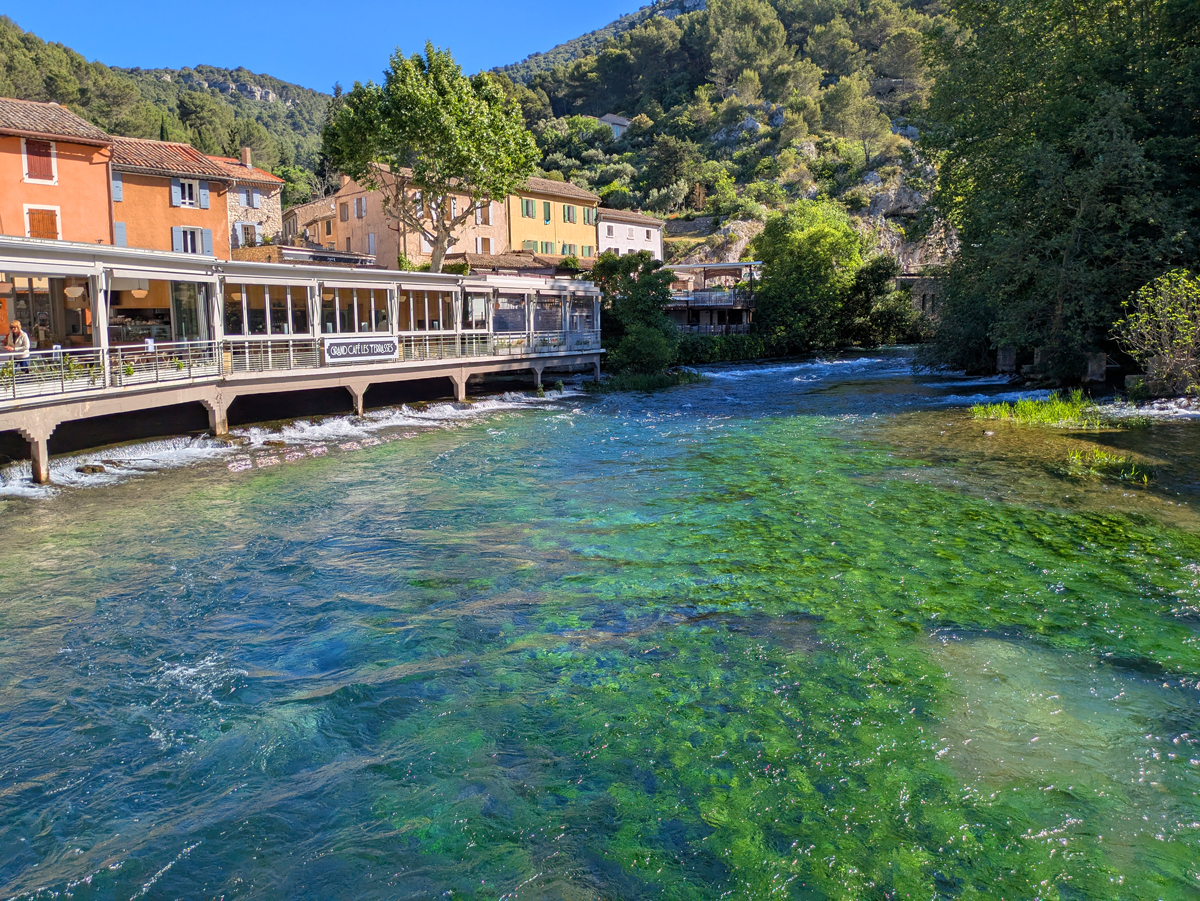
But most people will come here just to gawk at the spring and the scenery. From the main square – right by the bridge – follow the street upriver. There are lots of restaurants and tourist shops here*.
* I’m told that Fontaine-de-Vaucluse is very popular and gets lots of tourists. Come here early (as we did) to avoid the crowds.
The street leads to a large platform with fantastic views of the rushing stream and the backdrop of cliffs and the ruins of the castle.
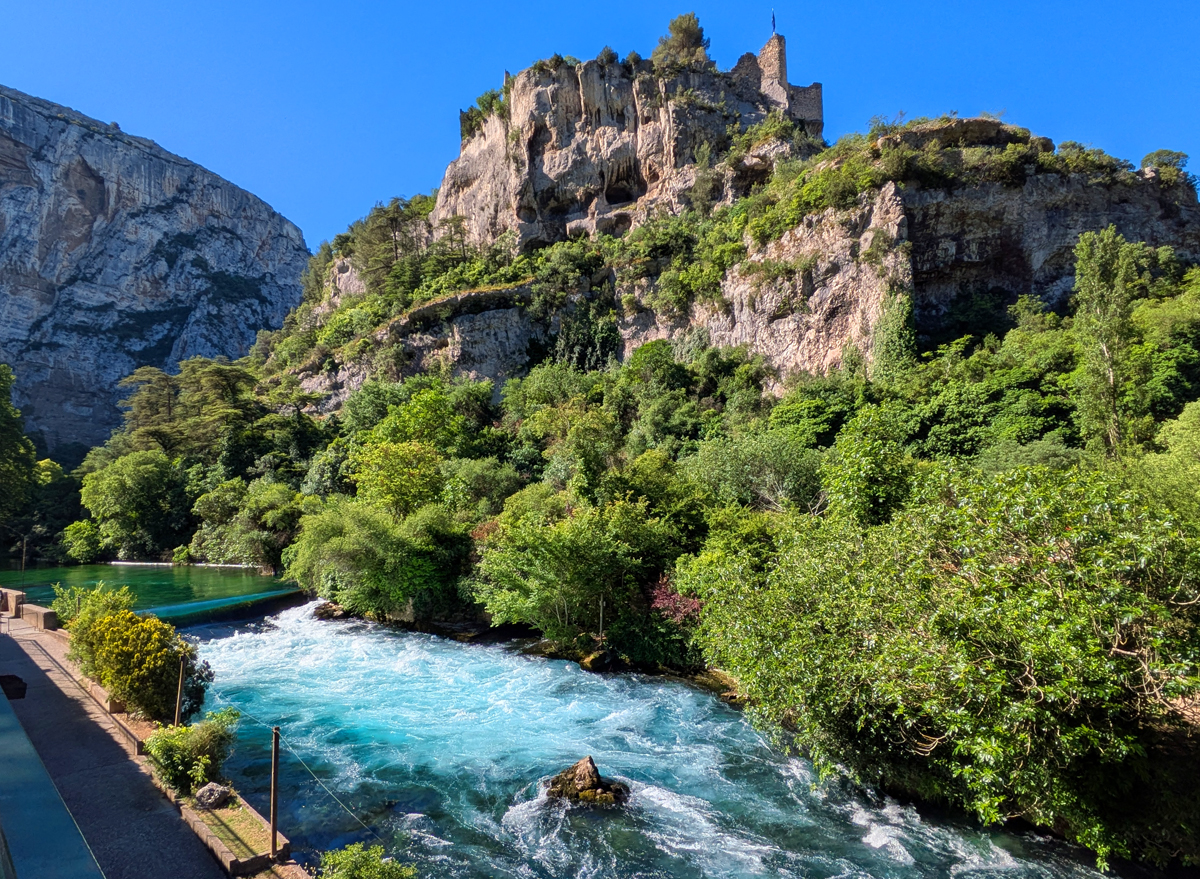
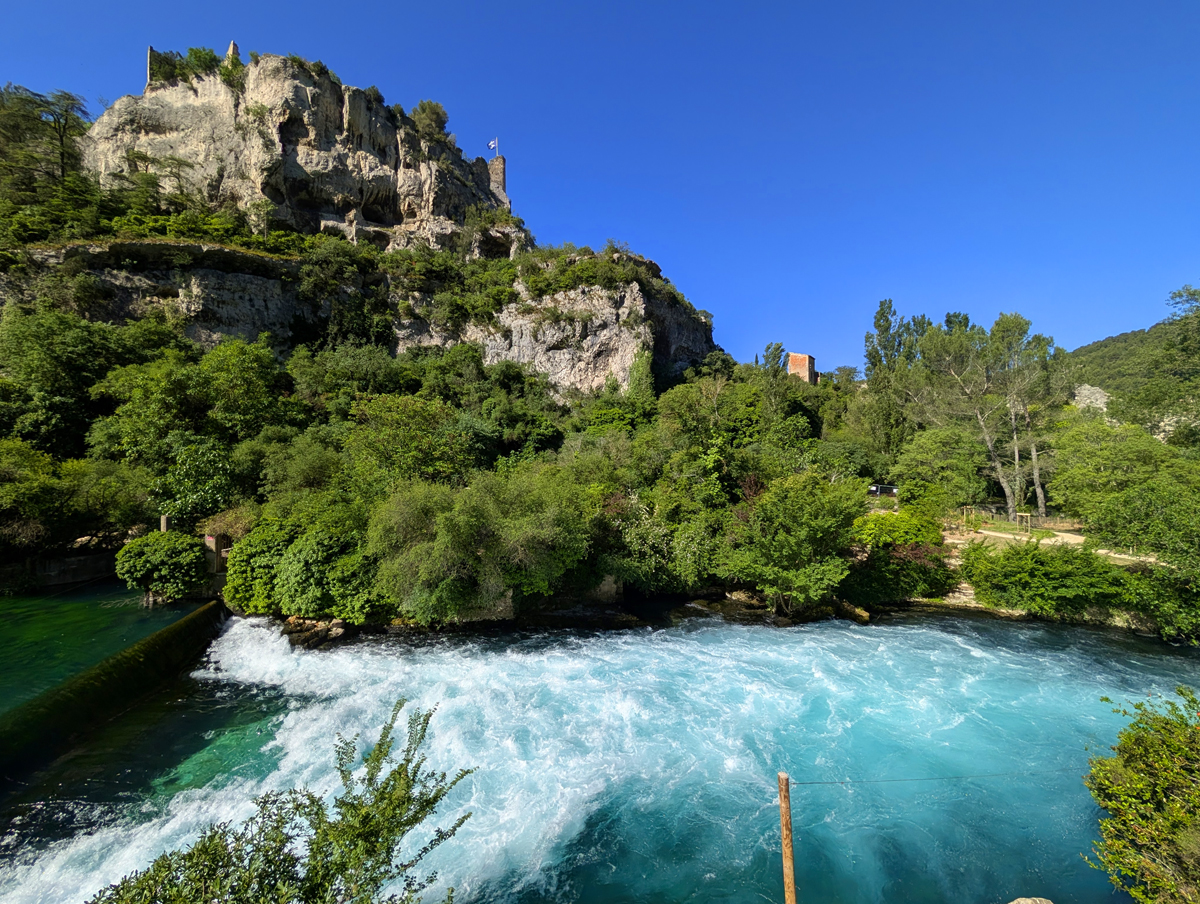
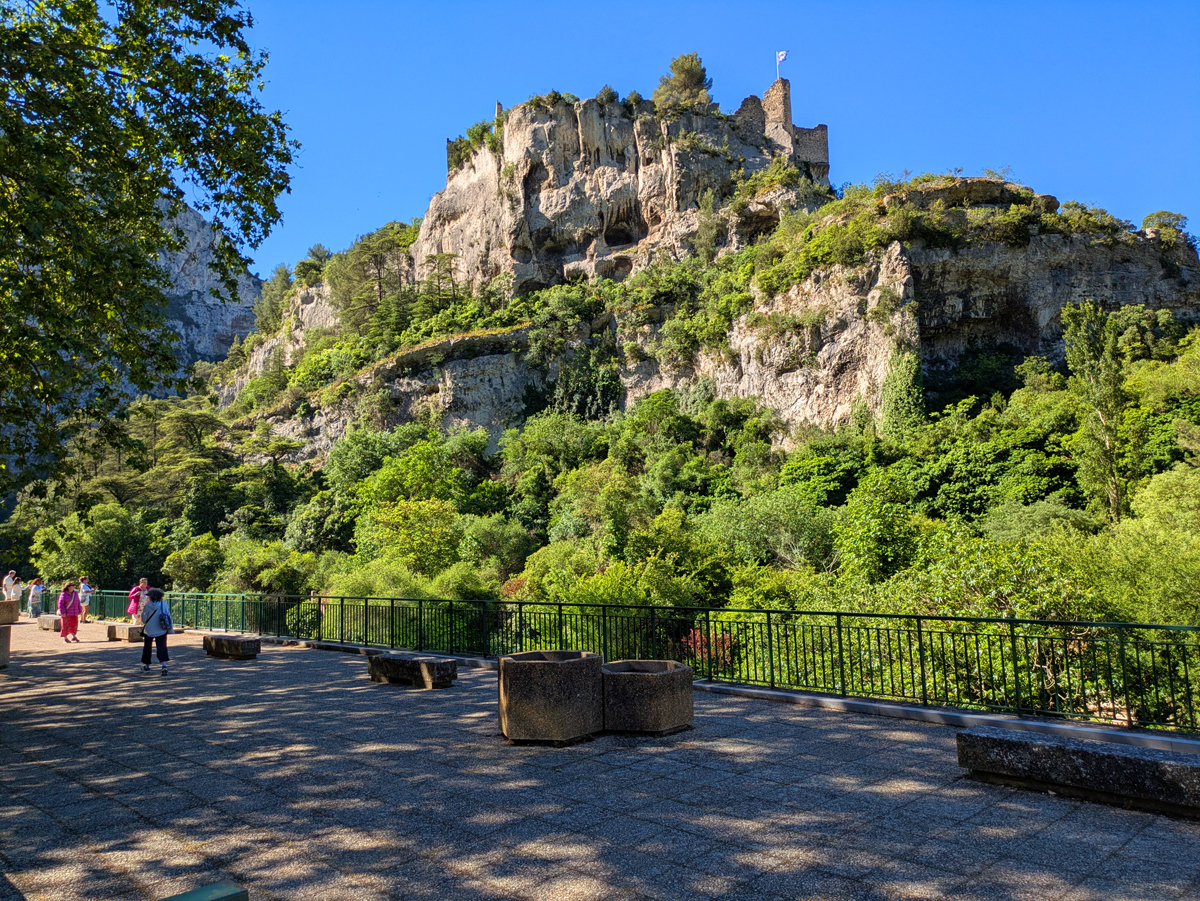
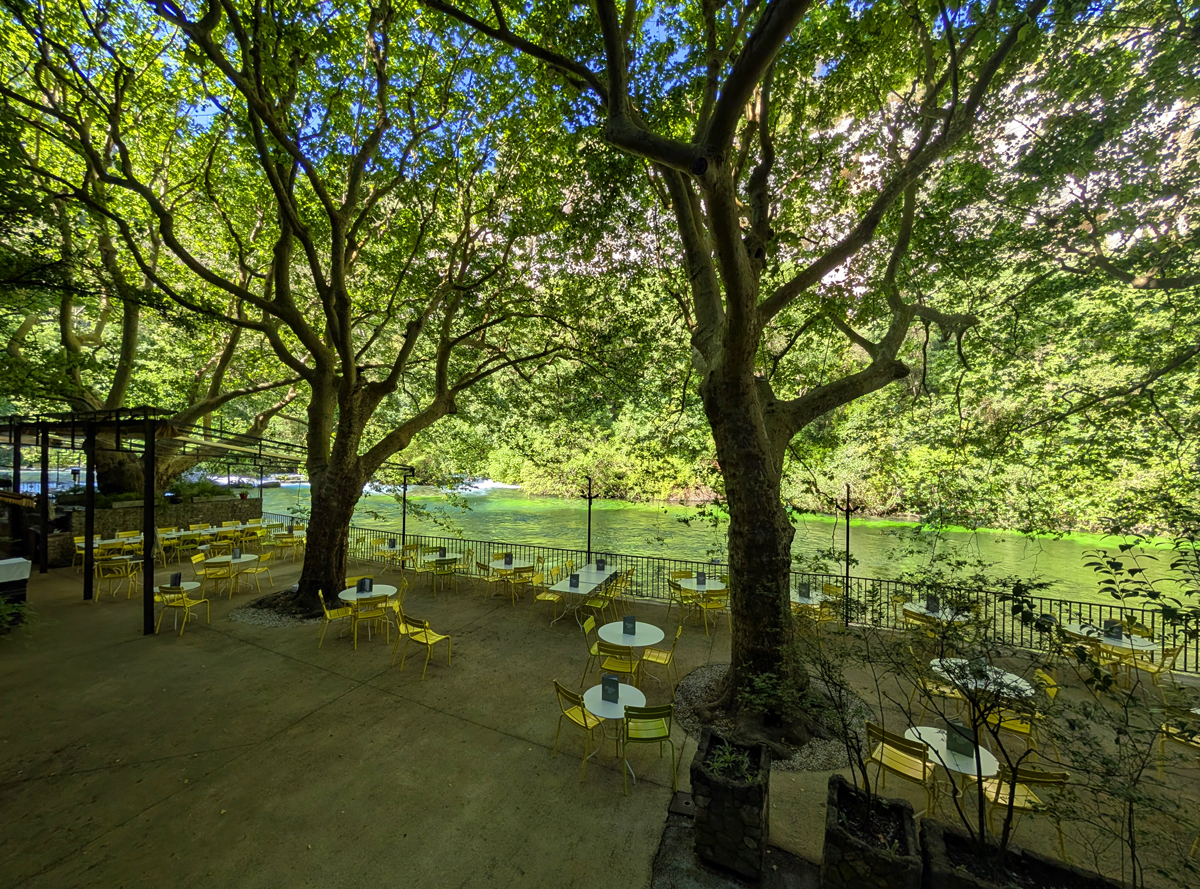
Continuing further, the street becomes narrower, becoming a path. It’s a nice walk along the river – shaded by trees – and you’ll see more restaurants along the way. If you continue further you’ll arrive at gates. It used to be that you could walk all the way up to the source of the spring but authorities decided to put a stop to that for safety concerns.
How to visit Fontaine-de-Vaucluse
How to get there. Avignon is the largest nearby town (34 km away), making it an easy drive if you have a car. You can take the bus but it requires a change and will take you about 1 hour to get there. I recommend what we did: take a tour. We took this full-day tour which included Fontaine-de-Vaucluse, Gordes, Roussillion, Les Baux de Provence, Saint-Rémy-de-Provence and the Pont du Gard. Very much recommended.
How much time does Fontaine-de-Vaucluse require? Our tour gave us 45 minutes of free time in Fontaine-de-Vaucluse. Really, you don’t need more time than that.
So is Fontaine-de-Vaucluse worth a visit? Definitely, especially in the spring or early summer. It is a spectacular destination.
Related: Visiting Gordes (France): the “Most beautiful small town in the world”

Related: A Guide to Visiting Carcassonne

Related: 30 images showing you why you should visit Montpellier

Leave a Reply