
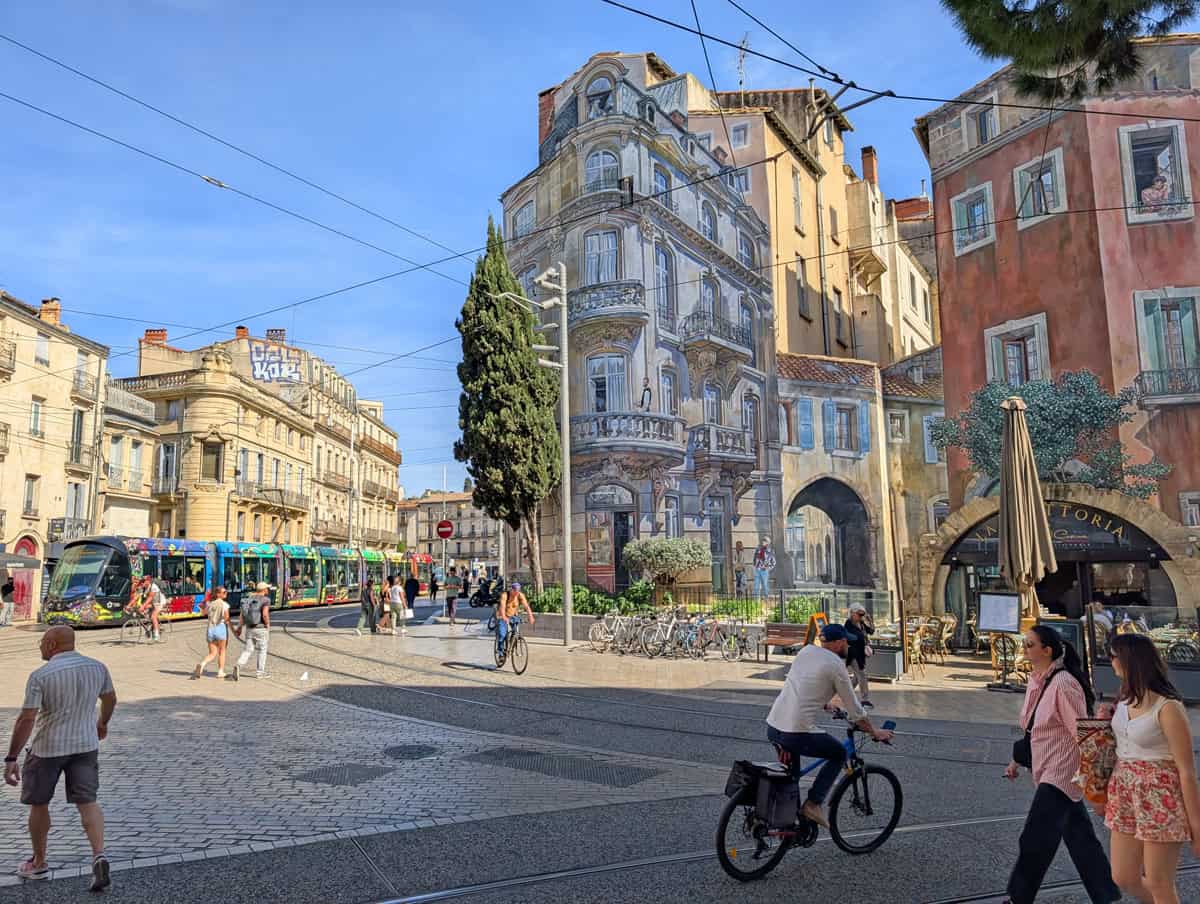
30 images showing you why you should visit Montpellier (France).
We stayed 10 days in Montpellier. For those who don’t know anything about Montpellier: it is the 7th largest city in France, a university city also known for its art and architecture.
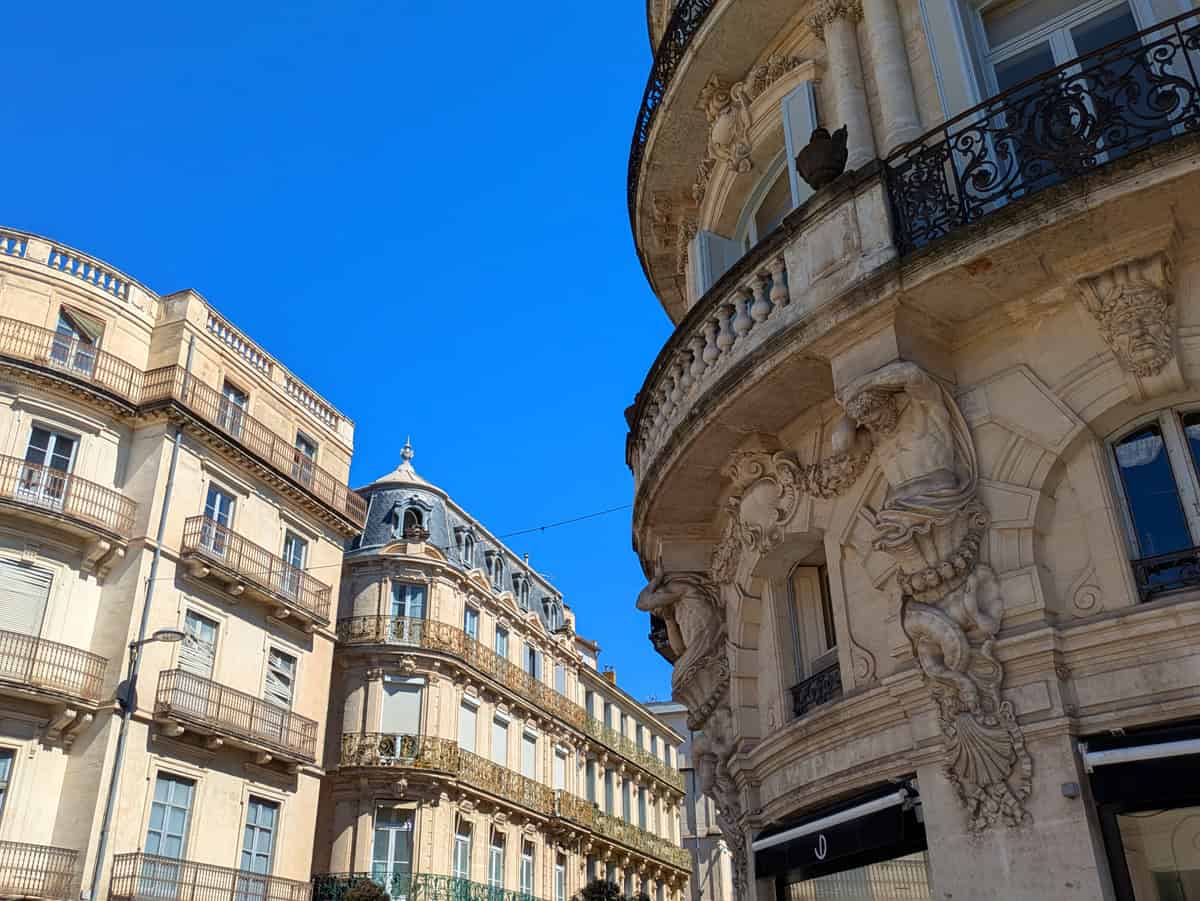
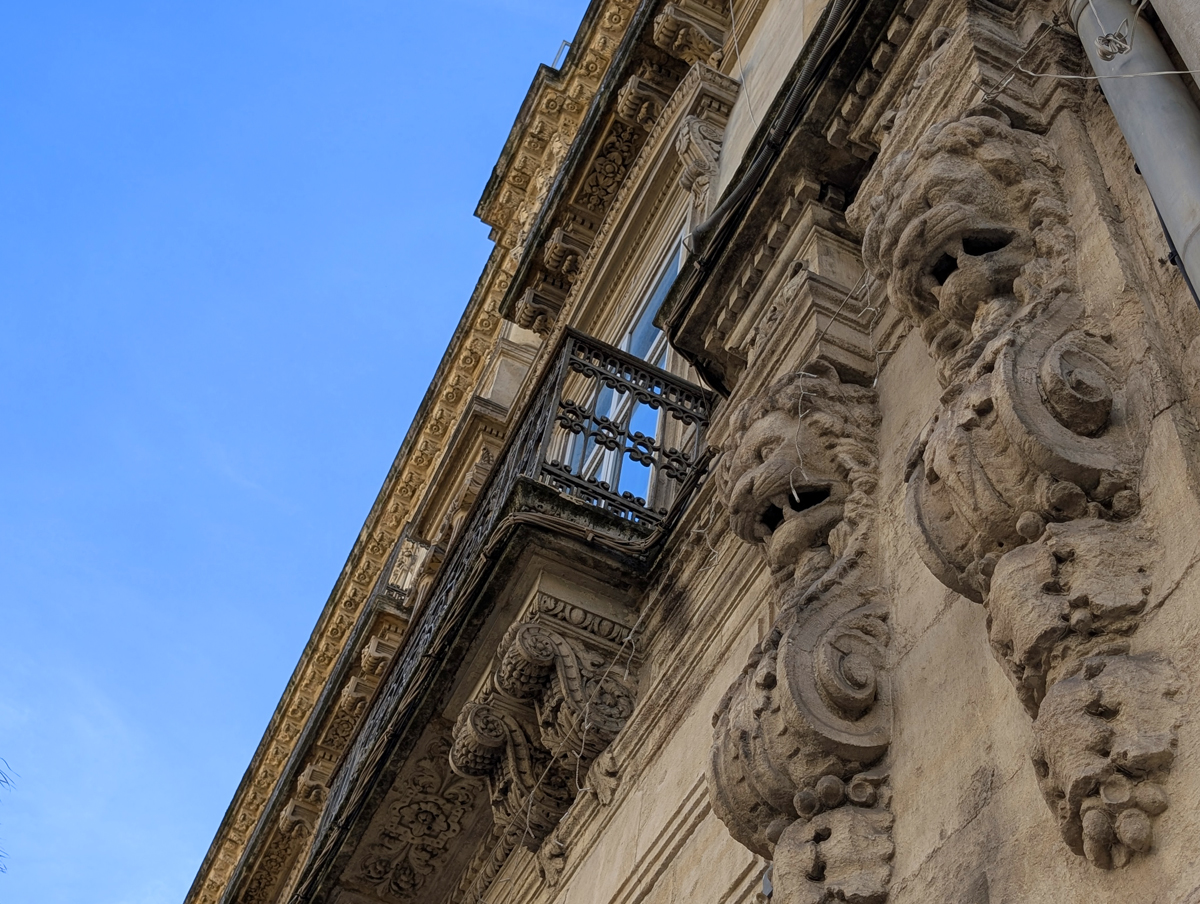
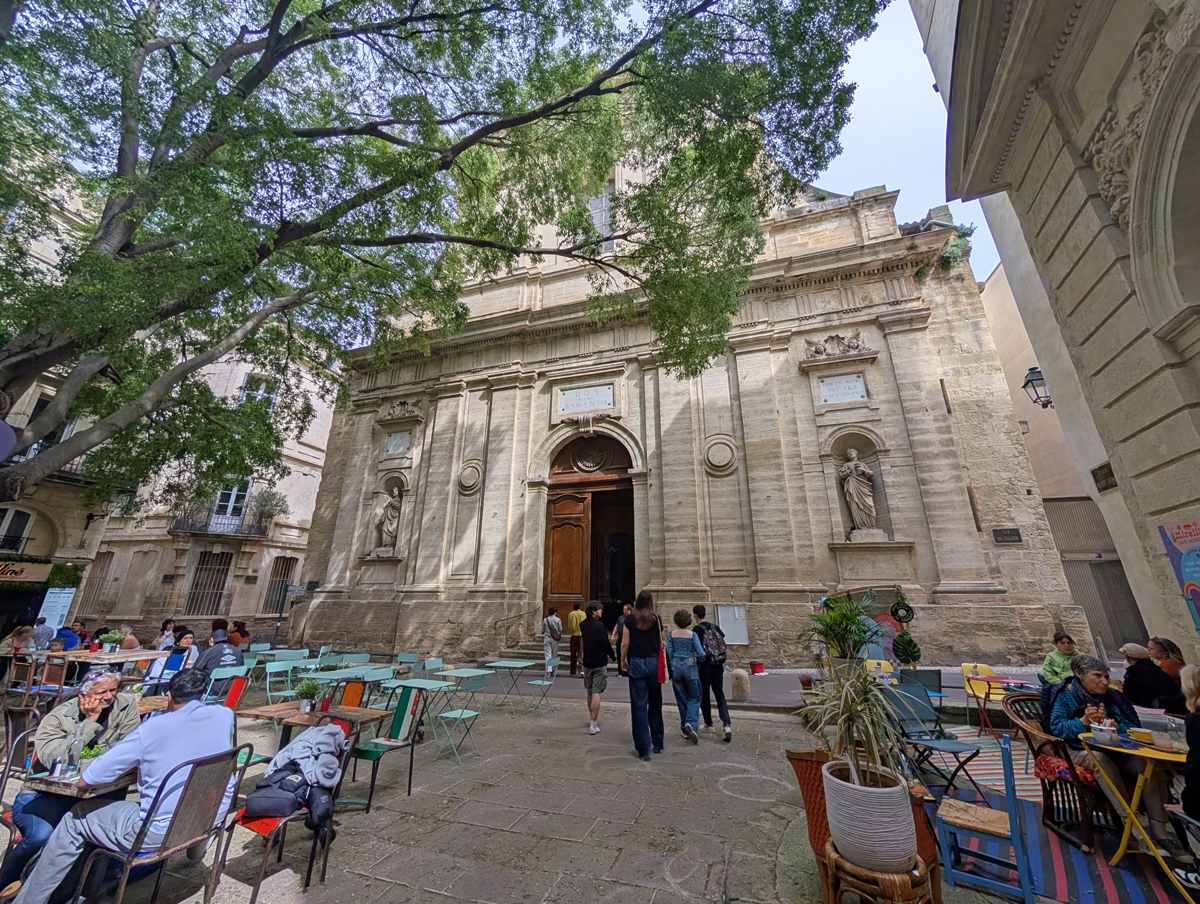
While Montpellier doesn’t have any one huge attraction, it is uniformly a beautiful city – full of churches, plazas and monuments – that’s made for walking and for sitting somewhere and having a coffee or beer while people watching. It also makes for a great base for exploration in the area: Sète (15 minutes away by train), Nimes (35 minutes) and Béziers (45 minutes) are all nearby. Even Carcassonne (1 ½ hrs away) can be explored from Montpellier.
In this post I show you why Montpellier should be visited, covering some of the highlights of the city in the process. At the bottom of the post I give you some practical tips and recommendations (accommodation, eating out, getting around etc).
A brief history of Montpellier
- Montpellier dates back to about 985 AD when it wasn’t more than two tiny hamlets and a castle encircled by walls. A local feudal dynasty, the Guilhem, ruled.
- Montpellier became wealthy in the 12th century as a trading center with links across the Mediterranean. It was a multicultural city with Jews, Muslims and Cathars (and later Protestants). During this time (specifically 1180), Montpellier established institutes of law and medicine. The medical faculty has, over the centuries, been one of the major centres for the teaching of medicine in Europe.
- In 1204 Montpellier, by marriage, became part of the Kingdom of Aragon. It became a very important city, a major economic centre and the primary hub for the spice trade.
- After having being a possession of the Kingdom of Aragon, the city fell into the hands of the King of Majorca…who in 1349 sold Montpellier to the French King (Philip VI).
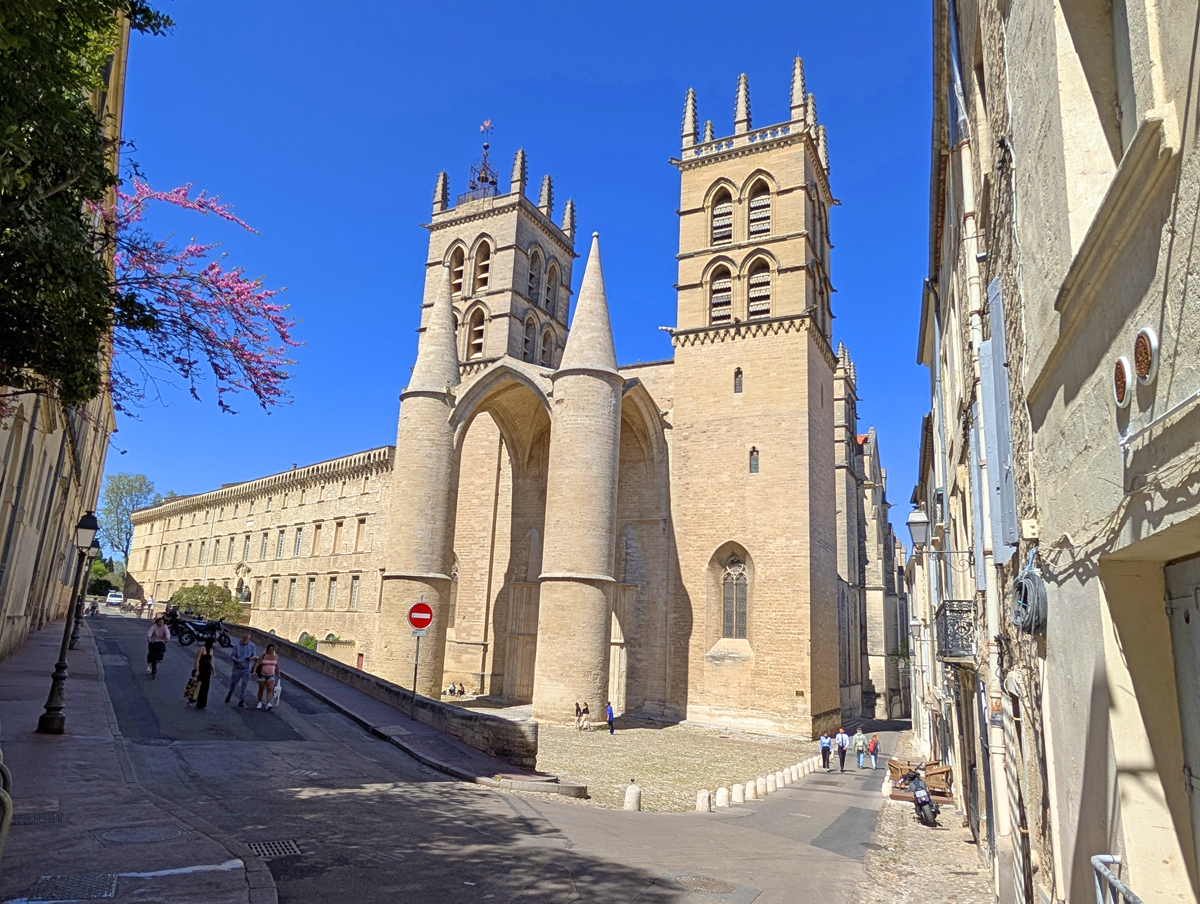
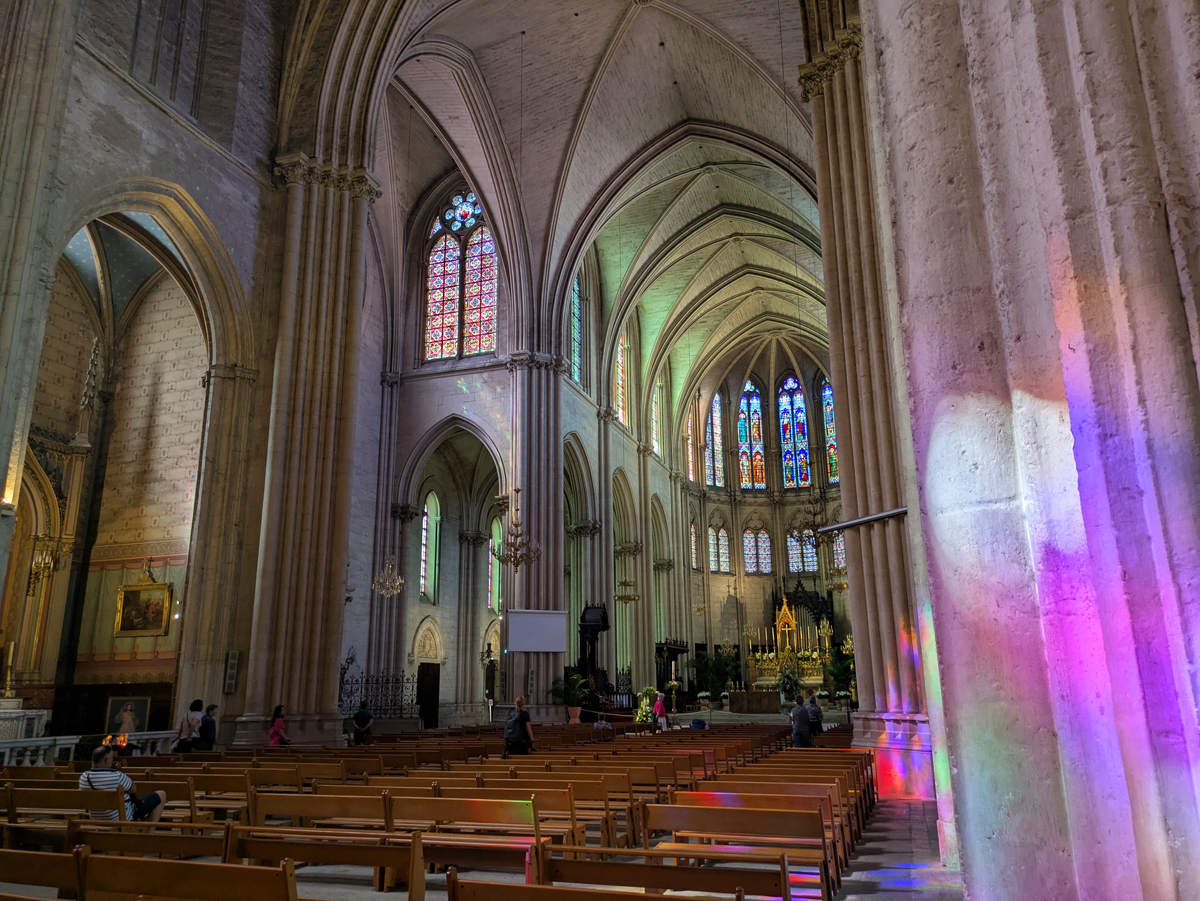
- In the 14th century Pope Urban VIII gave Montpellier a new monastery dedicated to Saint Peter. It is today the city’s cathedral, Cathédrale Saint-Pierre de Montpellier, which is unusual with its rocket-like towers.
- In the 16th century most of the inhabitants of Montpellier became Protestants (or Huguenots as they were known in France) and the city became a stronghold of Protestant resistance to the Catholic French crown. In 1622 the French King (Louis XIII) ended that with 40 days of attacks on the city. In the peace settlement, the Catholics took over the city and dismantled Montpellier’s fortifications.
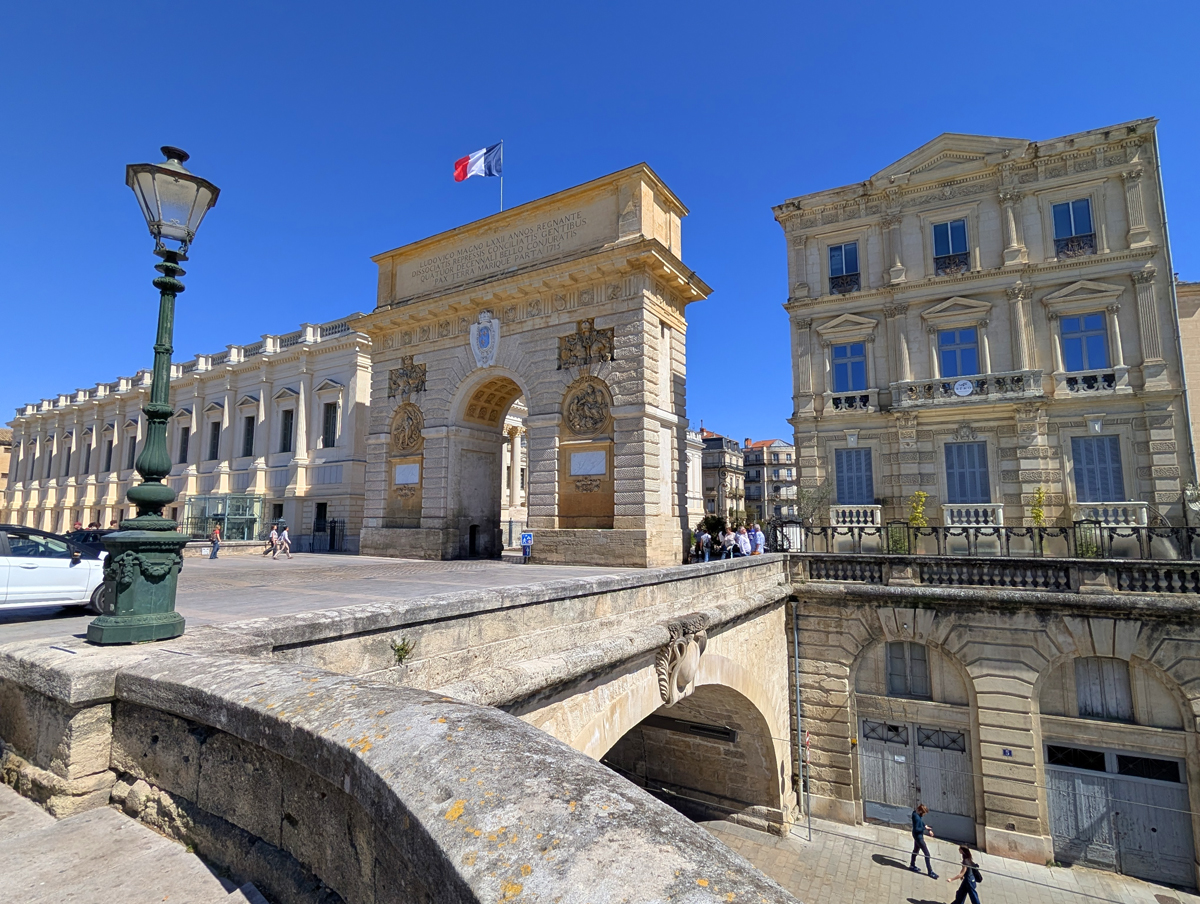
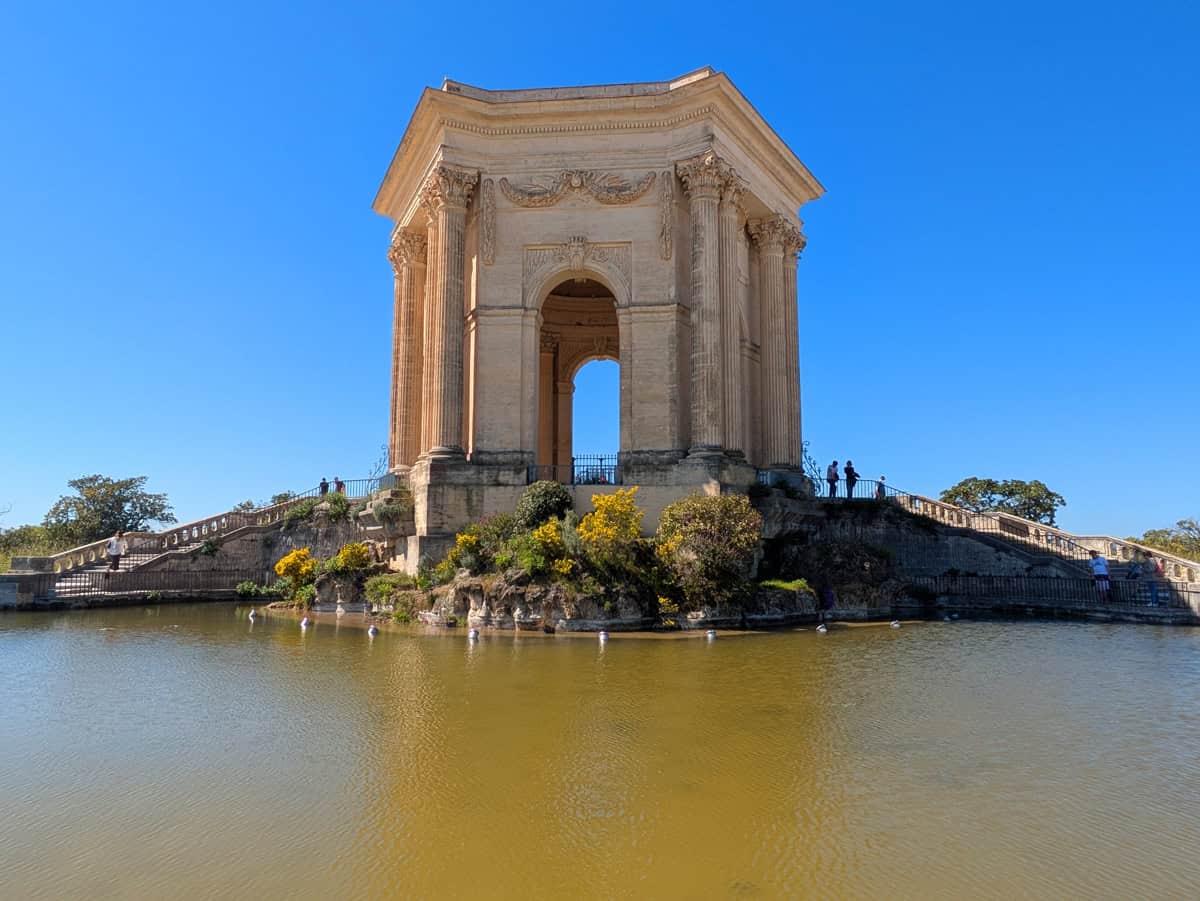
- In the late 1600’s Louis XIV made Montpellier the capital of the region of Bas Languedoc. Many of the city’s monuments such as the Promenade de Peyrou (1689), the Arc de Triomphe (1691), the Esplanade de la Comédie (1723) and the Place de la Comédie (1755) were built in this period.
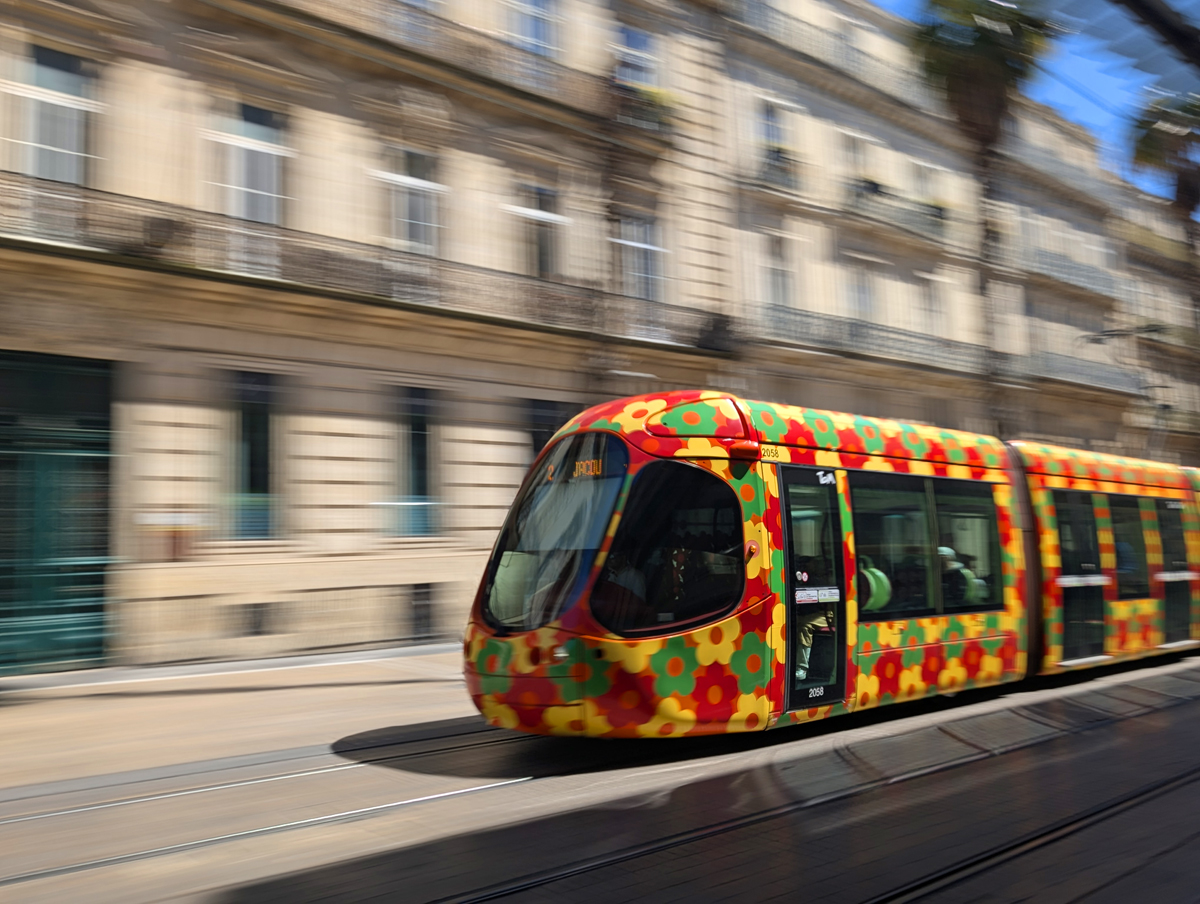
What to See in Montpellier
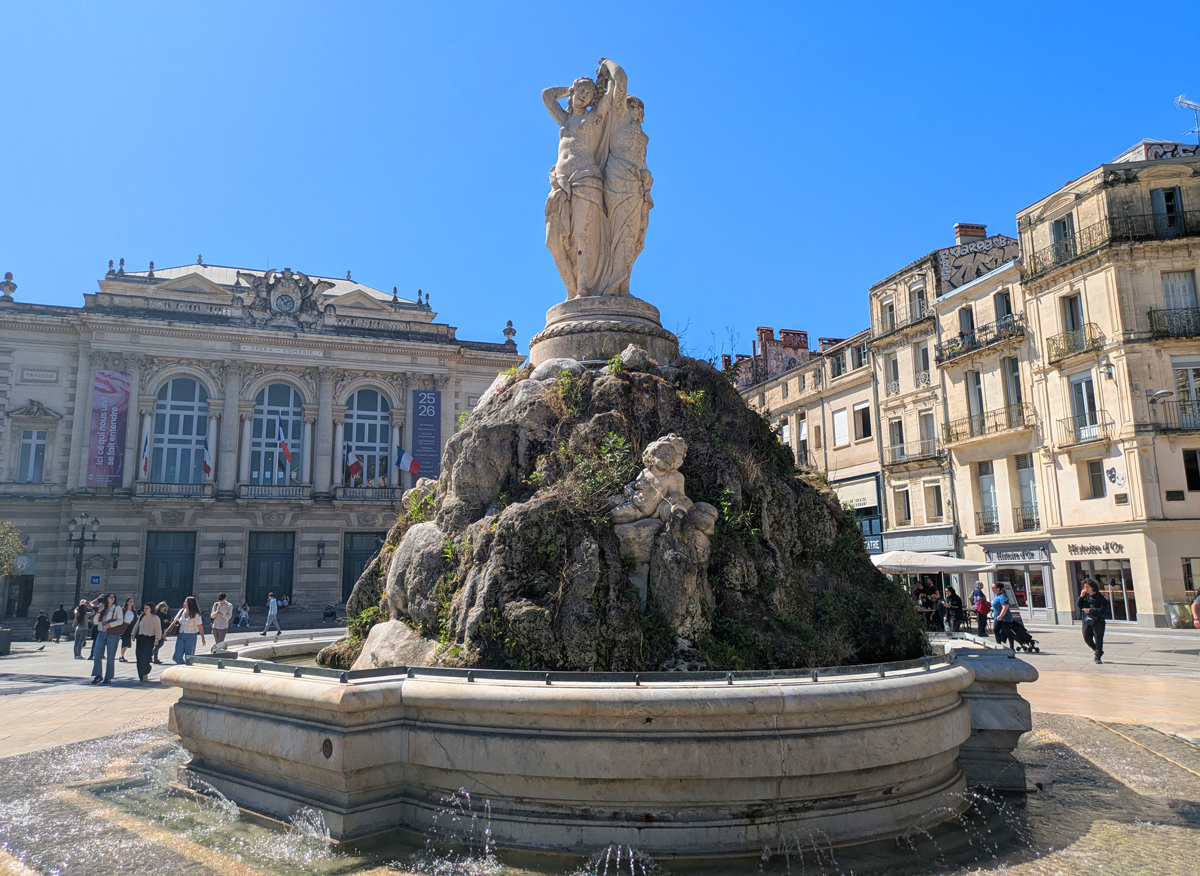
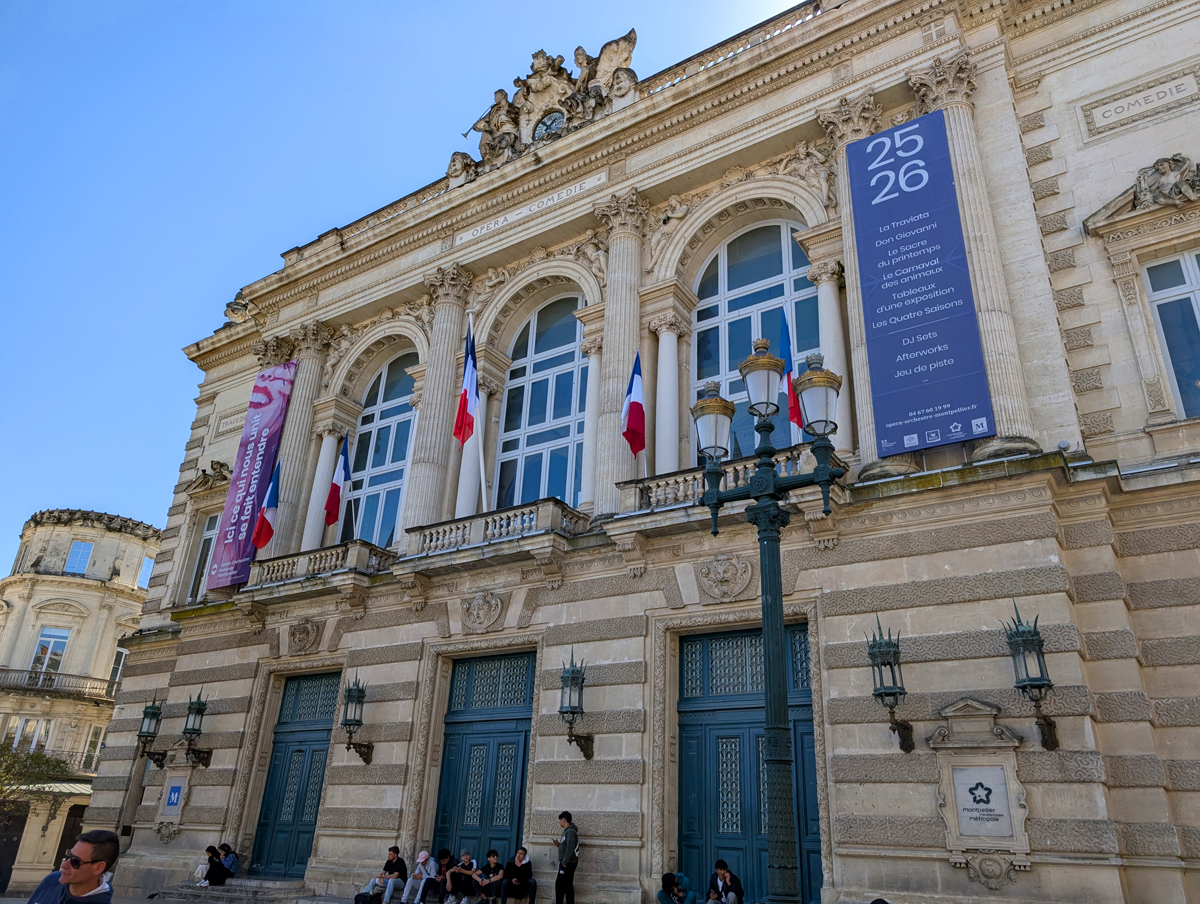
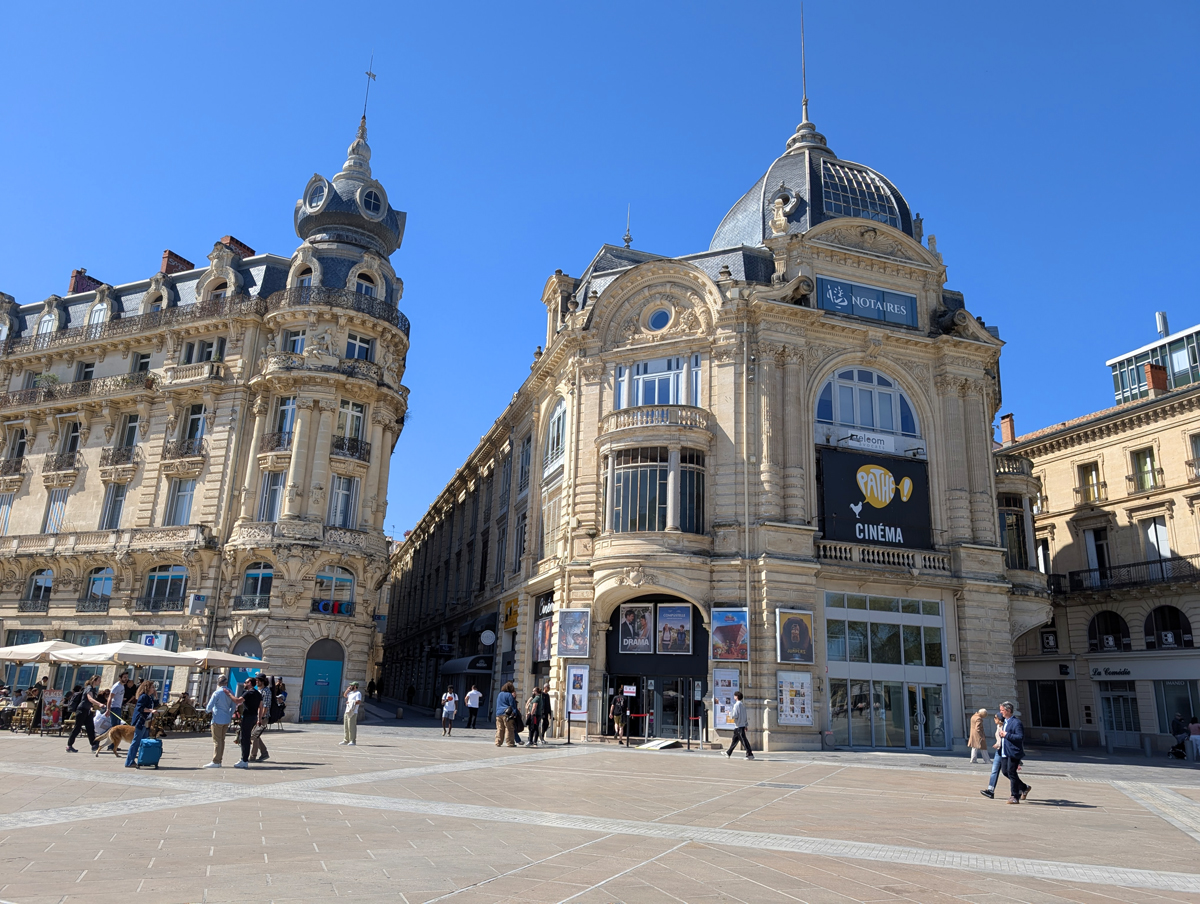
- Place de la Comédie, the huge main square which holds the Opéra Comédie and the Three Graces Fountain. The square is one of the largest pedestrian areas in Europe.
- The Saint Pierre cathedral
- The Promenade de Peyrou with the Water Tower and the Triumphal Arch (Arc de Triomphe)
- Musee Fabre the most famous museum in the city with paintings and ceramics from the 15th to 19th centuries.
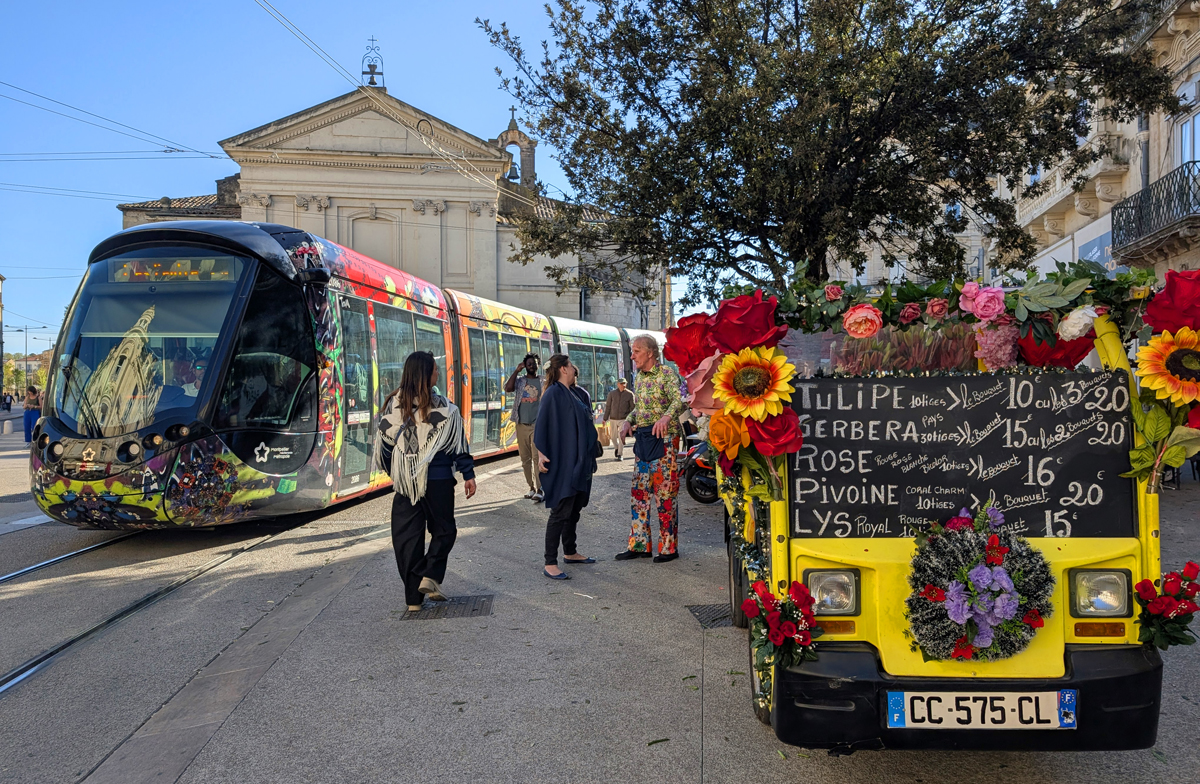
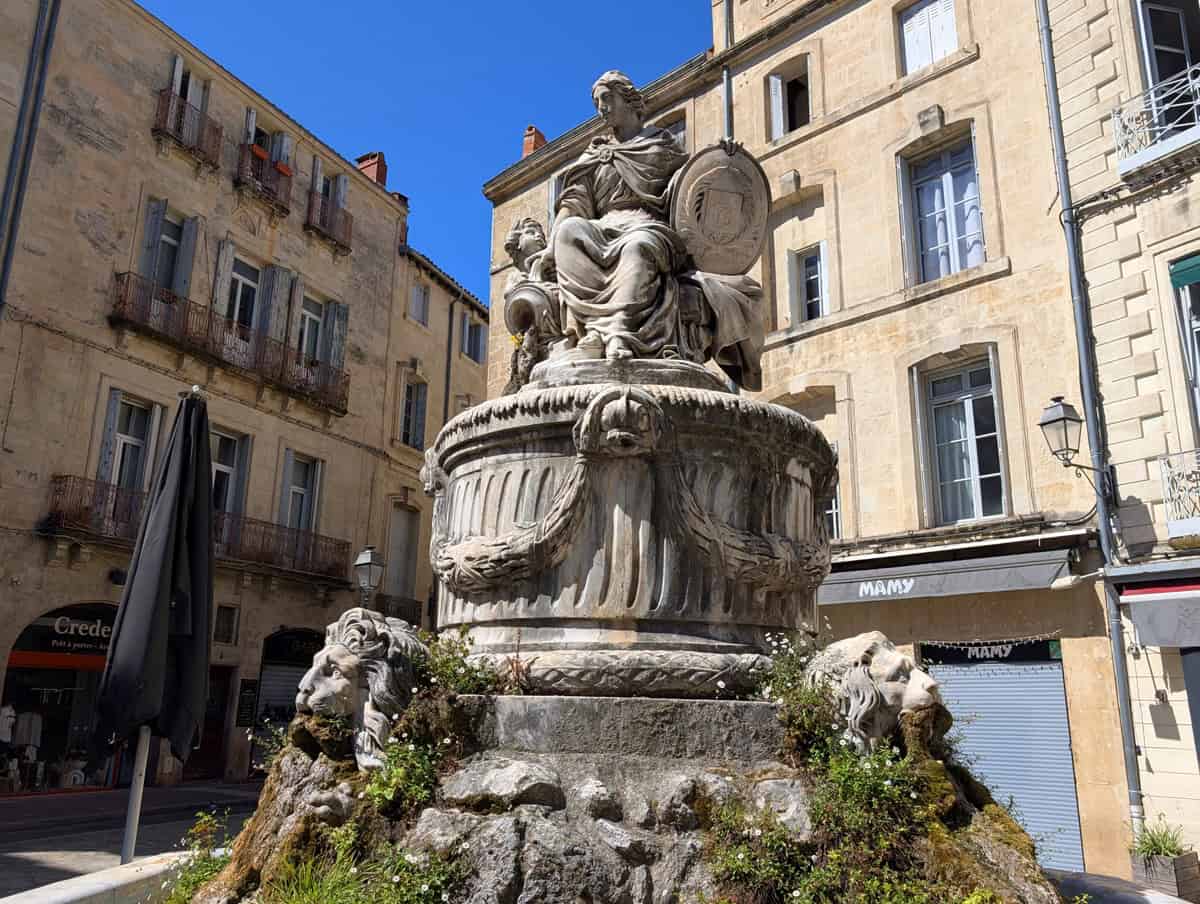
- Beautiful squares: I’ve mentioned Place de la Comédie. There is also Place St. Roch, Place Sainte-Anne, Place Jean-Jaurès, Place des Martyrs de la Résistance, Place du marché aux fleurs. All beautiful squares, some with churches, almost all with fountains and statues.
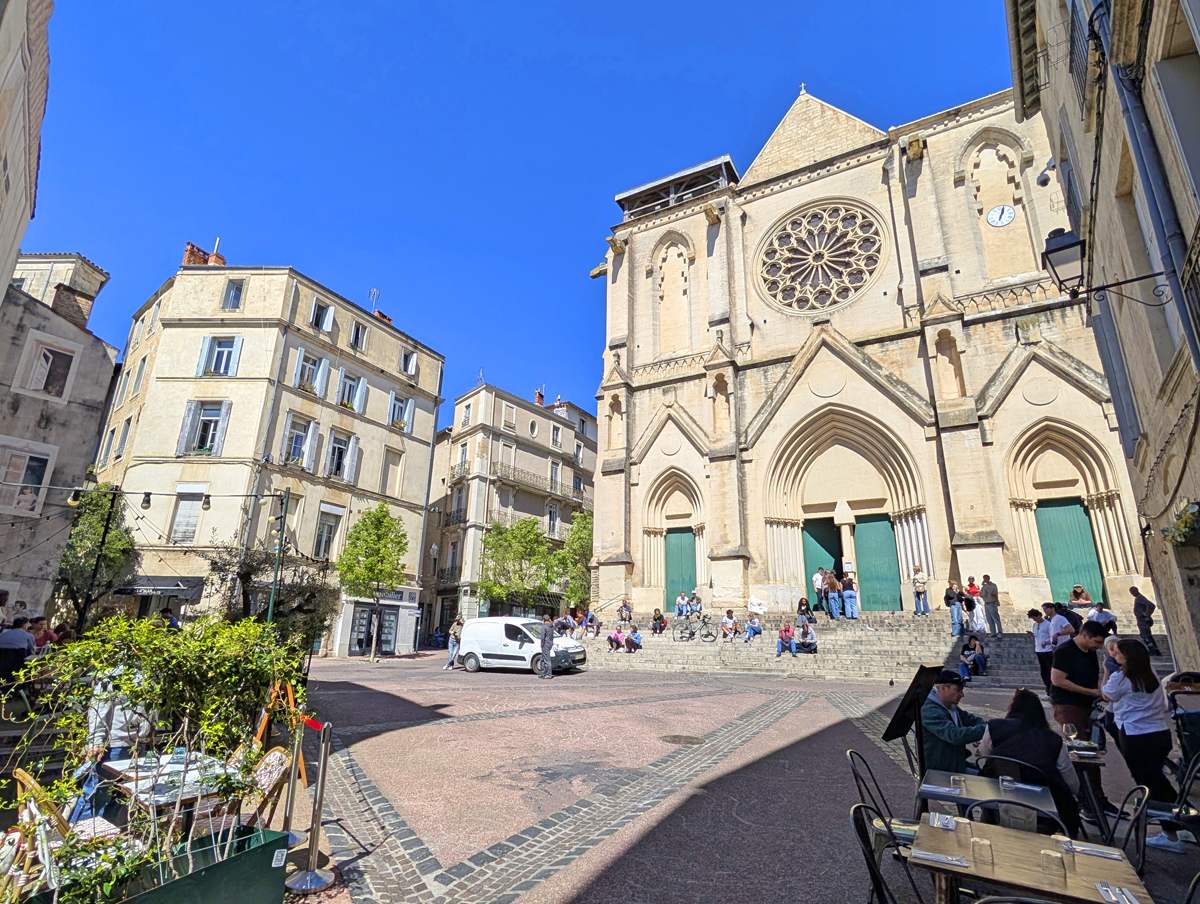
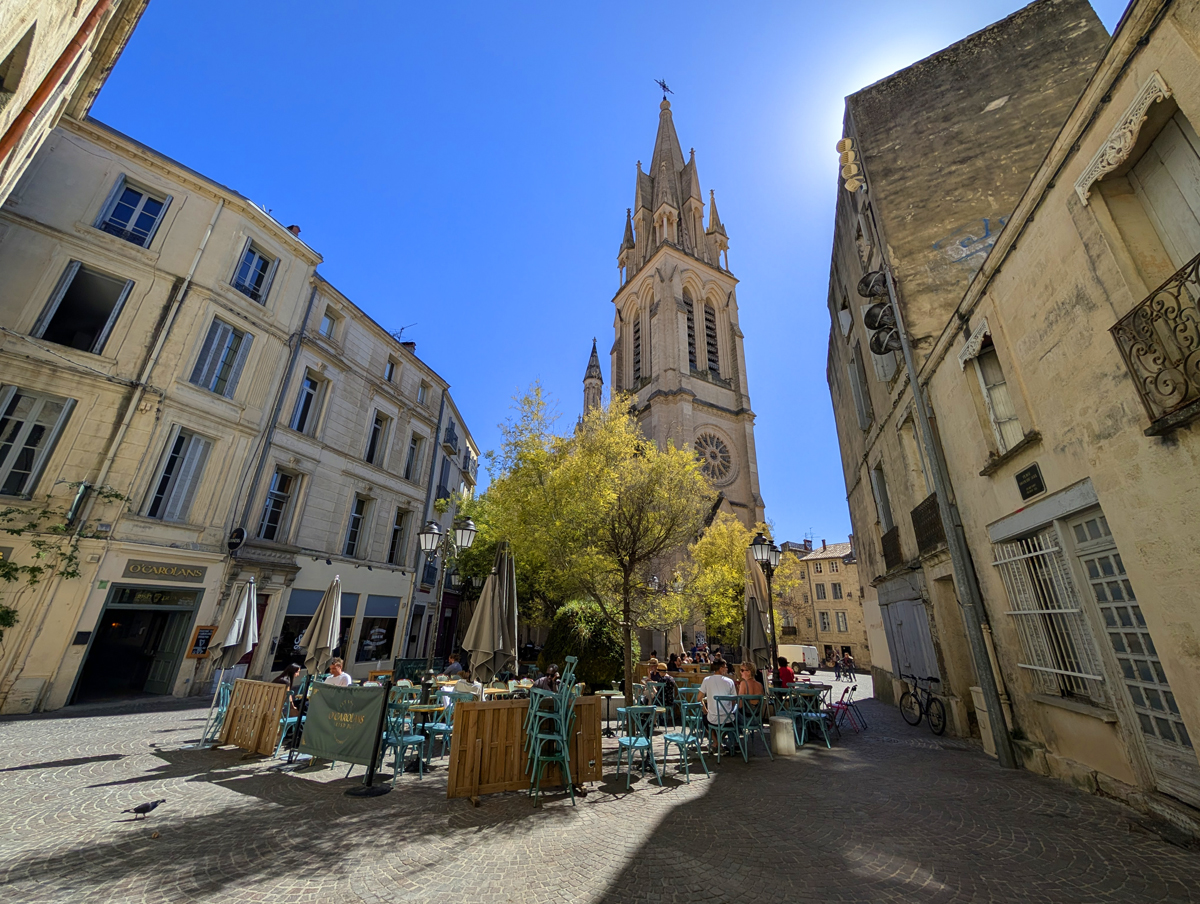
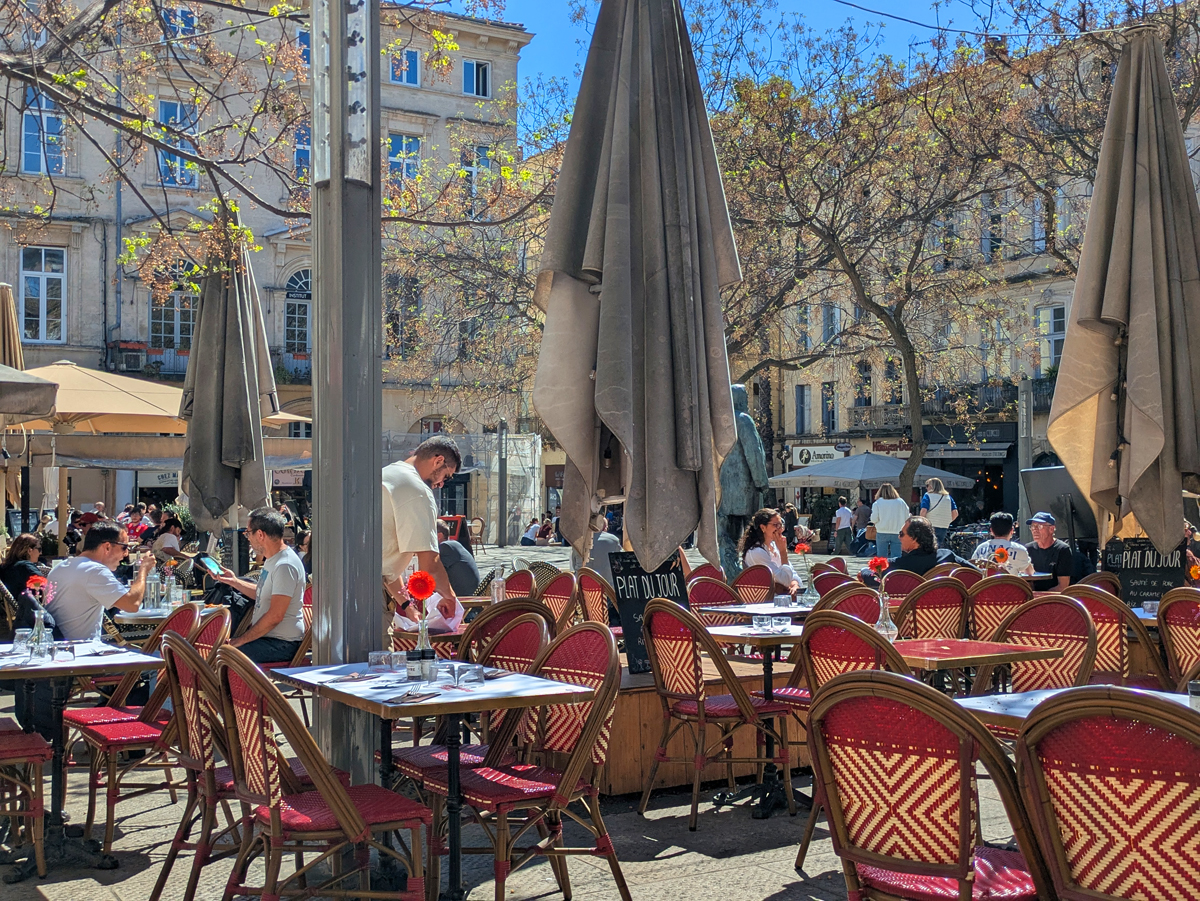
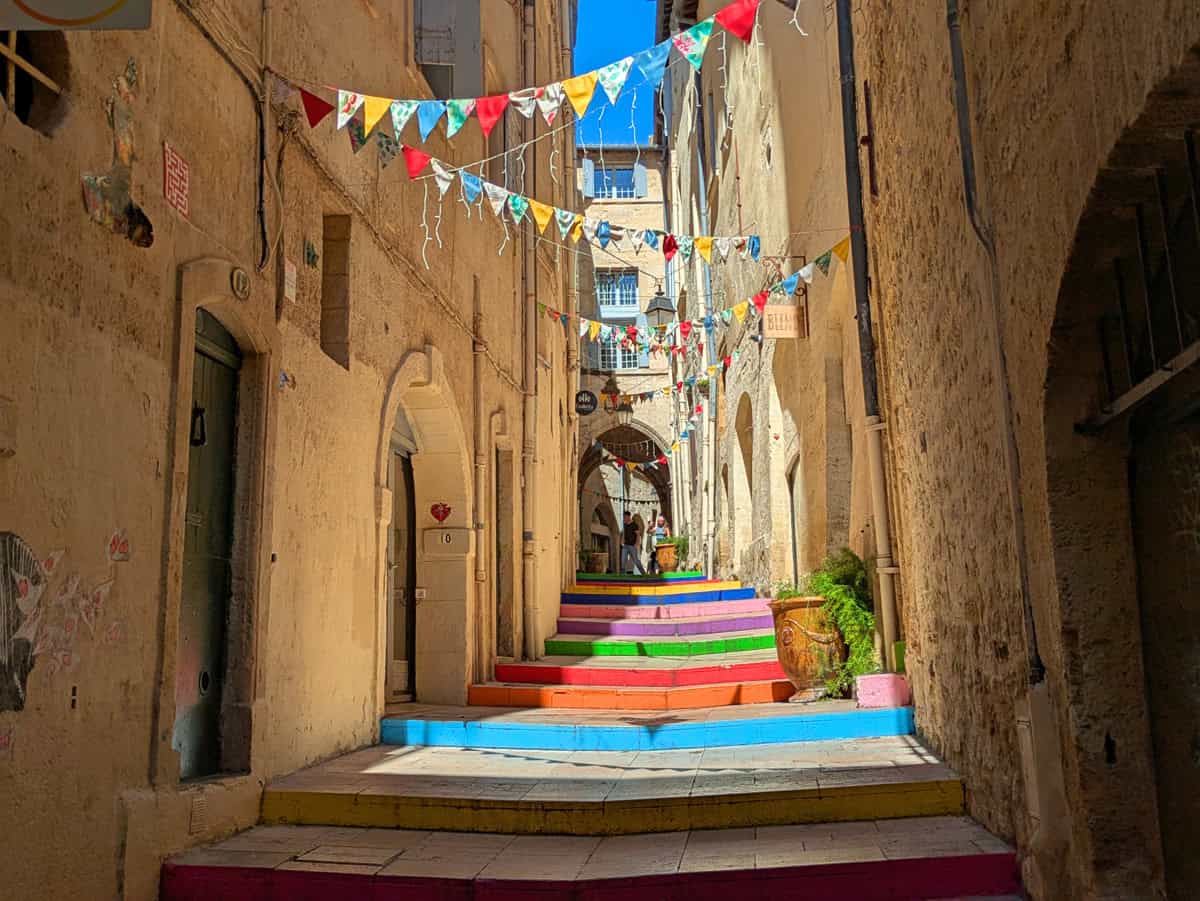
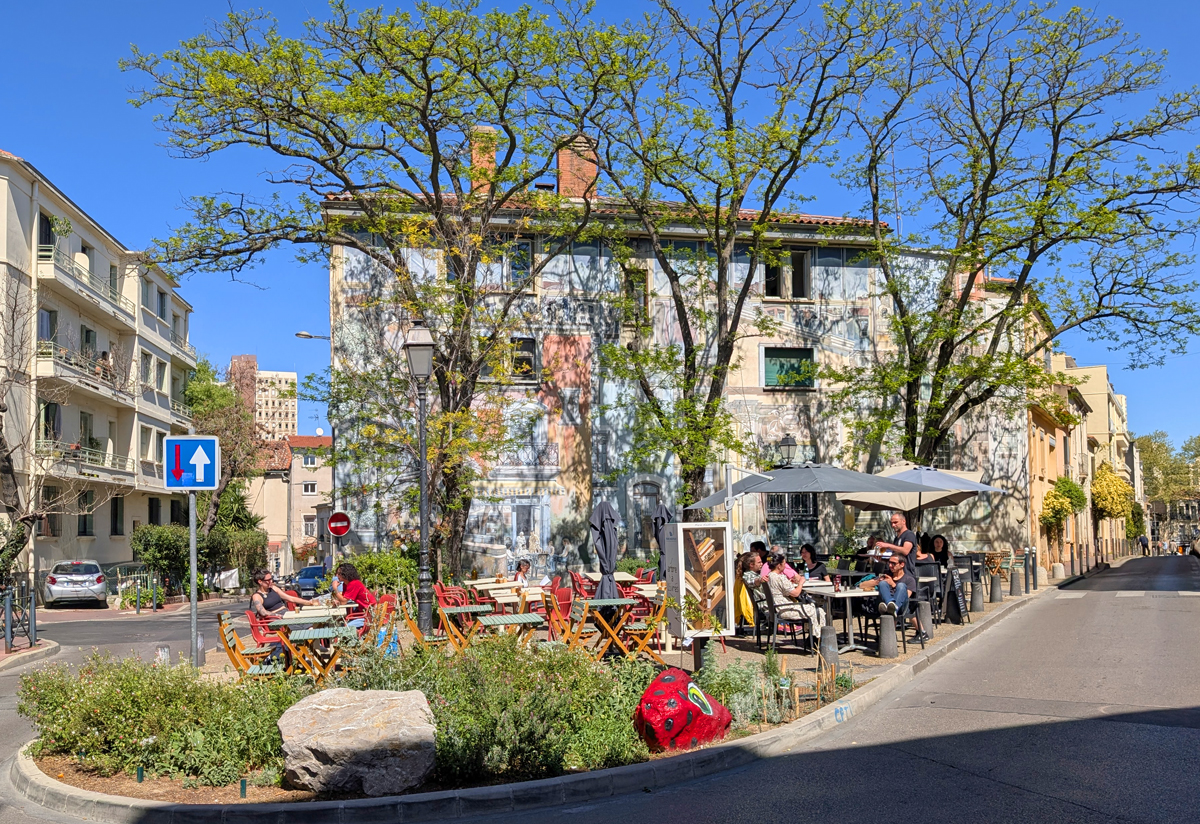
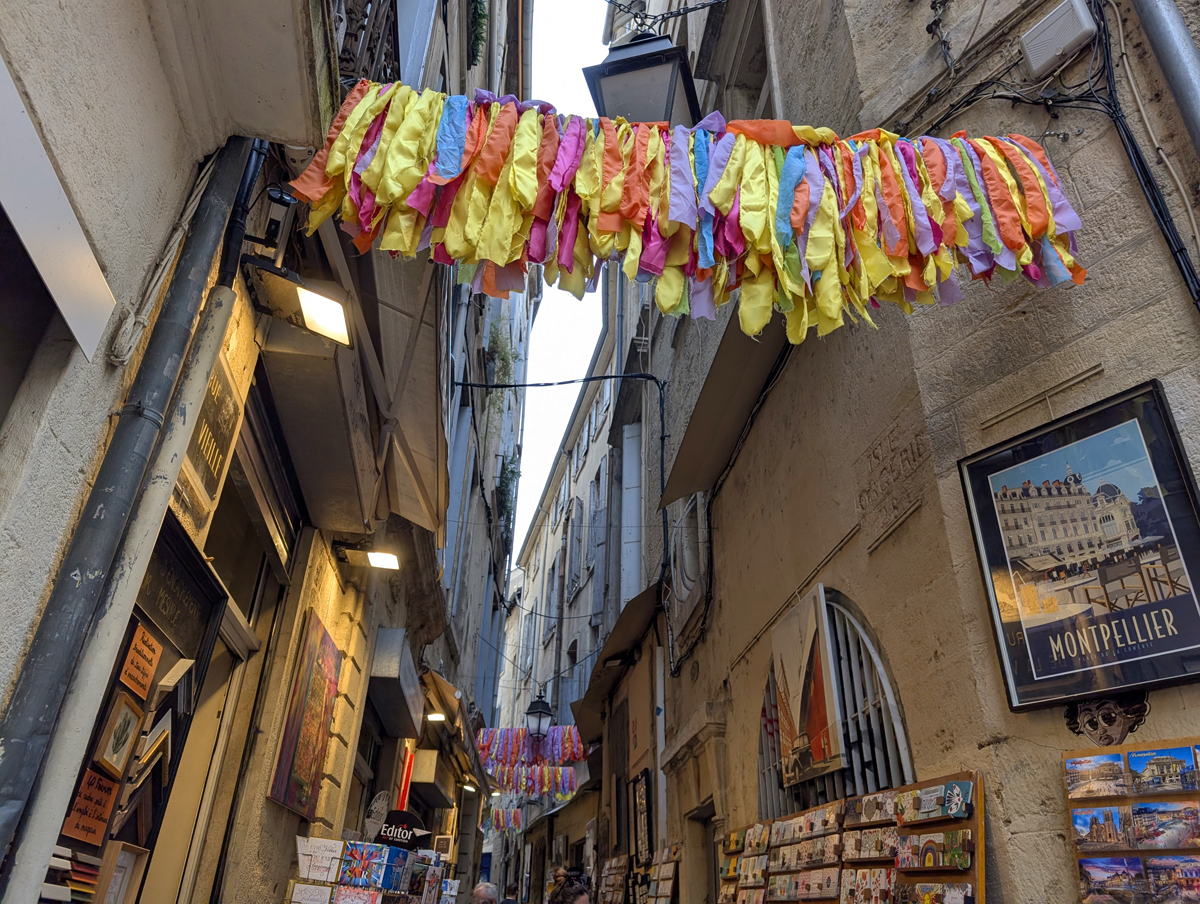
- Street Art. Montpellier is filled with murals (Trompe- oeil), colourful streets (such as Rue Bras de Fer), streets with hanging bicycles and balloons. Every street sign has artistic icons. You’ll see shoes on walls in homage of women killed by their partners. Montpellier is just filled with art.
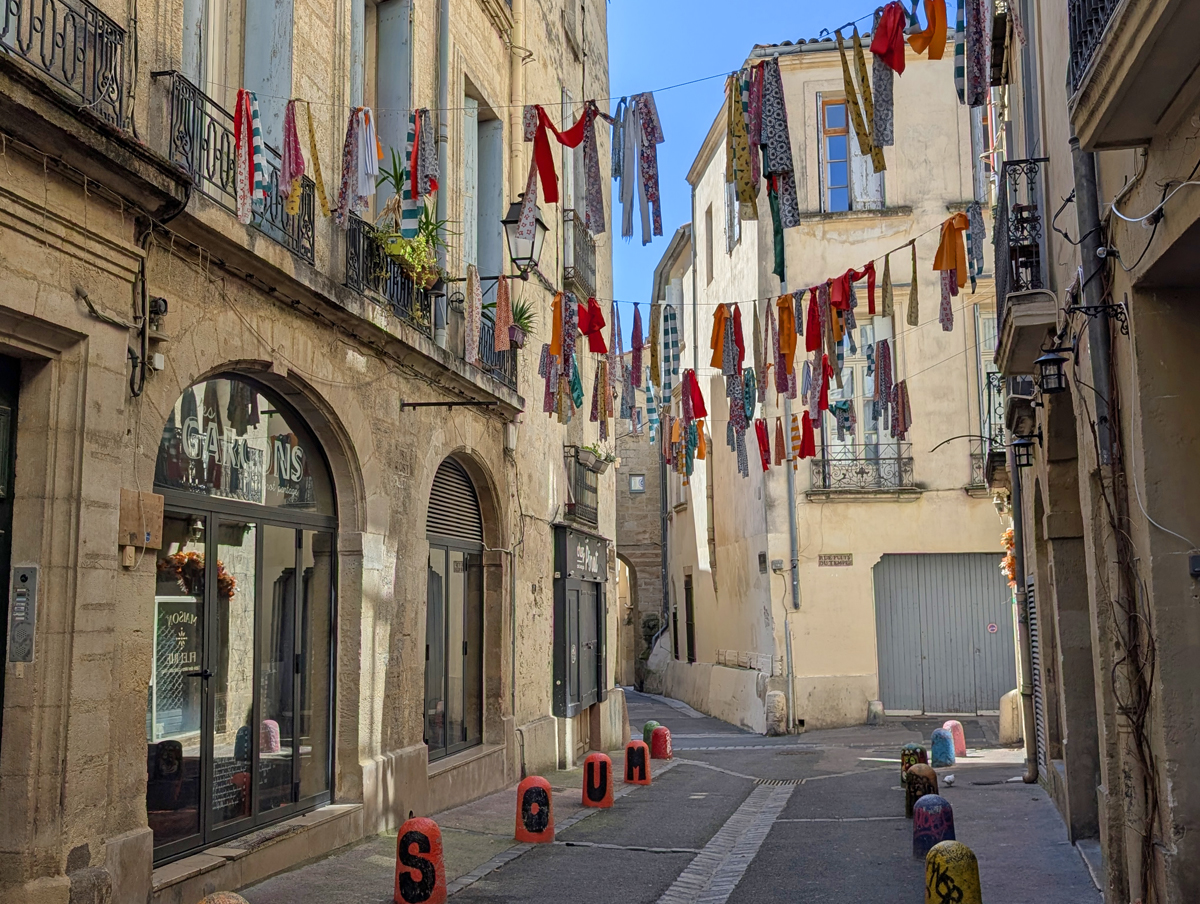
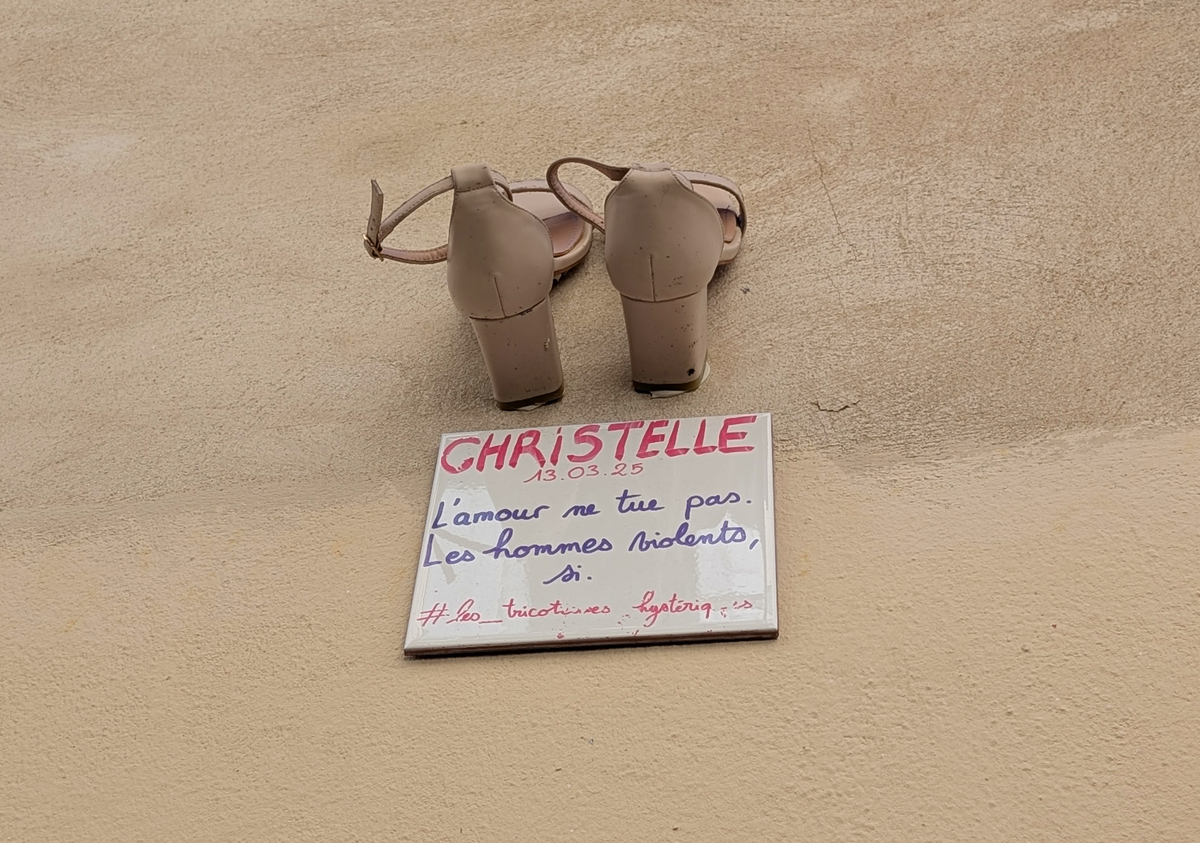
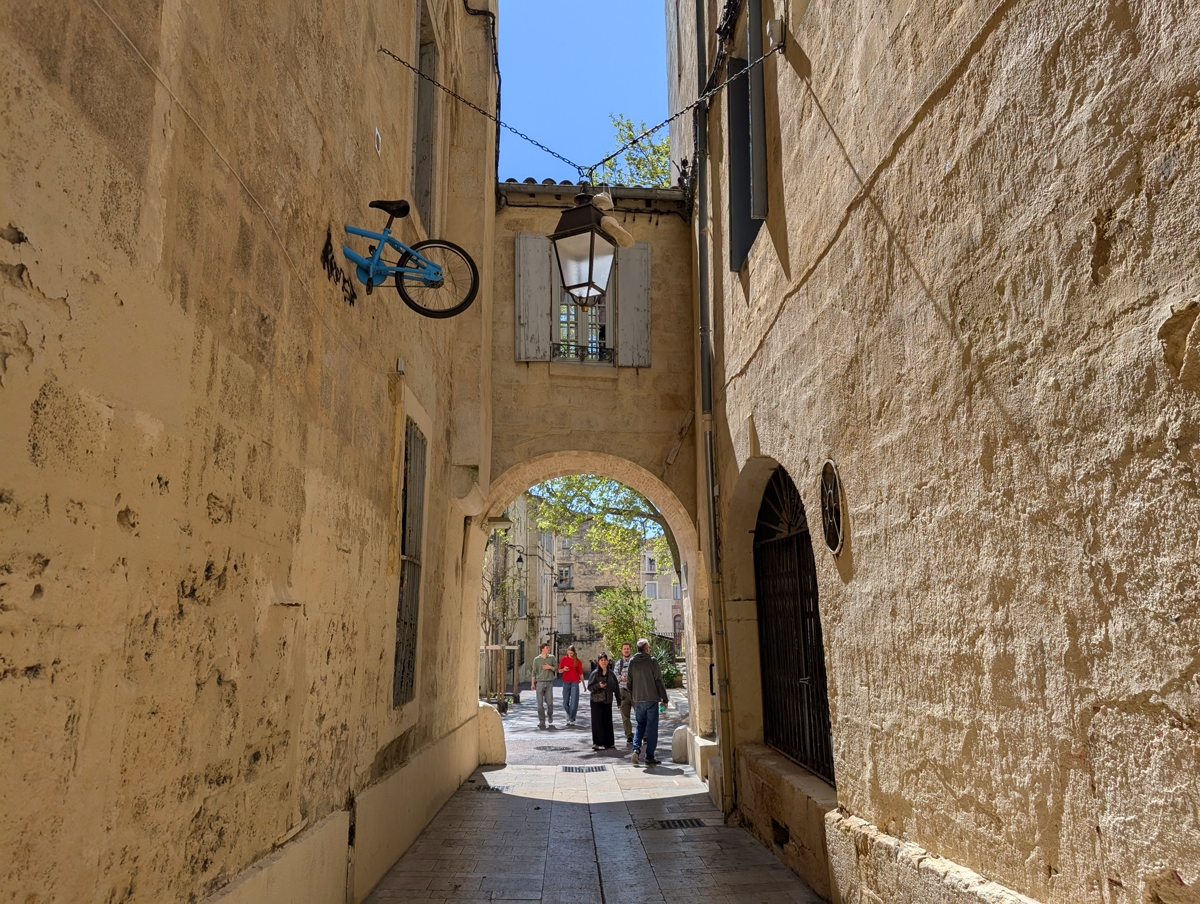
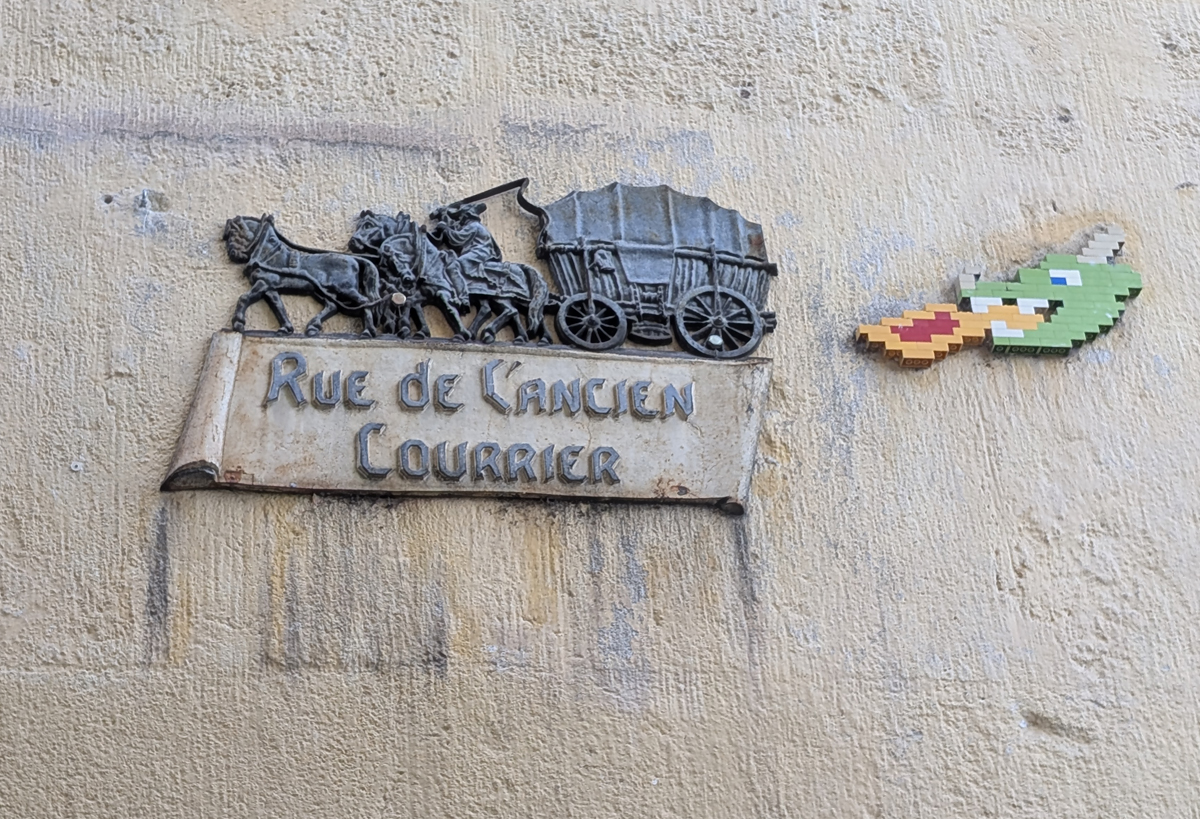
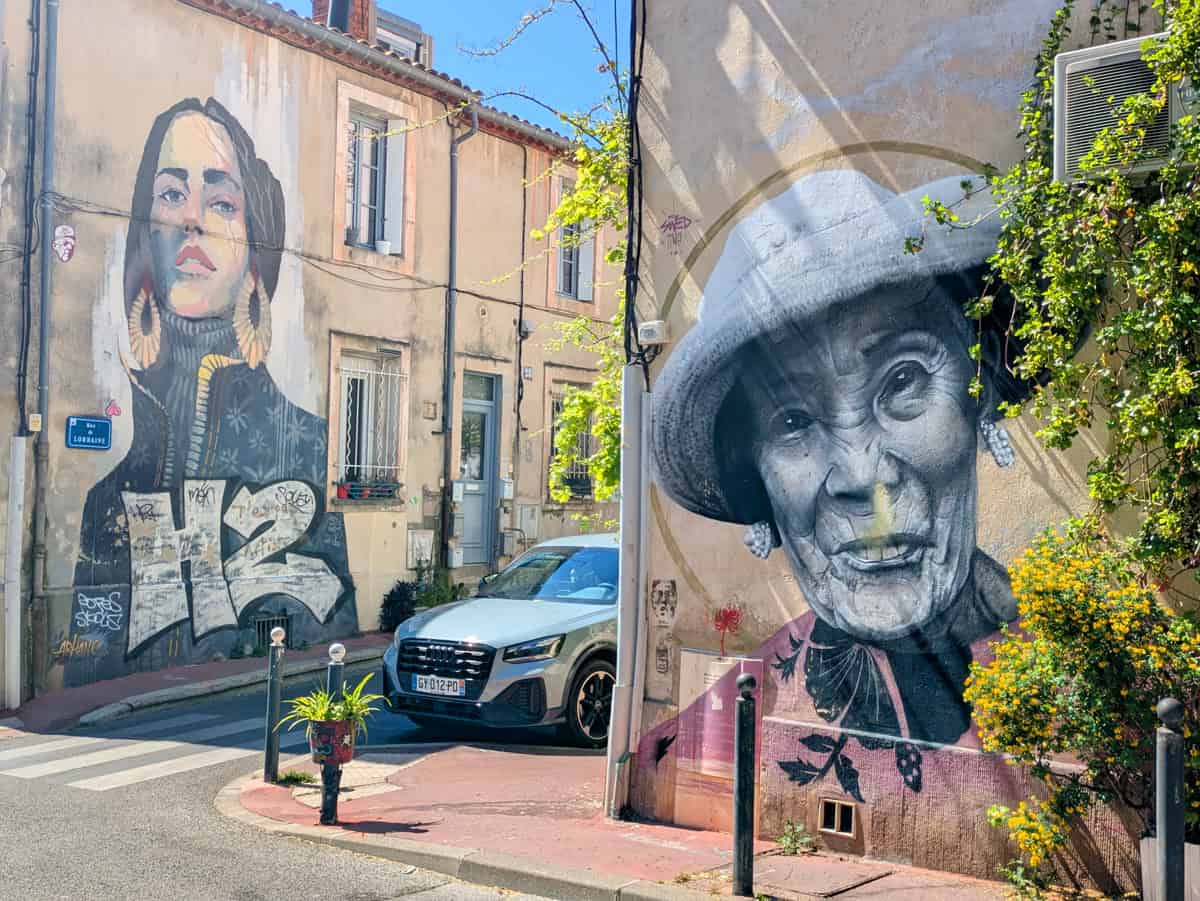
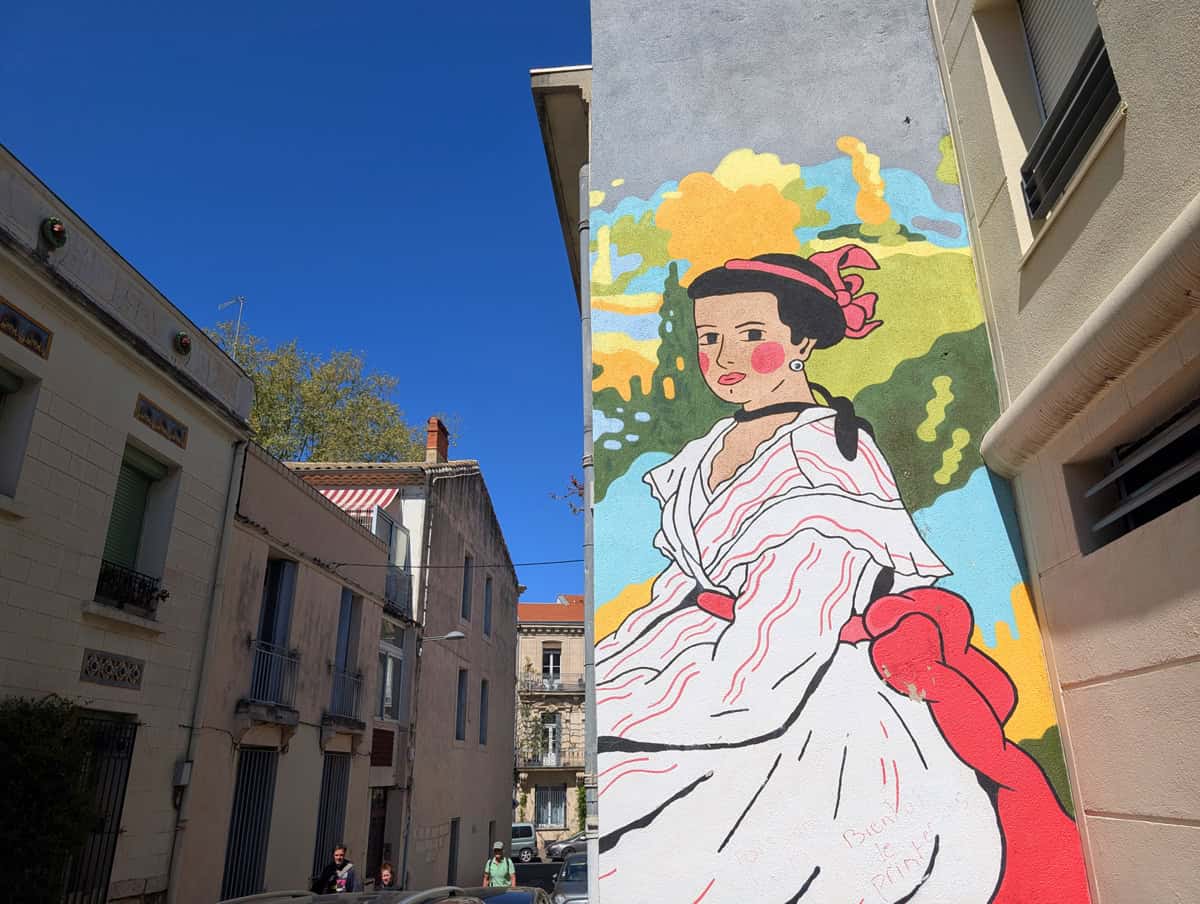
Montpellier is a beautiful and very liveable city
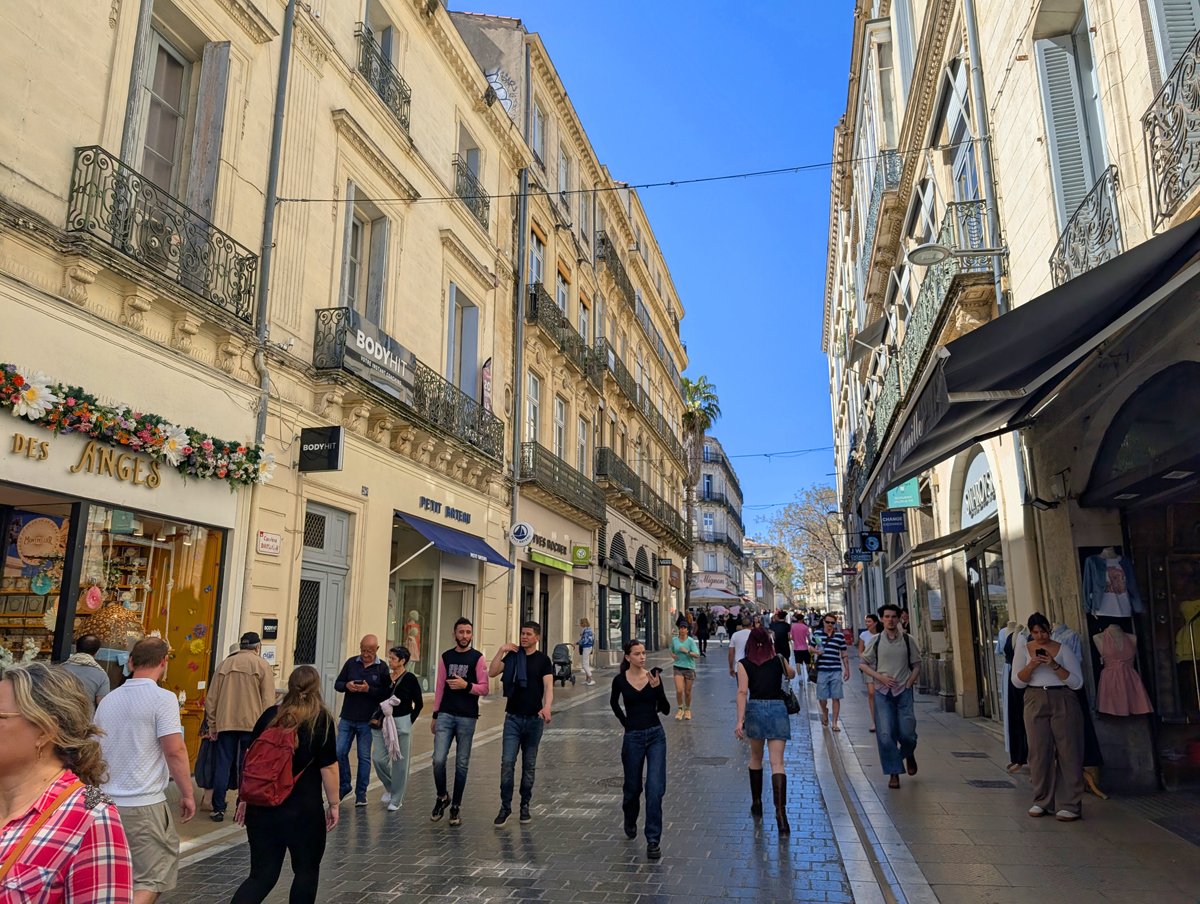
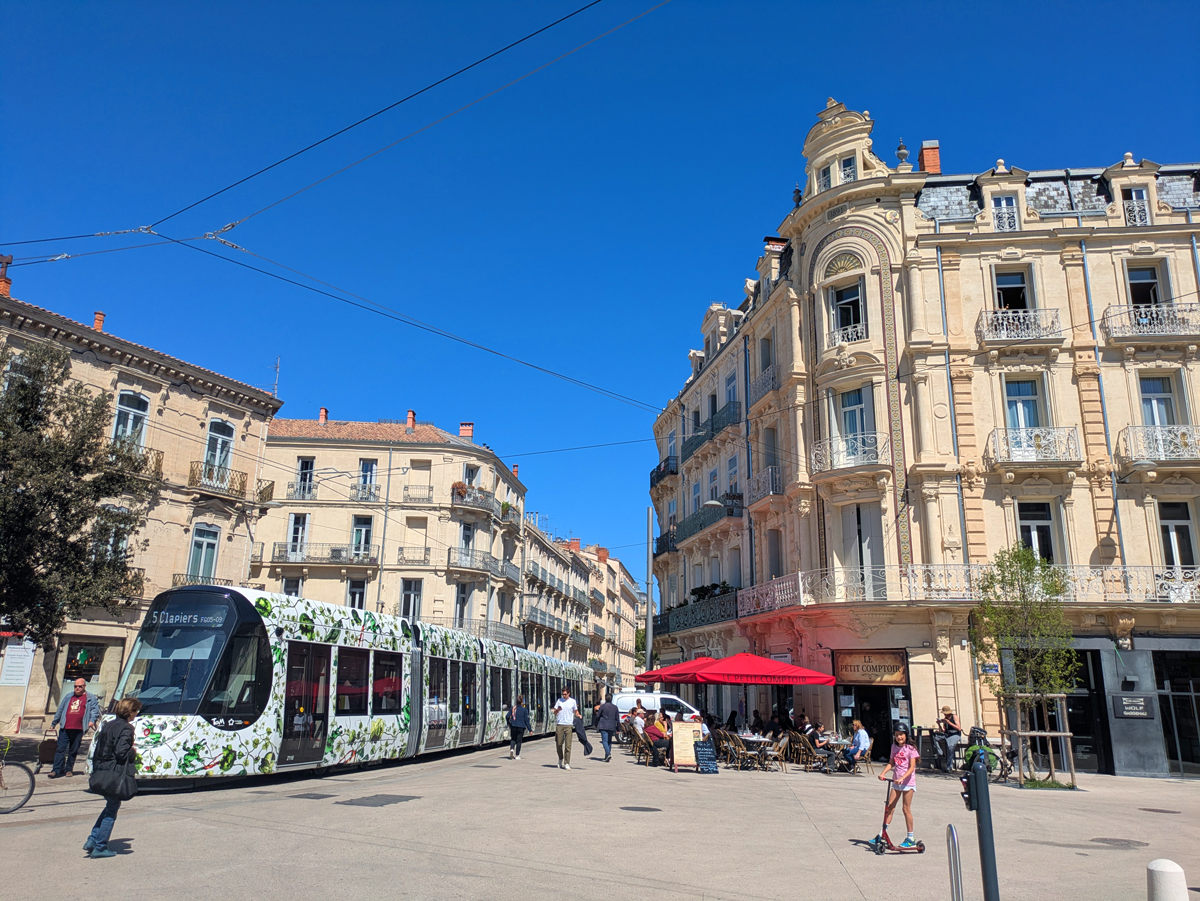
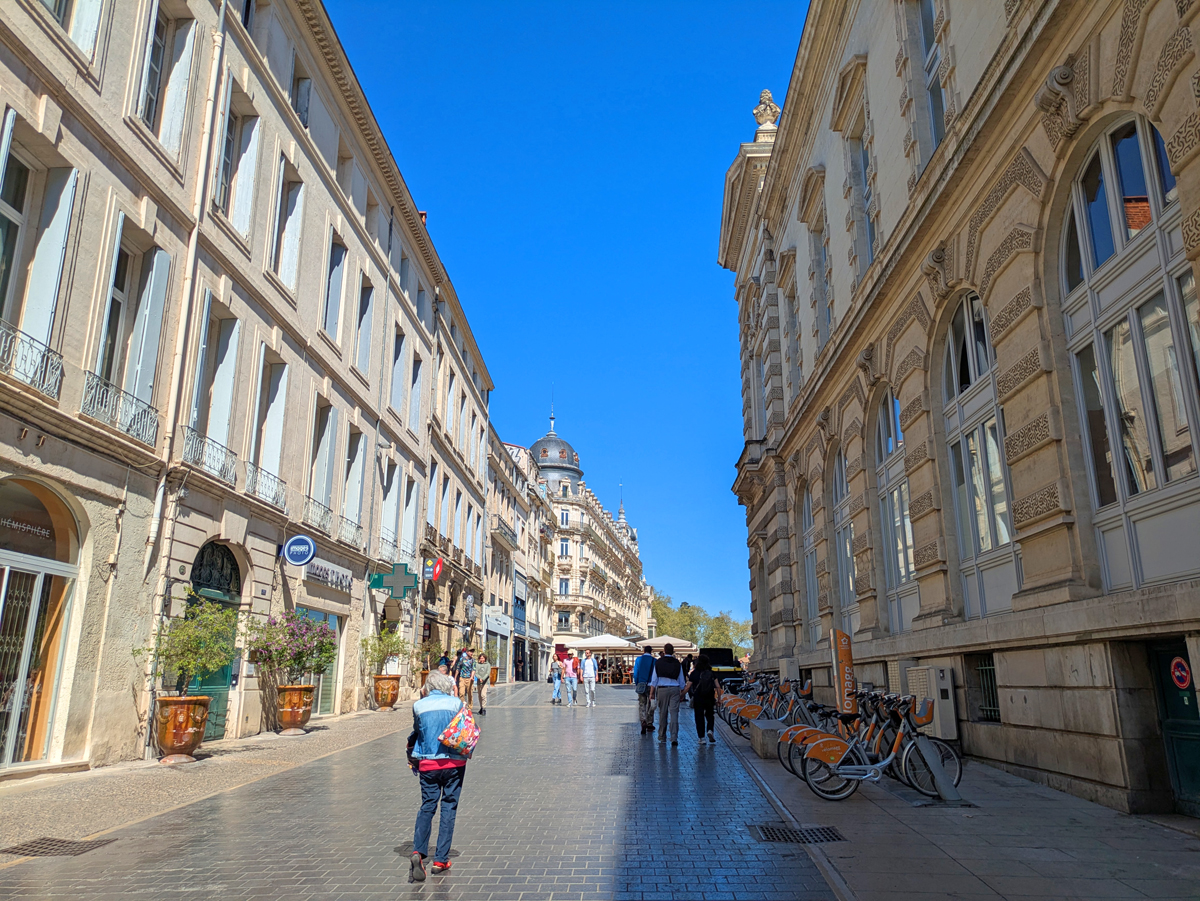
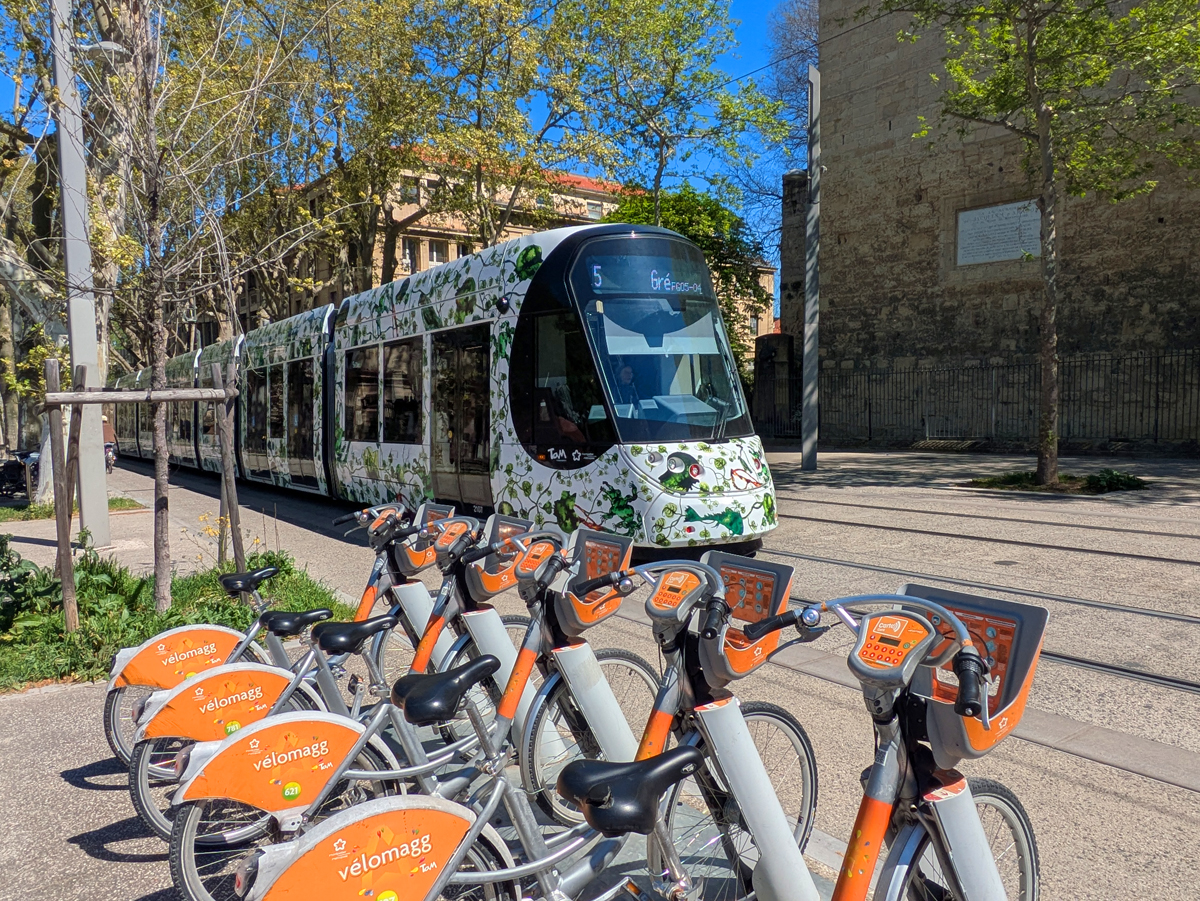
I mentioned up top that Montpellier doesn’t have any huge attractions. It’s not a place to check off highlights but rather a place to walk and be inspired. It’s a beautiful and very liveable with much of the city center being pedestrianized. For slow travellers like us it made for the perfect base.
Some more photos:
Practical Information on Montpellier
Getting there. Montpellier is on the main train lines going north-south and the train station (Gare Saint-Roch) is a beautiful station right in the city center. Very convenient getting anywhere including Sète (15 min) and Béziers (45 min) to the south and Nimes (35 min) and Avignon (1 hr 15 min) to the north. See the SNCF website for schedules and tickets.
Tourist Information Office. The Tourist Information Office is on Place de la Comédie, a 10 minute walk from the train station. They are excellent and will give you lots of information. I’ve included the map I picked up there (just click on it. You can print it out).
Accommodation. We stayed in an Airbnb for 10 days, unfortunately it wasn’t comfortable and I won’t recommend it (great apartment but one of the worst beds we’ve ever encountered). Instead: Hôtel Royal – Centre Comédie if you’re coming for a short stay and want to be right at the heart of the city OR Appartement Charme Ancien & Confort Moderne if looking for an apartment in the center (preferably for a few days)
Where to eat/drink. For a great breakfast/brunch, Olya Café Opera. A good bakery for bread and pastries is Maison L’oeuf. A great place to have a beer or coffee and watch the world go by is Café Paume (See the header photo at the top of the post. The café is right across the street). Cheap eats and really good is Ori Panzerotti (it was a little restaurant near our apartment). Sorry, don’t have a good dinner time restaurant as we always ate in our Airbnb apartment.
How much time to spend in Montpellier? It really depends on how you travel. For those just wanting to see the highlights and get a feeling for the city, Montpellier can be done in a day. For wanting a base in the area, you can easily stay a week. We had day trips to Sète and Béziers and Montpellier made an excellent base. We could also have easily visited Nimes from Montpellier.
The Bottom Line is that Montpellier is a beautiful and very pleasant city that should be visited.
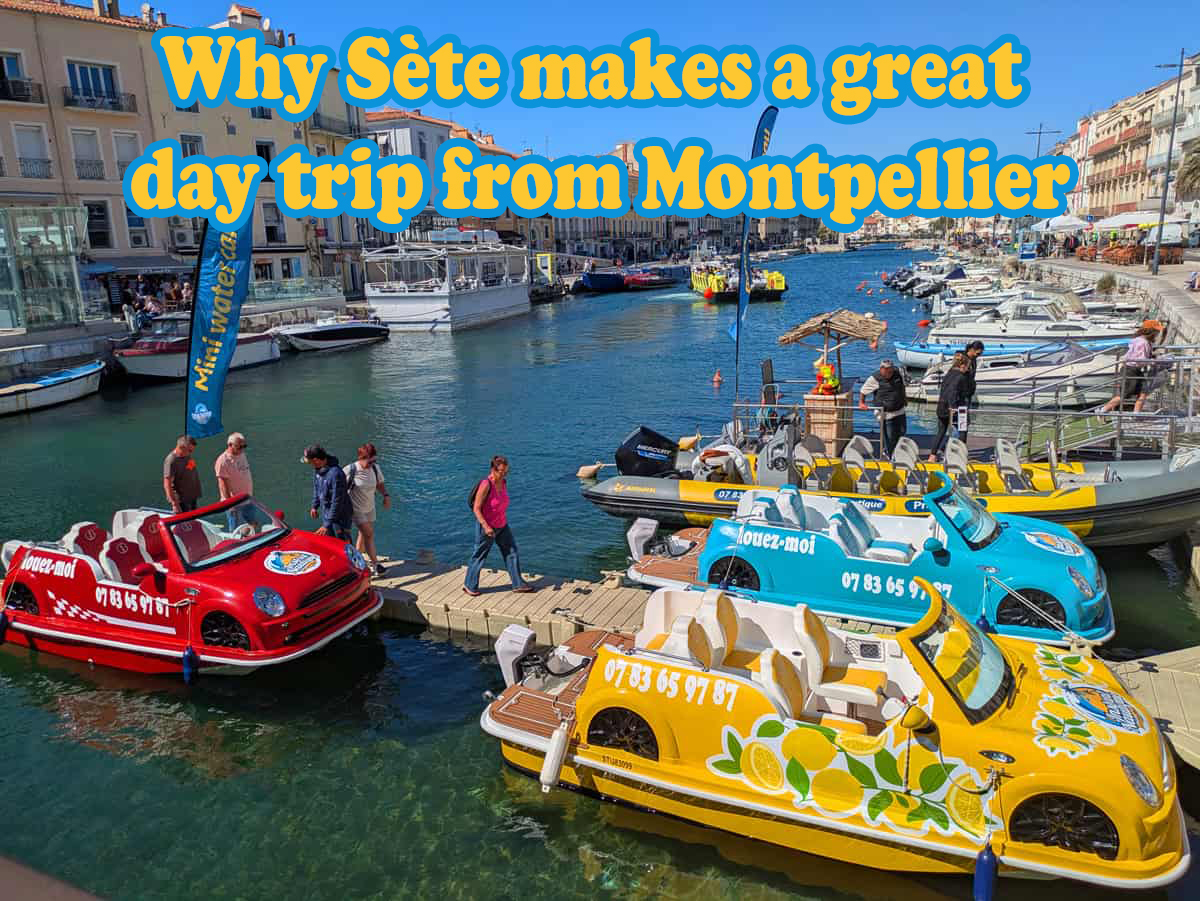
Related: Why Sète makes a great day trip from Montpellier
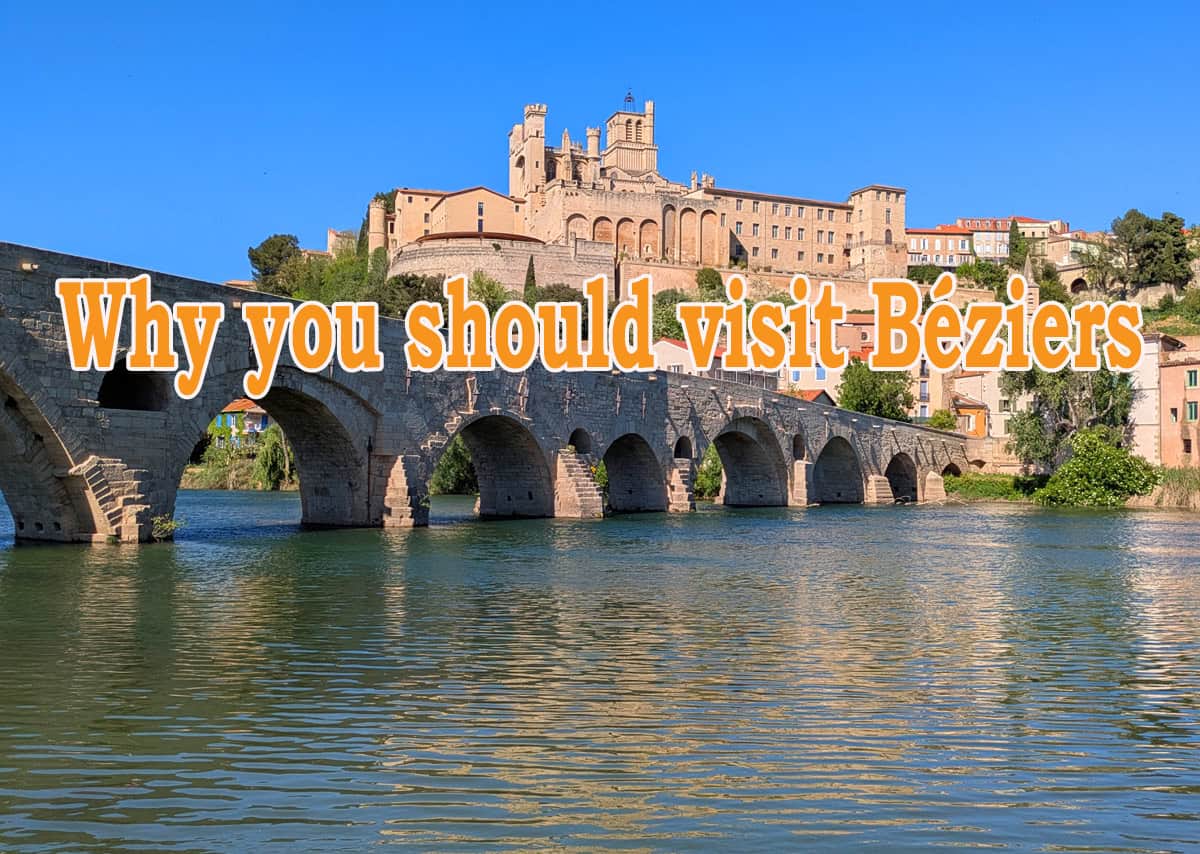
Related: Why you should visit Béziers: the 2nd oldest city in France
I’m glad you liked Montpellier…!!!
Yes we did 🙂