
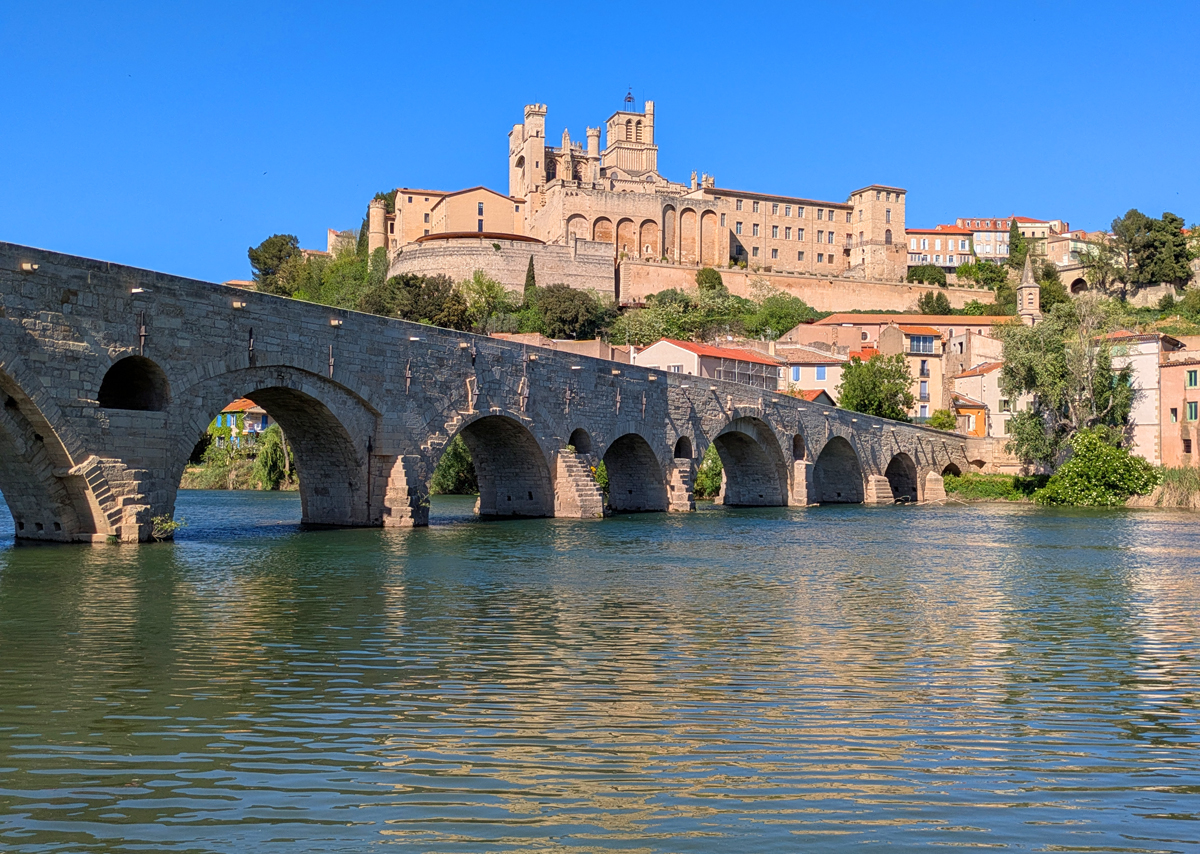
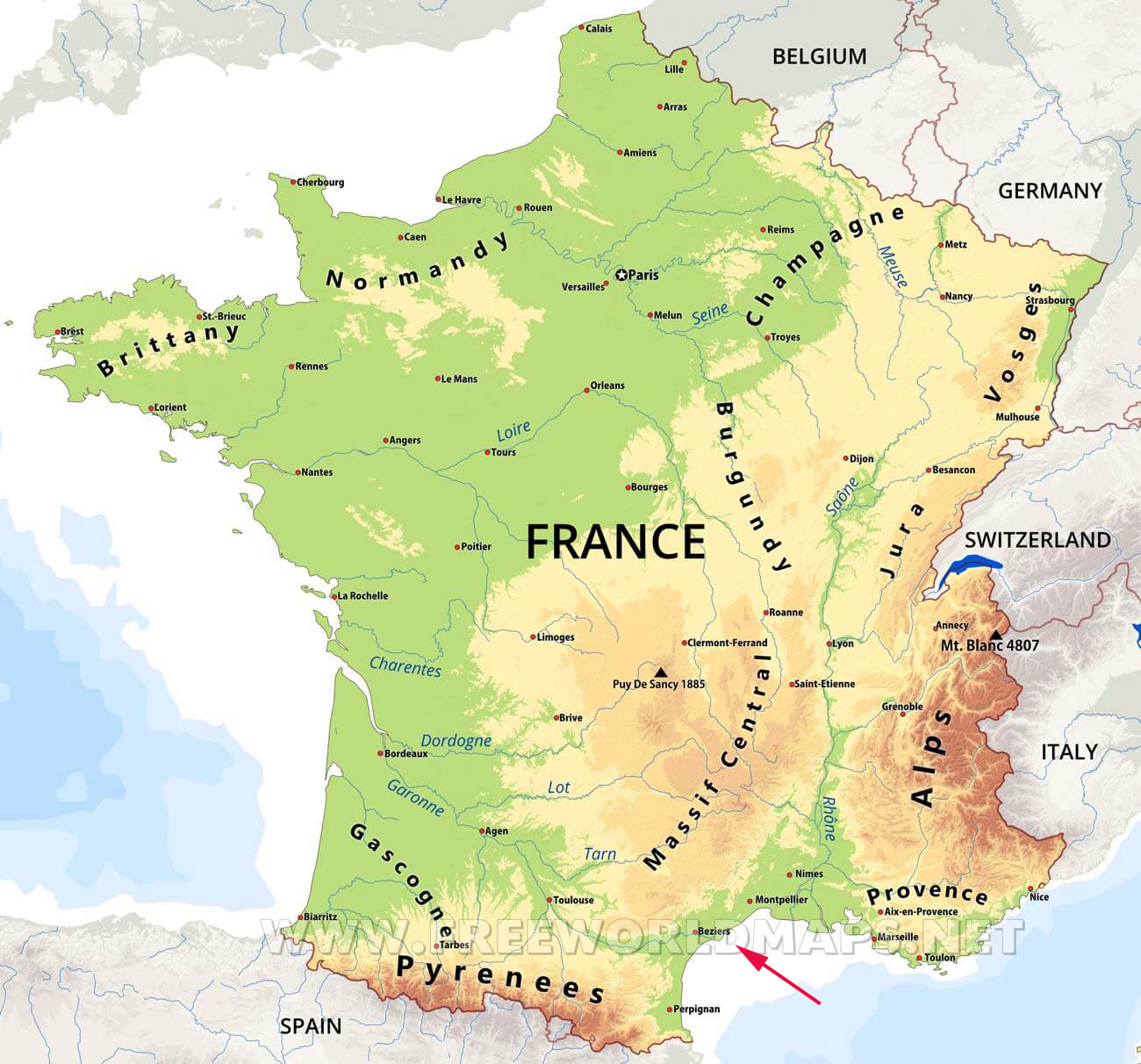
Why you should visit Béziers: the 2nd oldest city in France.
Béziers is the 2nd oldest city in France, dating back to 575 BC when it was a Greek colony. Only Marseille, founded in 600 BC, is older.
Béziers is a beautiful little city with lots of charm and makes for a fantastic daytrip. We came here from Montpellier (about 45 minutes away) but it also makes for an easy day trip from Carcassonne (also 45 minutes by train).
In this post I tell you about Béziers and show you why it is worth a visit.
A brief history of Béziers
Béziers is one of the oldest cities in France, dating back to 575 BC when it was a Greek colony. It was part of Gaul (Gallia) until the Romans conquered the region in 120 AD. It became a stop on the Via Domitia, the road that linked Rome to Northern Spain*.
*the region is strategically placed at a crossroads between east-west and north-south, situated in a fertile valley on the Orb river and just 10 km from the Mediterranean. During Roman times wine was exported to Rome from Béziers.
In the Middle Ages there were barbarian invasions by the Vandals, Visigoths and Sacarans. After a short period of Moorish rule in the 700’s, Béziers was the domain of various dukes and counts in the ninth century under the rule of Charlemagne (742-814) and his successors. Later it would be ruled by the Trencavel family, a powerful French noble family that controlled much of Languedoc between the 10th and 13th centuries.
Béziers is known for one of the worst massacres in French history. The city was a stronghold of Catharism, a Christian movement that didn’t follow the gospel of the Popes in Rome. It was denounced as a sect by the Catholic church and in 1209 the Pope (Pope Innocent III) sent a Crusader army, led by a Cistercian abbot named Arnaud Amaury, to drive out Catharism. The city was overrun and over 20,000 people were slaughtered despite taking refuge in the churches and cathedral. Amaury, when asked how to distinguish between heretics and the innocent Catholics: “Kill them all,” he said, “The Lord will recognise his own!”
After the massacre, the city was repopulated. In 1247 it became part of the domain of the King of France. Béziers was the capital of the Languedoc wine region and it made its fortune transporting local wines up to Paris during the 19th and early-20th centuries.
Béziers is famous for the Canal du Midi: considered one of the great construction works of the 17th century, it is a canal that connected the Atlantic to the Mediterranean through a combination of canal, locks, lagoons and rivers. The project was conceived by Pierre-Paul Riquet (born in Béziers) and was approved by Louis XIV in 1666; the purpose being to connect the Atlantic and Mediterranean while bypassing Spain (and the Strait of Gibraltar where French cargo had to pay hefty fees to the Spanish). About a 15-minute walk outside the center are a series of 9 locks (Les 9 Écluses de Fonseranes) which are a highlight of the canal: a lock system which allow boats to be raised a height of 21.5 metres over a distance of 300 metres.
What to See in Béziers
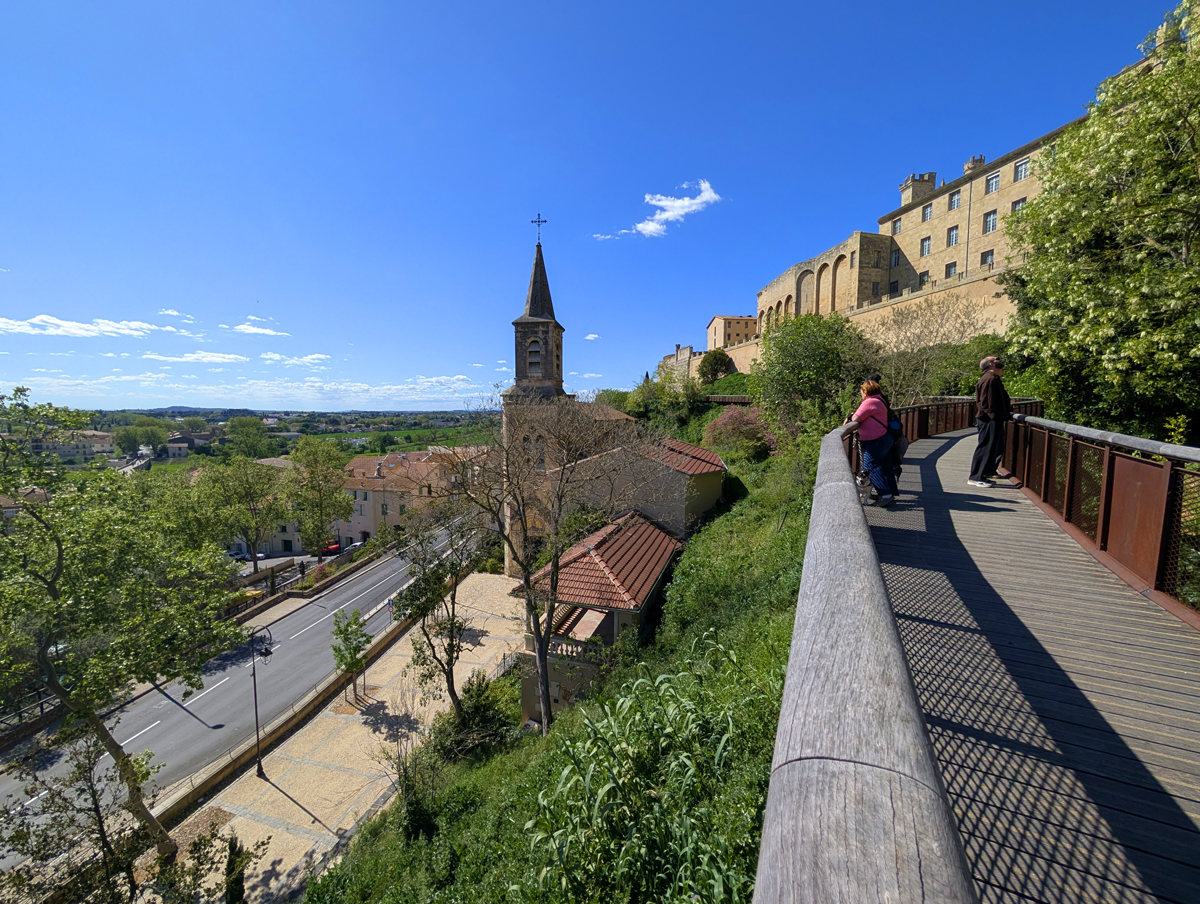
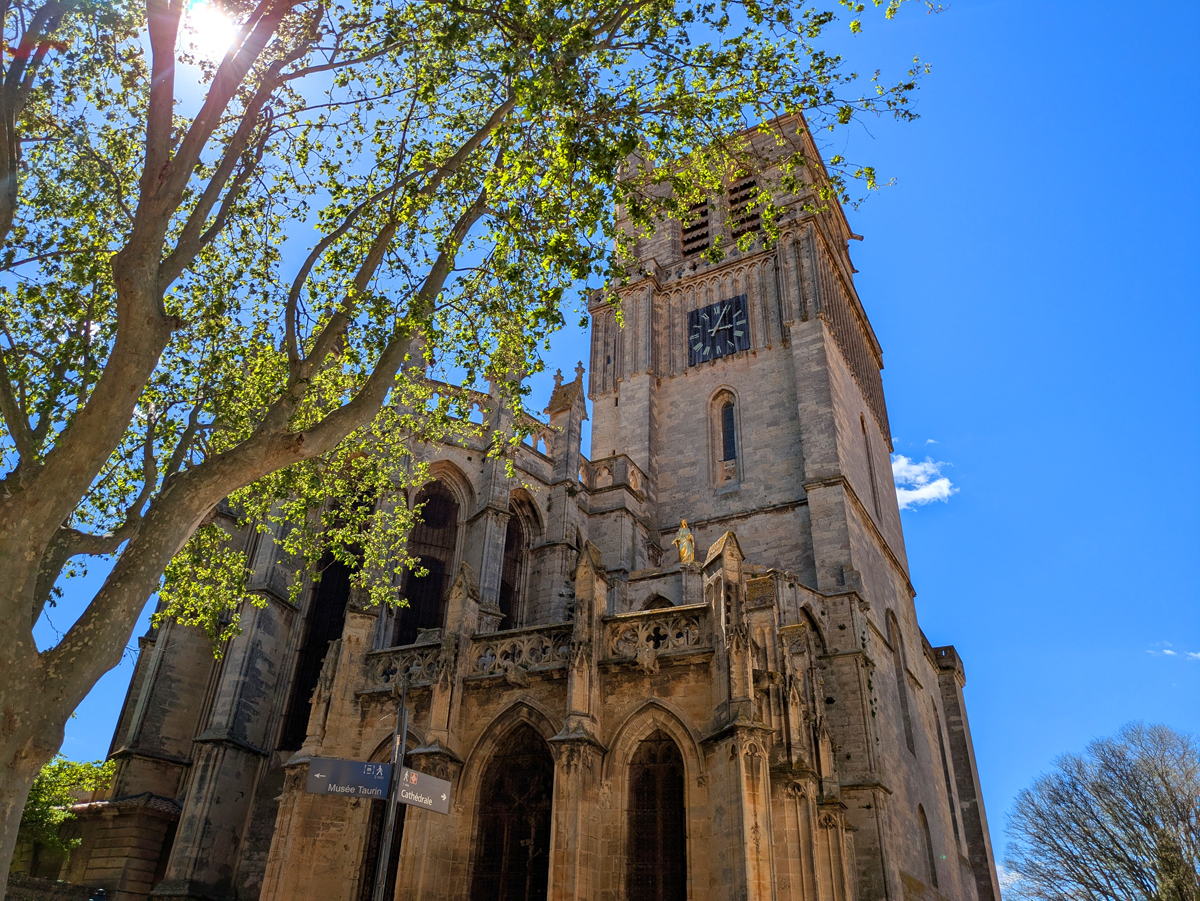
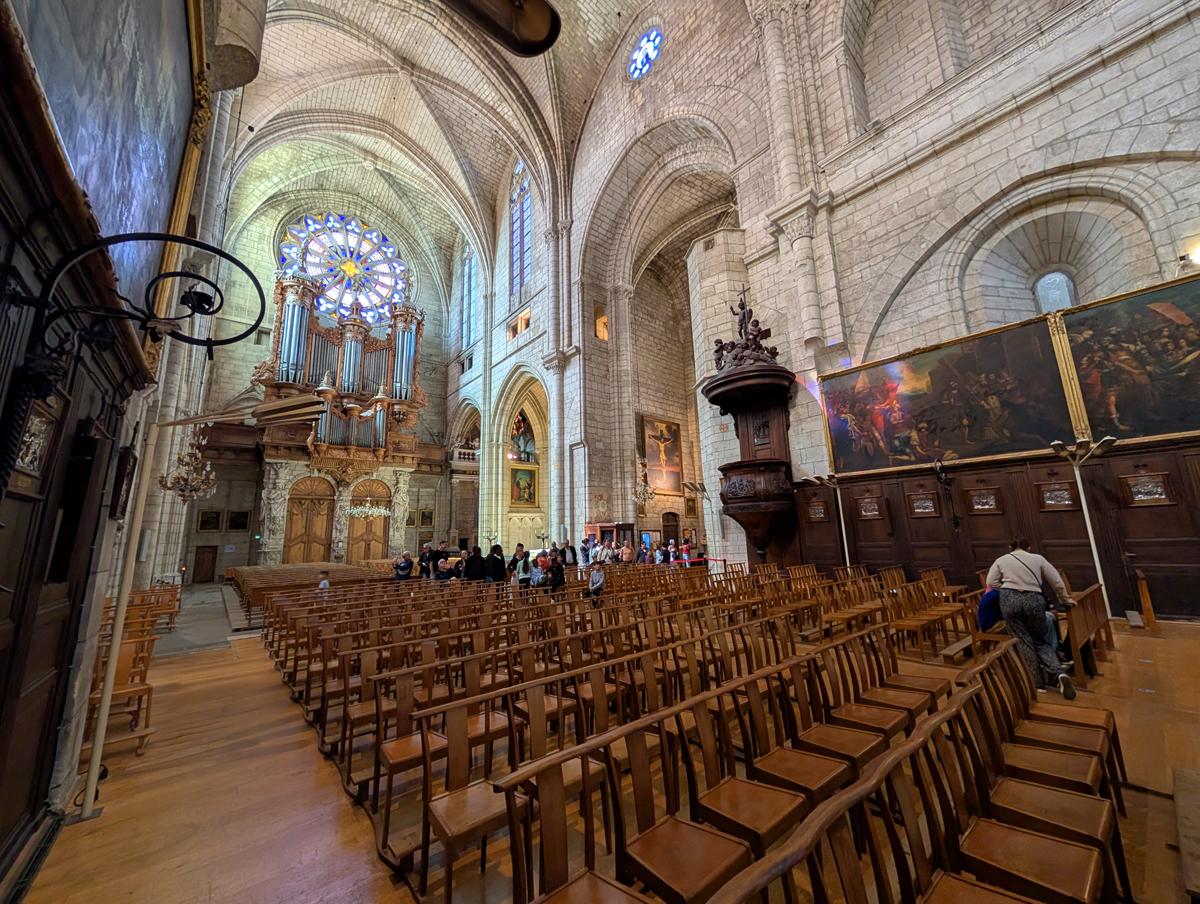
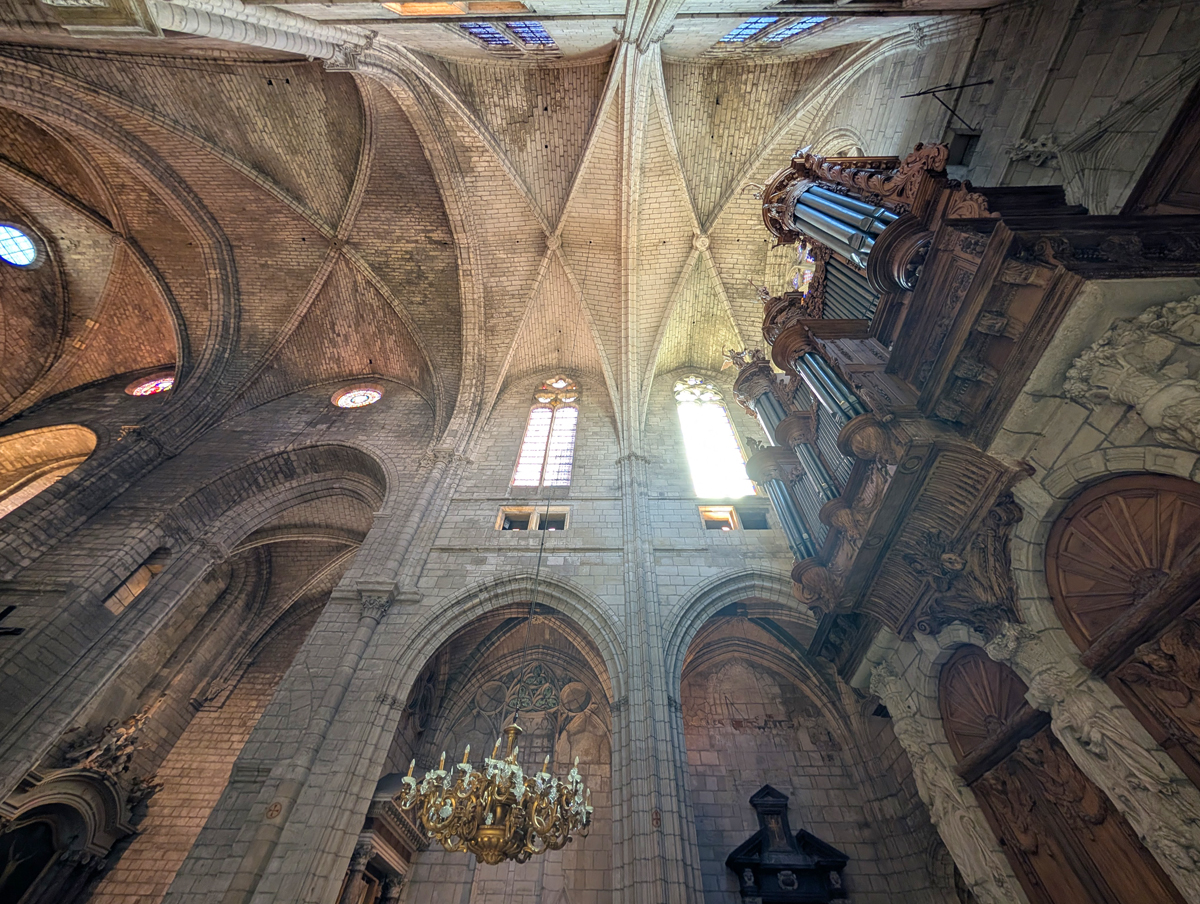
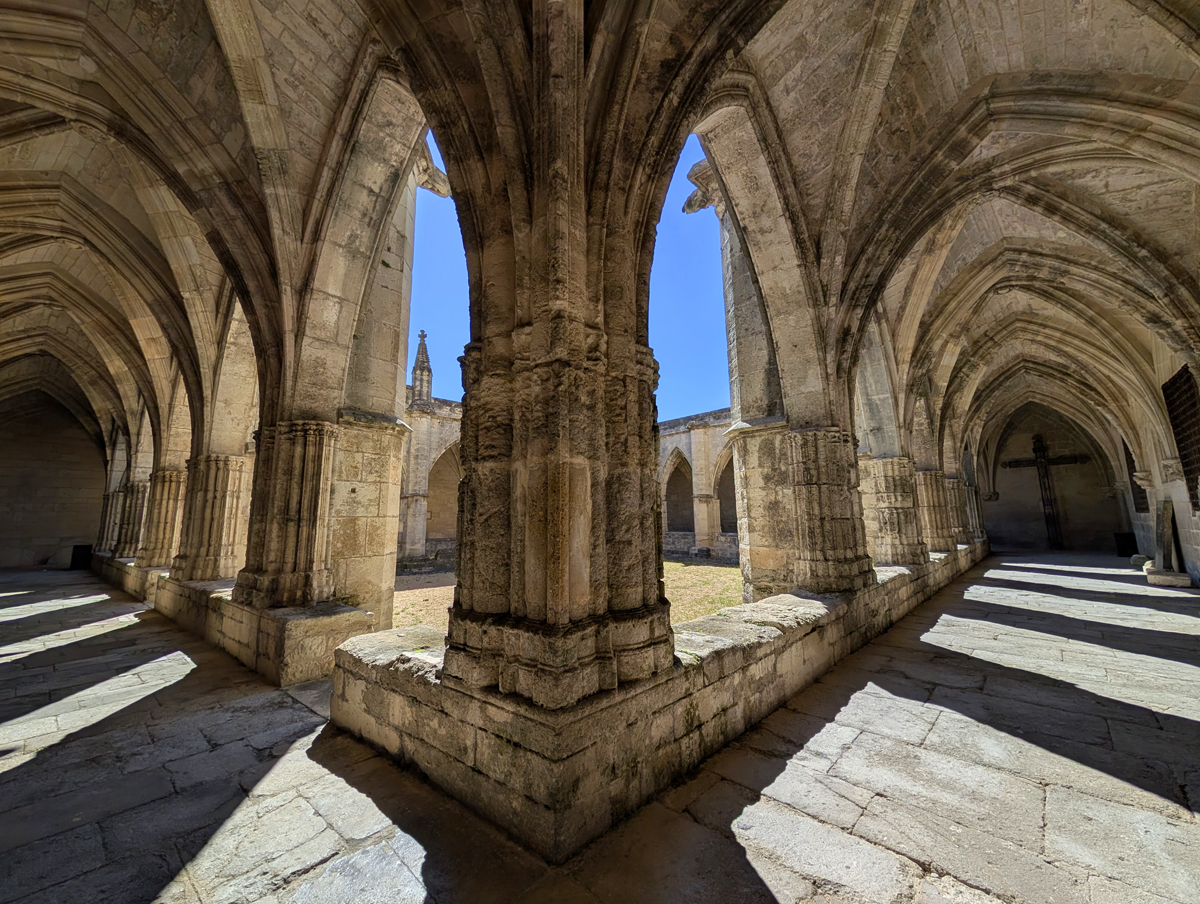
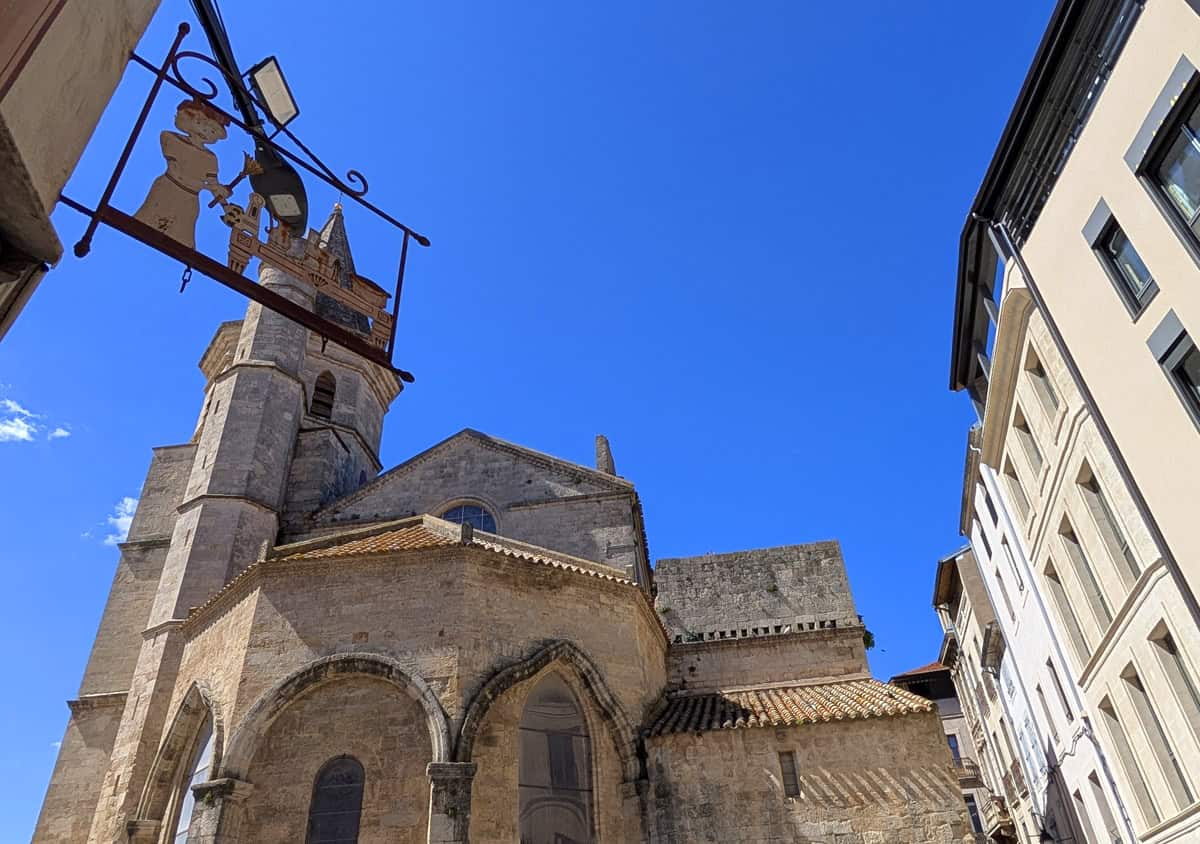
Béziers cathedral (Cathedrale St Nazaire)
It is the site of famous massacre of 1209 which I recounted above. The original was burned down and hundreds of townspeople were killed taking refuge here.
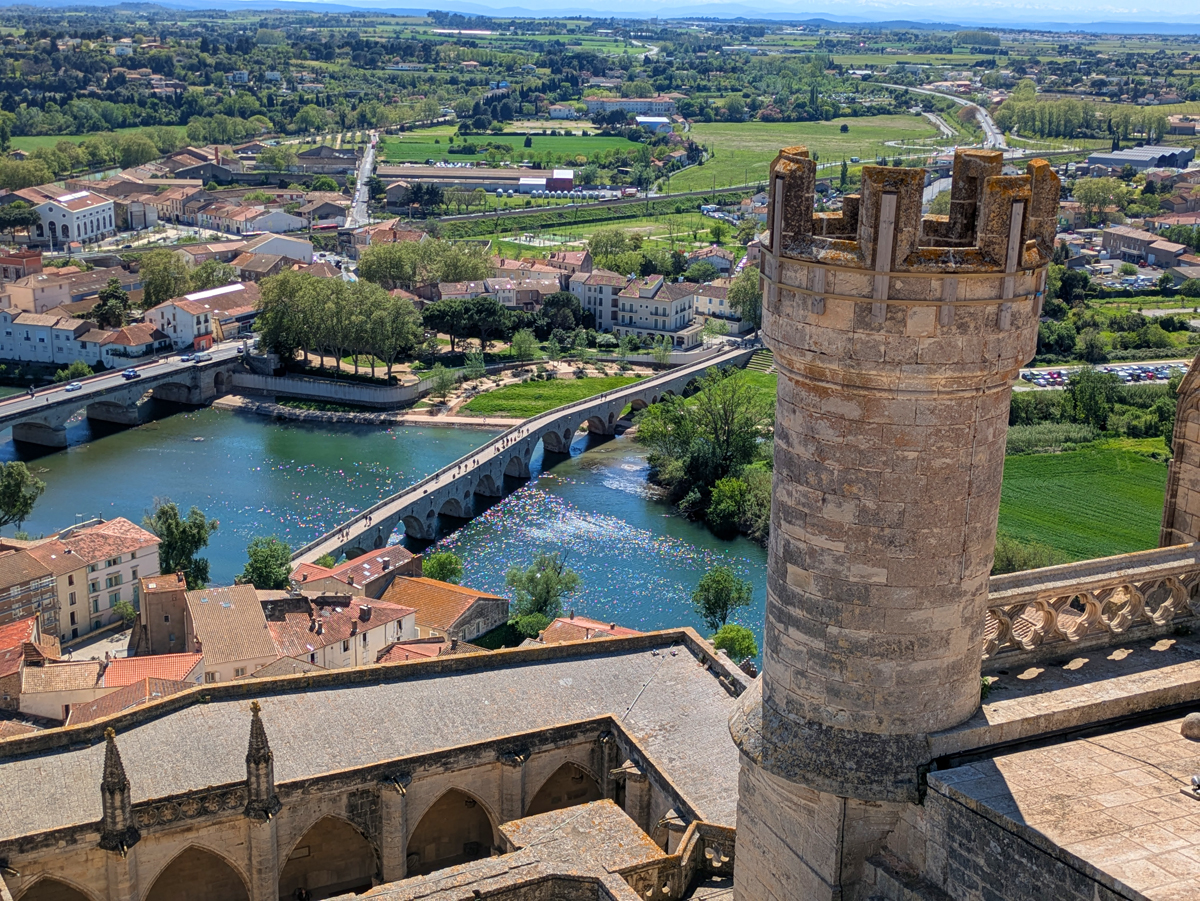
Shortly after, in the mid-13th century, the Cathedral was rebuilt into what you see before you now. It is a beautiful cathedral highlighted by stained glass windows, a cloister and a 175-step bell tower which you can climb. They views from the top are fantastic.
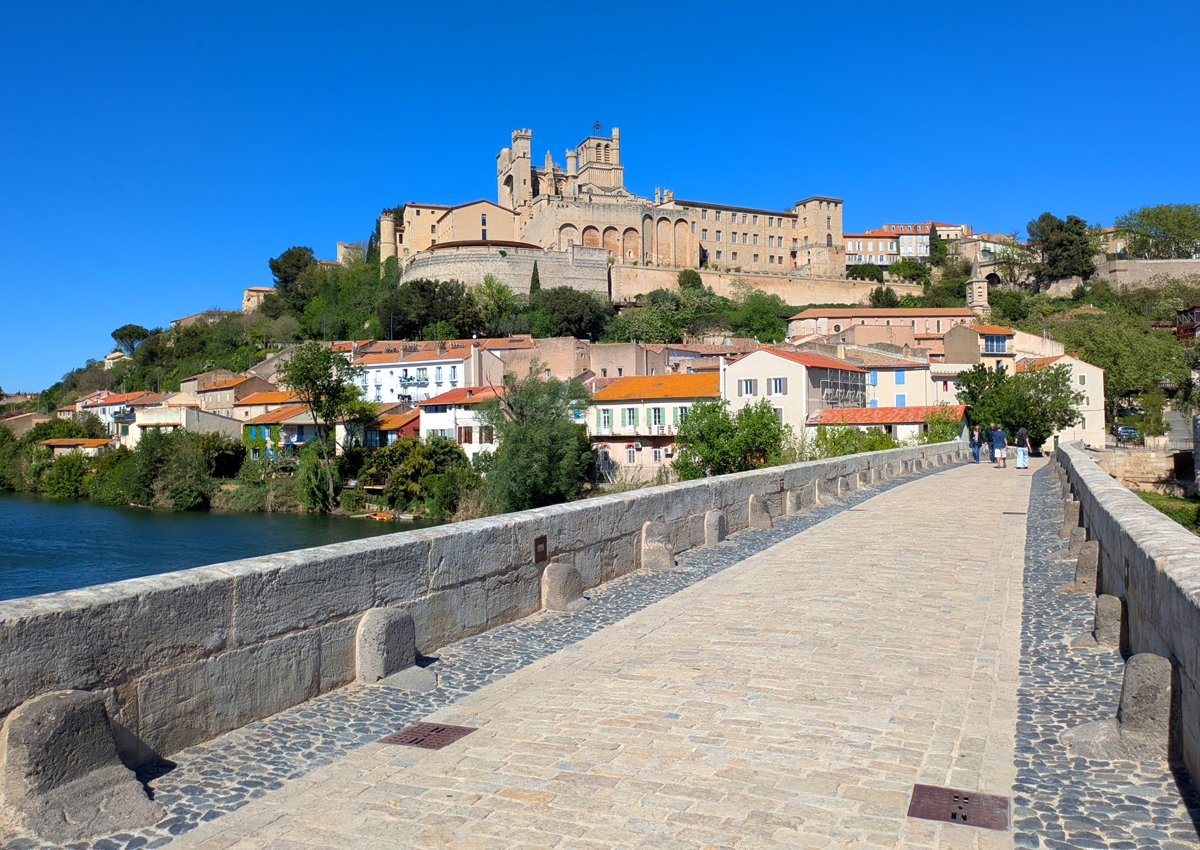
Old Bridge
Built over Roman foundations in 1134, it was (until the mid-19th century) the only bridge crossing the Orb river on the road from Marseille to Toulouse.
Today it makes for a pretty walk across the river, taking you to the other side where you have fantastic views looking across to the city center.
Note: leave the old bridge after you’ve explored the old town, because from there you can continue walking along the river and then down the Canal to Les 9 Écluses de Fonseranes. I’ll explain that further below and also include a map showing you a suggested walking itinerary.
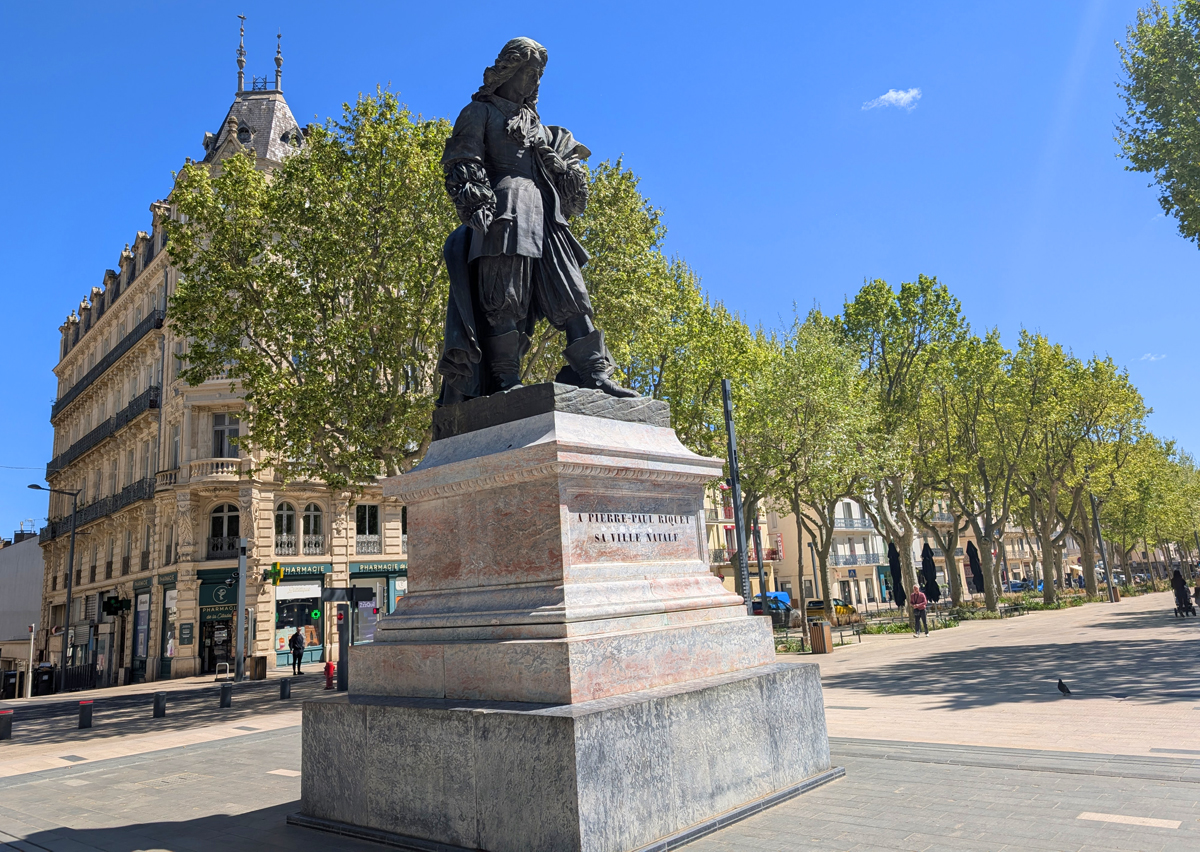
Allée Paul Riquet
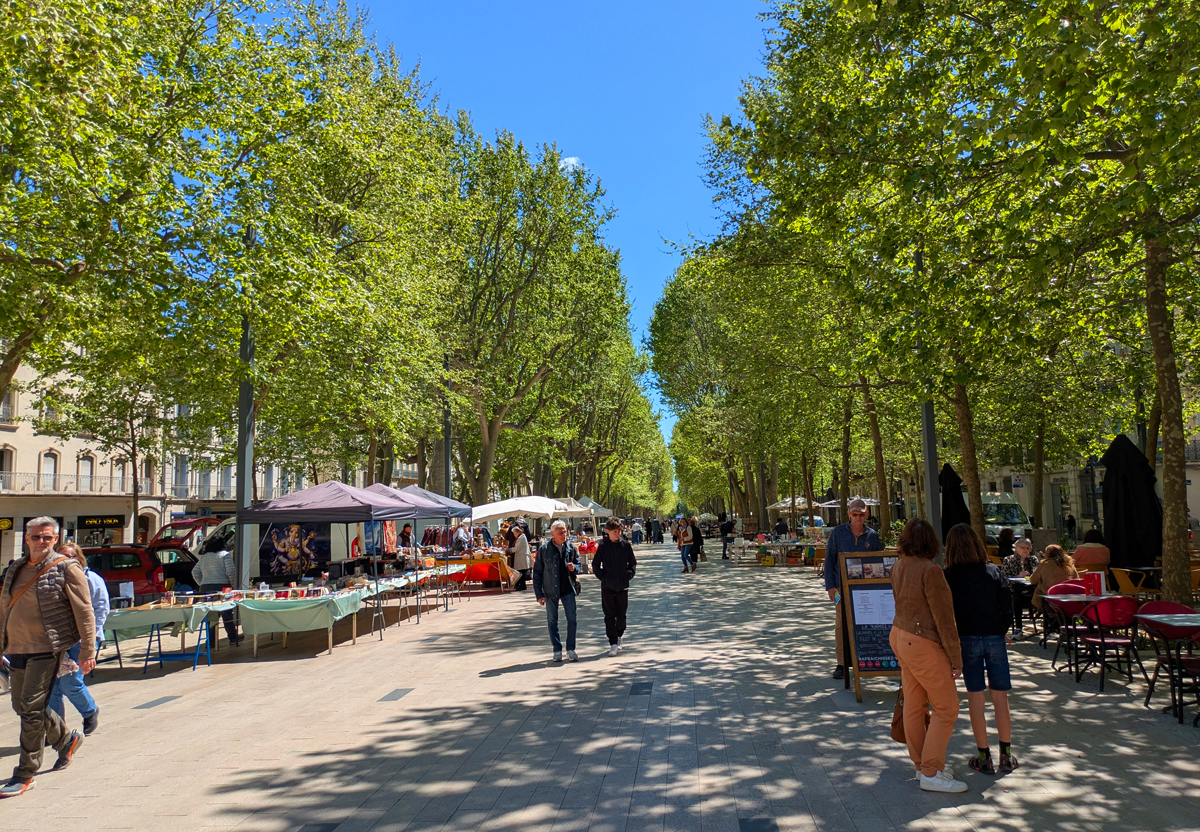
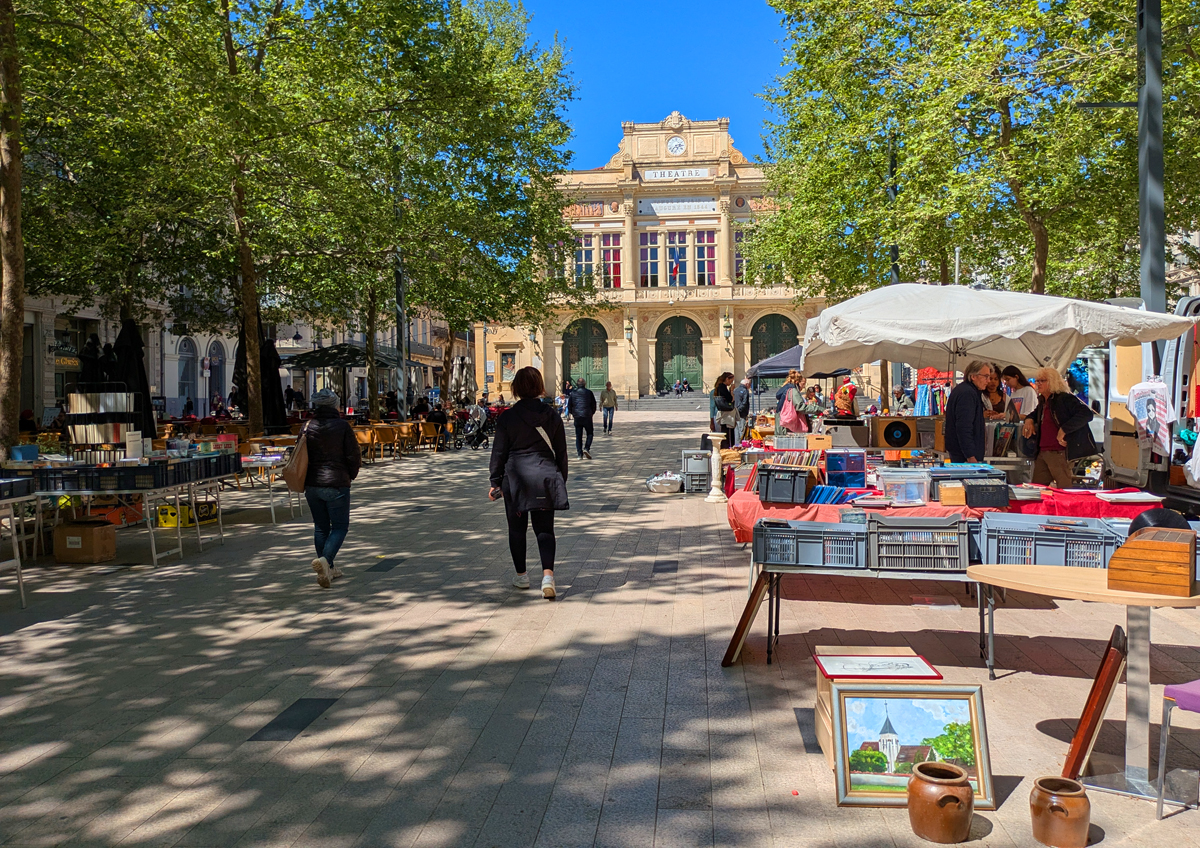
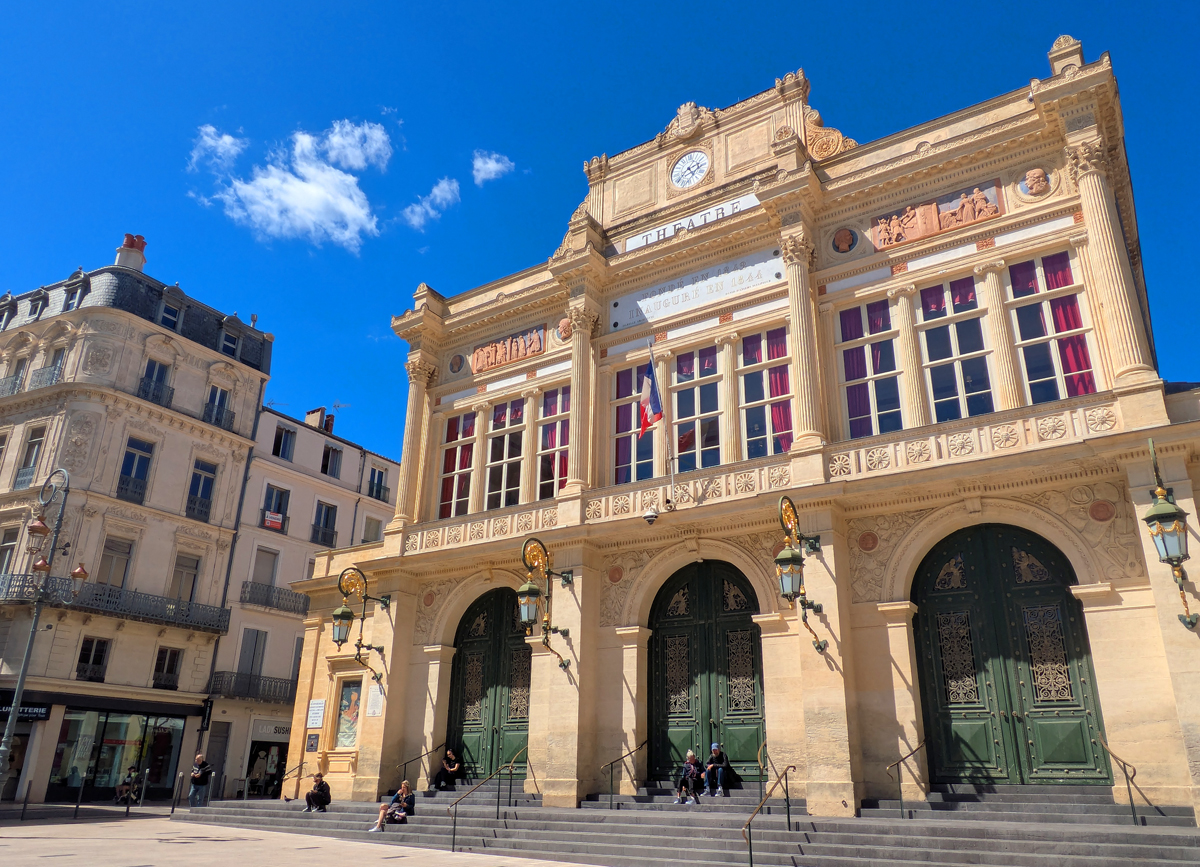
This promenade is named after the architect who conceived the Canal du Midi, a project that made the city wealthy in the 1600’s. It’s a beautiful promenade lined with trees, starting at the municipal theatre and extending to Plateau des Poètes (close to the train station). In the middle of the promenade is a statue of Paul Riquet.
It’s a nice walk and you’ll see stalls with interesting objects for sale along the way: paintings, antiques, memorabilia. Very much worth doing.
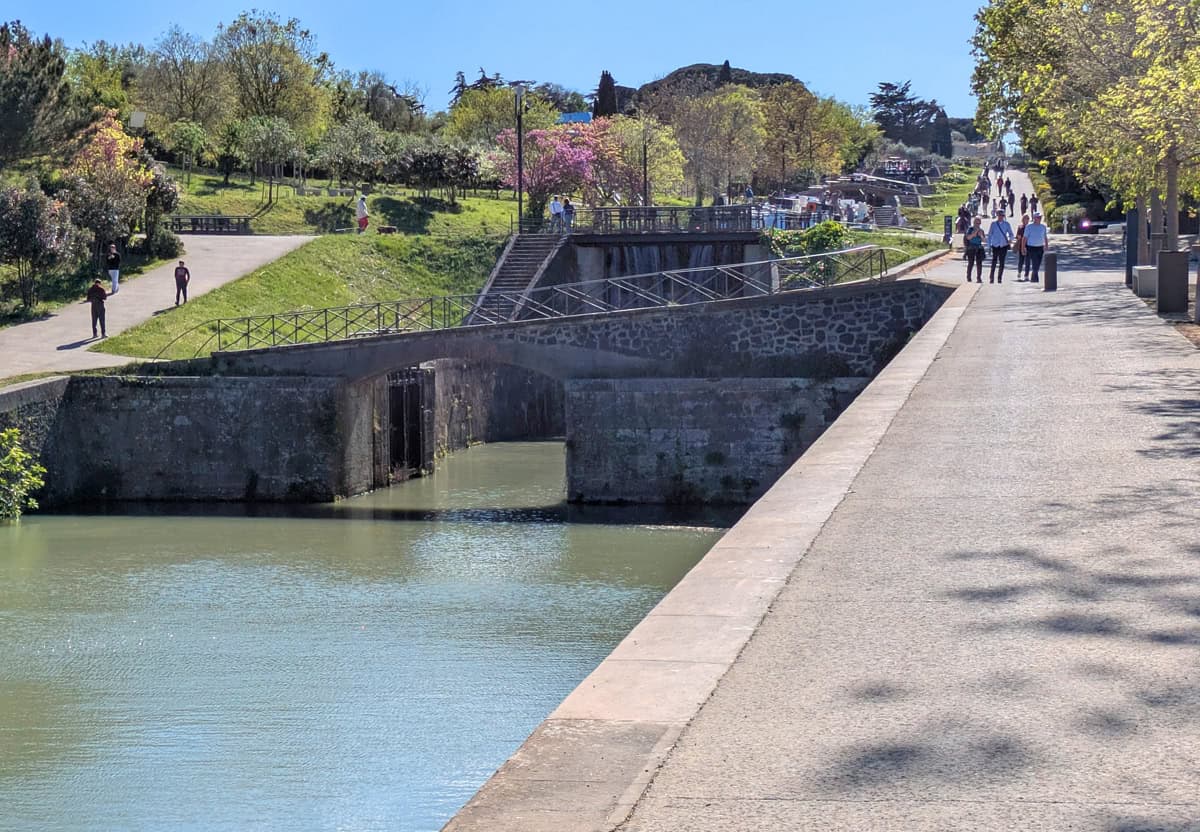
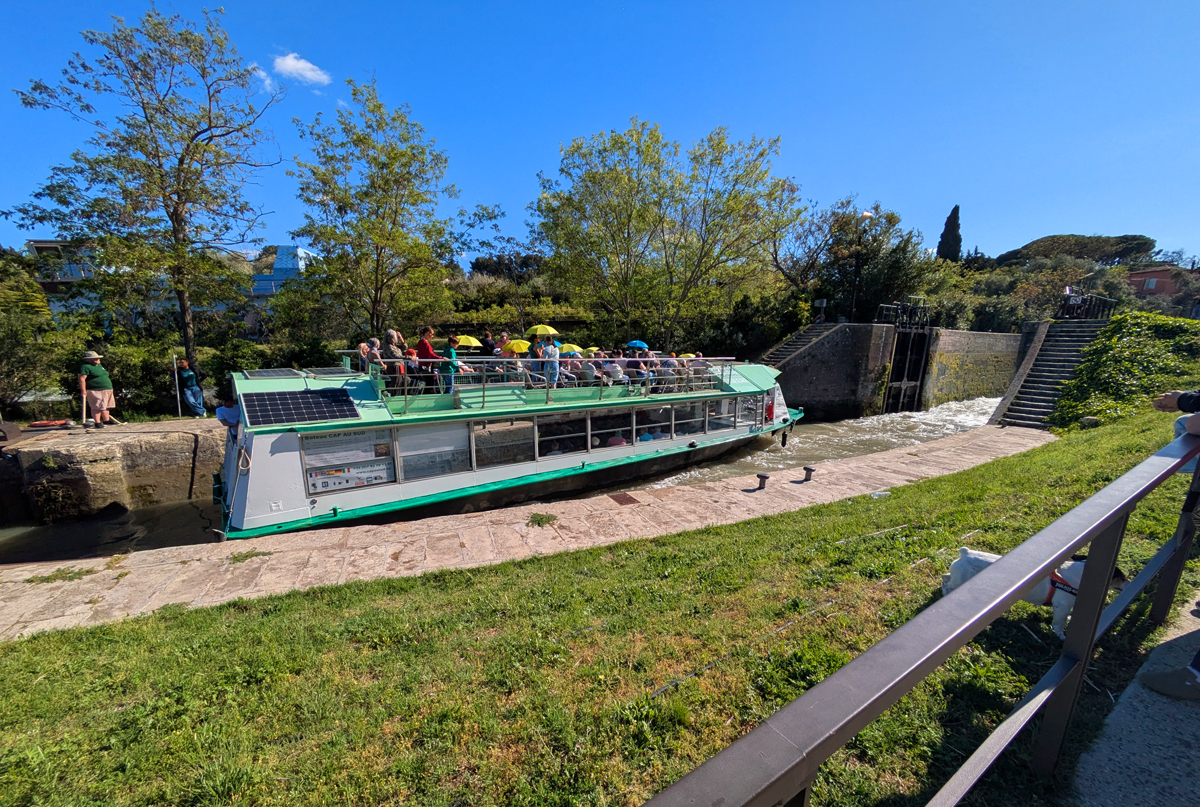
Les 9 Écluses de Fonseranes (The 9 Locks of Fonseranes)
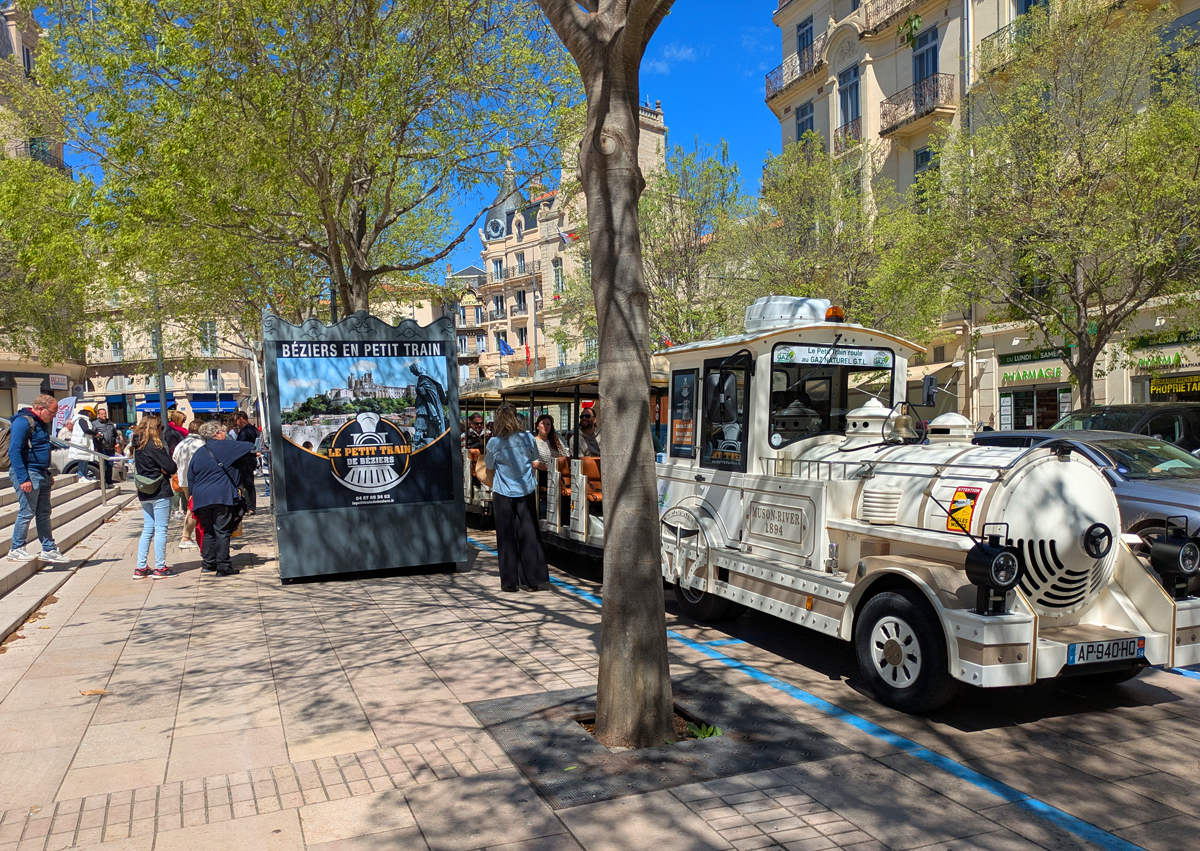
I mentioned the Canal du Midi in the history section. About 15 minutes outside the center (which you can walk…or take the tourist train) you’ll find Les 9 Écluses de Fonseranes. They consist of 8 lock chambers and 9 lock gates: over 300 meters they allow boats to be raised a height of 21.5 metres.
These locks were necessary because coming from Toulouse (54 km away), the canal was at a height of 31.54 meters. But at this point, just outside Béziers, the canal had to descend 25 meters to reach the Orb river.
The works on the Fonseranes lock began in 1667 and were completed in 1680. It is the largest “lock ladder¨ ever built in France.
Street Art
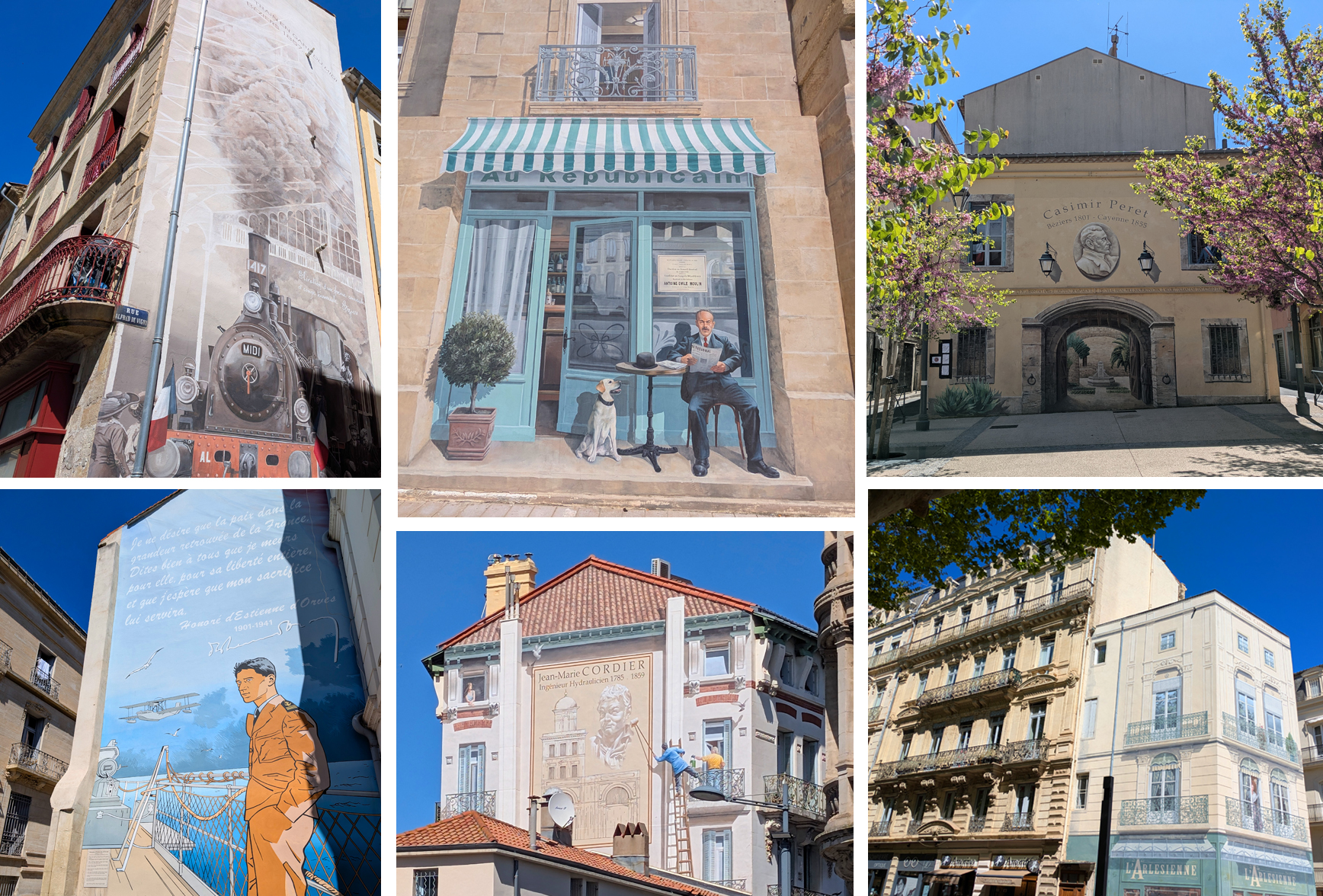
They call them “Trompe Oeil” in France and everywhere we’ve been to date has beautiful street art. I’m going to include a Tourist map below…follow it and you’ll see all the highlights including some very nice pieces of street art.
A very pretty city
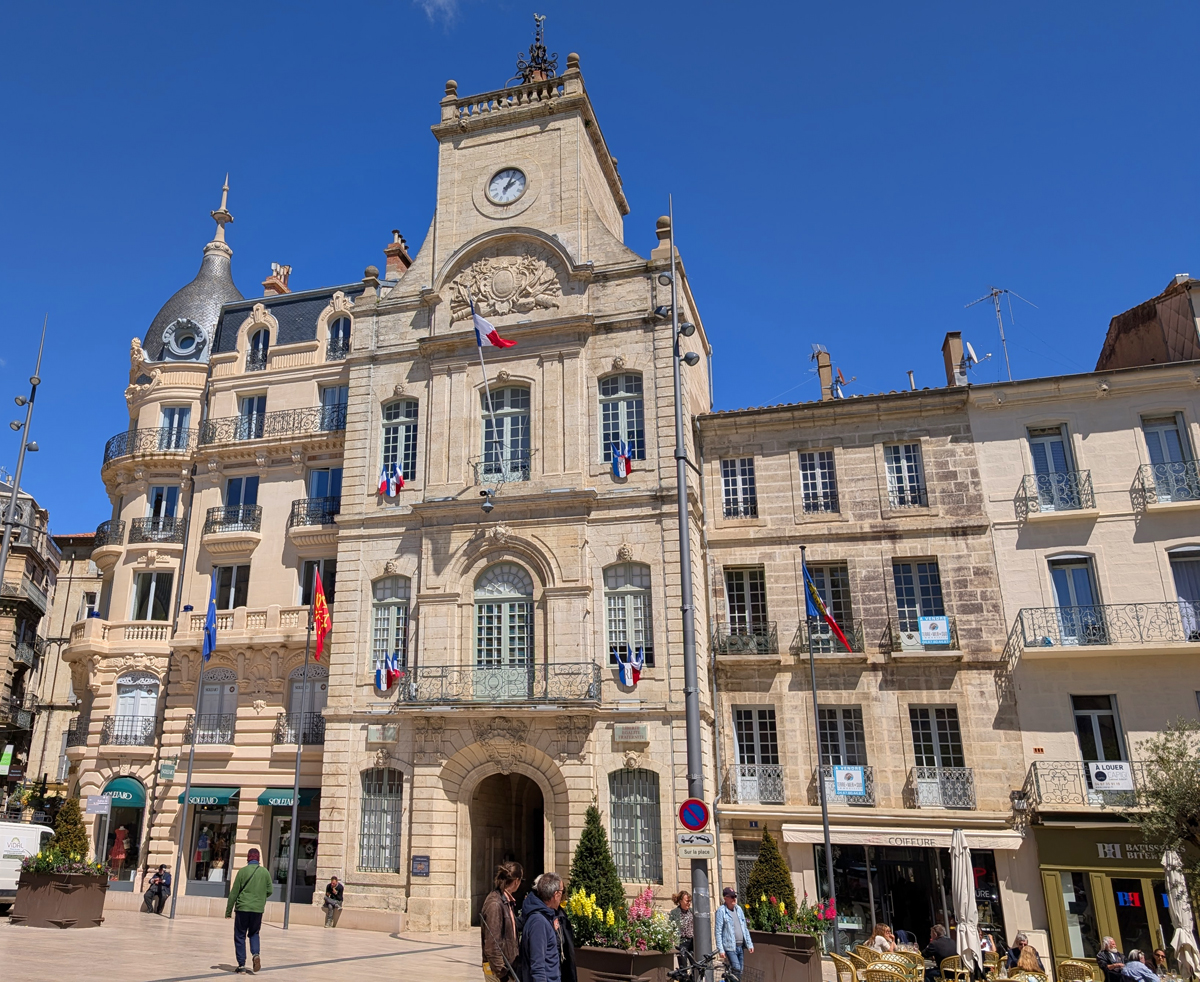
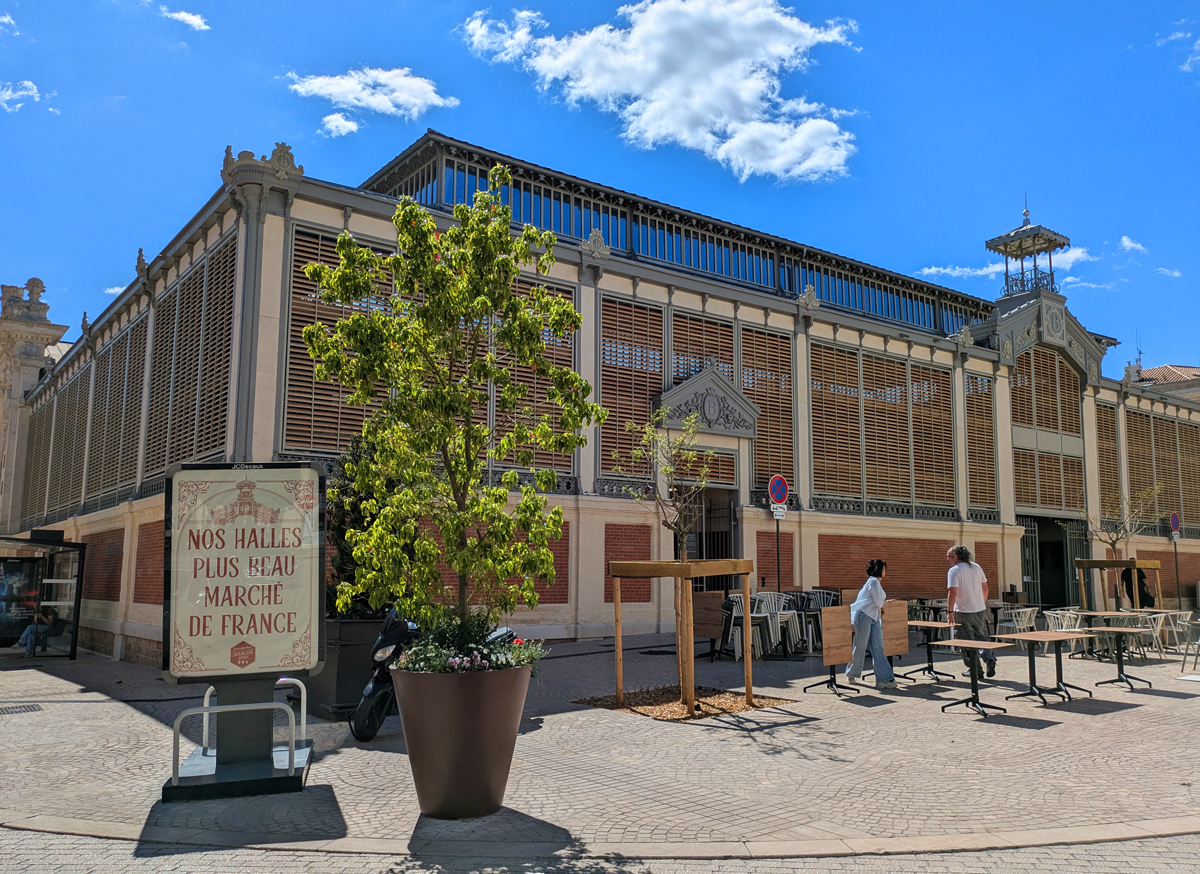
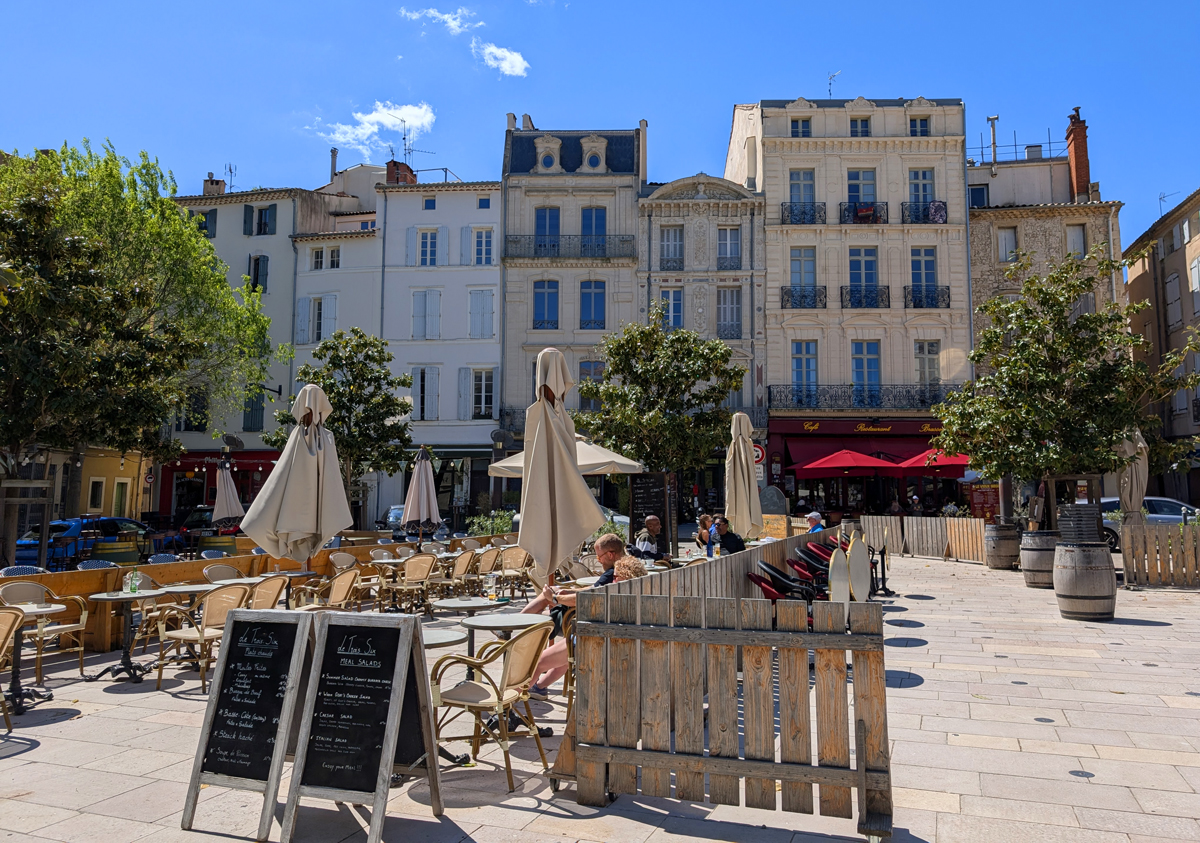
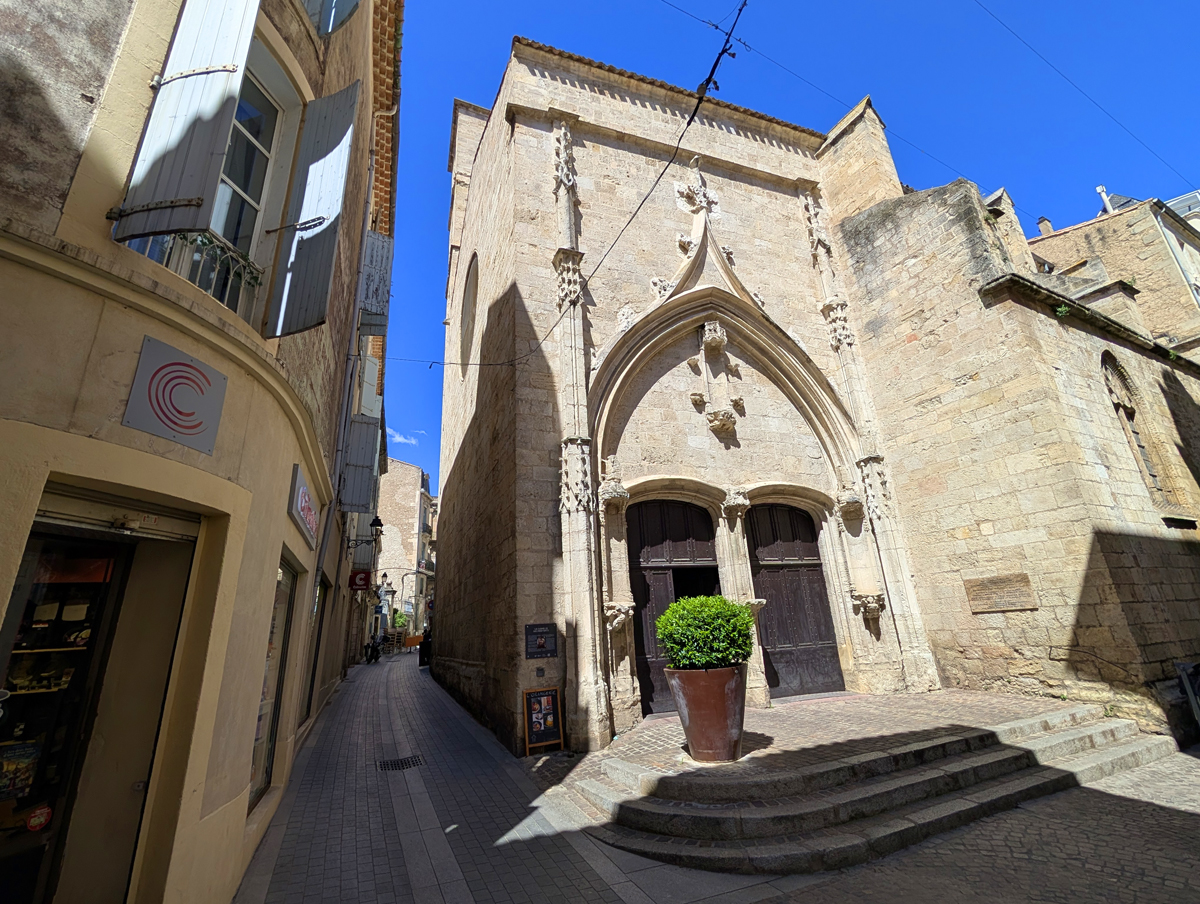
Béziers is a very pretty place and we enjoyed walking around. A few highlights besides the ones mentioned: Les Halles indoor market (they boast that it is the most beautiful market in France), Place de la Madeleine (which houses l’Église de la Sainte-Madeleine where people seeking refuge were assassinated in 1209) and the Hôtel de Ville de Béziers (the town hall. Right across from it is the very helpful Tourist Office).
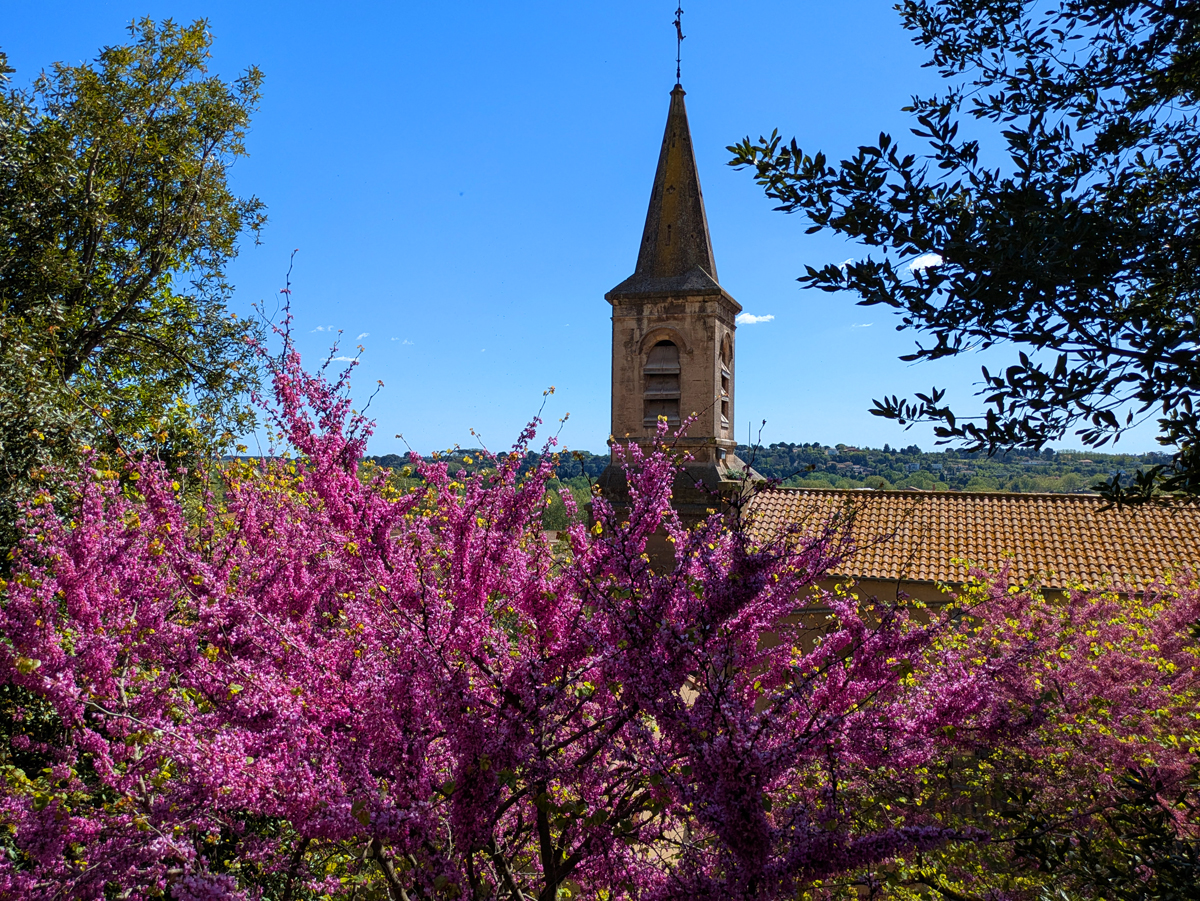
Some photos:
Practical Information
Getting there. Béziers is on the main train line going north-south and there are many connections. See the schedules and/or buy your tickets on the SNCF website.
Attached is a full-scale map of Béziers (just click on it to see the whole thing)
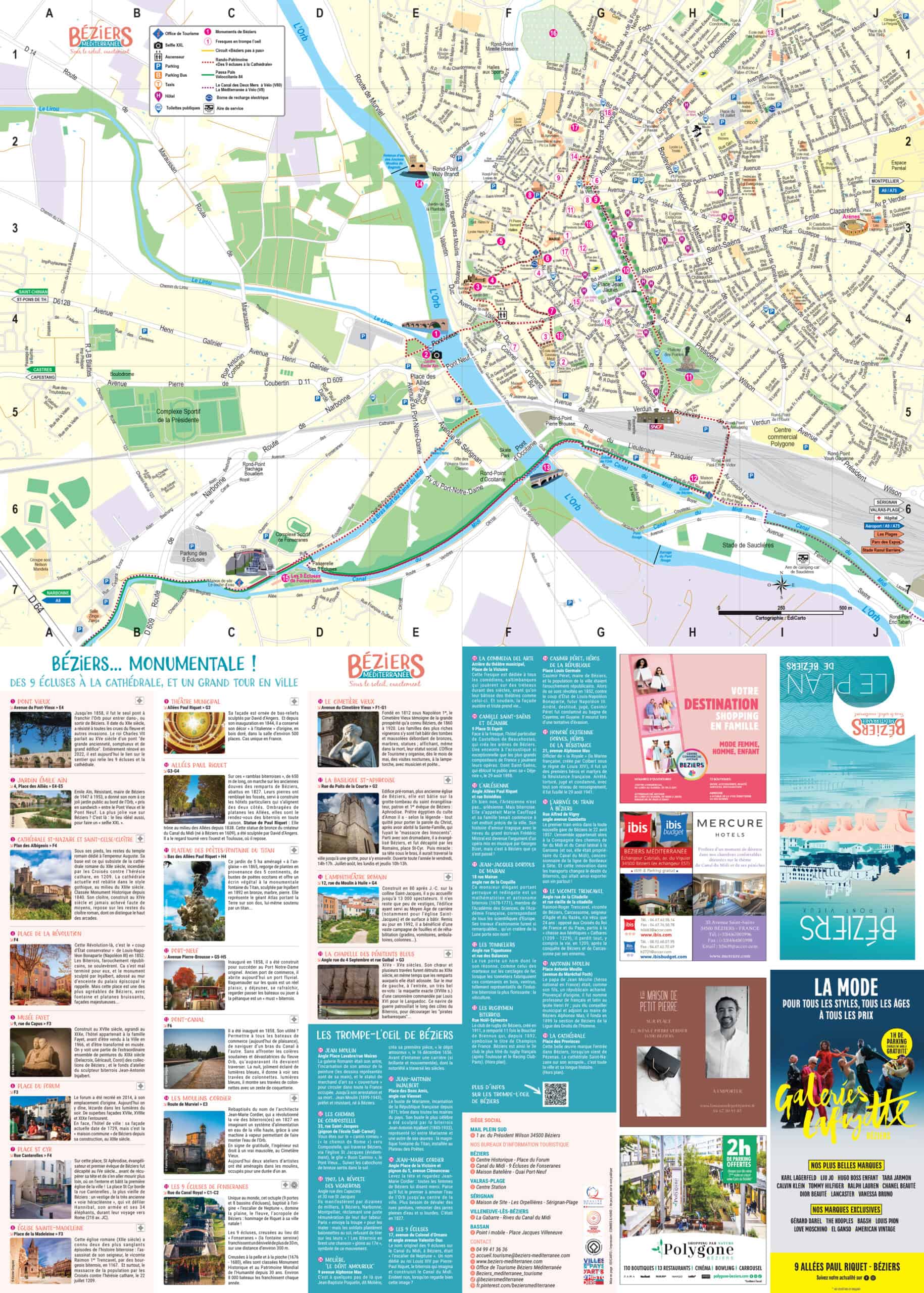
Itinerary: I recommend following the red-dotted walking tour on the map above, it’s a circular tour that will lead you back to the train station at the end. From the train station, cross to Plateau des Poètes and walk along Allée Paul Riquet. You’ll see the Theatre, pretty squares, Place de la Madeleine, Les Halles, Hôtel de Ville de Béziers and the tourist office. From there, go to the Cathedral. After visiting the Cathedral, go down the steps to the Old bridge. From there, walk along the river to the 9 locks. That should take about 20 minutes. Then come back, either going back over the Old bridge or over Pont d’Occitanie. Note: the map isn’t clear – we went back along « le bras mort de Canal de Midi » and then walked along Av. du Port-Notre-Dame. There is no sidewalk here, we walked along the side of the road and crossed the intersection at Rond-Point l’Occitanie. No sidewalk here either. But there is a sidewalk on the bridge once you’ve crossed the intersection. IF you want to avoid all this, walk all the way back to the Old Bridge and cross there.
Total recommended time to visit Béziers: We spent about 4 hours walking around Béziers, making it an easy and fun day trip.
Related: Why Sète makes a great day trip from Montpellier

Related: A Guide to Visiting Carcassonne
Leave a Reply