
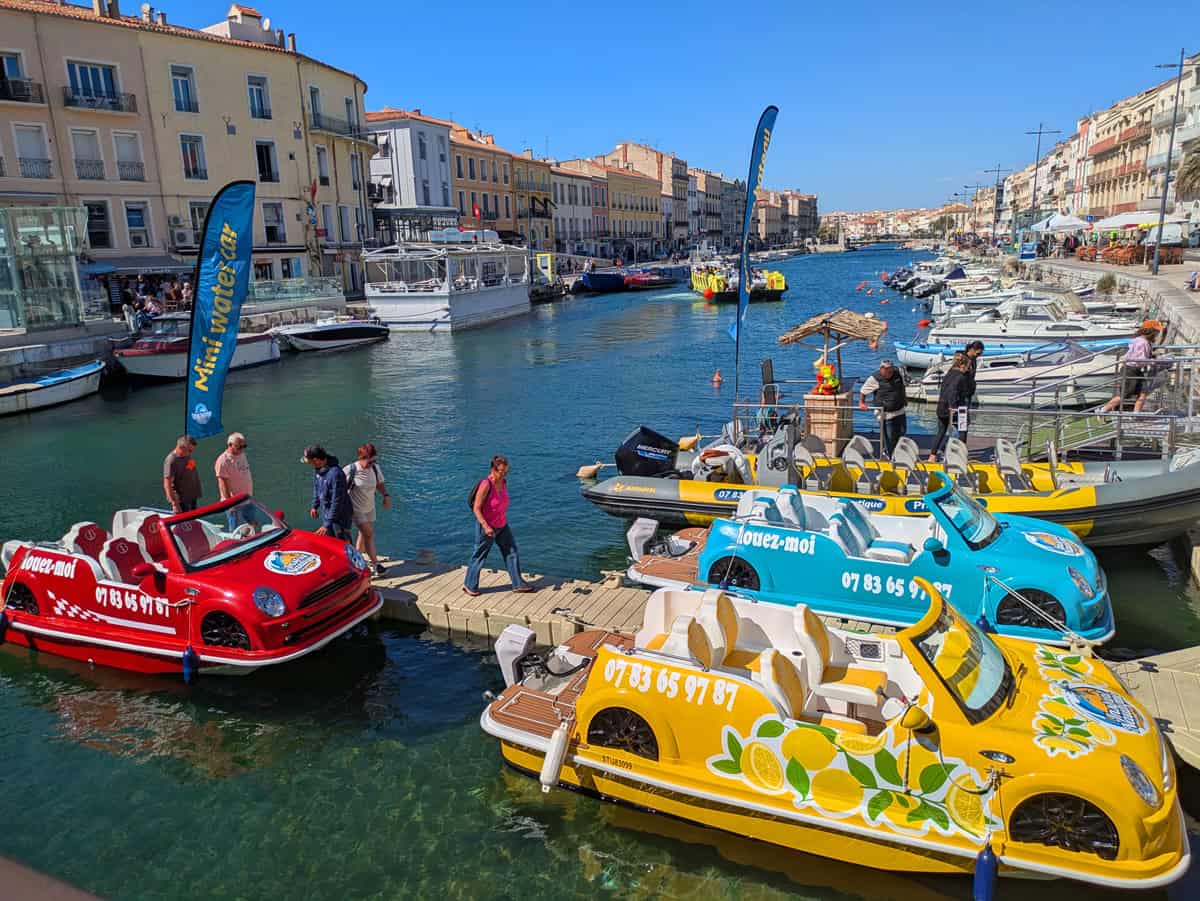
Why Sète makes a great day trip from Montpellier.
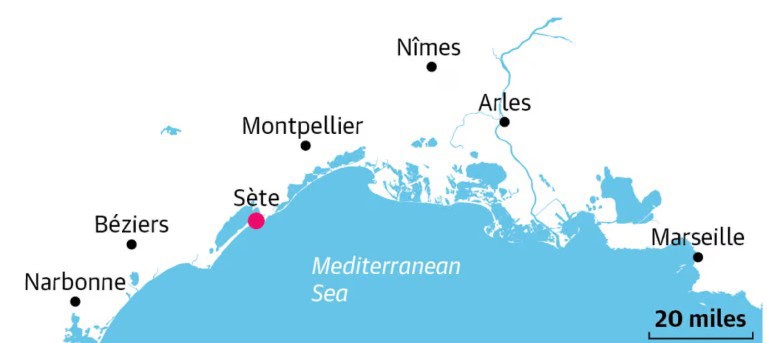
Only 15 minutes away by train, Sète is the easiest day trip from Montpellier. It is nicknamed the “Venice of Languedoc”. That’s a bit of a stretch but it doesn’t take away from the beauty and vibrancy you’ll see when visiting this coastal city.
In this post I’ll tell you what to see, what to skip, and give you some practical information on visiting the city of Sète.
A brief history of Sète
Sète is a new city (relatively), it was founded by Louis XIV in 1666 to give a maritime opening to the Canal de Midi, a Canal network that links the Atlantic to the Mediterranean. The location for a port here was ideal: Sète has the Mediterranean on one side with l’Étang de Thau (a salt water lake with links into the interior) on the other side. A network of canals were built linking the two bodies of water, thereby connecting the port of Sète to the Canal de Midi via the lagoon. The port grew with the trading of wine, cereals, wood, sulphur and iron and many Italians came to settle here (giving the city a bit of an Italian character). Today Sète is France’s largest port on the Mediterranean.
More detail on all the above here.
What to See in Sète
Canal Royal
There are various Canals in Sète but the Royal Canal is the most important and most impressive. You’ll see a lively canal full of colourful tourist boats, bridges lined with flags from the countries of the world, and the banks of the canal lined with restaurants and cafés. The Canal Royal sums up what Sète is all about.
Historically, the Canal Royal marked the end of a journey: After the 240 km and 63 locks of the Canal du Midi, and then the crossing of the Thau Lagoon, it was the final leg to the Mediterranean for merchant ships.
Note: if you want to know more about the Canal du Midi, see my post on Béziers
Really, if you only have time for one thing in Sète it should be at the Canal Royal. You can spend a couple of hours just walking the canal and its bridges or sitting down somewhere for a drink and food (Sète is known for “tielle”, a type of pie with octopus or other seafood. It has its origins with the Italians who emigrated here).
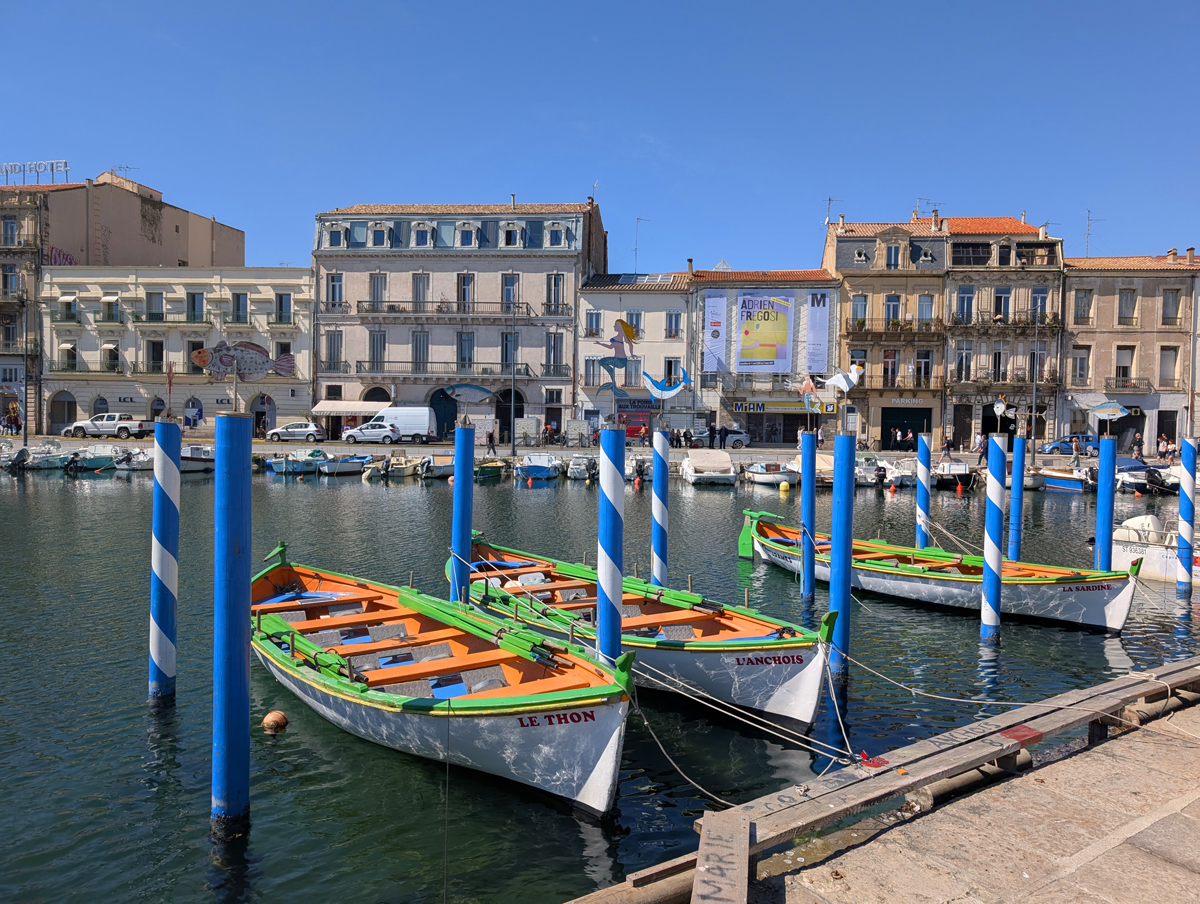
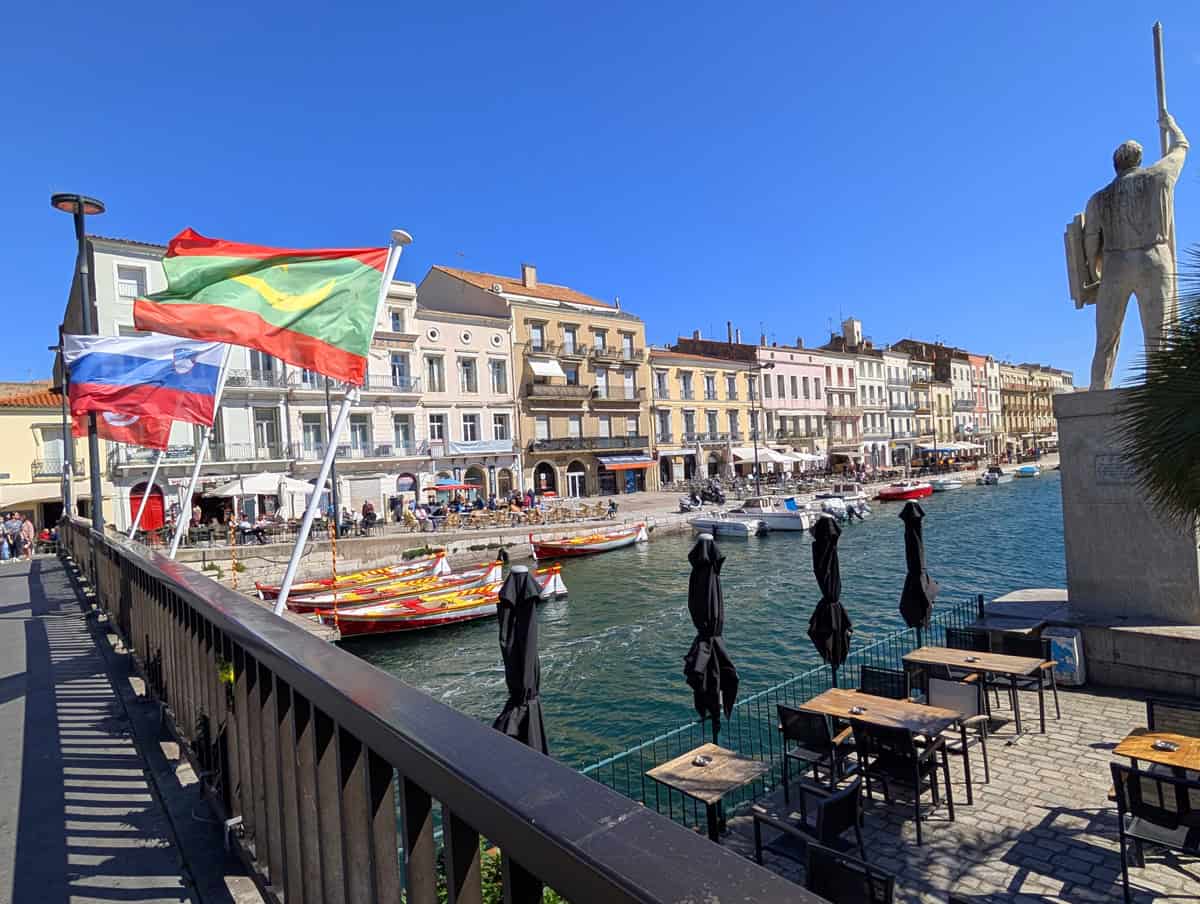
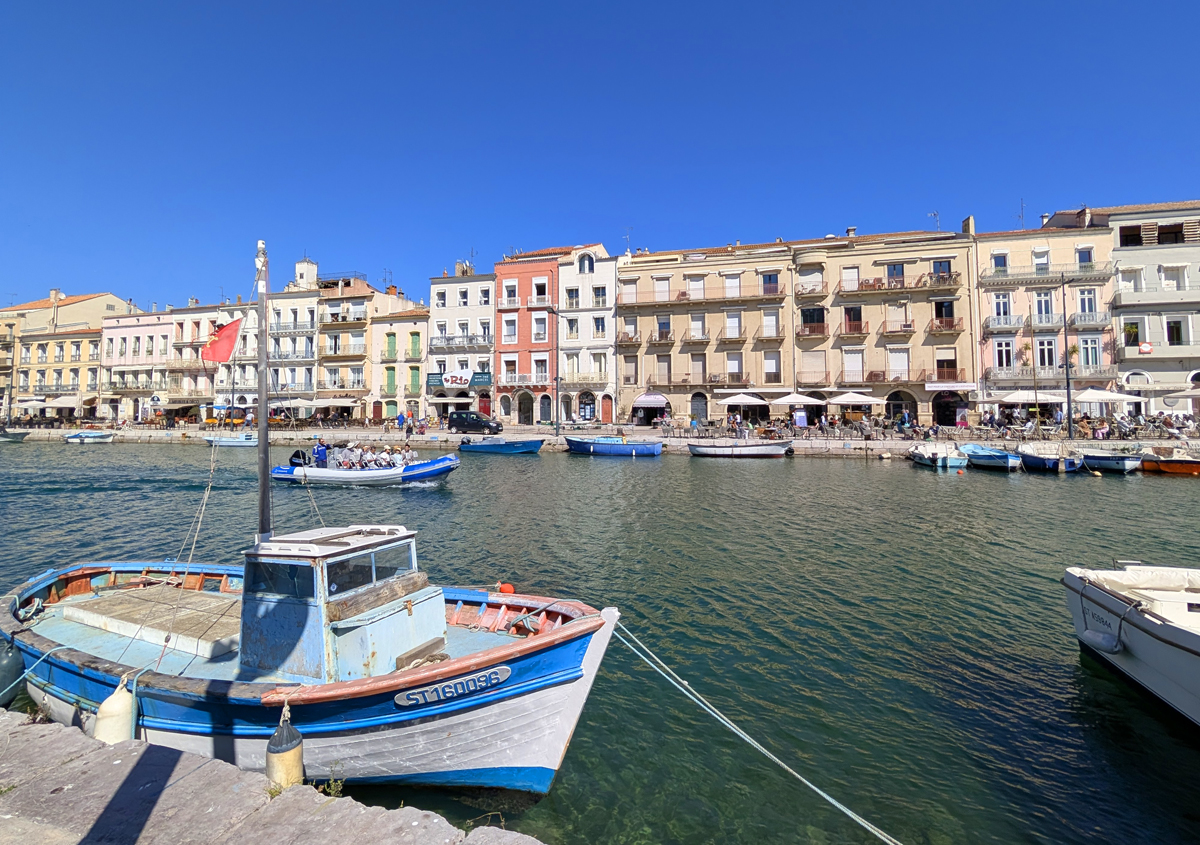
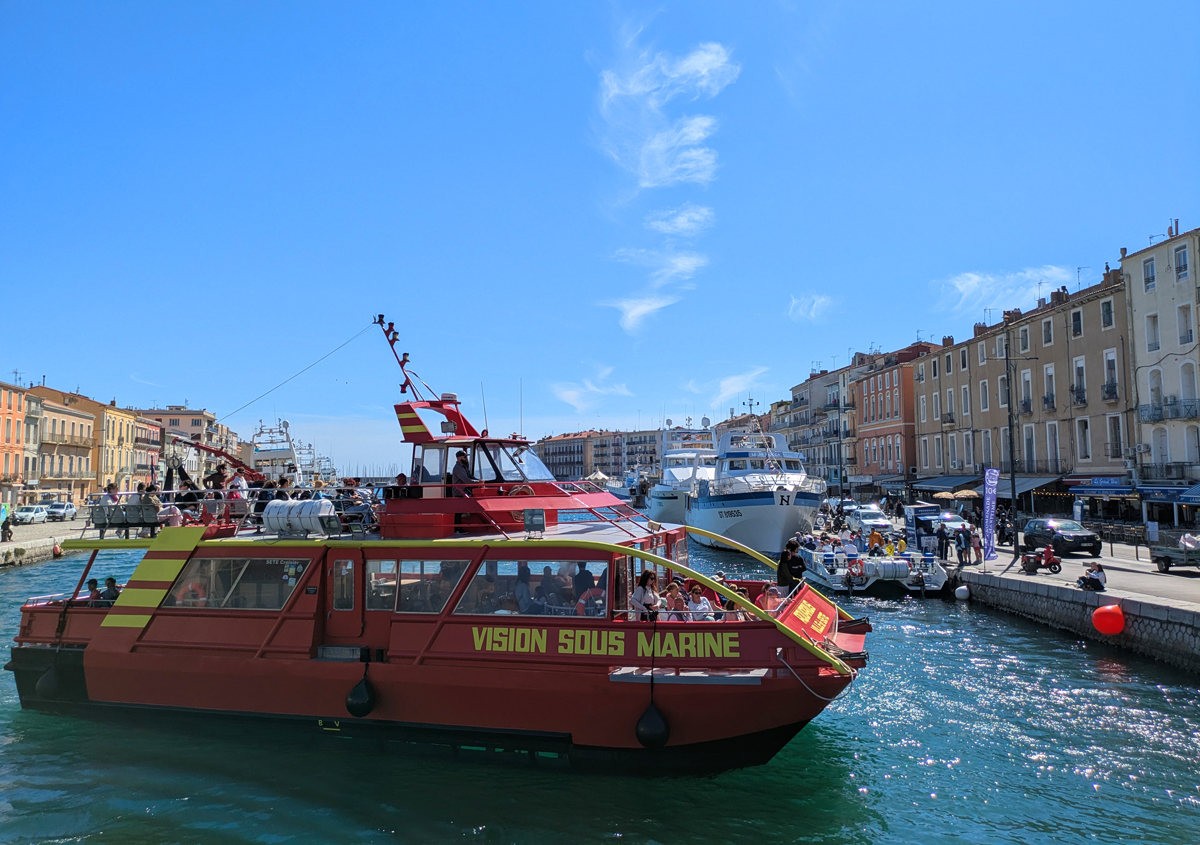
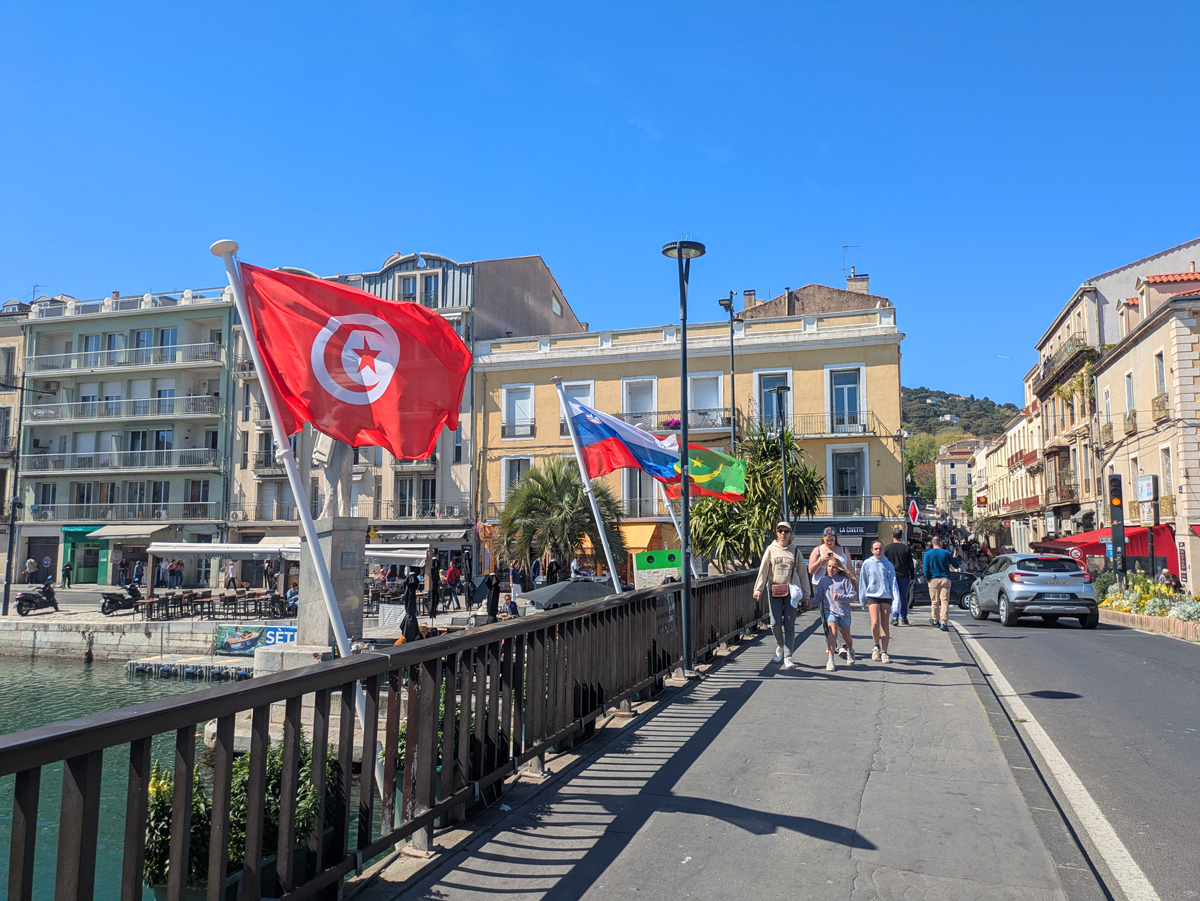
Note: taking a boat tour of the canals is a popular activity. This tour is recommended.
Viewpoint on Mont Saint Clair
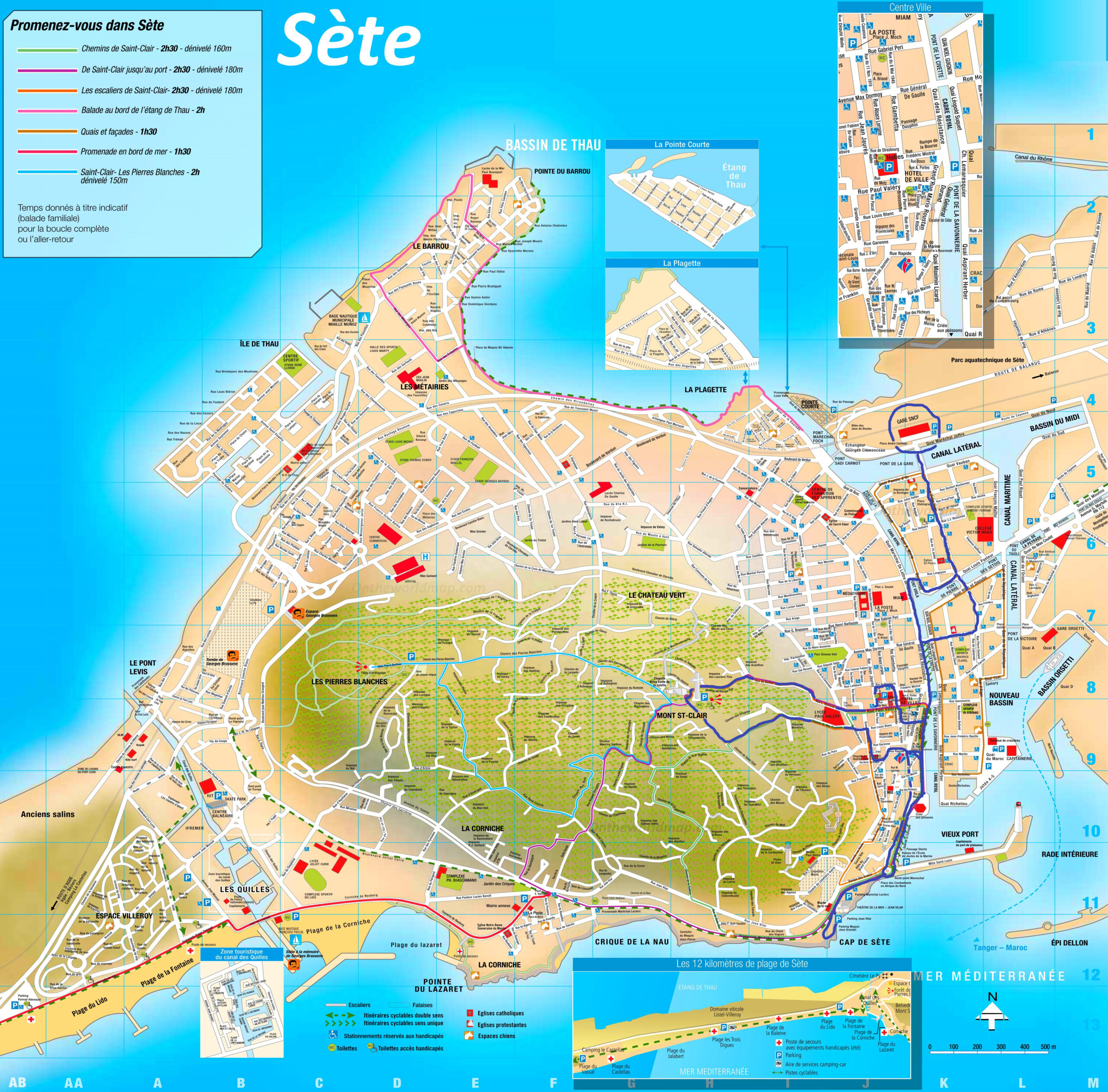
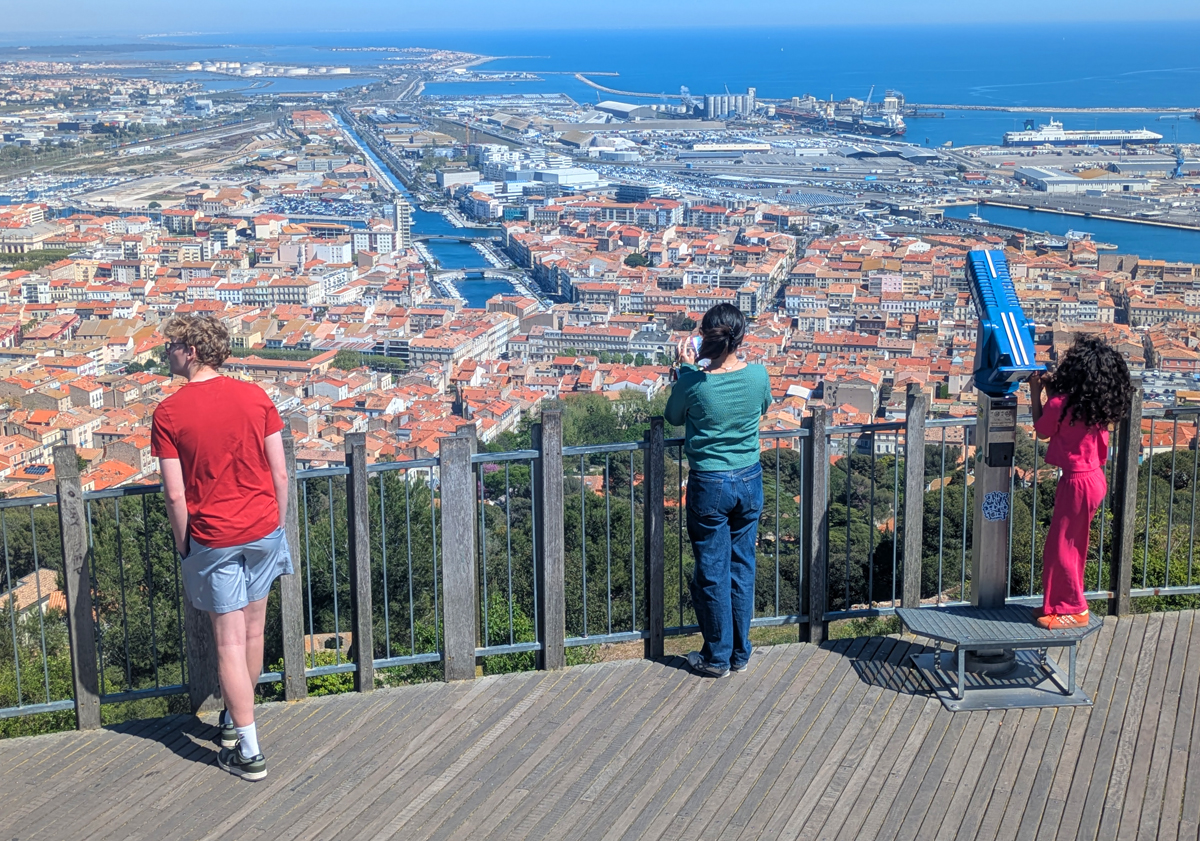
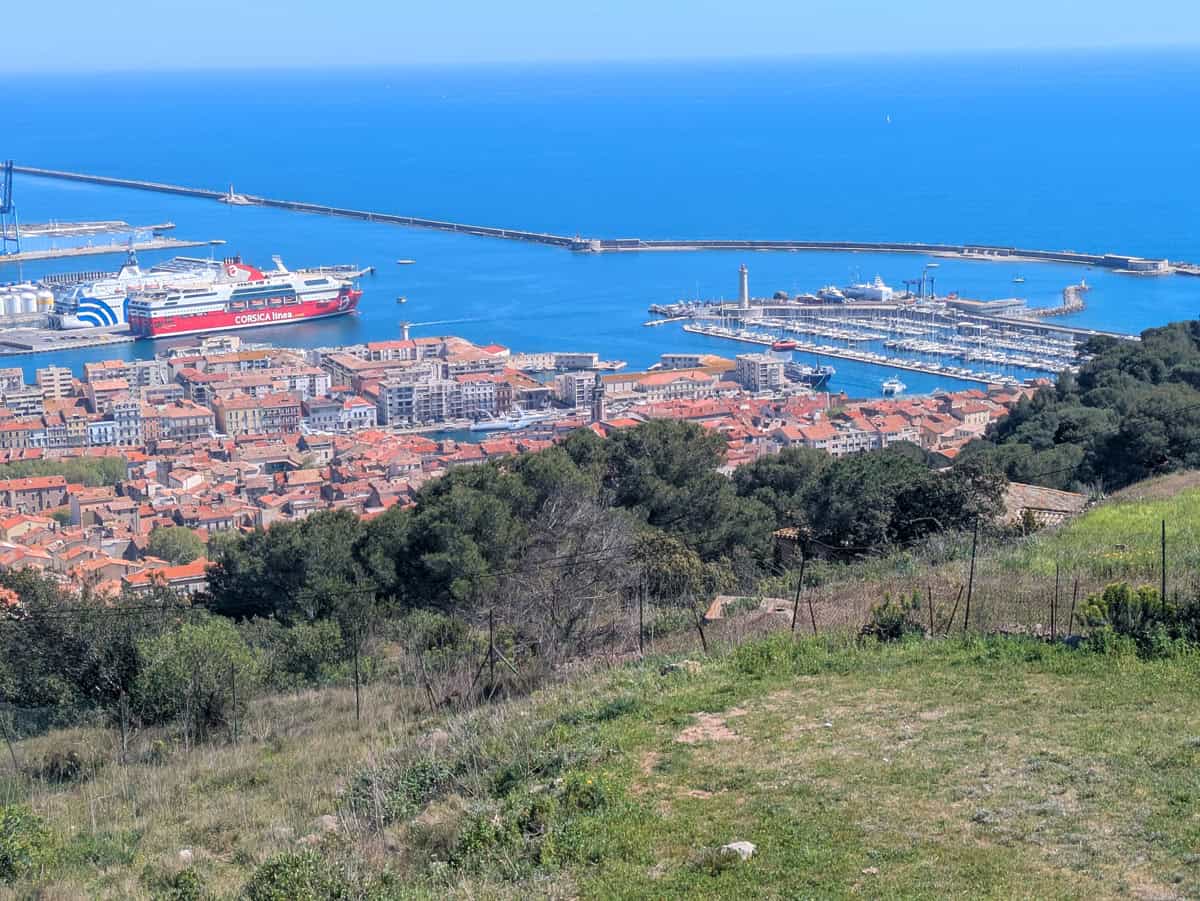
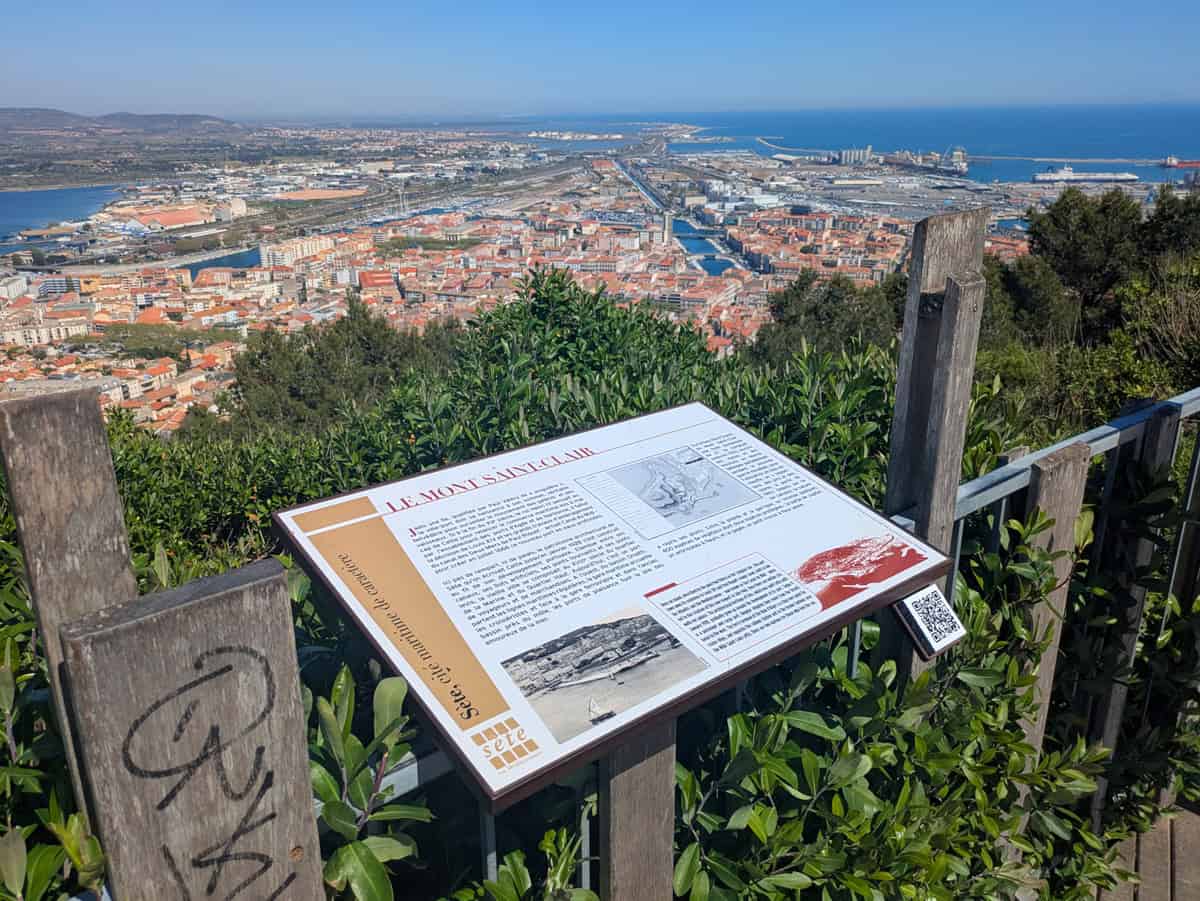
Sète is built at the base of Mont Saint Clair, a hill 175 meters high. At the top is a cross and a viewpoint with great views over the city, the Mediterranean and the Étang de Thau.
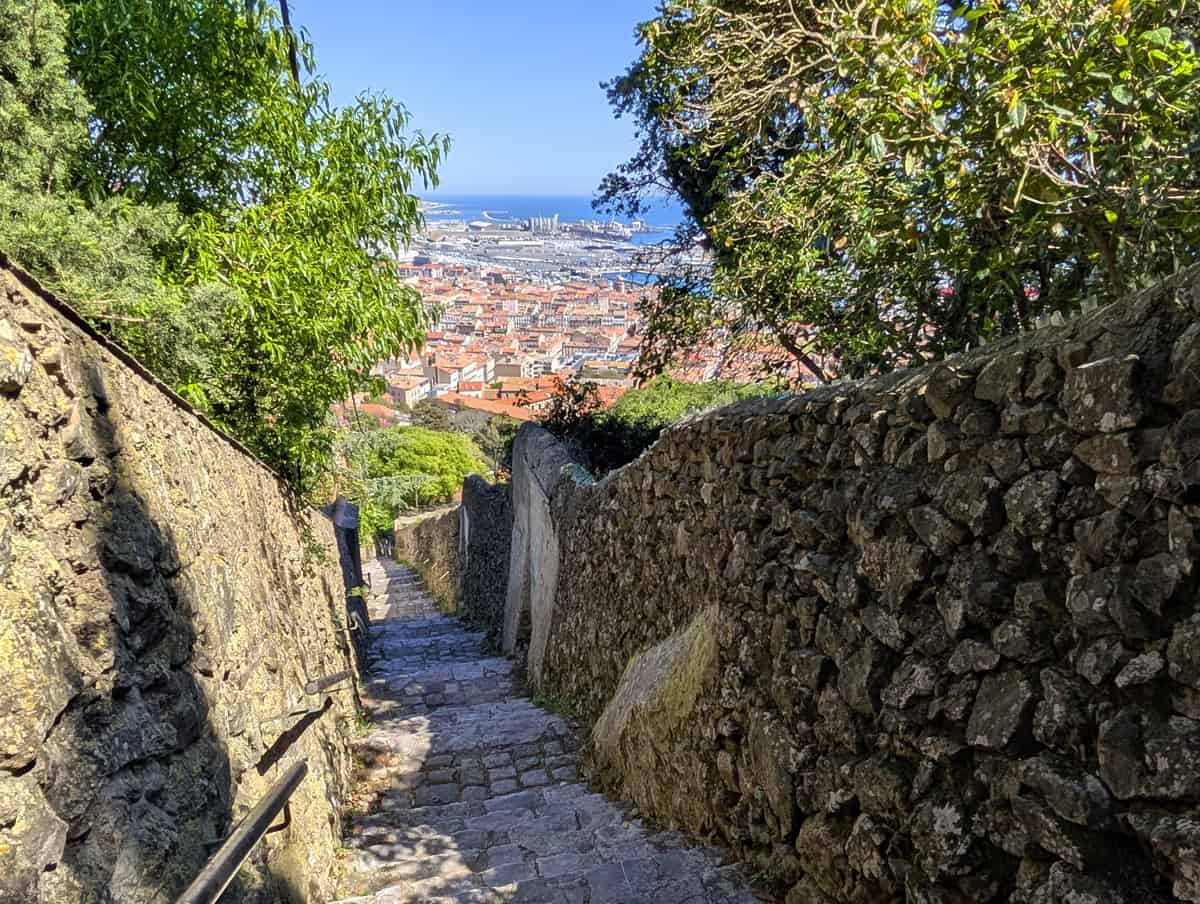
There are 2 ways of getting up here: 1) you can walk up, there are two paths (both with stairs). Either way will take about 20 minutes to get to the top. 2) the #5 bus from downtown (1.60 Euro fare which you can pay the driver).
Walk the Old Town
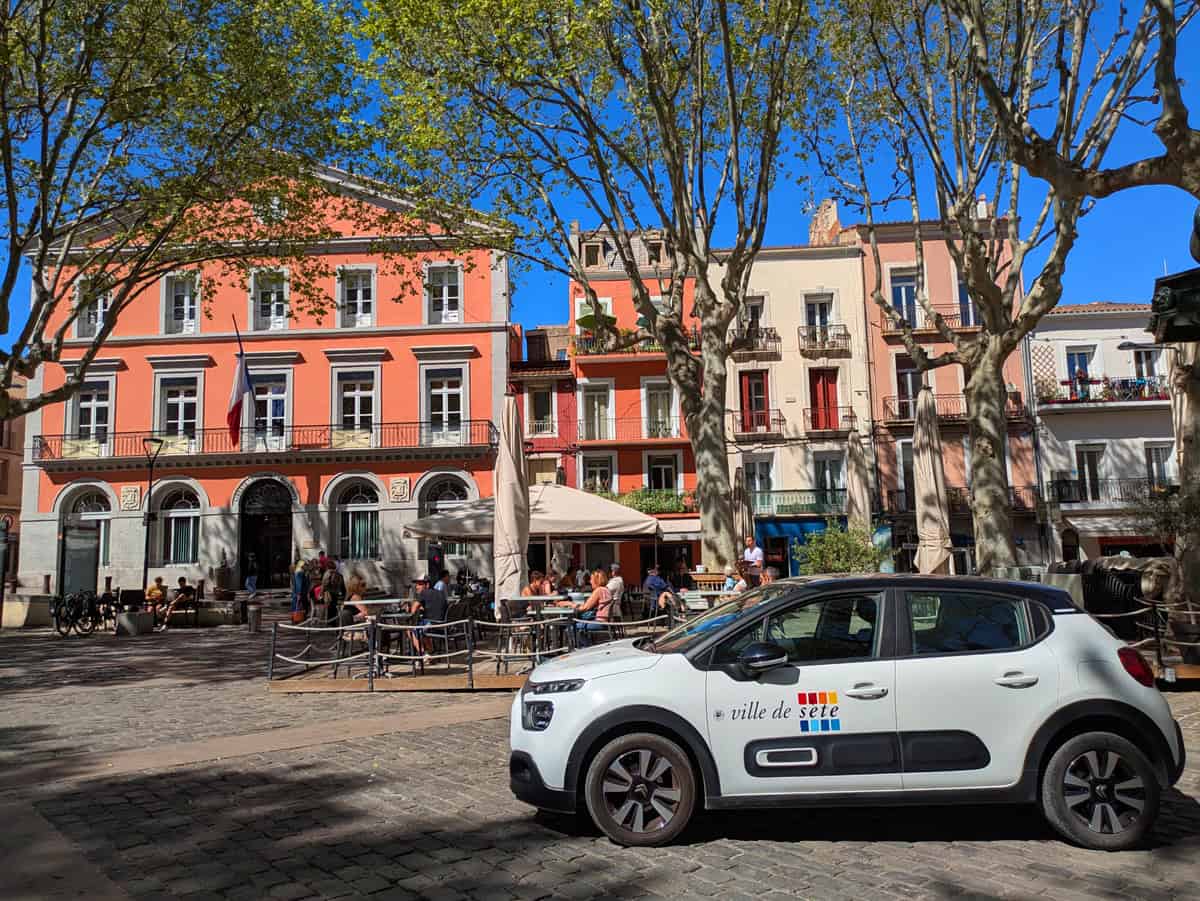
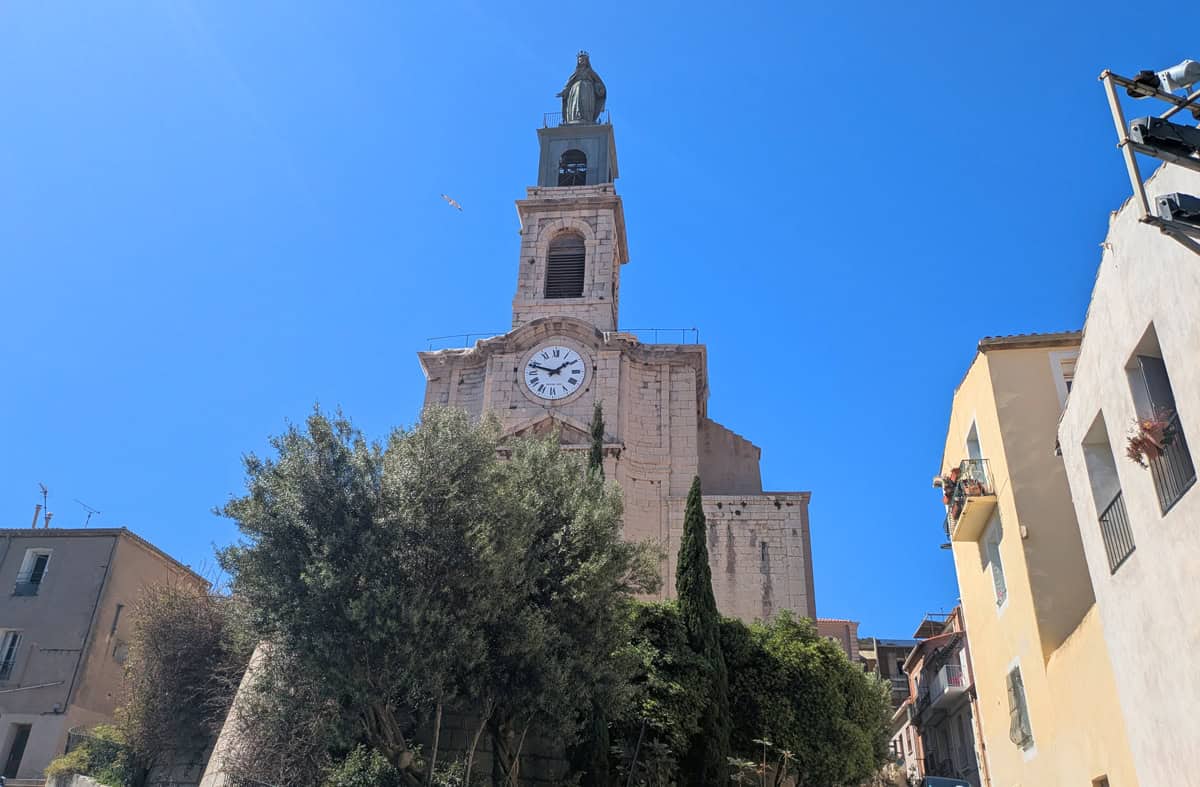
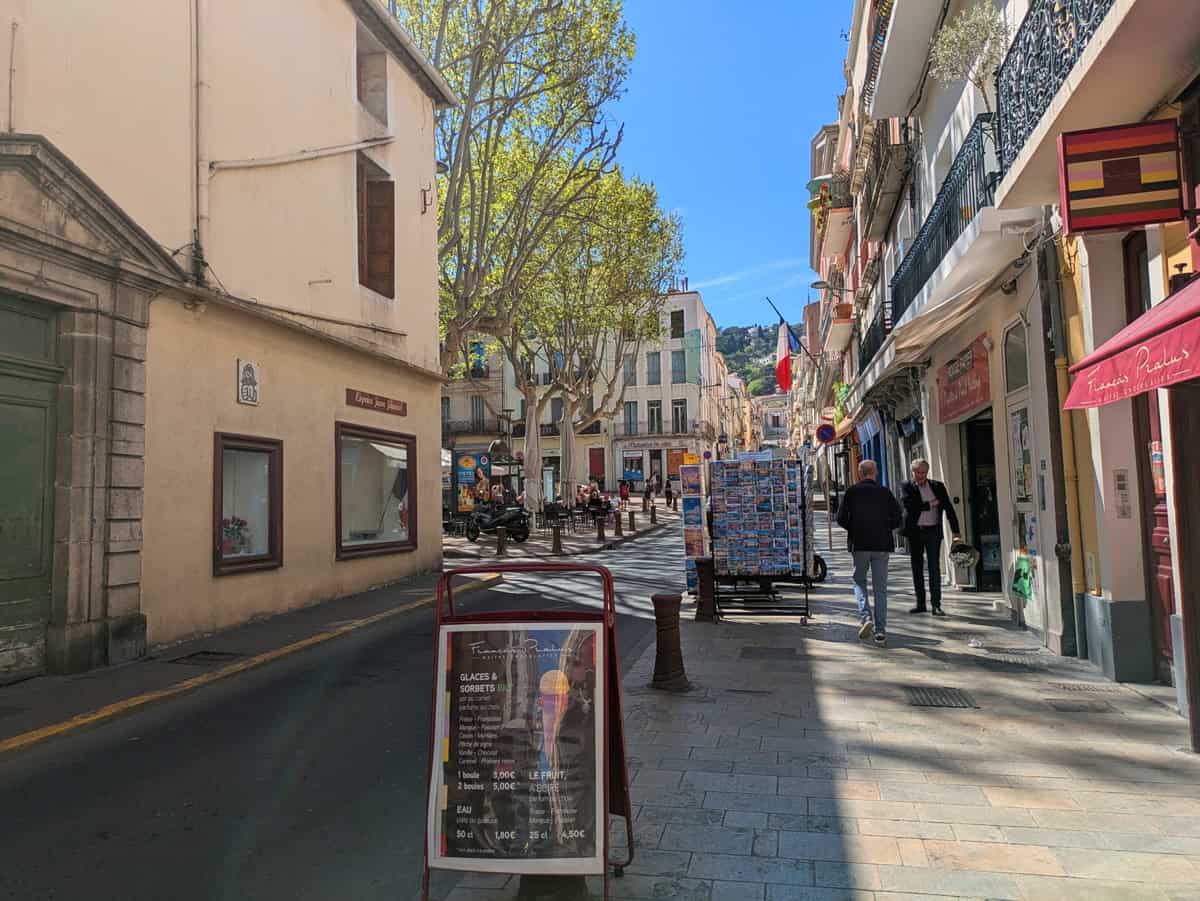
The Old Town is steps from the Royal Canal: it’s not big but it has charm. A few places to see: 1) Place du Puffre with its city hall, colourful buildings, dolphin statue, outdoor cafés (and public toilets). 2) Les Halles (the city market) and the network of small streets surrounding it. 3) a couple of blocks behind the Tourist office is Eglise Saint Louis, Sète’s oldest church (from 1702).
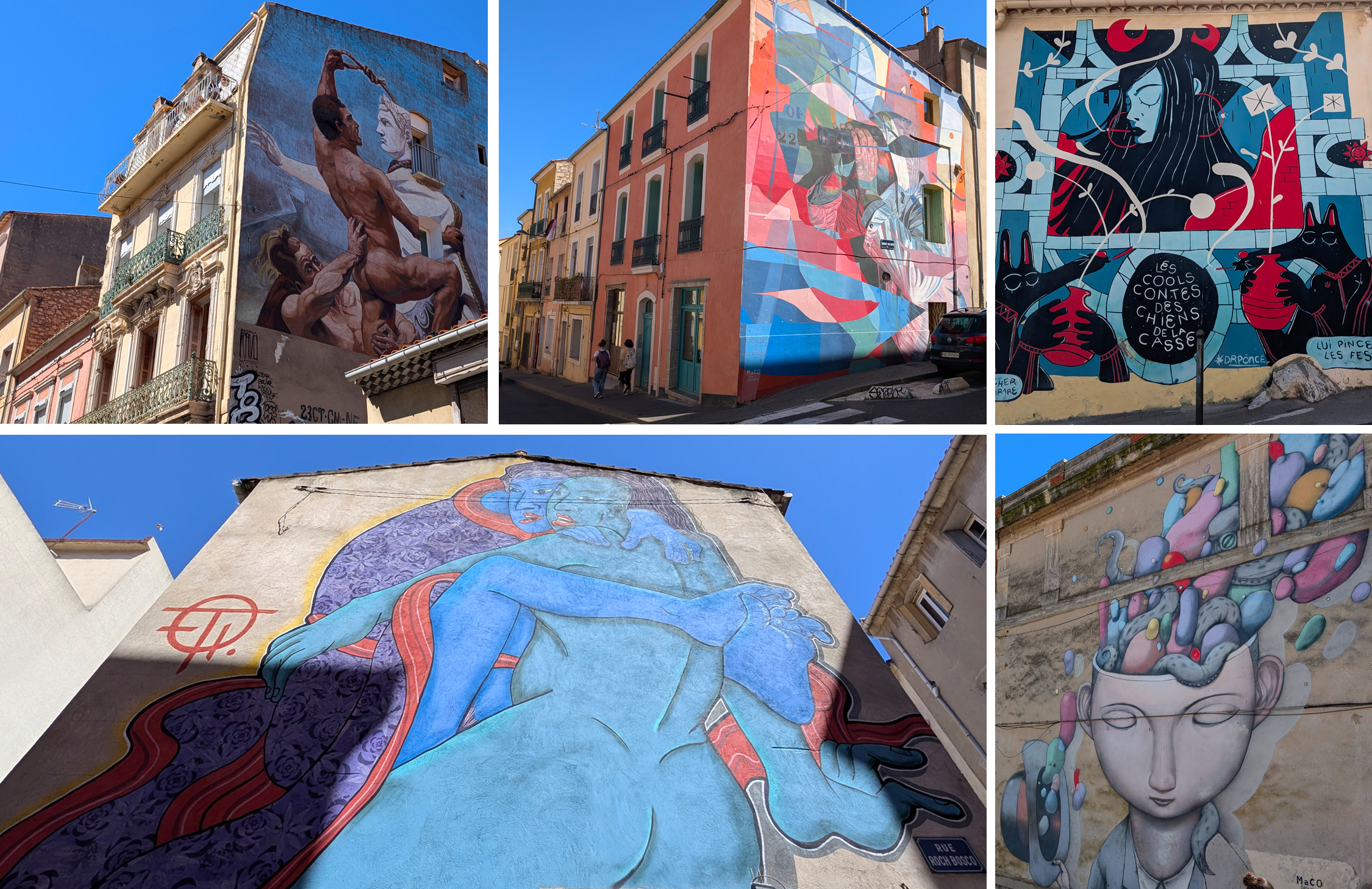
Like many French towns in the area, Sète has a lot of “trompe l’oeil” (street art) around the old town. If you like street art, the tourist office has a map showing you where major installations are located, you just have to follow the indications.
Other things to see in Sète
The things mentioned above are, in my opinion, the highlight of Sète. They are ideal (and easy) to see on a day trip.
But if you have time and want to wander further, here are a few other things:
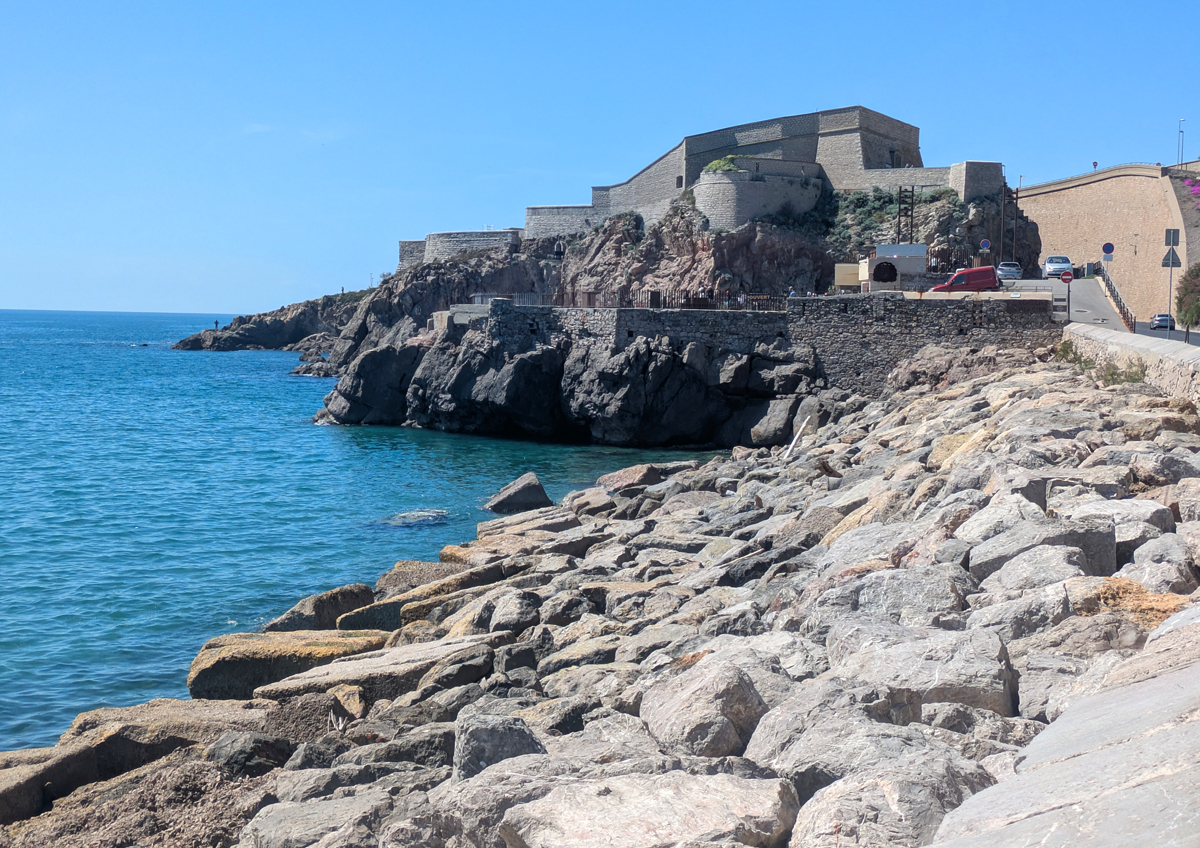
- A walk to the Théâtre de la Mer. The theatre is located in an 18th century fort which is impressive from the outside and which gives you views over the Mediterranean. You can’t see the inside though unless coming to see plays or music festivals.
- Musée de la Mar. A maritime museum located close to the Théâtre de la Mer. Free. It highlights the maritime history of Sète and has lots of models of ships which makes it popular with kids. Website.
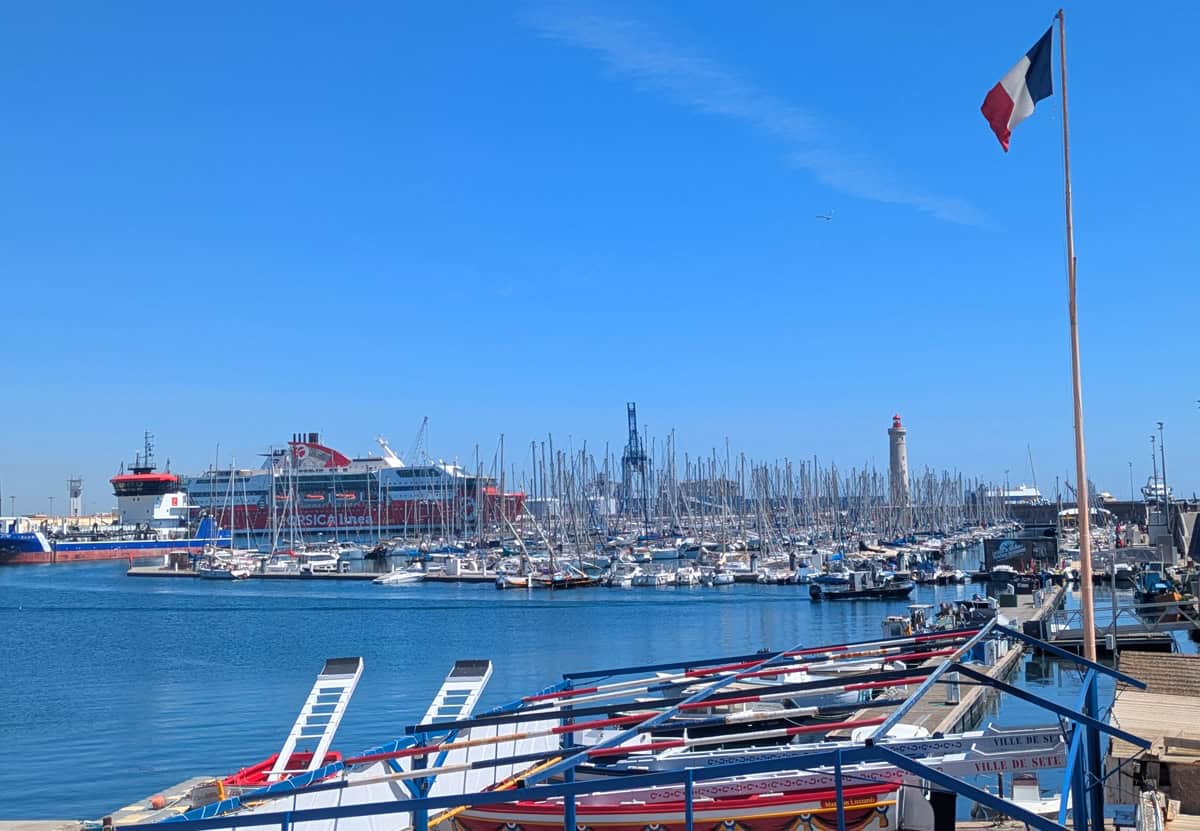
- The Port of Sète. I’ve mentioned above that it is the largest French port on the Mediterranean. You can see ships, from fishing trawlers to huge cruise ships, in the harbour.
- Visit the Saint Louis lighthouse. At the end of the port you can walk the promenade of the pier to the lighthouse. There you can climb up the 126 stairs to the top. Website.
Practical Information on Sète
Getting there. Sète is on a major train line so getting here by train is easy. See the SNCF website for schedules. It takes 15 minutes to get to Sète from Montpellier. When you come out of the train station, it is about a 20 minute walk to get to the Canal Royal (along pretty Avenue Victor Hugo).
Tour. If you prefer taking a tour, this one picks you up in Montpellier and takes you to the canals, city center, the market for food tasting and then to Mont Saint Clair for views of the city.
How much time to spend in Sète? My personal opinion is that 3 to 4 hours is enough time to visit the “must see’s”: the canals, Mont Saint Clair and the old town.
Related: 30 images showing you why you should visit Montpellier
Related: Why you should visit Béziers: the 2nd oldest city in France
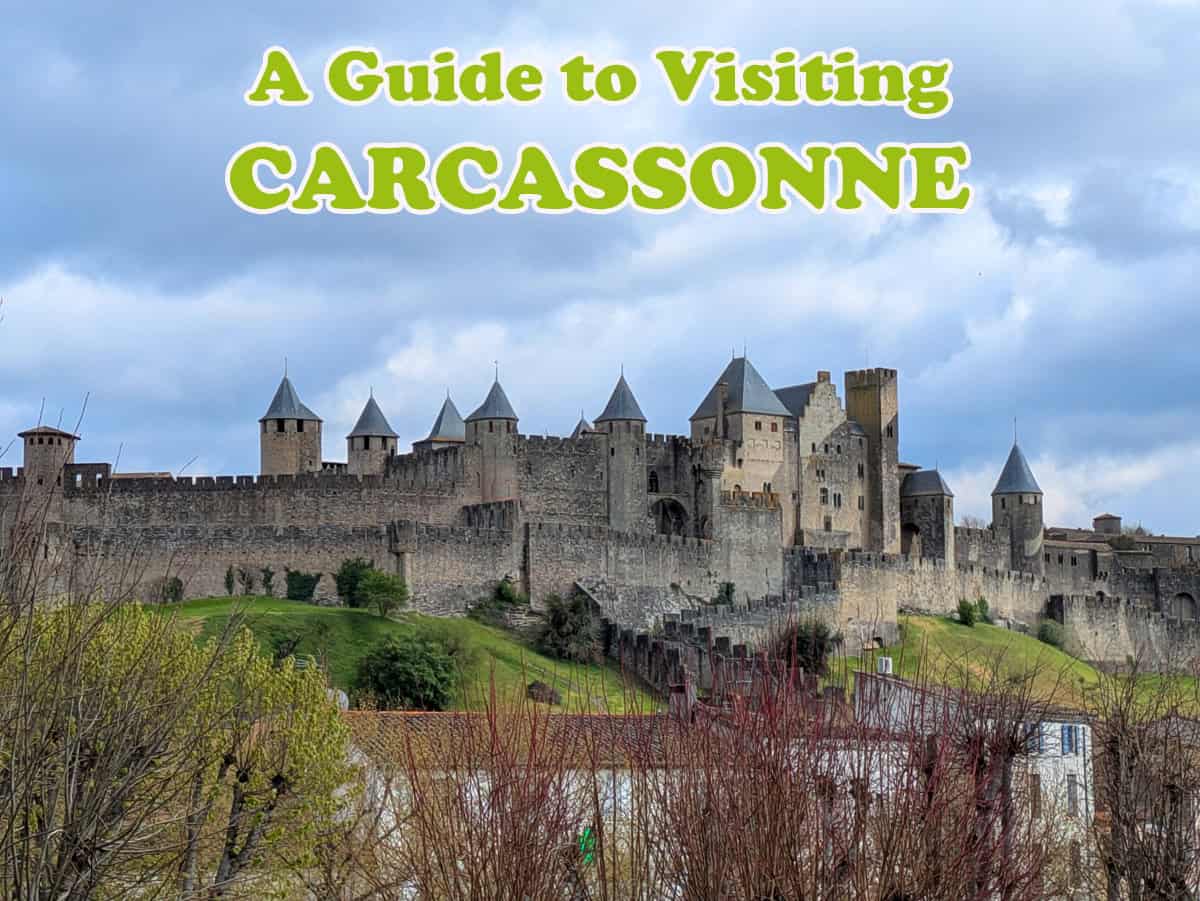
Related: A Guide to Visiting Carcassonne
Leave a Reply