
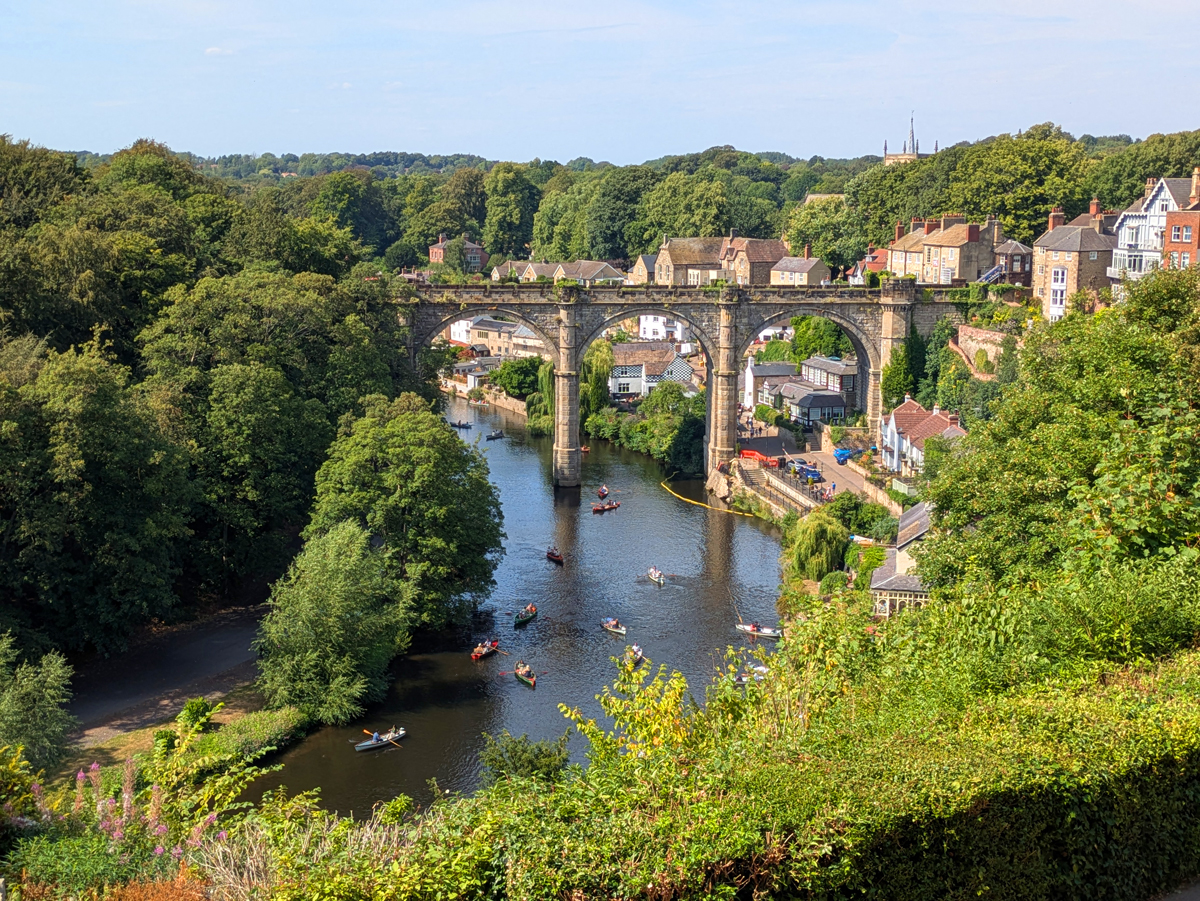
Why Knaresborough is a great day trip from York.
Knaresborough is a great day trip from York, it’s actually my very favorite day trip from York. Why? 1) It is beautiful and scenic, 2) there’s lots of nature and you have the option of some nice walks, 3) It is easy to get there, in fact the train will get you there in about 25 minutes.
In this post I’ll tell you everything you need to know about visiting Knaresborough including what to see and do. Depending on what kind of traveller you are, you might even want to consider making Knaresborough (instead of York) a base in the area. More on that below.
A Brief History of Knaresborough
Knaresborough started simply as a fortress on the rock, its location on a rocky bluff with impressive views of the gorge of the River Nidd (Origins of the name: “knarre” meaning rocky outcrop in Anglo-Saxon, and “burgh” meaning fortress). In time, a settlement grew around the castle.
The most famous event in Knaresborough history happened in 1170. Hugh de Morville (owner of Knaresborough castle at the time) and 3 other knights assassinated Thomas Becket who was the Archbishop of Canterbury. They in fact assassinated him in Canterbury Cathedral. Why? The English king at the time was Henry II and he was feuding with Becket. The 4 assassins, who had previously fought for the king, thought they were doing it under his orders.
After their crime, the 4 ran back to Knaresborough and barricaded themselves in the castle for a year. Long story short, they would be excommunicated by the Pope and ordered to fight for the Knights Templar for a period of 14 years.
Most famous Knaresborough people:
Mother Shipton (Ursula Southeil, c. 1488–1561): England’s most prophetess (described as a hideously ugly witch), reportedly born in a cave by the River Nidd. The Mother Shipton cave, a tourist attraction know for mineral-rich water that petrifies objects, is named after her and is – according to legend – where she was born.
“Blind Jack Metcalf” (1717–1810): John Metcalf lost his sight as a child but became a famous trader and a road and bridge builder. He became a builder after the age of 50 and managed to build hundreds of miles of road throughout Northern England.
St Robert of Knaresborough: A 12th-century hermit and holy man who lived in a cave along the River Nidd and became renowned for his piety and healing gifts. Pilgrims visited him, including King John in 1216. After his death, he became one of the best-known saints in Europe.
What to See and Do in Knaresborough
Go to Knaresborough Castle
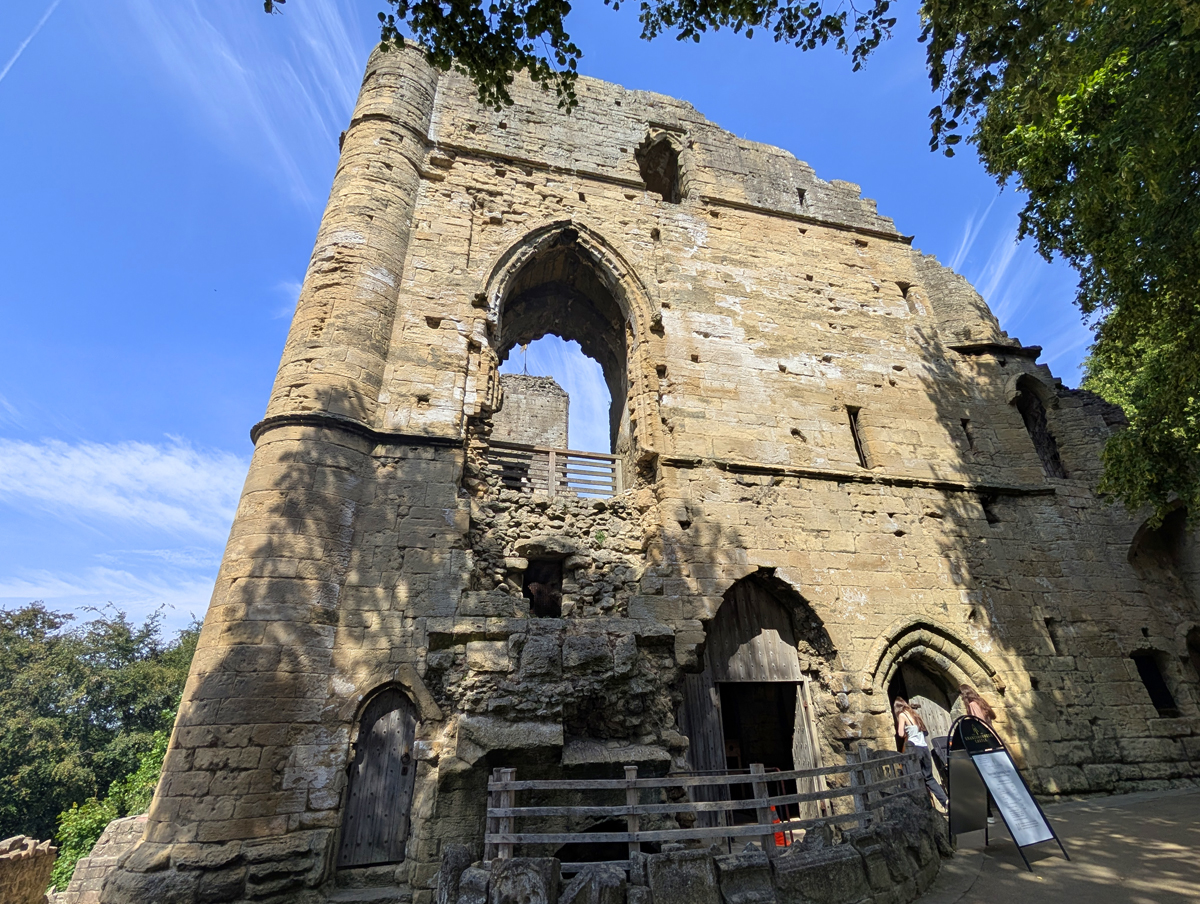
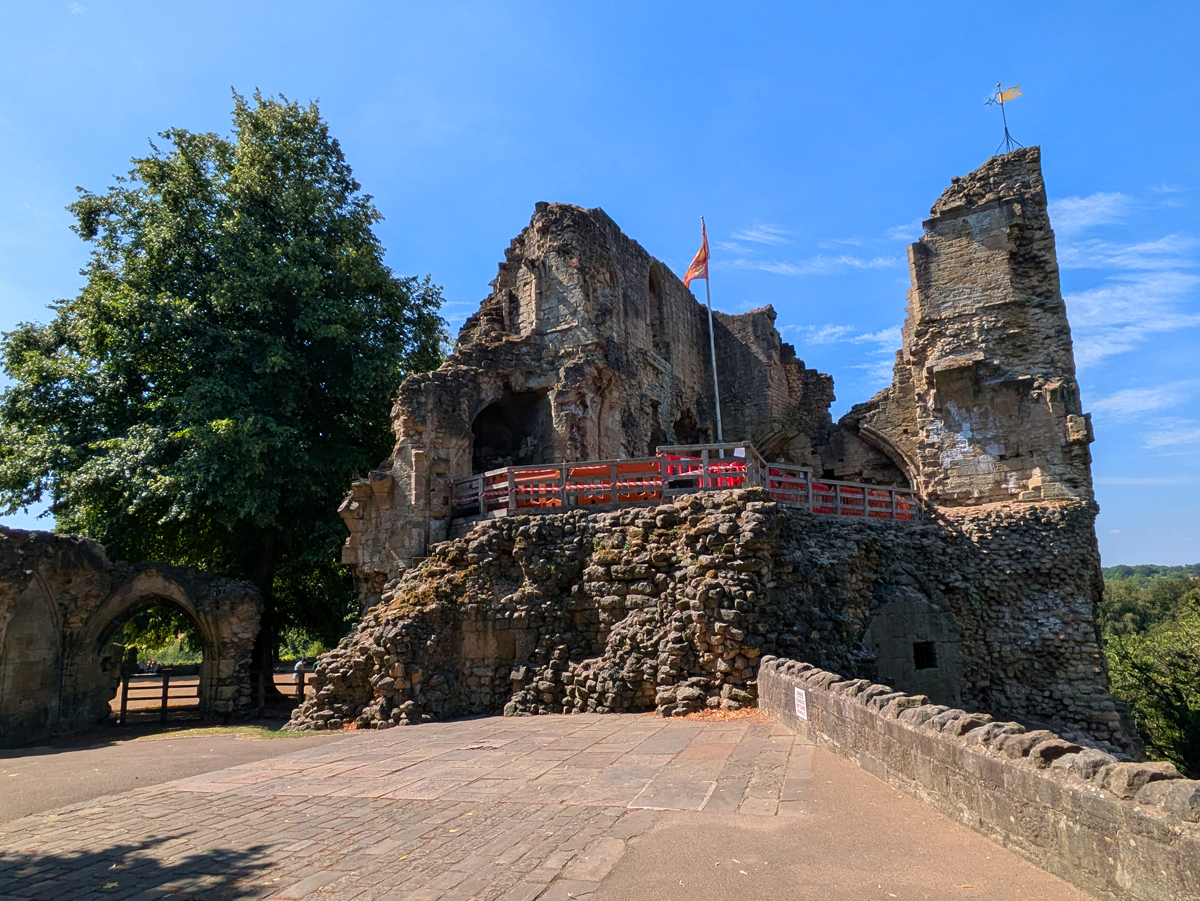
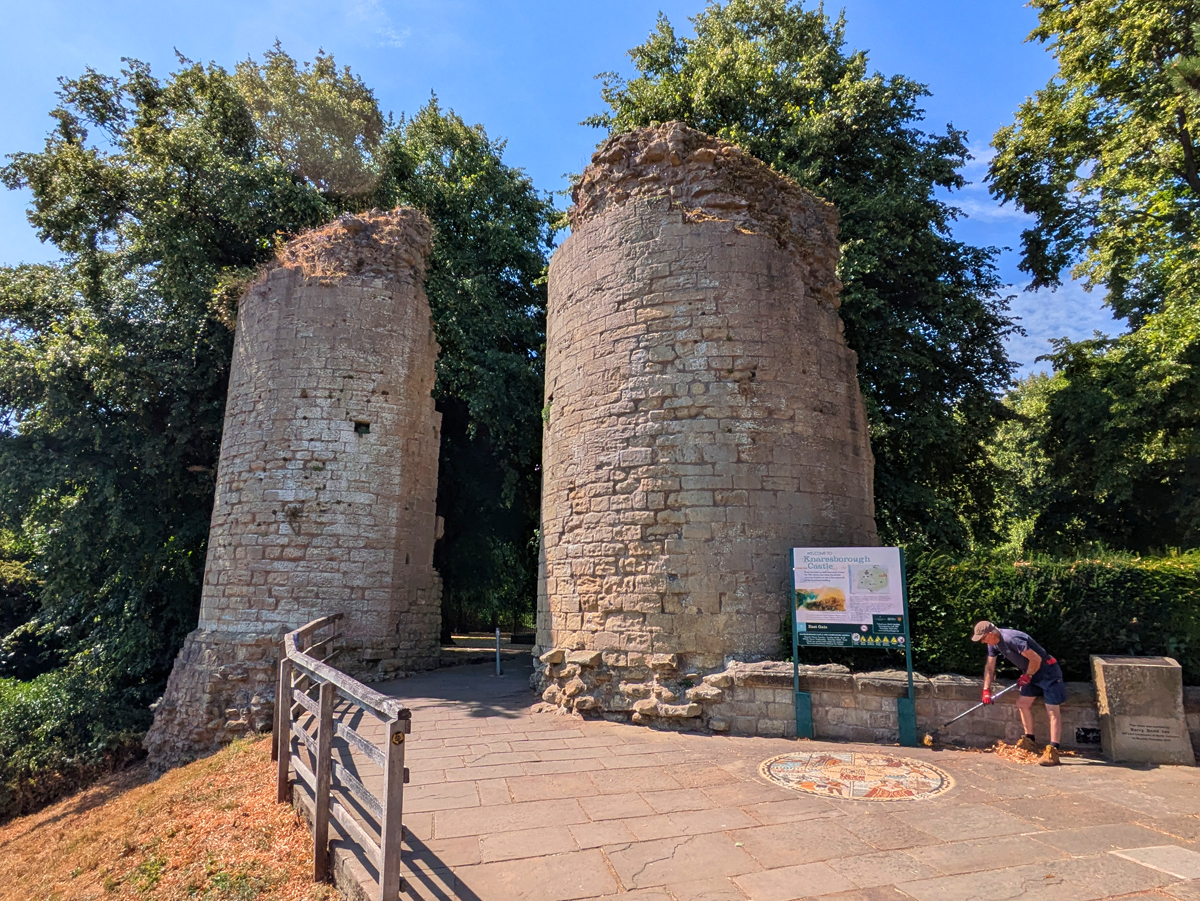
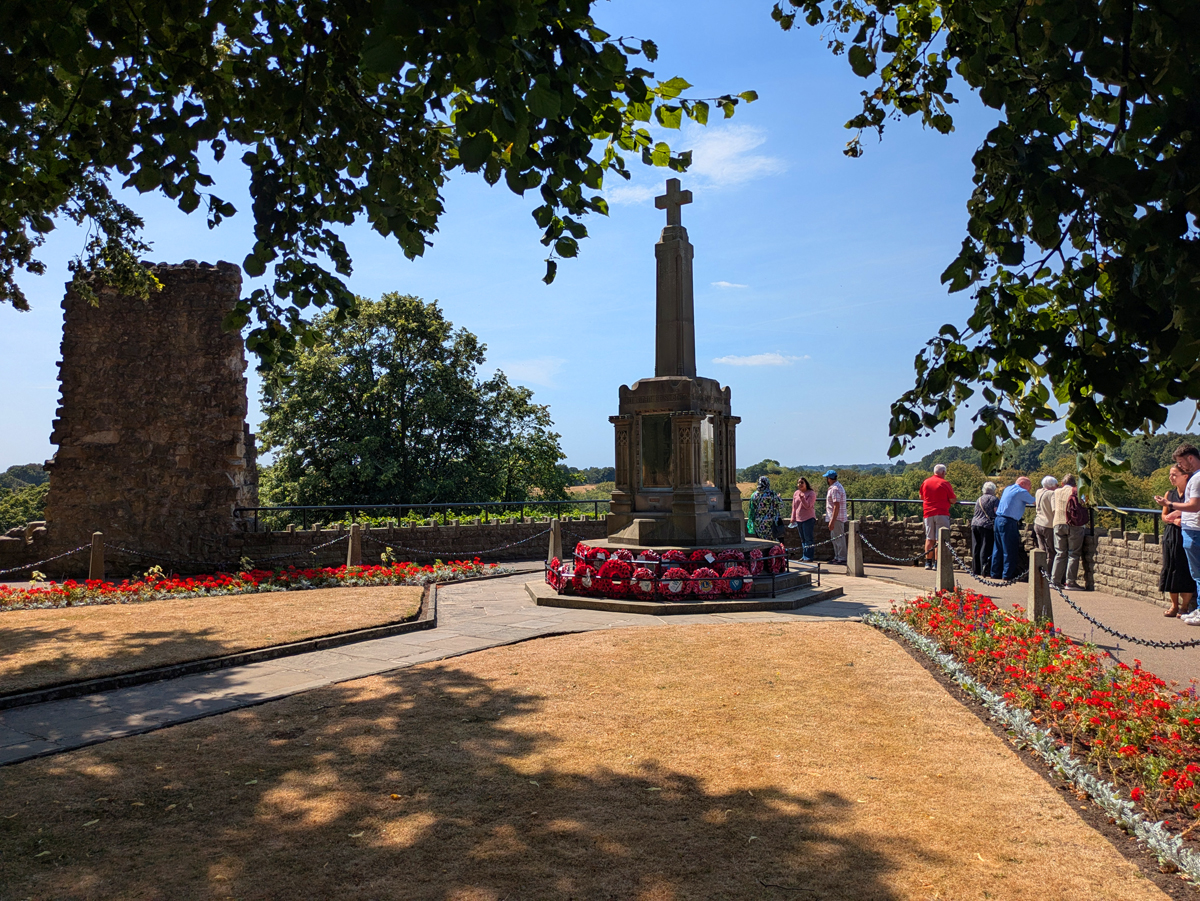
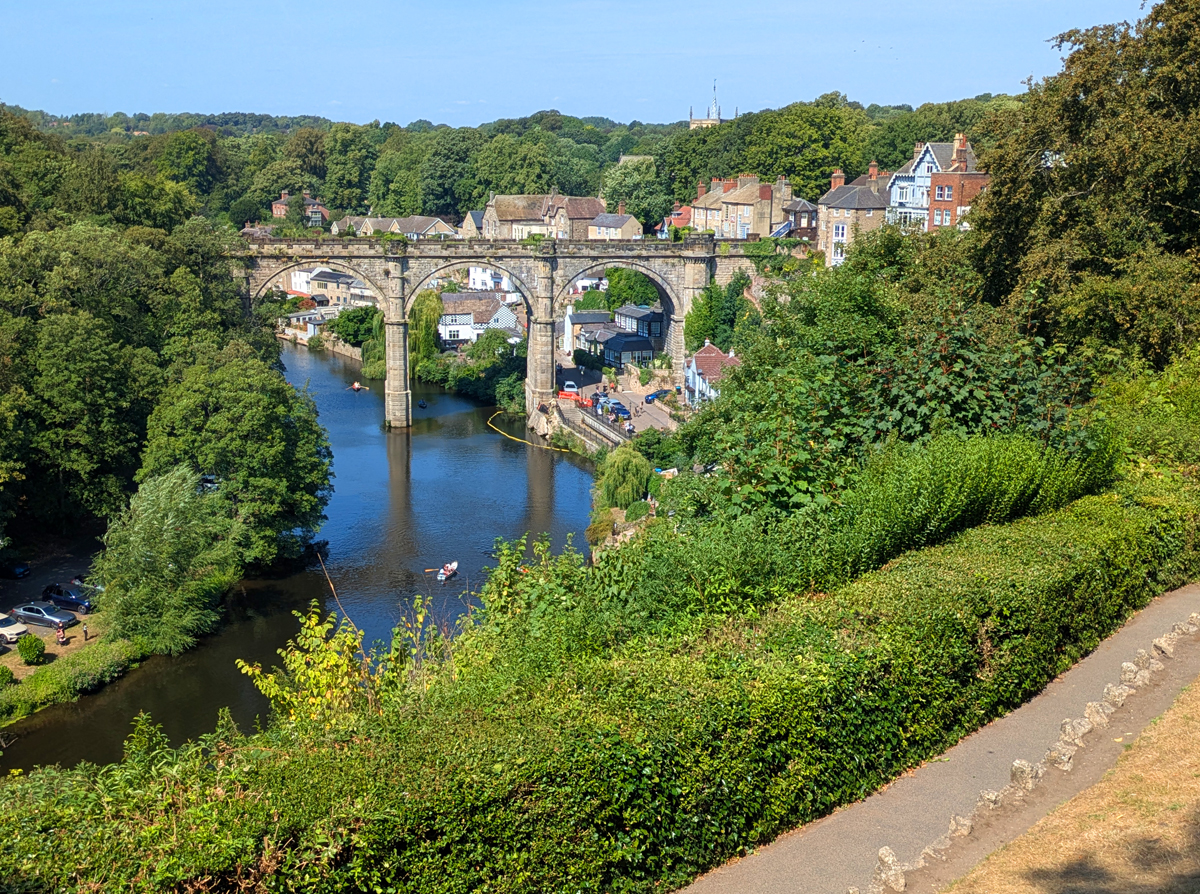
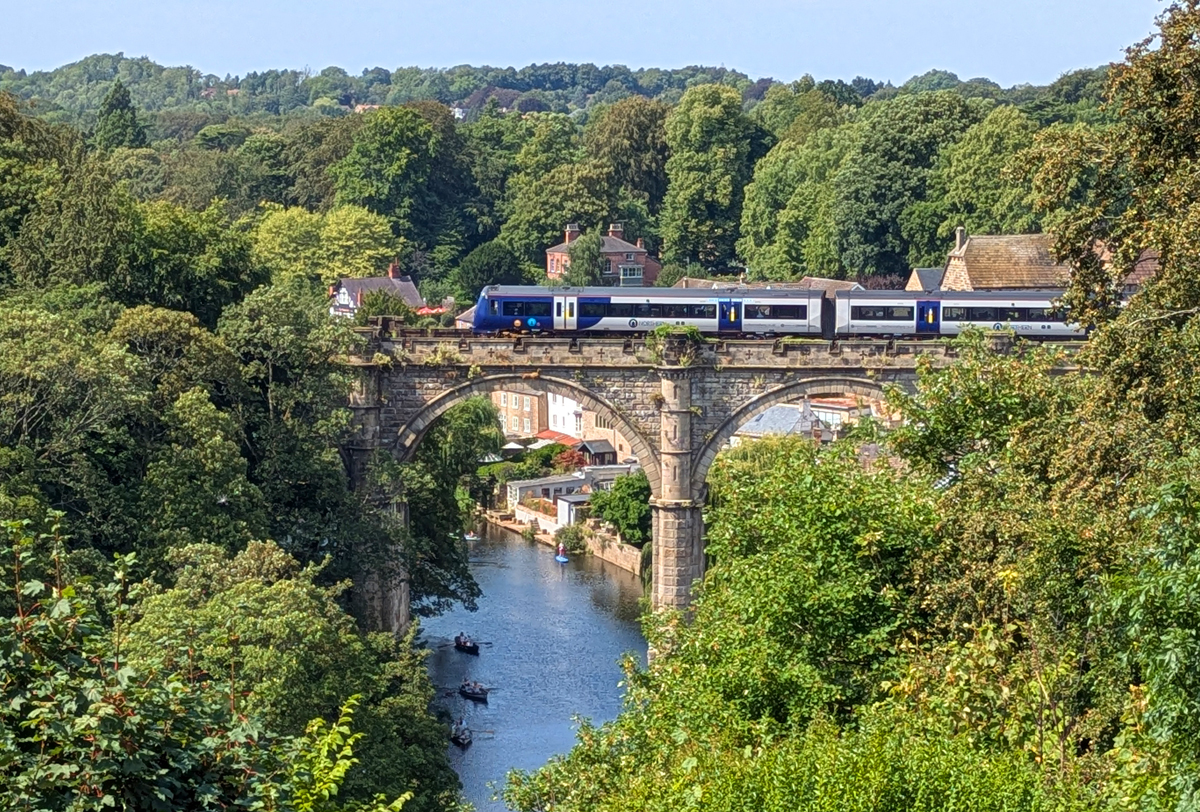
There’s really not a lot to the castle these days, it is mostly a ruin sitting on that high bluff. But the location is spectacular, with incredible views of the gorge, River Nidd and the viaduct running over it (which is where the train in/out of town runs).
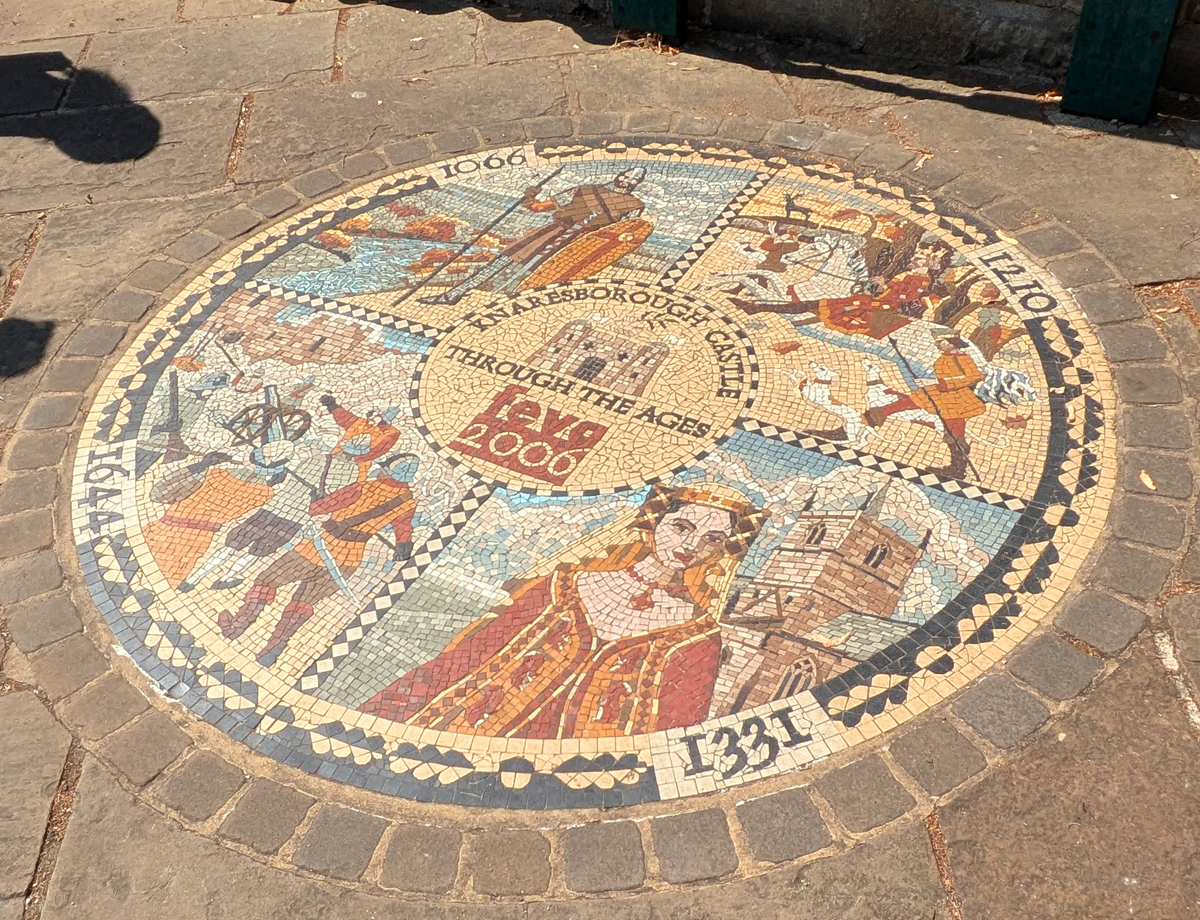
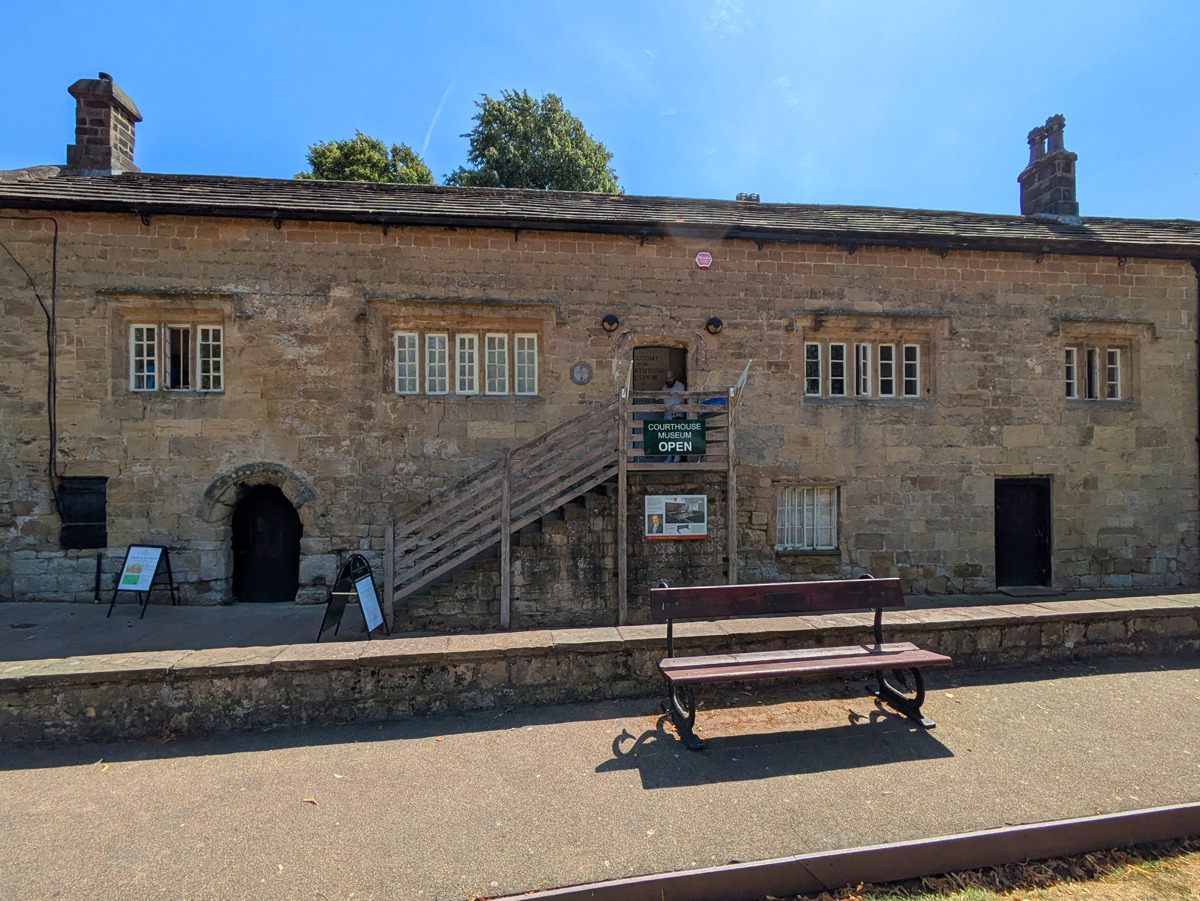
What to see at the Castle? Enjoy the various views of the scenery. It really is beautiful. You can pay £4.50 to visit the castle and the Courtyard museum which are on the grounds. Our honest opinion is that it is not worth it. The Castle is mostly a ruin and the museum is just ok (unless you want to read more about the town and some of the famous personalities I’ve mentioned above). I should mention that the man in charge of the museum is a beautiful human being with lots of information and advice. It’s nice meeting people so dedicated to their work.
Walk around Knaresborough town center
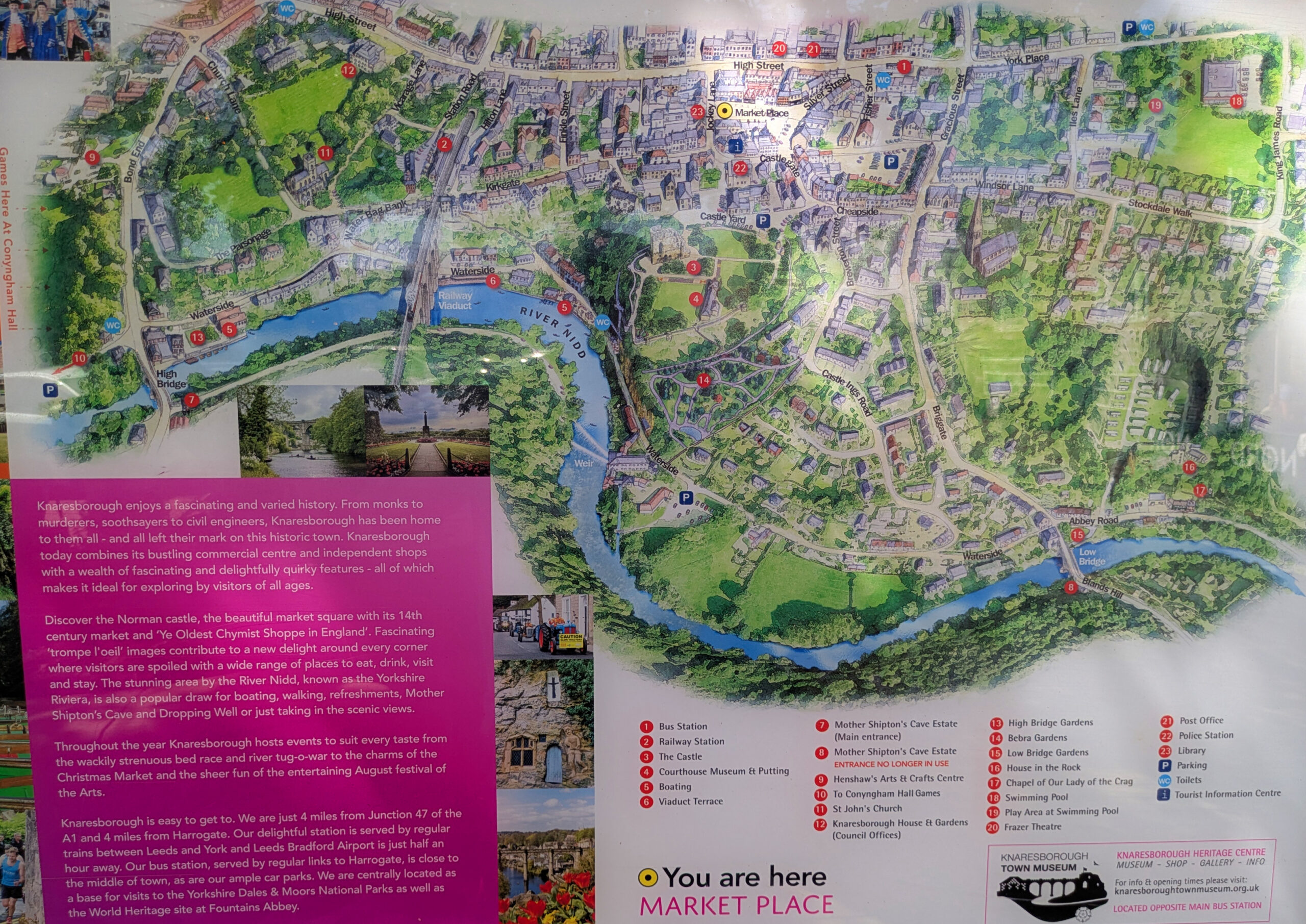
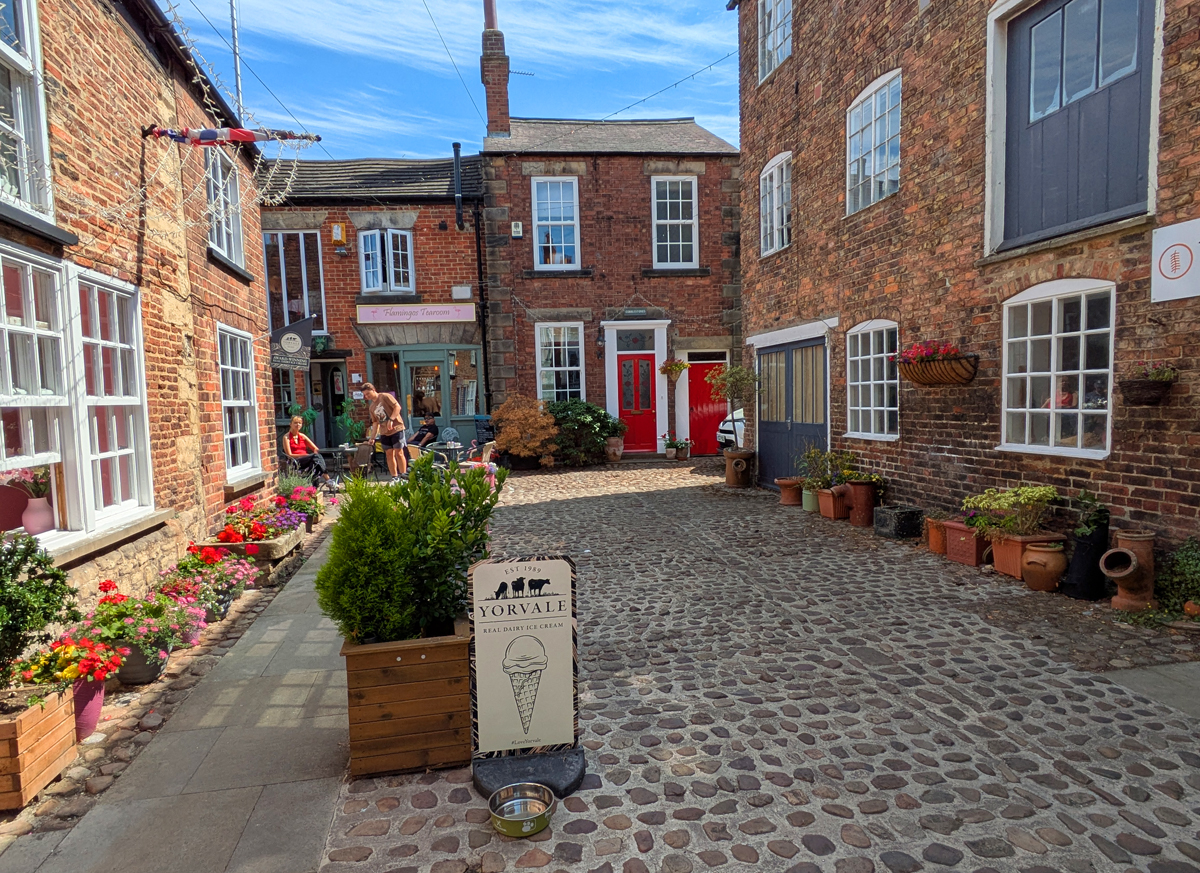
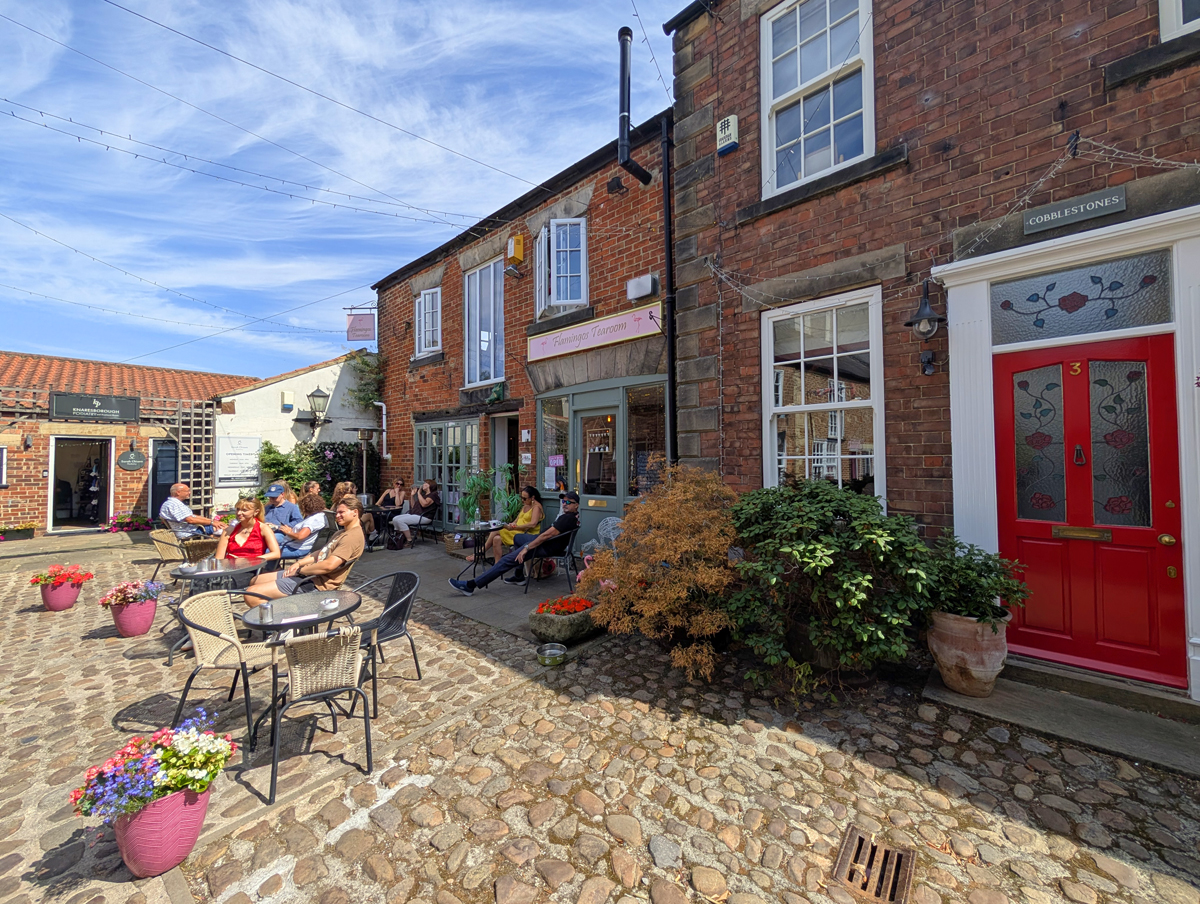
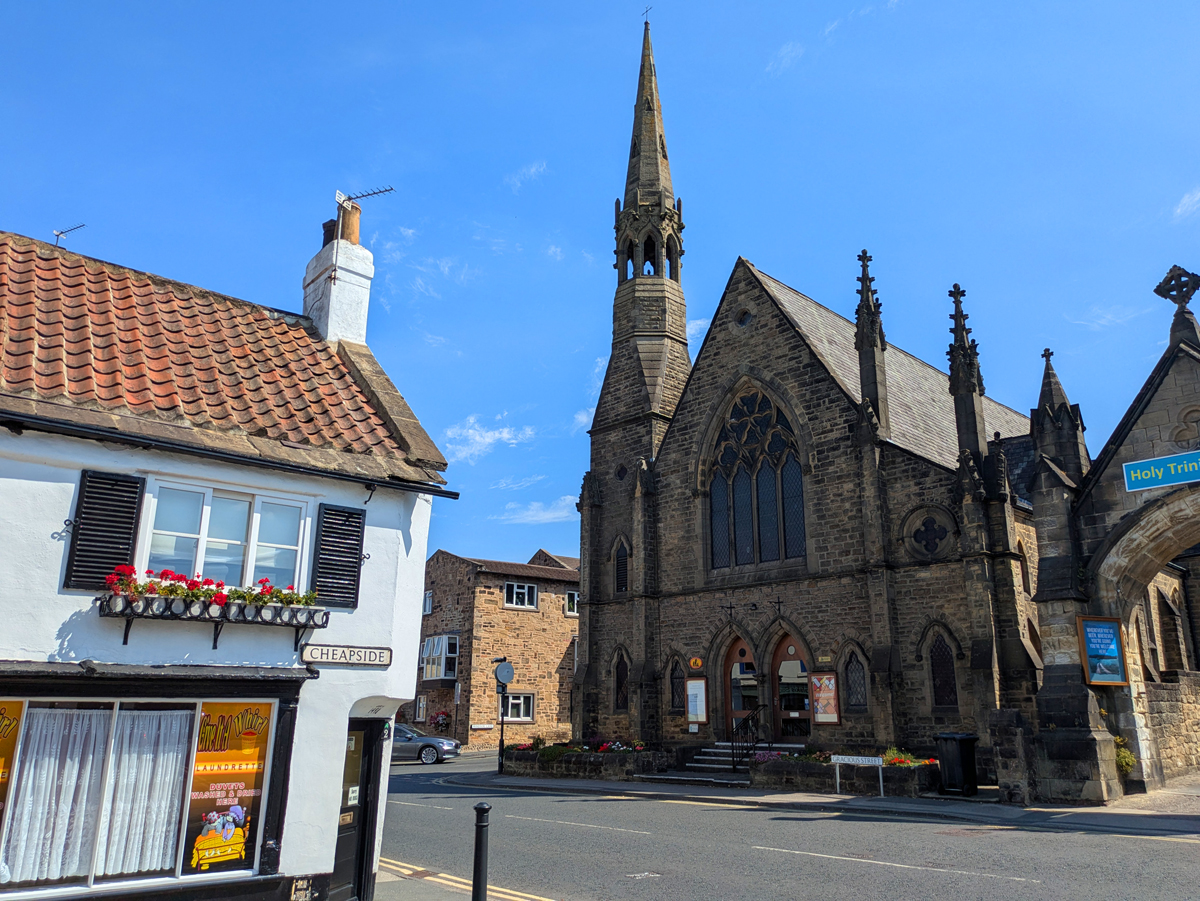
It’s not big but you should walk around the town center before going down to the river. The prettiest spot is Market Square which has some restaurants, cafés and quaint stores. They have a Subway if looking for a quick and inexpensive bite.
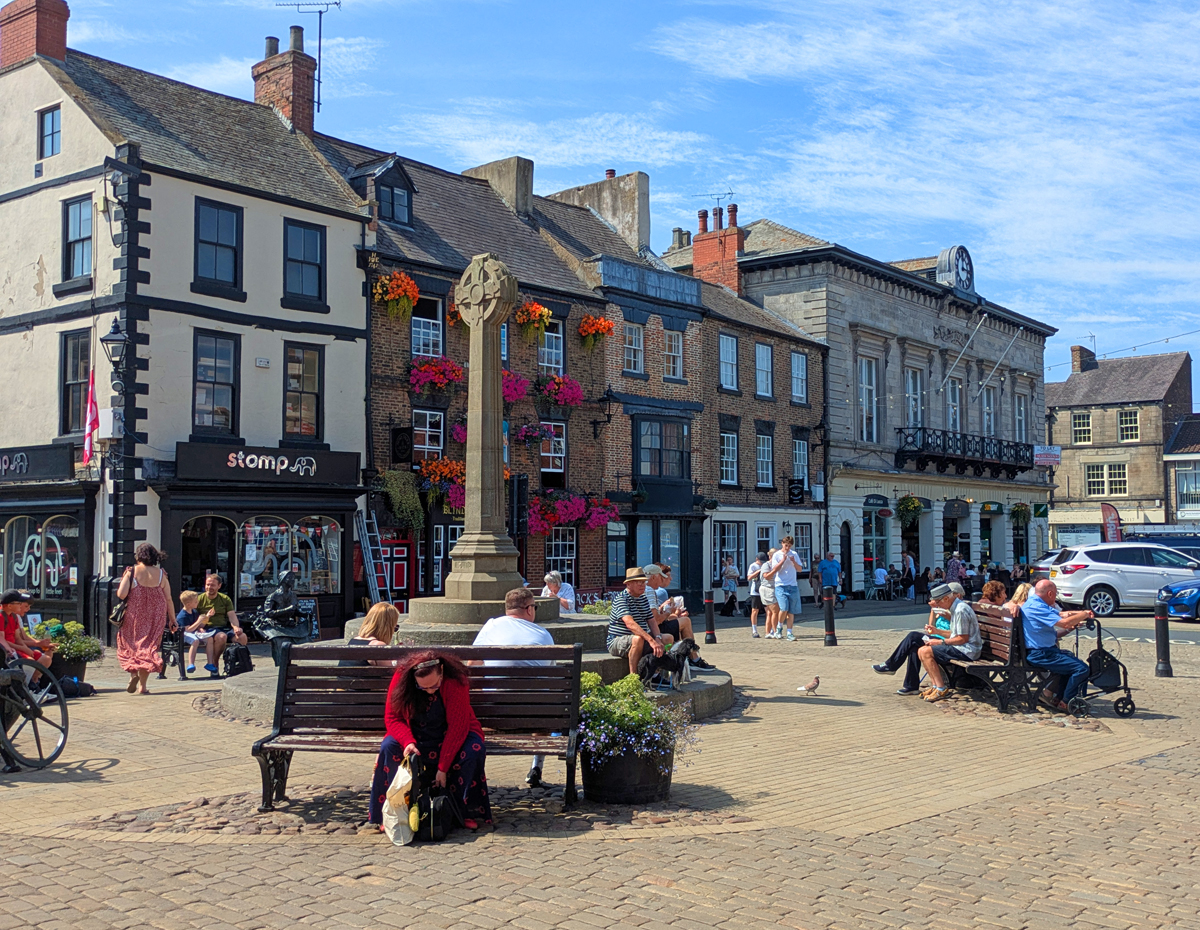
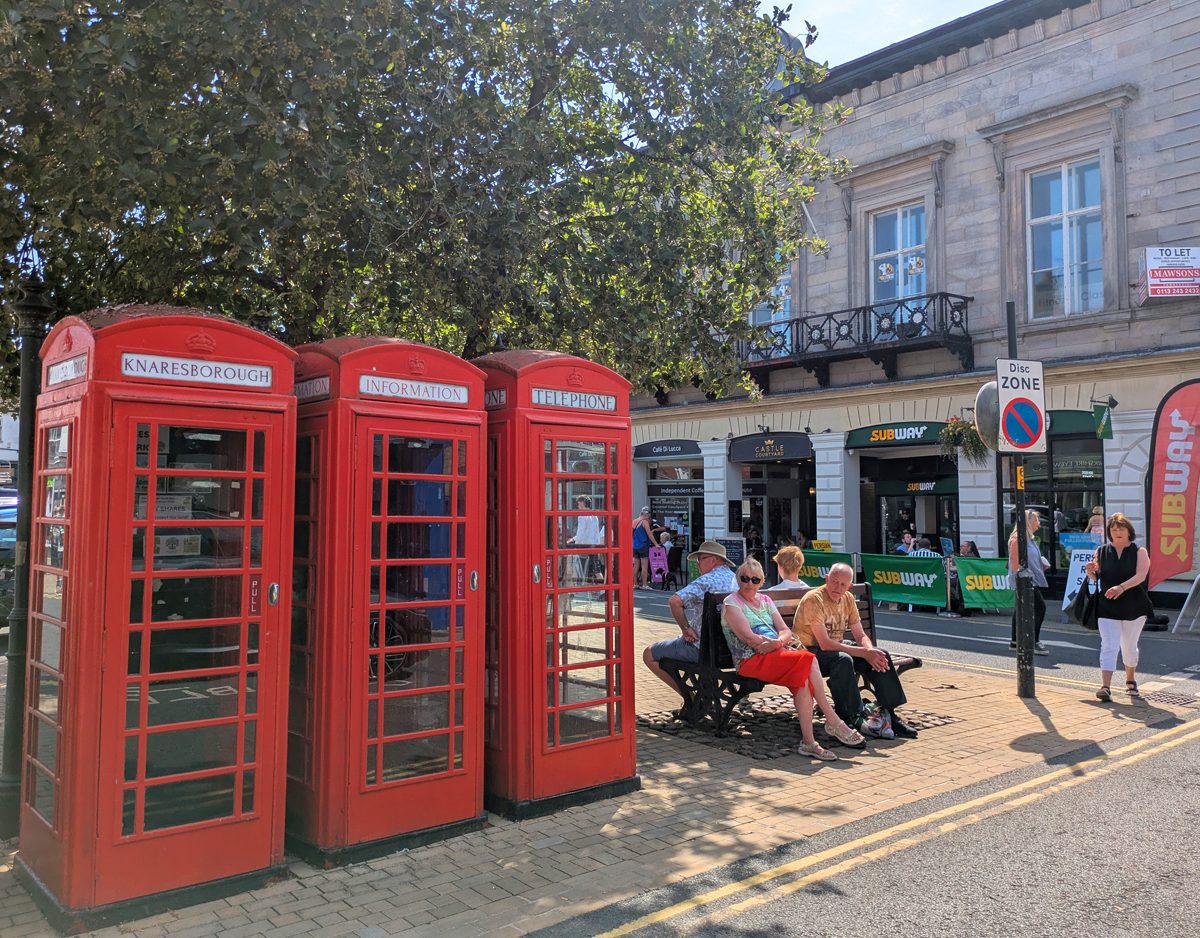
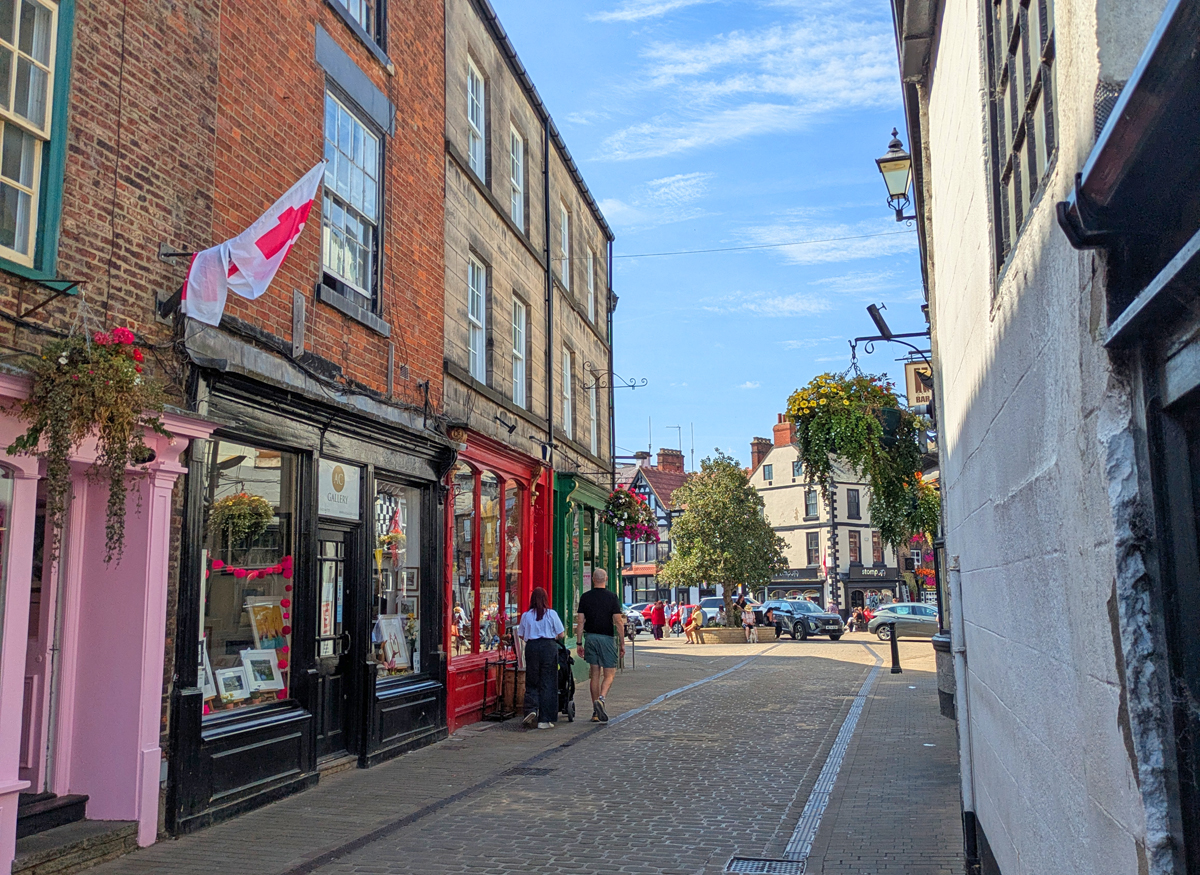
Every Wednesday there is a market in the square so if you want to see what Knaresborough is like when it’s happening, try to come on a Wednesday.
Bebra Gardens
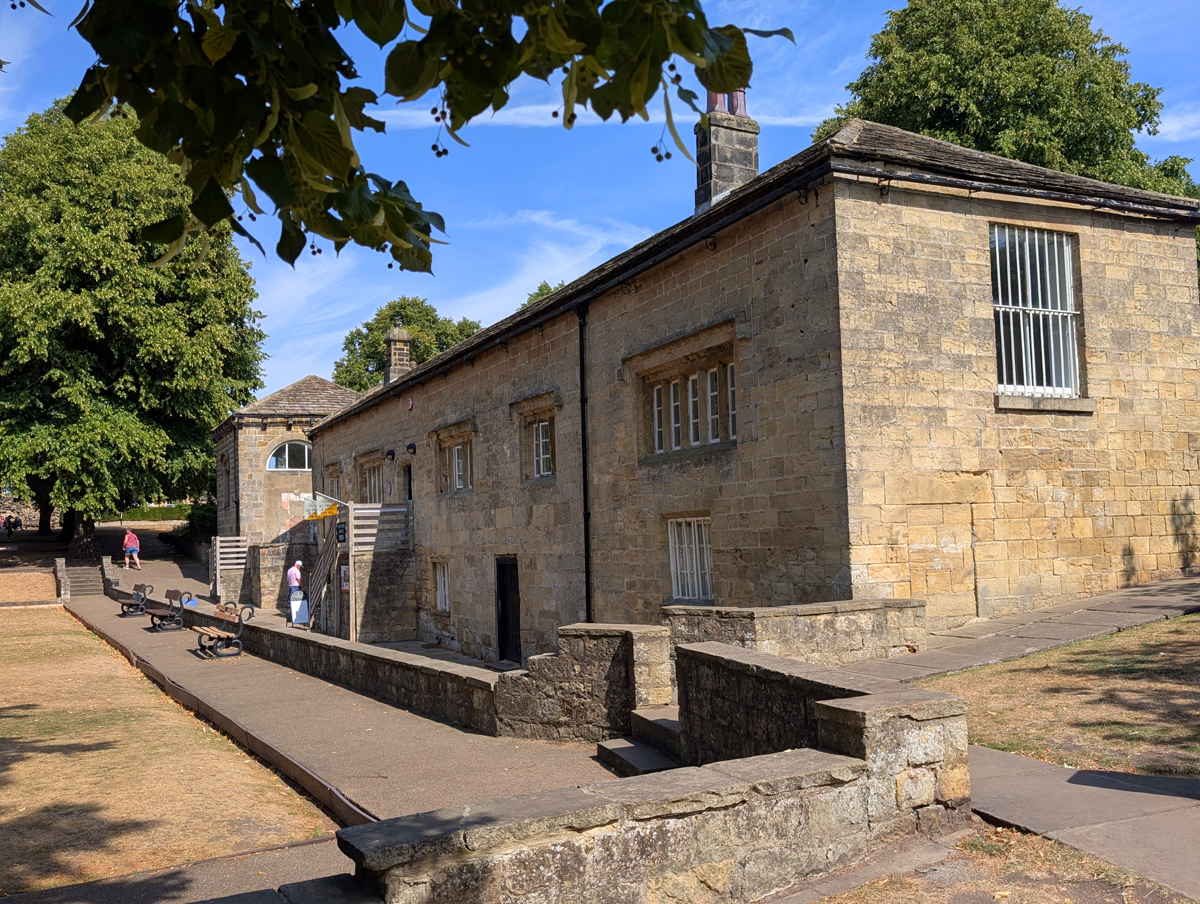
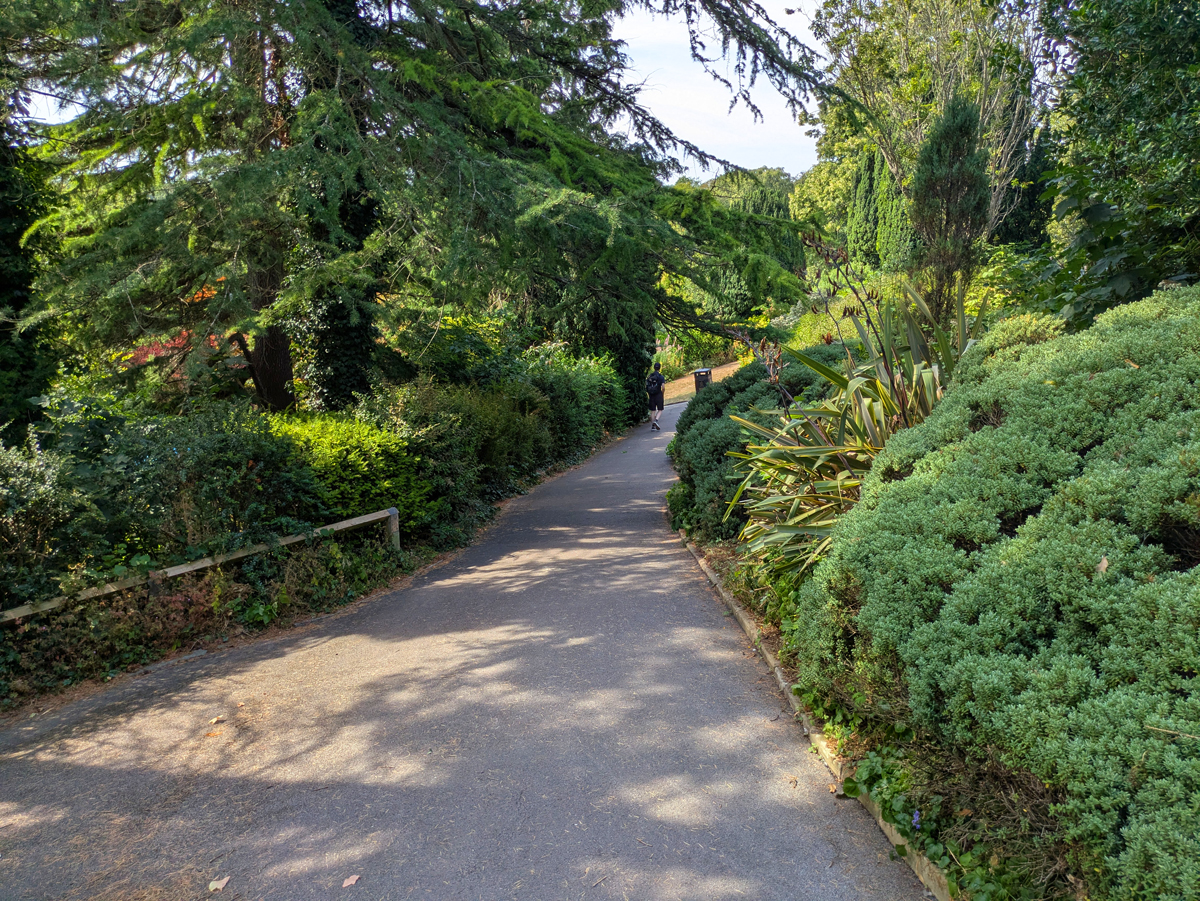
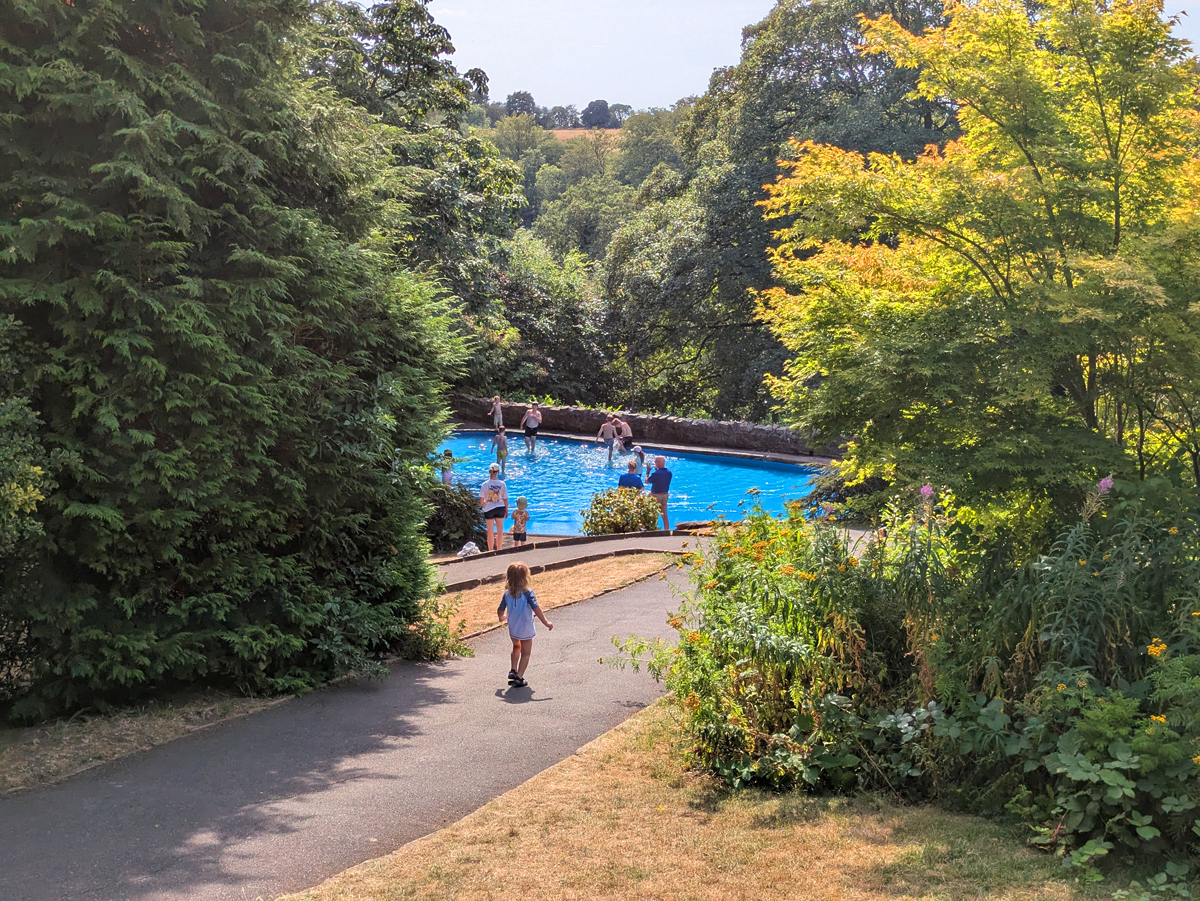
Come back to the castle grounds. Behind the Courtyard museum (off to the right of the entrance to the museum) you’ll see a path going down. Follow it down, it’ll lead to the Bebra Gardens which is lush with trees, plants and even a community swimming pool. Just by the swimming pool you’ll find another path that will lead you down to the river.
Walks along the river
If you’ve come down to the river from the castle, you have two directions to go: 1) right, taking you on a beautiful scenic walk towards the viaduct, 2) left if you have a lot of time and want a longish walk that will take you to Sir Robert’s cave. I’ll cover the two below.
1.Along the river to the Viaduct
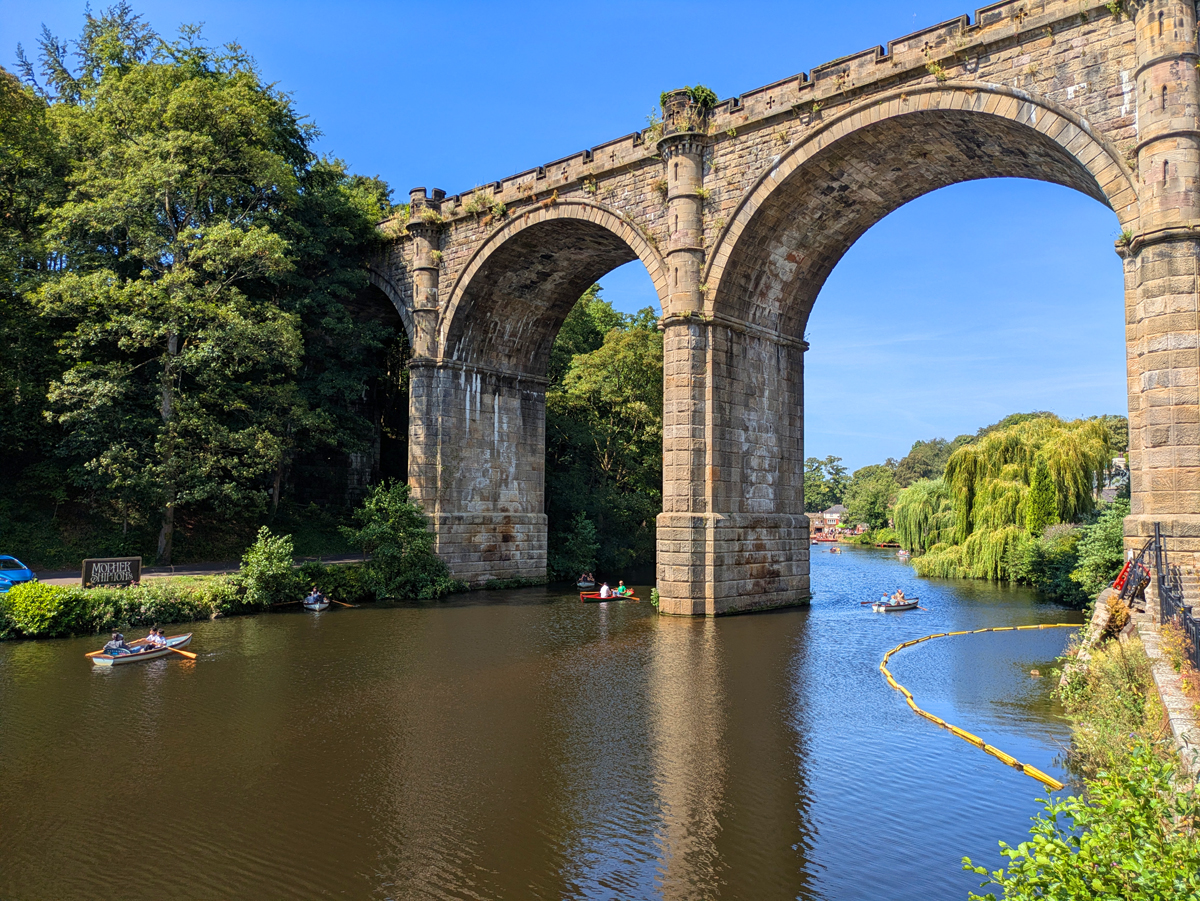
After the castle, it’s the most popular place to walk in Knaresborough. The road (Waterside) has restaurants, cafés, ice cream stalls and souvenir stores. It’s very pretty and lively and you can walk up to and under the viaduct. There you’ll see a place where you can rent canoes and go paddling along the river. It’s very, very pretty. It’s not long though…it’ll take you about 10 minutes before the road goes up to a small bridge.
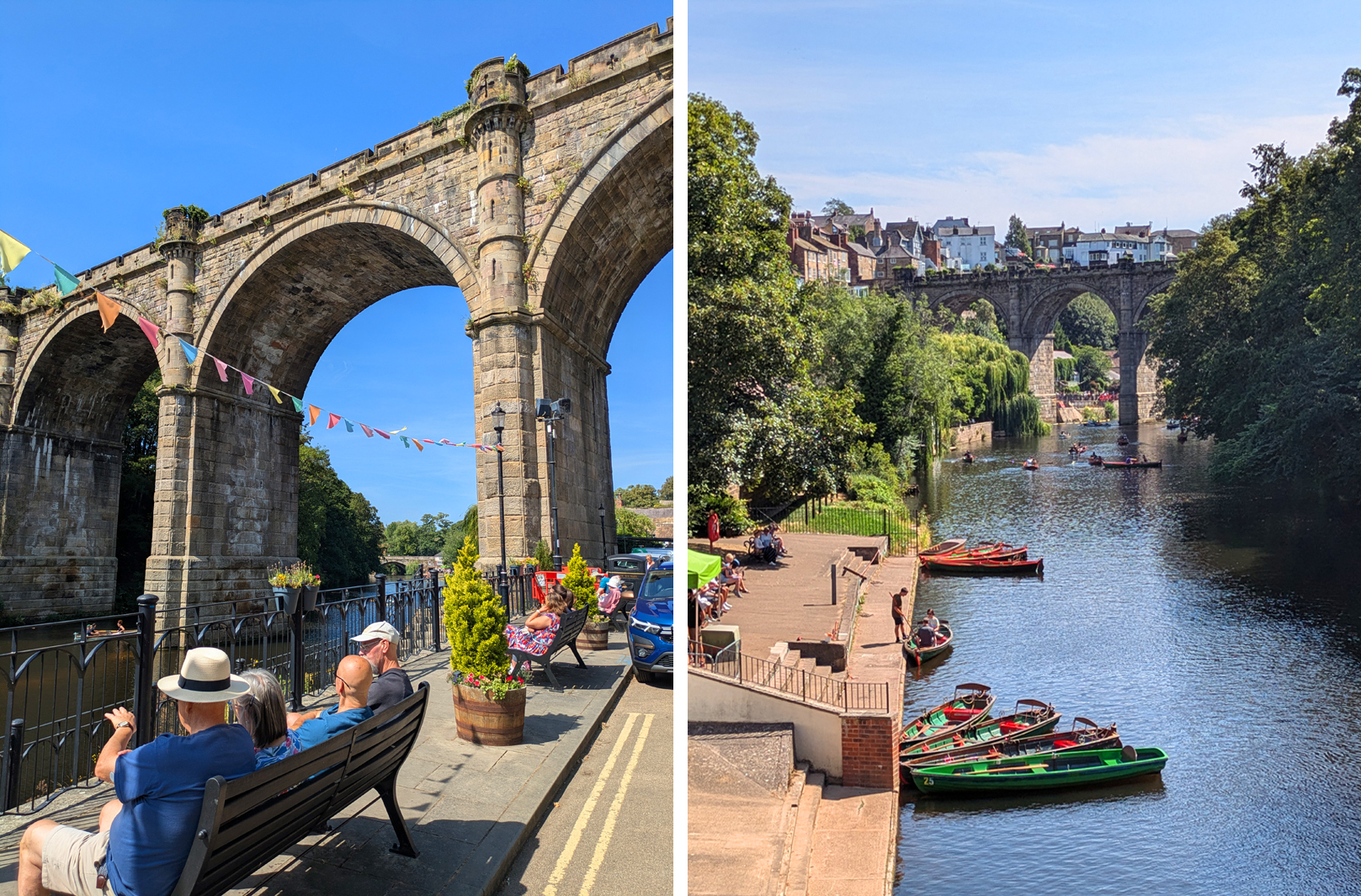
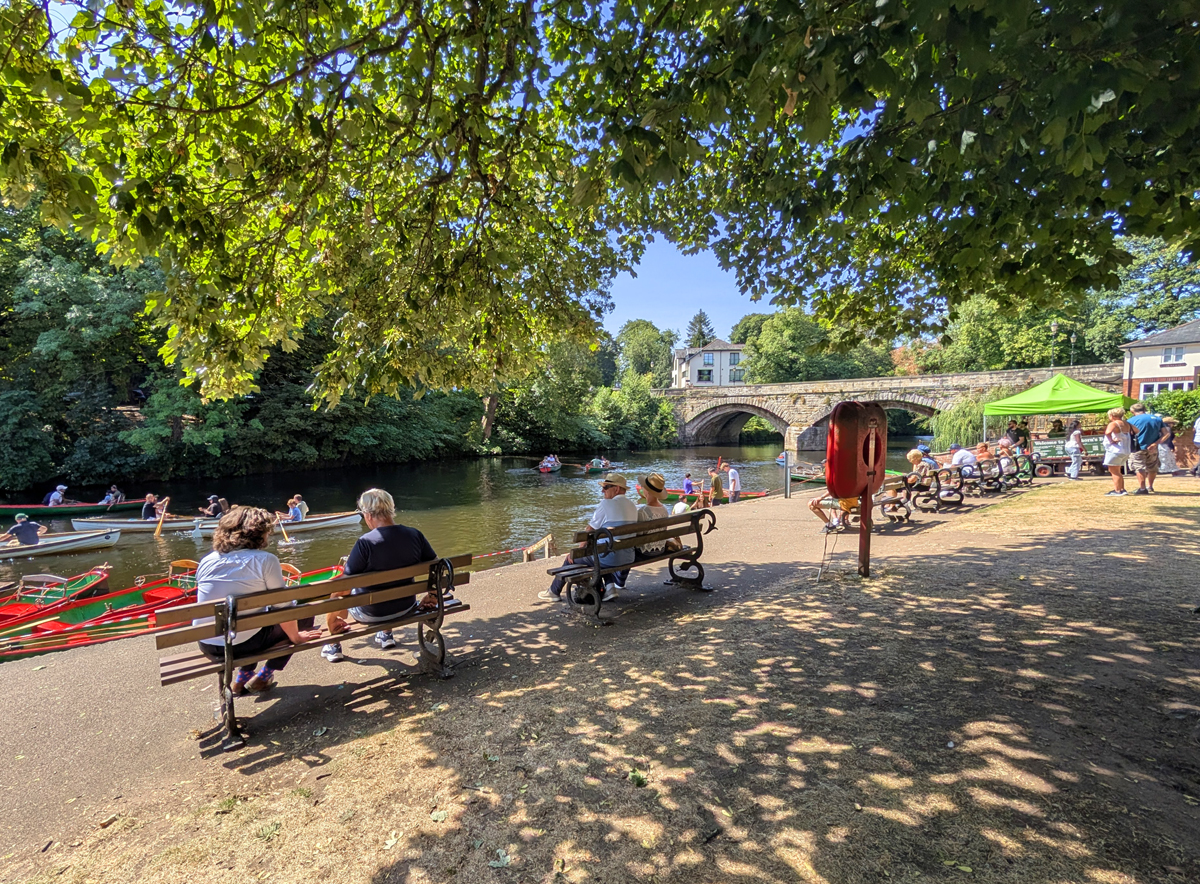
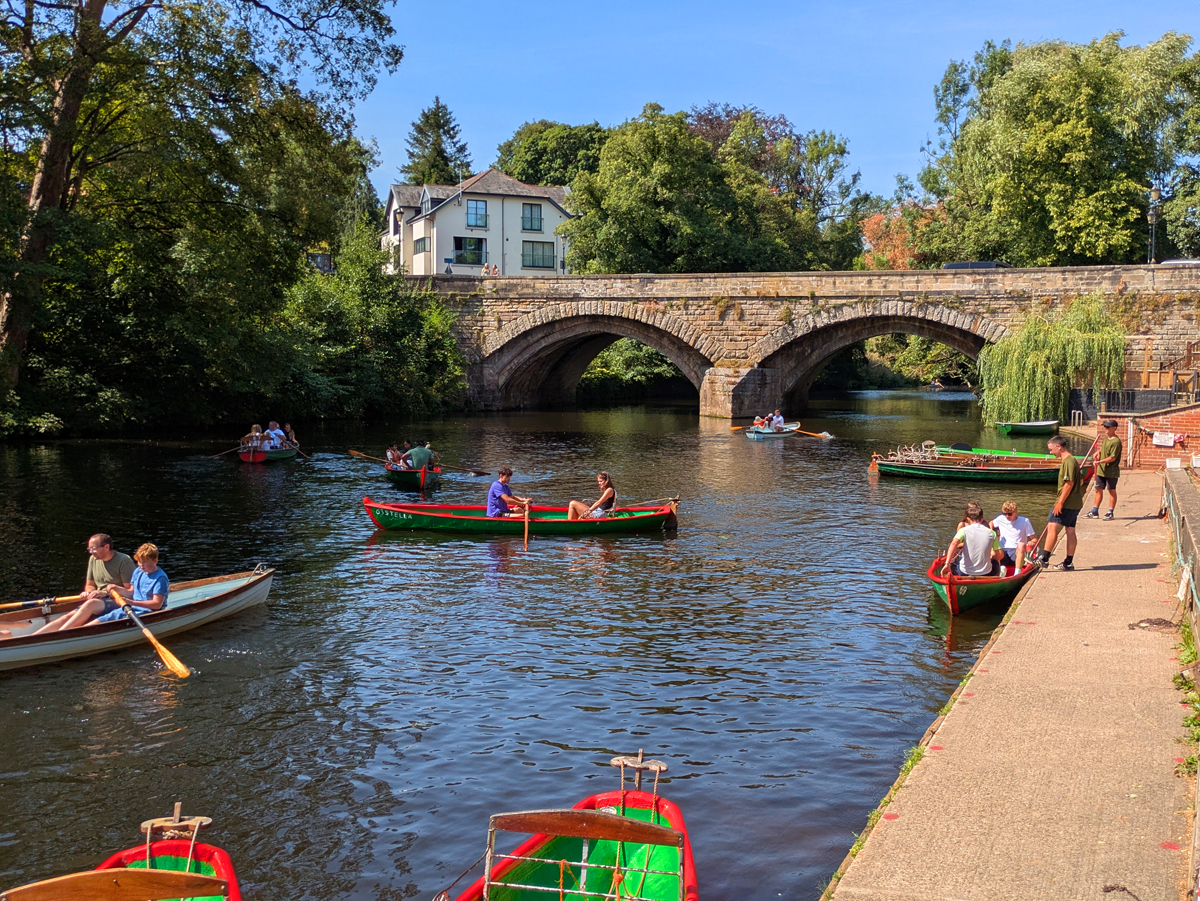
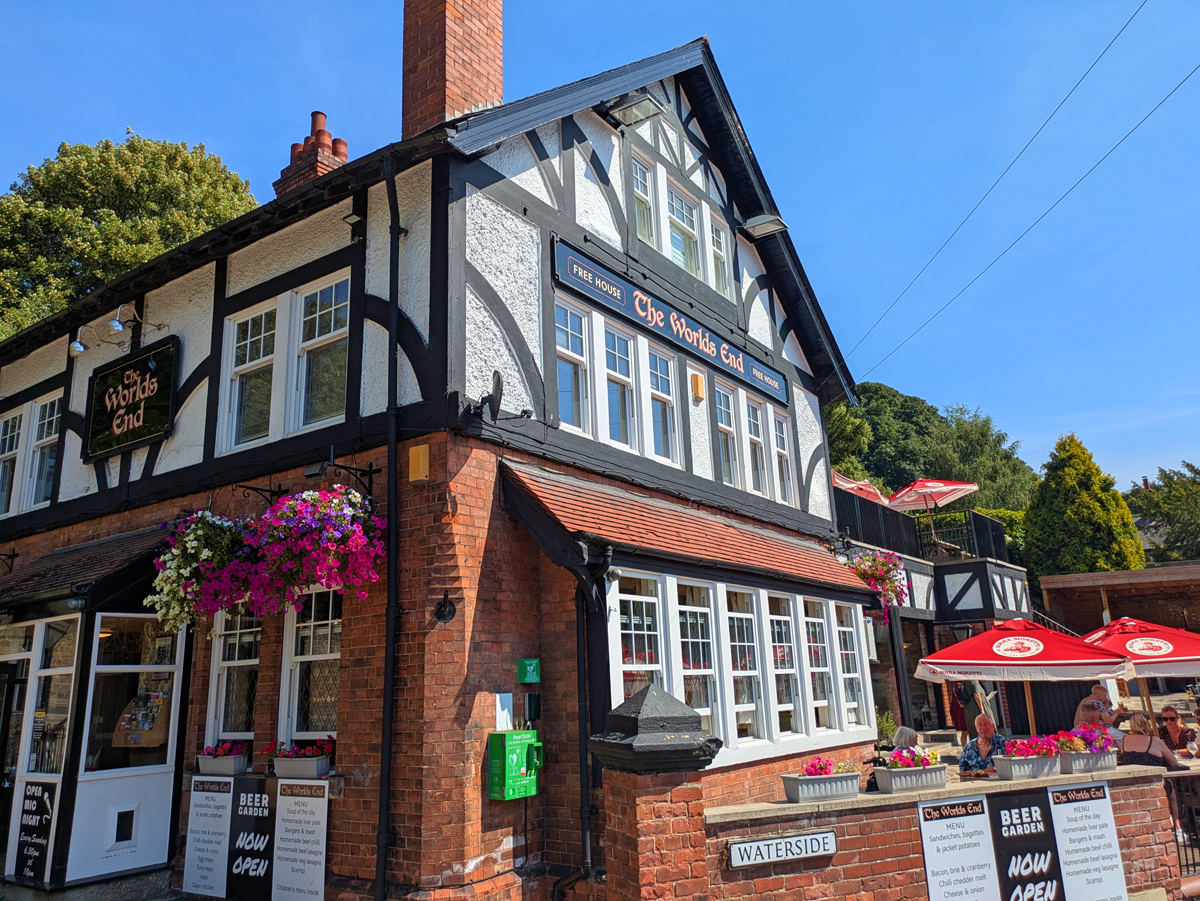
Across the bridge is the Mother Shipton Cave tourist attraction. Some may find it interesting but it caters mostly to families honestly and at £16/pp during peak season it’s expensive. We skipped it.
But you should go on the little bridge for the views of the river below and the viaduct in the distance.
2. Along the river to Sir Robert’s cave
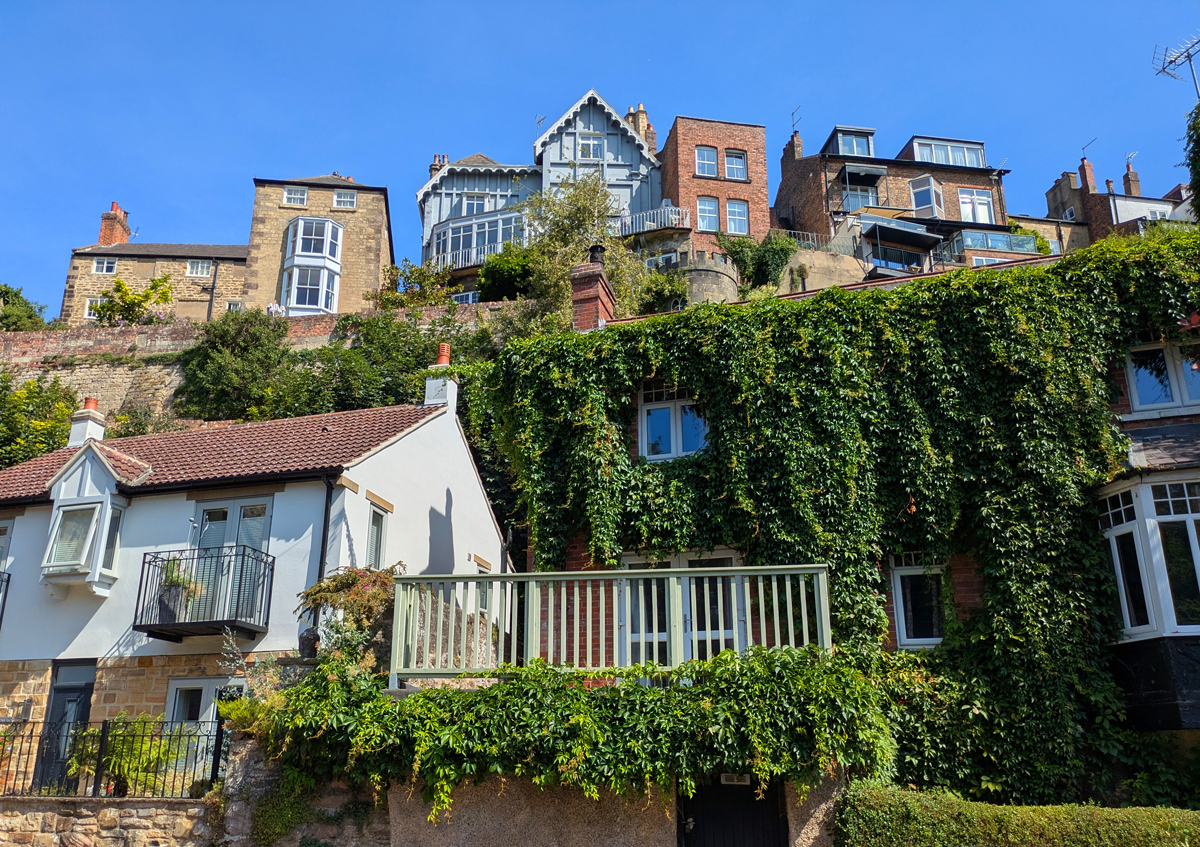
I mentioned up above the friendly custodian at the Castle. He recommended the walk along the river to the left, telling us about the cliffs and beautiful cottages along the way.
It was all that and more. The walk is very peaceful and you get glimpses of the river along the way. If you continue further you’ll get to Sir Robert’s cave which is down a dirt path to the river. There’s not much to it but as I mentioned in the “brief history” section, there is history here. You’ll find signs explaining the story of Sir Robert. But really, the walk is more about scenery and being out in nature.
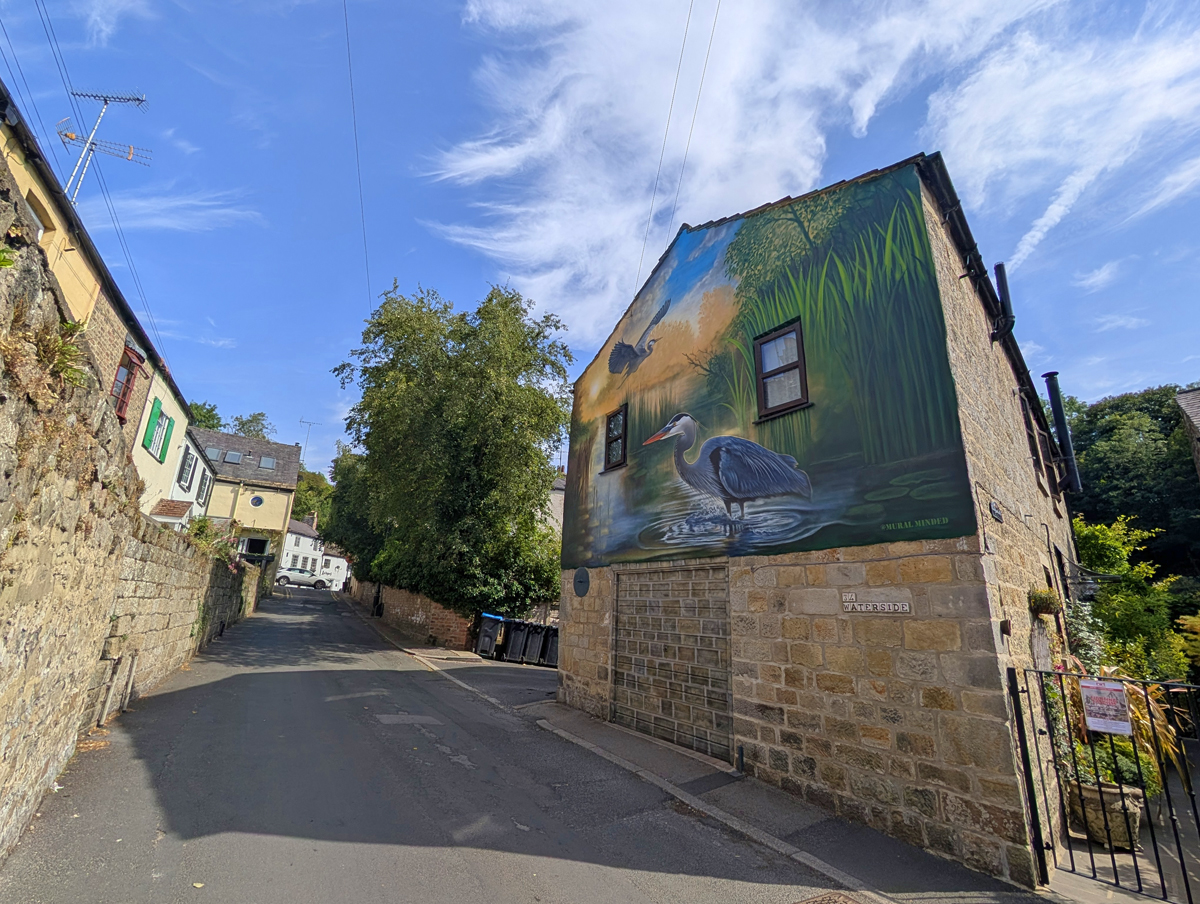
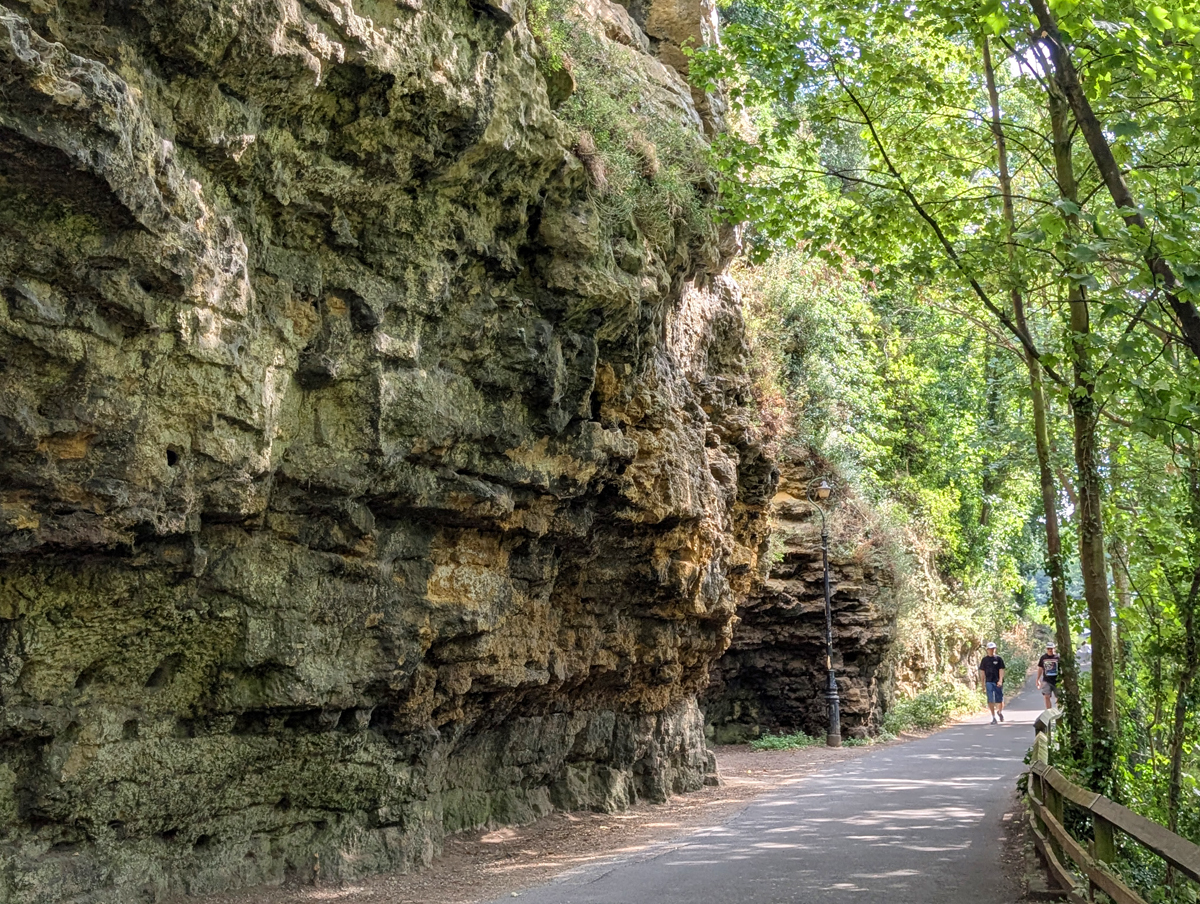
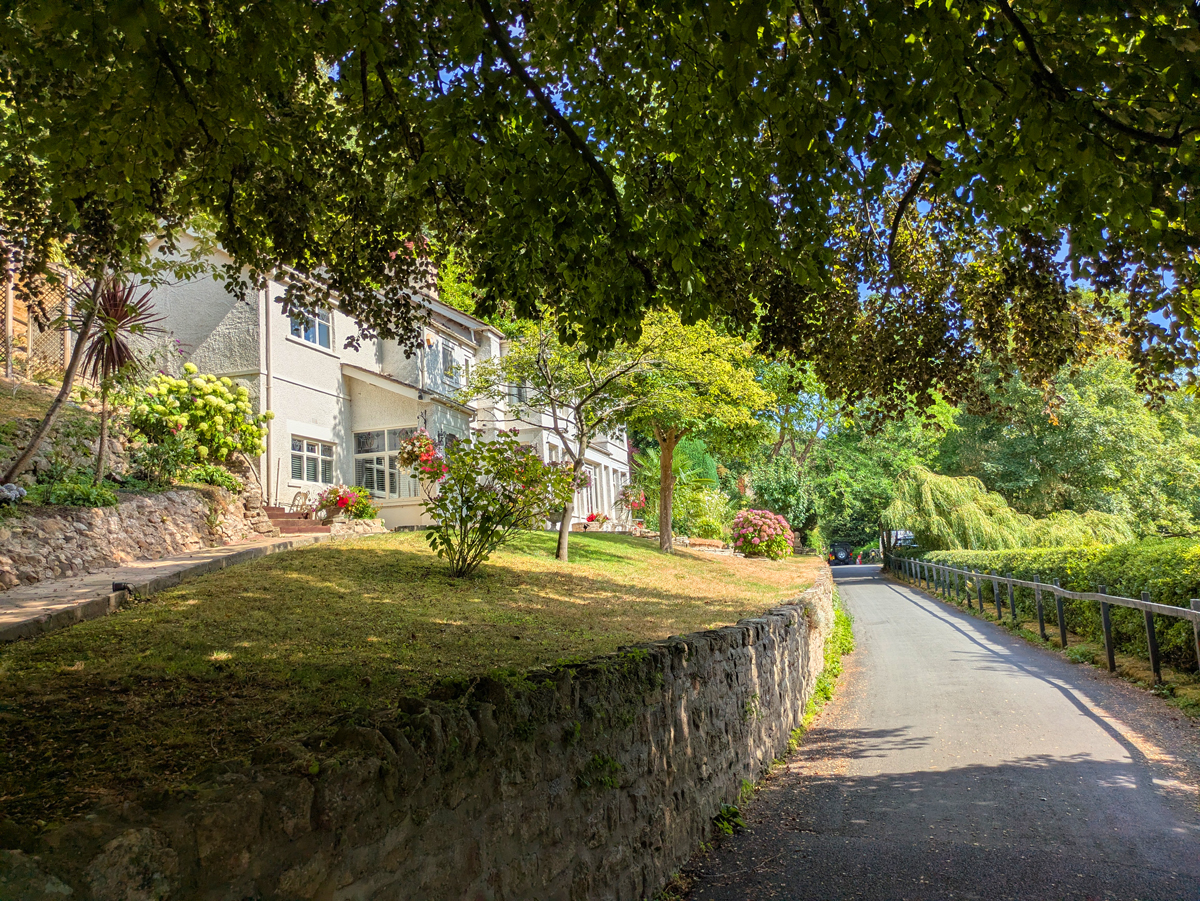
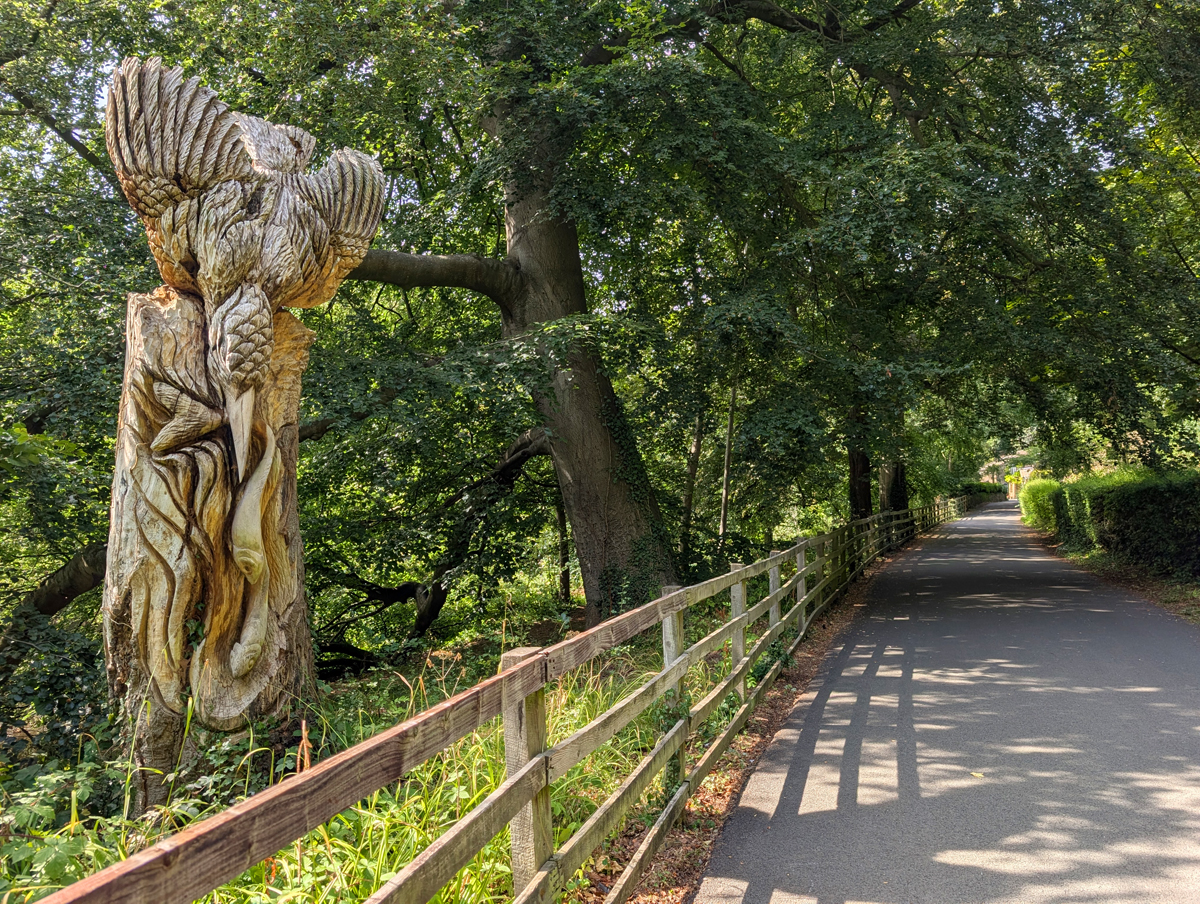
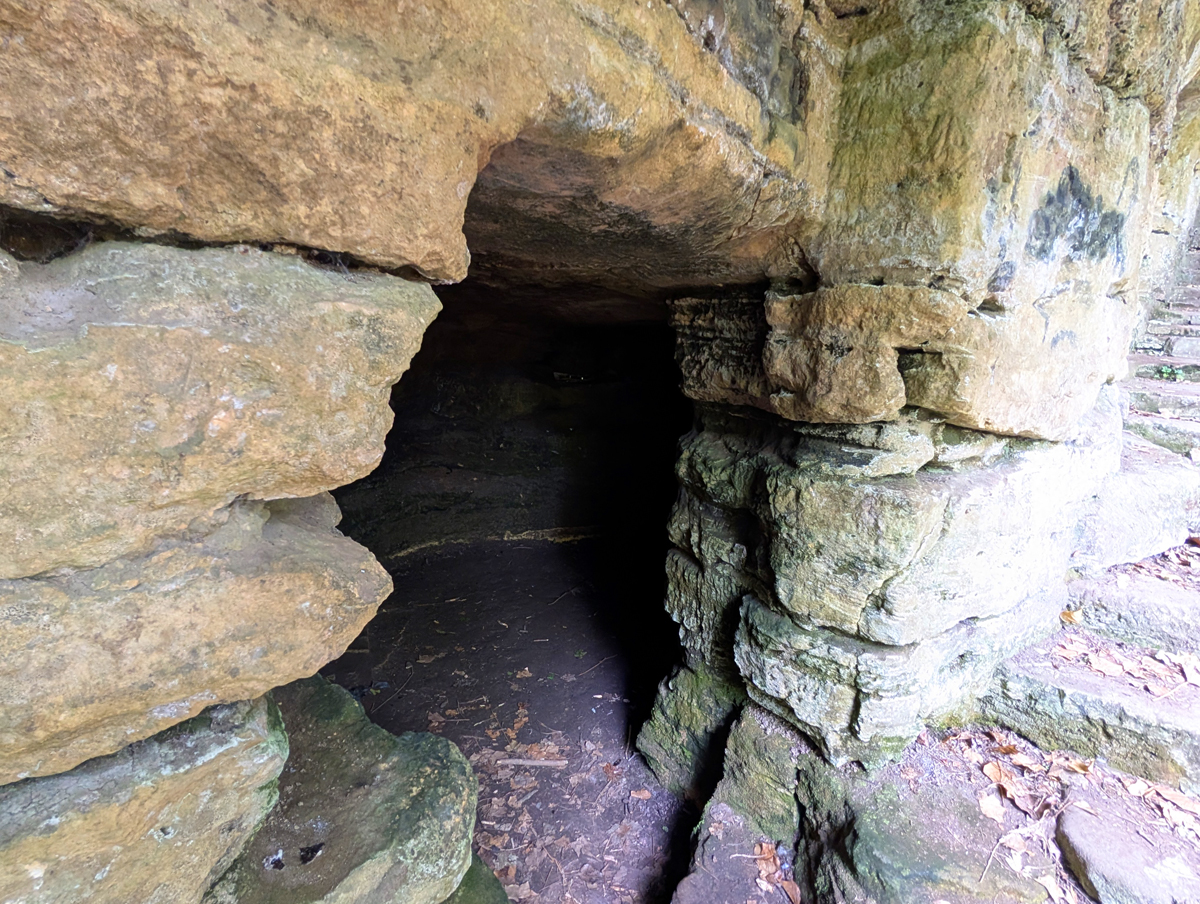
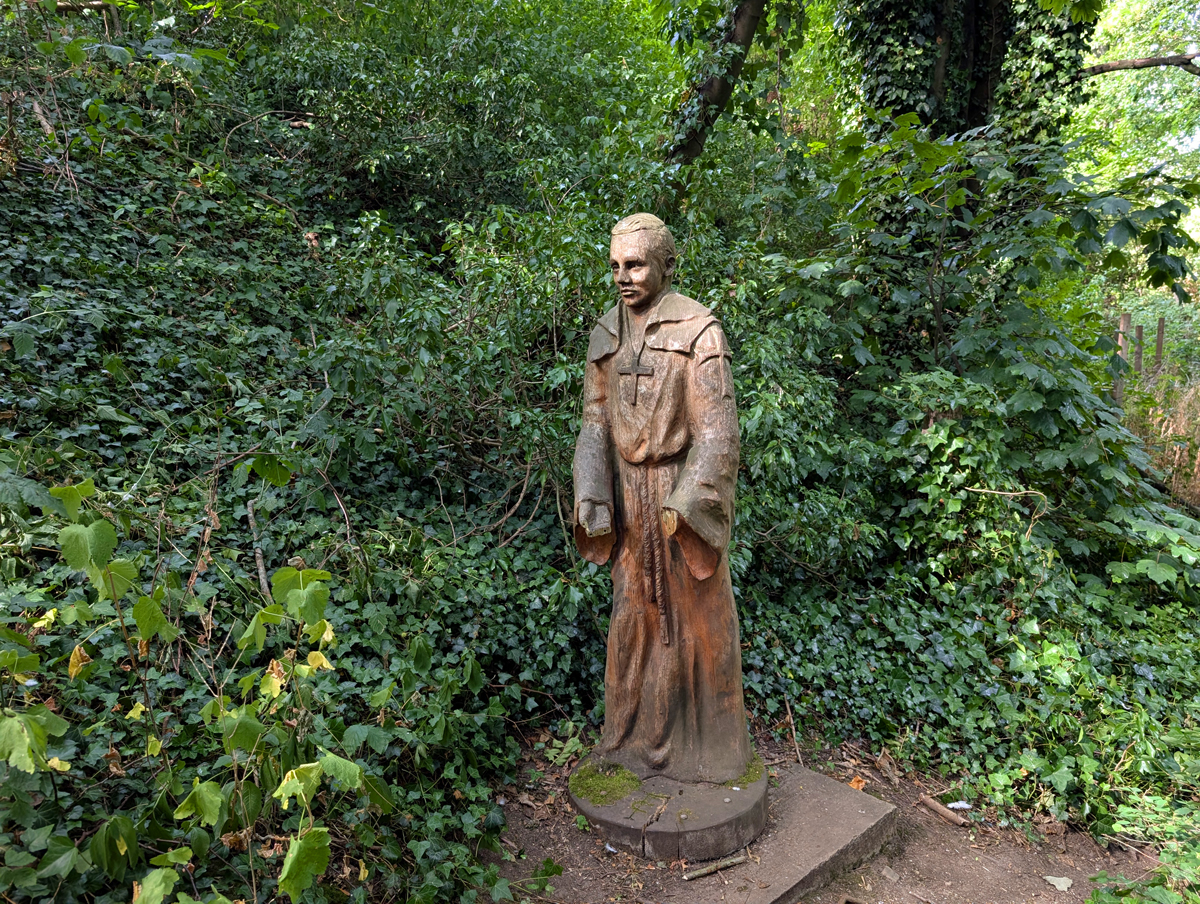
Getting to Sir Robert’s cave takes about 30 minutes from the Viaduct, so about 1 hour return trip from the center.
A few other things
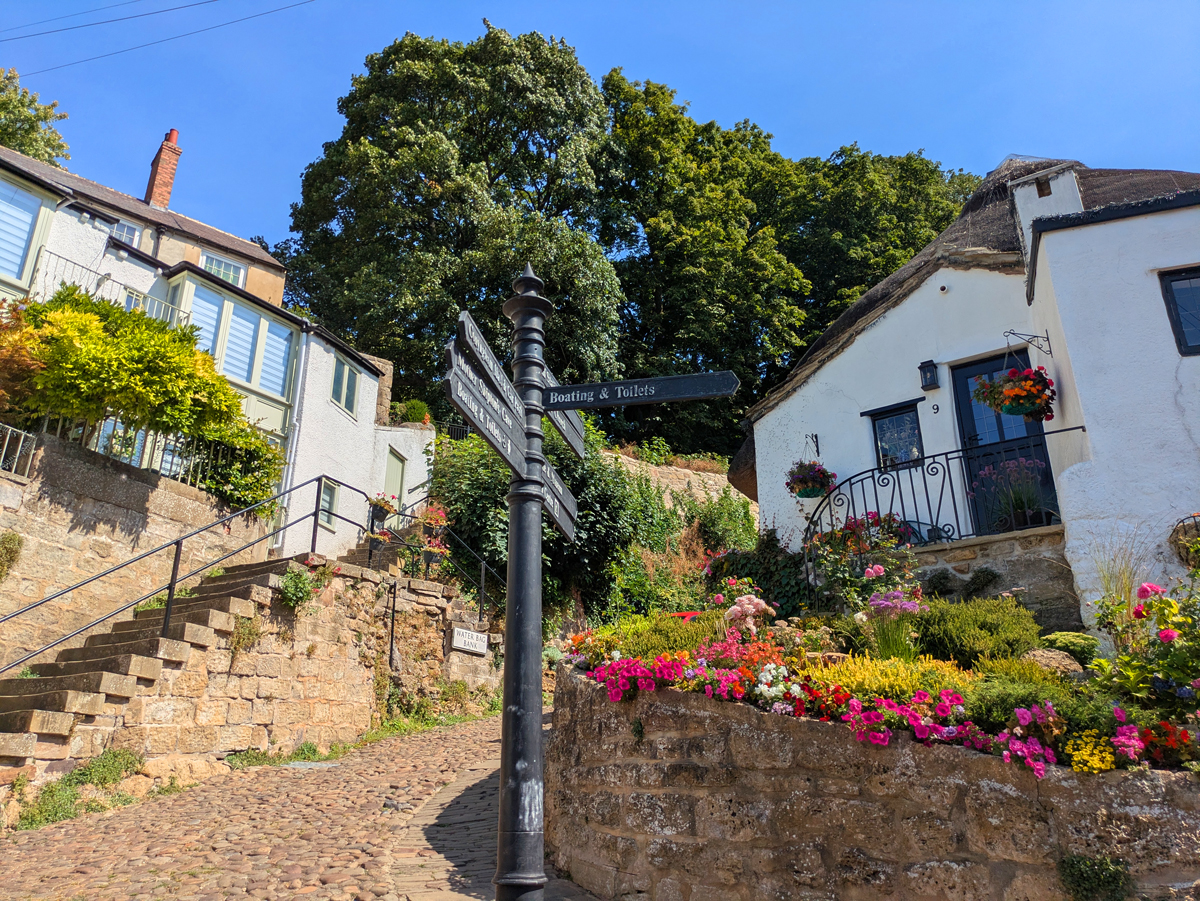
Getting to the train station: When ready to leave Knaresborough, walk up pretty “Water Bag Bank” from Waterside road under the viaduct. The train station is just 5 minutes up from the hubbub of the river.
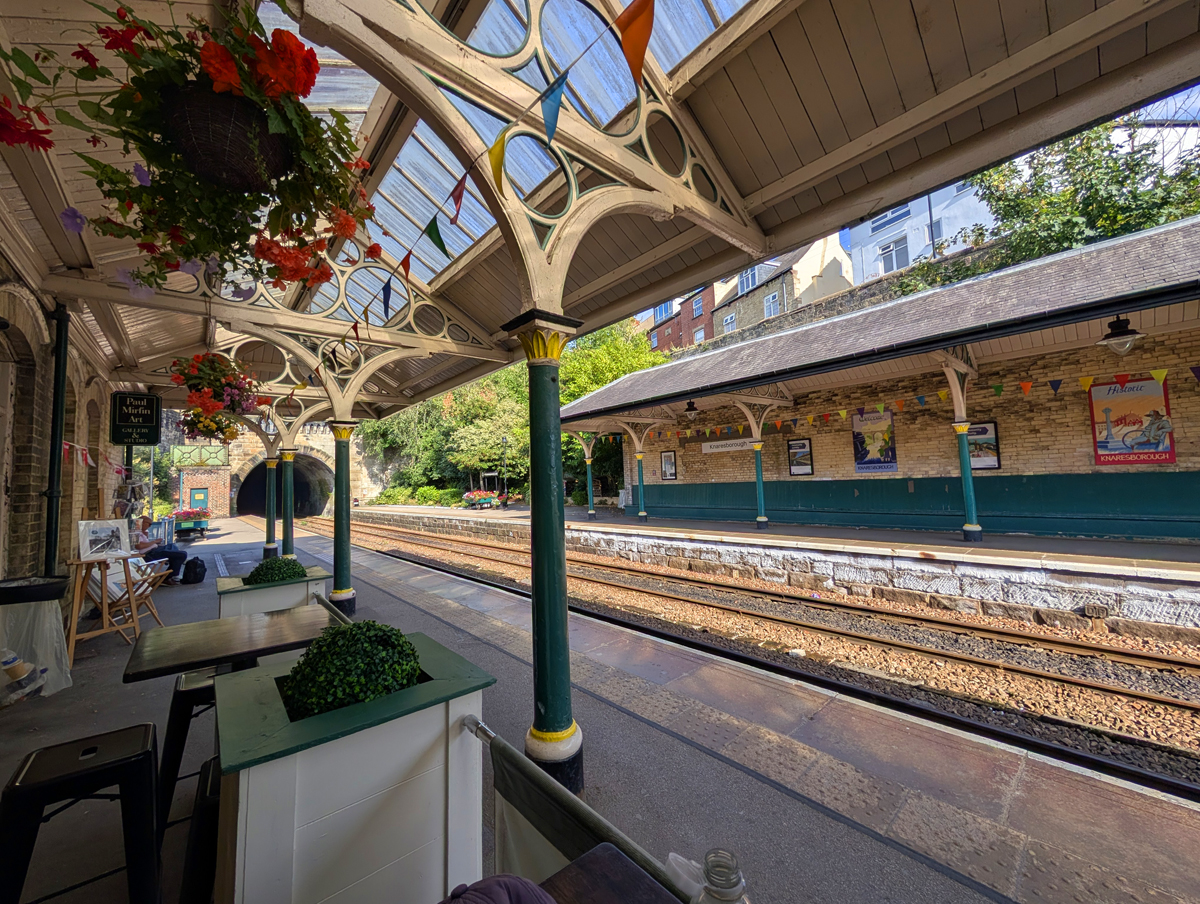
Have a beer at Knaresborough train station. It’s a beautiful little train station. You’ll see a store on the platform selling paintings and things as well as a bar. You actually have seating on the platform where you can have a beer while waiting for your train to come. There’s signage indicating when the next train comes so you can enjoy your beer without stress. That’s what I did.
The views over the Viaduct: If you are continuing on in the direction of Leeds (or Harrogate which is 2 stops – about 10 minutes – from Knaresborough), look out for the incredible views you get as you pull out of the station. The train goes over the Viaduct so you’ll get great views of the town and river below. One of the prettiest views you’ll ever see.
Practical Information
Trains between York and Knaresborough run every 30 minutes and it takes about 25 minutes. See the London North Eastern Railway (LNER) website. It cost us £14.50 (£7.25 each) for return tickets York – Knaresborough.
How long does it take to see Knaresborough? Honestly, you can see everything in 2 hours if it’s just about seeing the highlights and taking a few photos. But if you want to walk around, have an ice cream or beer at the river or go for the long walk I described up top, you could stay 4 – 5 hours. It’s a charming place and if you’re coming from York (which was jampacked with tourists. Turned us off to the place to be honest), then you might really enjoy the quaintness of Knaresborough.
Knaresborough as a place to base yourself. It was our guide Mark (with who we did the tour of the Yorkshire dales) who said it: if looking for a cheaper, quieter alternative to York, Knaresborough might be the place for you for a few days. He’s absolutely right. As mentioned, York is 25 minutes away by train, Harrogate about 10 minutes in the other direction. So Knaresborough could be a great base if looking for something a bit different.
Bottom line? Knaresborough makes for a great place to visit.
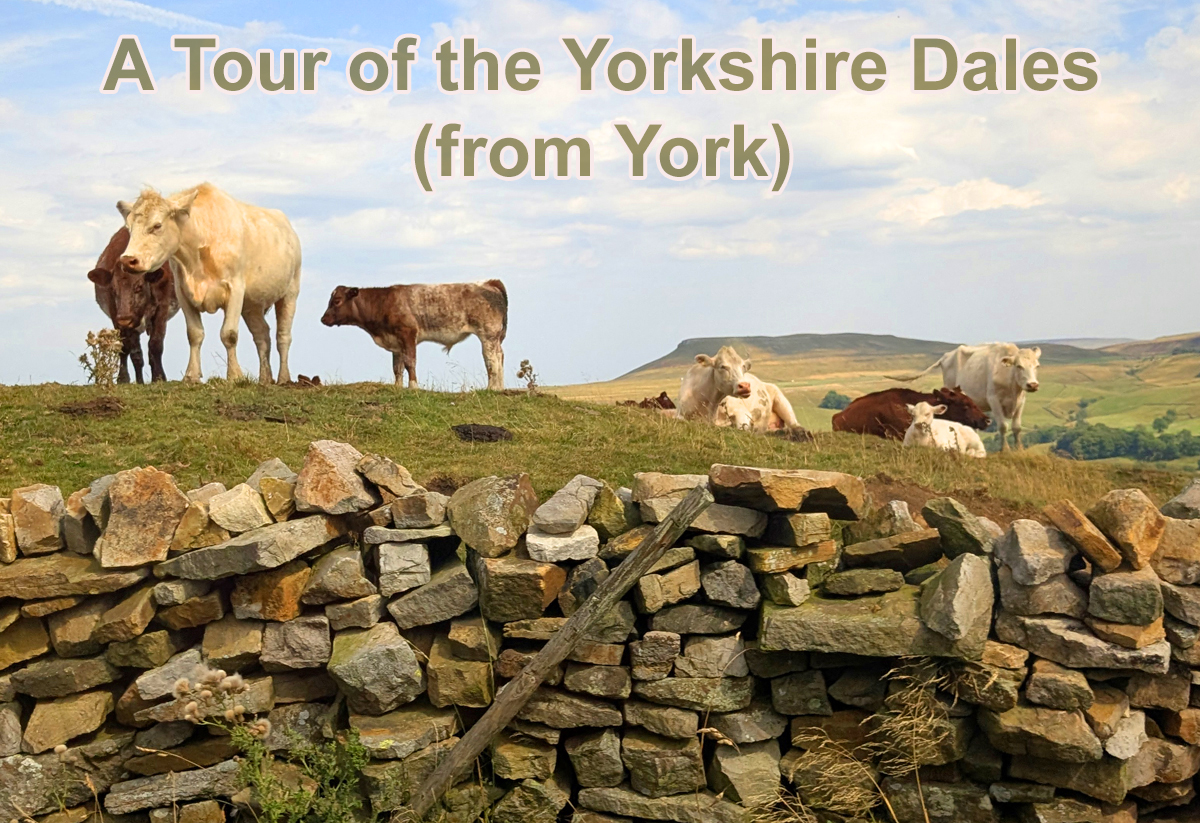
Related: A Tour of the Yorkshire Dales from York
Leave a Reply