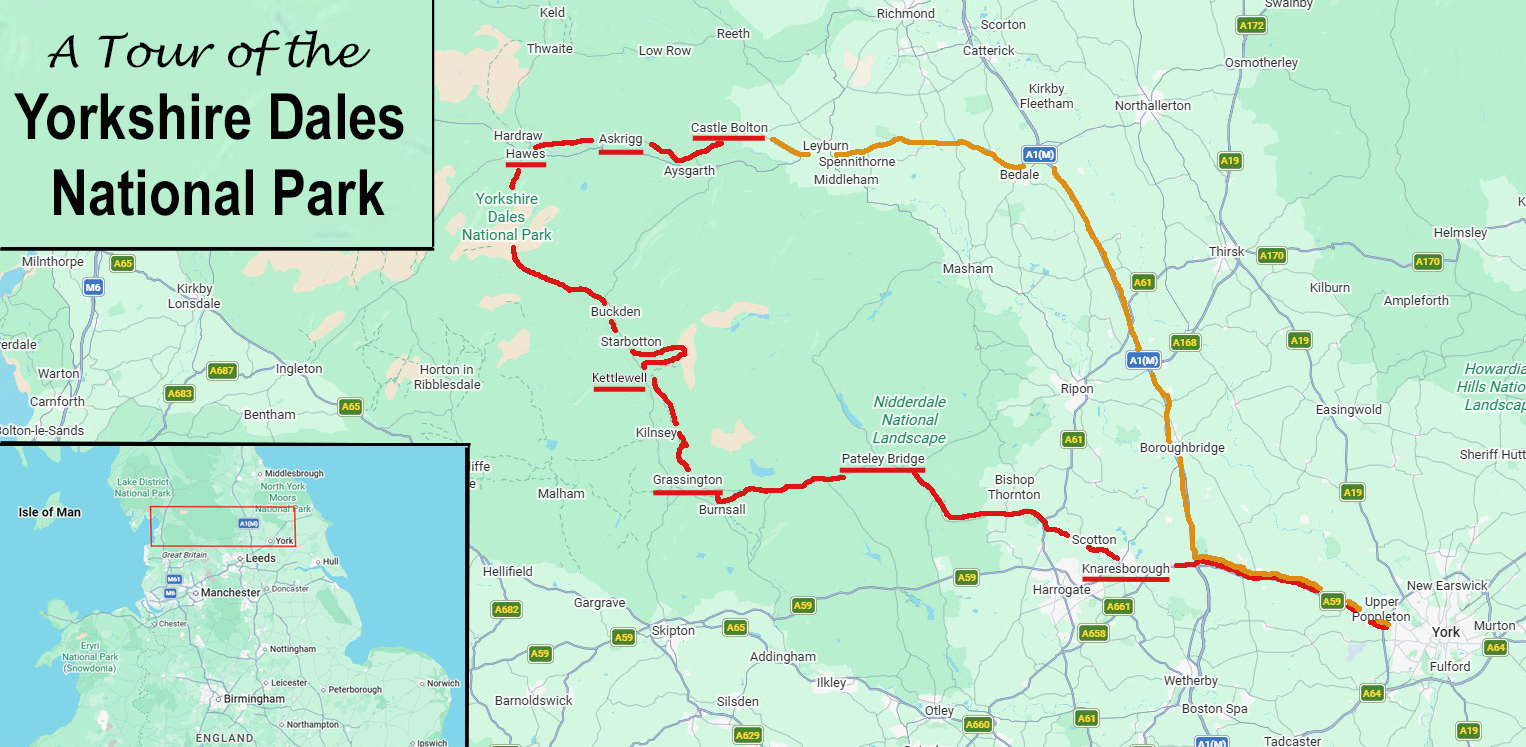
A Tour of the Yorkshire Dales from York.
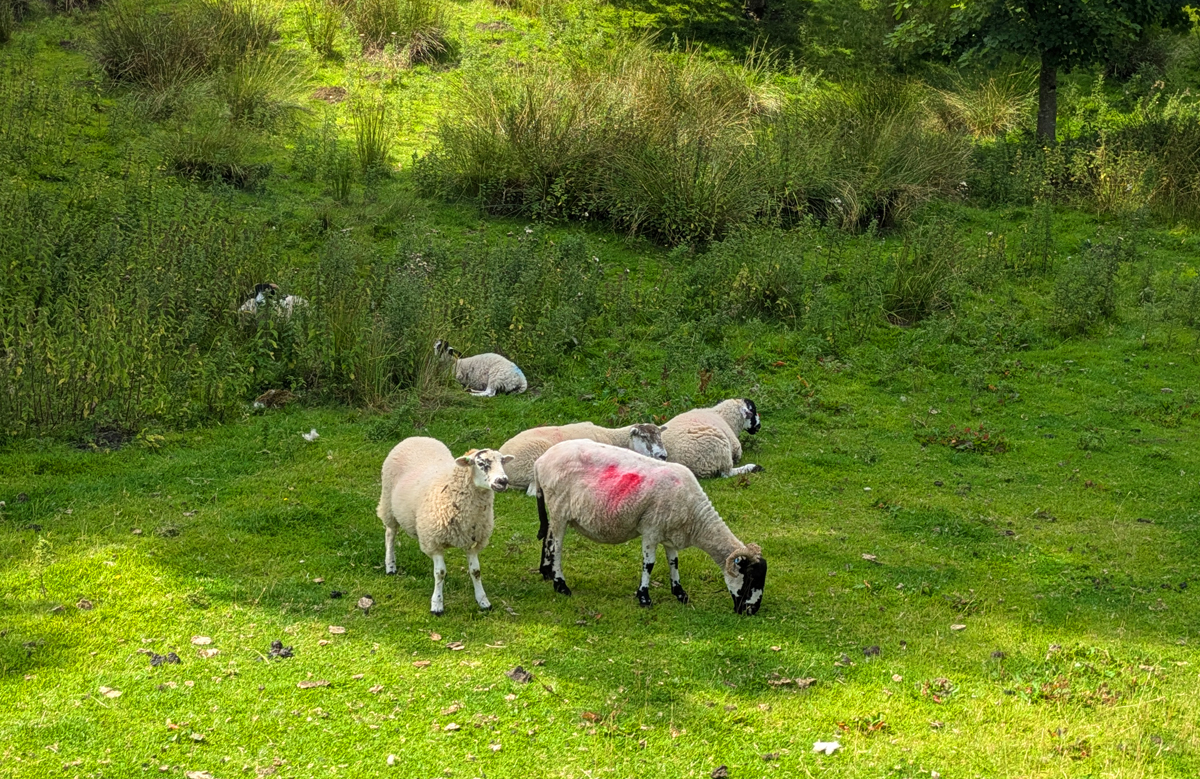
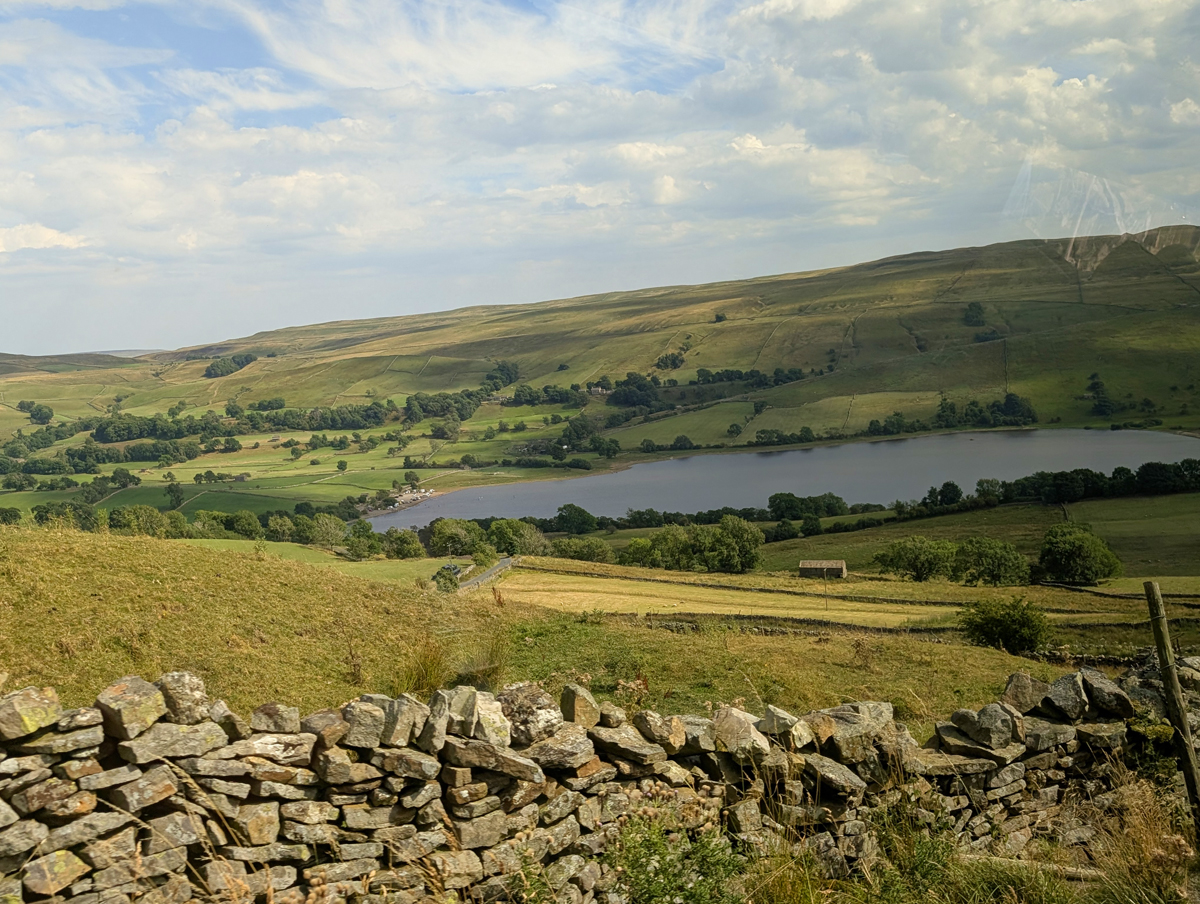
Why visit the Yorkshire Dales? It is considered the most typical North English national park, an area of rolling green hills, stone walls, plenty of sheep and cattle, a castle and many quaint villages (among them filming locations for the series “All Creatures Great and Small”). The area is also known for artisanal produce: our tour featured the oldest sweet shop in England, an incredible pie shop, and the most famous cheese creamery in the country.
We didn’t have a car in England so we took a tour with Best of Britain, they specialize in the Yorkshire Dales.
All about our tour of the Yorkshire Dales below.
Starting off
The meeting point was at 8:50 am at the Dean Court Hotel, steps from the York Minster. There were 9 of us on the tour plus our guide/driver Mark, a colourful and interesting character who (as we would find out) was full of fun facts and information.
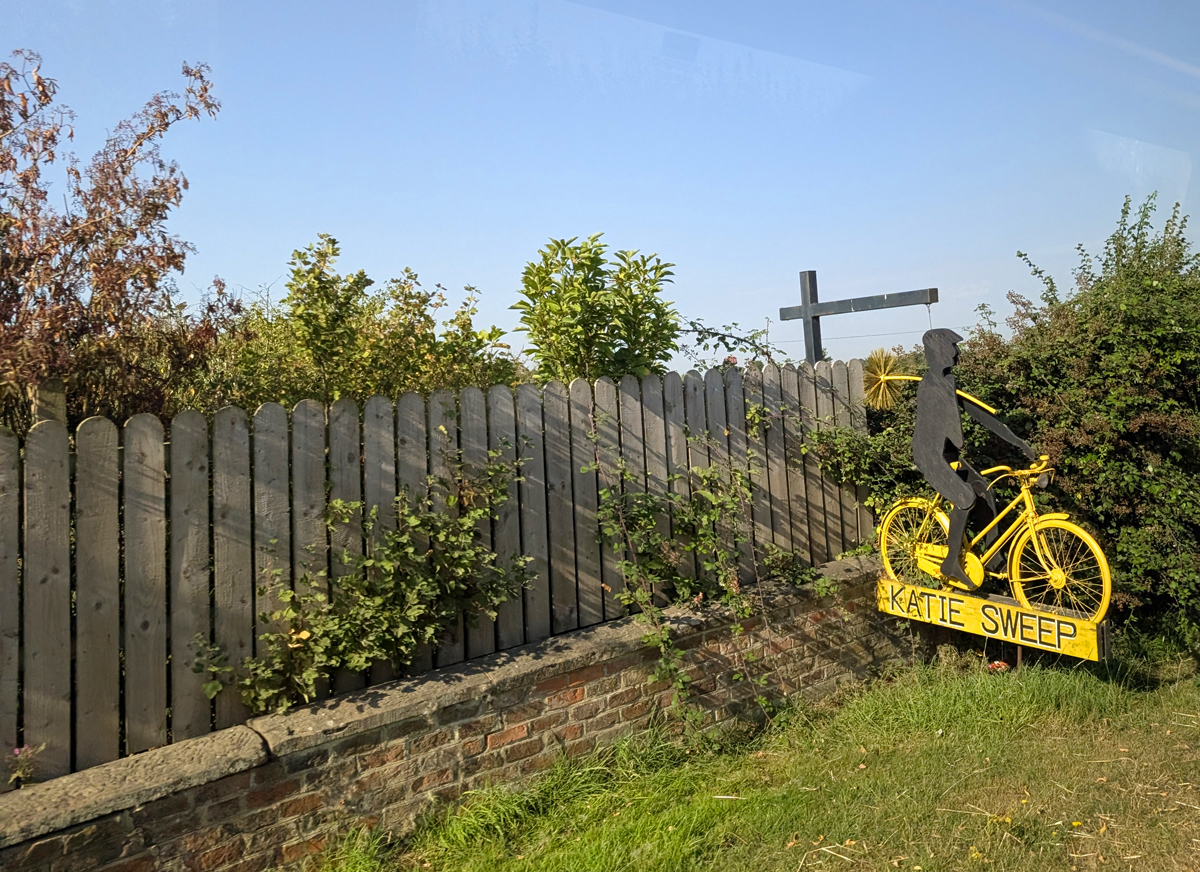
Did you know that the county of York has its own professional cycling competition? In 2014 the Tour de France came to the region and did 2 of its 21 stages here. Locals were so enthralled by it that they decided to start their own cycling competition. What to call it? It took them 2 months to come up with the perfect name…the Tour de Yorkshire. You might spot brightly painted yellow or blue bikes off the side of the road that indicate locations of previous race routes of the Tour de Yorkshire.
We drove Northwest from York, passing the town of Knaresborough. We had visited Knaresborough by ourselves 2 days previous and Mark told us what we previously knew: that it is a wonderful and scenic town that’s still little known to visitors. A quiet and cheaper base in the region than York (truth be told, there are just too many people visiting York. It can be overwhelming).
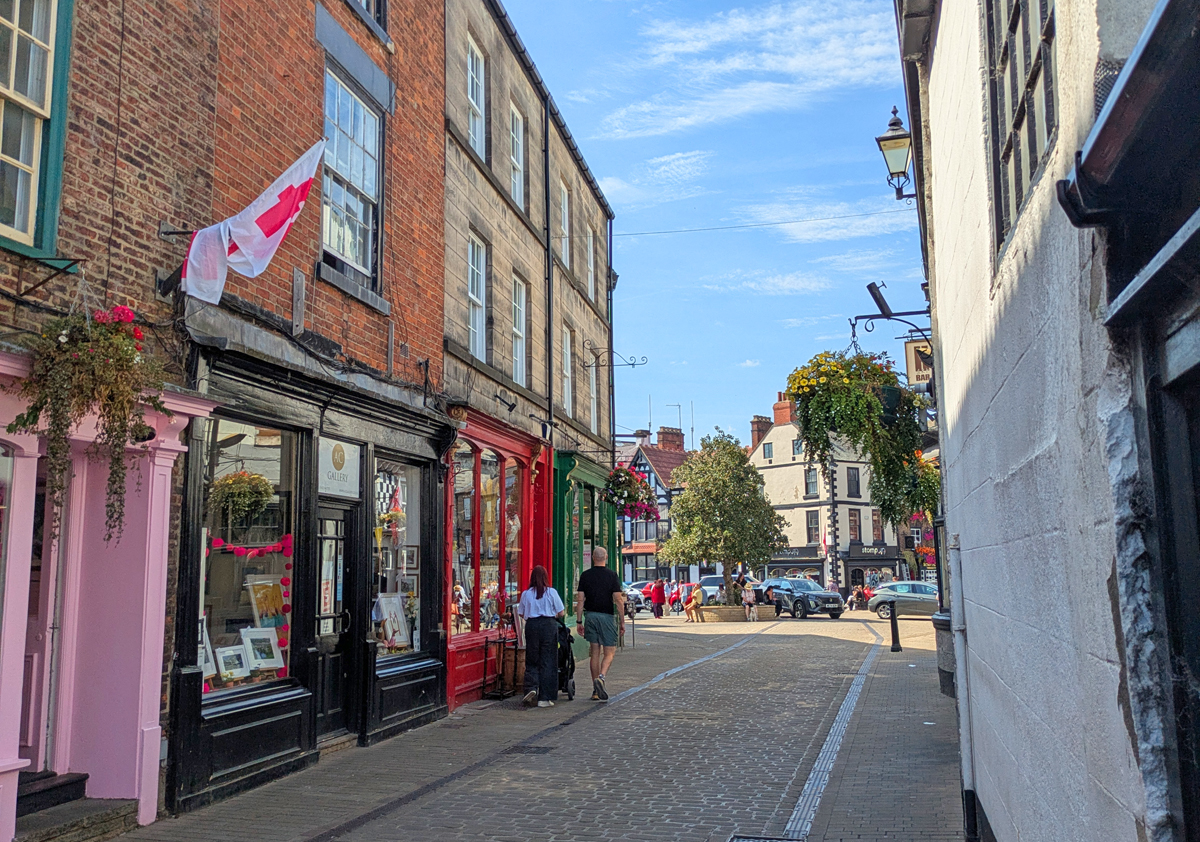
Pateley Bridge
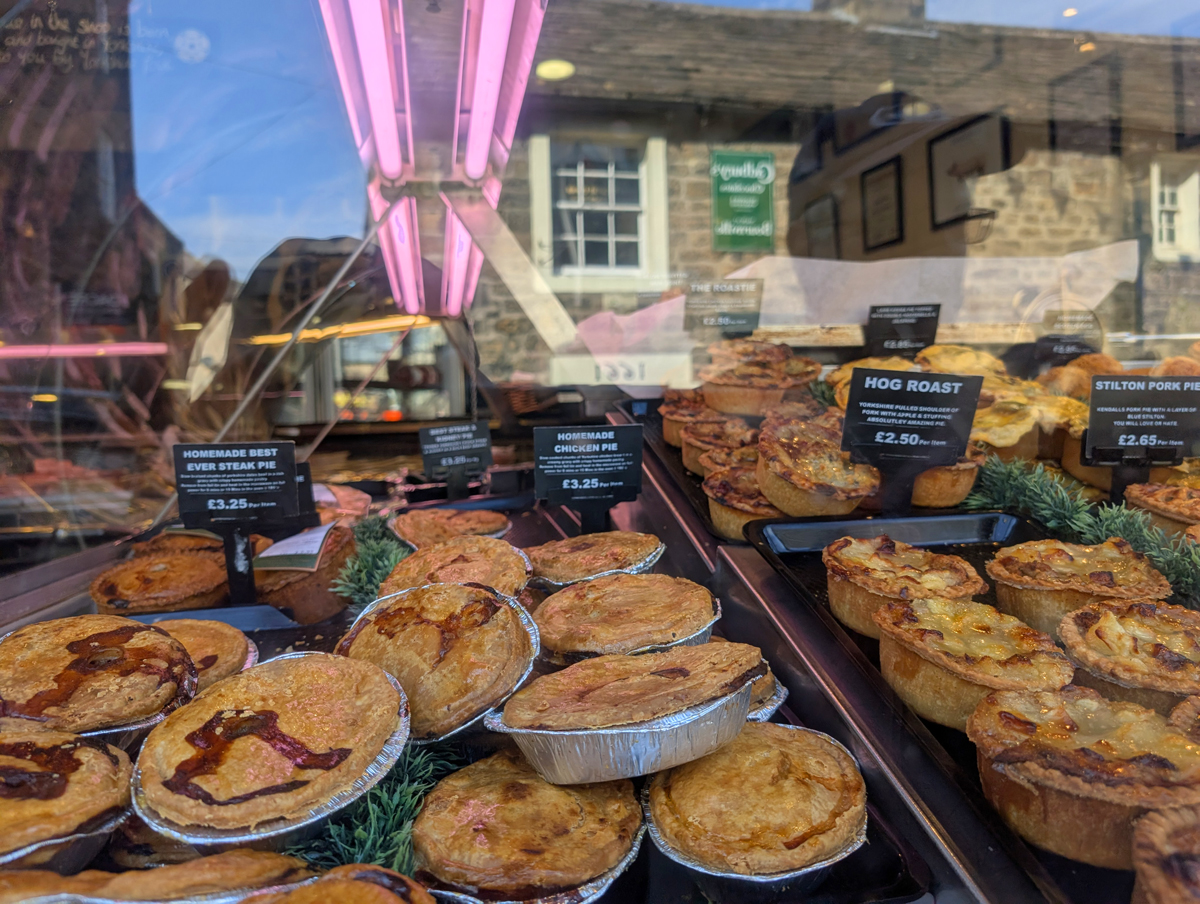
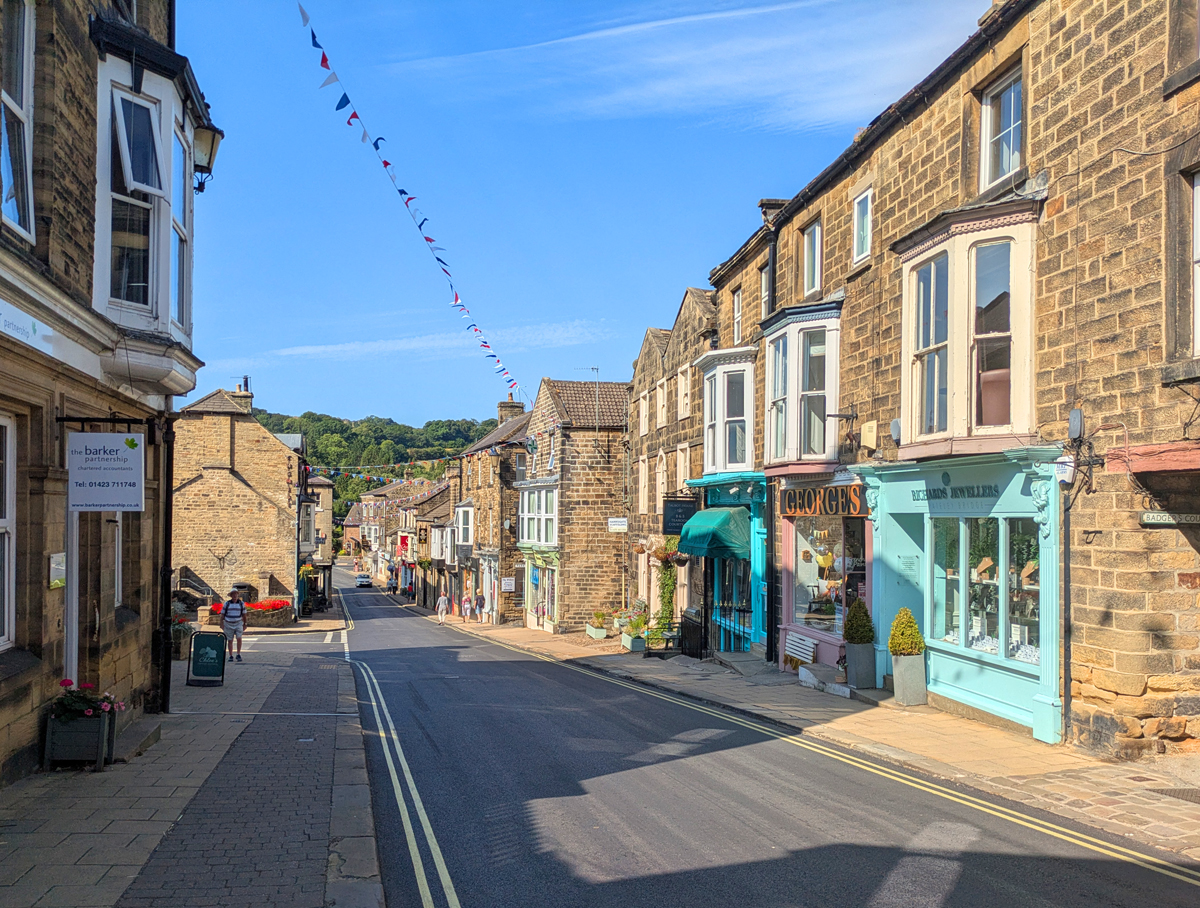
The small town of Pateley Bridge was our first stop…and last stop before we entered the boundaries of the Yorkshire Dales National Park. Why stop here? Firstly, it has the oldest sweet shop in England (it’s literally called “The Oldest Sweet Shop in England”), a bakery with Incredible looking pies (Kendall Farm Butchers) and Cocoa Joe’s, known for “the best hot chocolate you’ve ever tasted”.
The other reason to stop in Pateley Bridge was to use the public bathrooms next to the parking. As Mark would say over and over again on the tour “Better to go when you can and not when you need”.
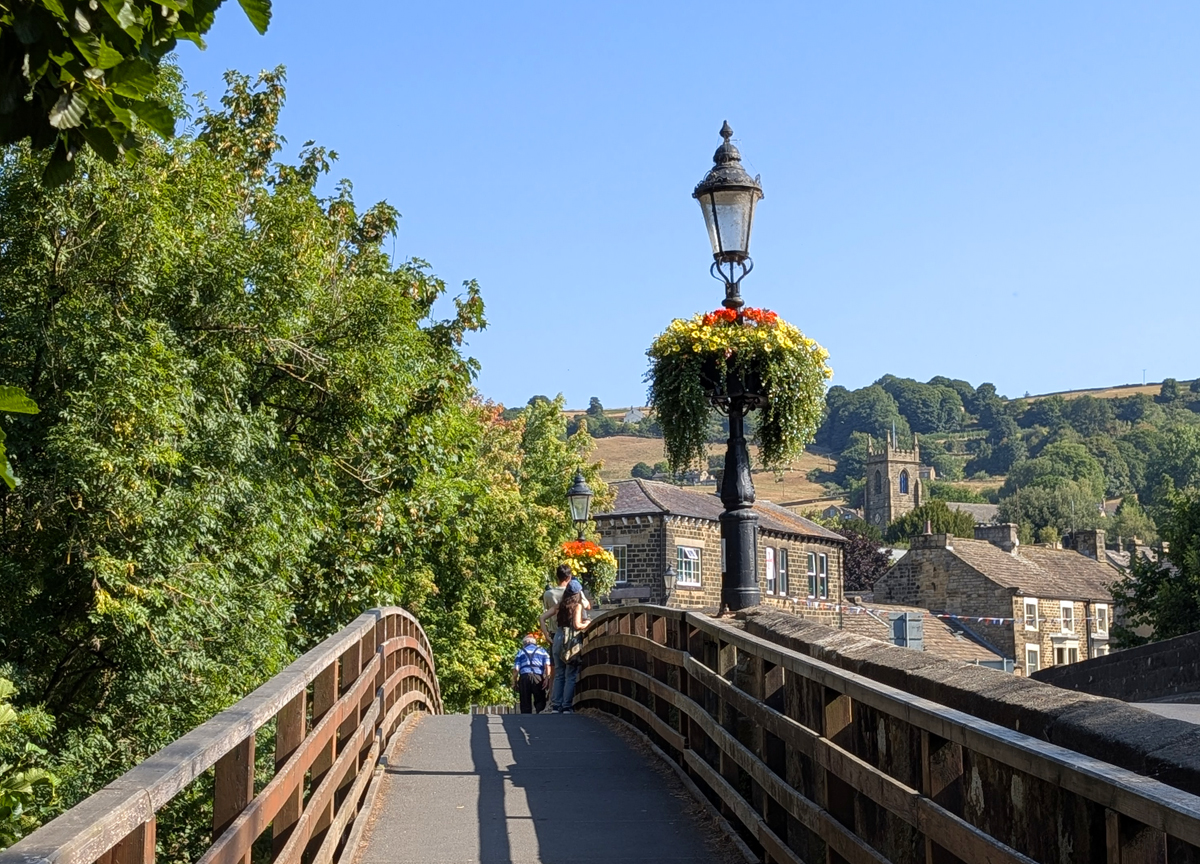
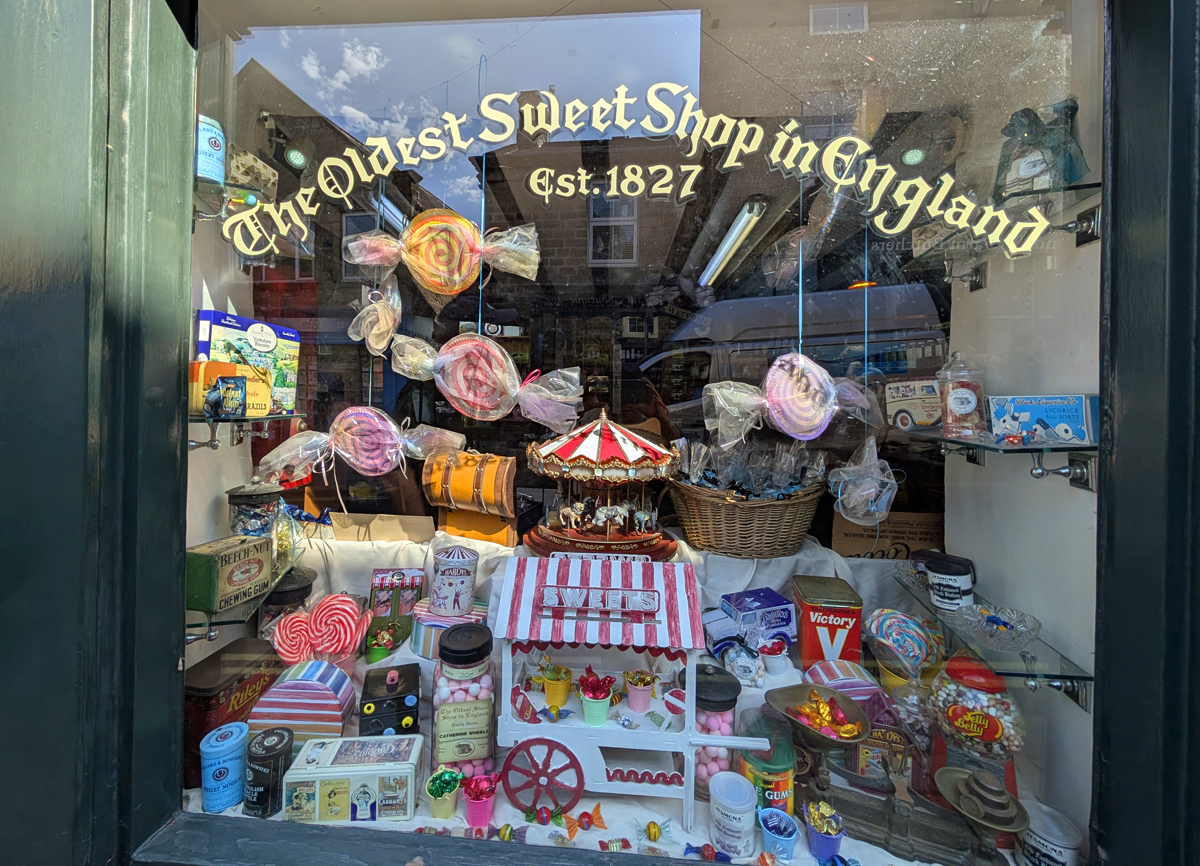
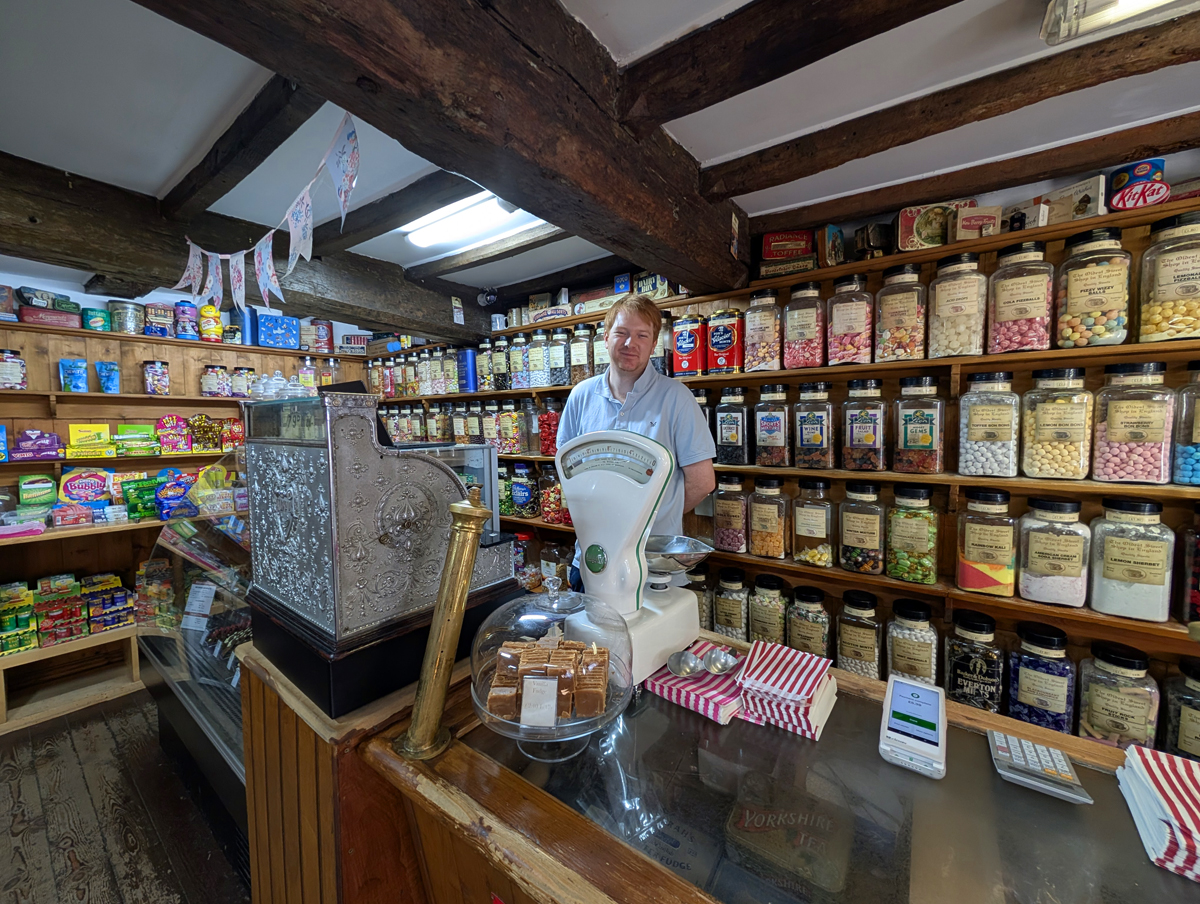
Entering the Yorkshire Dales National Park
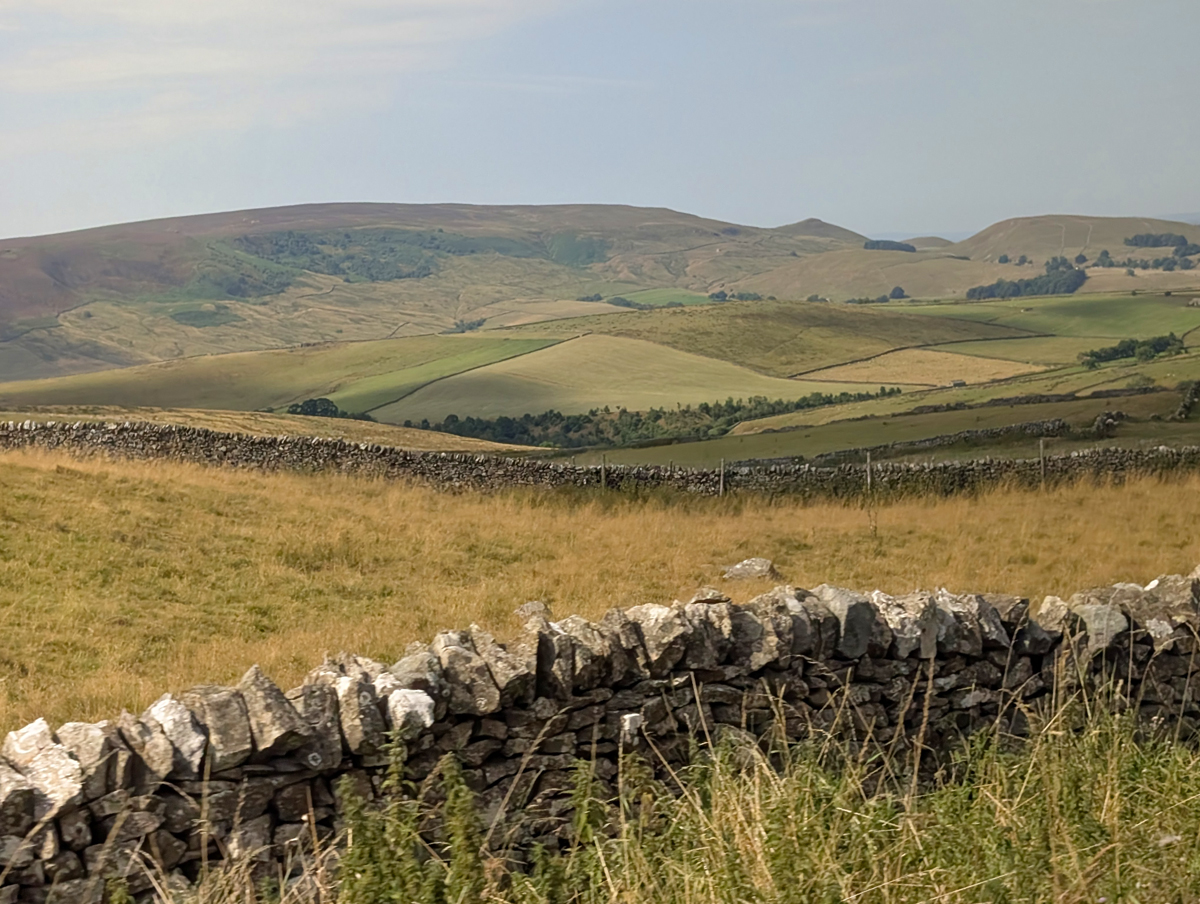
Leaving Pateley Bridge, the countryside became increasingly desolate and hilly. We soon passed a marker indicating that we had entered the boundaries of the Yorkshire Dales National Park. The word “Dale” originates from the Old Norse word “dalr,” meaning valley, describing the region’s steep-sided glacial river valleys. The geography here was mostly shaped by glacial activity around 80,000 years ago. They created the U-Shaped Valleys, drumlins (smooth, rounded hills), gorges as well as the cave systems that exist under the ground (the Yorkshire Dales National Park is Britain’s premier caving and karst area, featuring over 2,500 known caves—including the UK’s longest cave network).
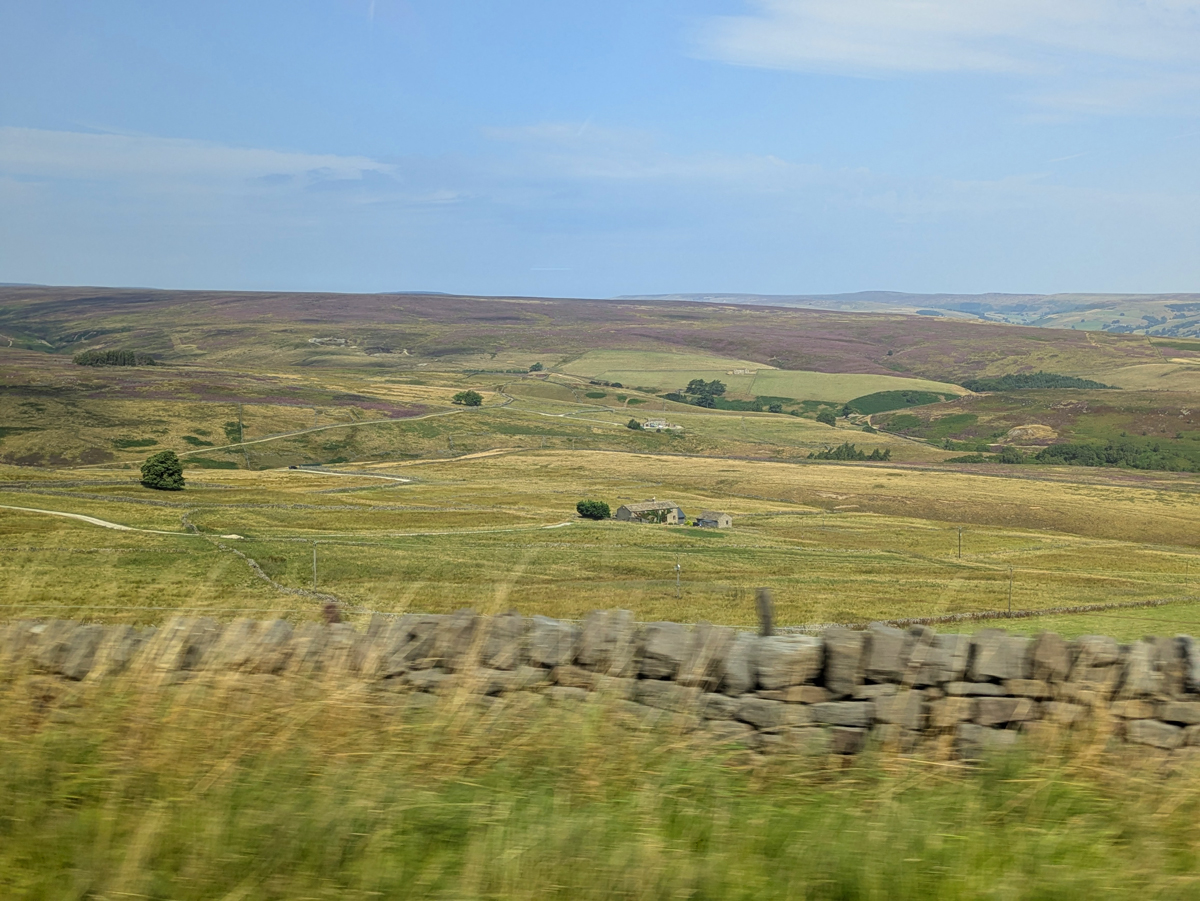
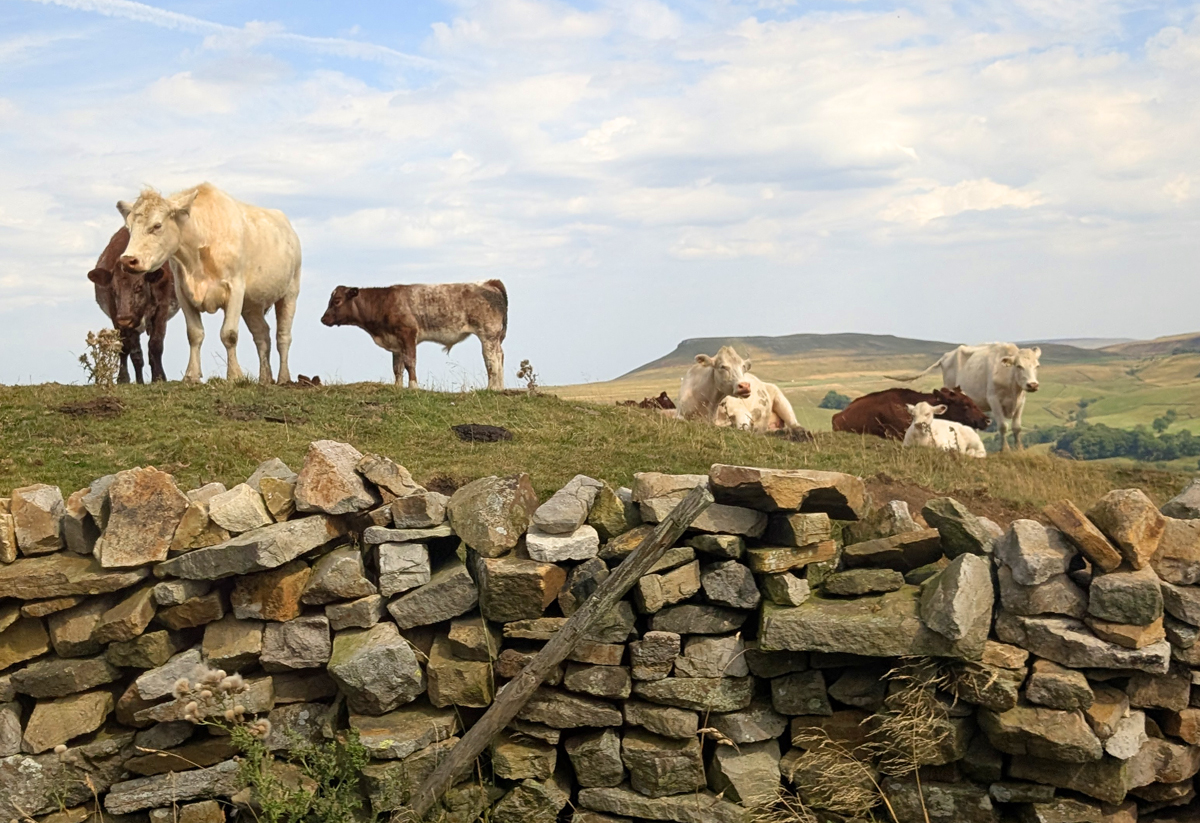
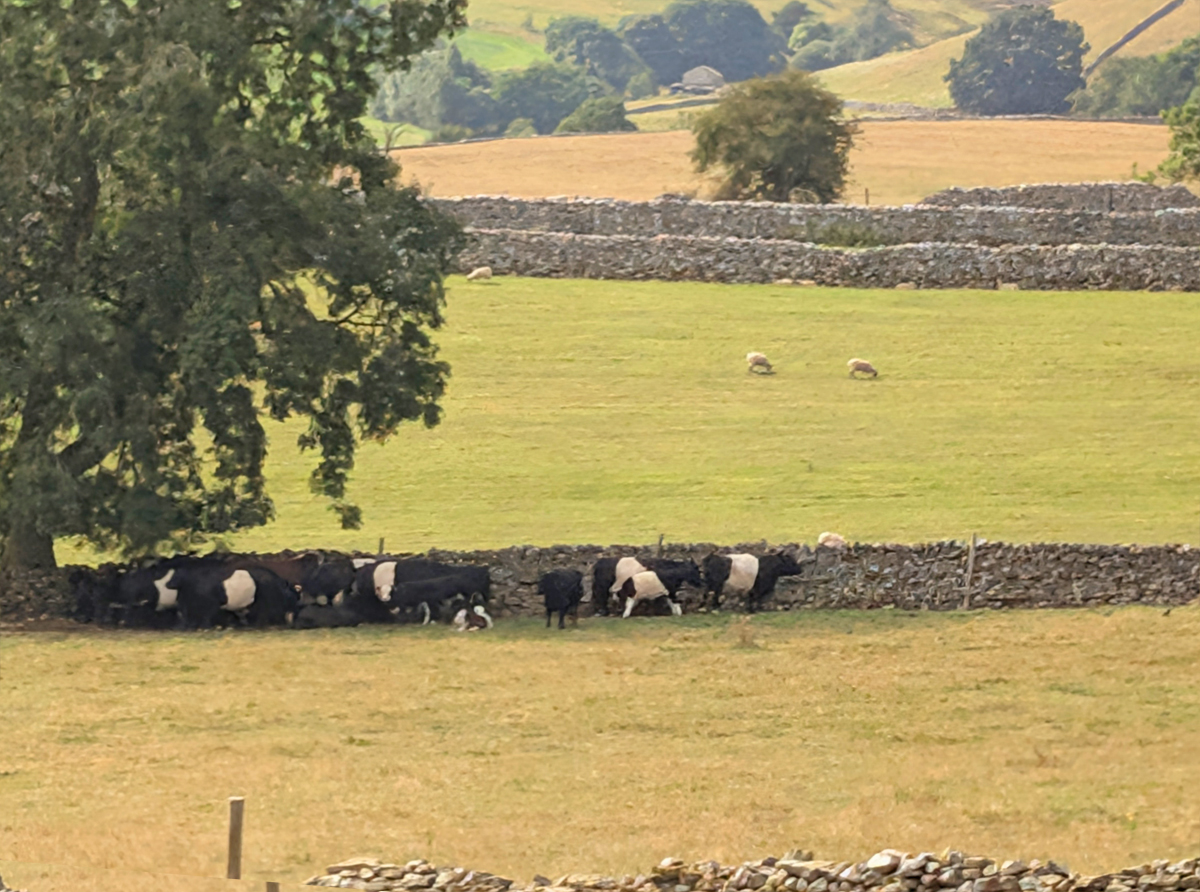
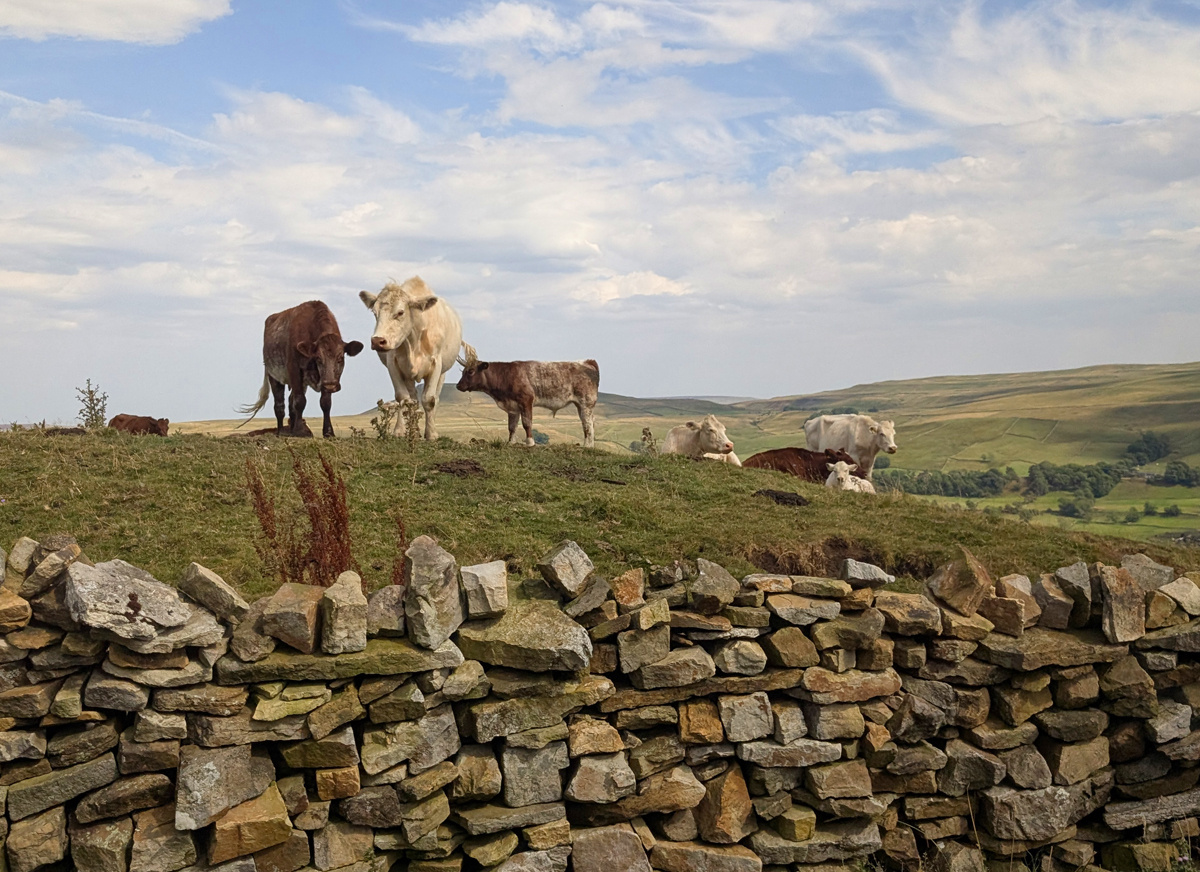
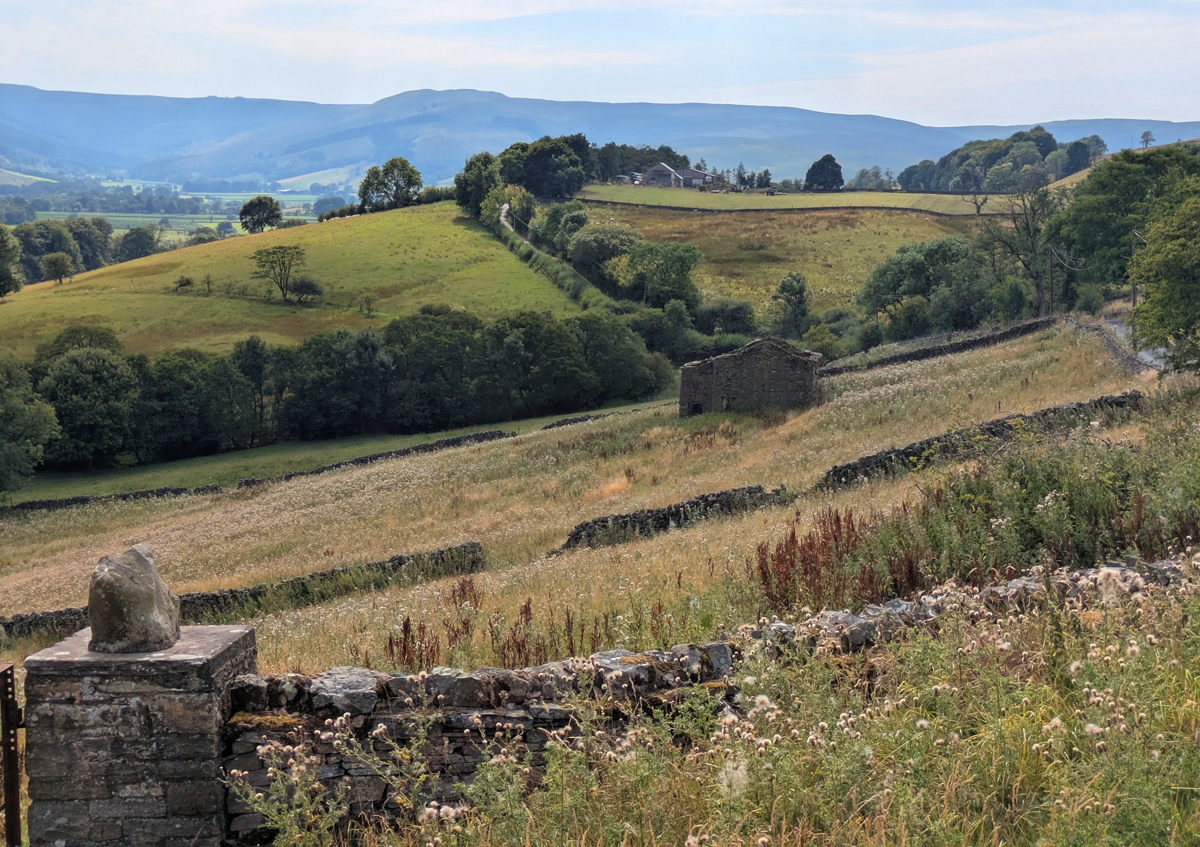
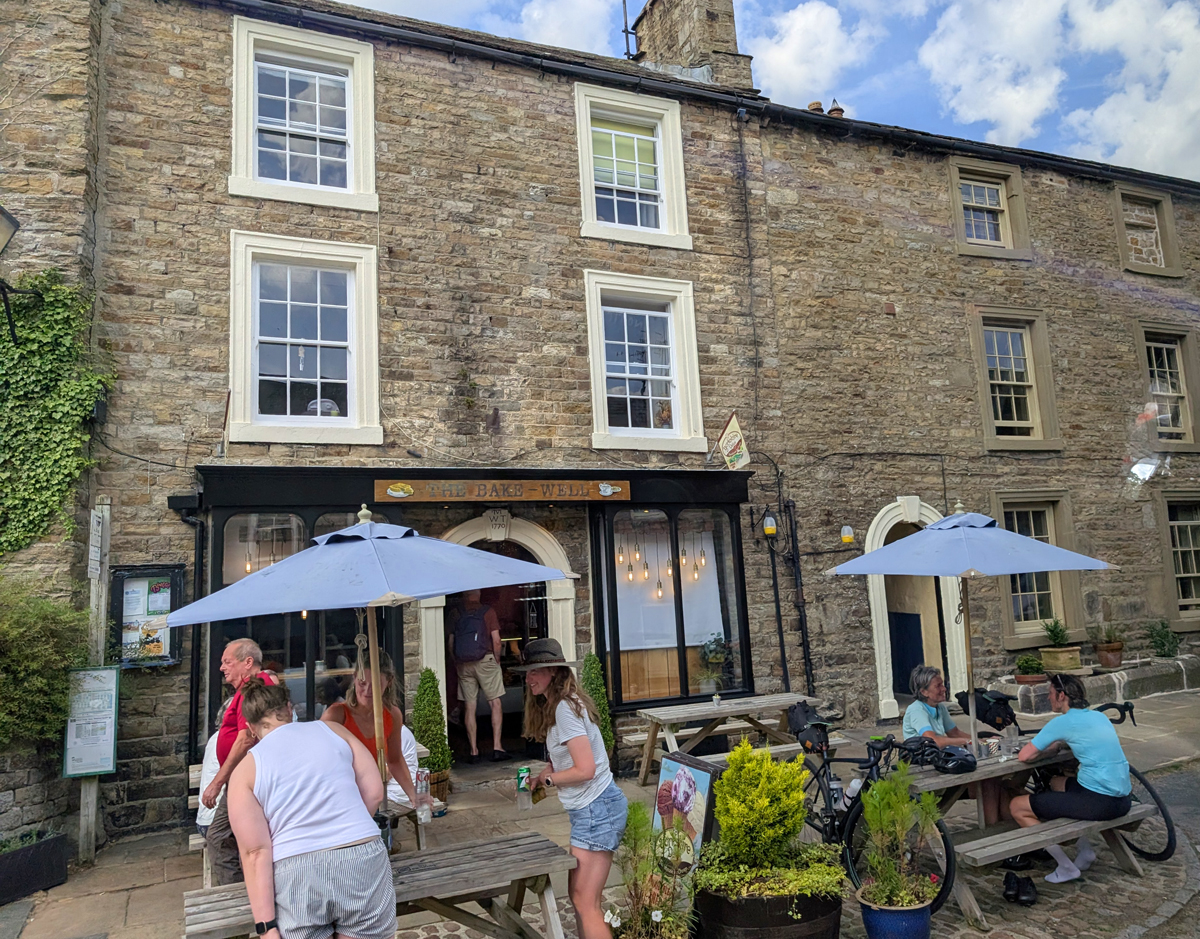
Interesting fact that would shock most people: 95% of the land in the Yorkshire Dales National Park is privately owned. You’ll see farms, their lands separated by stone walls: it is estimated that the park had about 5,000 miles (8,000 kilometers) of dry-stone walls, all put together naturally without mortar (most “wallers” are professional and certified with the Dry Stone Walling Association). You’ll also see lots of little towns, all characterized by stone housing.
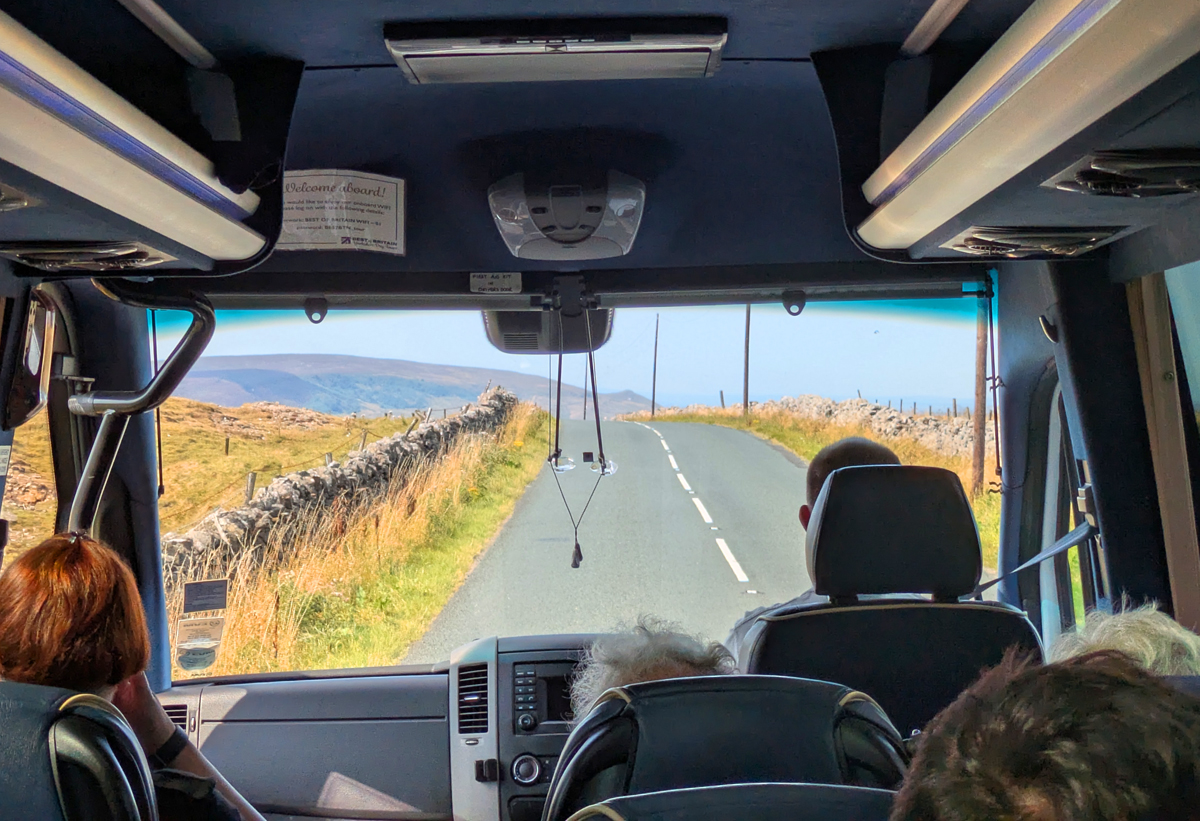
I wrote above that most people would be shocked to hear that most of the land in the national park is privately owned. That’s because usually (especially in North America) National Parks are government property. You usually won’t see any buildings unless it’s a Park information center or lodge. But it doesn’t work that way in the UK, the National Park system here was established in the 1950’s when there were already people living in what are now National parks. As Mark told us, “National Parks are not owned by the government, they’re managed by the government”. That means there are limits on what can be built here including what businesses you’ll find. You won’t see a Starbucks or McDonalds, any establishments you’ll see within a National Park are old mom-and-pop stores and restaurants. And there’s limits to additions to houses, construction has to be consistent with traditional methods. So an old barn has to look like an old barn…even if you have a modern 10-foot TV inside the barn.
Grassington
We came up on Grassington, what looked like a pretty little town. Even early on a weekday it was busy with tourists. Why? It is a filming location for “All Creatures Great and Small”. Mark was pointing out buildings that had starring roles in the series when he realized that nobody really cared – the participants in the bus were all from other countries (France, Sri Lanka, Germany, Canada, Chile, US) and most of us had never heard of “All Creatures Great and Small”.
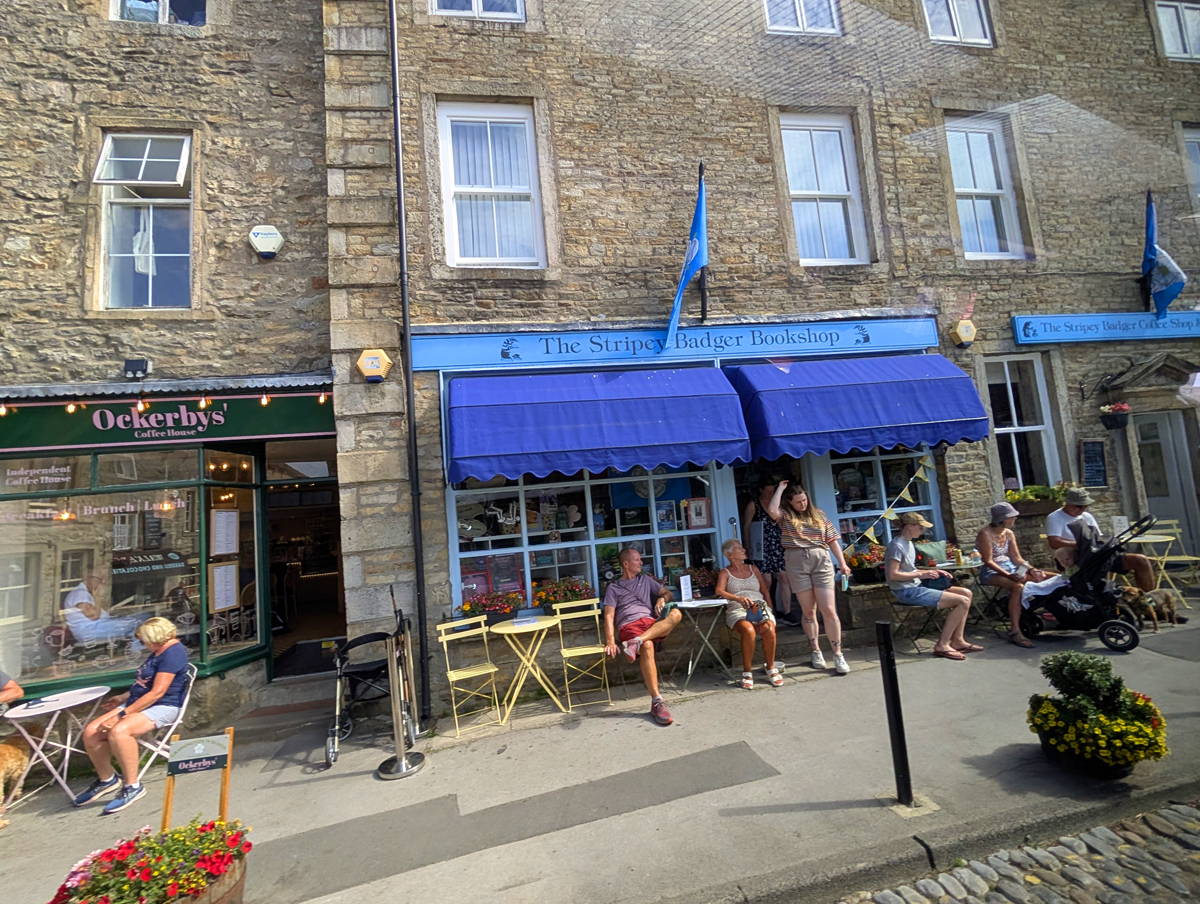
I think Grassington was meant to be a stop but judging that it would be wasted on us, Mark did a little loop with the van and we were soon on the road out of town.
Kettlewell
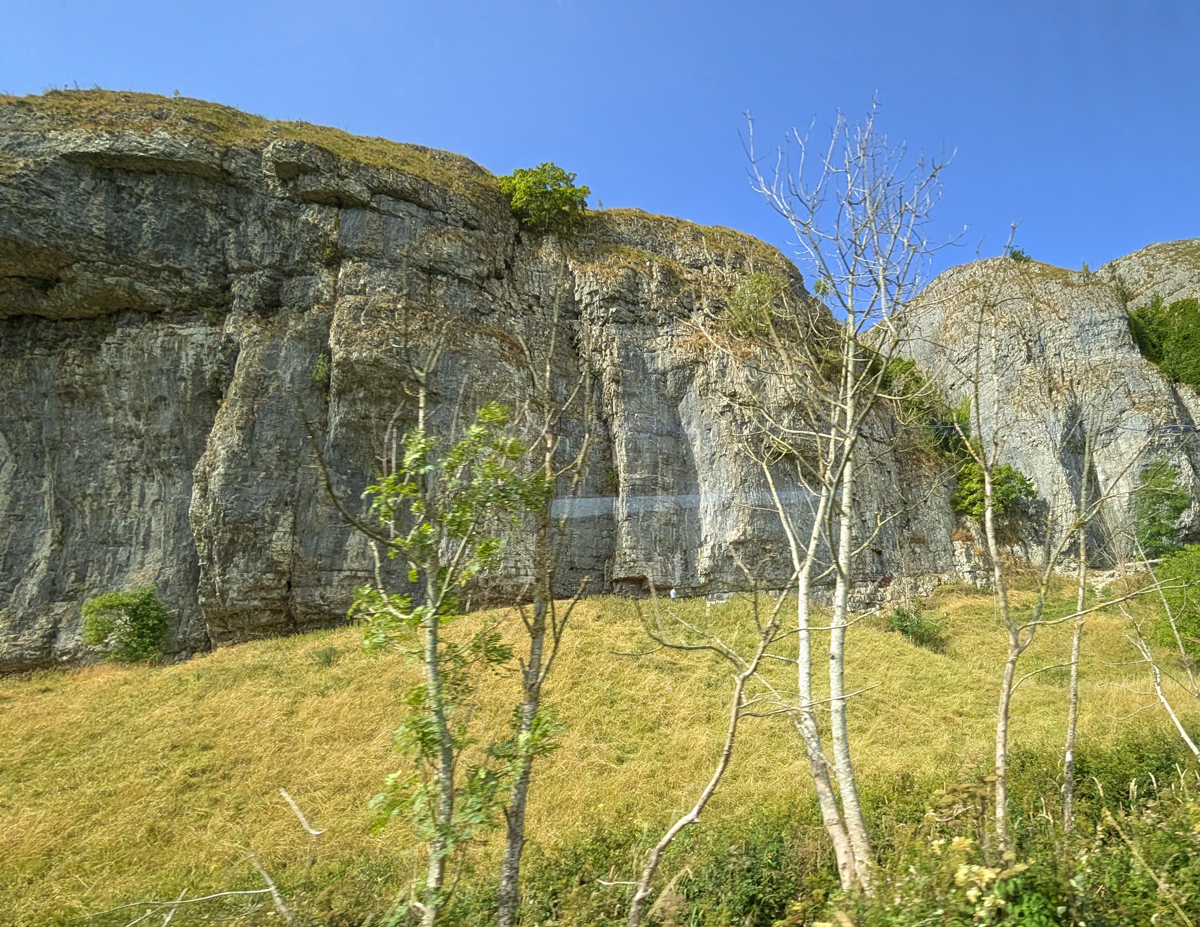
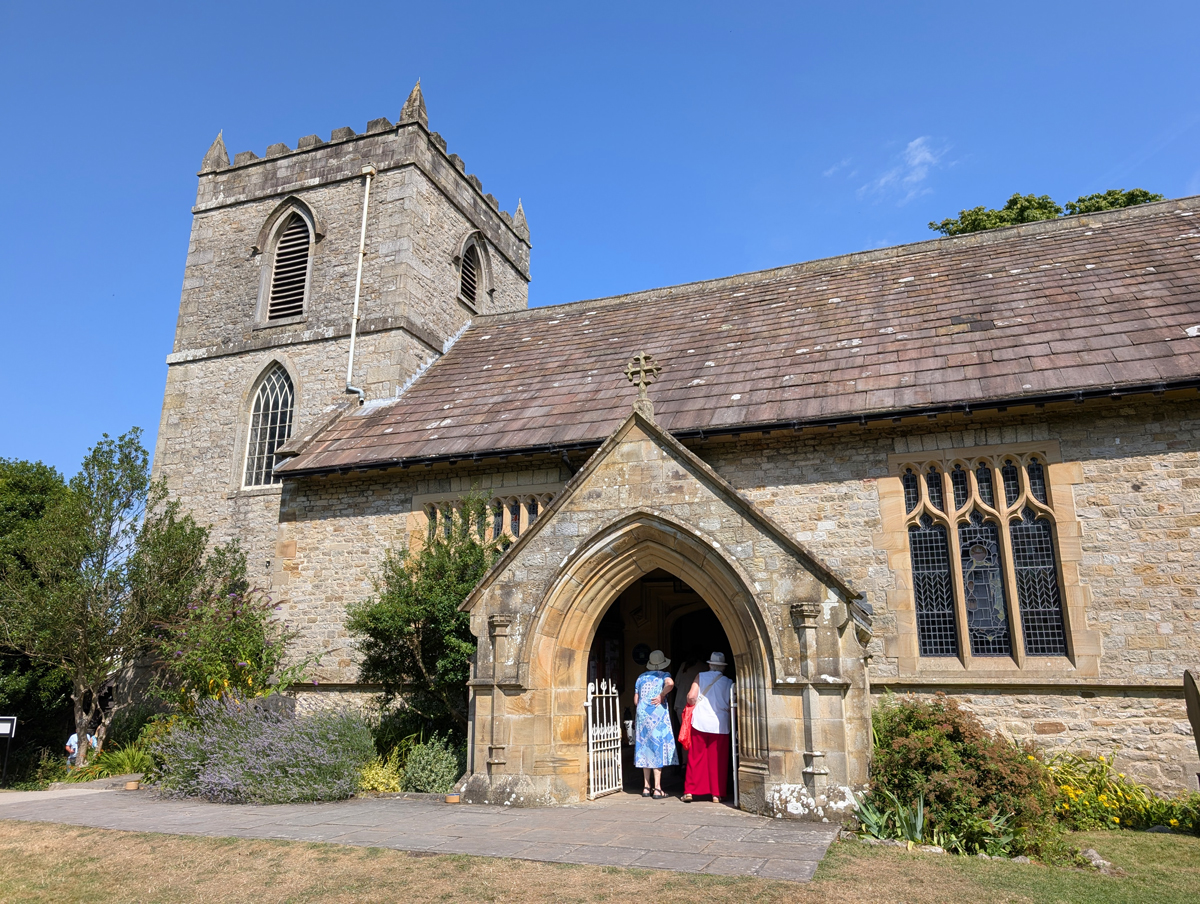
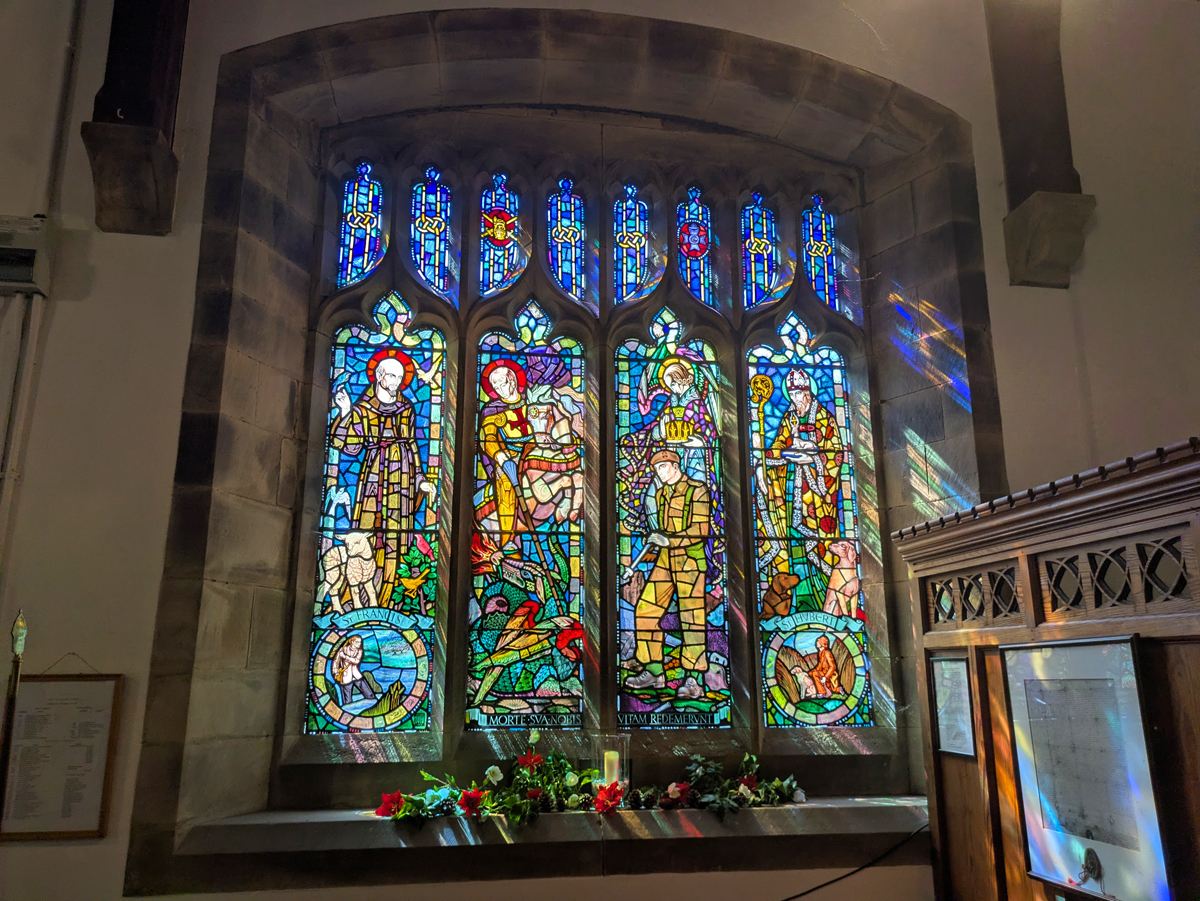
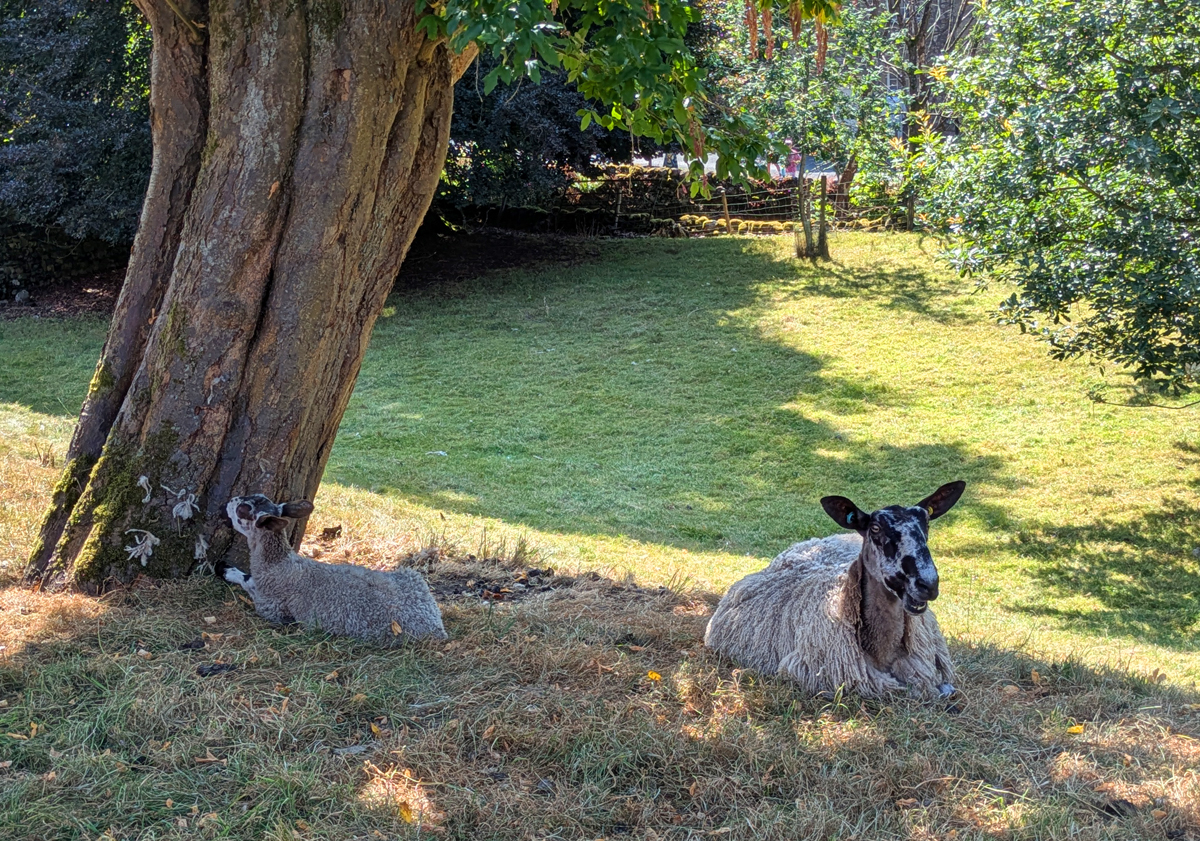
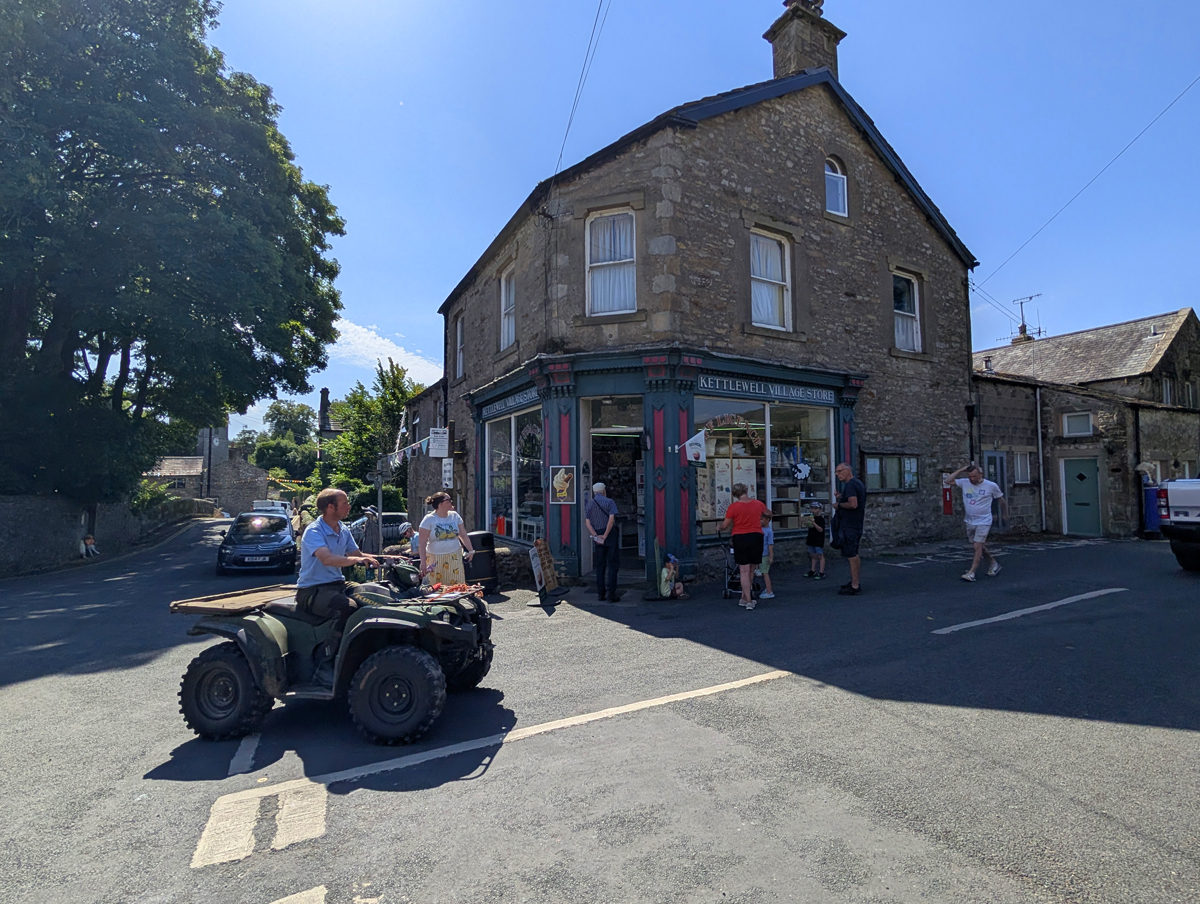
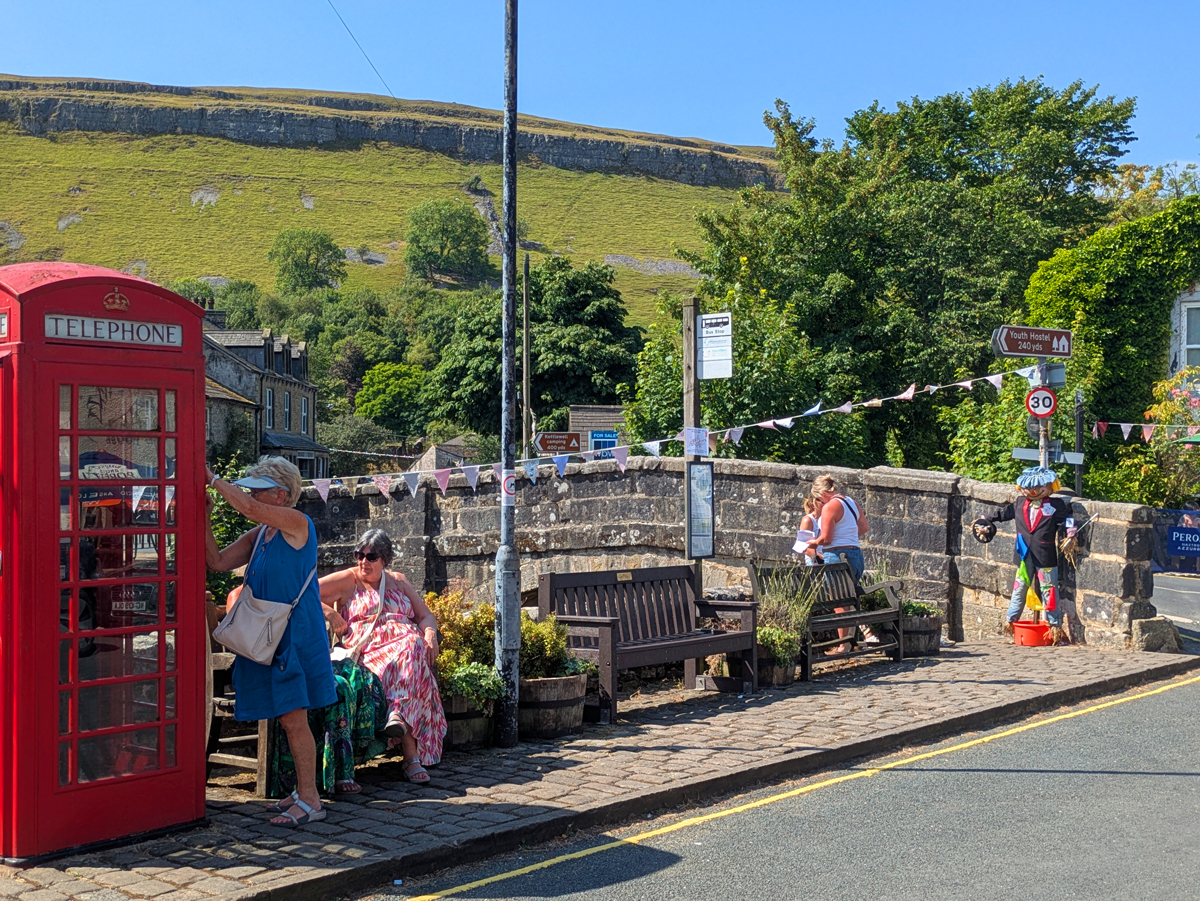
A pretty little town that gets few visitors except for the specific week we were visiting. Why? The annual Kettlewell Scarecrow Festival (always held in August). They even have a website.
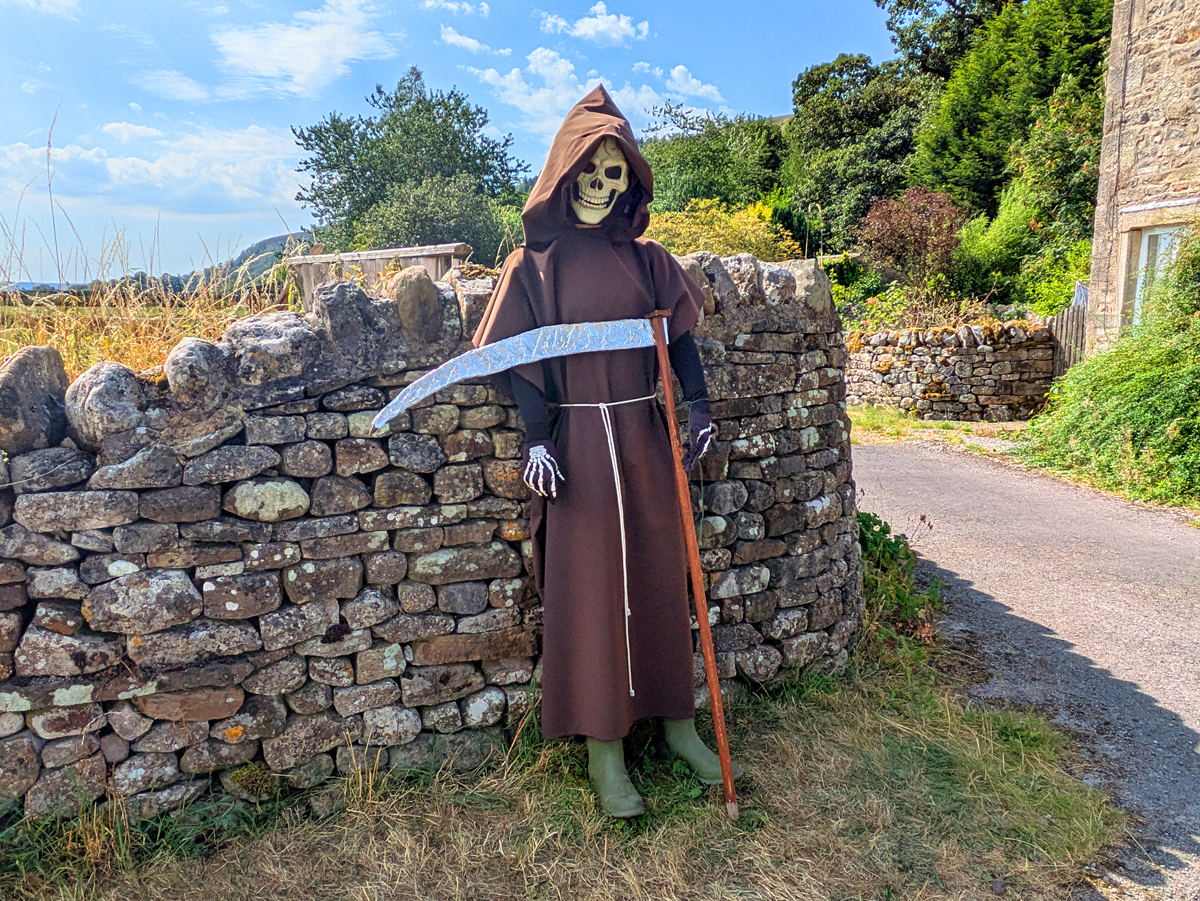
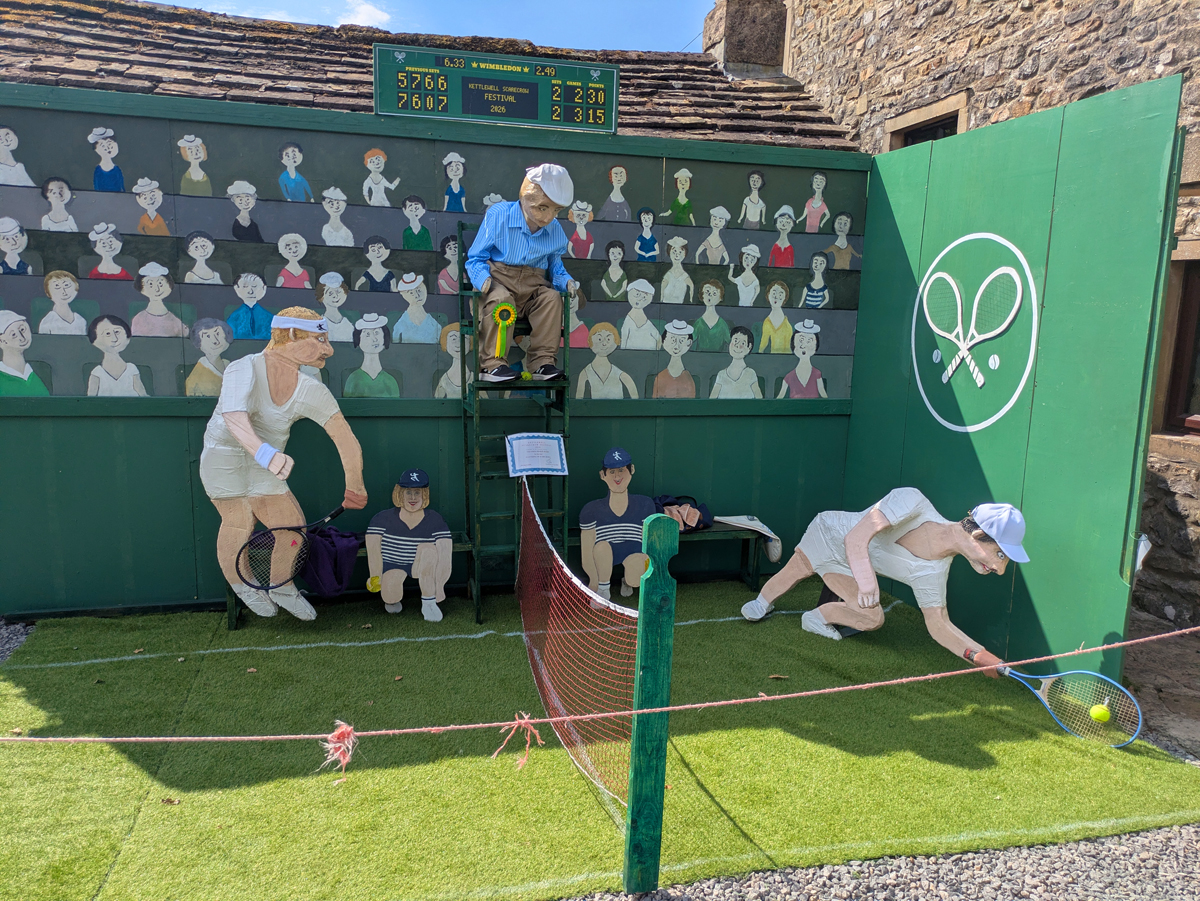
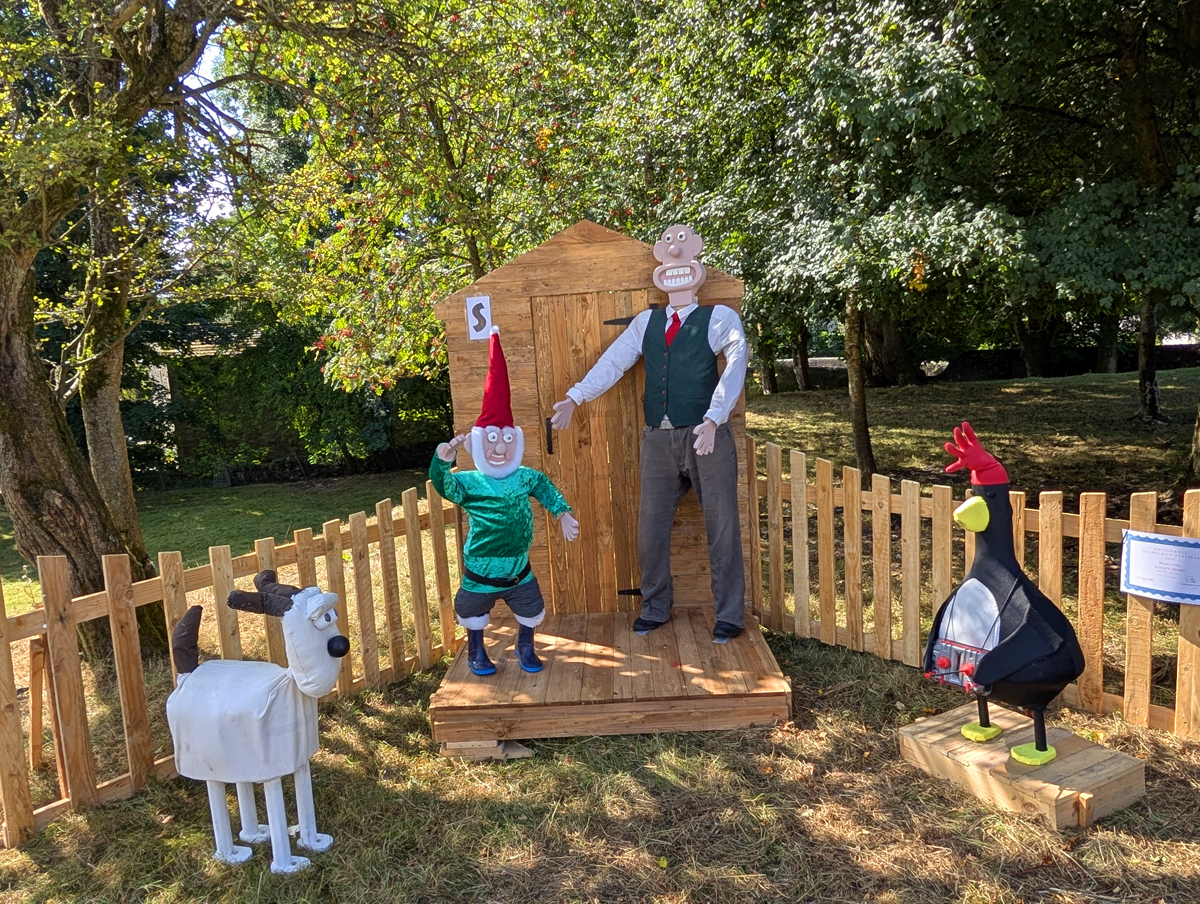
The Scarecrow festival aside, it is a scenic town with a stream running through it and high ridge dominating the view.
The Yorkshire Peaks
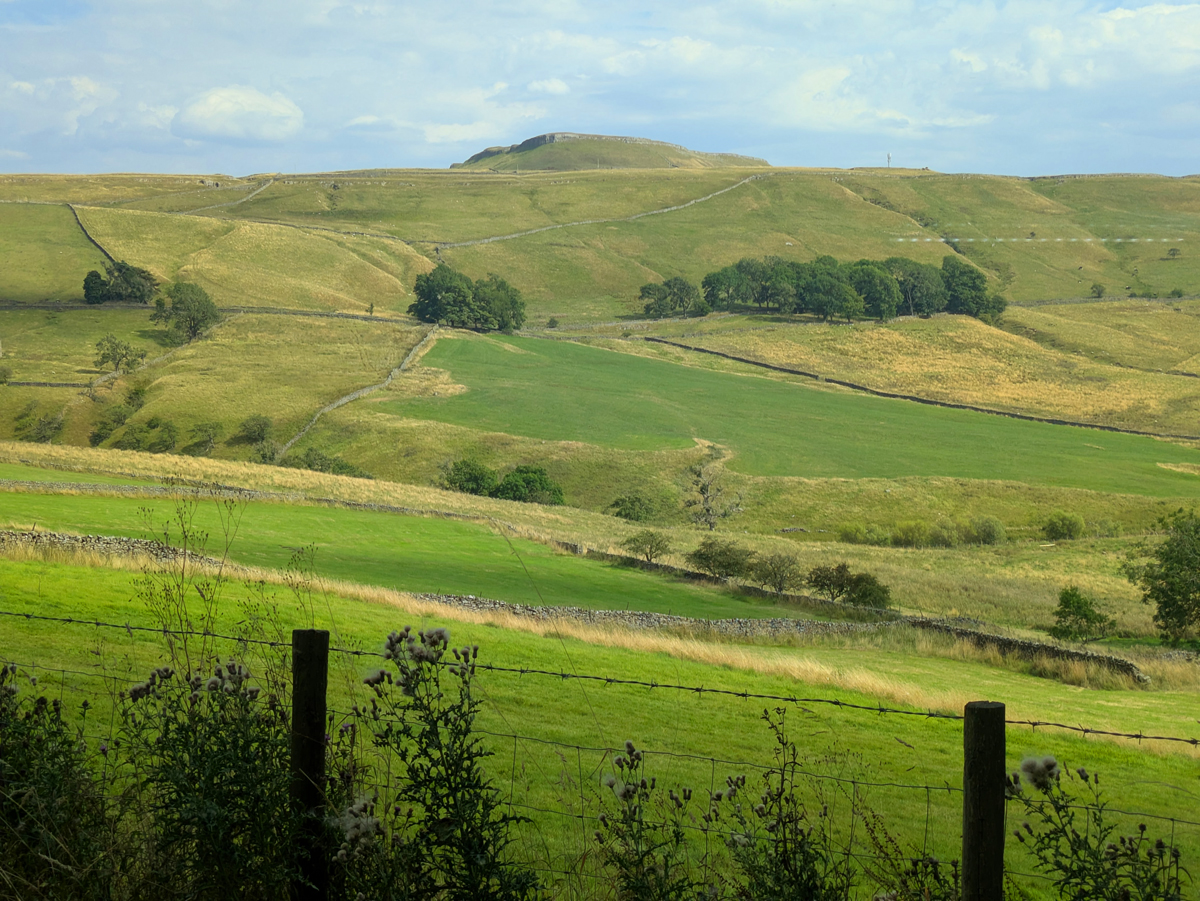
Continuing on, we did a gradual ascent into the hills, the geography becoming desolate and the views opening up as far as the eye could see. This area of the Yorkshires is the home of the 3 Yorkshire Peaks: Whernside (736m), Ingleborough (723m), and Pen-y-ghent (694m). A popular hike is the 24-mile hike that takes in the 3 peaks (it’ll take you between 10 and 12 hours). More on walking the Yorkshire Three Peaks.
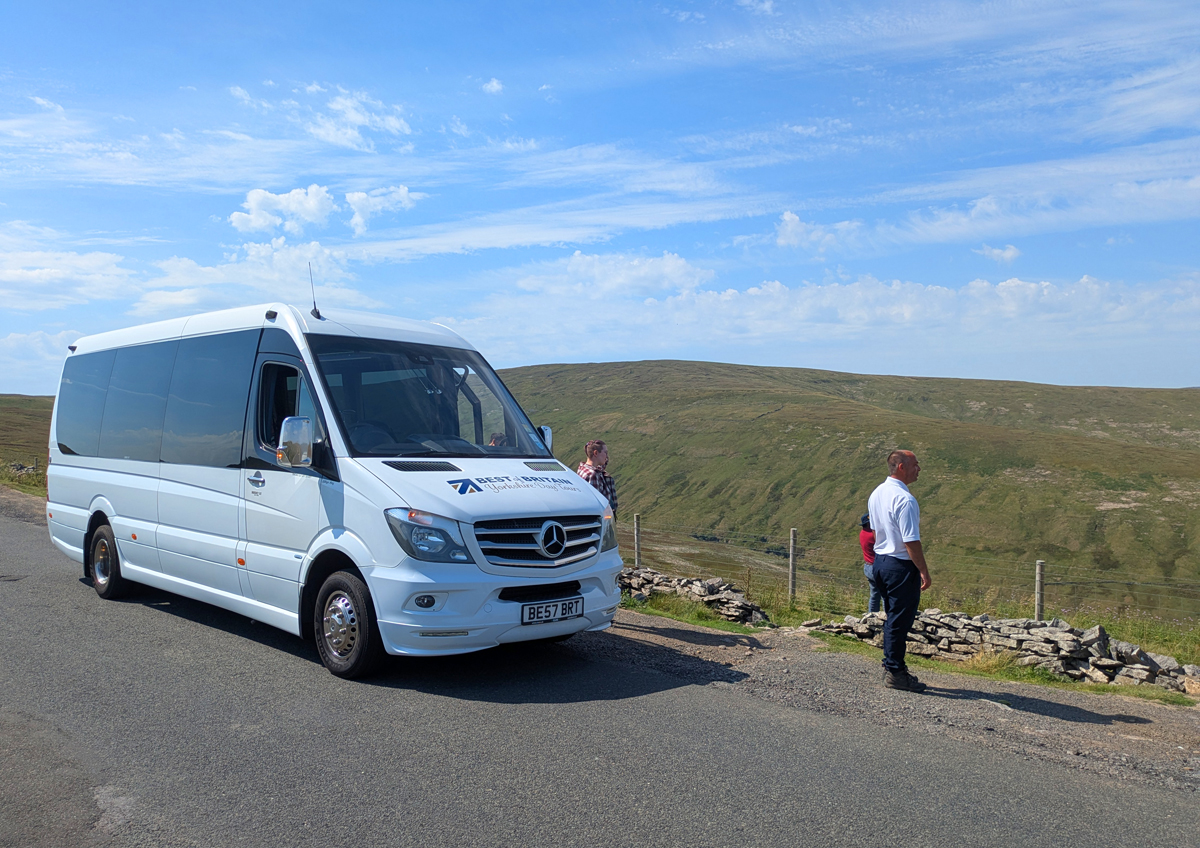
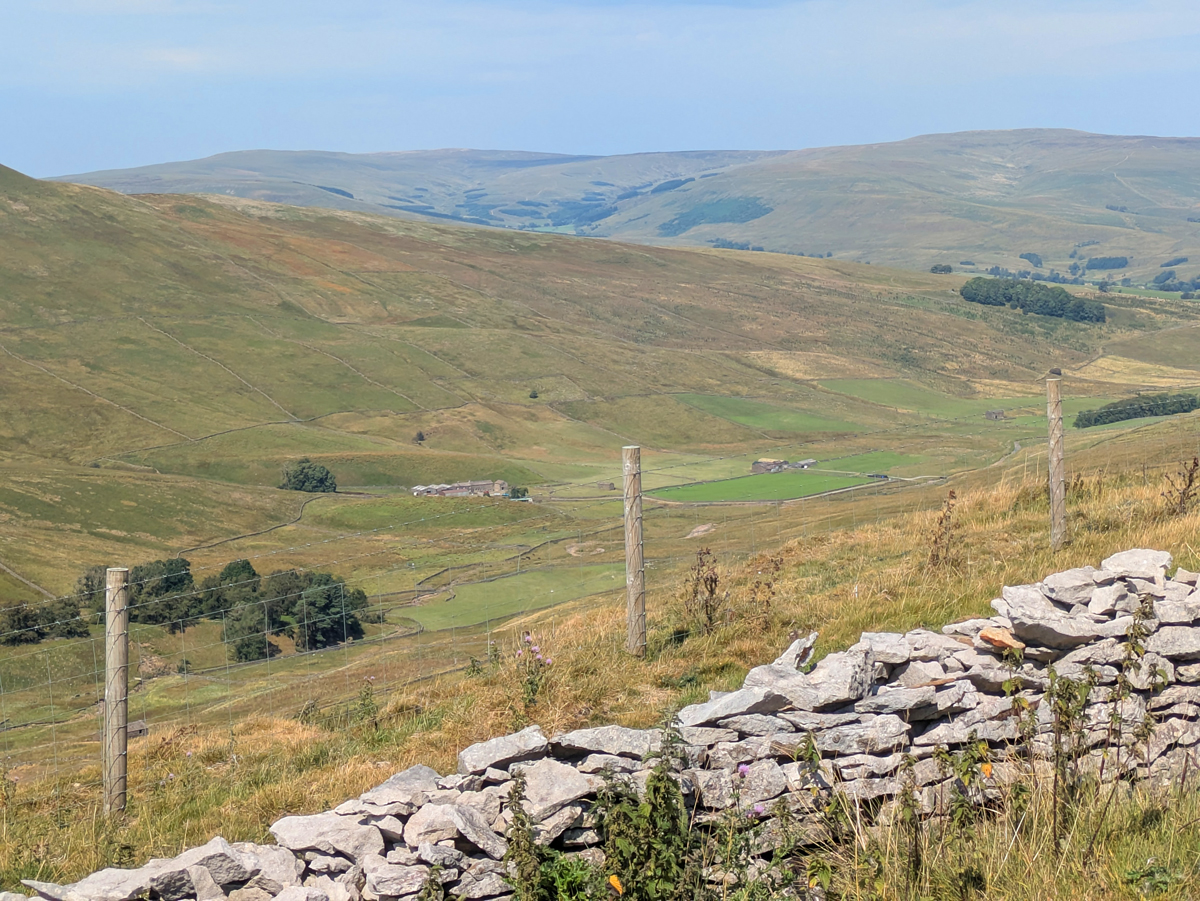
Whether hiking or not, the views here are very impressive.
Hawes
Hawes is where we stopped for our lunch break. The town is best known for the Wensleydale Creamery, England’s most famous cheese creamery. You can stop here to sample various cheeses like their traditional Wensleydale, the Wensleydale & Cranberries and their Wensleydale Mango and Ginger cheese (quite nice!). Their restaurant (Calvert) is popular and has a nice garden area.
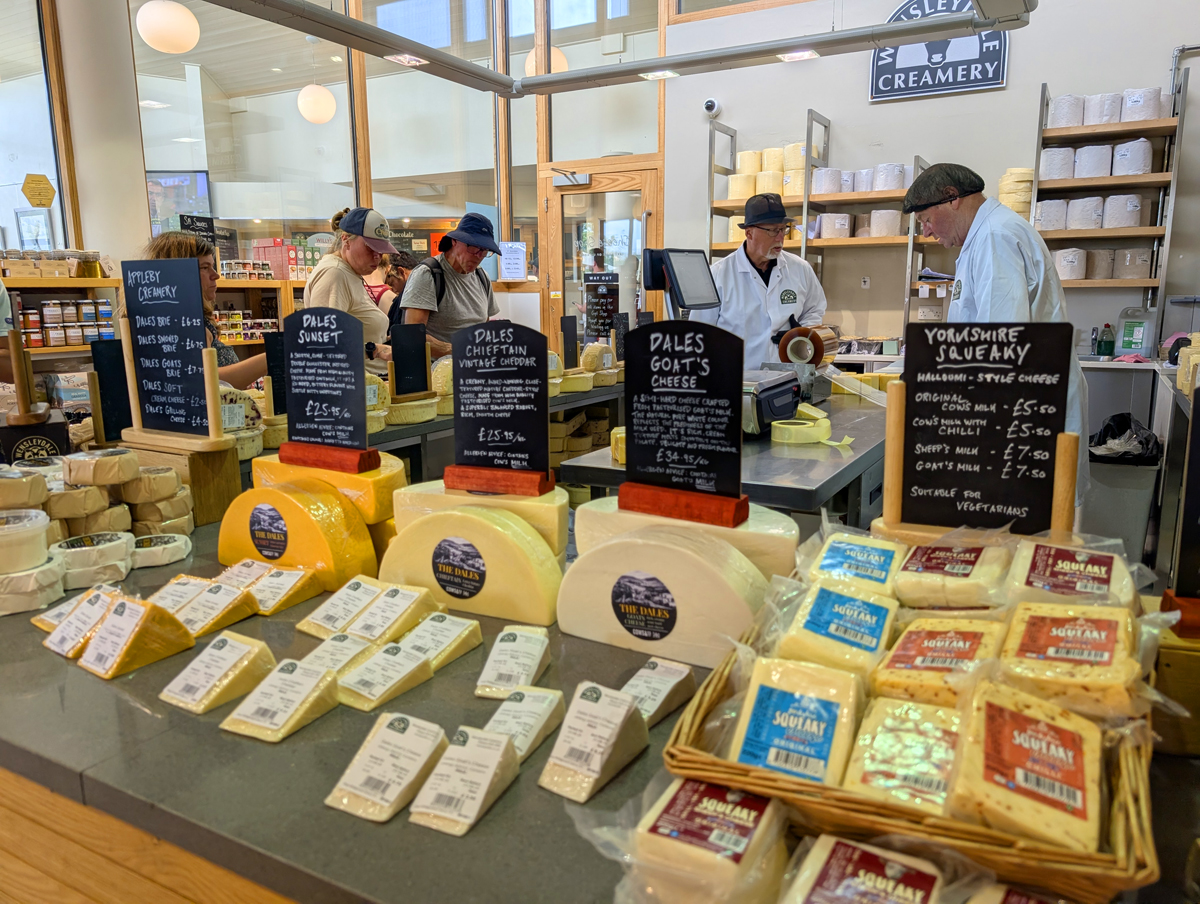
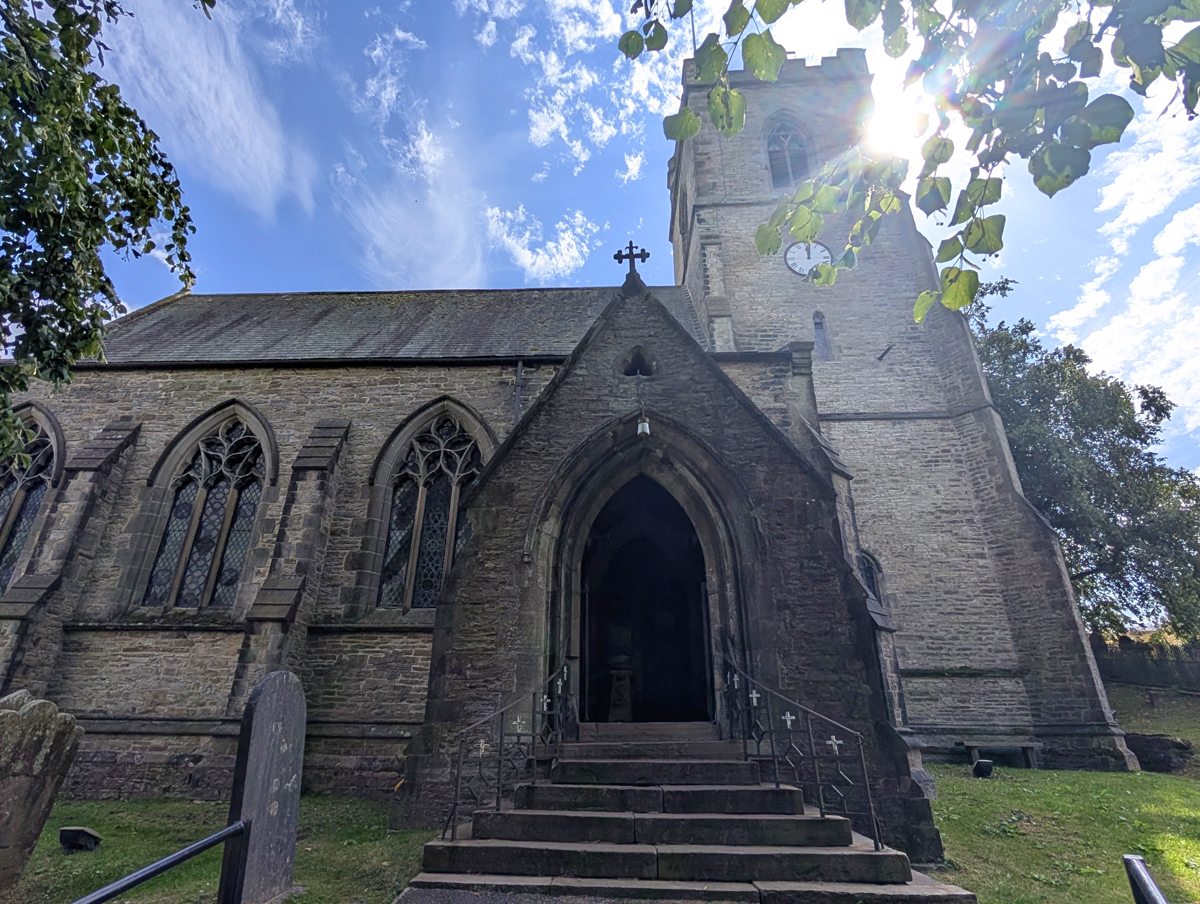
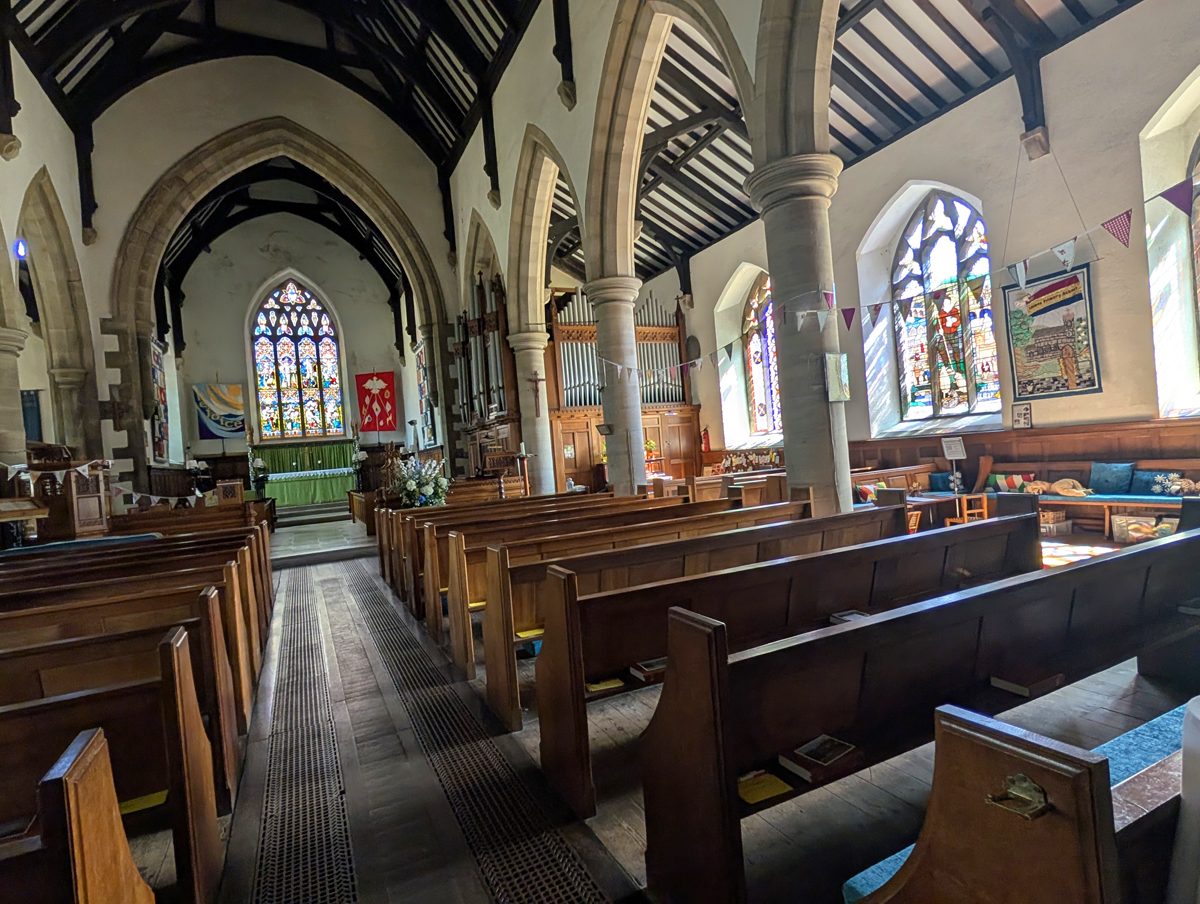
But Wenslesdale Creamery was full of tourists. Too busy for us. After doing the cheese tasting, we decided to walk into town (Hawes town center is 5 minutes away). It’s pretty with a main street comprising of a hotel, bank, a Spar and a church. We had lunch at quaint Caffè Curva which has some great vegan/vegetarian options.
More scenery and small towns
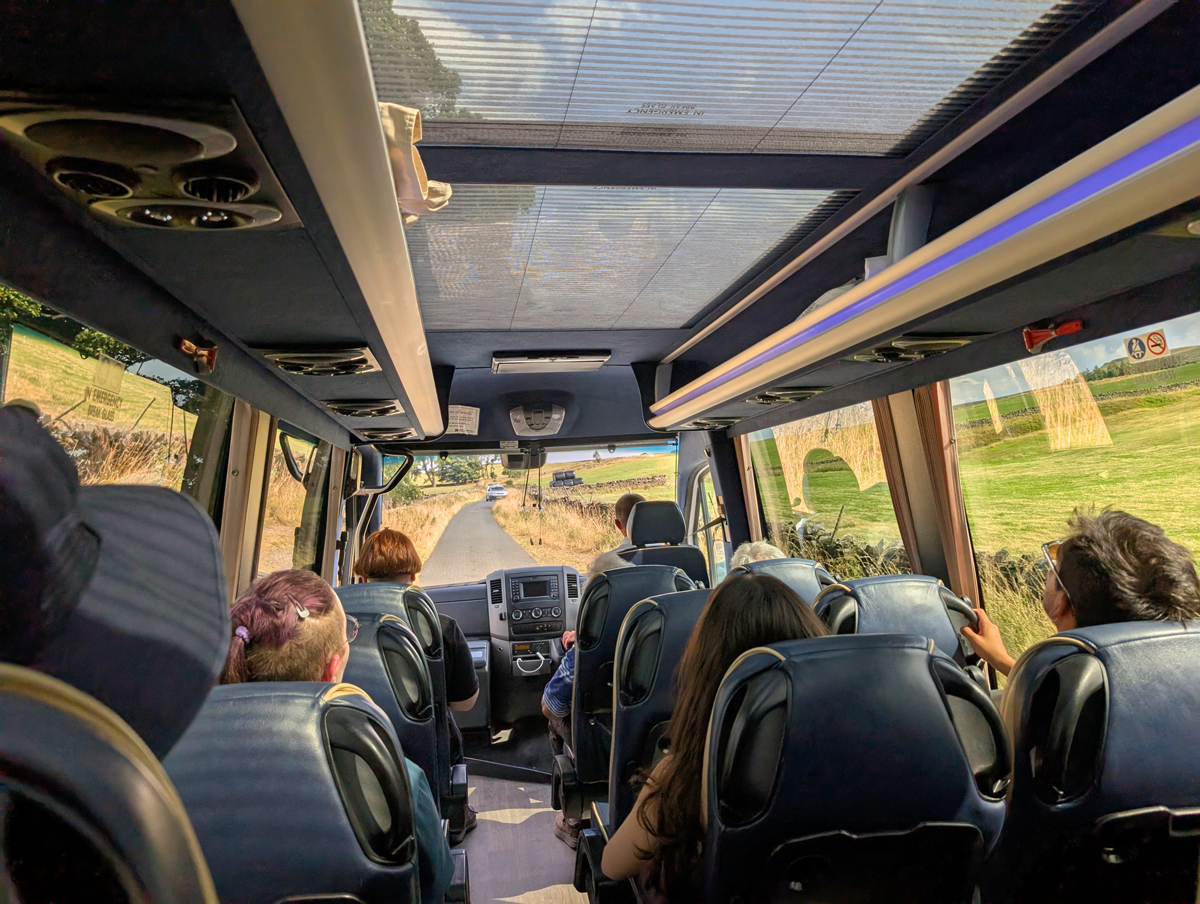
We left Hawes, the van meandering along small, winding roads. The scenery in this part of the Dales is beautiful, the colours changing as you round every corner.
Something interesting Mark told us: the Yorkshire Dales is an official International Dark Sky Reserve. It is in fact the largest dark sky reserve in the UK with some of the darkest skies and lowest light pollution in the United Kingdom. That makes the Dales one of the best places anywhere to come for stargazing. More about that here.
Castle Bolton
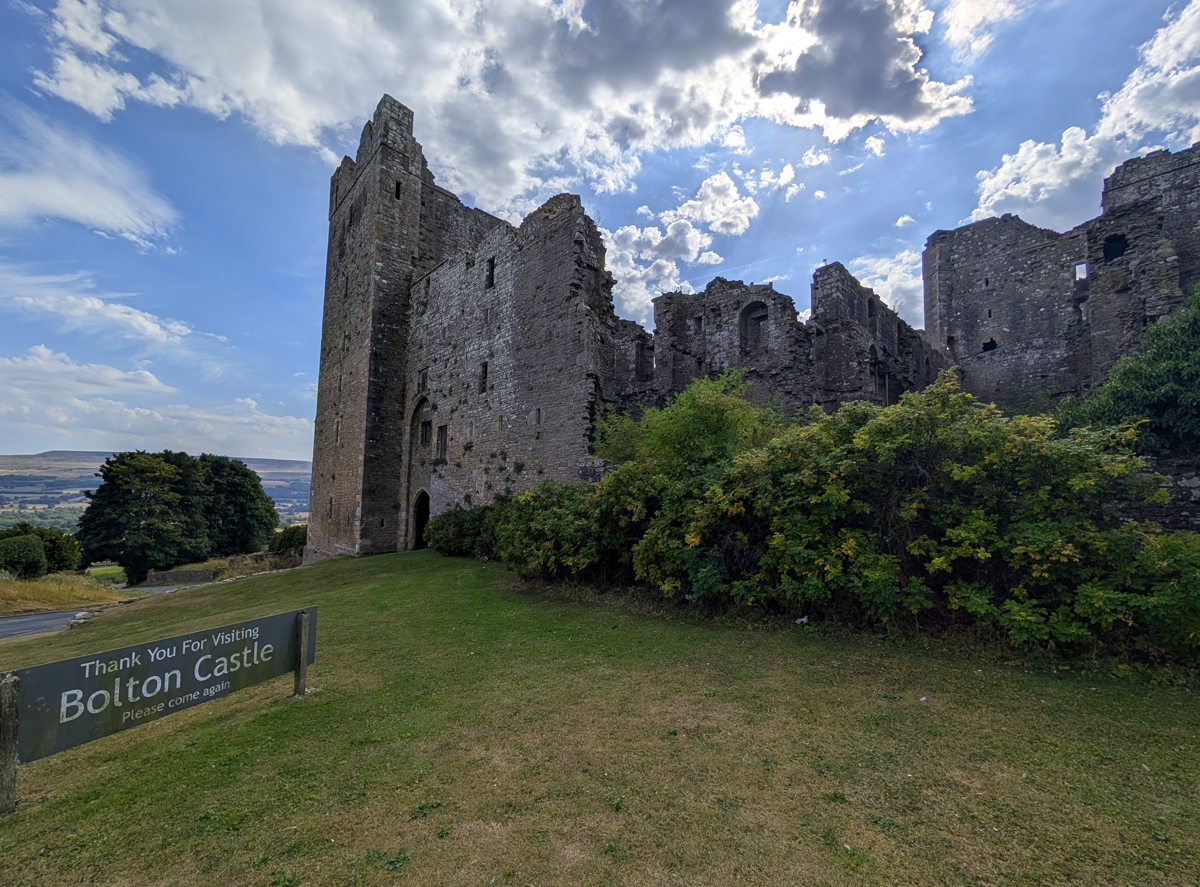
Castle Bolton was our last stop of the day. It was built between 1378 and 1399 by Richard, 1st Baron Scrope of Bolton and has stayed – over the last 600 years – in the Scrope family. Many castles in England have stayed in private hands through time.
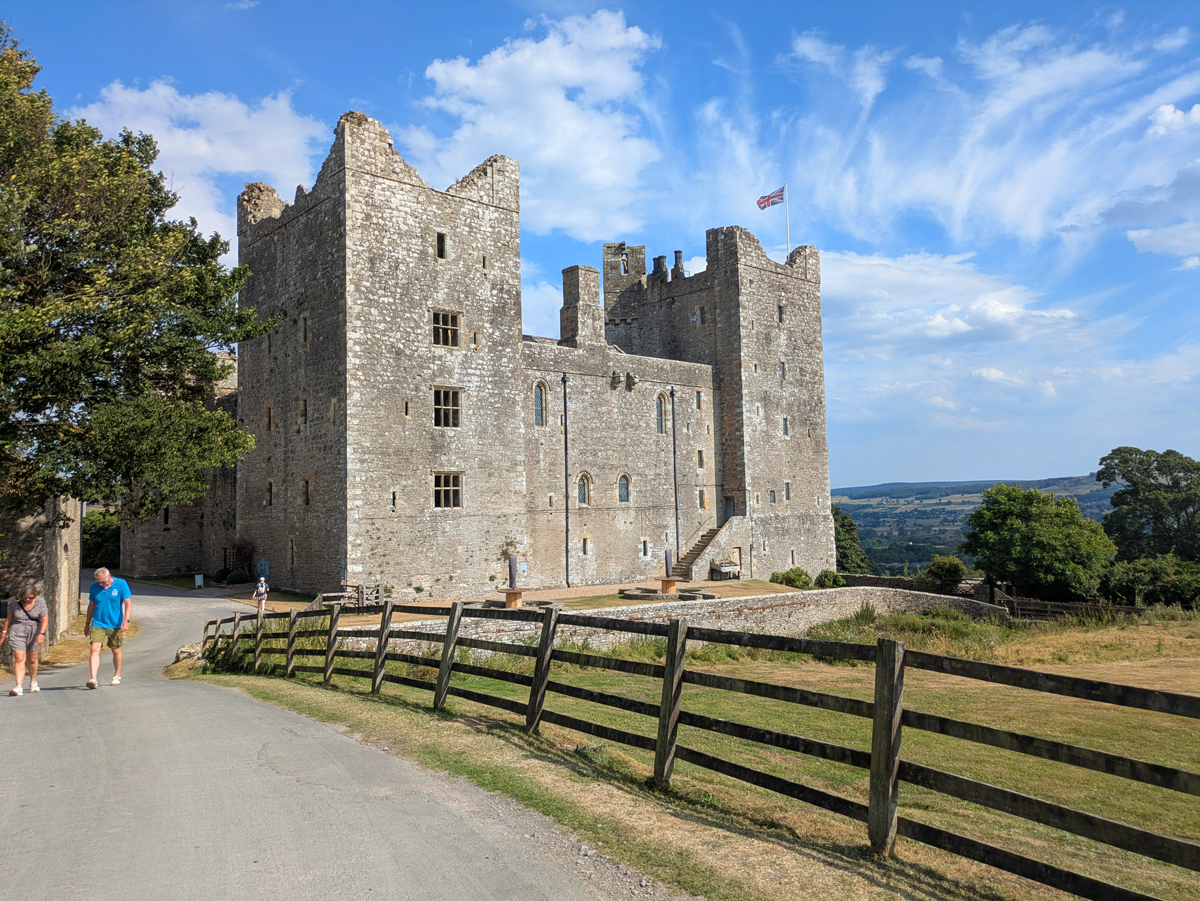
The castle is most famous as being where Mary, Queen of Scots was held prisoner for 6 months in 1568. Her imprisonment didn’t sound too harsh; she had a retinue of 51 “gentlemen, servants and ladies-in-waiting” and was allowed to wander the lands around the castle and even go hunting.
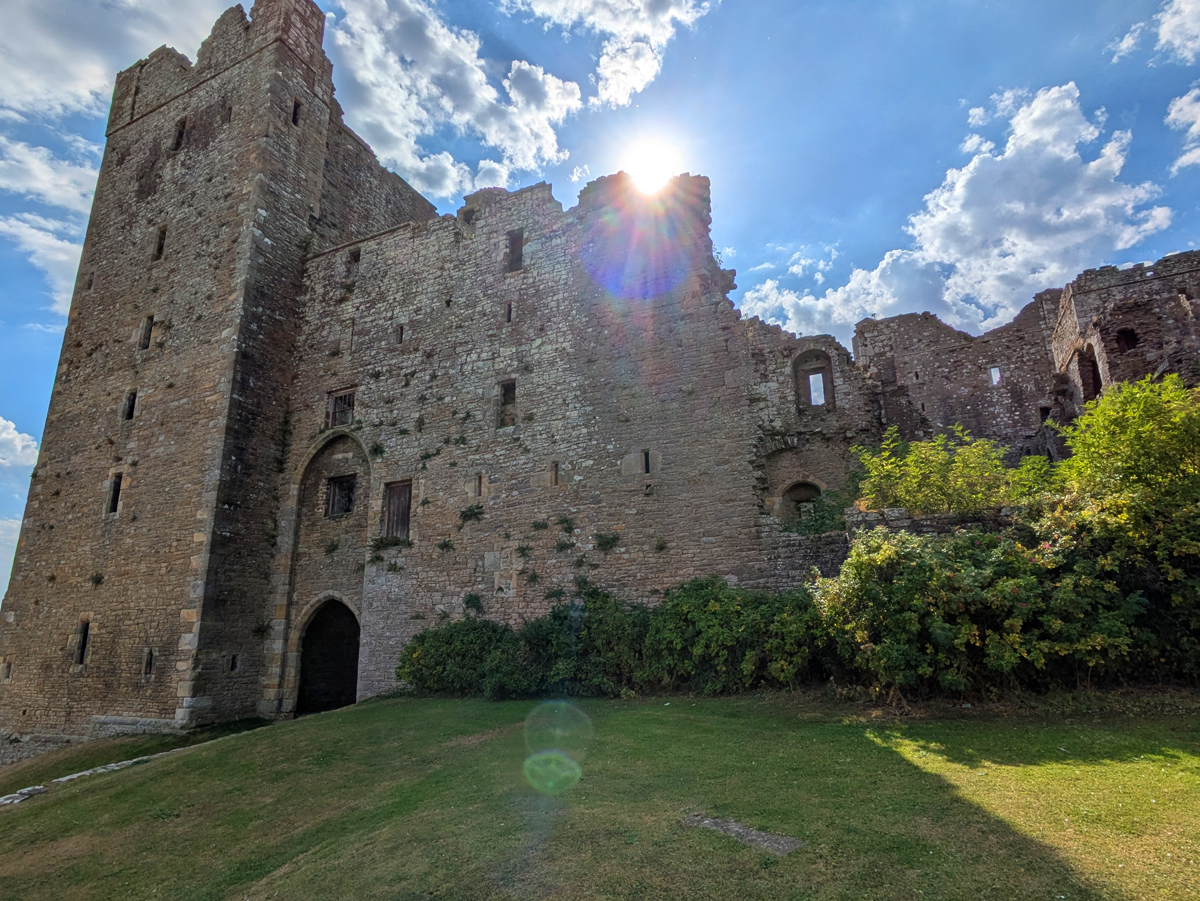
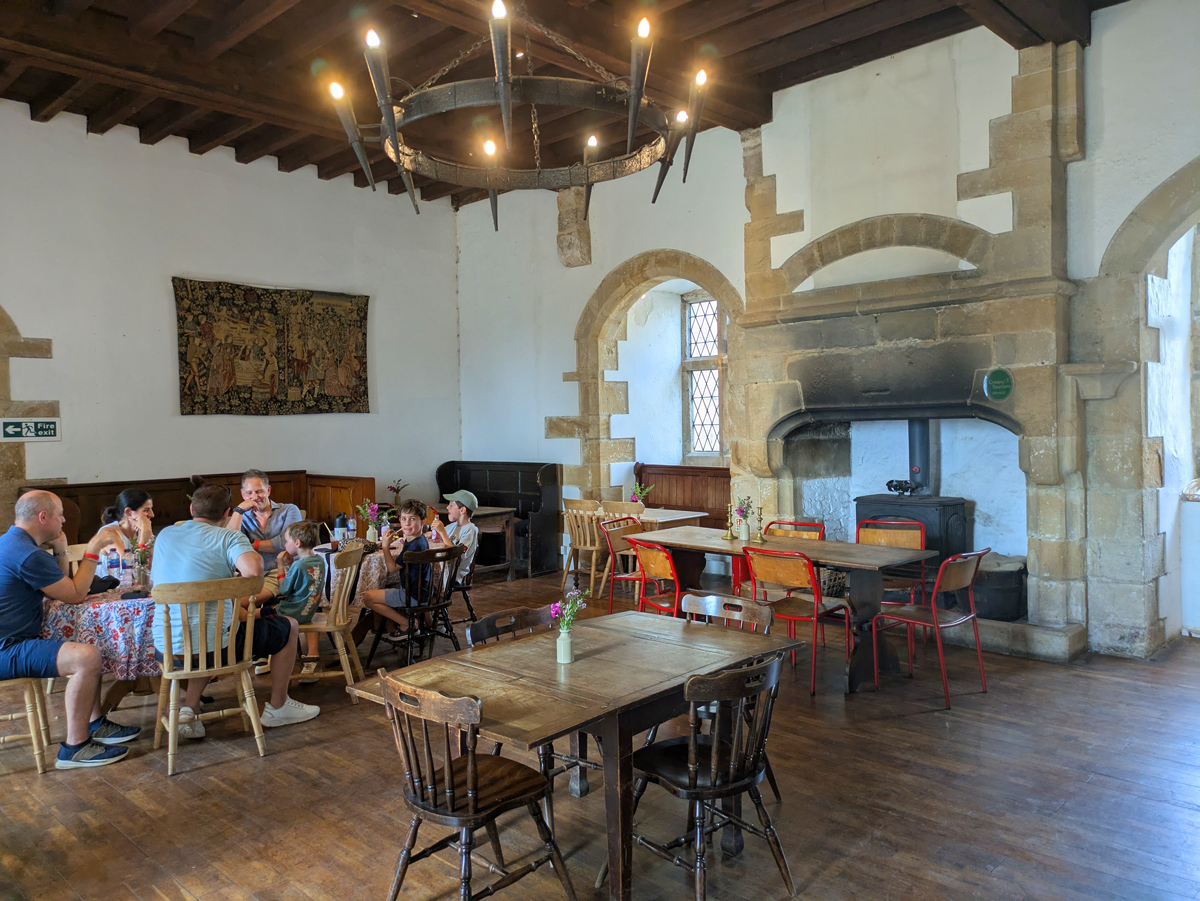
Being on a tour, we didn’t have time to visit the Castle (which I’m told requires at least 2 hours to do properly). But we were able to wander the grounds, see the boars (feeding behind a fence), walk through a cafeteria (which might have been a dining hall), and use the bathrooms. As Mark would repeat yet again, “Better to go when you can and not when you need”.
Ending the Tour
From Castle Bolton, we navigated some roads, suddenly seeing stop signs and street lights. Mark stated the obvious “We are now outside the national park”. It makes you aware of how special national parks are; places to see peaceful landscapes, animals grazing…without all the ugliness of human development.
From Castle Bolton it was a 90 minute drive back to York (during which most of us slept). Back under the shadows of York’s Minster, we said our goodbyes. It was the end of an enjoyable day of touring the Yorkshire Dales.
Many thanks to Mark – a great tour guide – and Best of Britain.
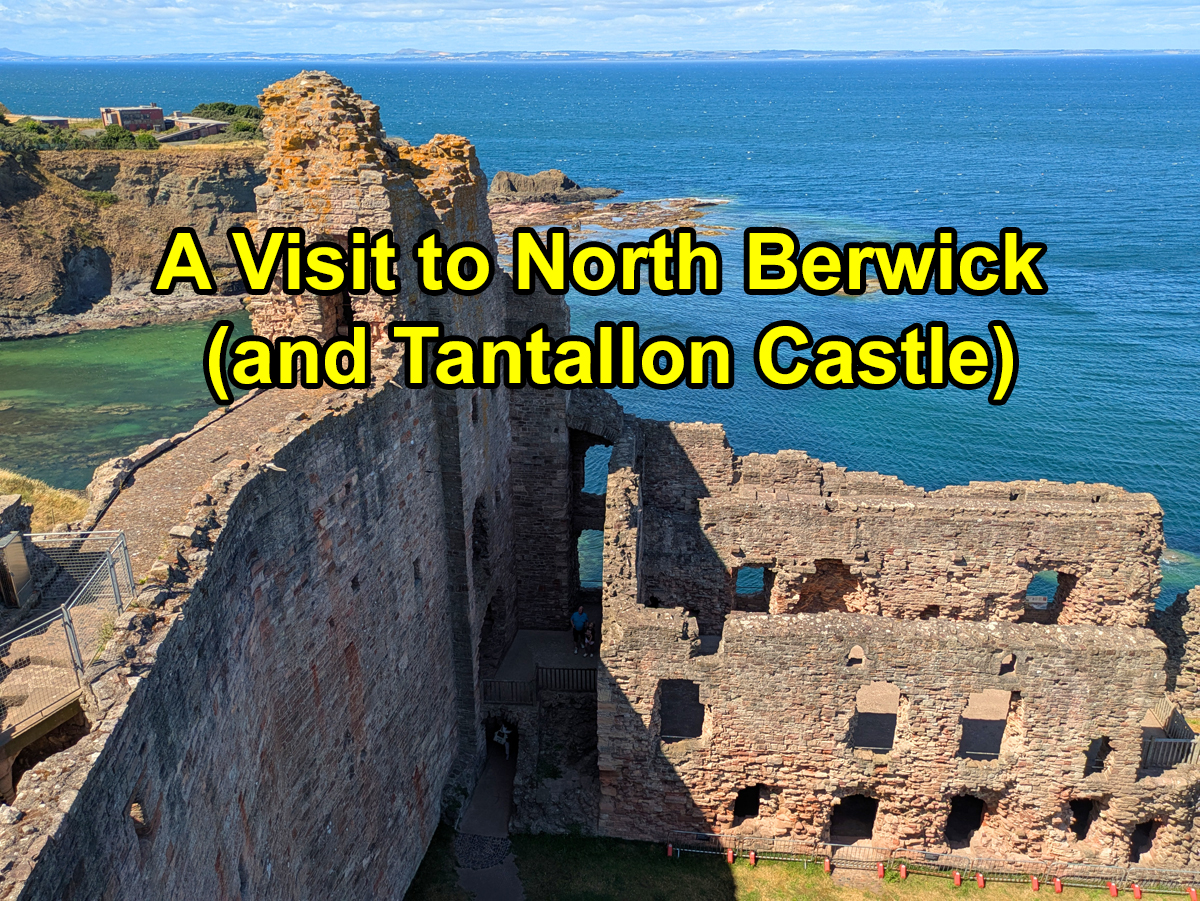
Related: A Visit to North Berwick (and Tantallon Castle)
The meat pies look delicious!
That’s what she said.