
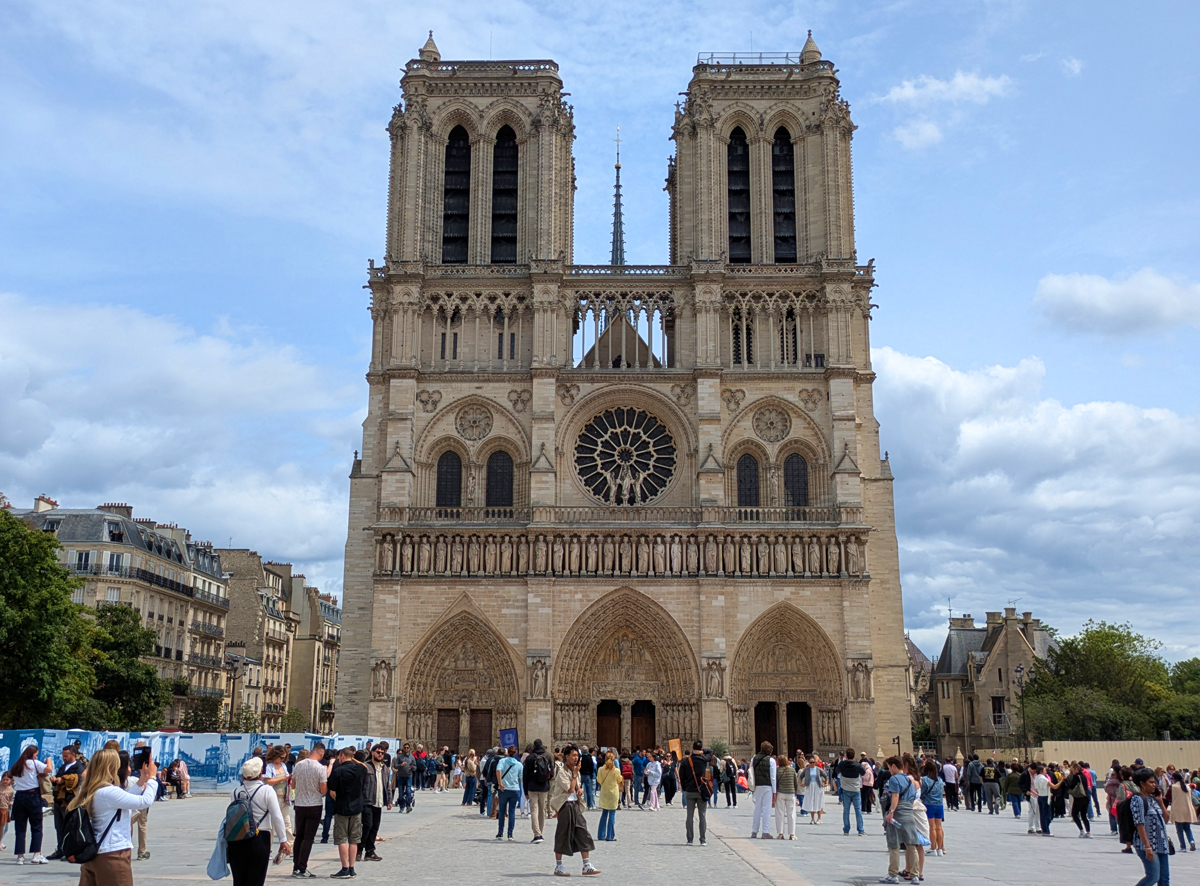
What to See in the 4th Arrondissement of Paris.
Paris’s 4th Arrondissement has some of the most famous highlights in the city. But while touristy, there are many very pretty spots in the area that don’t get a lot of foot traffic. It is also home to lots of magnificent views of the Seine and the attractions on both sides of the river.
This post covers Paris’s 4th arrondissement and gives you a suggested itinerary for visiting the district.
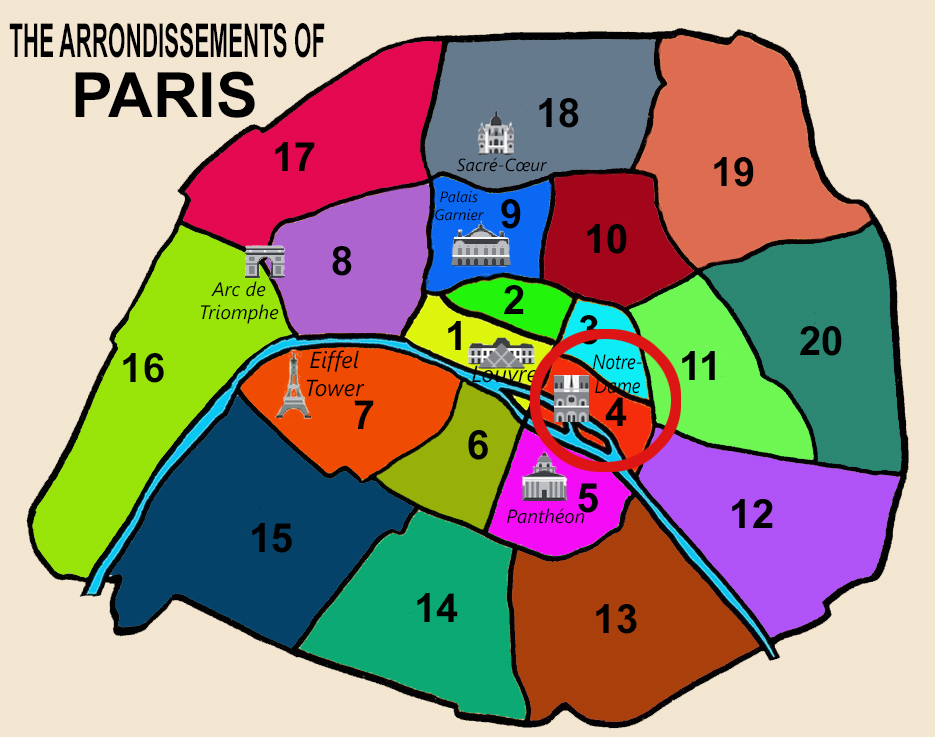
The 4th Arrondissement in a few words: Mostly very touristy, the 4th is a mix of the Marais (a continuation from the 3rd arrondissement) which is made up of mostly small streets, and large boulevards and momentous buildings as you approach the Seine. The 4th also includes Île de la Cité, where the Romans built their defensive fortress. It is one of the oldest parts of Paris.
How to see the 4th Arrondissement: there are different itinerary options to exploring the 4th. In our case we did a circuitous route starting at the Centre Pompidou and ending at the Hôtel de Ville (Paris city hall). It’s an itinerary that will cover most of the arrondissement and take most of a day. But you’ll see a lots including some attractions that have shaped the history of Paris.
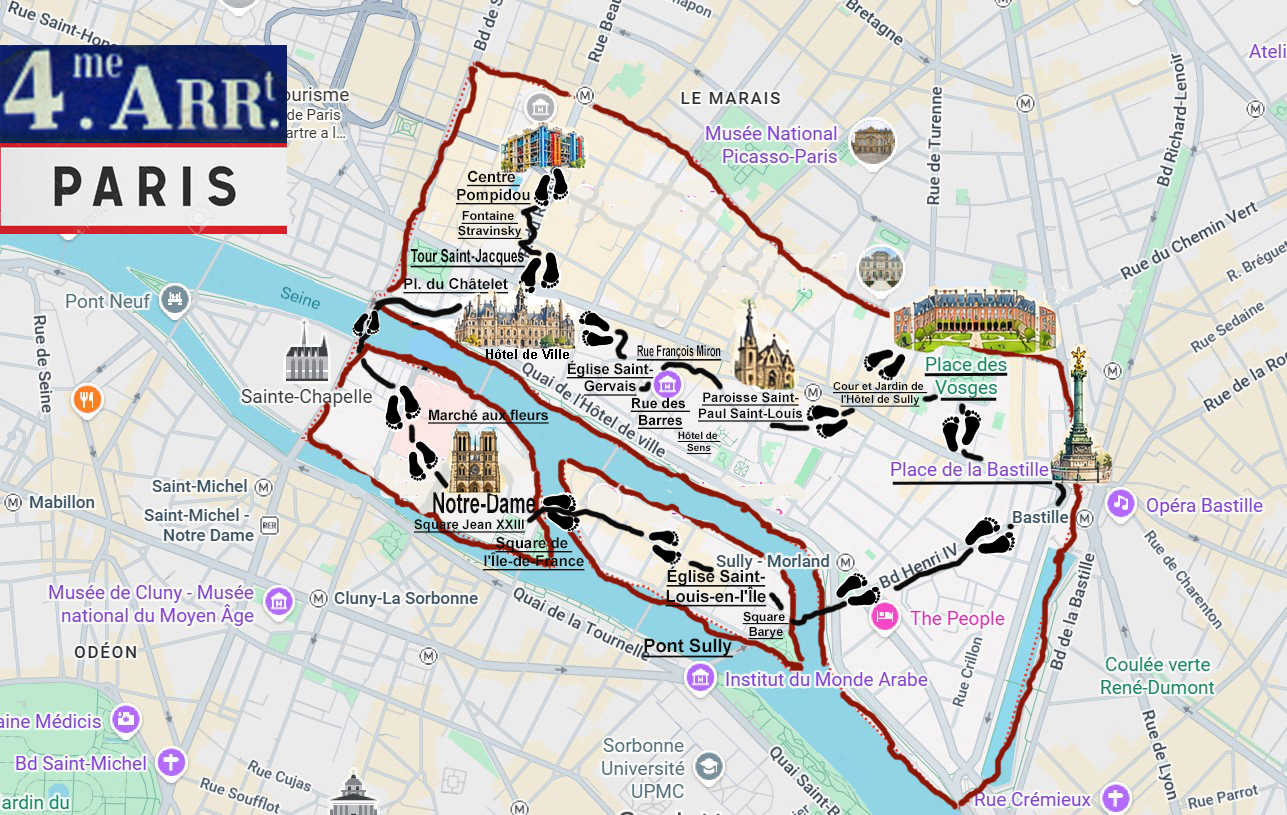
Highlights along the way:
Centre Pompidou
Fontaine Stravinsky
Hôtel de Ville
Tour Saint-Jacques
Place du Châtelet monument
Marché aux fleurs Reine-Elizabeth-II
Cathedral Notre-Dame
Square de l’Île-de-France
Église Saint-Louis-en-l’Île
Square Barye
Place de La Bastille
Place des Vosges
Cour et Jardin de l’Hôtel de Sully
Paroisse Saint-Paul Saint-Louis
Rue François Miron
Rue des Barres
Église Saint-Gervais
End back at Hôtel de Ville.
The 4th Arrondissement of Paris in Detail
Centre Pompidou
The Centre Pompidou (containing Europe’s largest modern and contemporary art collection) is undergoing big renovations and won’t be open until probably 2030. But one of the reasons it is famous is for its “inside-out” architecture where colourful pipes, elevators and steelworks are on the outside of the building and not hidden inside. You may find it interesting or you may just find it ugly…
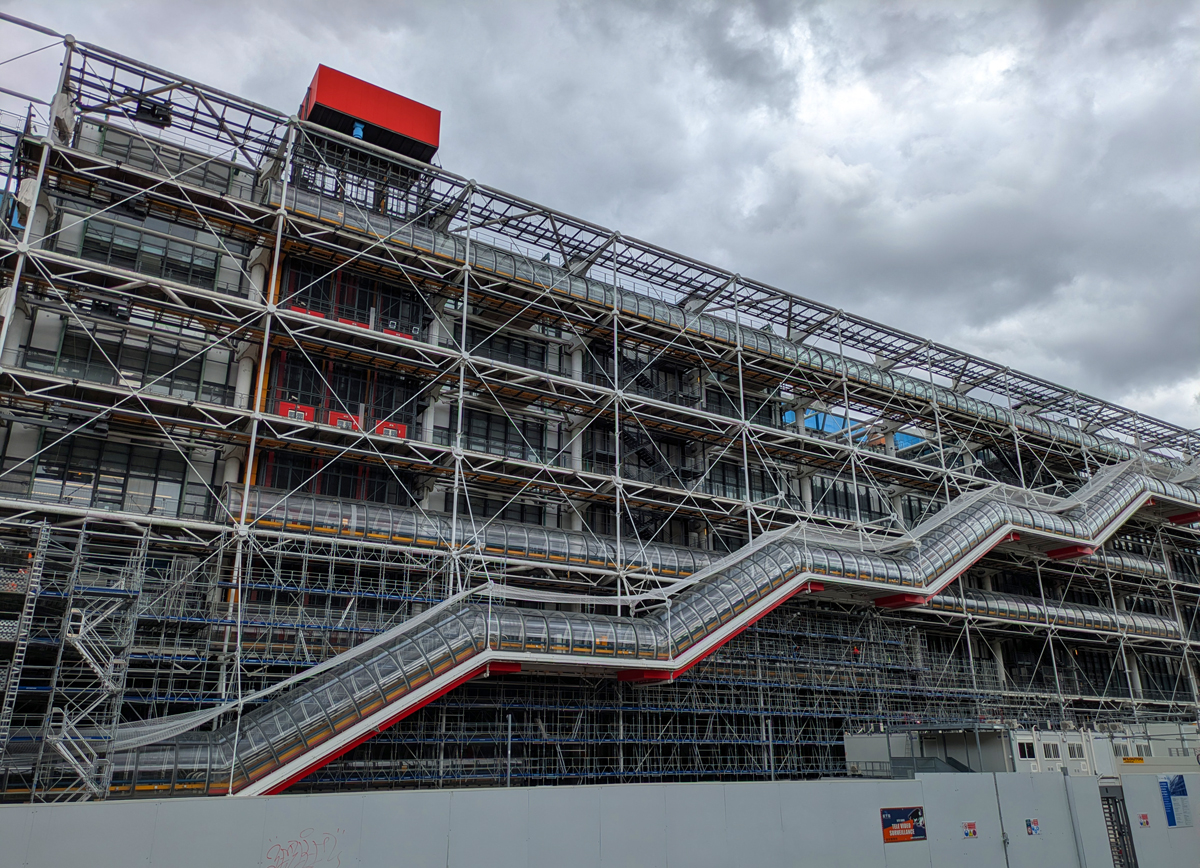
Outside the center, you’ll see outdoor street art and contemporary works such as…
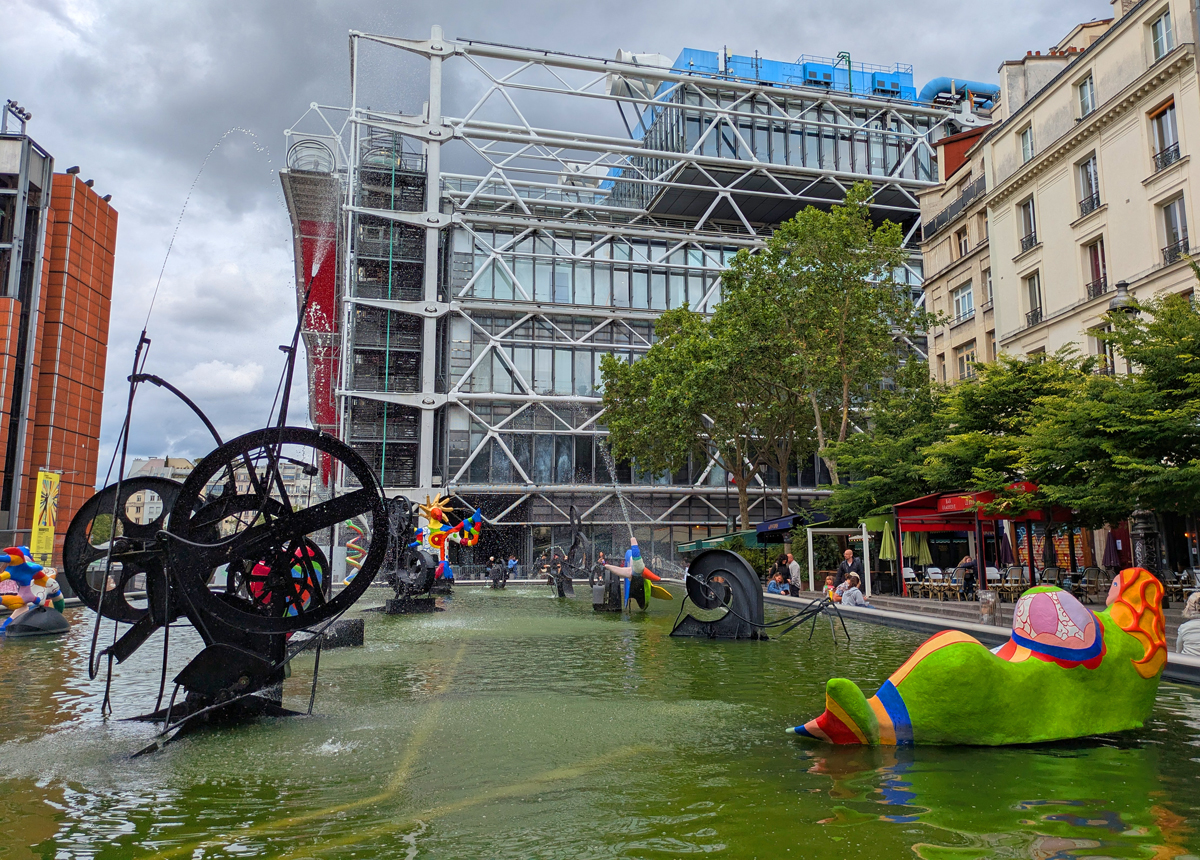
Fontaine Stravinsky (ie Stravinsky fountain)
Igor Stravinsky was a famous Russian/French musical composer. This fountain was inspired by Stravinsky and created by a couple of French sculptors in 1983. It was part of a plan by the city of Paris to build seven contemporary fountains with sculptures in different squares of the city.
Hôtel de Ville
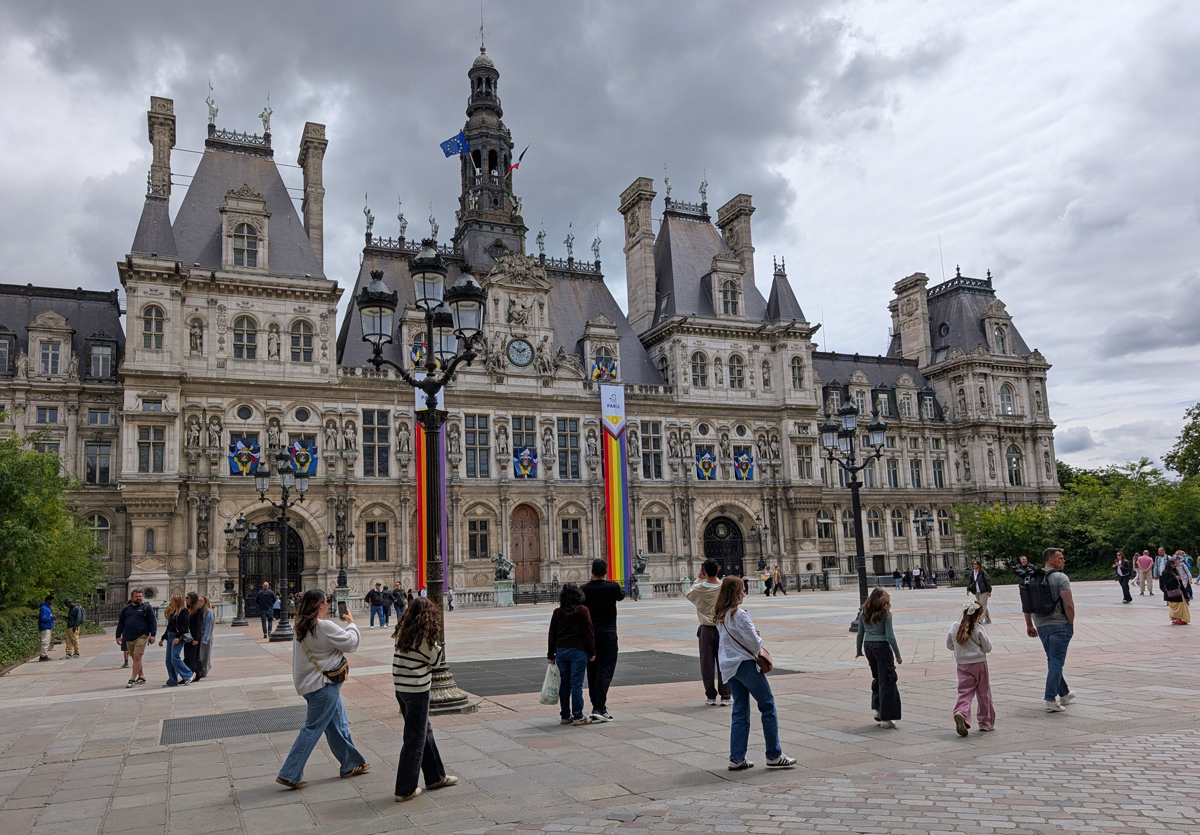
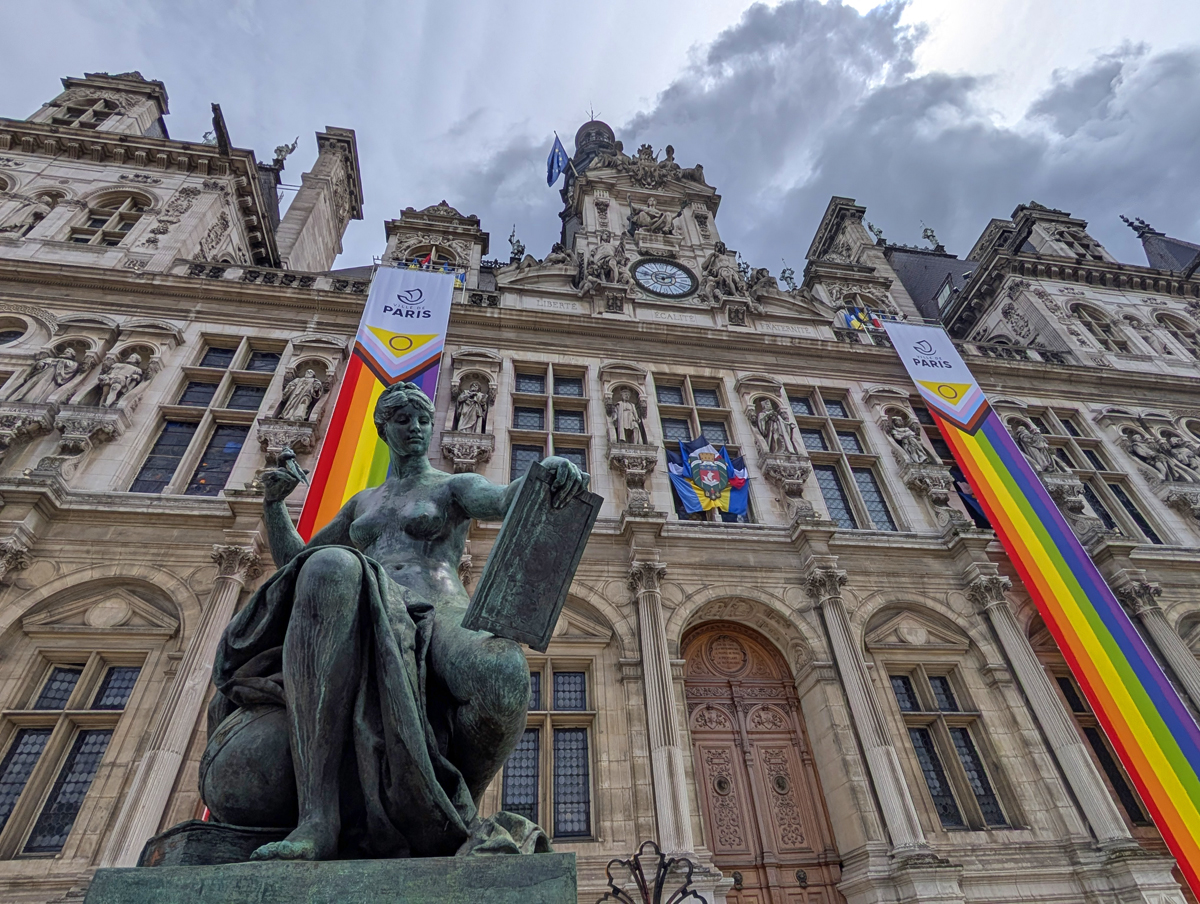
The Hôtel de Ville (City Hall of Paris). The original building from the 1500’s stood here until 1871 when it burned down. The building you see now, completed in 1892, replaced it. A gorgeous building, it has a façade adorned with 108 statues of famous Parisians. The building has been the scene of many events, including a speech by Charles de Gaulle in 1944 declaring the liberation of Paris from Nazi control.
Tour Saint-Jacques
Just a block over is this odd tower that stands alone. It was actually the tower of a church that stood here, the oddly-named “Church of Saint-Jacques-de-la-Boucherie (‘Saint James of the Meat Market’). It reflected the wealth of the butchers of the nearby Les Halles market at the time.
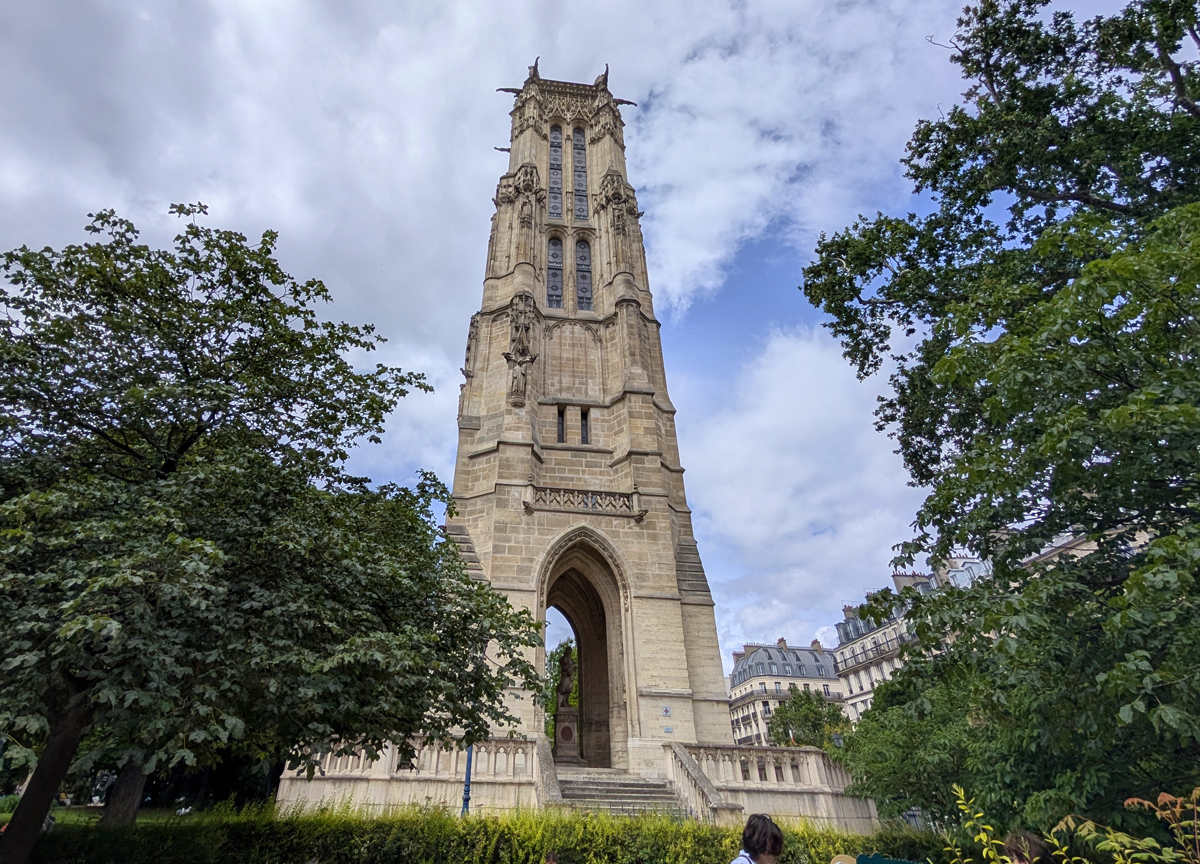
In 1793 the church was demolished but the tower preserved. Now it is ringed by a park.
Place du Châtelet
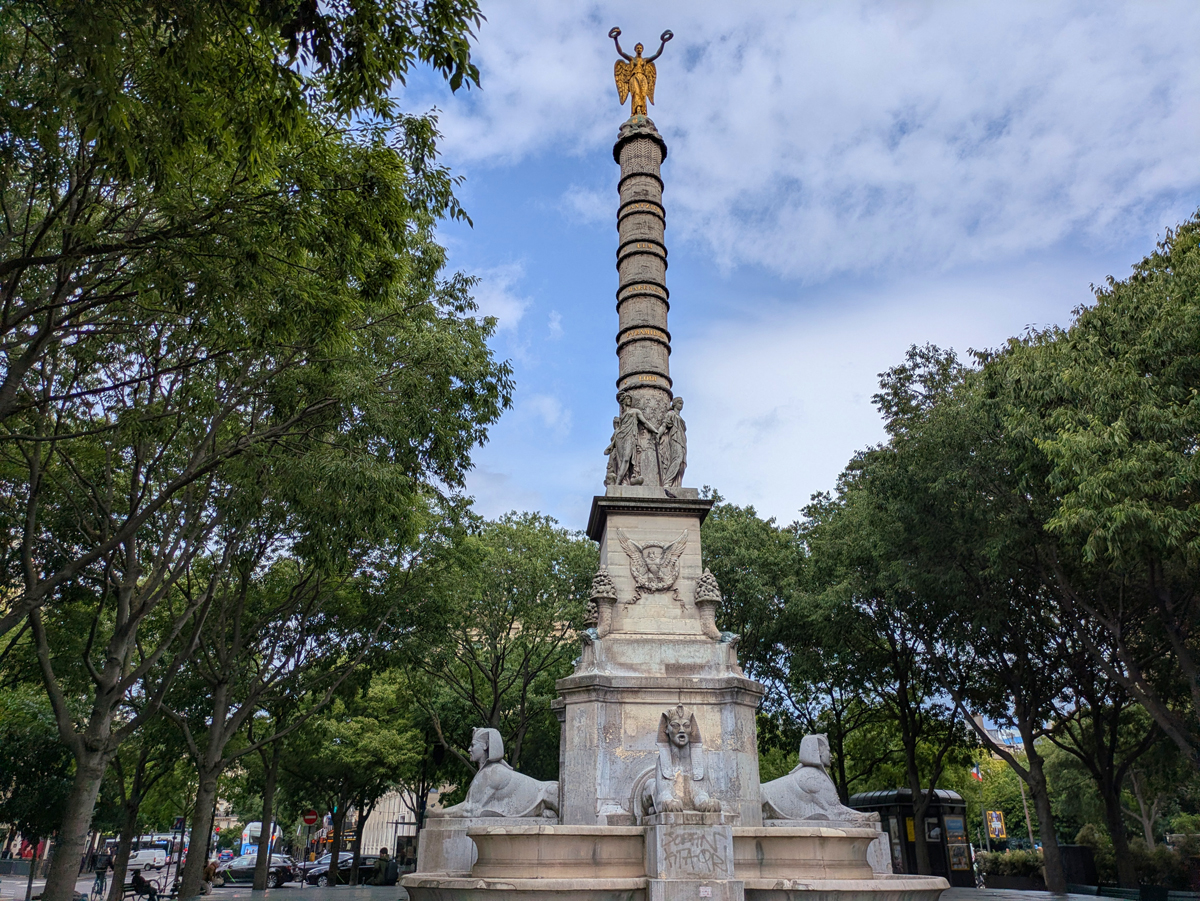
You’ll see a strange monument at Place du Châtelet: a fountain adorned with a statue, a triumphal column sculpted to look like a palm tree, with Egyptian sphinxes at its base. Why? It was commissioned by Napoleon Bonaparte in 1806 to supply the locals of the neighbourhood with water…while at the same time commemorating his victories during the military campaigns in Egypt (note: the sphinxes were actually added later, in 1858).
From here, cross the Pont au Change to Île de la Cité.
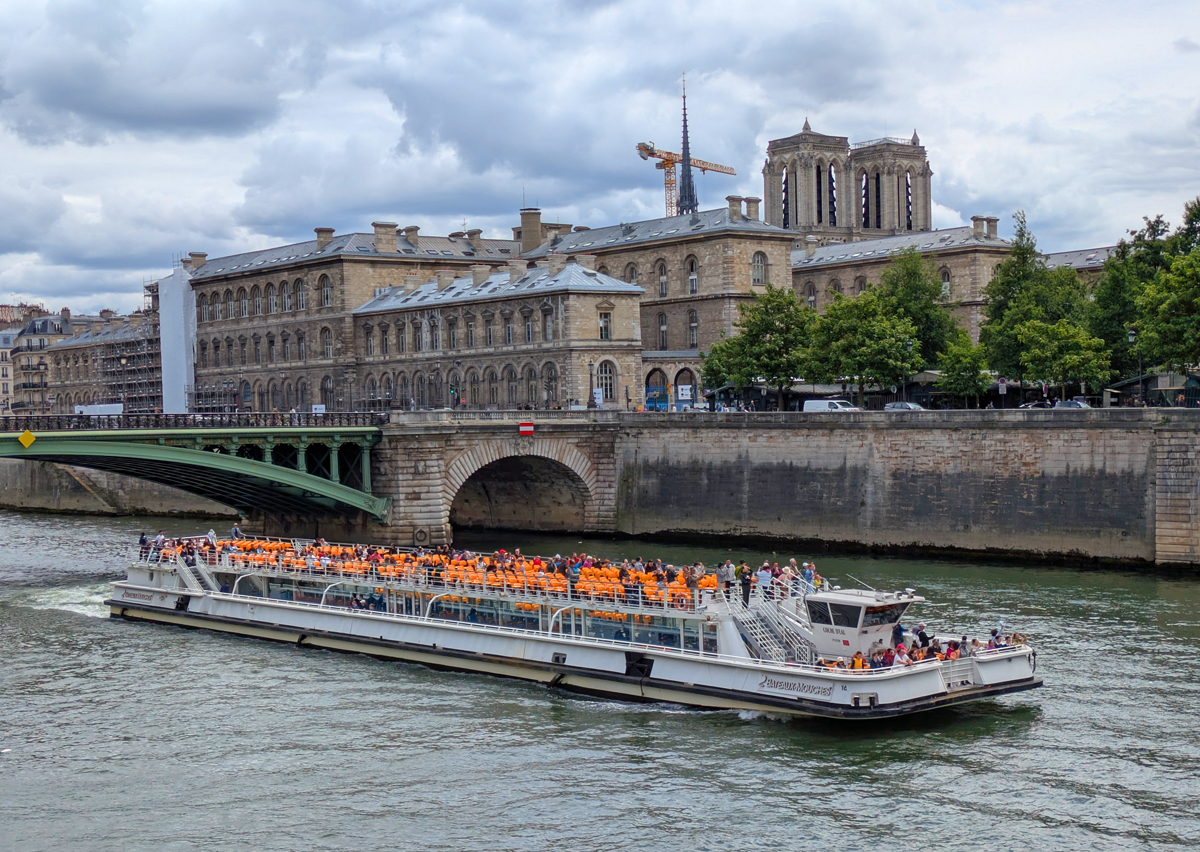
Here you are on the border of the 1st arrondissement and 4th arrondissement and you’ll see a few highlights that are technically in the 1st: the beautiful Conciergerie Clock (which you can’t miss when you’ve crossed the bridge), the Conciergerie Building (a famous prison where Marie Antoinette was imprisoned before being executed) and La Sainte-Chapelle church, one of Paris’s most beautiful and famous churches. But as I say, they are technically in the 1st and if you want to read more about them please see my post on the 1st arrondissement.
Instead of turning right which would bring you further into the 1st, you’ll turn left in the direction of Notre-Dame Cathedral. But first you’ll come across a flower market…
Marché aux fleurs Reine-Elizabeth-II
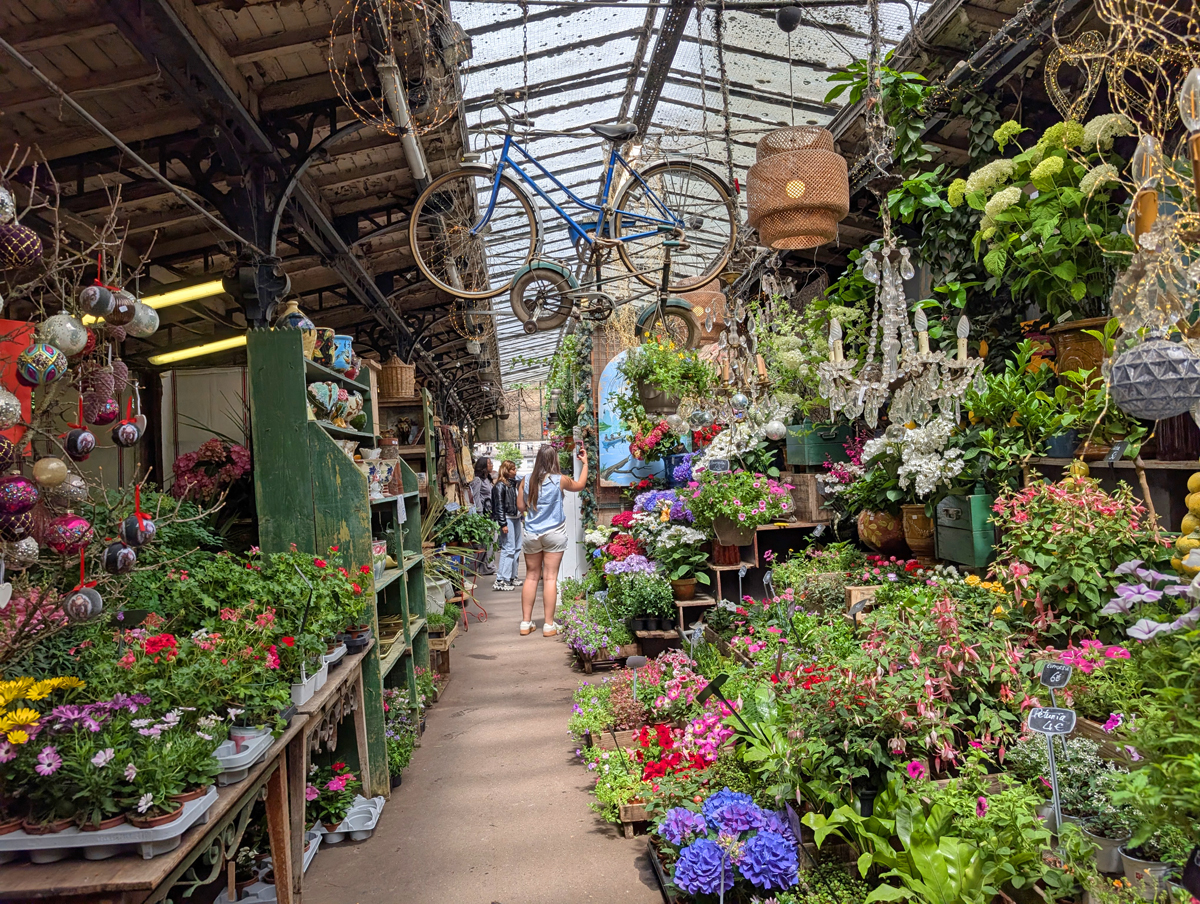
Have a look at this pretty flower market. It’s the oldest flower market in Paris (over 200 years old) previously called “Marché aux Fleurs et aux Oiseaux”. In 2014, after a visit by Queen Elizabeth II to the market, they renamed the market after her.
Cathedral Notre-Dame
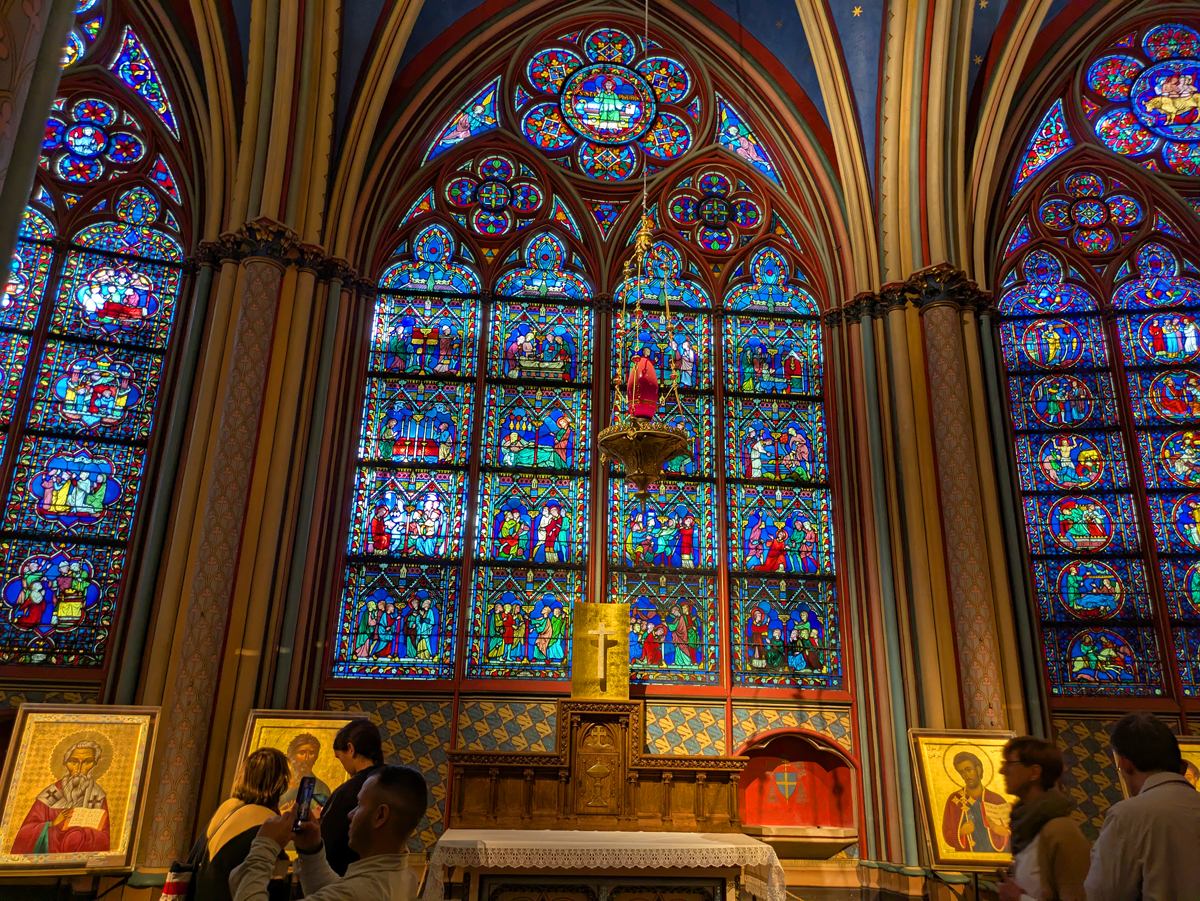
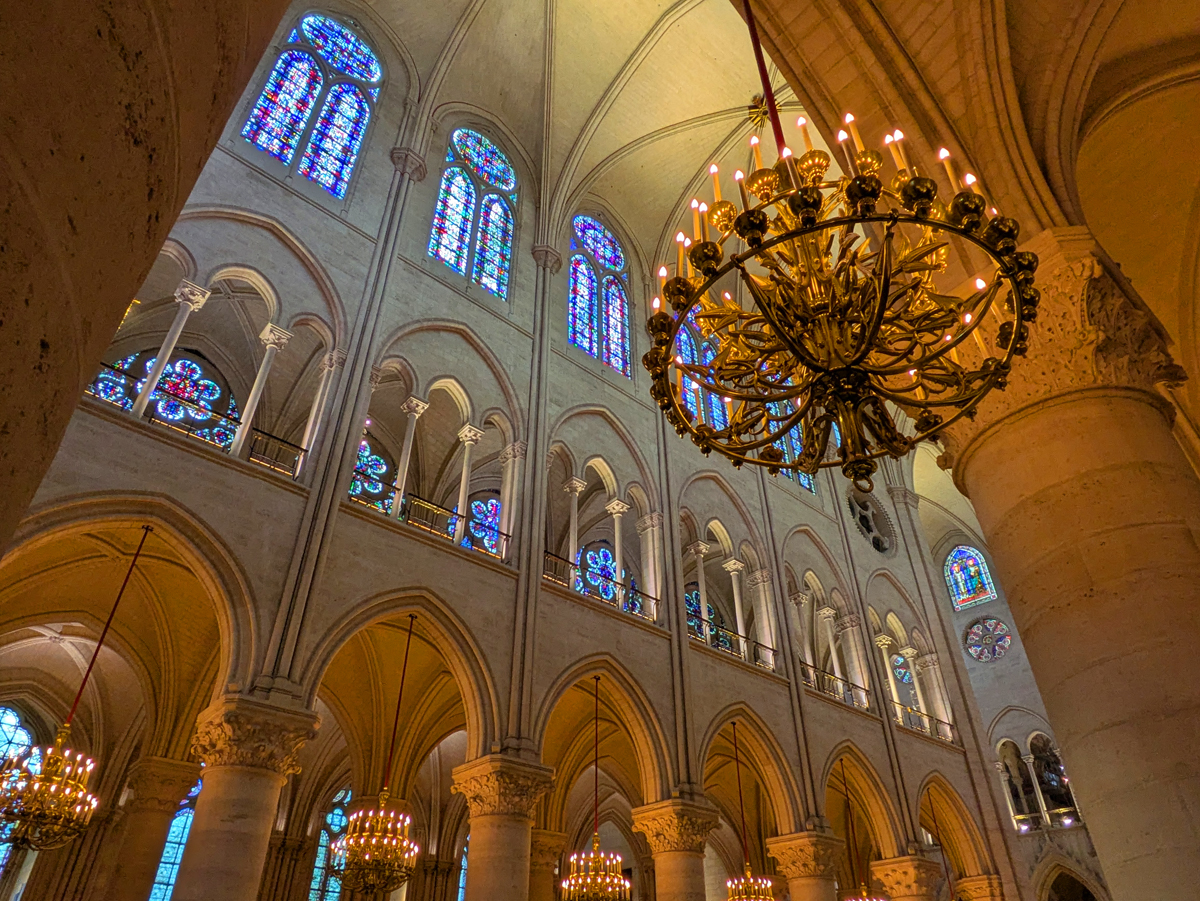
It is one of the most famous attractions in Paris, a Cathedral built starting in 1163 and completed in 1345 (it took almost 200 years to build). When completed, it was the largest Western religious building of its time, the nave reaching 115 feet high (designed to awe worshippers and project the growing power of the Church). Notre-Dame is considered as one of the finest examples of French Gothic architecture, exemplifying by its flying buttresses, rib vaulting and enormous and colourful stained glass windows.
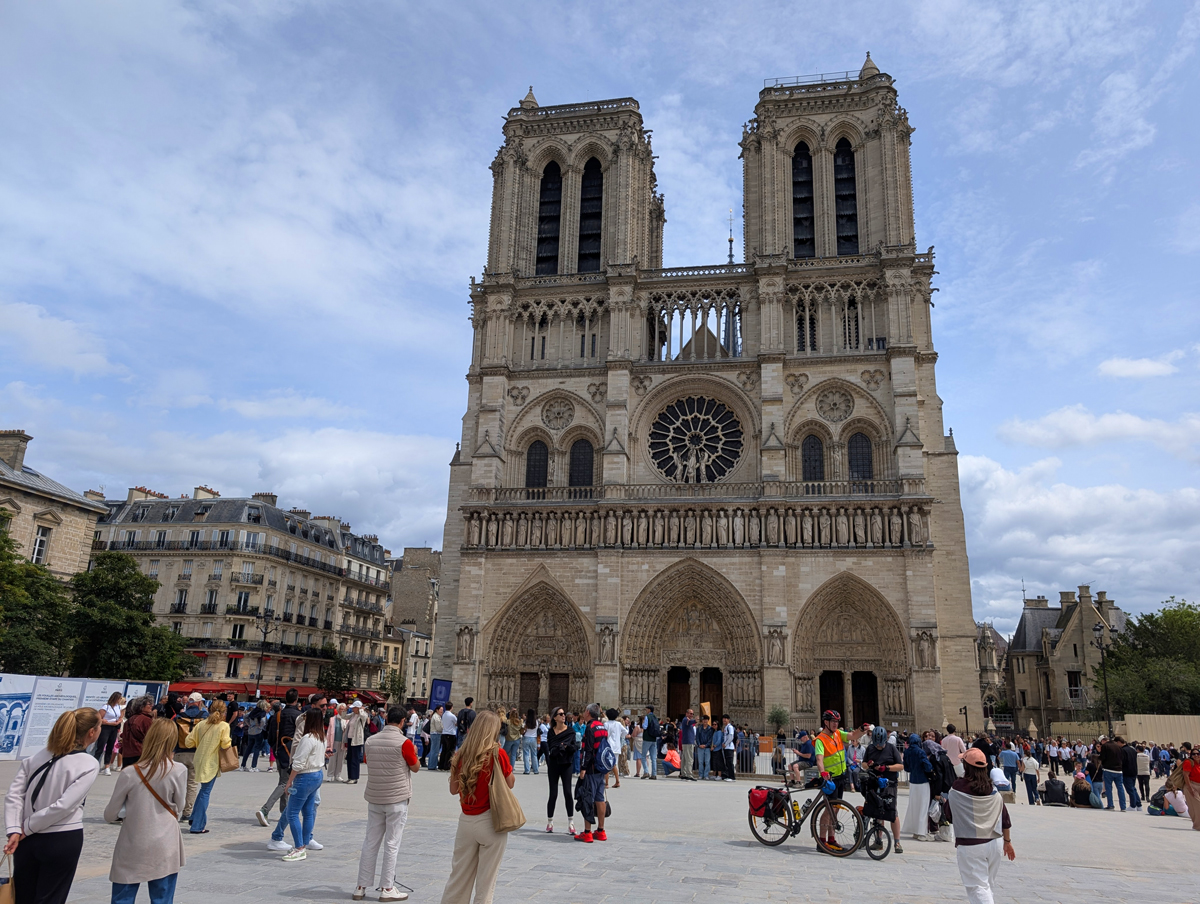
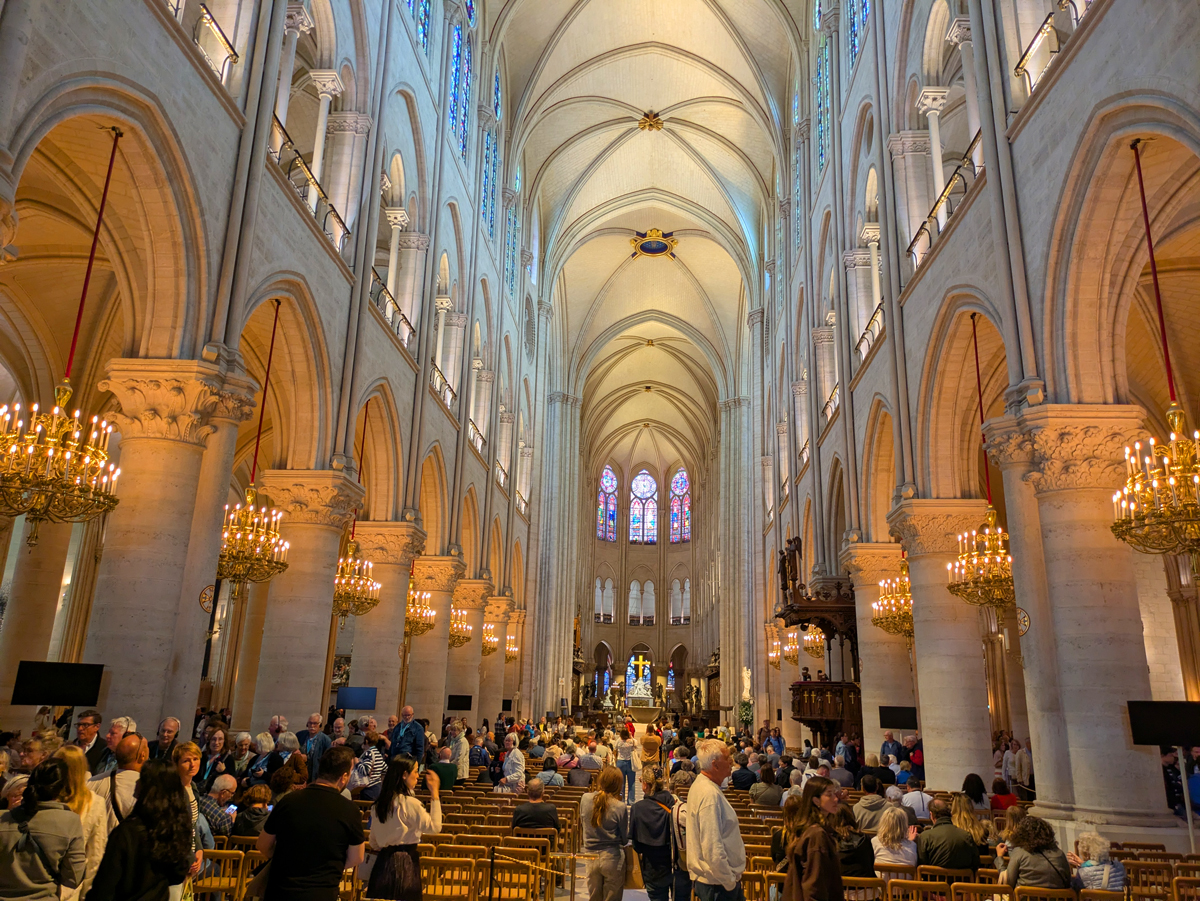
Notre-Dame has withstood the French Revolution in the 1790’s, was the site of Emperor Napoleon Bonaparte`s coronation (in 1804), and was made famous by Victor Hugo’s book The Hunchback of Notre Dame (in 1831). In 2019 it was damaged in a massive fire and it was only in December of 2024 that it was re-opened to the public.
Interesting: this is one of the most venerated locations in the city, a spot that previously held a Roman Temple dedicated to Jupiter (built at the beginning of the 1st century). What many don’t know is that underneath the square in front of Notre-dame lie extensive Roman ruins, they are in fact Europe’s largest archaeological crypt. You are standing in a spot that marks the early history of Paris dating back to the Parisii (a Celtic tribe that settle in Paris around 250 BC) and the Romans (who took over in 52 BC and held power until 486 AD).
Visiting: Notre-Dame is one of the “must-do” things to see in Paris. The great thing is that its FREE (don’t fall for those websites that tell you that you have to buy tickets. You don’t). Also, for all that I heard about how hard it is to get into Notre-Dame, it took us 15 minutes in line to get through its doors. And this was in June. So don’t sweat it.
Square de l’Île-de-France
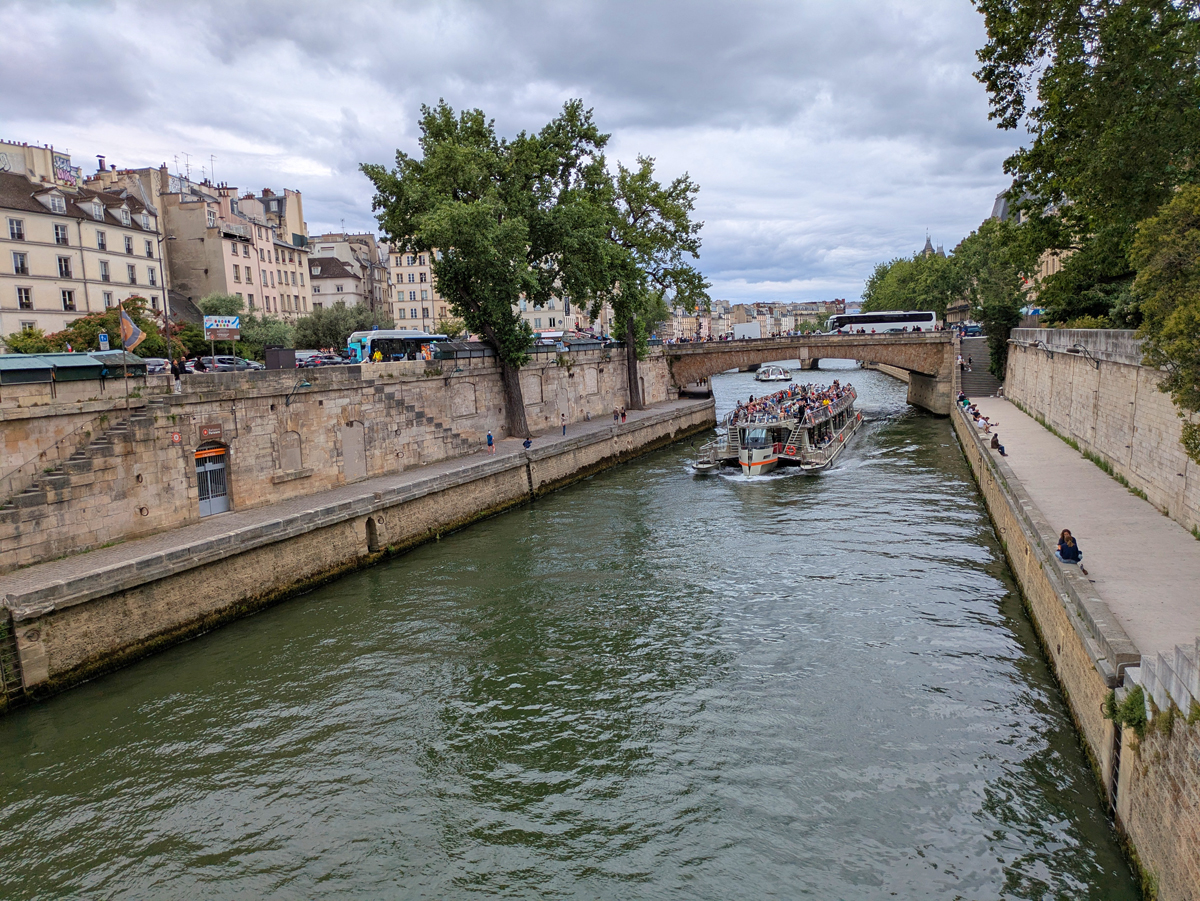
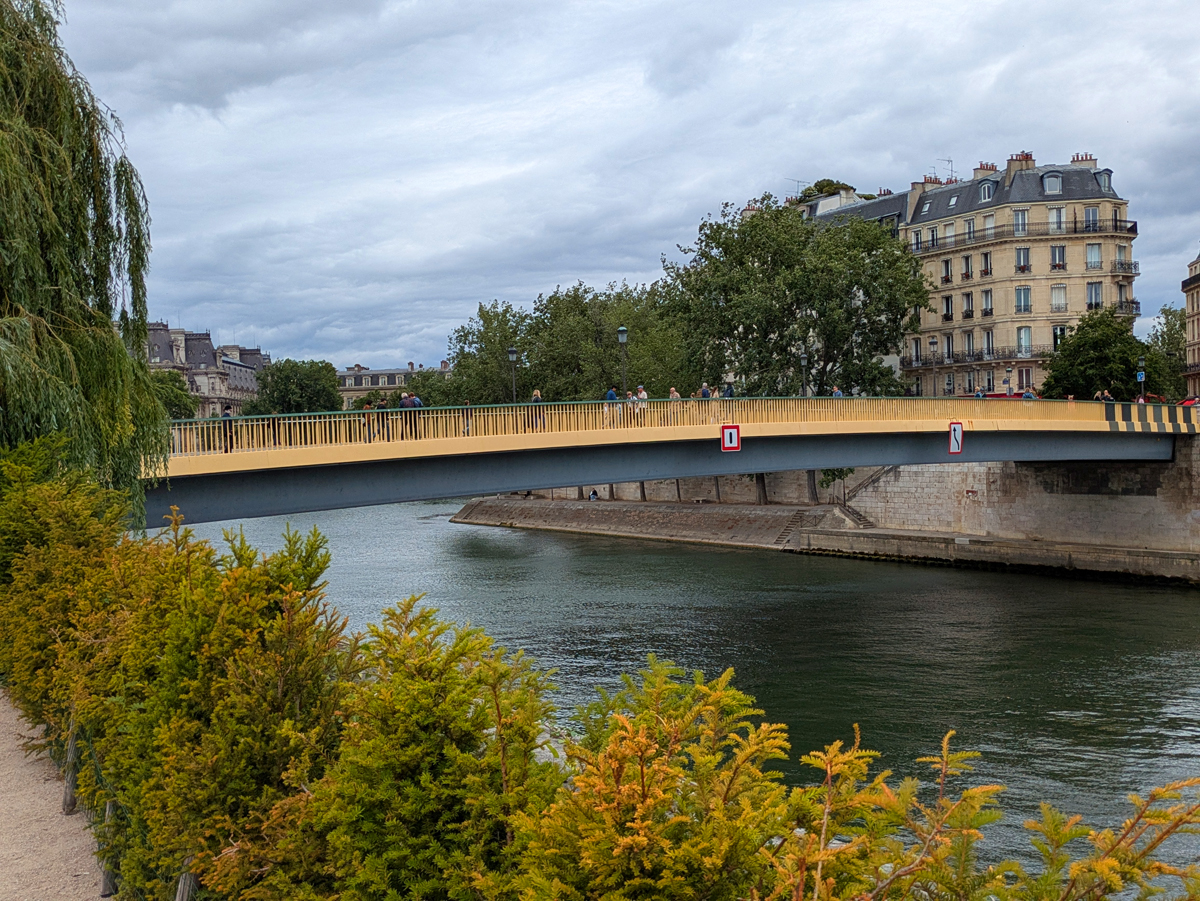
At the end of Île de la Cité is this park, Square de l’Île-de-France. You can get there (in theory) by walking behind Notre-Dame to the end of the island but when we were there in June of 2026 there was construction going on and we had to cross to the left bank of the Seine and then cross back to the park at Pont de l’Archevêché. Why go here? There are views of the Seine and the next island, Île Saint-Louis. There’s also a memorial here to people who were deported to Nazi concentration camps. Finally, it takes you to the small pedestrian Pont Saint-Louis which will take you to Île Saint-Louis.
Pont Saint-Louis
As mentioned above, this small pedestrian bridge is the link bet ween Île de la Cité and Île Saint-Louis. Crossing over to this 2nd island, you’ll leave most of the tourists behind. We were surprised by how much more quiet Île Saint-Louis is.
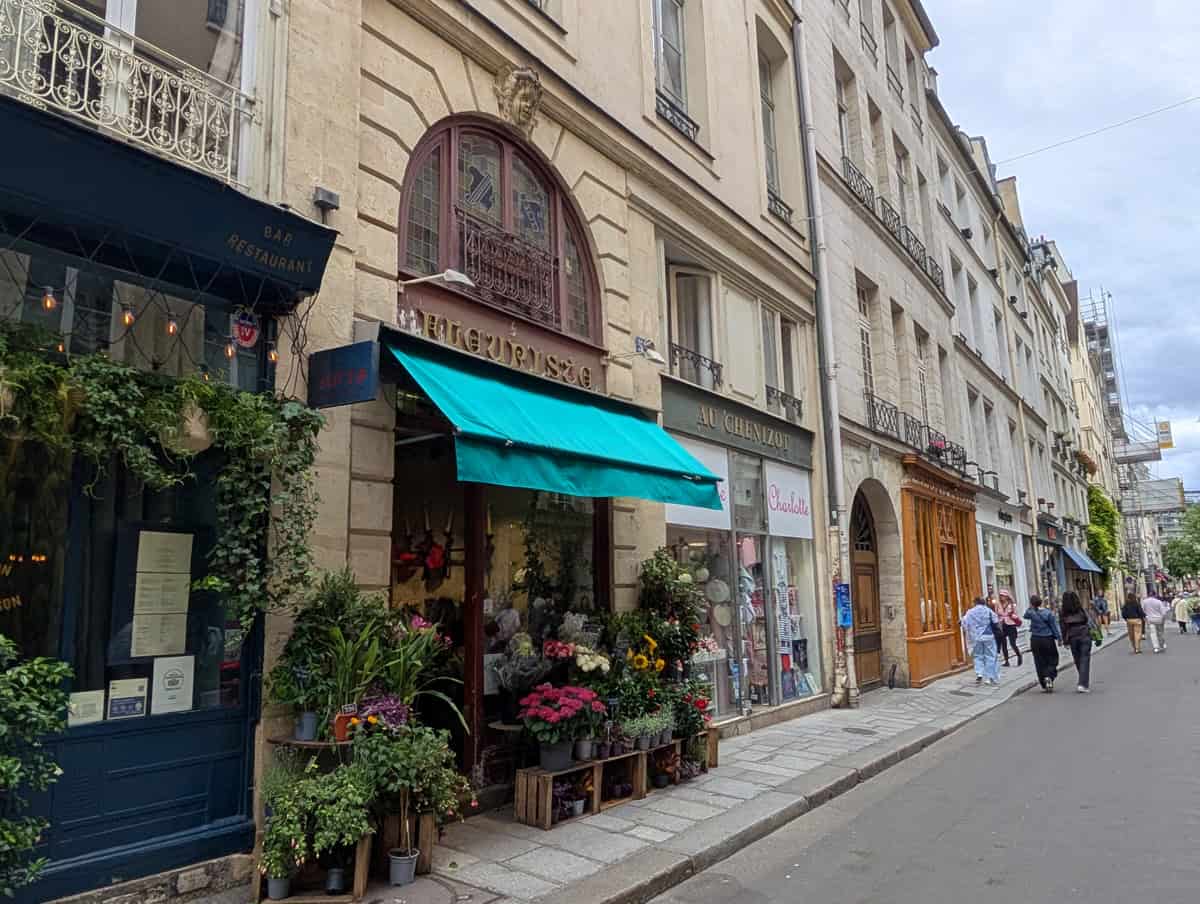
Walking down the main street of Île Saint-Louis (called Rue Saint-Louis-en-l’Île), you’ll see specialty stores and restaurants, galleries and pretty residential buildings.
Église Saint-Louis-en-l’Île
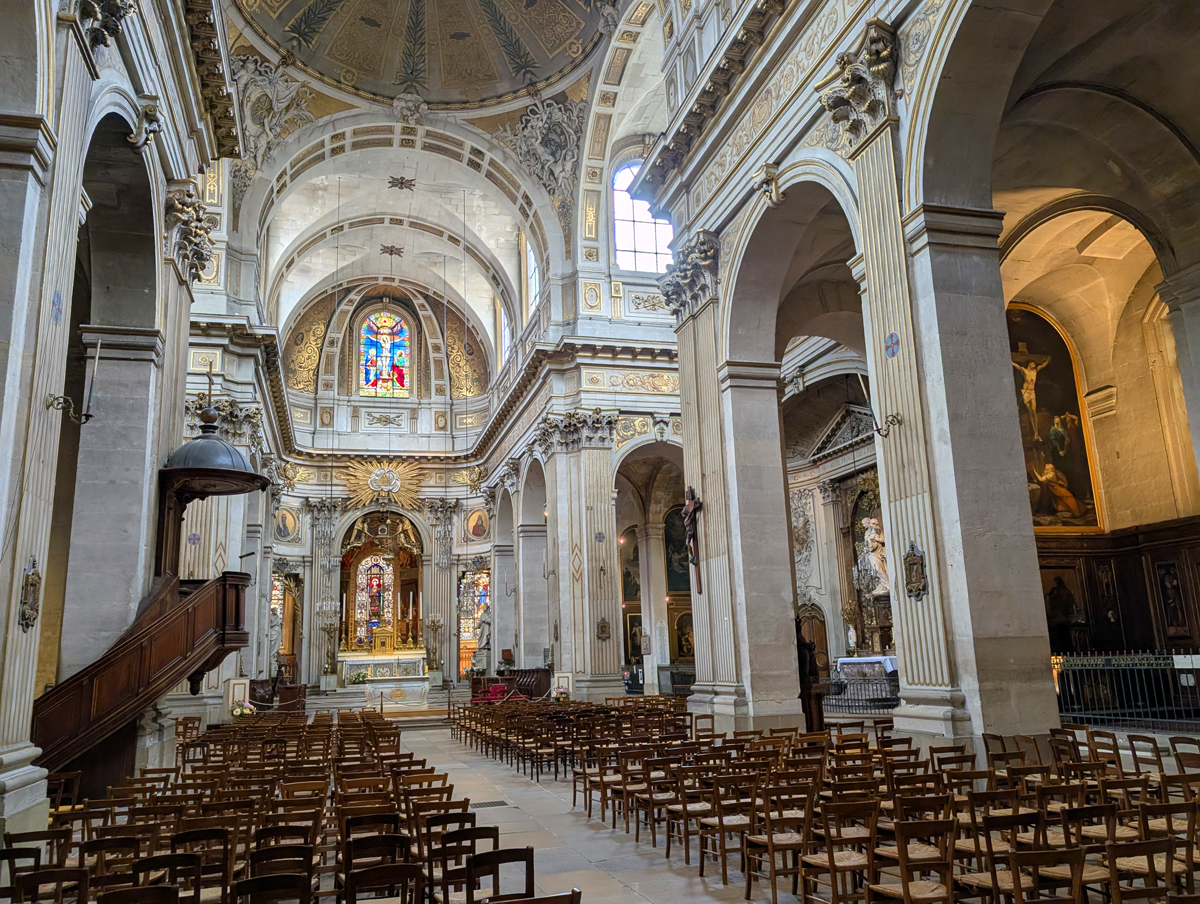
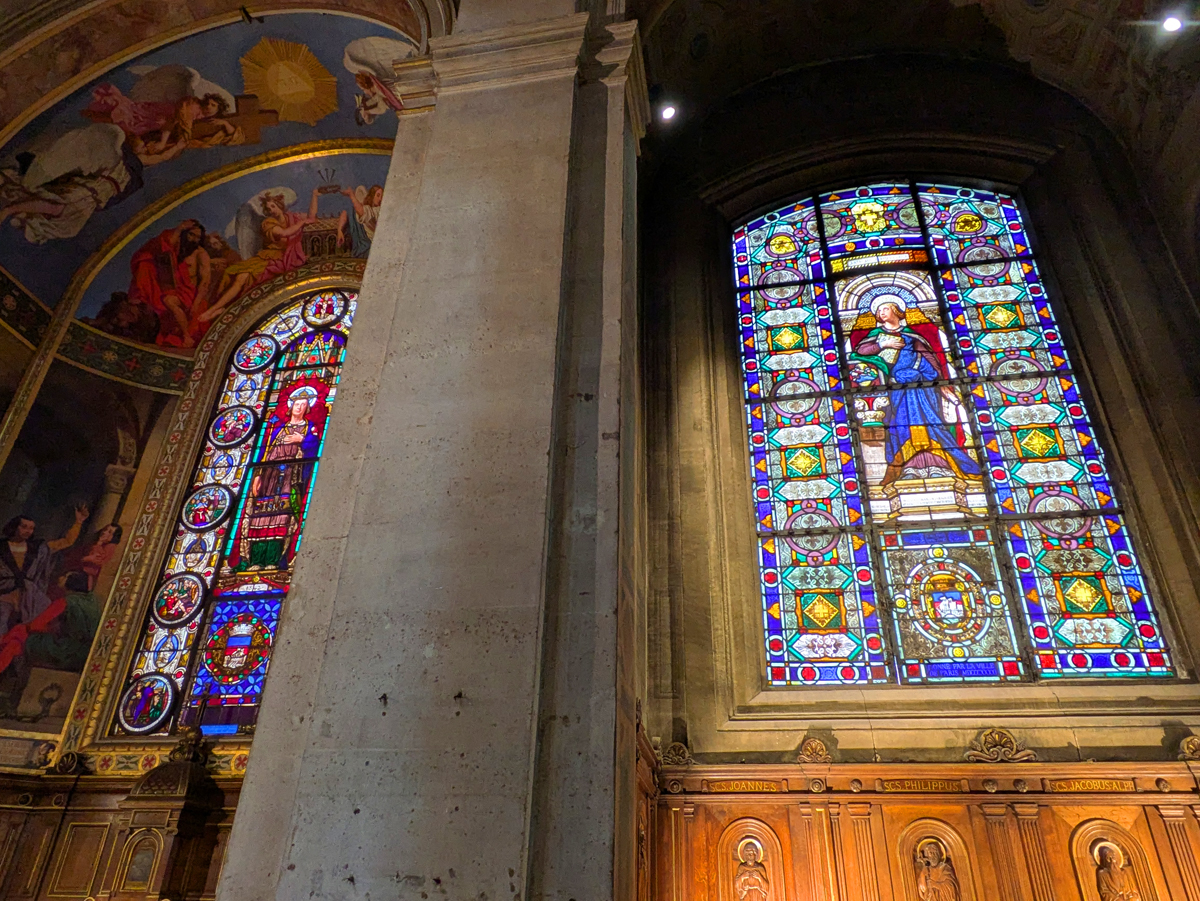
You’ll get to Église Saint-Louis-en-l’Île. It was built starting in 1644 to serve a growing population (prior to the 17th century, Île Saint-Louis was an uninhabited pasture). It’s a pretty but modest church.
Square Barye
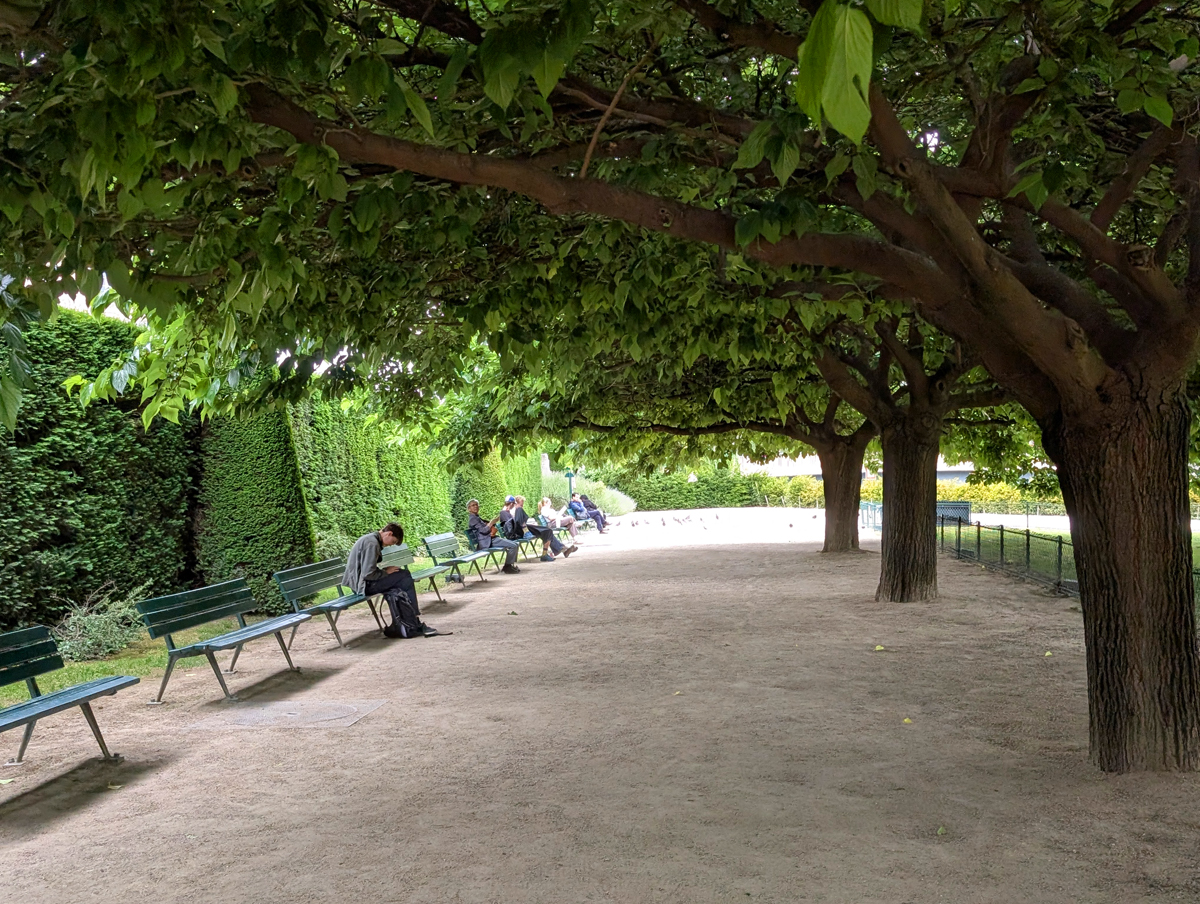
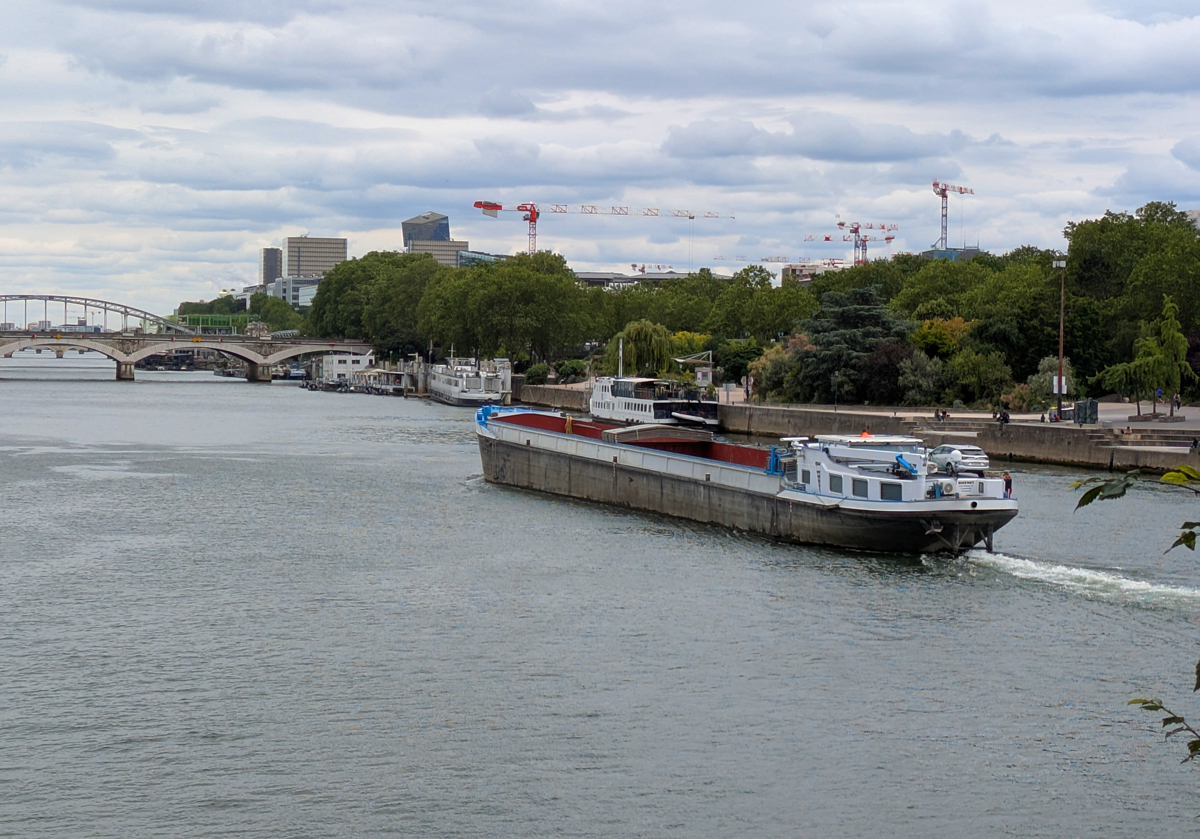
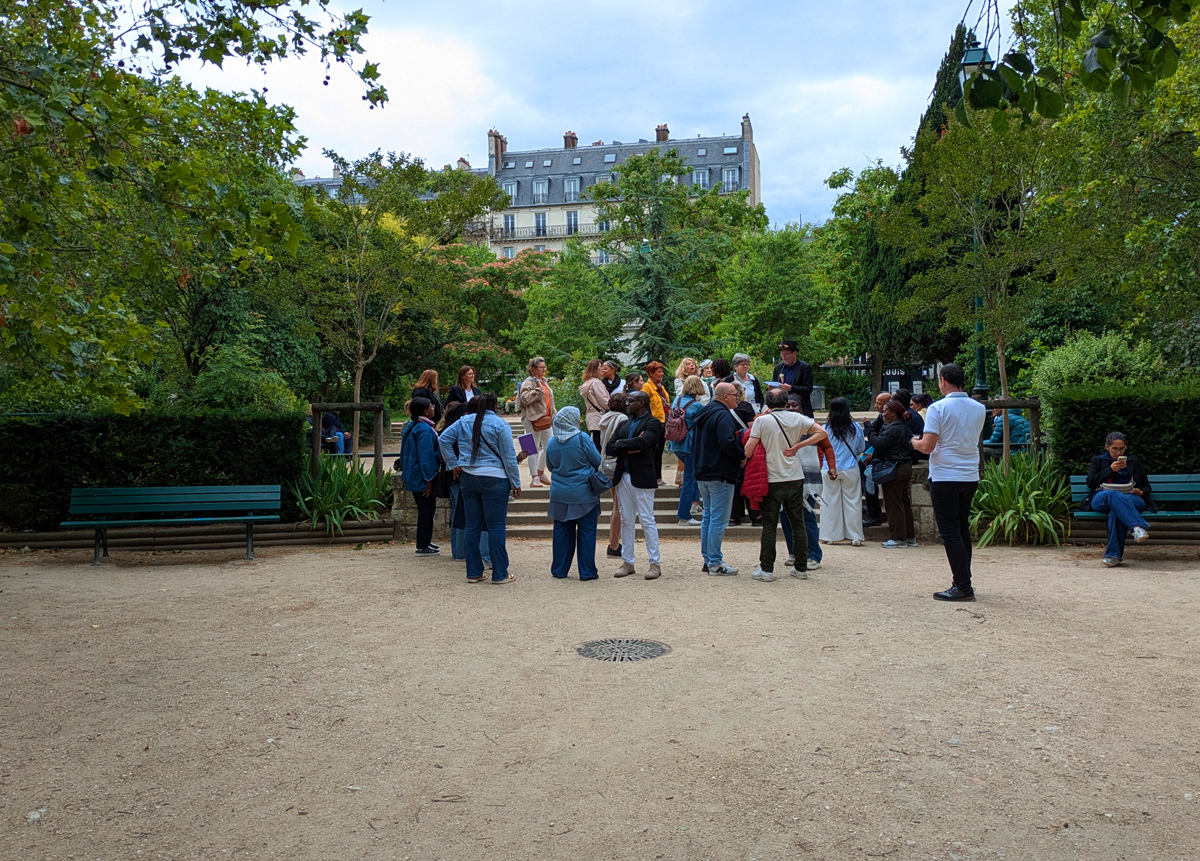
Continuing along, Square Barye is a rectangular park at the very tip of Île Saint-Louis. You’ll see a lot of locals, maybe a few tour groups…but mostly it is a quiet park with views looking up the seine. The park is named after Antoine-Louis Barye, a famous 19th-century animal sculptor (you’ll see some animal sculptors in the park).
Pont Du Sully
You’ll leave Île Saint-Louis for the right bank along Pont Du Sully. From here you’ll have an approx. 15 minute walk along Boulevard Henri IV to Place de la Bastille (not the most exciting stretch of this route but you’ll see a few interesting buildings along the way).
Place de La Bastille
While not spectacular, Place de la Bastille is one of the most historically significant squares in Paris. It served as the epicenter of the French Revolution where the infamous Bastille fortress and prison once stood. When you hear about the “storming of the Bastille” it was here that it happened: on July 14, 1789, a gang of revolutionaries stormed and seized control of a building which represented royal authority in Paris. It would lead to the Declaration of the Rights of Man and of the Citizen (August 1789) from which came the motto “Liberté, Égalité, Fraternité” (Liberty, Equality, Fraternity) that France is famous for.
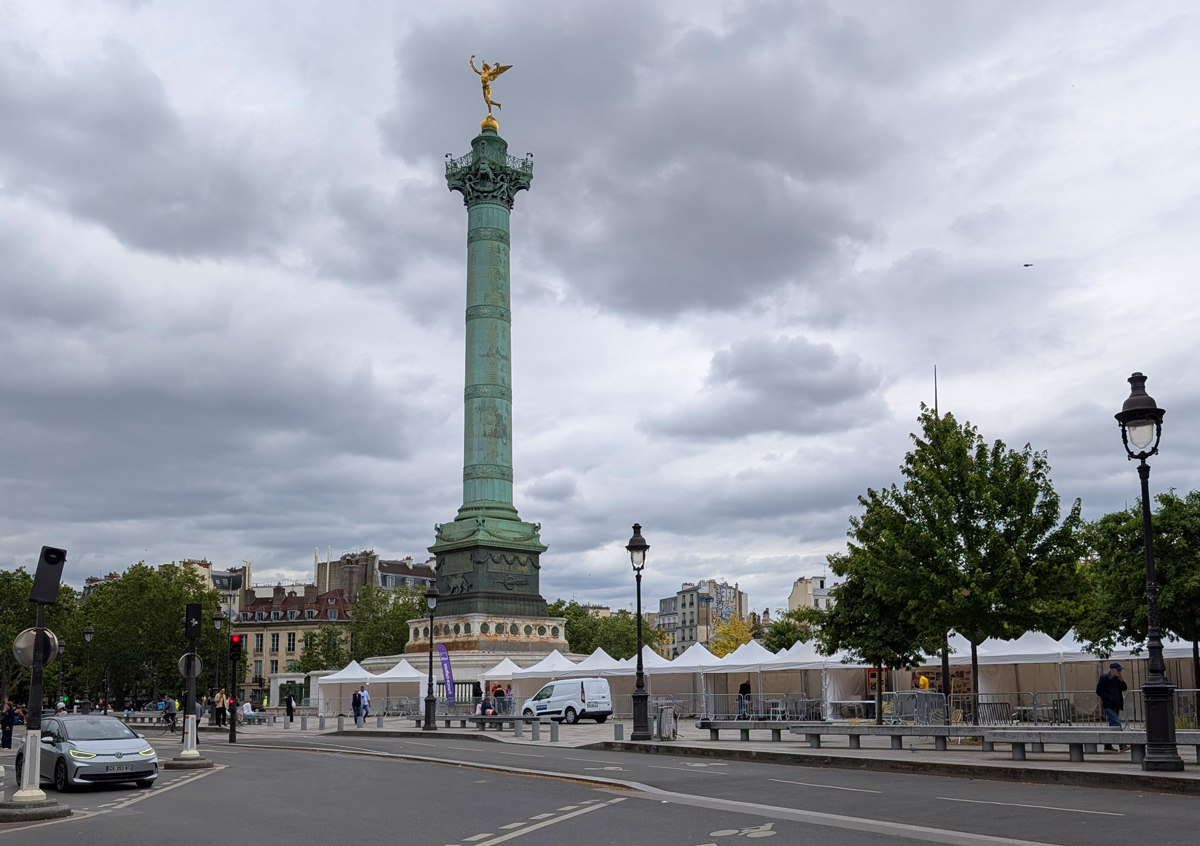
Today Place de La Bastille is a modern plaza with a monument, topped by a statue called the Génie de la Liberté (Spirit of Freedom). Around the plaza is a heavily congested traffic circle.
Place des Vosges
Just minutes away from Place de La Bastille is another of Paris’s famous squares. This is Place des Vosges which borders the 3rd and 4th arrondissement.
Place des Vosges as I’ve previously described in my description of the 3rd:
Place des Vosges, built between 1605 and 1612, is the oldest planned square in Paris and one of 5 Royal Squares in Paris*.
*The others are Place des Victoires (in the 2nd), Place Dauphine (in the 1st), Place Vendôme (in the 1st) and Place de la Concorde (in the 8th).
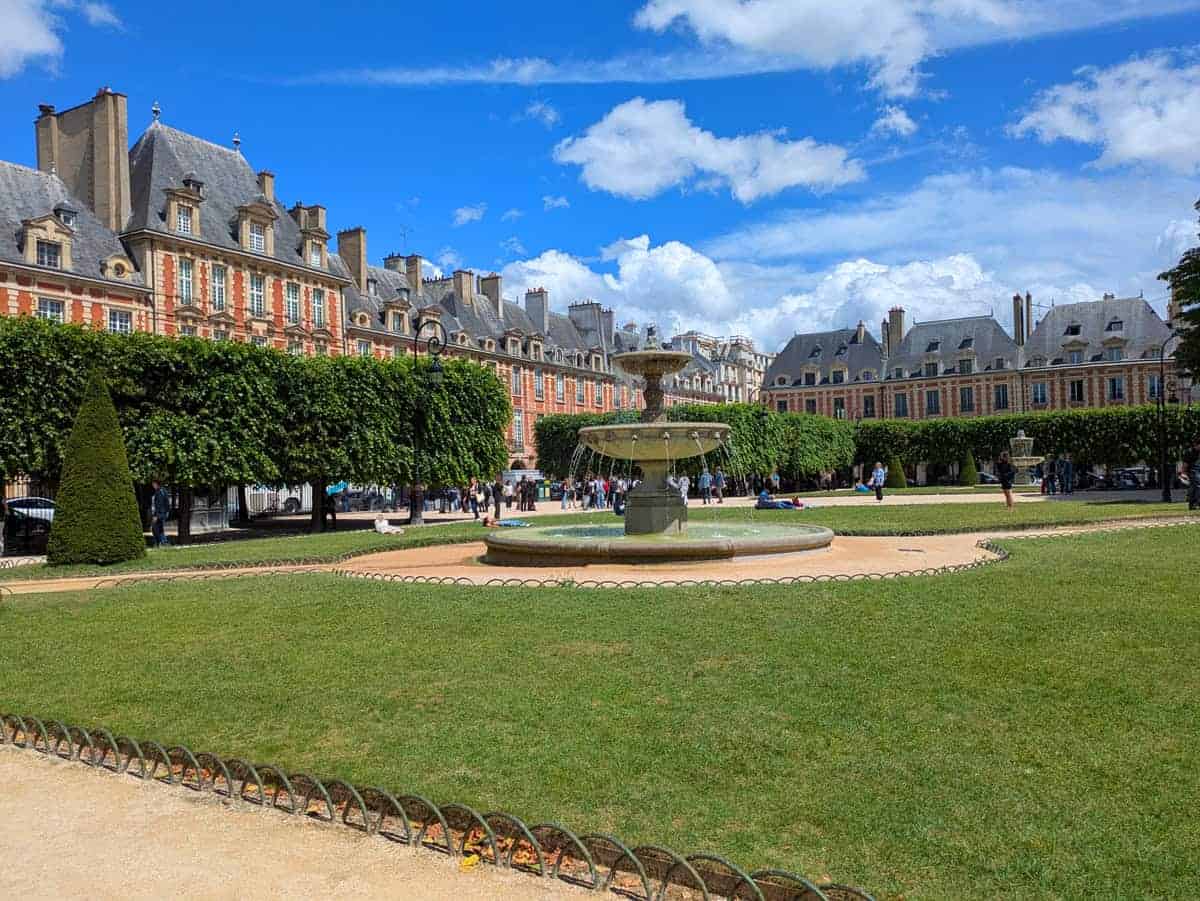
It’s a beautiful square built of uniform red brick houses over vaulted arcades. The well-to-do lived here and, until the French Revolution, it served as a meeting place for chats in the park. In the center of the park is a statue of Louis XIII. Once of the most famous residents of the square was Victor Hugo the French writer. Today his home is a museum (interesting if you are a Hugo fan).
Cour et Jardin de l’Hôtel de Sully
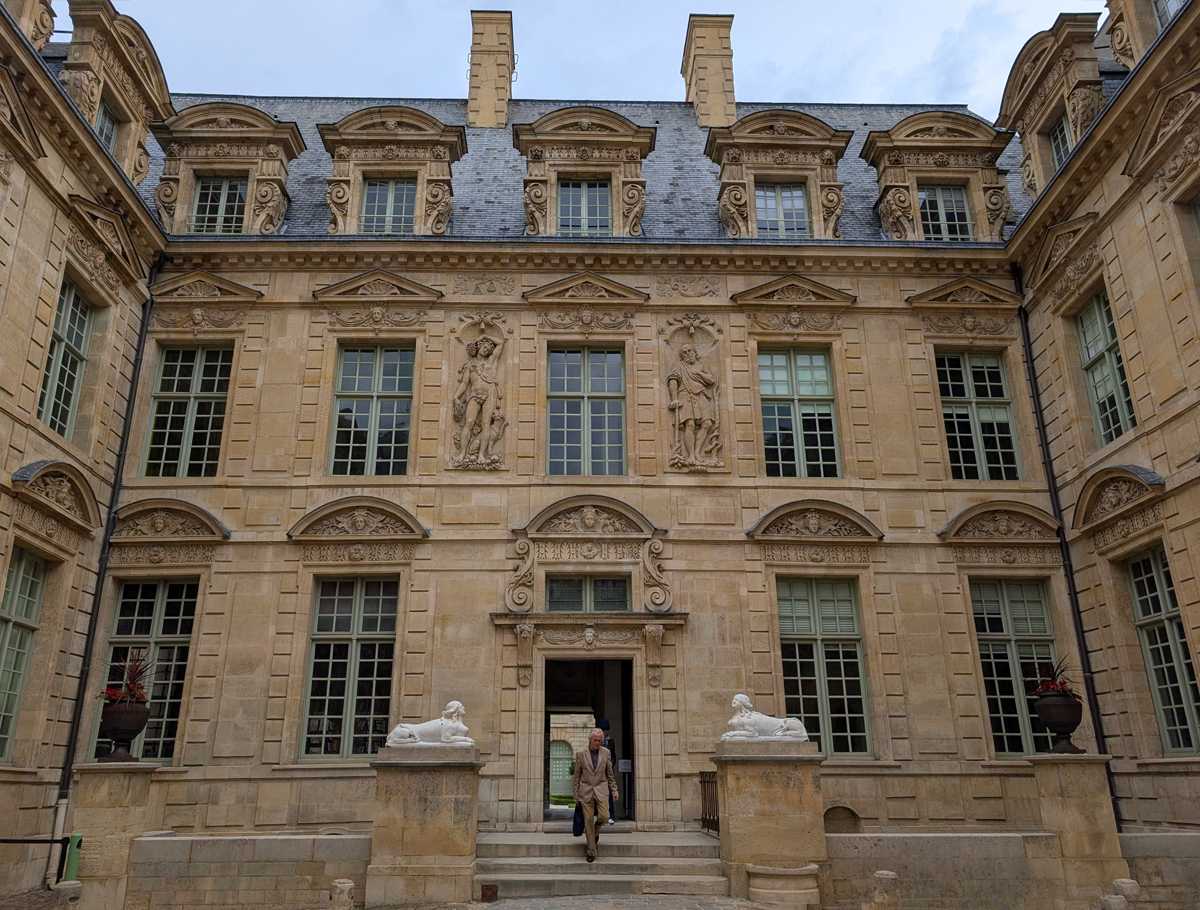
You’re in for a surprise; if you leave Place des Vosges from the south-western corner of the square, you’ll find yourself in this beautiful little courtyard/garden. This “cour” is the backyard of Hotel de Sully, a mansion built in the early 1600’s. More about this here.
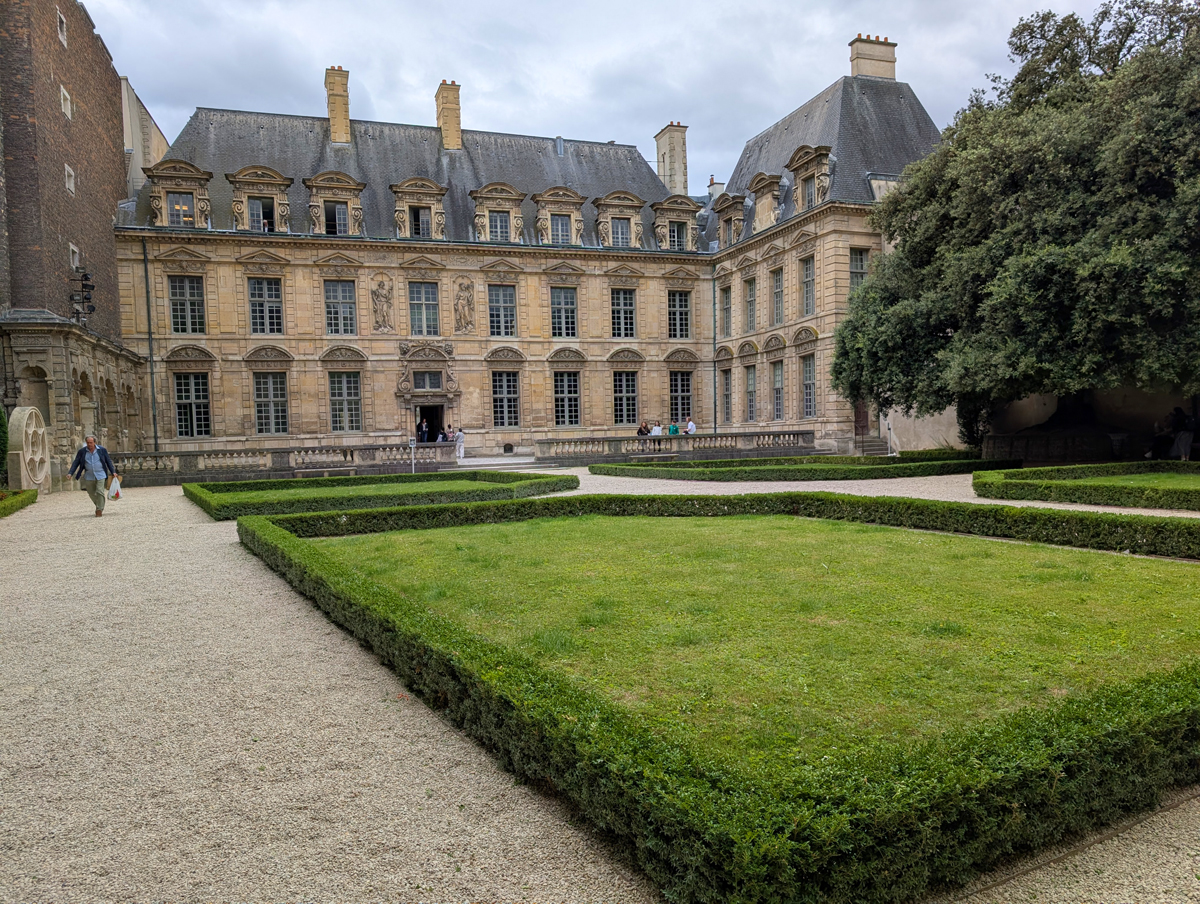
Just know that you can walk through this building through to the main street on the other side (Rue Saint-Antoine), enjoying the other side of this building as you do. It is very impressive.
Paroisse Saint-Paul Saint-Louis
Just a few blocks down is this gorgeous (and huge) church. Constructed in the early 1600’s under the orders of King Louis XIII, it was the first church in Paris to be built in Baroque style (previous churches were all built in Gothic style). It was an architectural Marvel, famous for its intricate, ornate facade and its monumental 180-foot (55-meter) dome.
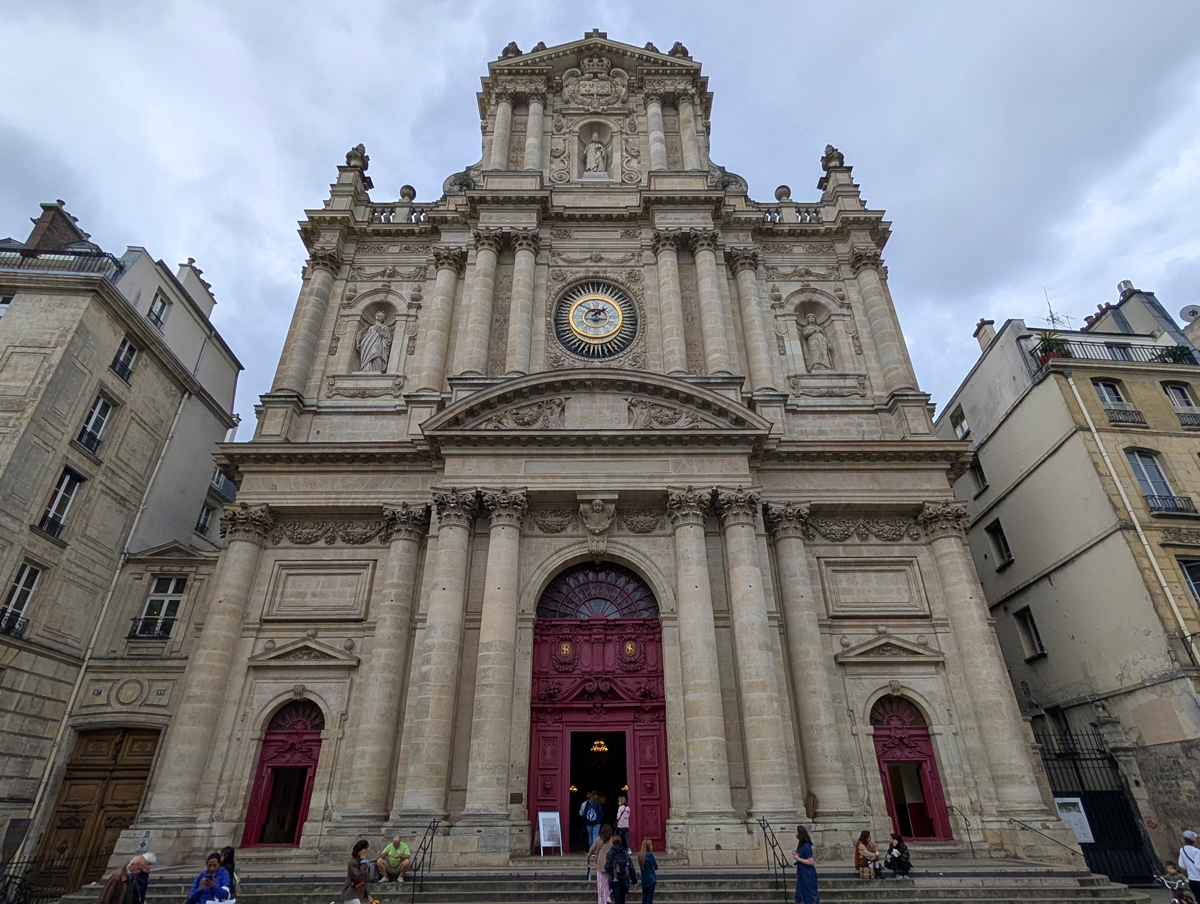
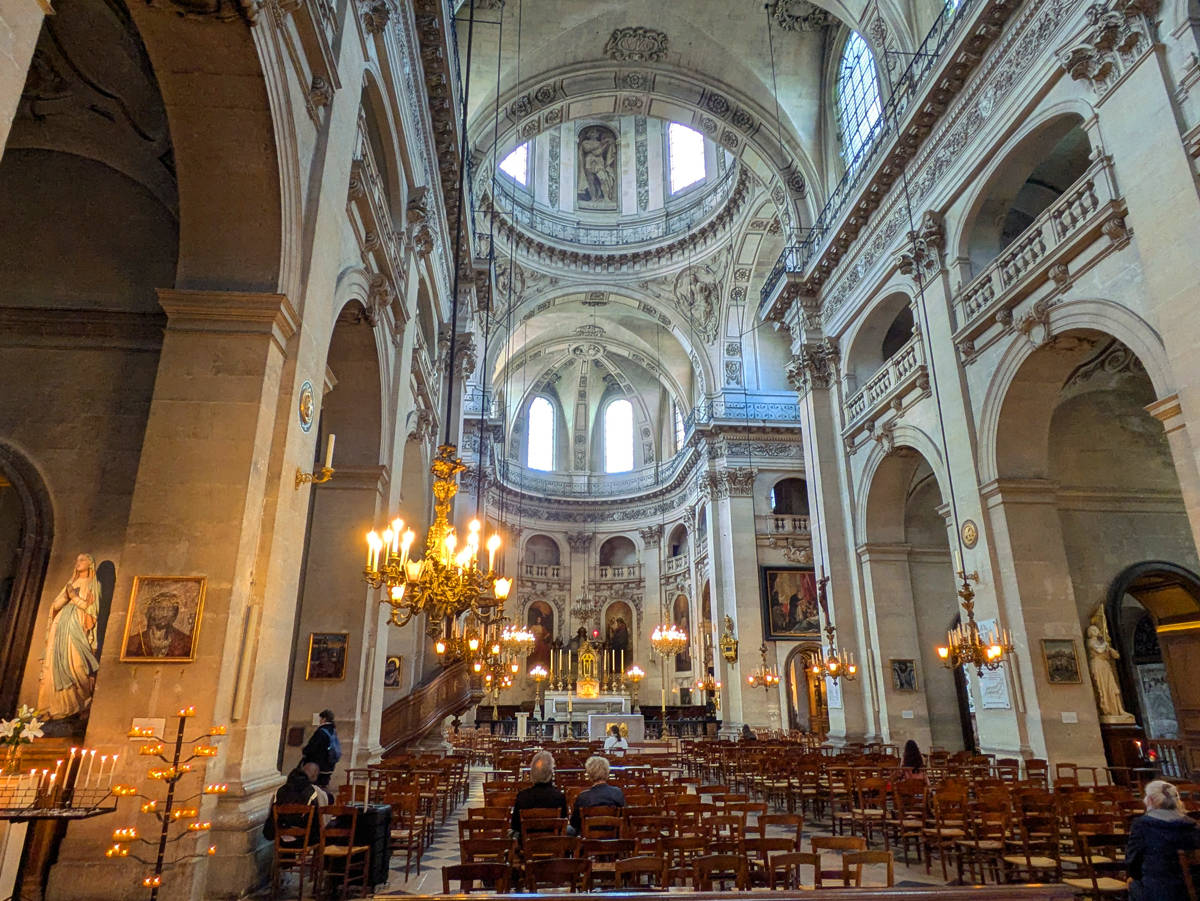
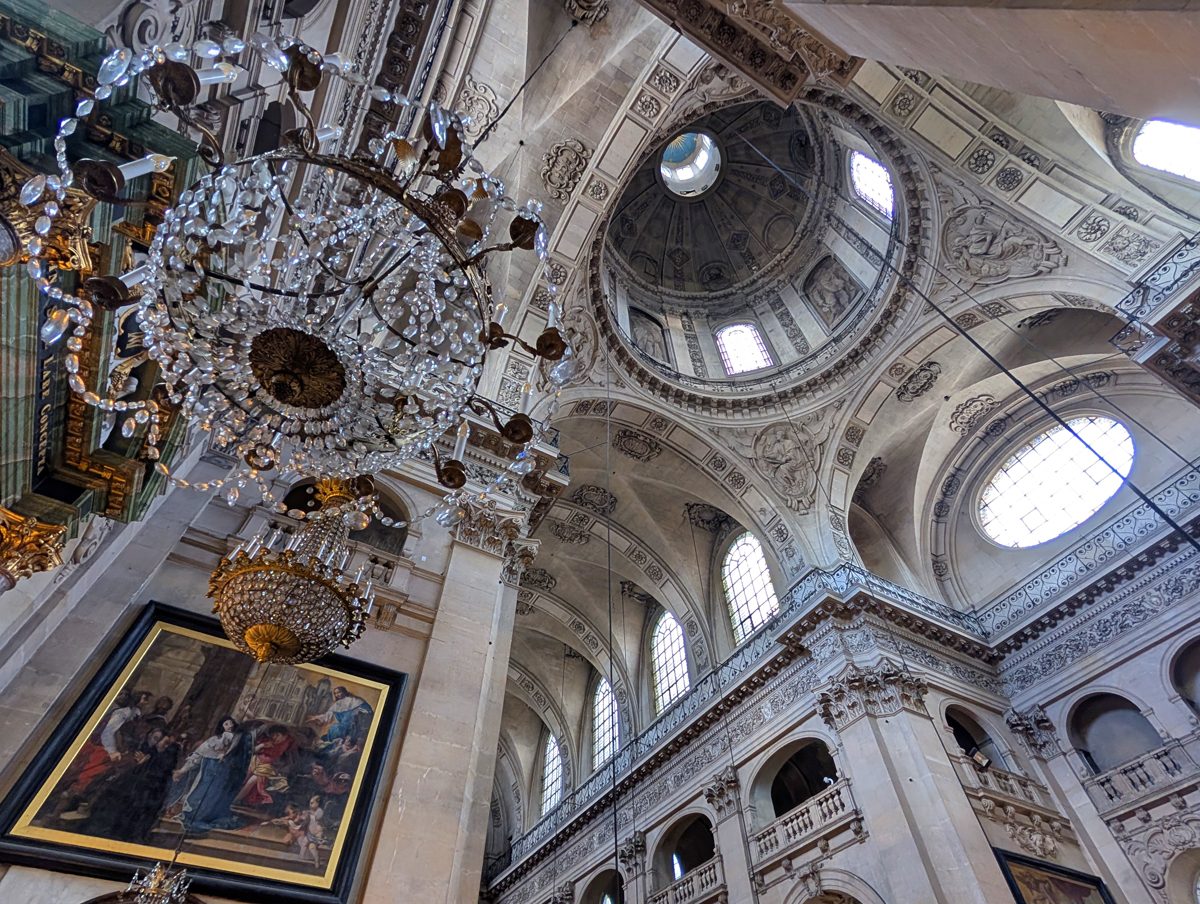
Somehow this church isn’t known to most tourists.
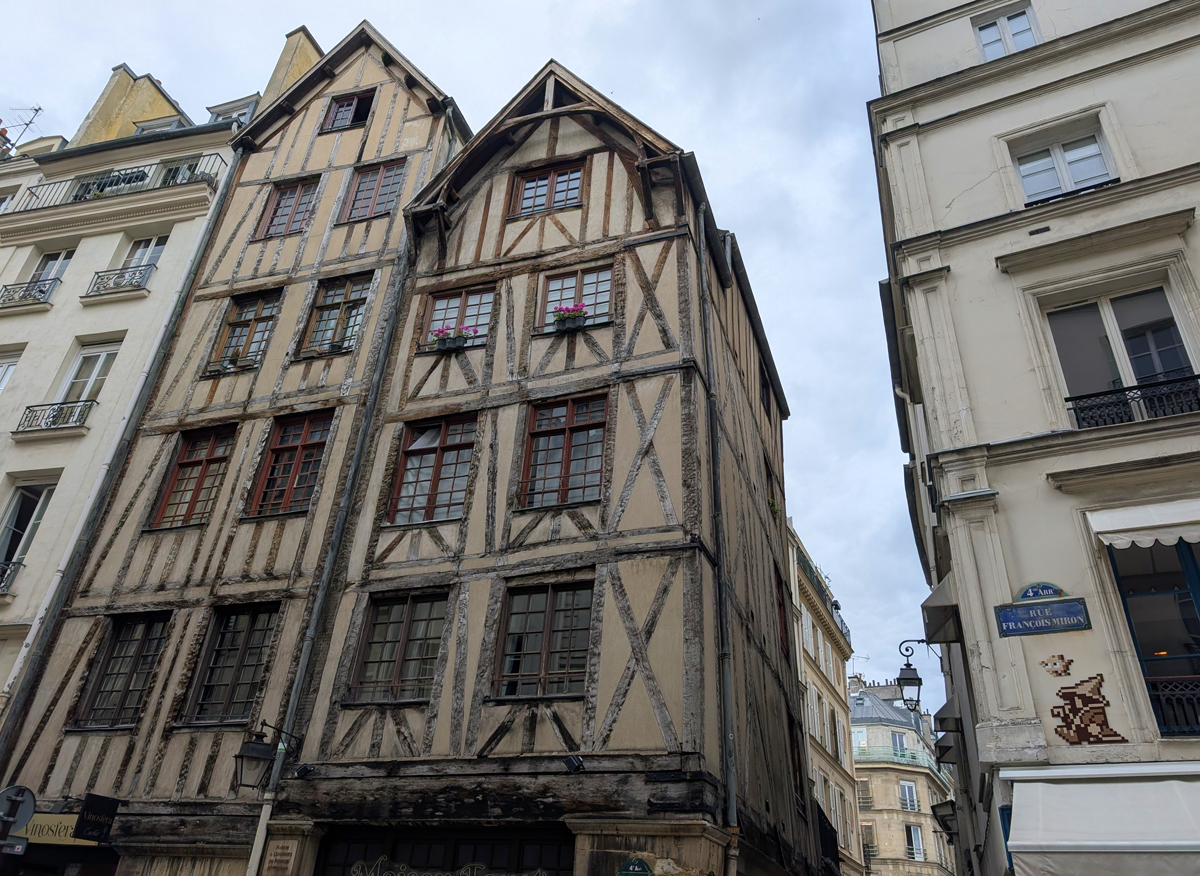
Rue François Miron
This next attraction is an oddity: the half-timbered buildings on Rue François Miron. This is one of the oldest streets in Paris with roots to an ancient Roman road. Located in the street are these half-timbered homes which are among the last surviving examples of late-medieval civilian style architecture in Paris. They were built in the 16th century, prior to a royal decree that all exposed timber frames be covered in plaster to reduce fire hazards. So they were covered up…until the 1900’s when restoration works uncovered the original design.
Rue des Barres
Just off the above Rue François Miron is this pretty little pedestrian street. Rue des Barres dates back to the 13th century, its name tracing back to the Moulin des Barres, a medieval watermill that once operated nearby on the banks of the Seine.
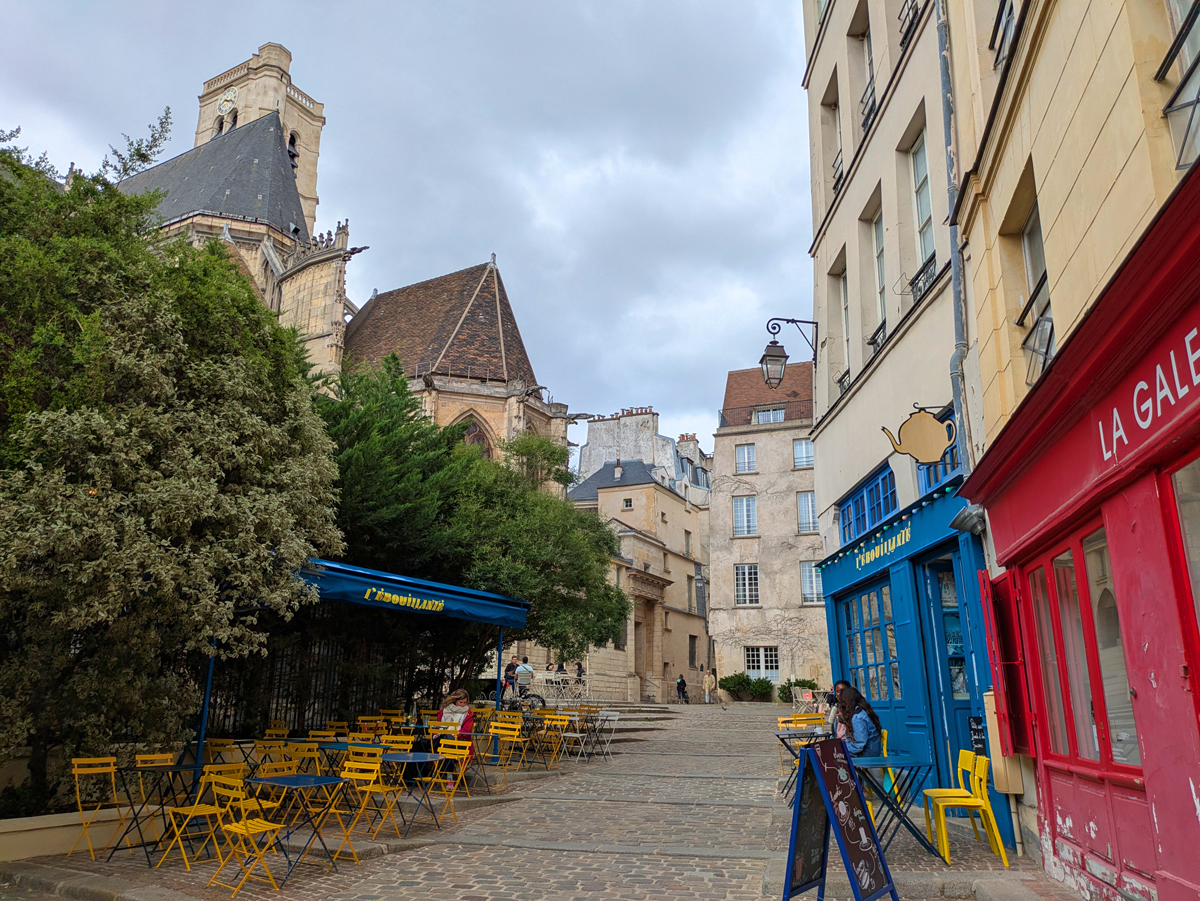
Rue des Barres is emblematic of what (parts of) the Marais is known for…while most of Paris was demolished in the 19th century to build grand, uniform boulevards (the Baron Haussmann plan), this tiny enclave completely escaped large-scale demolition, thereby preserving its intimate charm.
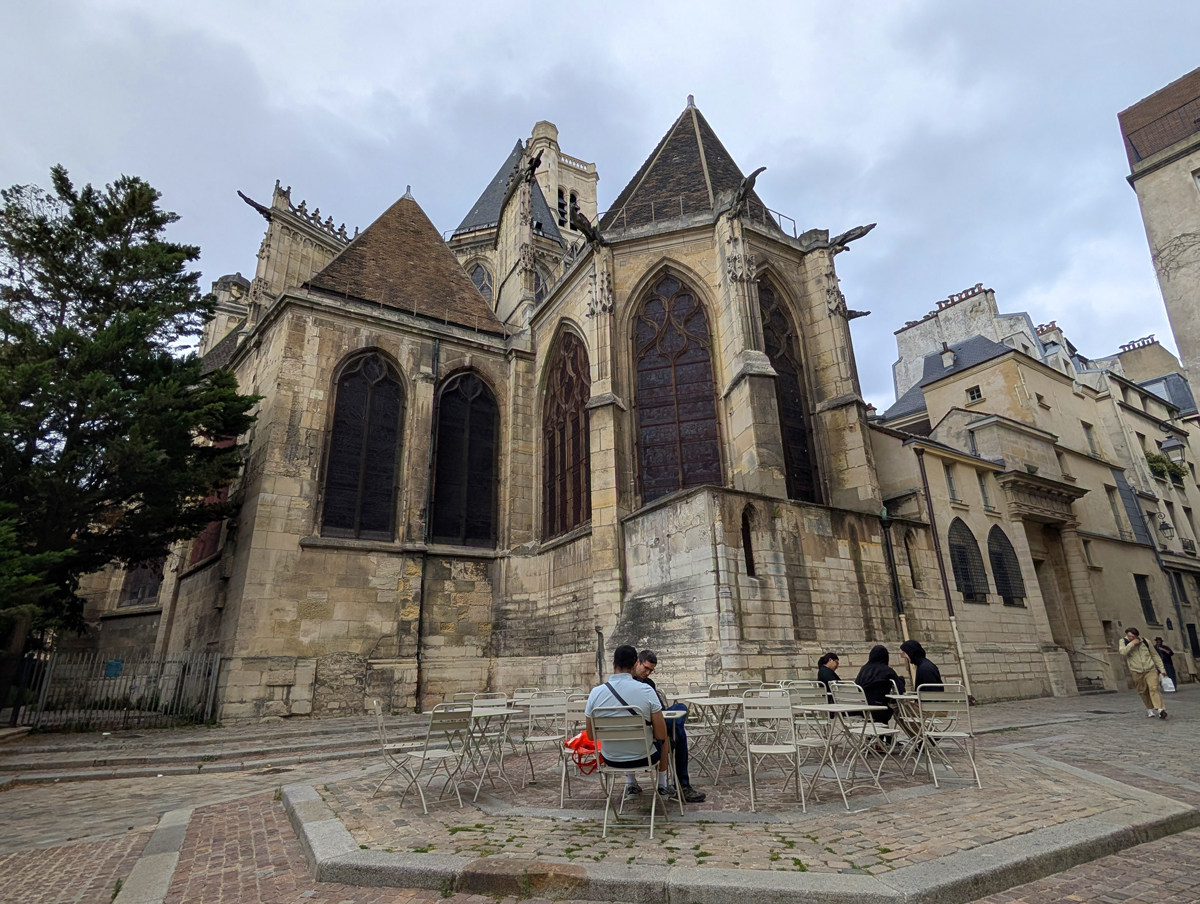
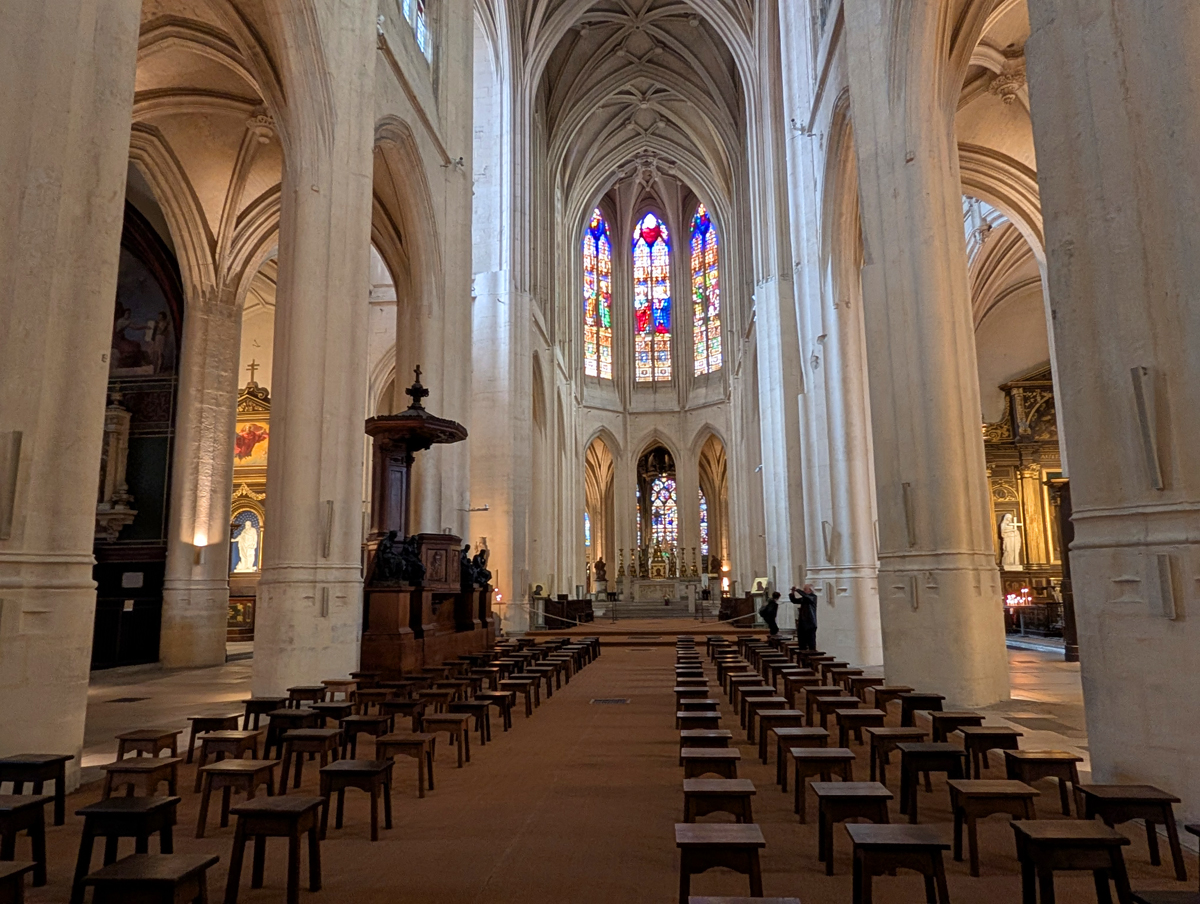
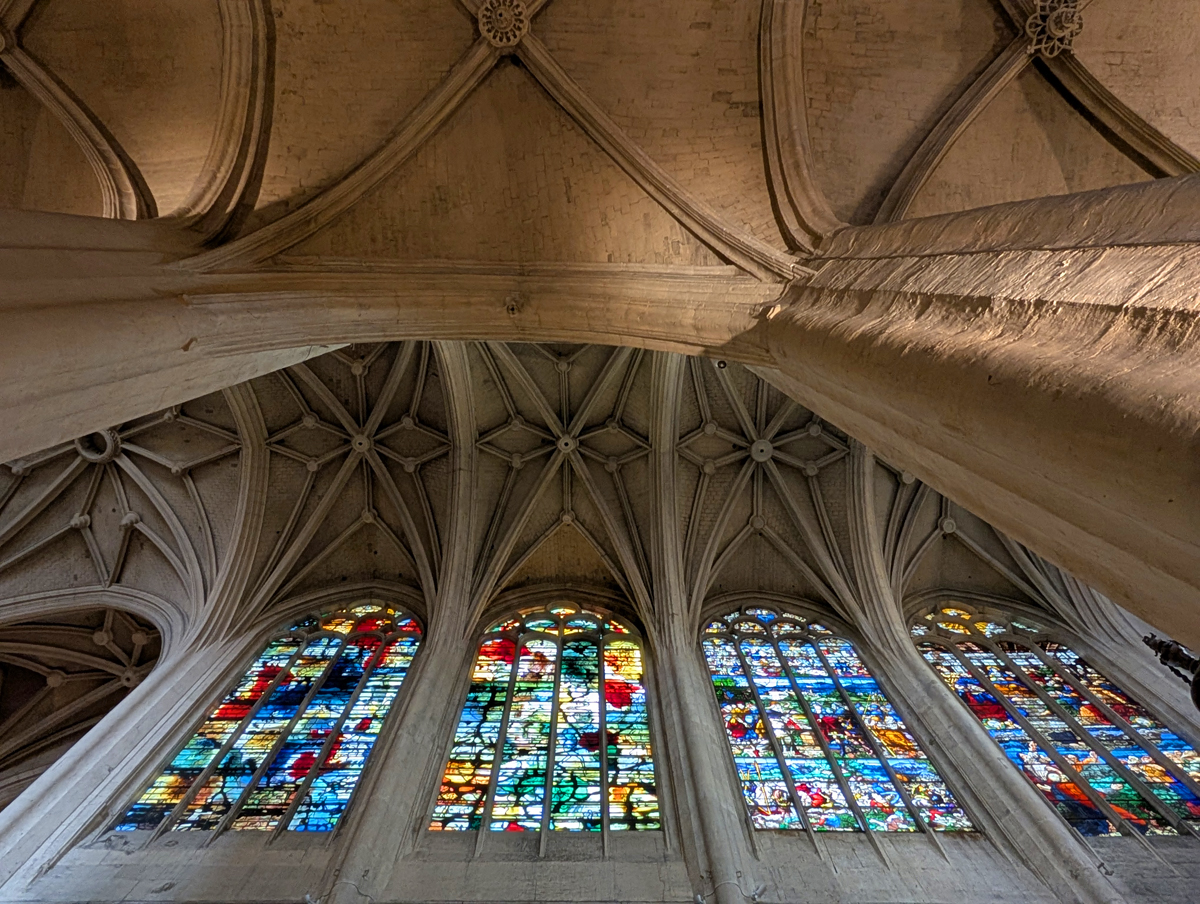
Église Saint-Gervais
Built between 1616 and 1621, this is one of the oldest and most architecturally significant religious landmarks in Paris. It is known for its west facade (considered the first masterpiece of French Classicism in Paris), its soaring, 26-meter-high nave built in late Gothic Flamboyant style, and its beautiful 16th century stained glass. The church is also known for a tragedy: on March 29, 1918, a German shell hit the roof. The vault collapsed onto the congregation, killing 91 people and injuring over 60. A commemorative chapel in the south aisle honours the victims.
Leaving the church, you’ll realize that you’re back Hôtel de Ville (covered above) where you can finish your tour and take the metro.
Summing up Paris’s 4th Arrondissement
As you can see above, there are many highlights in the 4th. Despite this being quite a popular arrondissement among tourists (principally around Notre-Dame Cathedral) many of the places I’ve covered below see few tourists.
Absolute “must-sees” in the 4th: Notre-Dame Cathedral, Hôtel de Ville and Place des Vosges.
Lesser-known highlights: Cour et Jardin de l’Hôtel de Sully and some great churches including Paroisse Saint-Paul Saint-Louis and Église Saint-Gervais.
Add to the above some of the historical curiosities I’ve mentioned above. It all makes the 4th a great arrondissement to discover.
Related: What to See in the 2nd Arrondissement of Paris
Related: What to See in the 1st Arrondissement of Paris
Leave a Reply