Why Everest Base Camp Should Be Your Next Big Hiking Adventure.
I’ve hiked in a lot of places over the last twelve years of full-time travel. One of the places that I haven’t been yet (and which is on my list) is Nepal. Why? The hike to the Everest Base Camp.
I asked Magical Nepal, a trekking company based in Kathmandu, to write about the Everest Base Camp trek. I asked for the honest version: what the walk is actually like day to day, what it costs, what the altitude does to people, and who should not be booking it at all.
Their guide to hiking to Everest Base Camp below.
What is the Everest Base Camp Trek?
The Everest Base Camp trek is a 12- to 14-day walk to the foot of the world’s highest mountain and back.
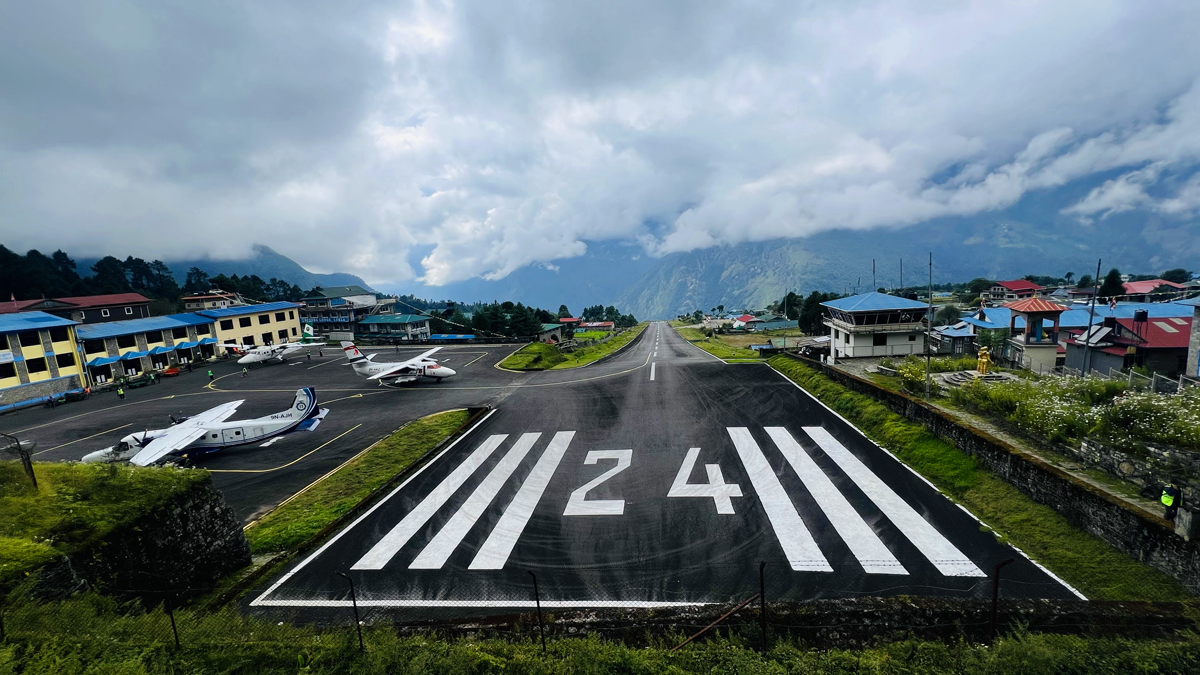
You fly into Lukla. Lukla Airport, high in the mountains, is considered one of the world’s most spectacular (and dangerous) airports. So your adventure starts before even getting your feet on the ground 😊.
A brief overview: From Lukla, you’ll walk north up the Dudh Koshi valley over several days to get to Everest Base Camp. You have rest days in between to allow your body to acclimatize to the altitude. It will also allow you time to enjoy the magnificent scenery and wildlife of the valley and mountains.
These are the stops on the way up:
| Stop | Altitude |
| Lukla | 2,845 m (9,334 ft) |
| Phakding | 2,610 m (8,563 ft) |
| Namche Bazaar | 3,440 m (11,286 ft) |
| Tengboche | 3,867 m (12,687 ft) |
| Dingboche | 4,410 m (14,468 ft) |
| Lobuche | 4,940 m (16,207 ft) |
| Gorak Shep | 5,164 m (16,942 ft) |
| Everest Base Camp | 5,364 m (17,598 ft) |
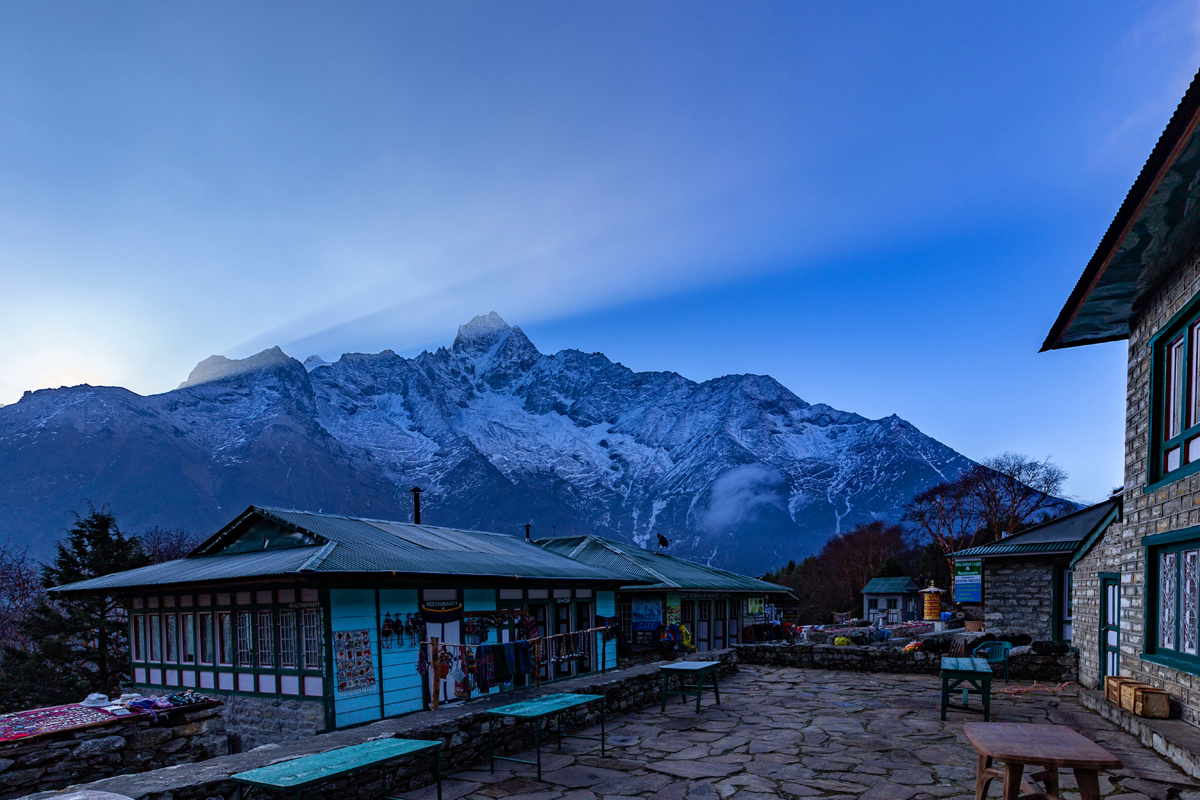
You sleep in teahouses the whole way. These are simple family-run lodges with a dining room, a stove in the middle of it, and small bedrooms off to the side. You get a bed, a blanket, and hot food. Higher up, you pay extra for a hot shower and for charging your phone.
Coming back, you’ll come down the same valley. Coming back takes about three days because you are going downhill and no longer stopping to acclimatize.
The whole trek stays on a trail. At no point do you use a rope or put on a crampon.
What is a Normal Day Like on the Trail?
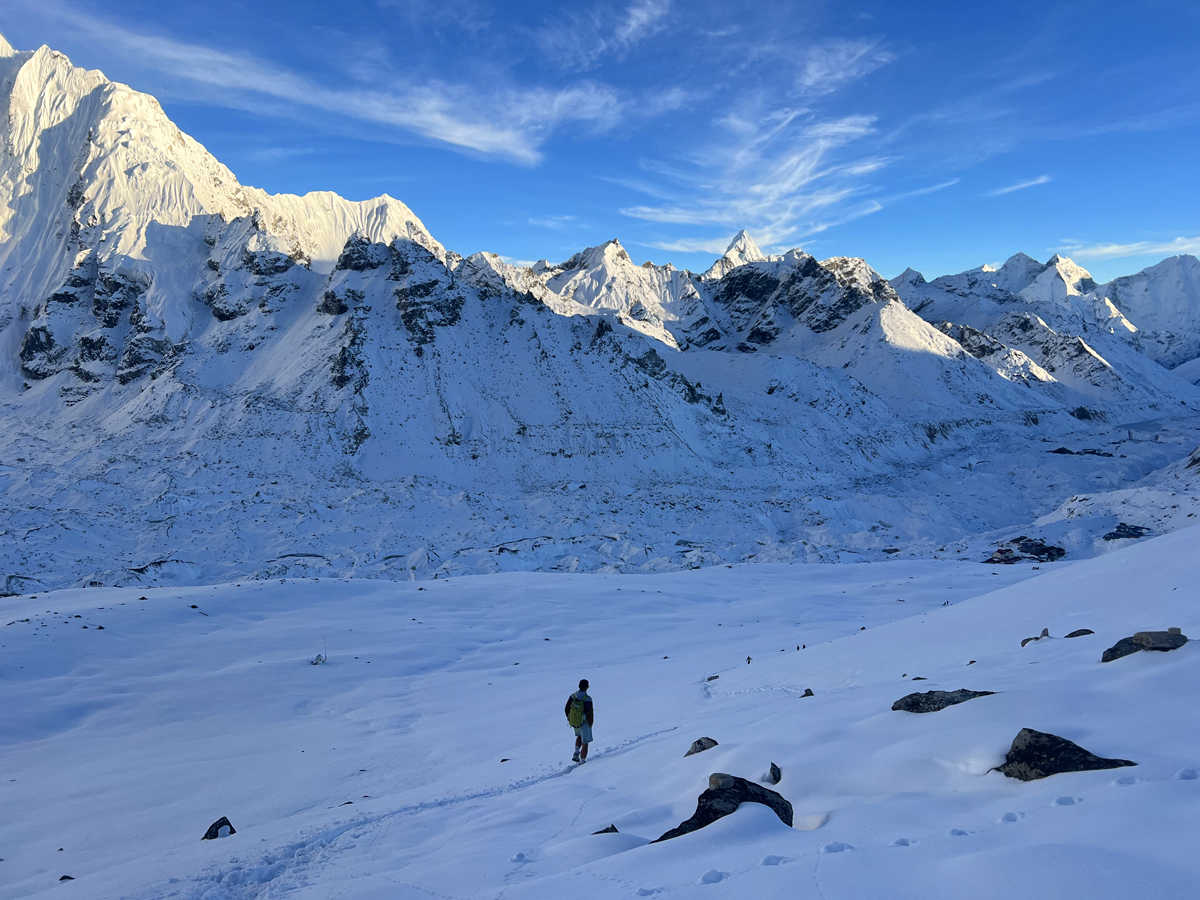
A normal day on the trail is shorter and slower than most people expect.
You eat breakfast around seven, walk for two or three hours, stop at a lodge for lunch, then walk another two or three hours. You are usually at your teahouse by mid-afternoon. That is five to seven hours of walking, but at a pace that would feel slow at home.
Porters carry the heavy bags. You carry a daypack with water, a warm layer, sunscreen, and your camera.
The evenings are quiet. Everyone sits in the dining room around the stove because it is the only heated room in the building, and people drink tea, play cards, and go to bed at eight. There is no nightlife above Namche, and there is not much phone signal either. Plenty of people say afterwards that this peacefulness was their favorite part of the experience.
Can You See Everest from Base Camp?
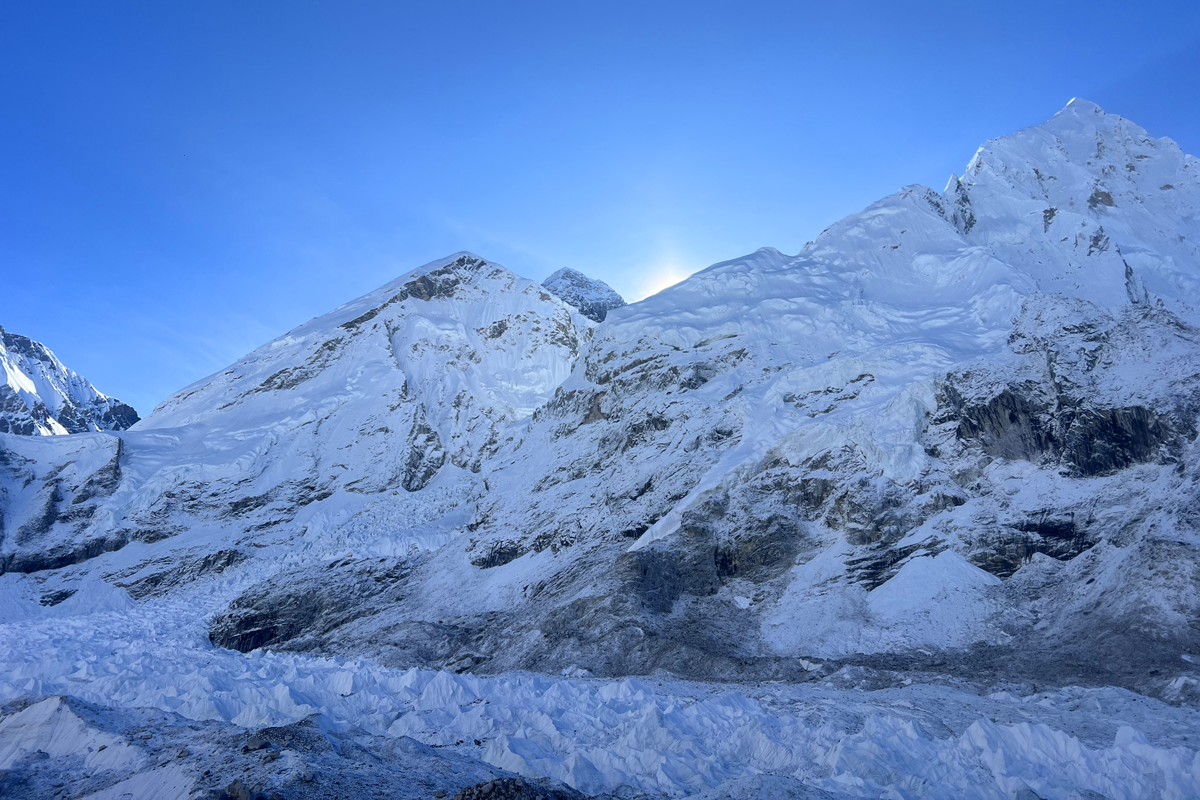
No, you cannot see the complete view of Everest from base camp. Most people don’t realize this. Why? The Nuptse ridge sits directly in the way and blocks the summit from view. What you see at base camp is the Khumbu Icefall, a frozen river of broken ice pouring down between the peaks, and in spring, you see the tents of the expedition teams. It is beautiful, it is just not where the Everest photograph comes from.
For that, you climb Kala Patthar at 5,545 meters (18,192 feet) the next morning. It is a small brown hill by Himalayan standards, and it takes about two hours. Most people leave in the dark to be on top at sunrise, when the light hits the summit first.
If you remember one thing from this post, make it this one: trekkers who skip Kala Patthar to sleep in go home without the picture they came for.
What Makes the Khumbu Different from Other Trekking Regions?
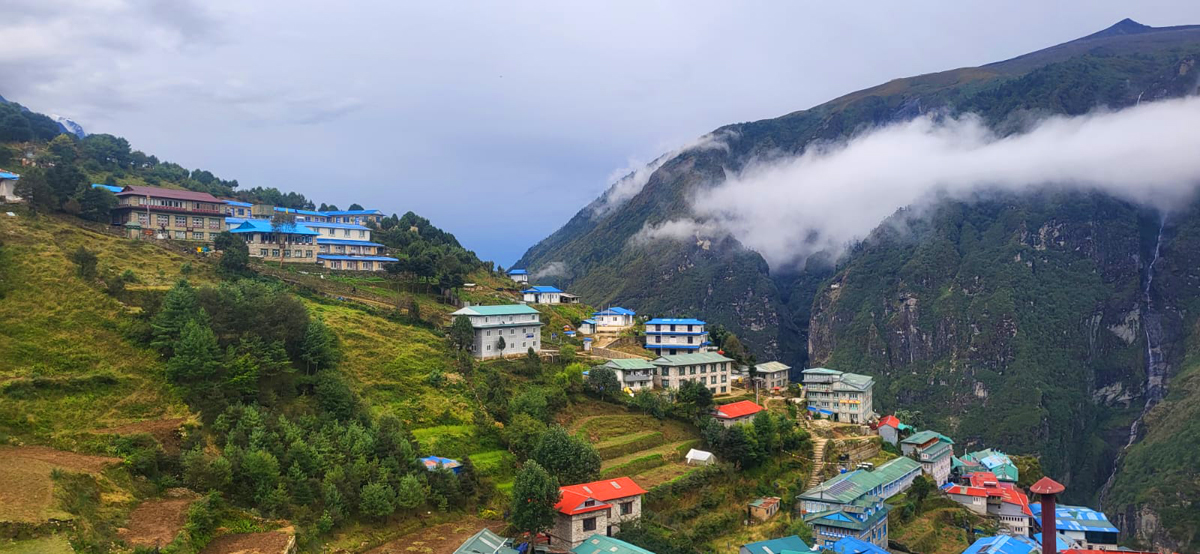
The Khumbu is Sherpa country. Families have farmed and traded here for around 500 years, and the villages you walk through are working villages rather than trailheads. Namche Bazaar is the main town, built in a horseshoe on a hillside, with a Saturday market that traders still walk into. Some of them come from two days away.
Above Namche is Tengboche, which has the largest Buddhist monastery in the region. The monks hold a prayer service in the morning and again in the afternoon, and trekkers are usually welcome to sit at the back.
A few things worth knowing before you go:
- Take your shoes off at the monastery, sit at the back, and do not photograph anyone without asking first.
- Pass Mani walls, the long, low stone walls carved with prayers, on your left so they sit on your right as you walk by.
- Say hello. Namaste works everywhere, and people use it.
- Expect food to get more expensive as you climb. A plate of dal bhat at Gorak Shep costs about three times what it costs in Lukla, because someone carried the rice up there.
That last point is worth sitting with. The teahouses are not hotels. You are sleeping in someone’s house, and the woman cooking your dinner either carried the ingredients up on her back or paid a porter to do it.
How Fit Do You Need to Be?
You do not need to be an athlete. The people we take up there are mostly in their thirties to sixties, with regular jobs and no mountaineering background.
What the trek asks for is endurance rather than strength. You need to walk for five or six hours, sleep badly, get up cold, and then do it again the next day for two weeks. That is a different thing from being fit enough for one hard day out.
How to prepare for the hike:
- Do back-to-back hikes on consecutive days, five to six hours each, with real elevation gain.
- Carry a light pack on every training walk, so your shoulders get used to it.
- Climb stairs if you have no hills near you.
- Spend time on your feet. It matters more than speed or distance.
Know: Preparing for two days in a row does more for your body than one long day.
Now the honest part. Fitness helps, but it does not decide whether you reach base camp. Altitude does, and altitude tolerance is close to random. We have watched marathon runners turn back at 4,900 meters, and watched people in their sixties who had never hiked before walk in comfortably. Nobody can tell you in advance which one you will be.
How Dangerous is the Altitude?
Altitude is manageable if you go slowly, and the main reason people go home early is if they do not.
There is roughly half as much oxygen in the air at base camp compared to sea level. Almost everyone feels something on the way up: headaches, loss of appetite, broken sleep, and odd dreams. They are all normal symptoms and usually pass in a day.
What to watch out for is acute mountain sickness. The serious versions of it are fluid in the lungs or in the brain. Those are rare, but they do kill people, and they kill people who kept going up after they should have stopped.
The itinerary is built around this. There are rest days at Namche and at Dingboche, and on those days, you walk high in the afternoon and come back down to sleep. That is what acclimatization means in practice. It is not padding, and it is not there to sell you two extra nights.
Important: the biggest risk factor is a rushed schedule. If a company offers you Everest Base Camp in nine days, what they are selling you is a higher chance of getting sick and going home early. We will not run it in nine days.
The treatment for acute altitude sickness is to go down. Not to rest, not to push through, not to take another tablet.
Make sure to get travel insurance that covers trekking to 6,000 meters and includes helicopter evacuation. Standard policies stop well below base camp. A rescue flight out of Gorak Shep runs into thousands of dollars, and the helicopter will not lift off without proof that someone can pay for it.
When is the Best Time to Trek to Everest Base Camp?
The answer is Spring and autumn (considered peak seasons). Here is how the year breaks down:
| Season | Months | What to expect |
| Spring | March to May | Warmer, rhododendrons lower down, expedition teams at base camp |
| Autumn | Late September to November | Clearest air and best views, busiest trails |
| Winter | December to February | Cold, clear, and very quiet. Some higher lodges close |
| Monsoon | June to August | Cloud, wet trails, leeches lower down, flights that do not fly |
Autumn is the one most people pick and the views are the reason. Spring is our own preference: the mountain a little quieter and you can experience base camp in full expedition season.
We do not recommend the monsoon.
How Do You Get to Lukla?
This is the part that first-timers do not see coming.
In the two peak seasons, flights to Lukla do not leave from Kathmandu. They leave from Manthali Airport in Ramechhap, 132 km east of the city.
What the peak season version looks like:
- A bus from your Kathmandu hotel at around 1 AM in the morning
- Four to five hours on winding roads in the dark
- A flight of 15 to 20 minutes from Manthali to Lukla
Nobody enjoys the Manthali drive. It exists because Kathmandu airport has a single runway and cannot handle the traffic in season, and the flights genuinely are more reliable from Manthali than they are from Kathmandu.
Make sure to build two spare days into your trip anyway. Lukla flights get delayed by weather, and it happens often enough that you should plan for it rather than hope.
What Permits Do You Need?
There are two of them, and together they cost about NPR 6,000 (approx $40).
| Permit | Cost | Where to buy it |
| Sagarmatha National Park entry permit | NPR 3,000 (about USD $20) | Nepal Tourism Board in Kathmandu, or the checkpost at Monjo |
| Khumbu Pasang Lhamu Rural Municipality permit | NPR 3,000 (about USD $20) | Lukla or Monjo only |
The second one catches people out. It is not sold in Kathmandu, so if an agent tells you they have already arranged it there, they have not.
You do not need a TIMS card for this trek. It was replaced in the Khumbu back in 2018, and anyone still telling you to buy one is working from old information.
Since 2023, Nepal has also required trekkers in national park areas to use a licensed guide booked through a registered agency (like us). Check the current position before you travel, because this rule has been revised more than once.
Who Should Not Do This Trek?
I would rather talk someone out of it than have them go home from Dingboche.
Think again if:
- You cannot spare two buffer days for flight delays.
- What you want is quiet, because the trail in late October is busy and the teahouses fill up by mid-afternoon.
- You have a heart or lung condition and have not spoken to a doctor who understands altitude. Do that before you pay a deposit, not after.
- You are travelling with children under about ten, who cannot reliably tell you how they are feeling at altitude.
If the crowds are the problem but the mountains are not, the Gokyo Lakes trek goes up a parallel valley in the same region. Fewer people, six turquoise lakes, and from Gokyo Ri, you get Everest, Lhotse, Makalu, and Cho Oyu lined up in a single view. Plenty of people who have done both prefer it.
Final Thoughts on Trekking to Everest Base Camp
Everest Base Camp has a reputation as either impossible or overrun. It is neither.
It is a two-week walk through a valley where people live, ending at the foot of the biggest mountain on earth. The hard parts are the altitude and the one o’clock bus to Manthali, and both of those are manageable if you plan for enough days.
If you do decide to do it, you will be rewarded by one of the world’s most magical hikes and lifetime experiences.
Many thanks to Magical Nepal for contributing this post.
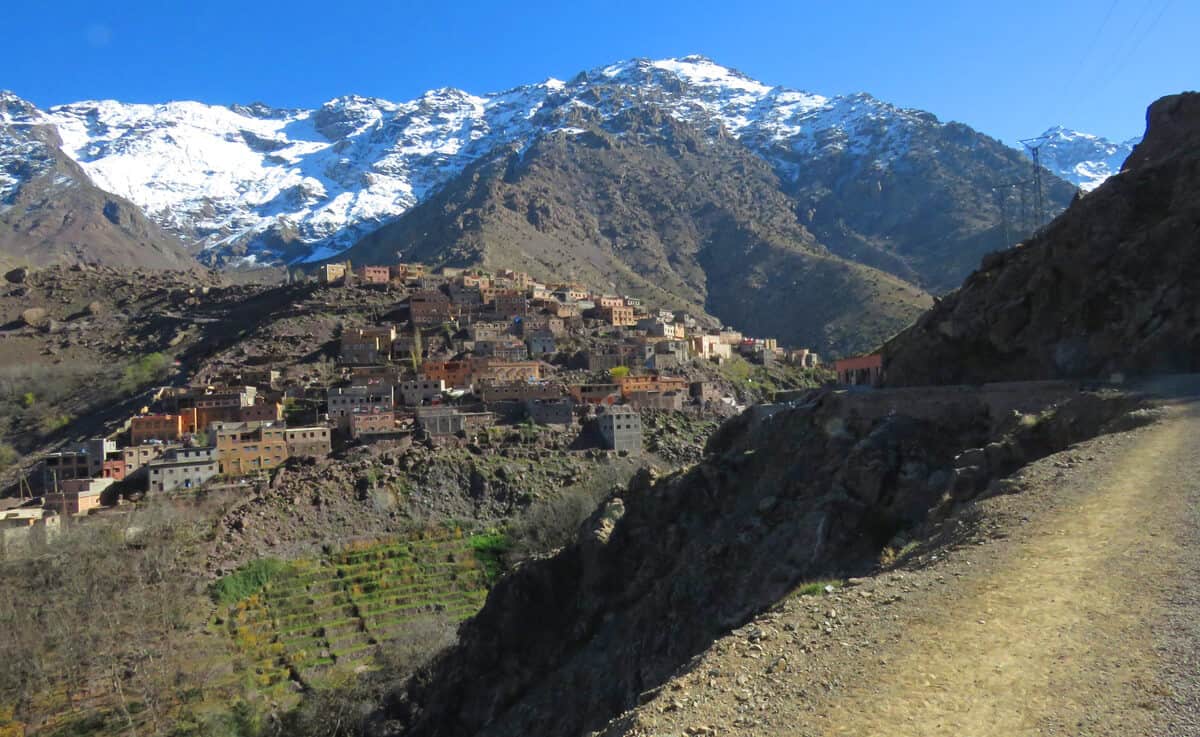
Related: Hiking around Toubkal National Park (Morocco)
Leave a Reply