
Summarizing a month of full-time travel in Spain
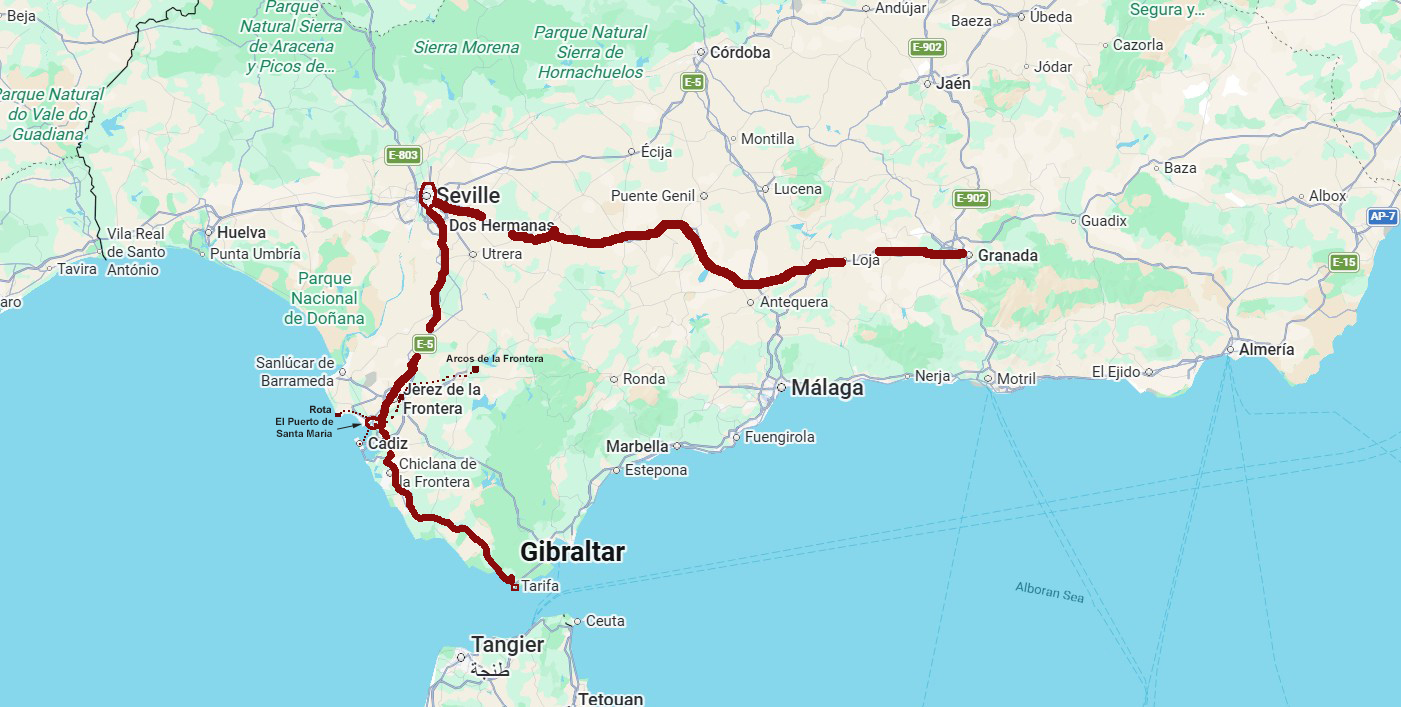
February was our first month getting back to full-time travel. On February 1st we left Granada (where we had lived most of the last 2 years) for Seville. It would be a return to a city we had visited 10 years ago, the first place we had seen in Spain.
We stayed 12 days in Seville before moving on to El Puerto de Santa Maria in the province of Cadiz which we used as a base for 2 weeks. I’ve written about why we chose El Puerto de Santa Maria as a base instead of the city of Cádiz: the principal reasons being that it is a better base for day trips in the region as well as more cost-efficient. We explored some beautiful places during our stay: the inland city of Jerez de la Frontera, the coastal town of Rota, the white village of Arcos de la Frontera as well as the city of Cádiz.
We finished off the month in Tarifa, the southernmost town in Europe (from where you can see the Moroccan coast just 14 km away).
In this post I cover the highlights and lowlights of the month, go over costs, and write about the challenges and adjustments we’ve had to make getting back to full-time travel.
(click on map to enlarge)
Highs and Lows of the month
I’ll start with the definite low of the month of February: the weather. January had been rainy but February was even worse. It rained 10 of the 12 days we were in Seville: not just light rain, but heavy, heavy rain. In 5 years living in Spain we had never seen such weather and even locals told us that it was the most rain they had ever seen. We had never owned a raincoat in Spain but a few months back we bought them thinking they would be needed when we visit the UK later this summer…well, we ended up using them a lot in Seville.
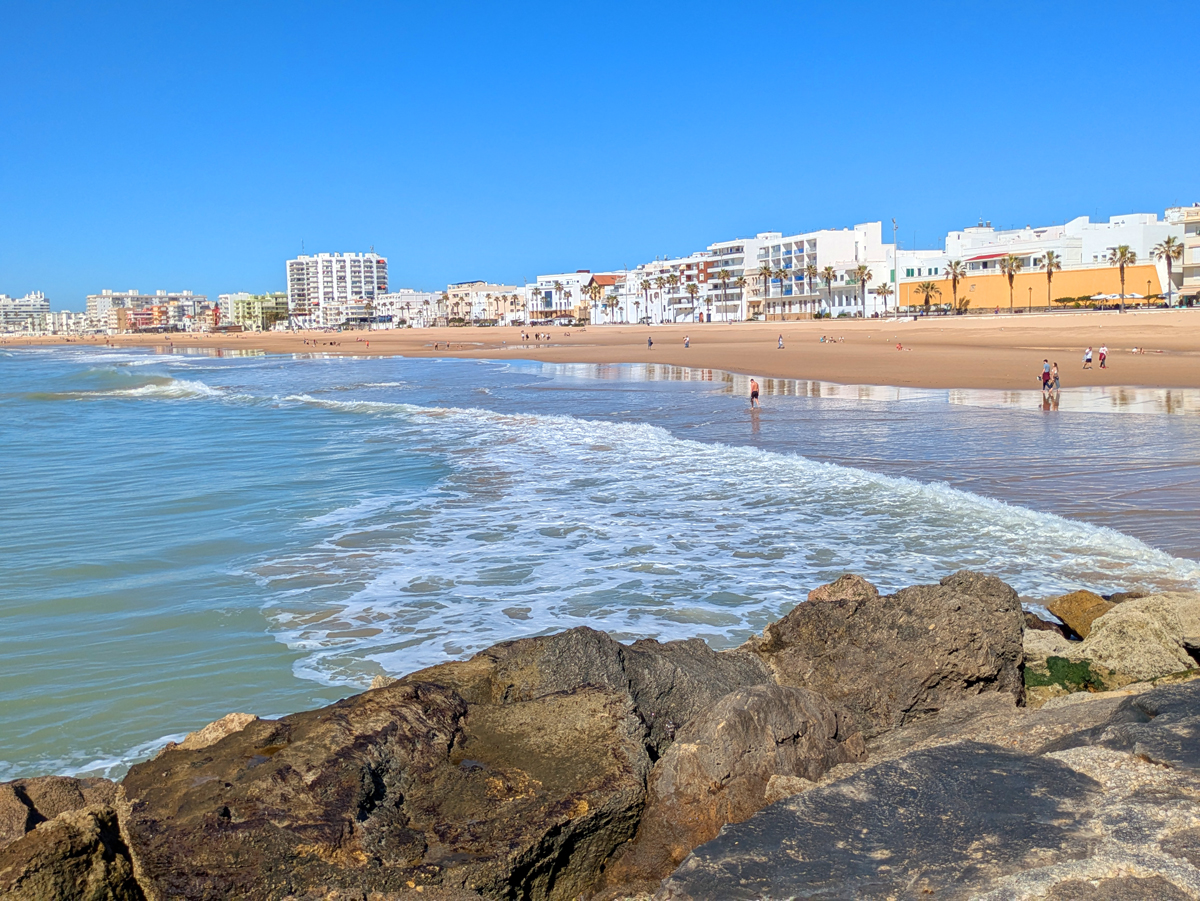
Highlights: Rota was a real surprise, a beach town we had never heard of. It has a fortress, a church, a nice old town…but the highlight was a long beach promenade and a beautiful, wide beach with white sand. And the great thing is that if you’re in Cadiz, you can take the ferry to Rota.
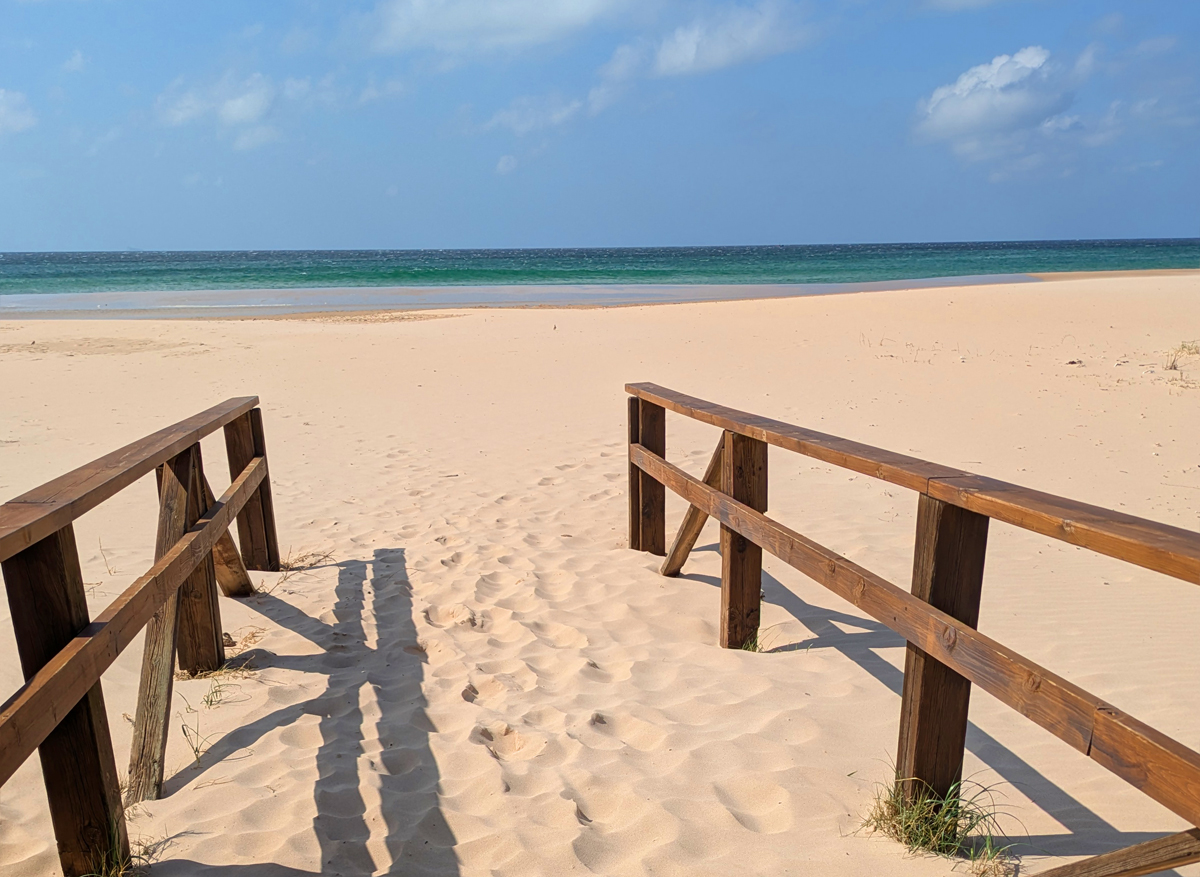
Tarifa was another highlight, a beach town with a cool vibe that attracts a lot of foreigners (including lots of Germans). Some excellent restaurants. But the main attraction is the wild nature; the Mediterranean and the Atlantic meet here, waves crash on beautiful white beaches and there are some picturesque trails all along the coast.
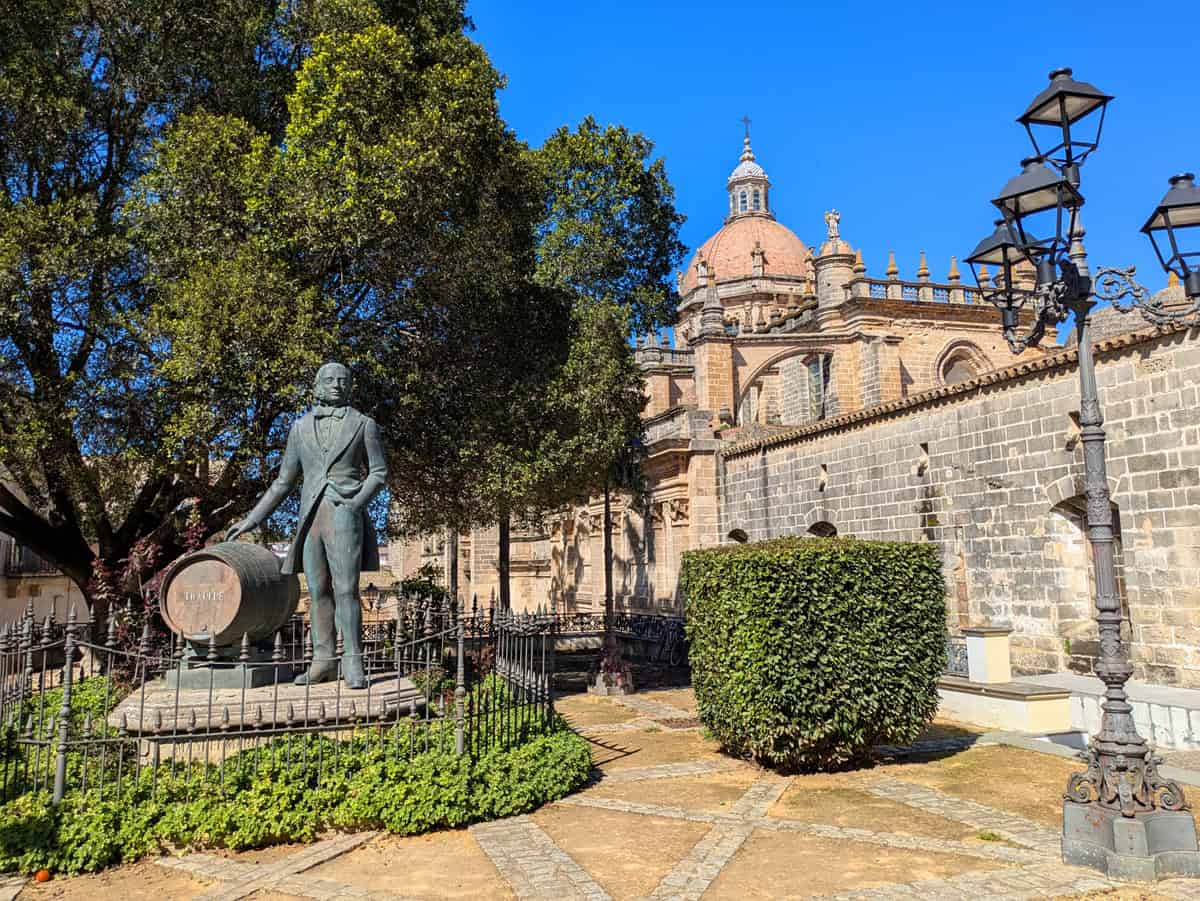
We were pleasantly surprised by Jerez de la Frontera, a city with a pretty old town. Some beautiful churches (the Cathedral and the Iglesia de San Miguel) and an impressive fortress. A city of monumental, leafy plazas including Plaza de Arenal (the main square) and Plaza de la Asunción (my favorite). We found people there very friendly.
We were underwhelmed by the City of Cadiz. We’ve heard so many people talk about how amazing Cadiz is, maybe we just expected more (we took 2 day trips there from El Puerto de Santa Maria). In a few weeks we’ll finish off the Cadiz Province part of our travels with a 2 day stop in Cadiz. I wanted to spend a bit more time, specifically to visit the Museum of Cadiz (Cadiz is the oldest city in Europe and I’m always interested in history). Maybe those 2 days will change our opinion…
And finally Seville: a beautiful city with some incredible highlights. If you have any doubts of which Andalusian cities to visit, it’s easy: Seville, Granada and Cordoba. All great cities.
February 2026 Costings
I accounted for all of our costs in February. I’ve done it for myself but I hope it helps those wondering what things cost in Spain (especially in the off season).
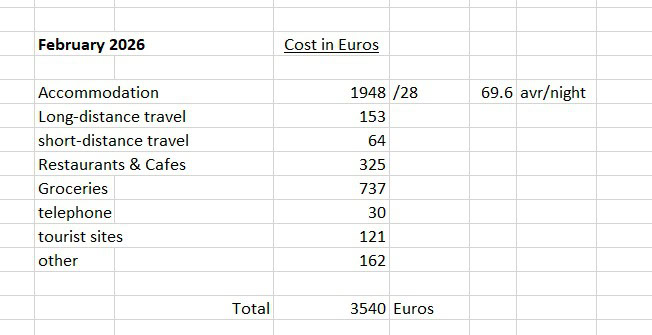
Accommodation cost on average 70 Euros a night on average. I personally think that’s very indicative of what you’ll pay travelling around southern Spain in February.
Our most expensive stay: Seville 77.10 Euros/night
Least expensive stay: El Puerto de Santa Maria 64.29 Euros/night
Long-distance travel: of the 153 Euros, 94 Euros (ie 47 Euros each) was spent on the high-speed train between Granada and Seville. High-speed trains are always the most expensive way to get around, regional trains and buses are much more affordable (the media-distancia train between Seville and El Puerto for example cost a total of 28 Euros between the two of us).
Short-distance travel covered ferries, buses and commuter trains. Sample costs: ferry between Cadiz and El Puerto 2.90 Euros, Cercanías train El Puerto to Jerez 1 Euro, Cercanias train El Puerto to Cadiz 3.40 Euros. 40 minute bus El Puerto to Rota 2.10 Euro.
Restaurants and cafes: We had diner in 3 sit down restaurants during the month: a Chinese restaurant in Seville (Ming Restaurant. Get’s mixed reviews but what we had was very good. 52 Euros), a higher-end Spanish restaurant in El Puerto (La Micaela. Excellent. 100 Euros) and an Indian restaurant in Tarifa (Namaste. Excellent. 50 Euros). We also went out for breakfast, coffee and drinks a few times. One of the places that stood out was Ojú Qué Alegría just next to the castle in El Puerto de Santa Maria where we had several glasses of Sherry. Very much recommended if going to El Puerto.
Groceries: The 737 Euros were a bit higher than our usual monthly grocery cost when we lived in Granada but that’s mostly because we were staying downtown while in Seville and doing some of our grocery shopping at the expensive Corte Ingles.
Tourist Sites: You have to pay to visit most Cathedrals, fortresses and museums in Spain. Of the 121 Euros spent, the most expensive was Seville Cathedral (where we couldn’t get free tickets this time). That cost 28 Euros between the 2 of us. Cadiz Cathedral cost 24 Euros between the two of us.
But that leads me to…
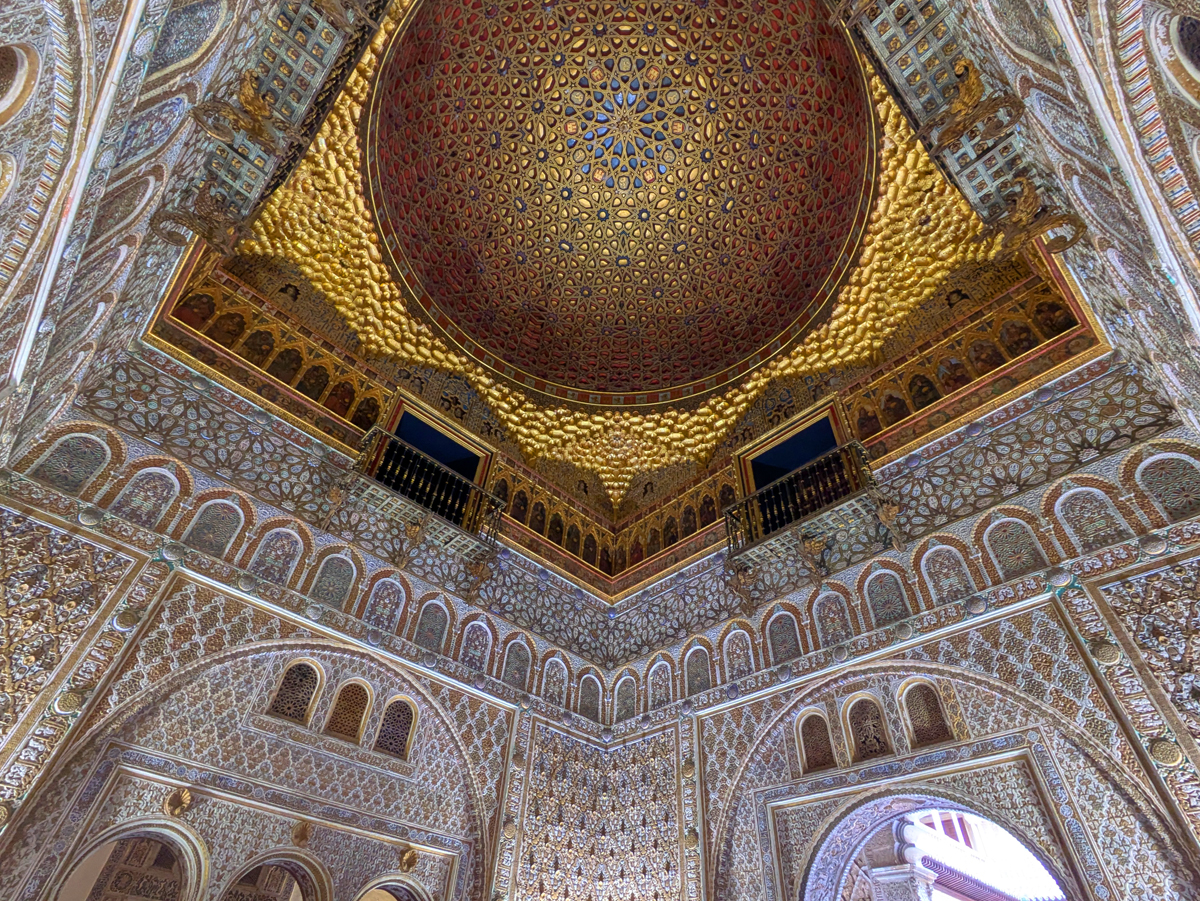
Money saved at tourist sites in February: 103 Euros. In Seville we took advantage of free entries to visit the Real Alcazar, Casa de Pilatos and Casa de las Duenas (I detail how to save money on Seville attractions in this post). In El Puerto de Santa Maria, we visited the Castillo de San Marcos on Monday between 10 – 11 am when it’s free. Otherwise it’s 10 Euros each (it’s not worth 10 Euros). So with a bit of planning you can save money on attractions in Spain.
Getting back into full-time Travel
It’s tough living out of suitcases! Packing, unpacking, repacking, reunpacking…It’s probably the most aggravating thing about full-time travel. We thought we were packed pretty light leaving Granada but with every new destination we’ve trimmed and trimmed a bit further.
Really, it’s become a bit of an obsession.
So we’re weighing comfort, like the duvet that we packed that has already made a huge difference in our quality of sleep VS volume and weight. Do we keep it? There are other things: Lissette for example has her fancy camera and its lenses which are both heavy and voluminous. She’s decided to ditch that, so we’ll be looking for a camera store in Madrid (or Paris) where we can trade some of that equipment for something small and compact.
The thing is that when you travel with 2 backpacks and 2 carry-on sized suitcases, everything makes a difference. The goal is for at least one of our two suitcases to get changed for a much smaller carry on over the next few months. As Lissette says “If I can’t carry it on my own, I need to have less and get something smaller”.
Another challenge is routine. Every day is different when travelling and you get out of rhythm. I’ve mentioned previously that over the last 6 months we’ve worked on getting back on shape, eating better etc. That included working out every day, following a diet that includes healthy meals and snacks. Now travelling again, we’re being careful with what we eat. But eating at proper times and following a diet by the letter is almost impossible. And we haven’t worked out every day (we have our workout straps and a yoga mat and have barely used them) but we have done tons of walking. And I guess that makes up for some of it but we’ll be trying to be better, especially when we get to mid-April: almost all of our stays between April and September will be longer (1 month) stays. “Slow Travel” has always been our preferred way to travel. It should get us back to some kind of routine.
I’ve mentioned the challenges and the adjustments we’re making. But honestly, we’re very happy to be back travelling. We’re keeping busy and sleeping great at night, something we haven’t done for a long time (we’ve always had issues with sleep). But being active, walking every day and getting fresh air has really helped with our sleeping.
Needless to say, see new places has also been stimulating. It’s why we love to travel.
The month ahead: we’ll be fast travelling through Spain towards France, leaving Andalusia in a few days, re-discovering Madrid, and then spending about 2 weeks on the Costa Brava. I haven’t been to the Costa Brava since I was 19, it was my first experience visiting Spain. I’ve always wanted to go back, mainly for the geography and hiking along the coast. We both look forward to that 😊.
Related: FULL-TIME TRAVEL 2.0!
Hey Frank and Lissette;
Thank you for an ALWAYS valuable read.
Conrad and I are still house sitting, now in Australia for 9 months, but man are we slowing down! And indeed this is our last long trip.
We’ll probably take some month-long trips to Spain, (totally agree with faves in the south: Seville, Cordoba, Granada), and hang out in our favorite Vilanova i la Geltru. We have many friends there and love the lifestyle.
We’ll stay living in the States because of kids and grandkids – and get more involved with local events as we age.
So while I’m super envious of your energy, do you feel the slowing down, too?
Wishing you safe and happy travels
Josie
Thank you Josie! Vilanova i la Geltru? Never heard of it but just googled it…planning to be in that area within the next week. Right now in Tossa de Mar which I love, beautiful geography.
I think we get bored honestly being in one place. Not a good thing I know…but for now we’re just happy to get back to travel and seeing things 🙂
Thank you for the nice comment. Enjoying Australia? We’ve never been.
Frank
A fun read! I agree about Cadiz, the location is stunning and the beach promenade is nice but the city itself is a bit of a dump. I also didn’t like Jerez very much, it felt very insular and conservative somehow. But I love Seville and Granada, great destinations. Cordoba is okay too, the Mezquita is spectacular and worth the visit alone.
Thanks RJA! I think we agree on everything. You’re right, Jerez is small and religious. But we just thought it was pretty and met a few nice people who maybe influenced our perception. Cadiz is tight, packed with tourists and felt a bit dirty. We were surprised by that.