
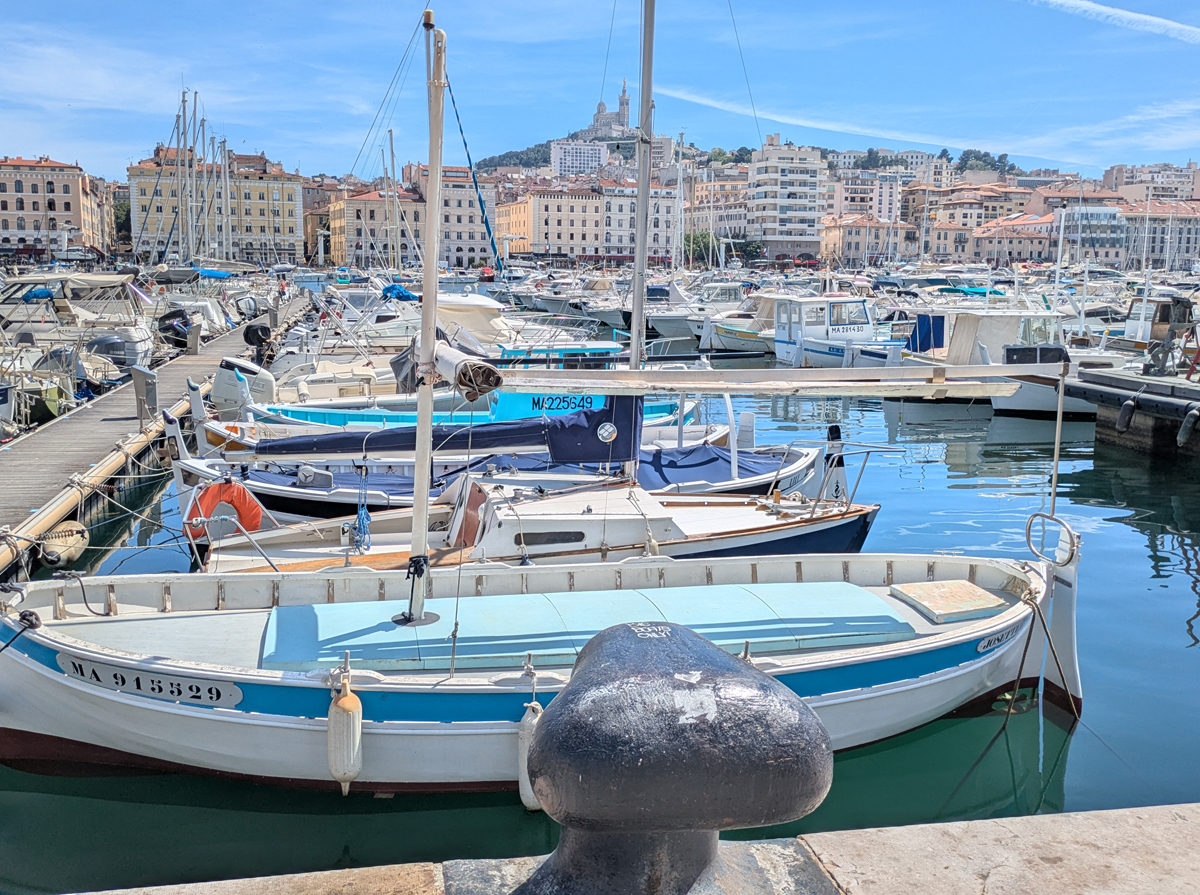
Marseille is worth a day trip…but nothing more.
Marseille is the grittiest, most unsafe place we’ve been to in a long time. We’ve been to Colombia, South Africa and all over Mexico and I can’t remember a place where my spider senses tingled as much as they did in Marseille.
Marseille is statistically the most dangerous city in France and we saw it with our own eyes: we were there 5 hours and, in that time, saw two police takedowns where teams of police officers forcibly arrested young men: pinning them on the ground and slapping handcuffs on them. This was not in “the dangerous neighborhoods” of Marseille, it was in the city center close to the tourist office.
I’ll be honest: for the most part, Marseille is not a pretty city. It is gritty, dirty, devoid of green spots and feels poor. It’s not a city I would linger. But before you write it off: Marseille is the oldest city in France and one of the oldest continuously inhabited cities in Europe. There are some impressive things to see and they are concentrated in the safe districts of the Old Town (le Panier) and the Old Port. So while I wouldn’t recommend an overnight stay, Marseille is worth a day trip.
In this post I’ll cover what to see in Marseille on a day trip and how to do it.
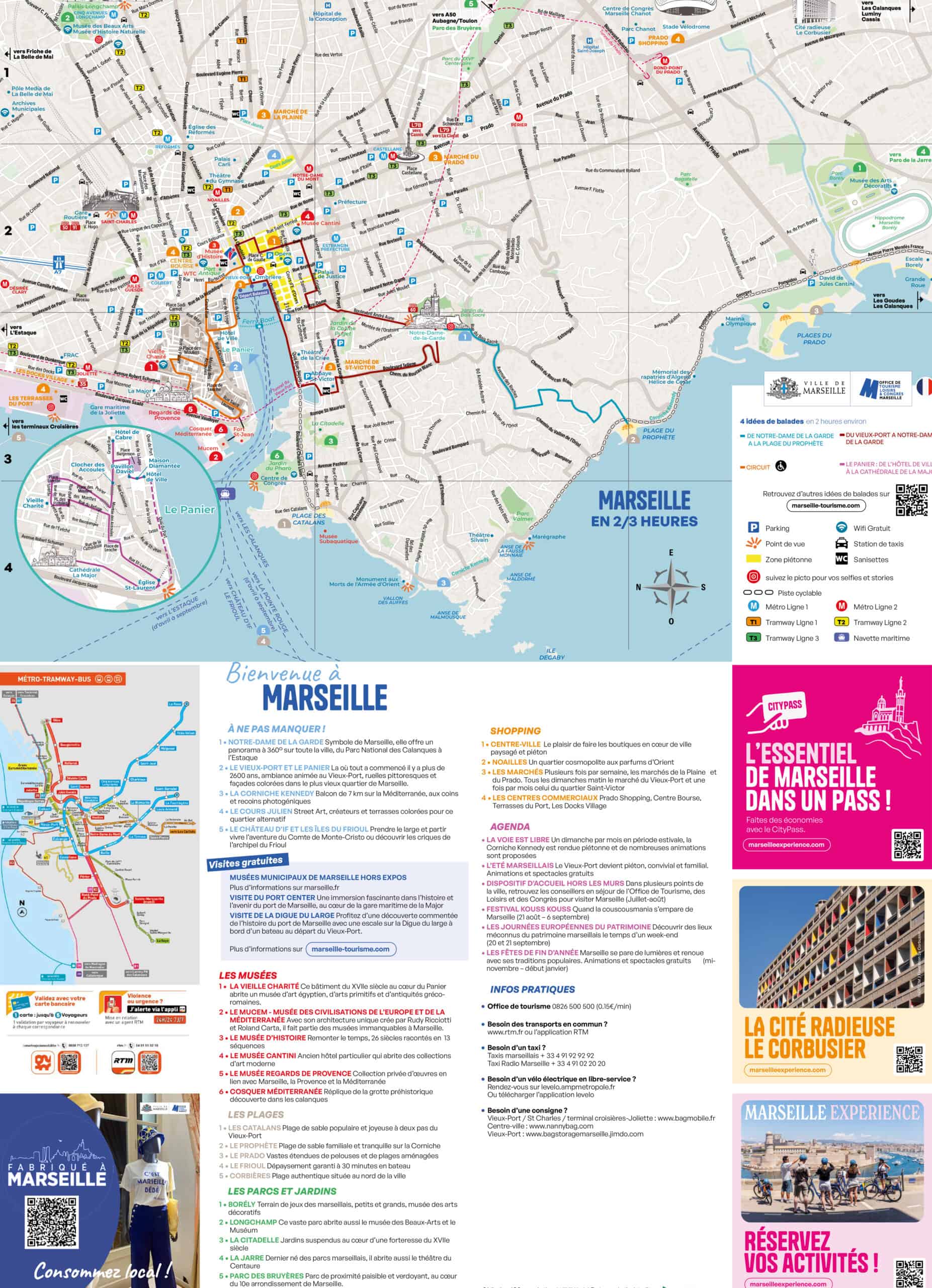
What to see in Marseille and how to do it
Your starting off point in Marseille will probably be the train station, Marseille Saint-Charles. The area around the station is reputed to be dodgy but we didn’t see any signs of that when we arrived mid-morning.
Your first destination will be “Porte d’Aix” (use that as your Google Maps reference point). It’s a walk of about 10 minutes from the train station and is in the direction of the old town.
Porte d’Aix
The Porte d’Aix was built in 1839 and represents the old entry point to the city on the road from Aix-en-Provence. The gate was initially conceived in 1784 to honour Louis XIV but, after a change in government, it was decided that it would be a tribute to the victory at the Battle of Trocadero (when the French army helped the Spanish King during the Spanish Expedition of 1823).
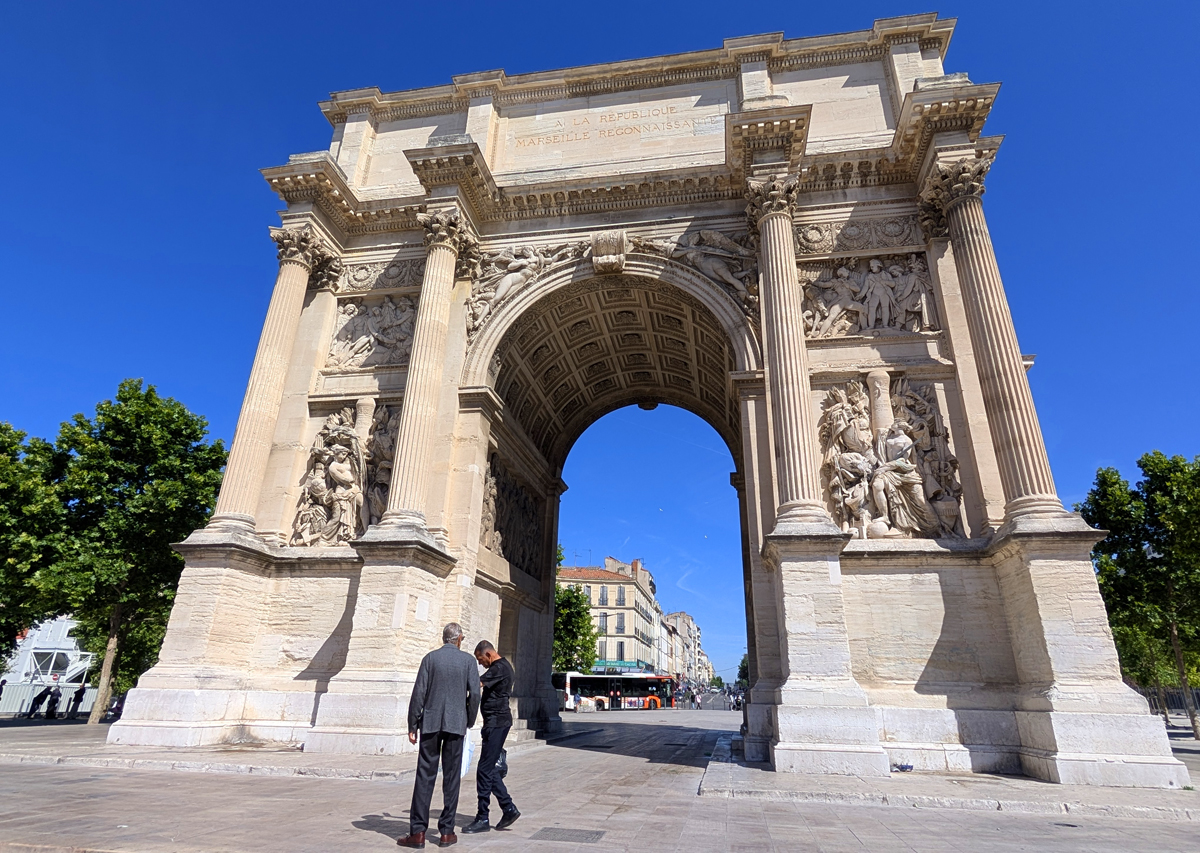
It is a beautiful monument and we were taking photos of it when a North African man decided to take a piss along the wall of the arch.
There you go, that’s Marseille in a nutshell.
Your next destination (I’m telling you so that you can search the route on your phone) is “Centre de la Vieille Charité”. It’s a walk of about 12 minutes from Porte d’Aix.
Centre de la Vieille Charité
You’ll be entering the Old Town (le Panier) as you arrive at the Centre de la Vieille Charité (translation: “Old Charity Center”).
Today the Centre de la Vieille Charité is a (free!) archaeological museum focusing not only on the Mediterranean region but also on Africa, Oceania and the Americas. We weren’t expecting much and were surprised by how good this museum is. They had for example some very interesting artefacts from both Egypt and Mexico. We ended up spending more than an hour here.
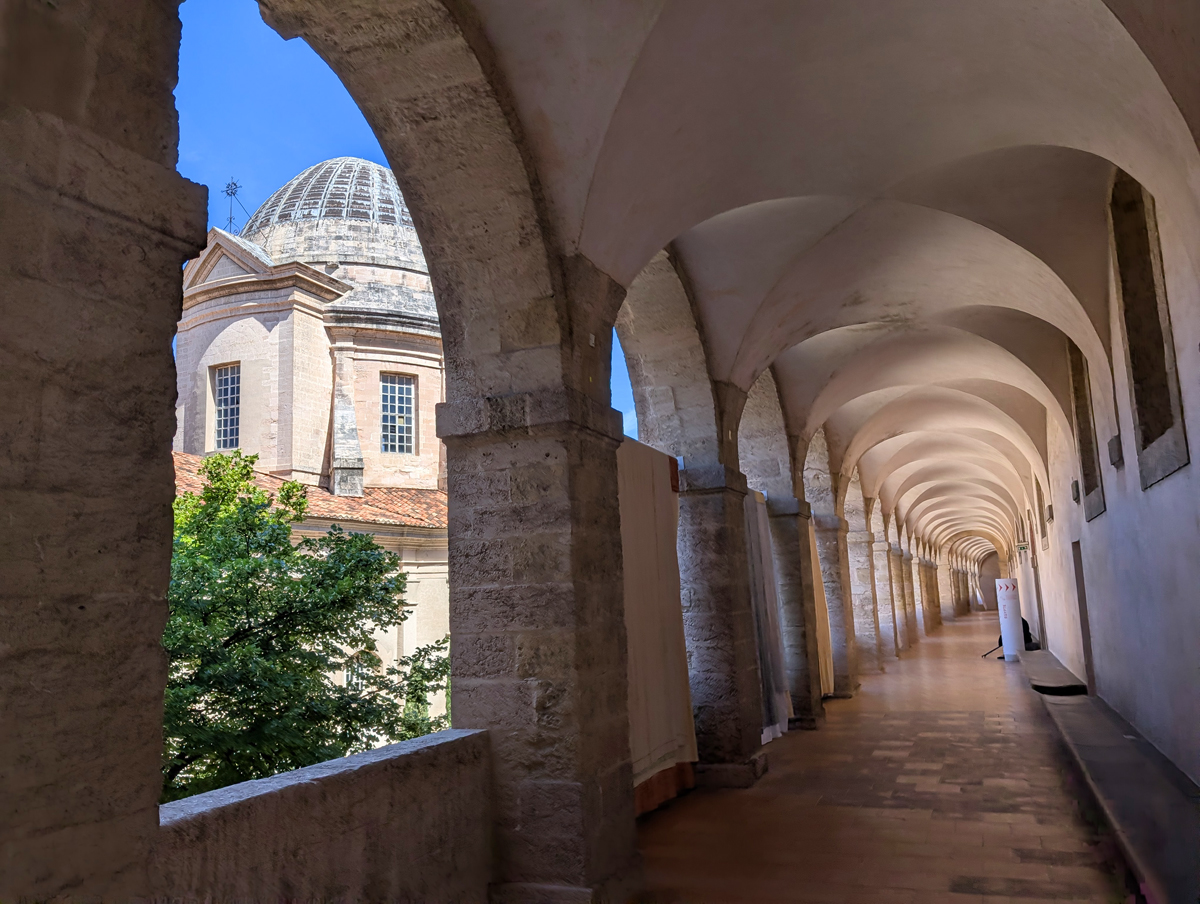
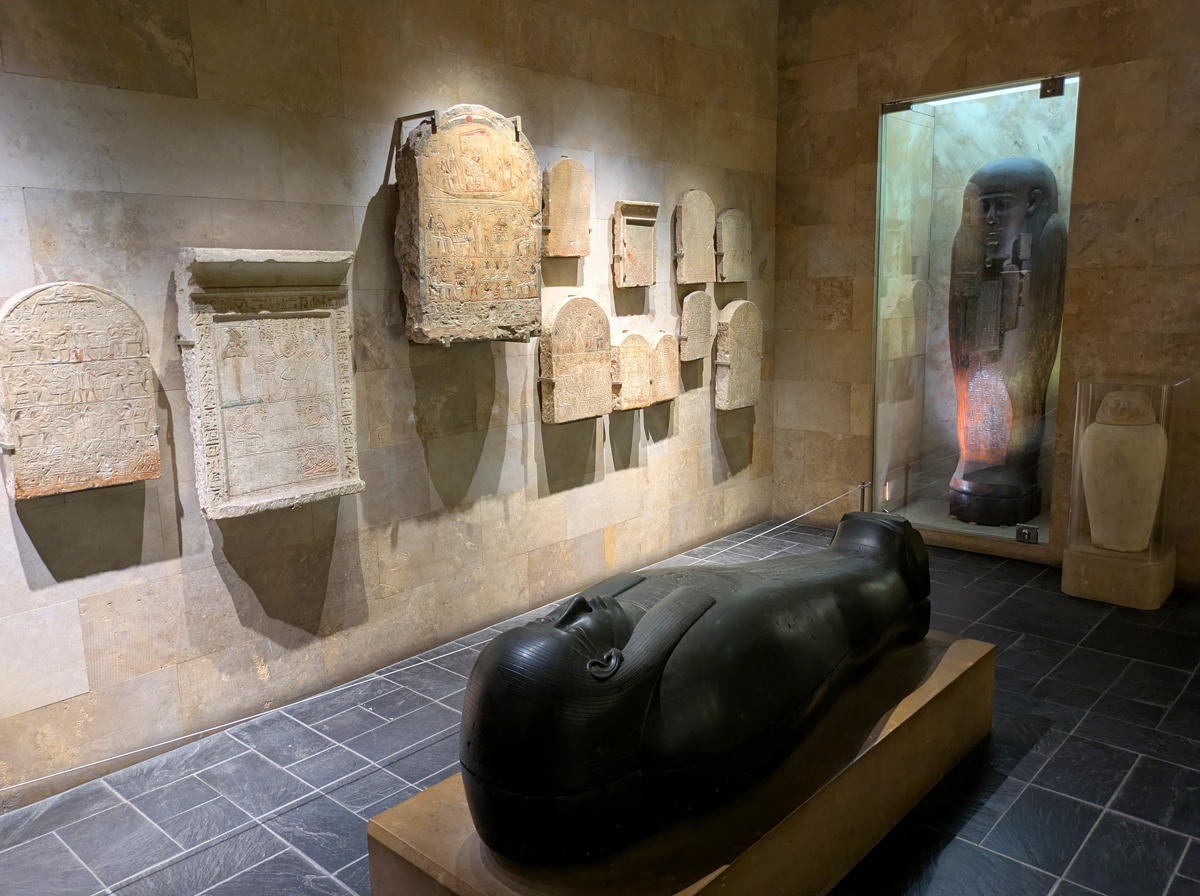
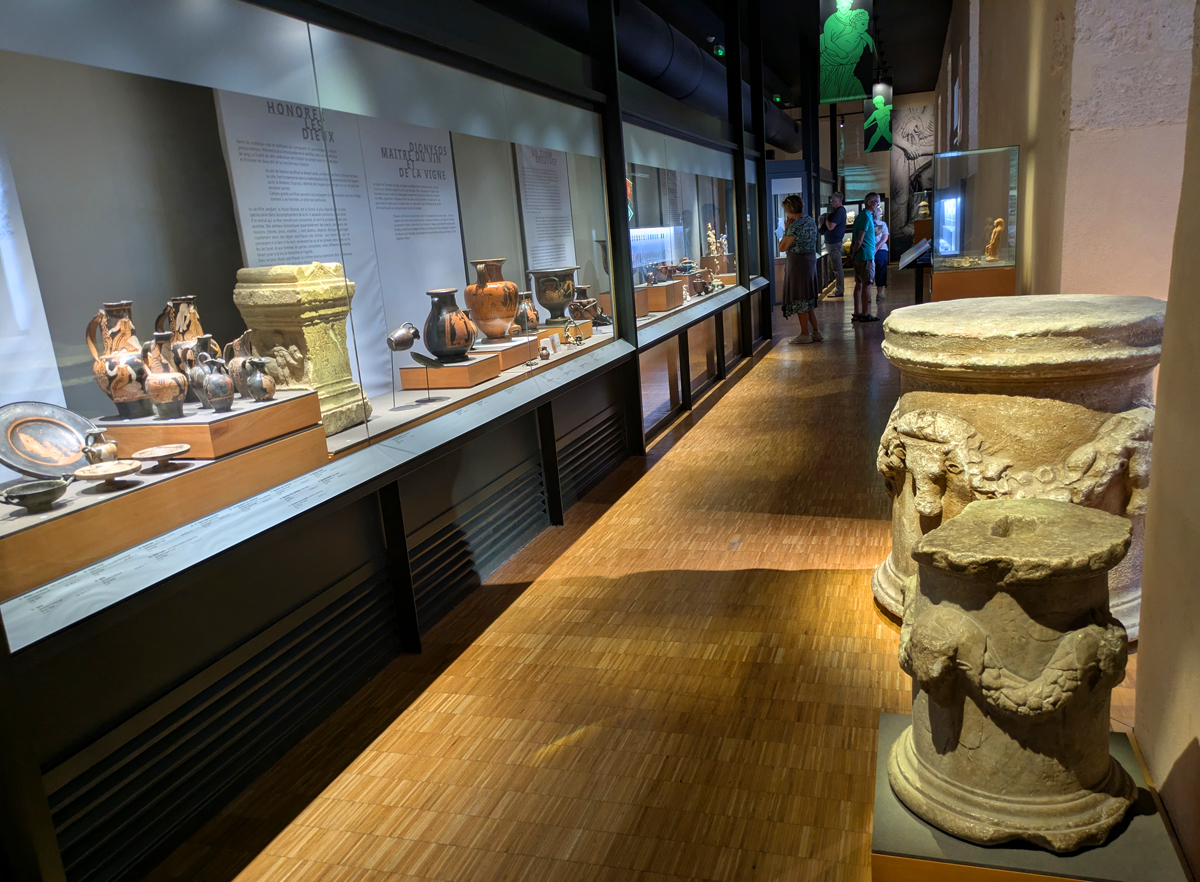
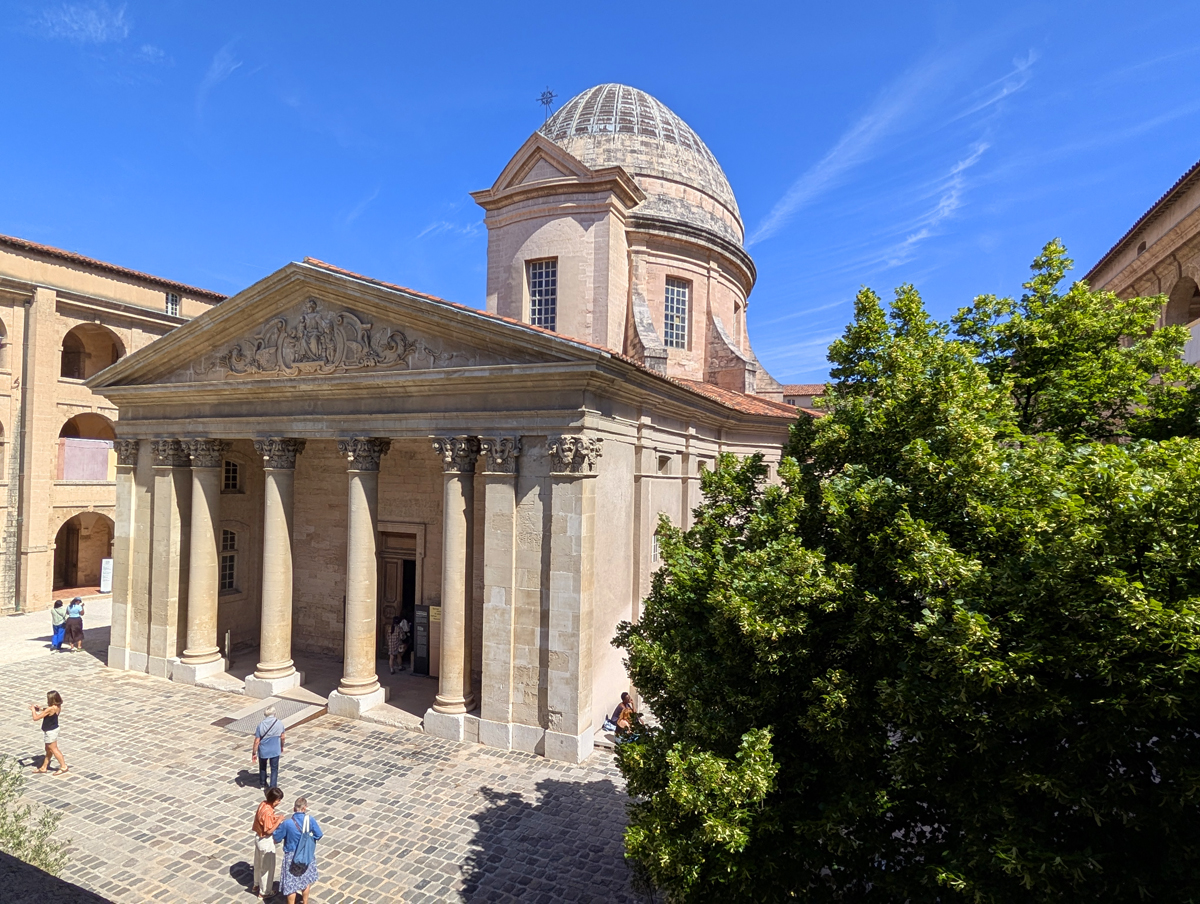
The museum is located in the buildings surrounding a chapel in the center of the courtyard (the chapel is more interesting from the outside than the inside).
Le Panier
The neighbourhood of Le Panier is the oldest part of Marseille, dating back over 2,600 years. Around 600 BC, the Greeks settled here and named it Massalia. That would be changed to Massilia when Roman forces conquered the region in 49 BC.
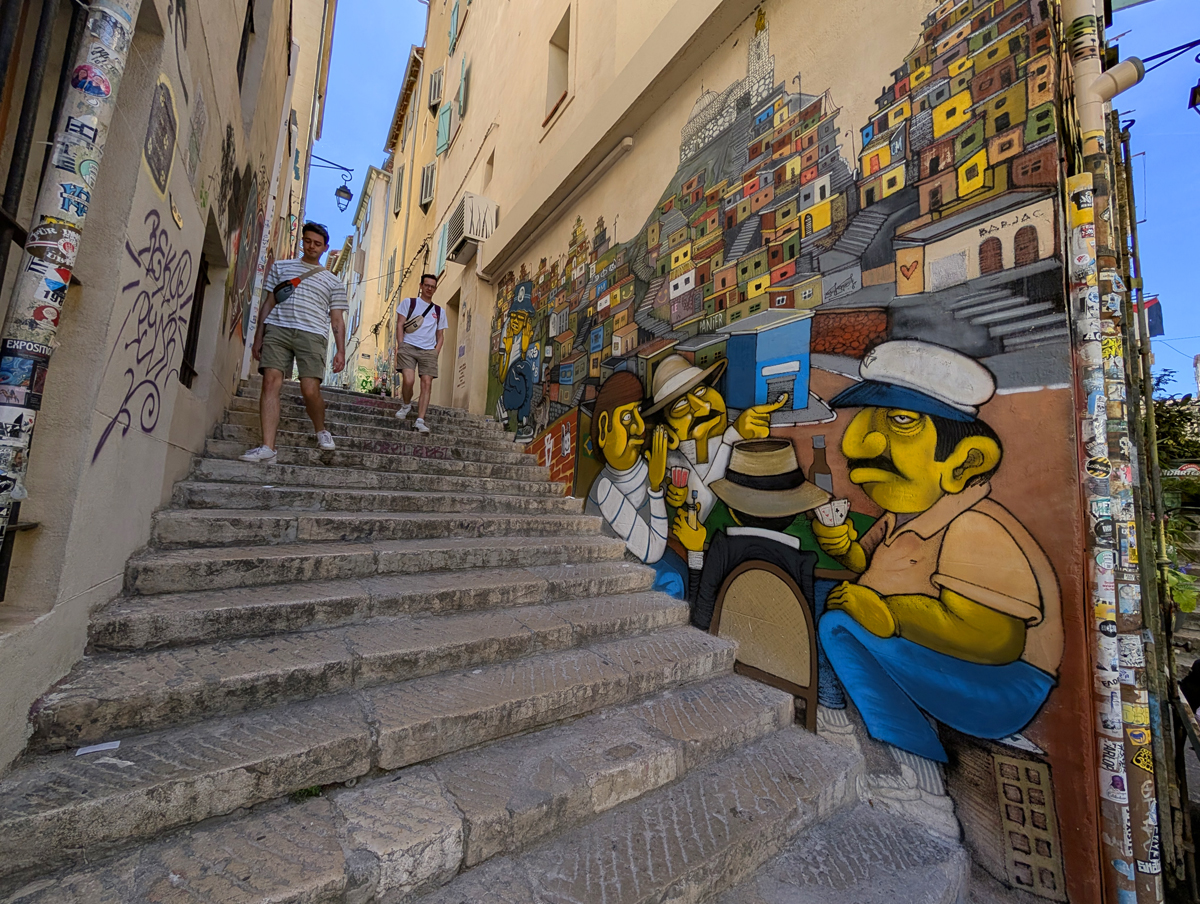
Unfortunately you won’t find any open-air Greek and Roman ruins in Le Panier. What you’ll see today is a Bohemian neighbourhood with lots of street art, souvenir stores and cafés.
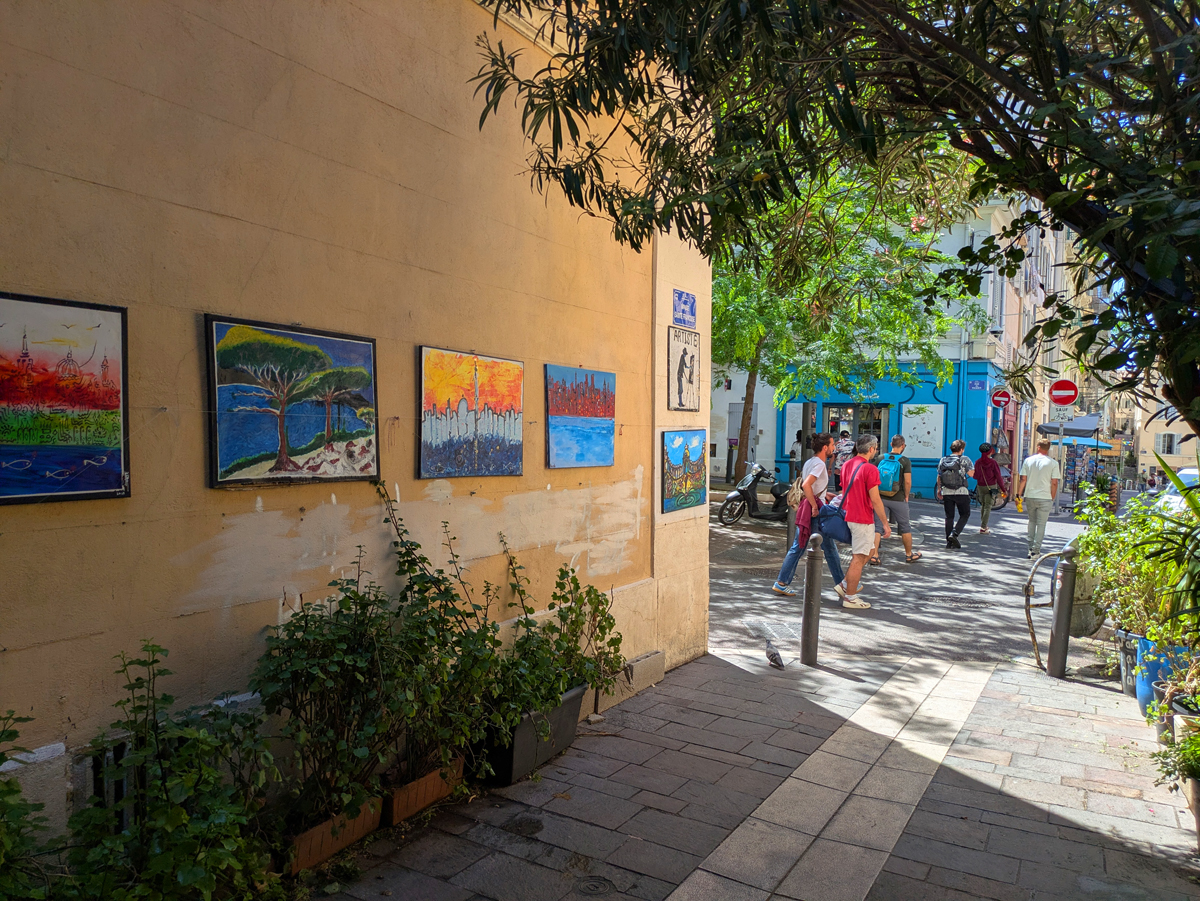
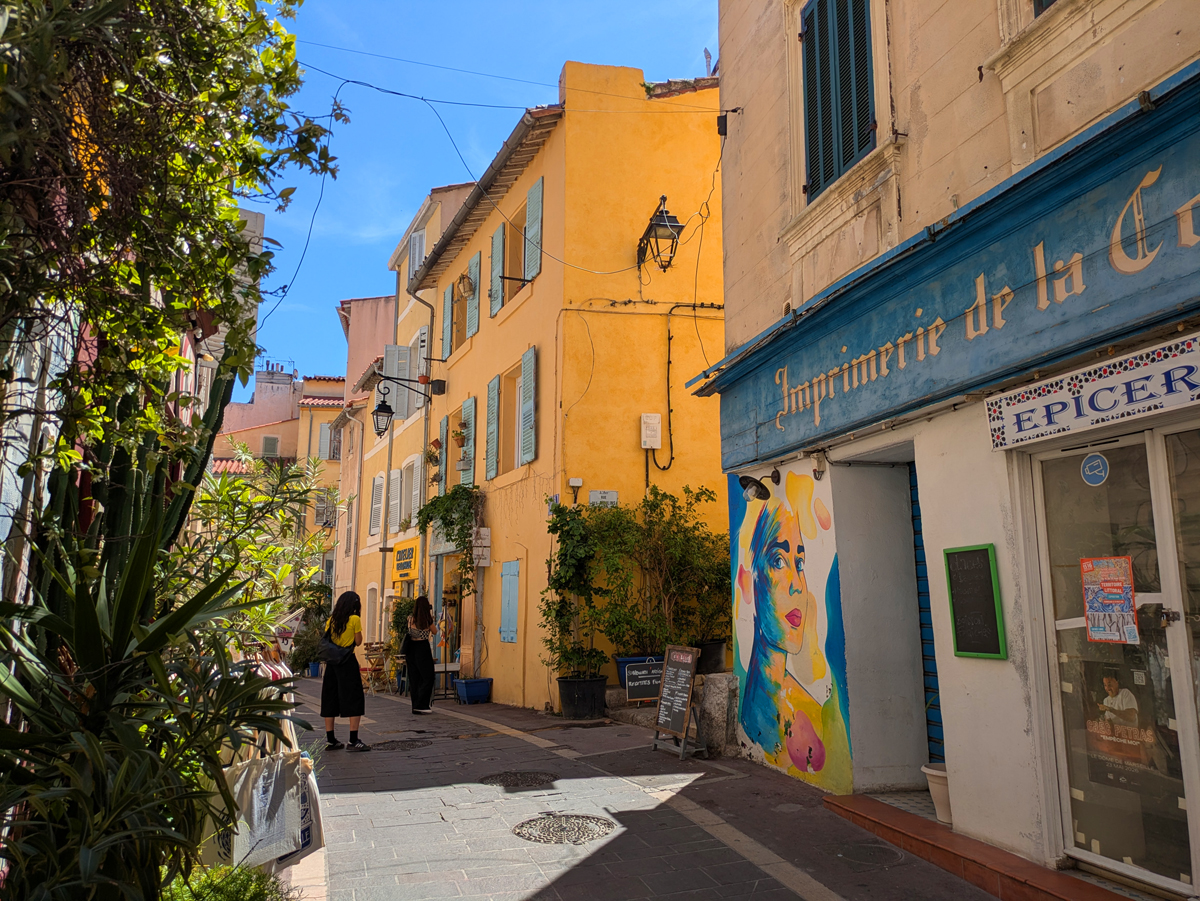
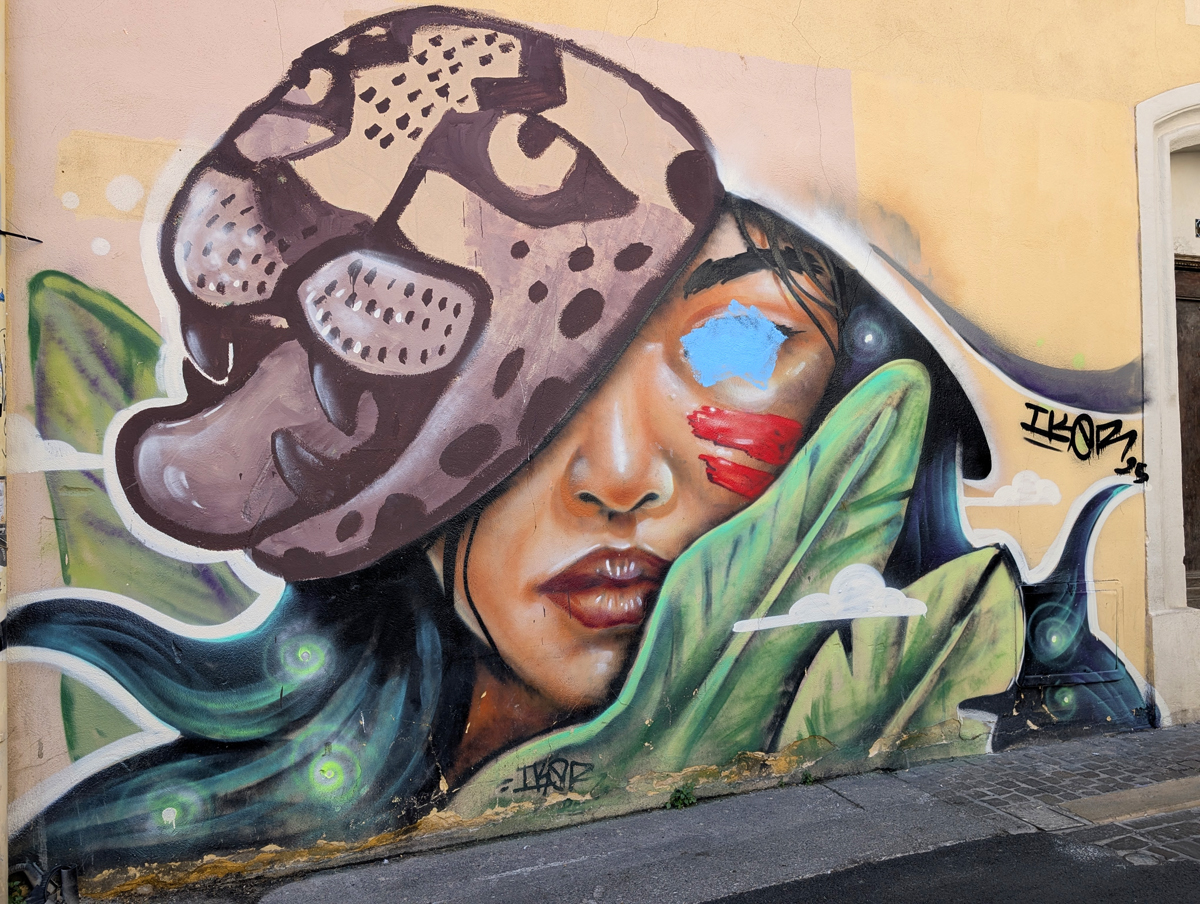
It’s not a large area and it’s worth wandering the streets. Rue du Panier has the most to see and has a vibrant atmosphere. Rue du Petit-Puits and Rue du Refuge are also noteworthy…but it’s honestly such a small neighbourhood that you can just follow your eyes around.
When you’ve finished (and about 30 minutes should do it), head downhill from Rue du Panier towards Marseille Cathedral (Cathédrale la Major).
Marseille Cathedral
There are a few things you may find odd about Marseille Cathedral.
Firstly, it’s quite new. It was built between 1852 – 1893, making it the only cathedral in France to have been built in the 1800’s. So the oldest city in France has one of its more modern Cathedrals. Why? Emperor Napoleon III had decided to have the old (12th) century Cathedral torn down and to have it replaced with a brand new, gigantic Cathedral. That’s why this new Cathedral stands here today.
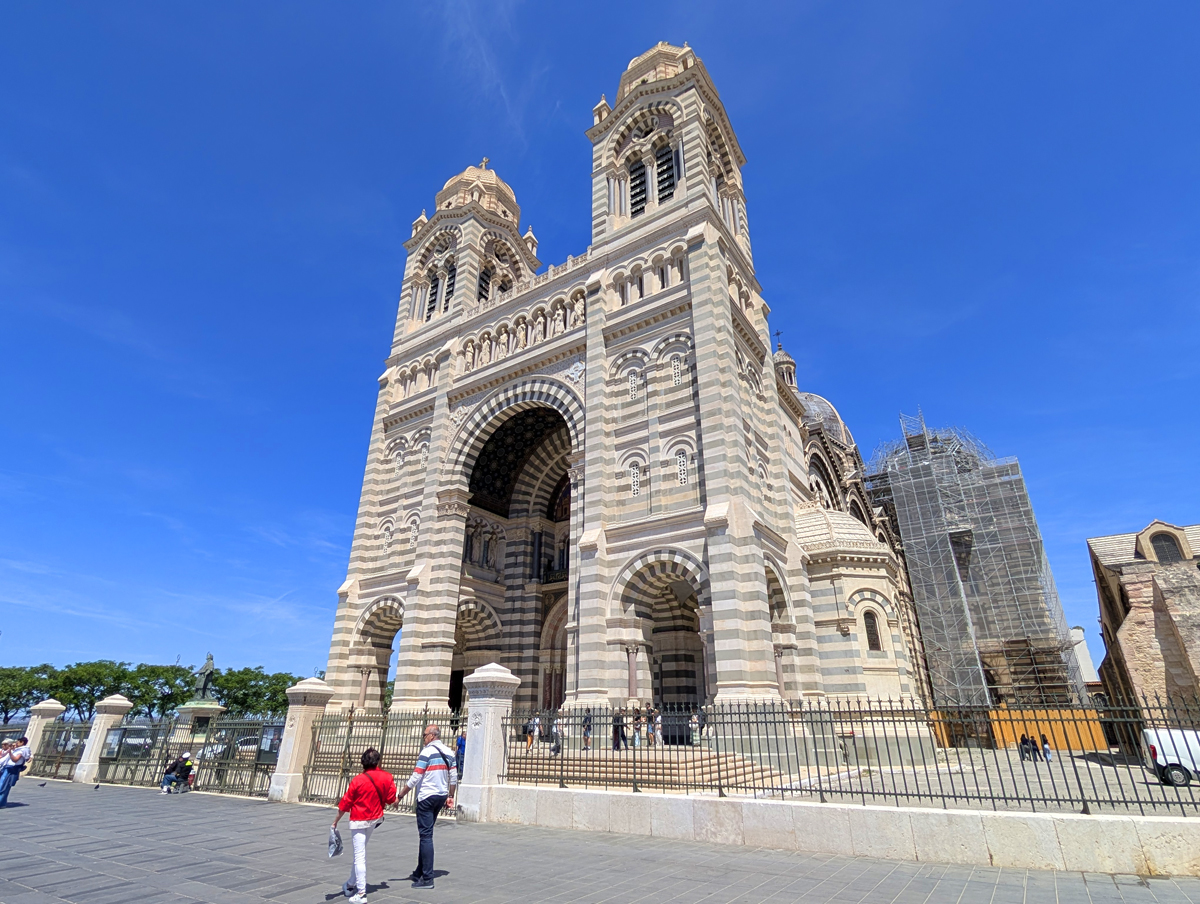
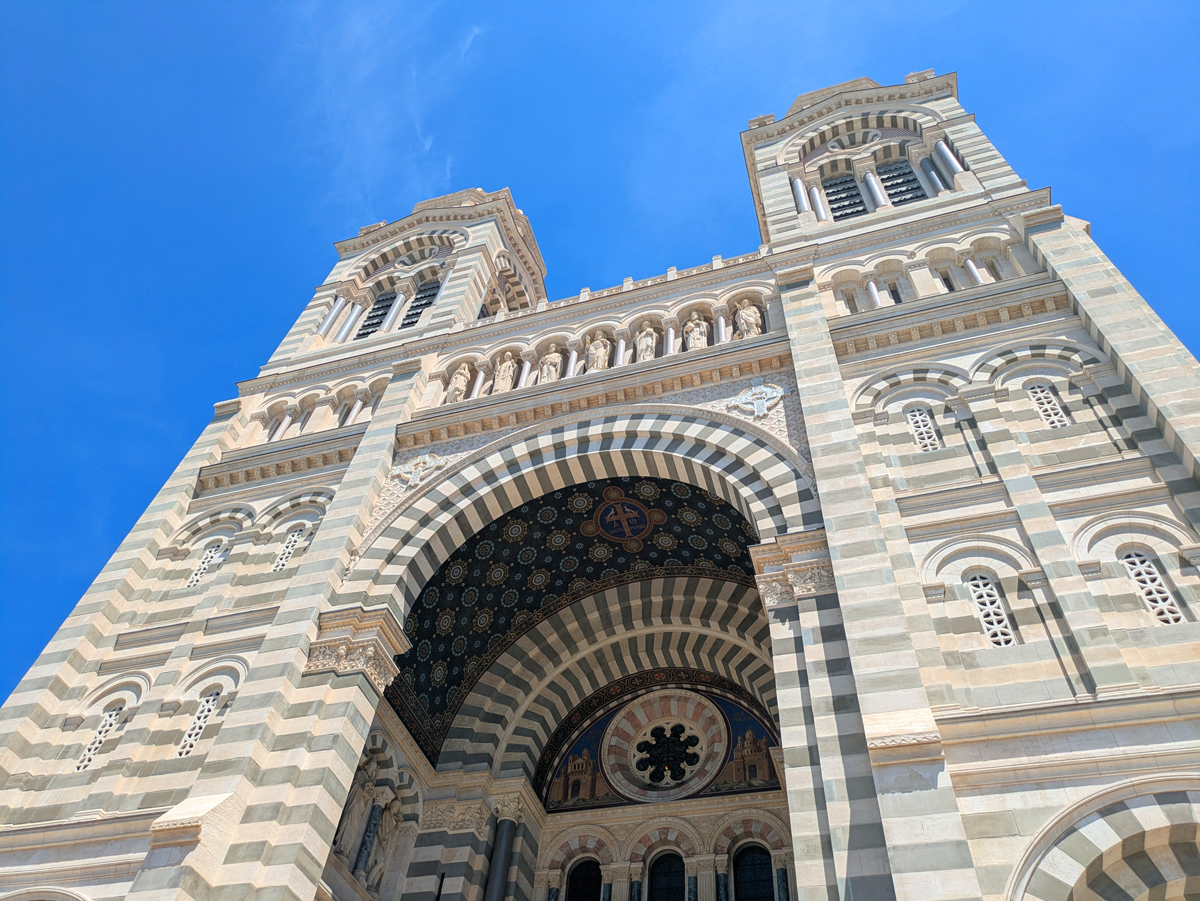
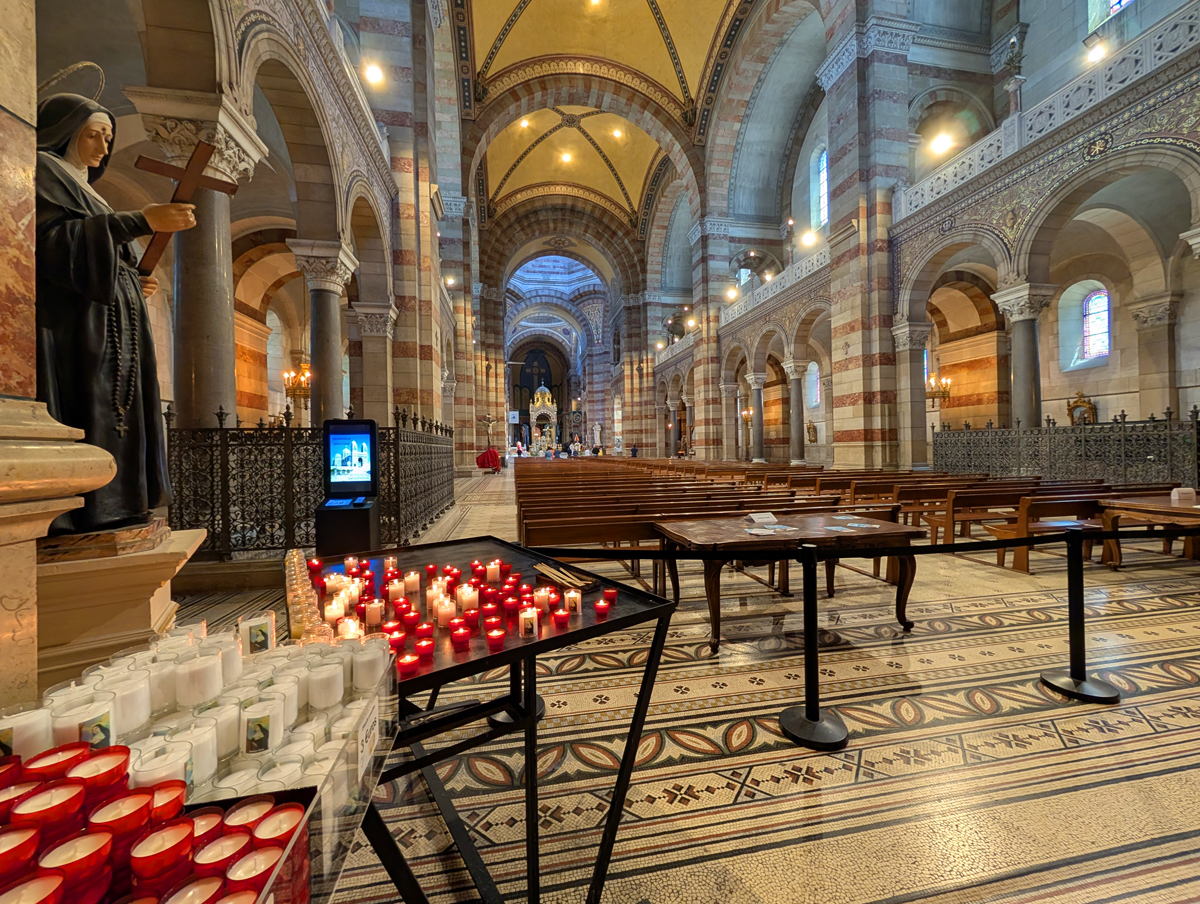
Secondly, why is the Cathedral built in Roman-Byzantine style? It is very different than most French religious buildings which are built in Gothic style. The reason was that in the mid-1900’s Marseille was a major trading port (it’s still the largest commercial port in France) and that much of its trade was with the eastern Mediterranean. The Roman-Byzantine aesthetic—characterized by prominent domes and alternating polychromatic stone stripes—was chosen to honour the city’s multicultural reputation and its ties with Eastern Mediterranean empires.
Note: You’ll also see Marseille’s basilica (Basilique Notre-Dame de la Garde) built in the same style. Another religious building built in Roman-Byzantine style is the gorgeous Basilica of Notre Dame de Fourvière in Lyon. Unsurprisingly, all 3 buildings were constructed around the same period.
Truth be told, Marseille’s cathedral isn’t very interesting and pales compared to the very impressive Basilique Notre-Dame de la Garde which comes soon…
The Old Port
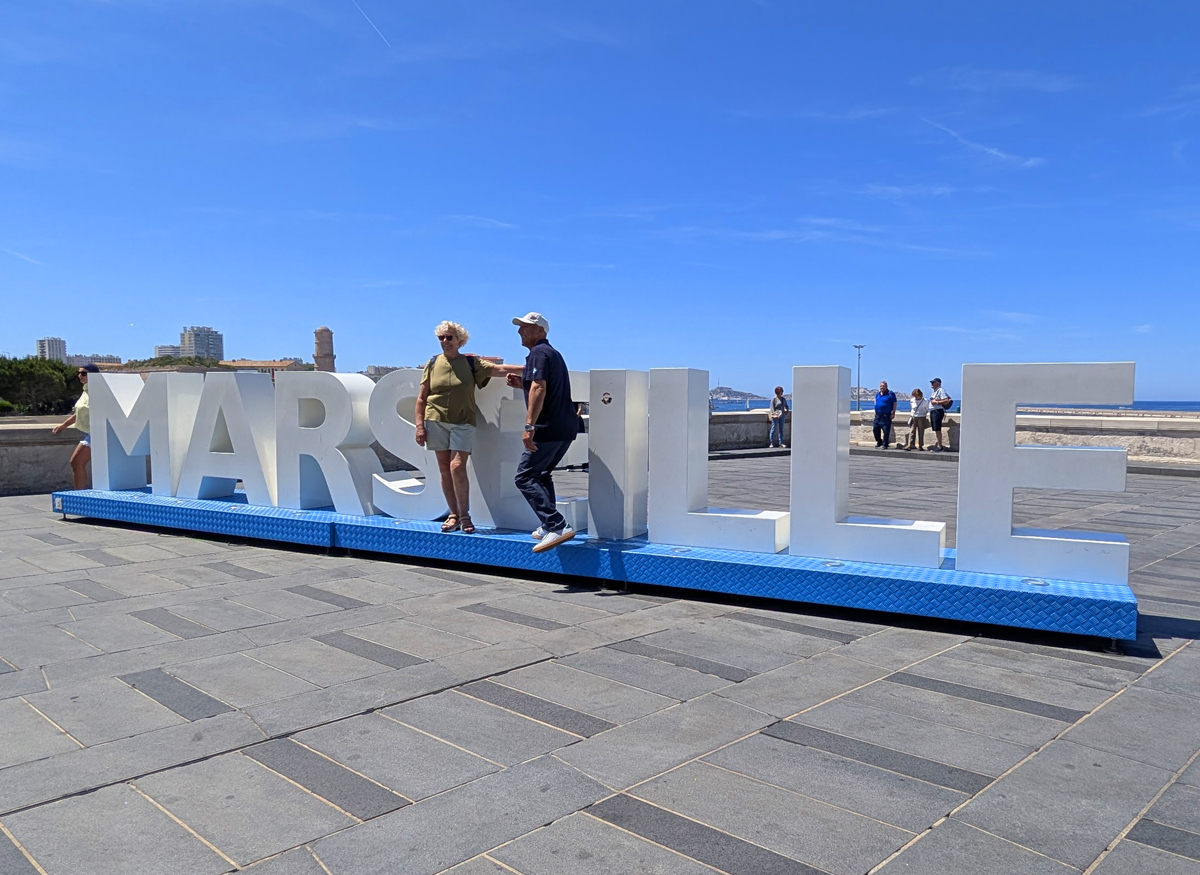
Coming from the cathedral, follow the coastline leading towards the city’s Old Port. Before you do that, you’ll see the large “Marseille” sign just outside the Cathedral. This whole area has in recent times been restored and has monuments, seating areas and a large modern museum (the “Mucem”, a museum dedicated to the history, culture, and anthropology of the Mediterranean region).
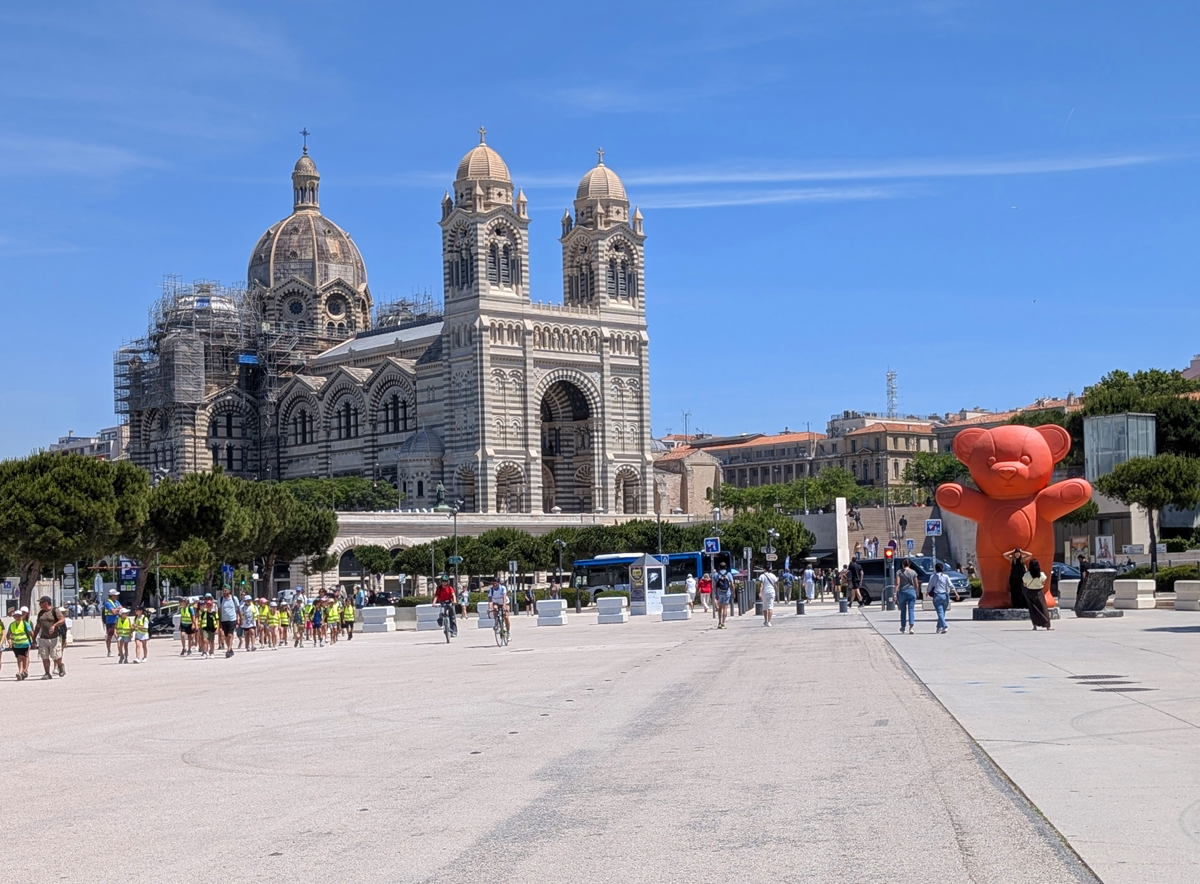
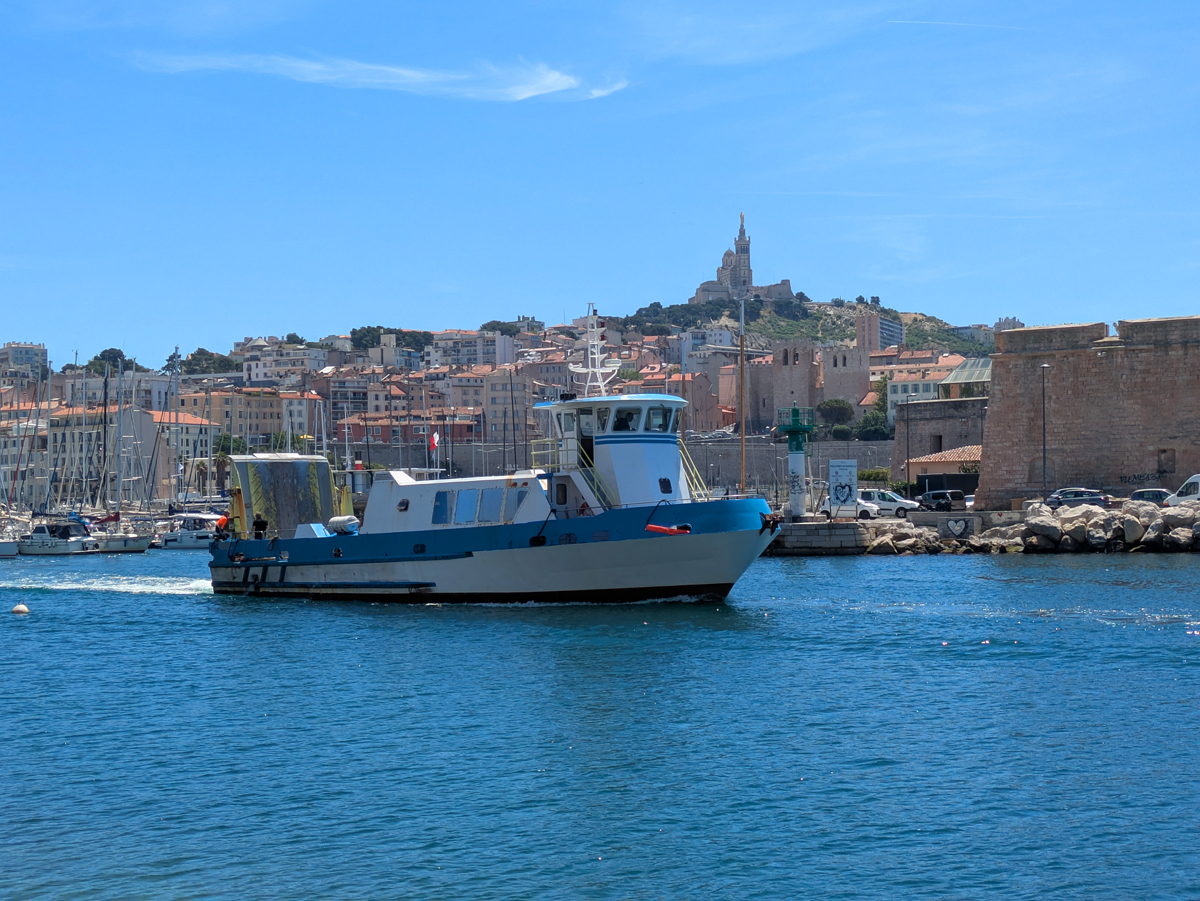
You can walk the ramparts of Fort St-Jean, a fortress built in the 15th century to protect the harbour entrance from attack. Some nice views of the Mediterranean which, as you turn the corner, develop into dramatic views of the Old Port and the Basilica at the top of the opposite hill.
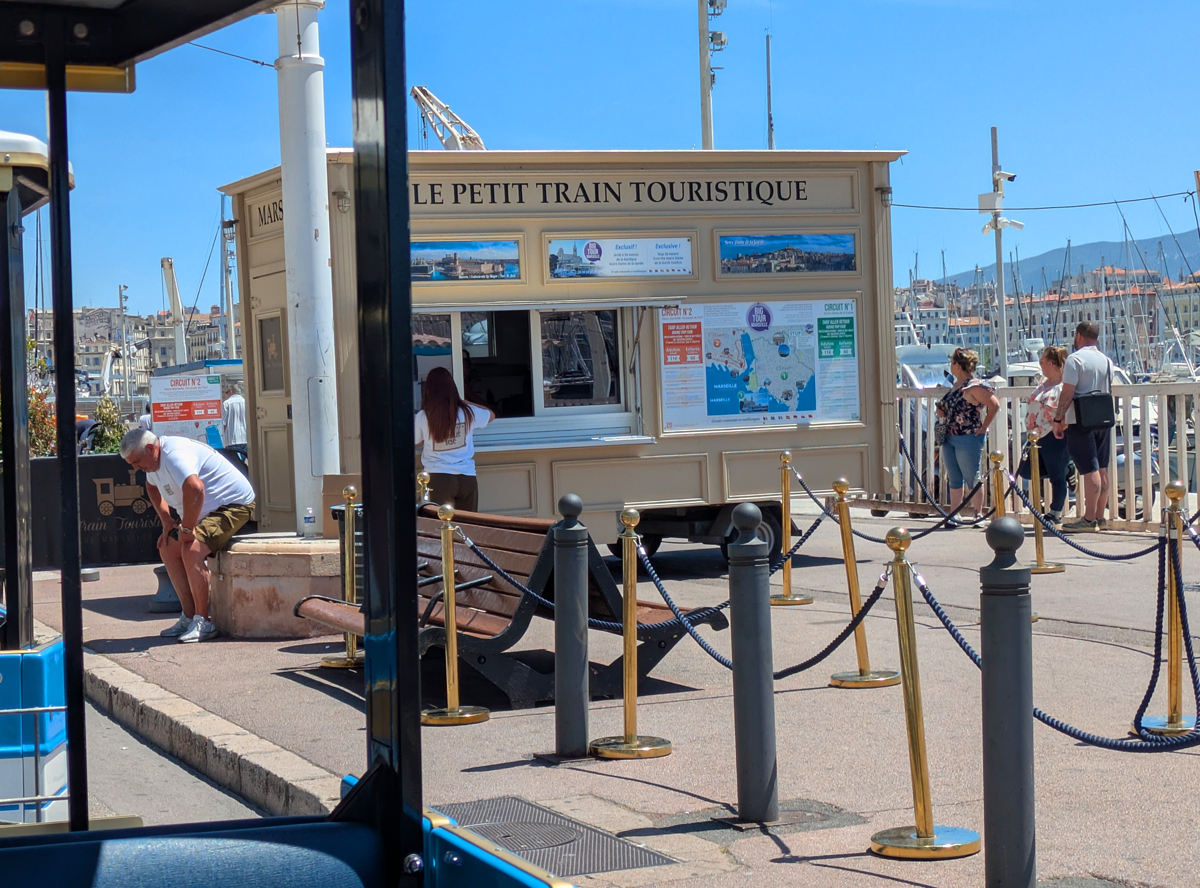
Why you should take the Le petit train touristique
As you enter the Old Port area, you’ll see the kiosque for Le petit train touristique. Why take it? Because it will take you Basilique Notre-Dame de la Garde, high up on the hill. Not only that, it will drive around the entire Old Port area and along the coast (known as the Corniche Président John Fitzgerald Kennedy) before doing the steep climb to the basilica.
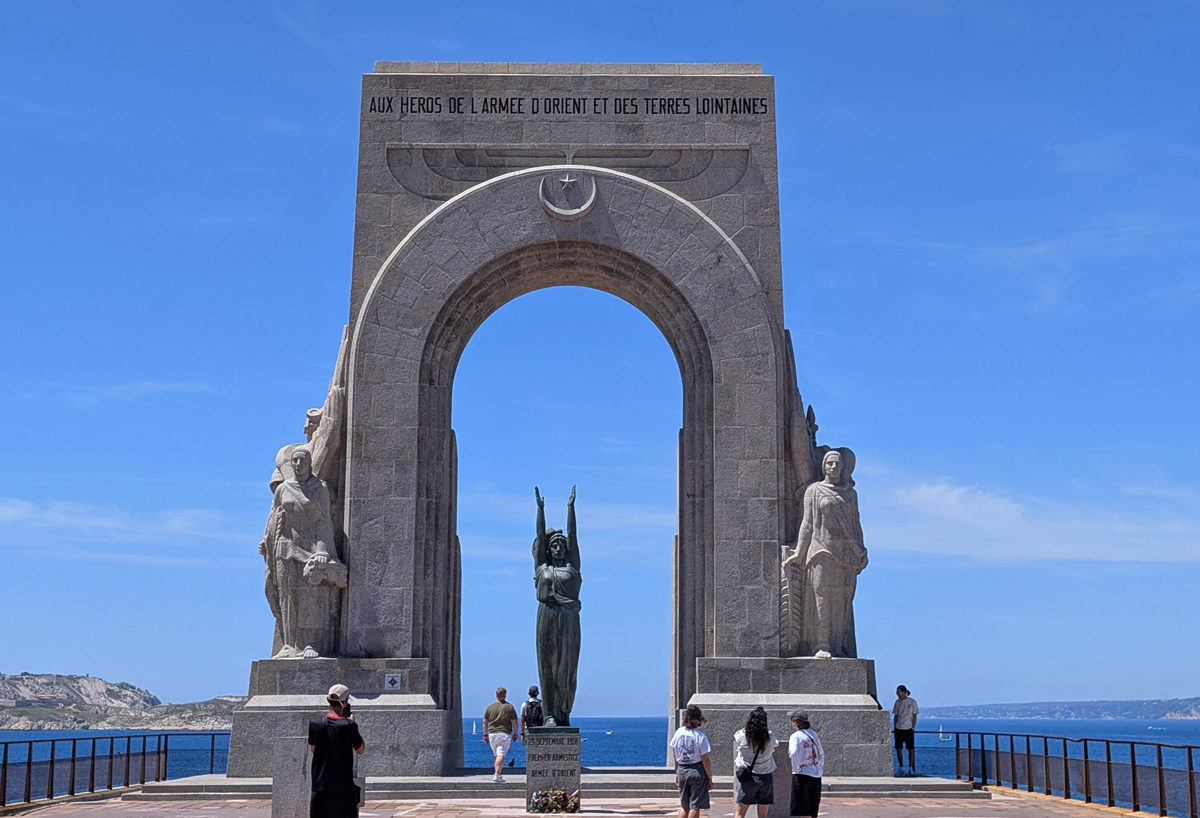
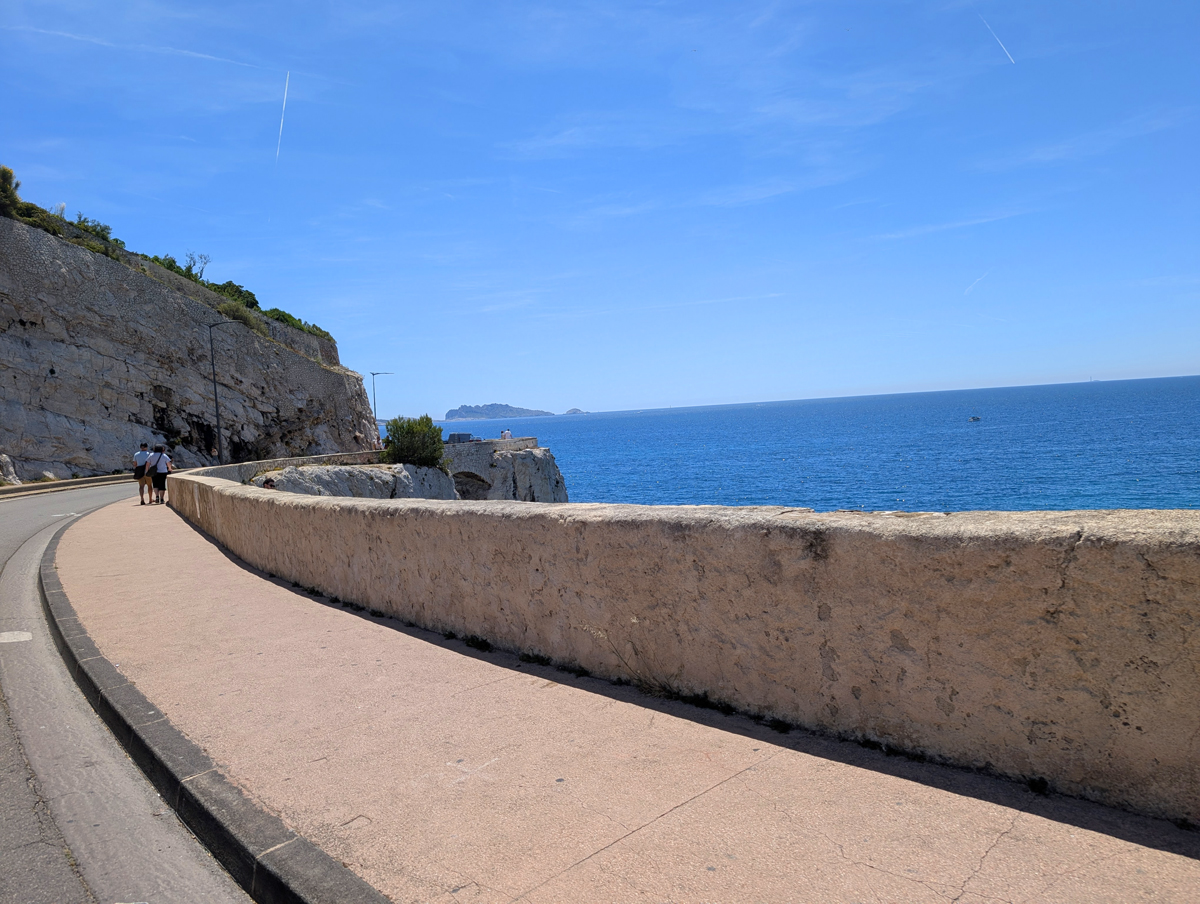
Between the limited time we had in Marseille and the heat, it was the best way to see what we wanted to see. Cost to take the train: 11 Euros/pp.
The highlight of Marseille is the Basilique Notre-Dame de la Garde
This location high on the hill was always a pilgrimage spot venerating the Virgin Mary. It was especially popular with sailors and fishermen. With Marseille becoming a major trading center, the small chapel that had been built up here had grown to be too small. So it was decided that a large basilica would be built. And again, for the same reasons that the cathedral was built in Roman-Byzantine style, the basilica was built in the same style. Construction started in 1853 and it was completed in 1897.
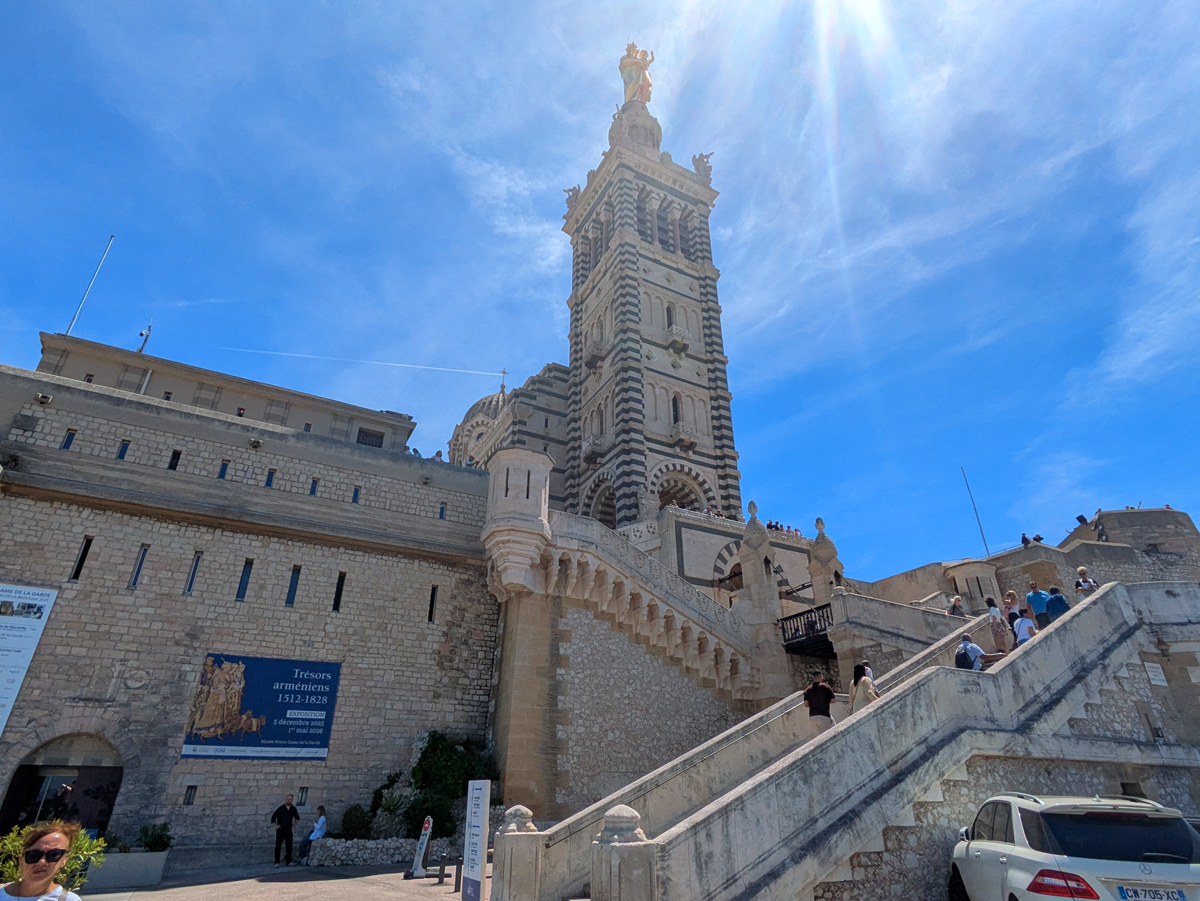
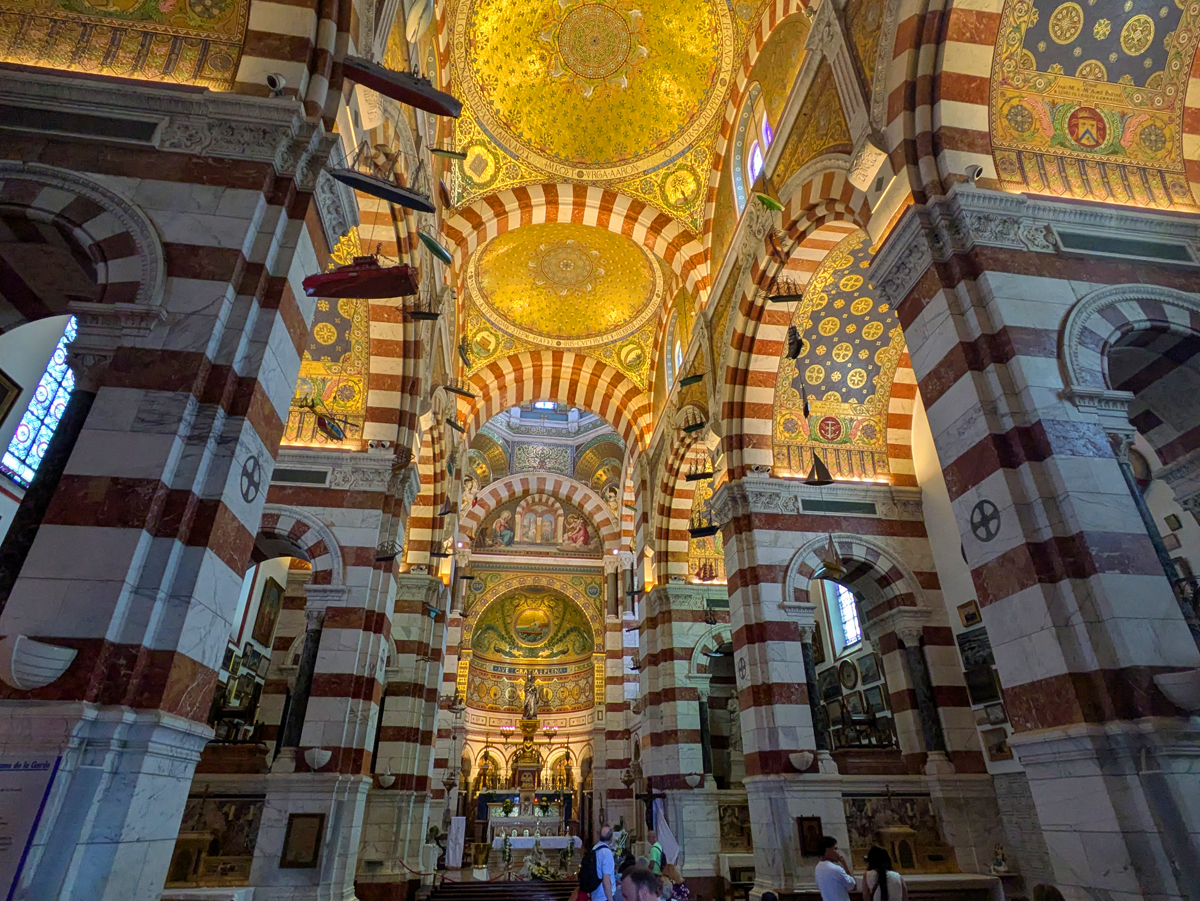
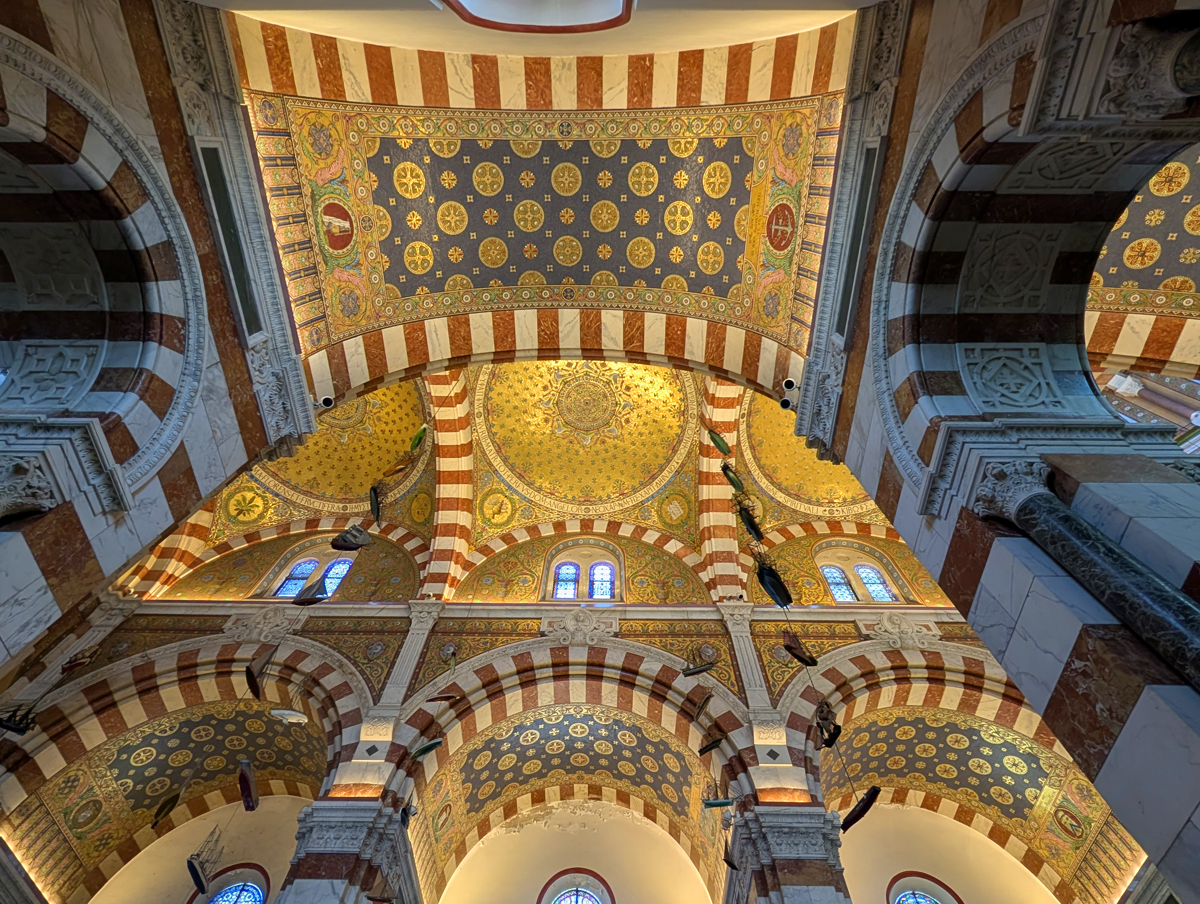
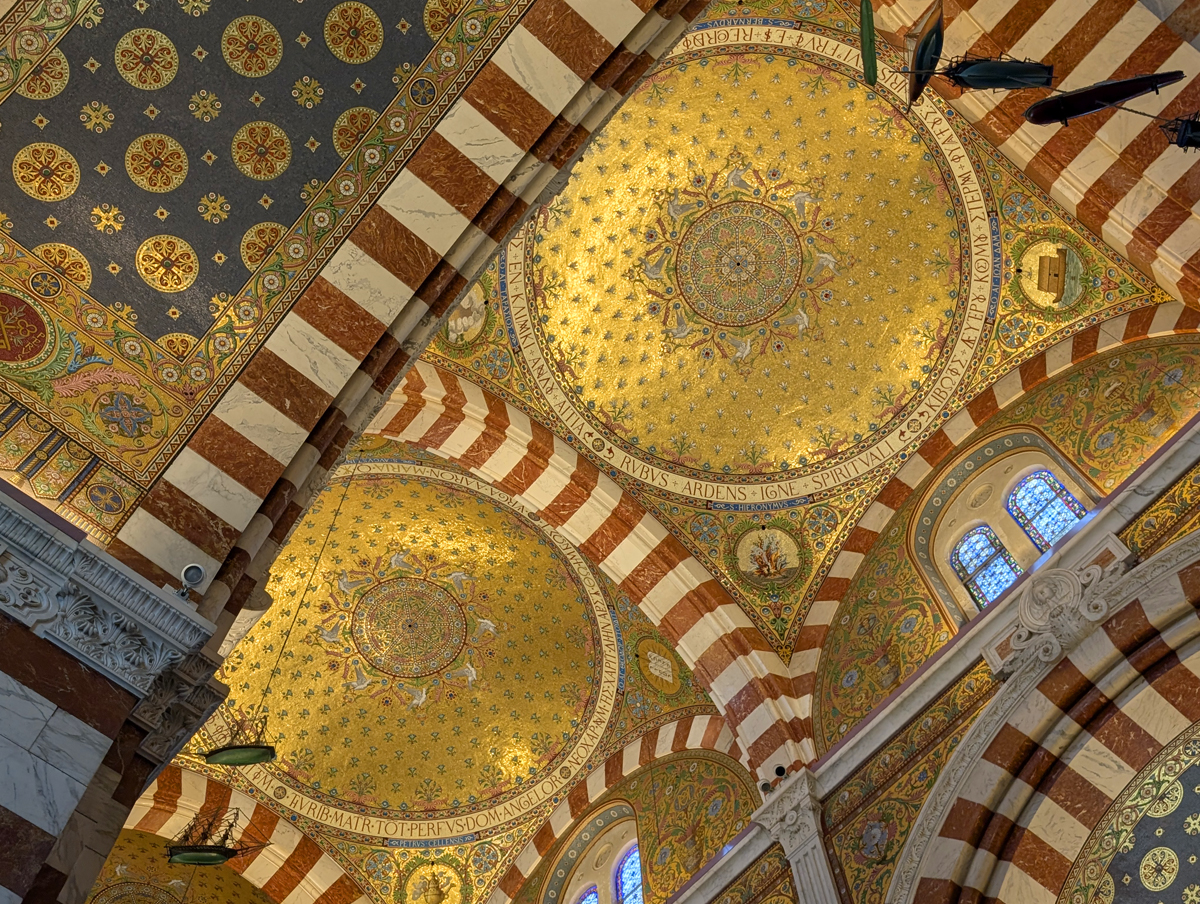
Note: The basilica, just like the Cathedral, is FREE to visit.
But coming up here is more than just about the basilica: the views of the city from up here are incredible.
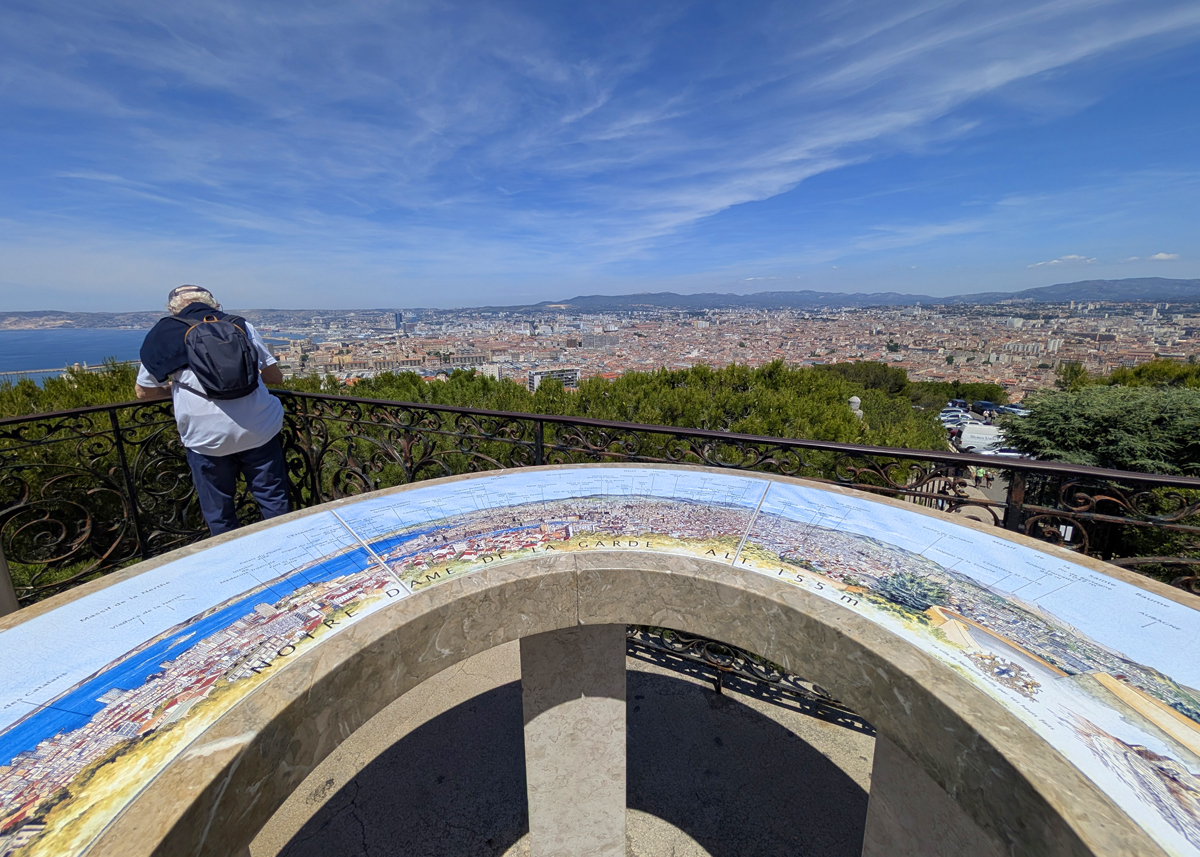
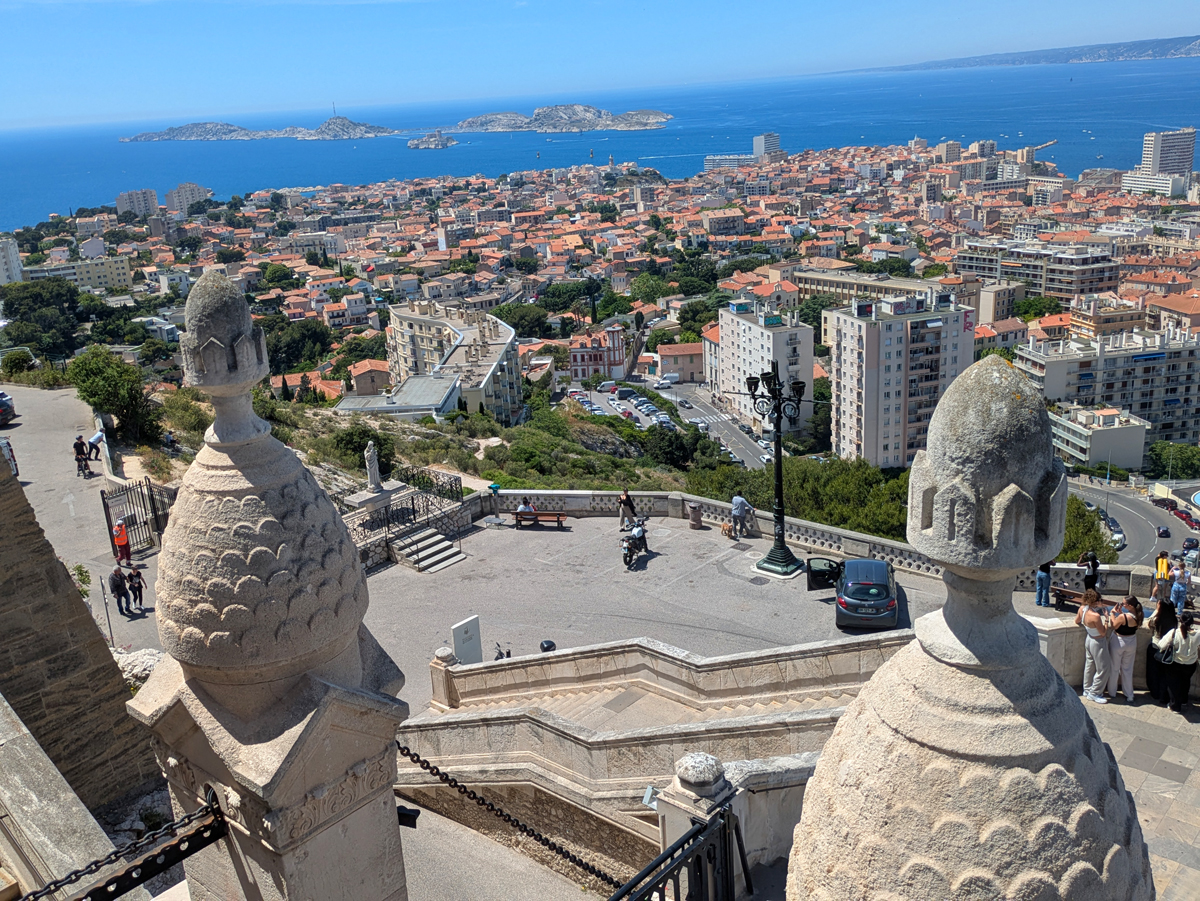
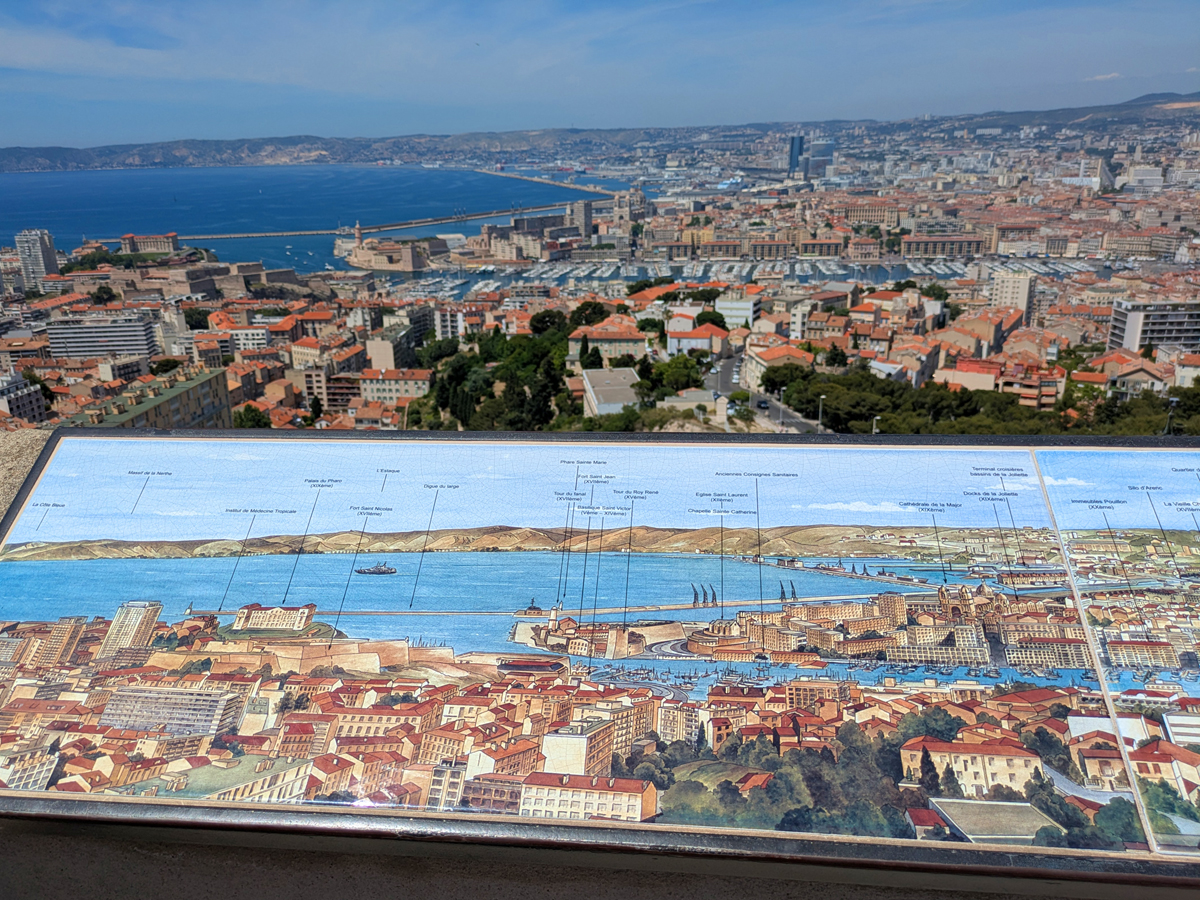
More to see in the Old Port
The tourist train brought us back to our starting point in the Old Port. From here we walked around and explored. Really, the highlights are the views, the boats and the vibrant atmosphere.
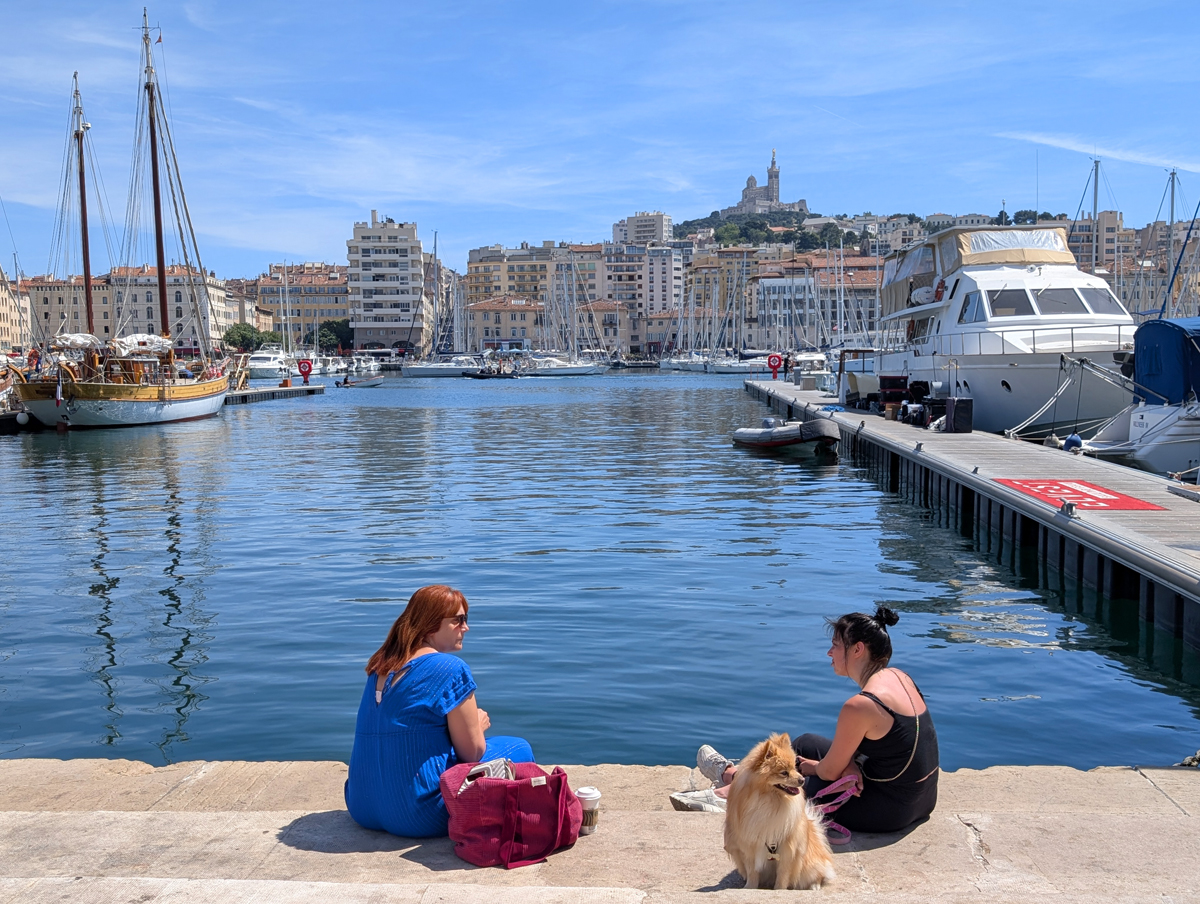
But there are a couple of other points of interest:
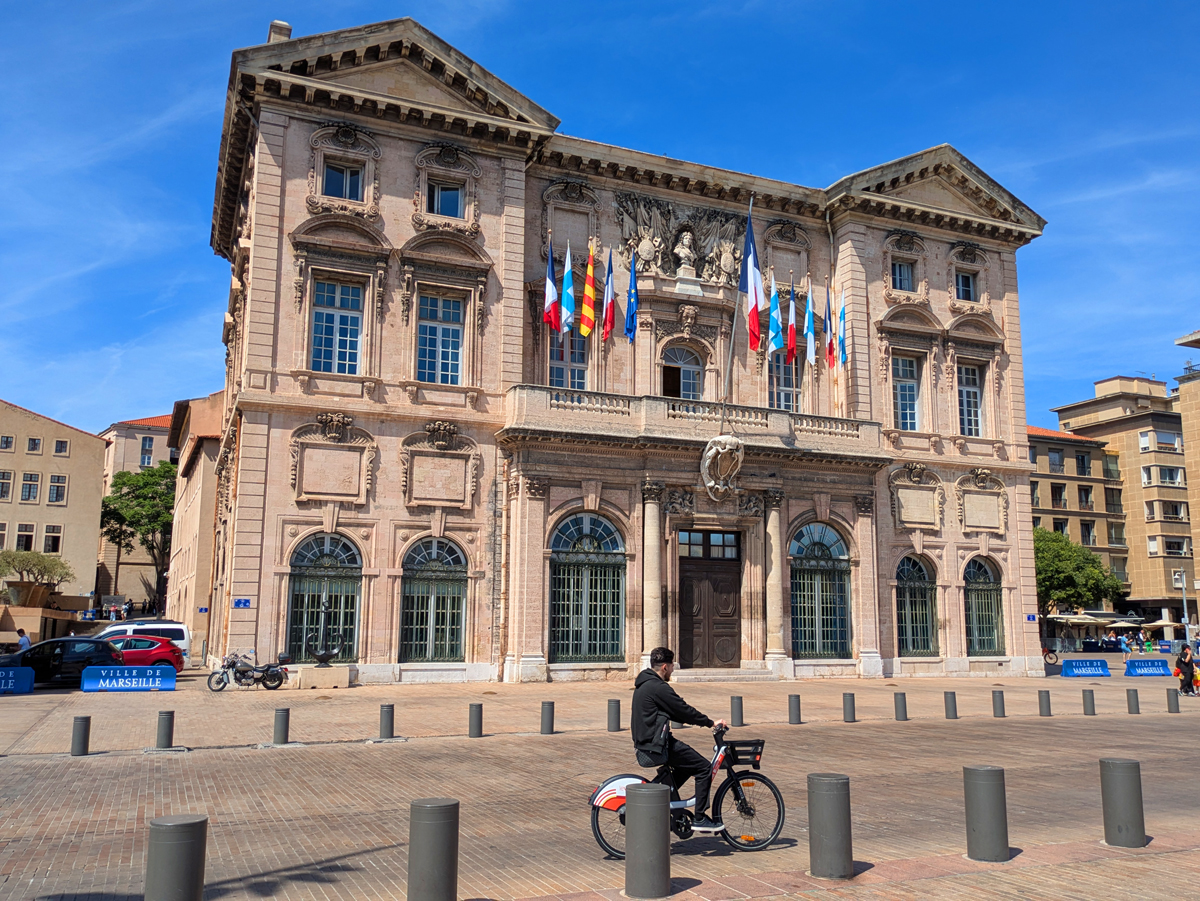
Marseille City Hall (Hôtel de Ville de Marseille). A 17th century Baroque building across the street from the waterfront.
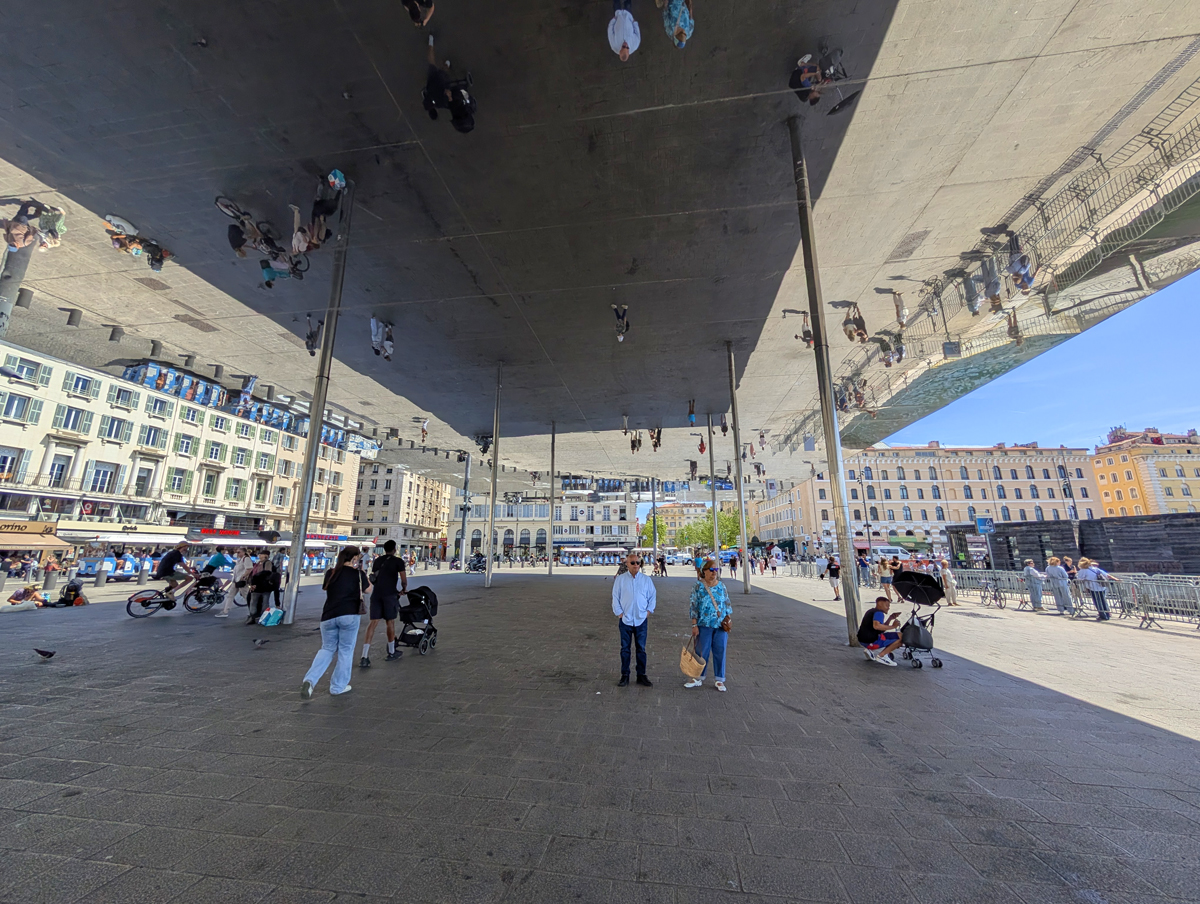
L’Ombrière, a giant 1,000-square-meter mirrored canopy at the very end of the Port (a good place to take a break from the sun on a hot day).
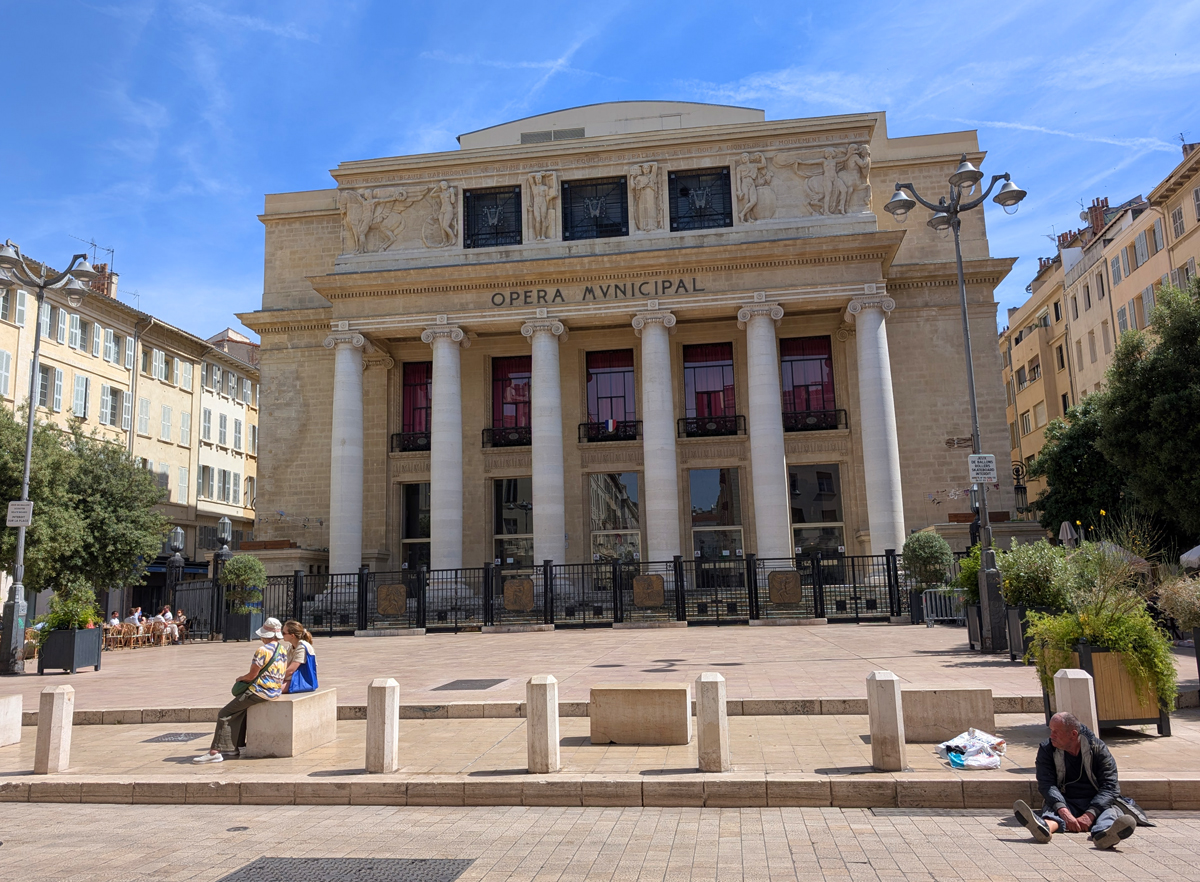
Opéra de Marseille. Originally built in 1787 in Neoclassicism style, it was the 2nd largest theatre in France. After a fire in 1919, the interior was totally redone in Art deco style making it France’s premier Art Deco opera house.
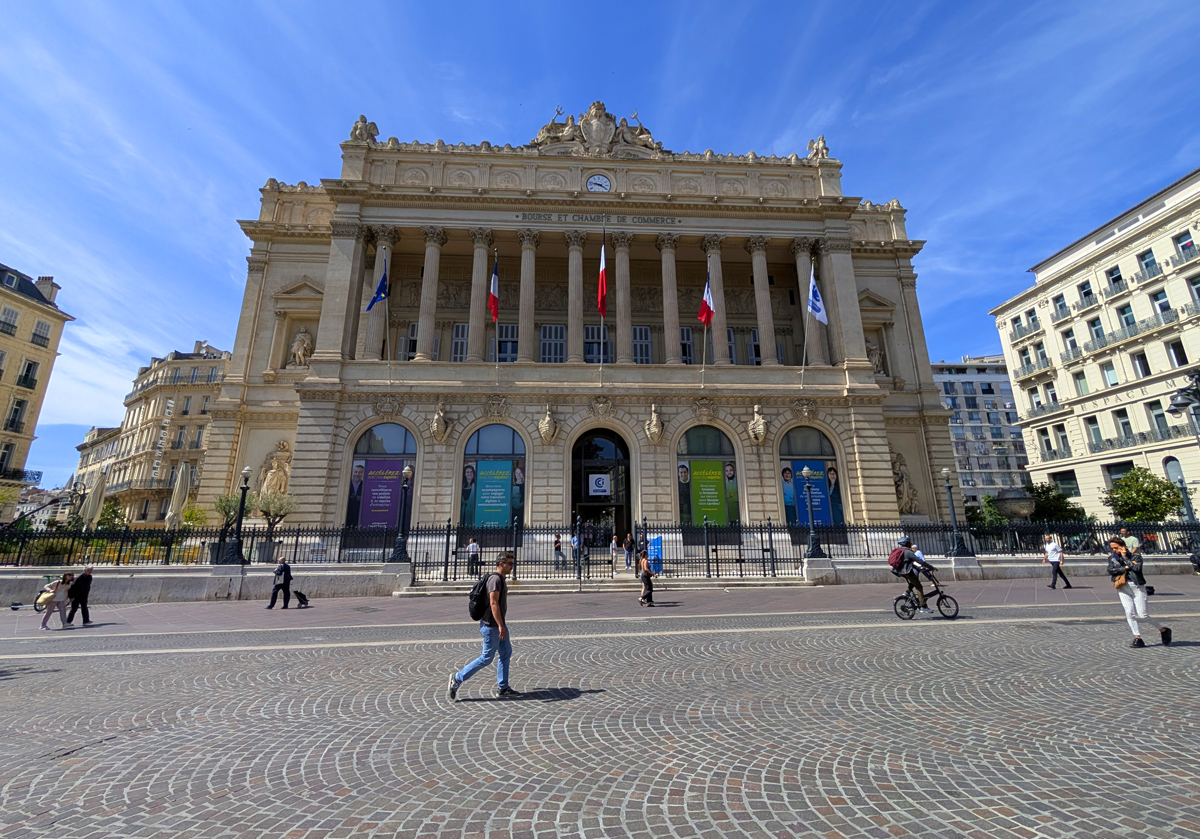
Palais de la Bourse. A gorgeous mid-19th century building.
Tourism office. Right next to the above Palais de la Bourse is Marseille’s tourist office. Address: 11 La Canebière.
From the tourist office we walked up busy La Canebière (one of Marseille’s famous avenues) to Boulevard d’Athènes where we made a left to the train station. Note: keep your eyes open. It was mid-afternoon and the street was dodgy. It was here we saw (separately) two teams of police officers take down a couple of young guys, most probably for something drug related.
Arriving back at Marseille Saint-Charles (the train station) from this direction, you’ll be climbing up a huge staircase – the 125 step staircase (built in 1925) has sculptures and panoramic views of the city.
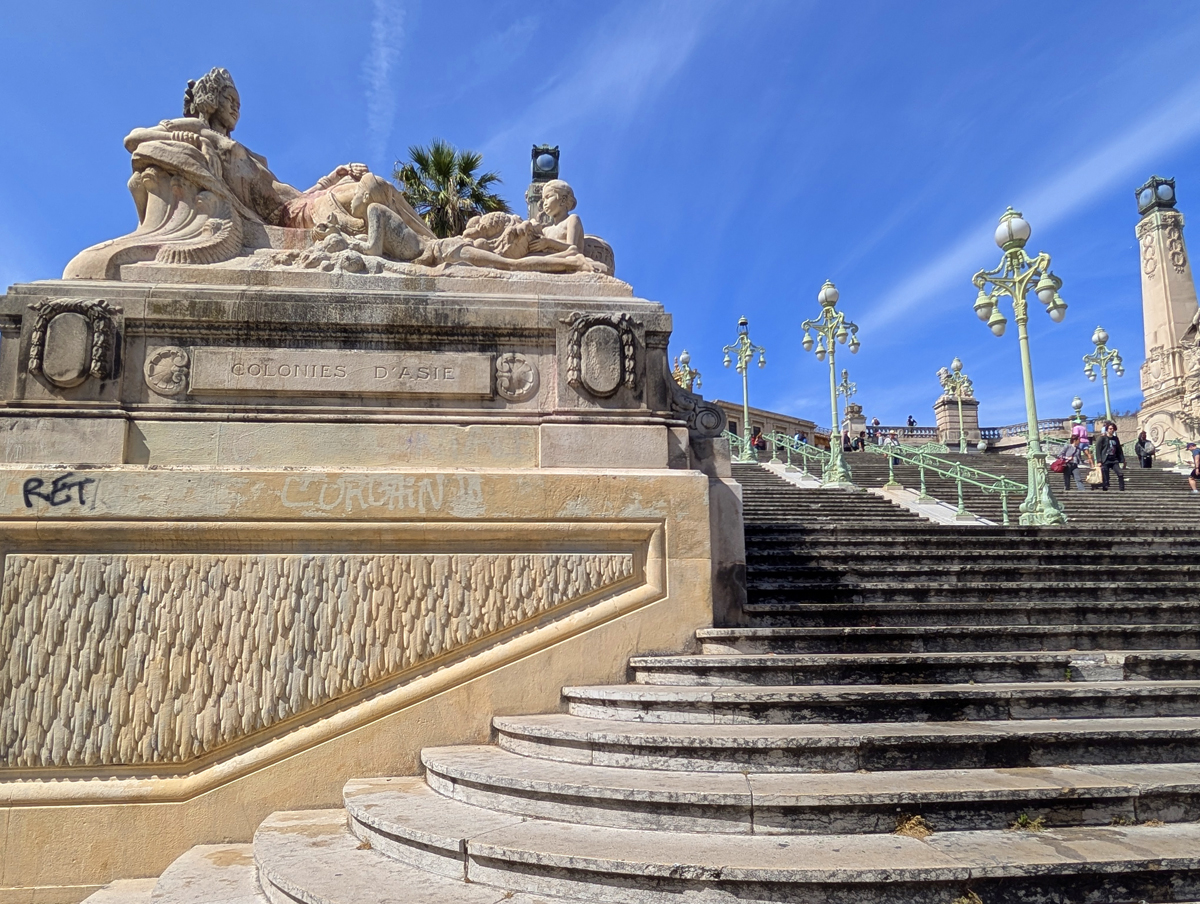
All in all, we spent about 4 hours in Marseille. That’s really all you need.
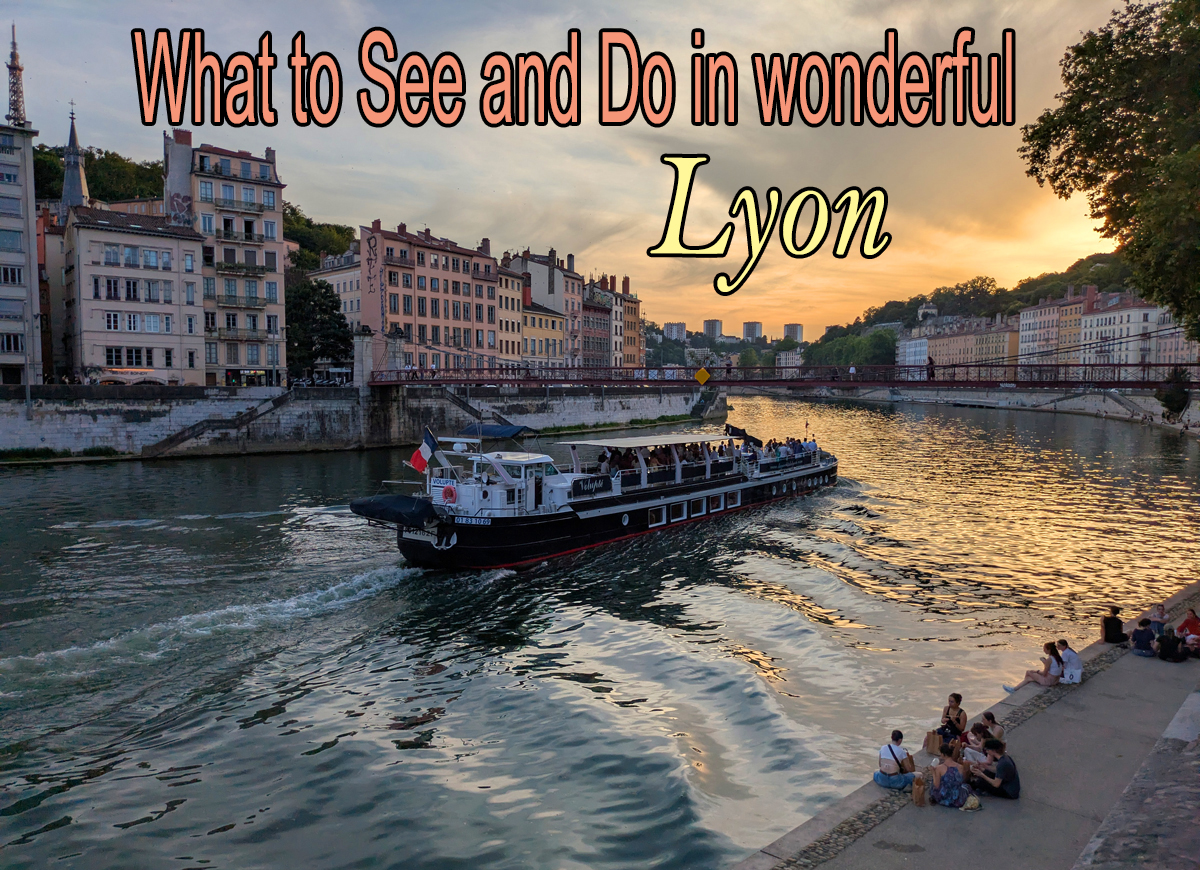
Related: What to See and Do in wonderful Lyon
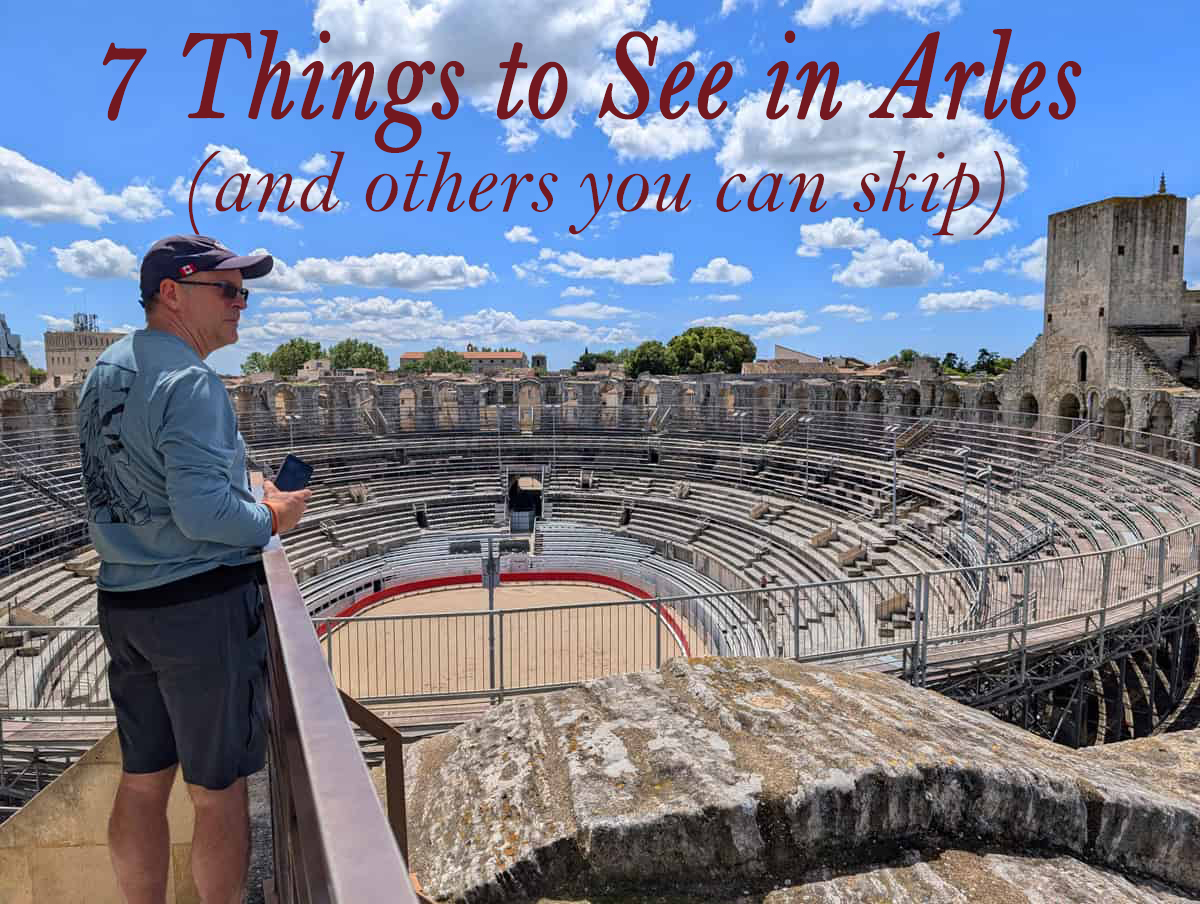
Related: 7 Things to See in Arles (and others you can skip)
We stepped off the train in Marseilles and began to walk toward the stairs when we saw a family living on a filthy mattress at the top of the stairs, the stench was overwhelming. First impressions. I wanted to leave right then and there but my husband convinced me to stay and do a little exploring. We had lunch near the port, which was a nice spot with the boats and water, but my senses were on overload and I couldn’t relax enough to enjoy the experience. I just didn’t feel safe. We meandered for a while and wanted to see the cathedral but it was closed. I think we spent maybe three hours before getting back on the train. Gritty doesn’t begin to cover it. I was so disappointed so I went looking for confirmation of my assessment of the city and found it in an article by Rick Steves. I wish I had read it before we went. But, as they say you have to take the good with the bad to get the full experience.
Thanks for that Patti! I think we lived the same experience 🙂
We weren’t huge fans either. Did you make it to Palais Longchamps? That was pretty.
It’s a bit outside of the area we covered and we would have had to do the unthinkable…stay longer in Marseille 🙂 Just kidding…