
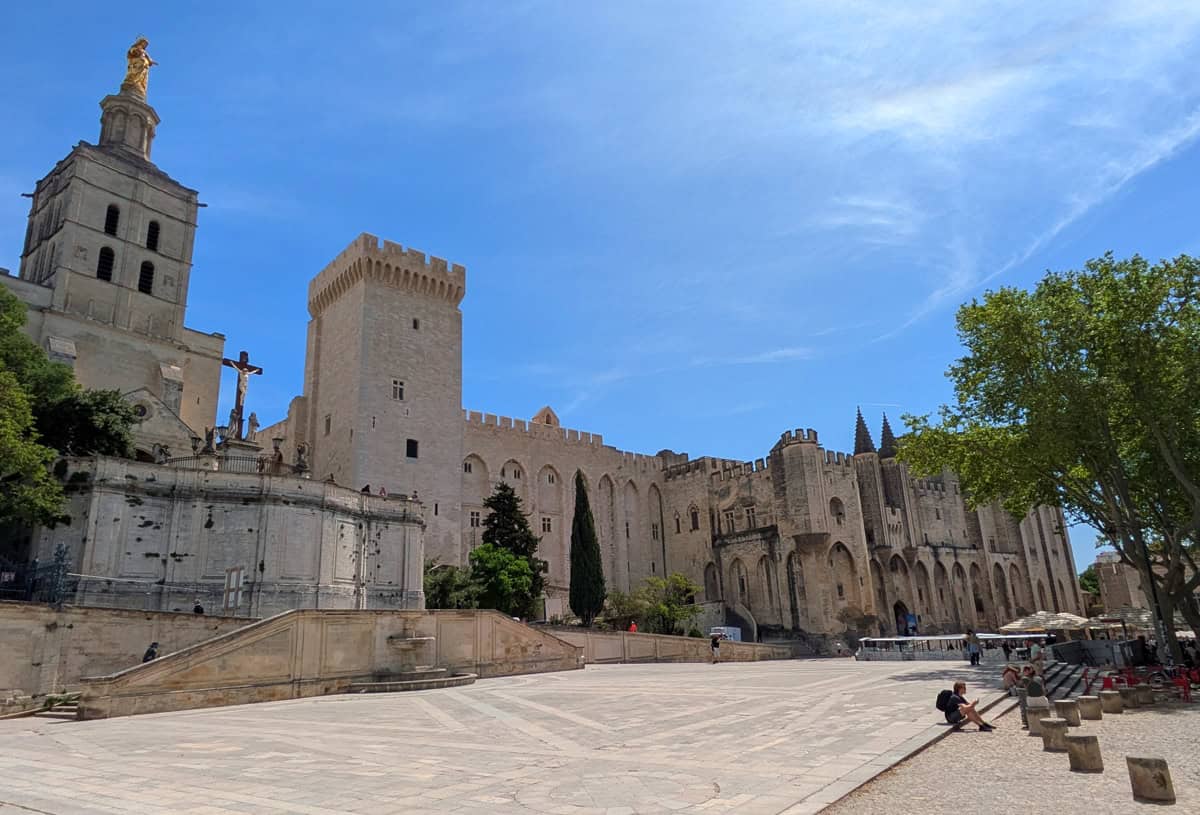
10 Things to Do in Avignon (Provence, France).
We were in Avignon for a month. We fell in love with the city and got to know it well.
In this post I cover 10 things to do in Avignon. Many of the things I mention below I lump sum in different categories – as you’ll see, I actually cover a lot more than 10 things.
10 Things to Do in Avignon
1. Visit the Palais des Papes
Avignon is famous for two things, one of them being the Palais des Papes (the Pope’s Palace). What many don’t know is that the Popes of Rome actually moved to Avignon for almost 70 years in the 14th century. It was known as the Avignon Papacy and it lasted from 1309 to 1376.
Why move the Papacy to Avignon? There are several reasons:
1) Rome was politically unstable at the time and several powerful aristocratic families created division within the College of the Cardinals, the body that chose the Pope. Some Popes would leave Rome and move the papacy to different cities in Italy or France just to get away from Rome.
2) the French King (Philip IV) had influence over the new French Pope at the time (Pope Clement V who was elected in 1305). The French king was one of the most powerful monarchs in Europe and Clement thought it important to buy the support of the King. That was one reasons to choose a location in France.
3) Avignon was about midway between Paris and Rome and was controlled by the Kings of Naples, a vassal of the Pope. This gave the Pope security while keeping a certain degree in independence.
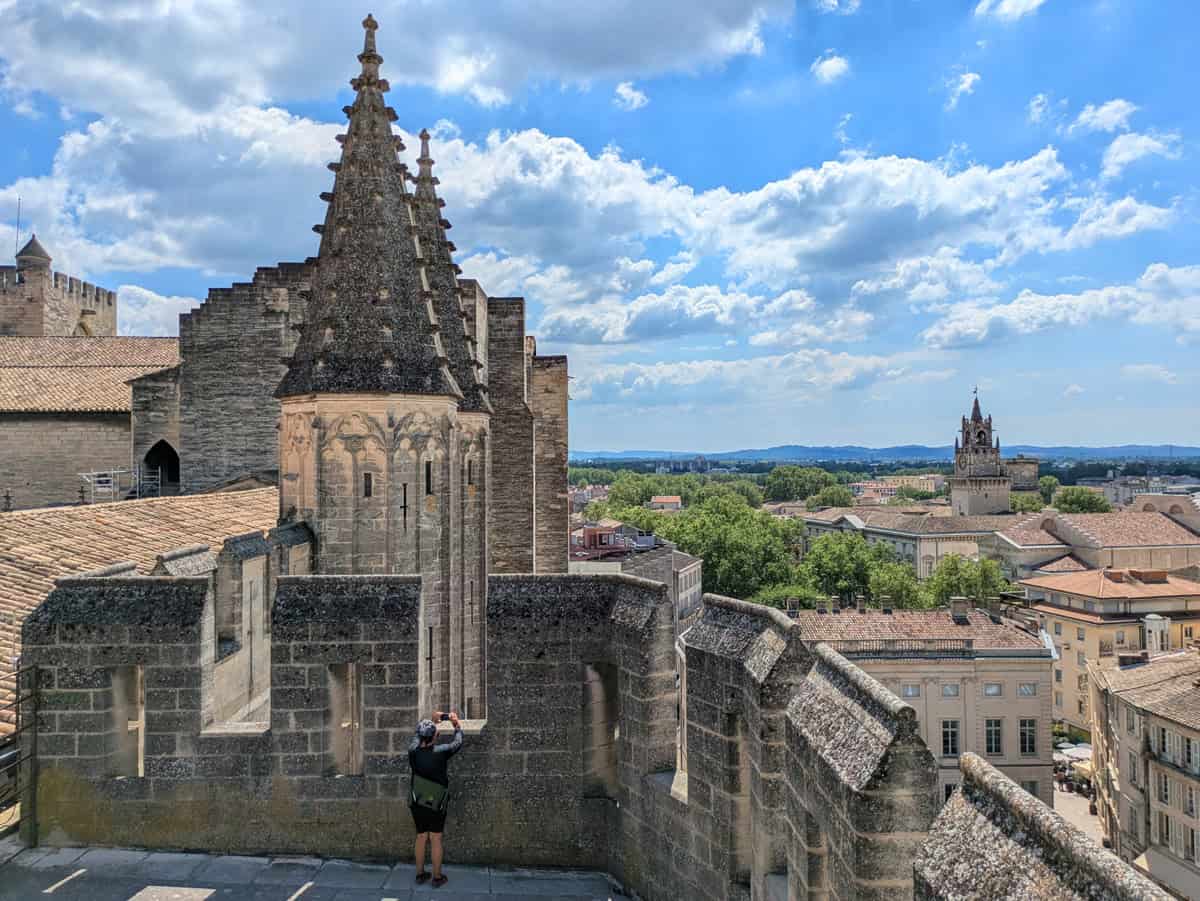
The Palace of the Popes was built and expanded over the years. The building you see today is actually 2 buildings, the old palace of Benedict VII and the newer palace of Clement VI. Together they form the largest Gothic Palace in Europe. It is today a UNESCO World Heritage Site.
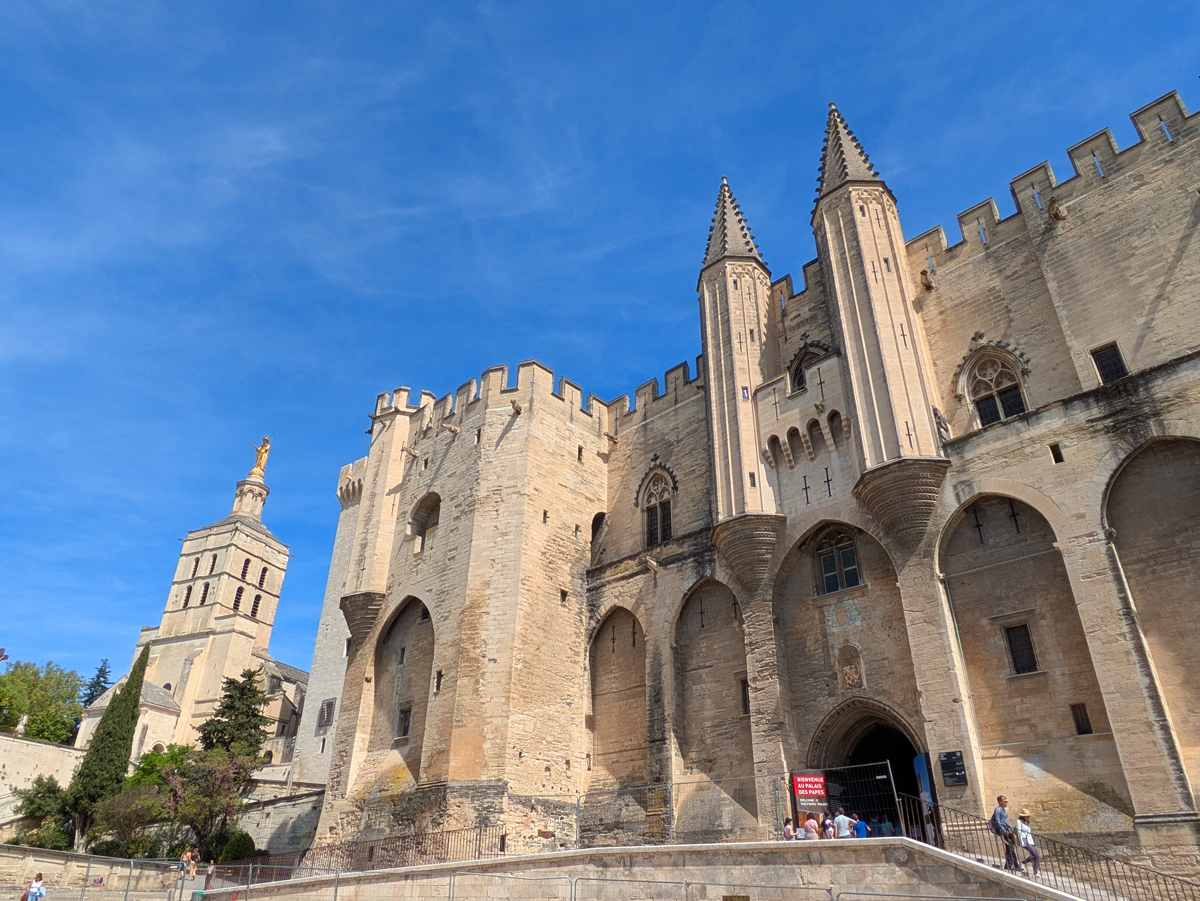
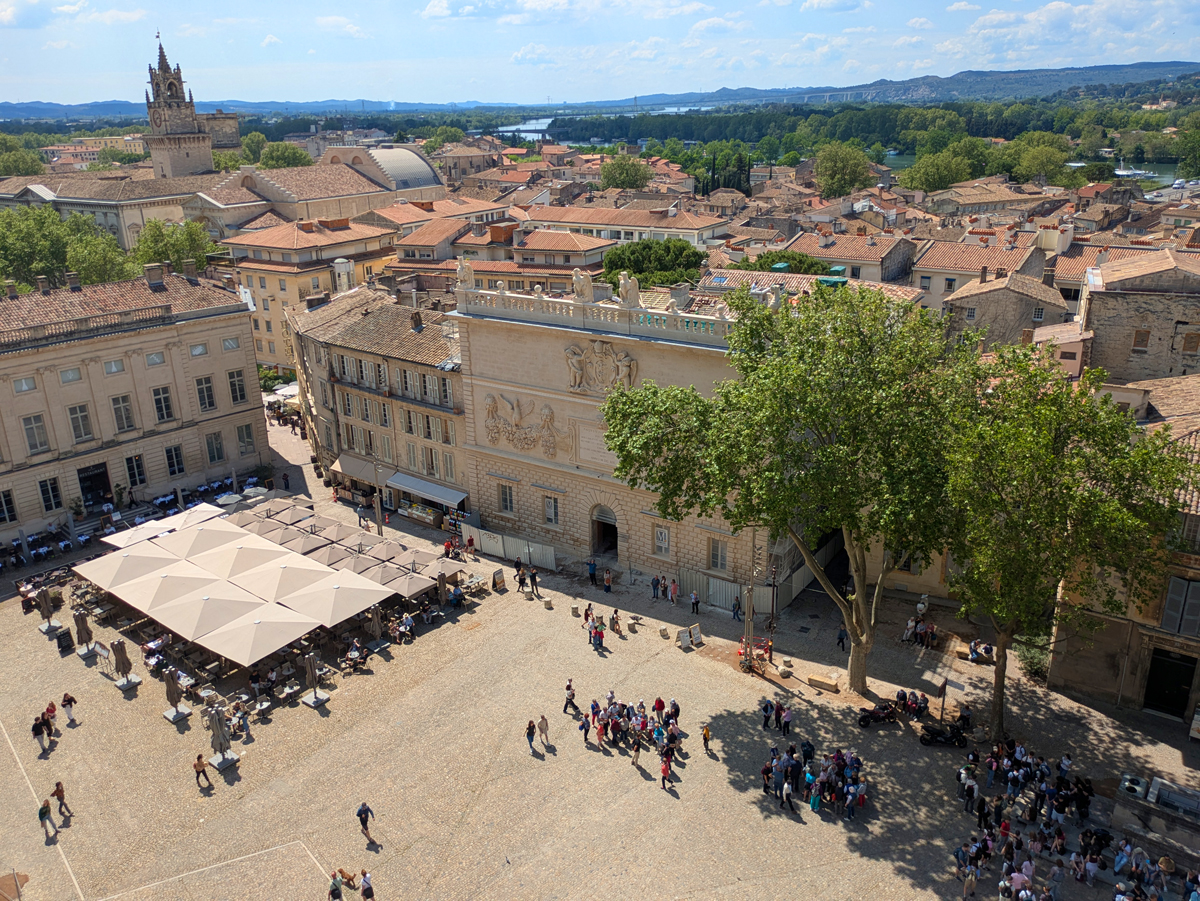
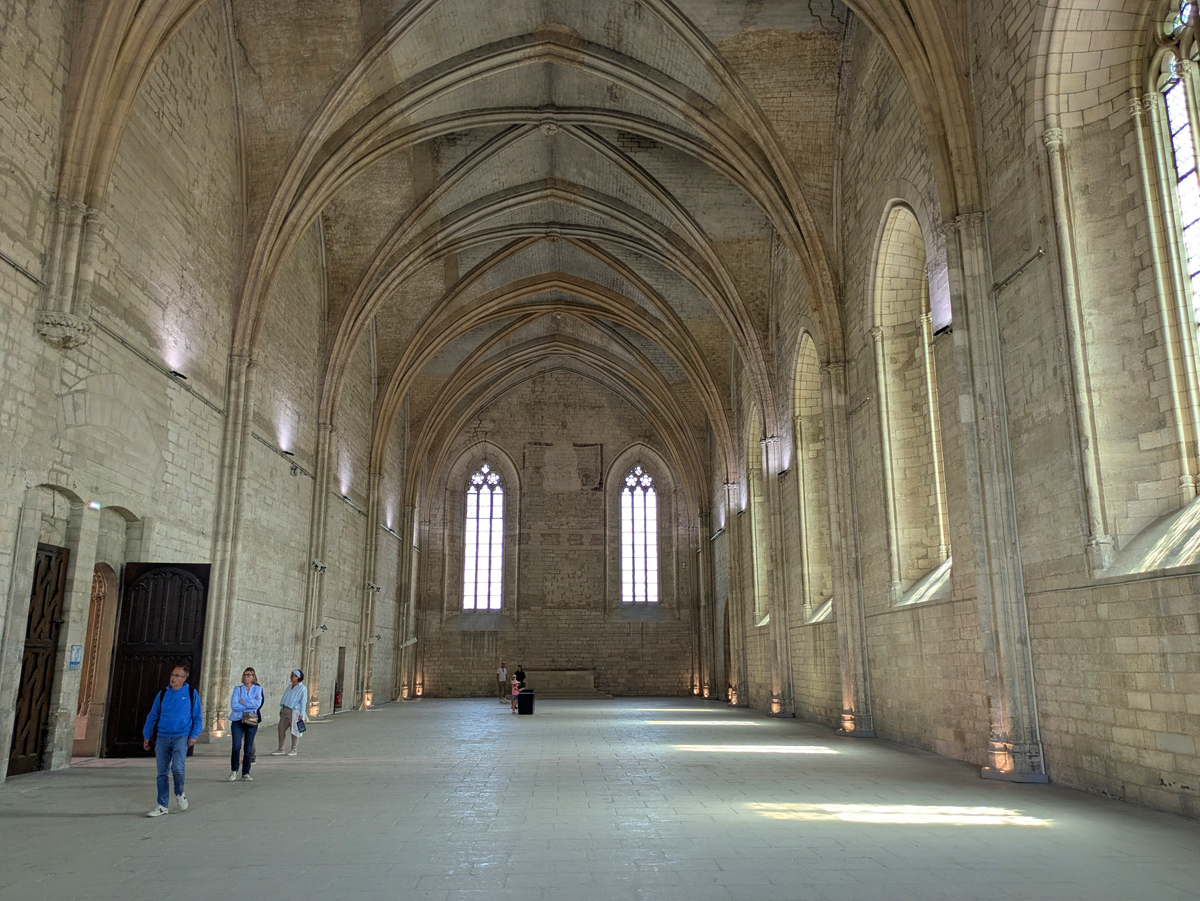
Visiting the Palace of the Popes: tickets cost 17 Euros each when we visited in April of 2026 (see the official website). The ticket includes the Pont D’Avignon (officially the Pont Saint-Bénézet). It took us about 1 ½ hours to visit everything.
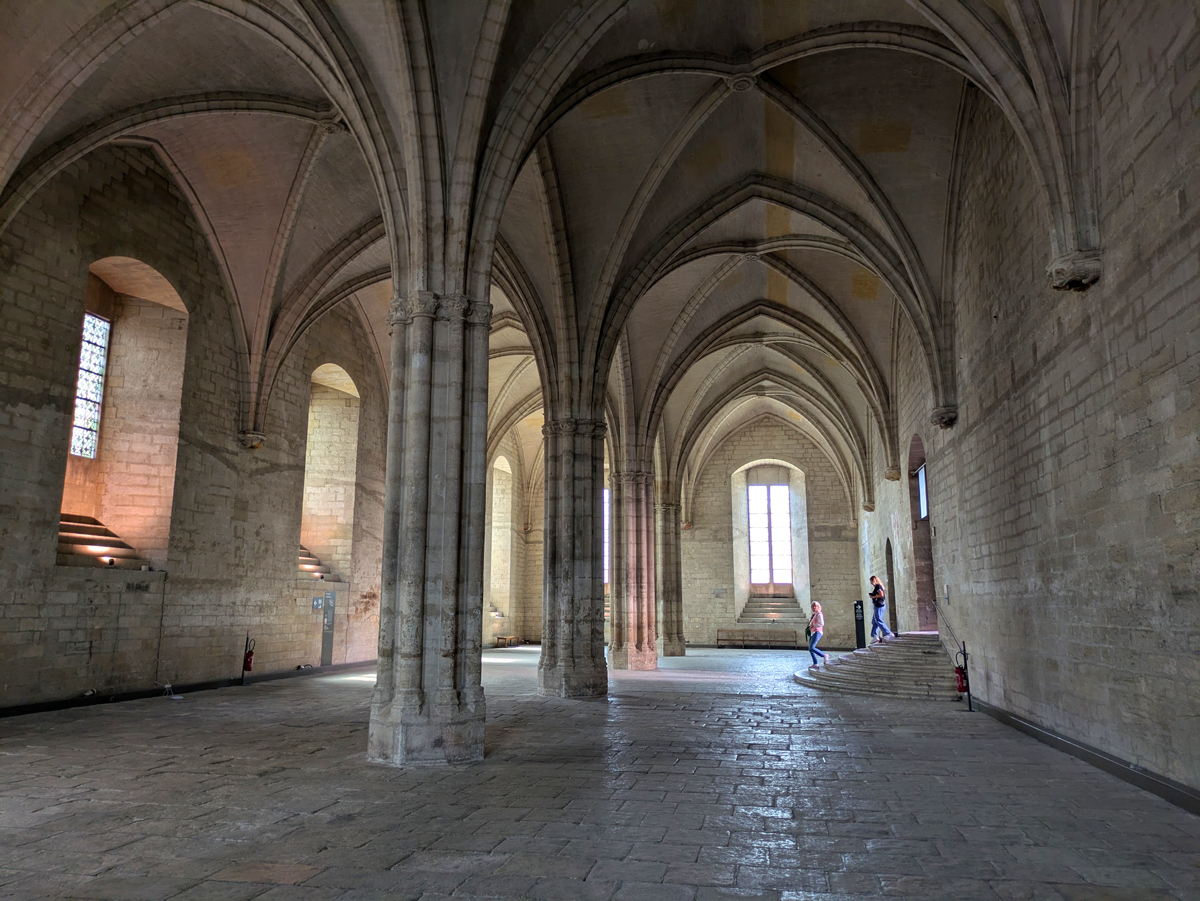
Word of warning: don’t expect the sumptuous rooms and furniture that you’ll see in most palaces, the rooms here are all empty and cold. You have to use your imagination to how it was at the time. But you’ll be impressed by the sheer size of the palace and the rooms, knowing that this complex dates back over 700 years. Some great views of Avignon from the turrets of the Palace.
2. The Pont D’Avignon (Pont Saint-Bénézet)
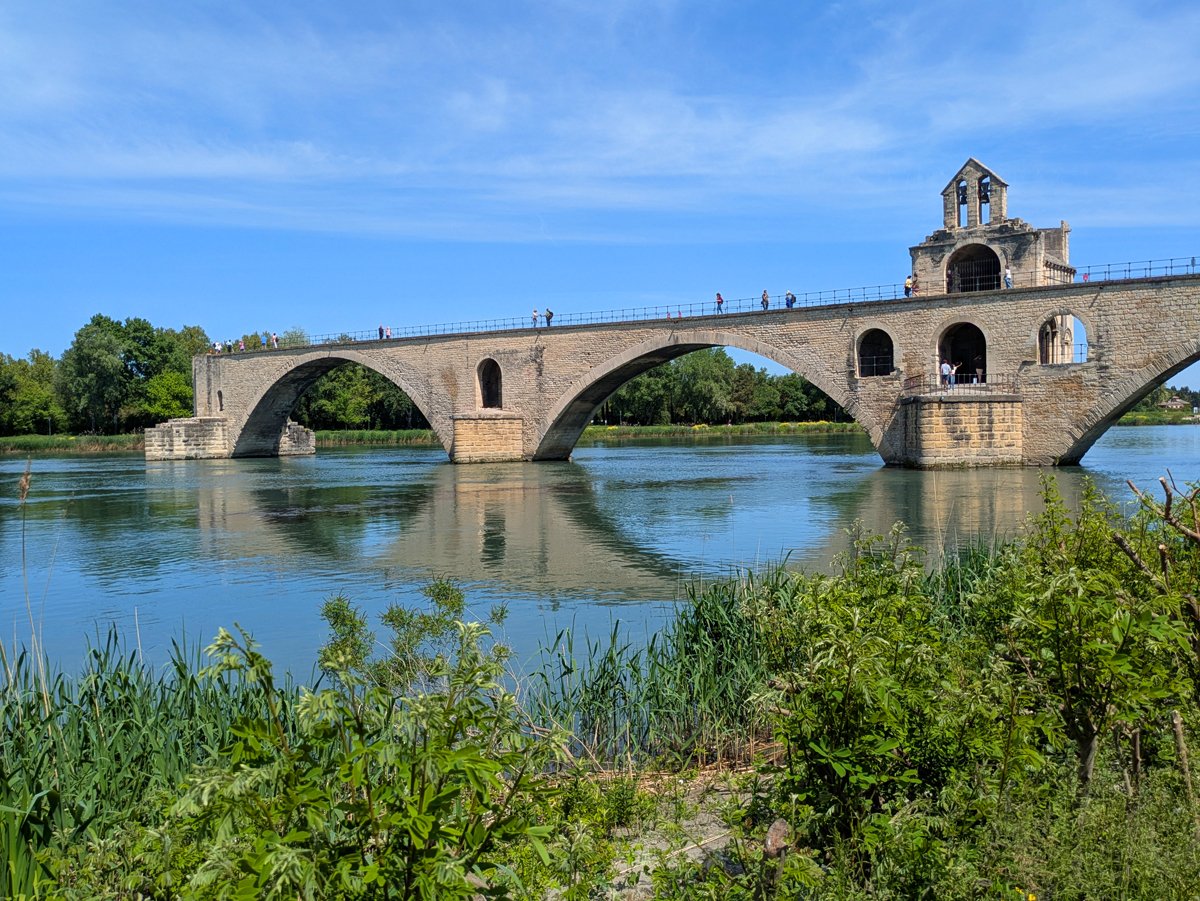
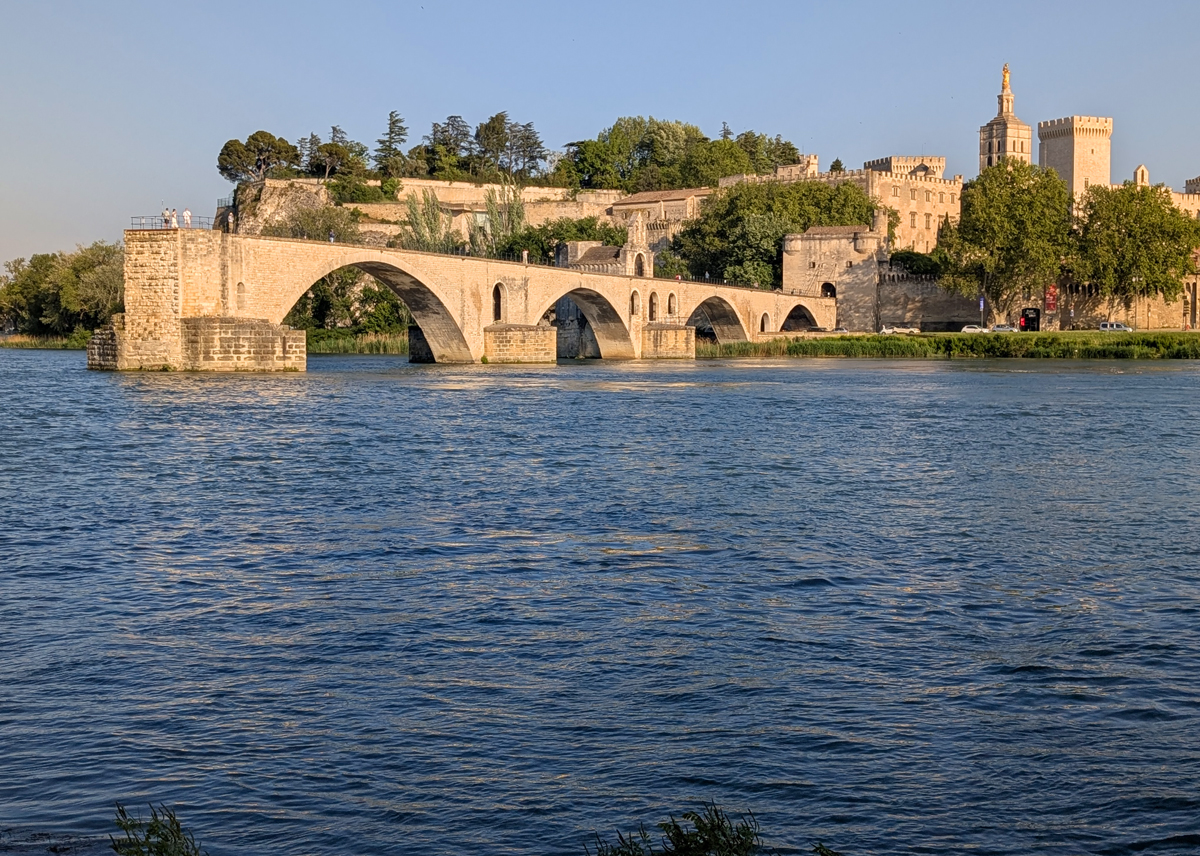
This is the 2nd famous site in Avignon. The Pont D’Avignon was built around 1177 AD on the remains of Roman abutments. When it was completed, it had 22 arches and was a total of 920 meters long and 4 meters wide. It was for a long time one of the only bridges linking the north of the Rhone river to the south, allowing carts to transport goods from the interior to the Mediterranean coast.
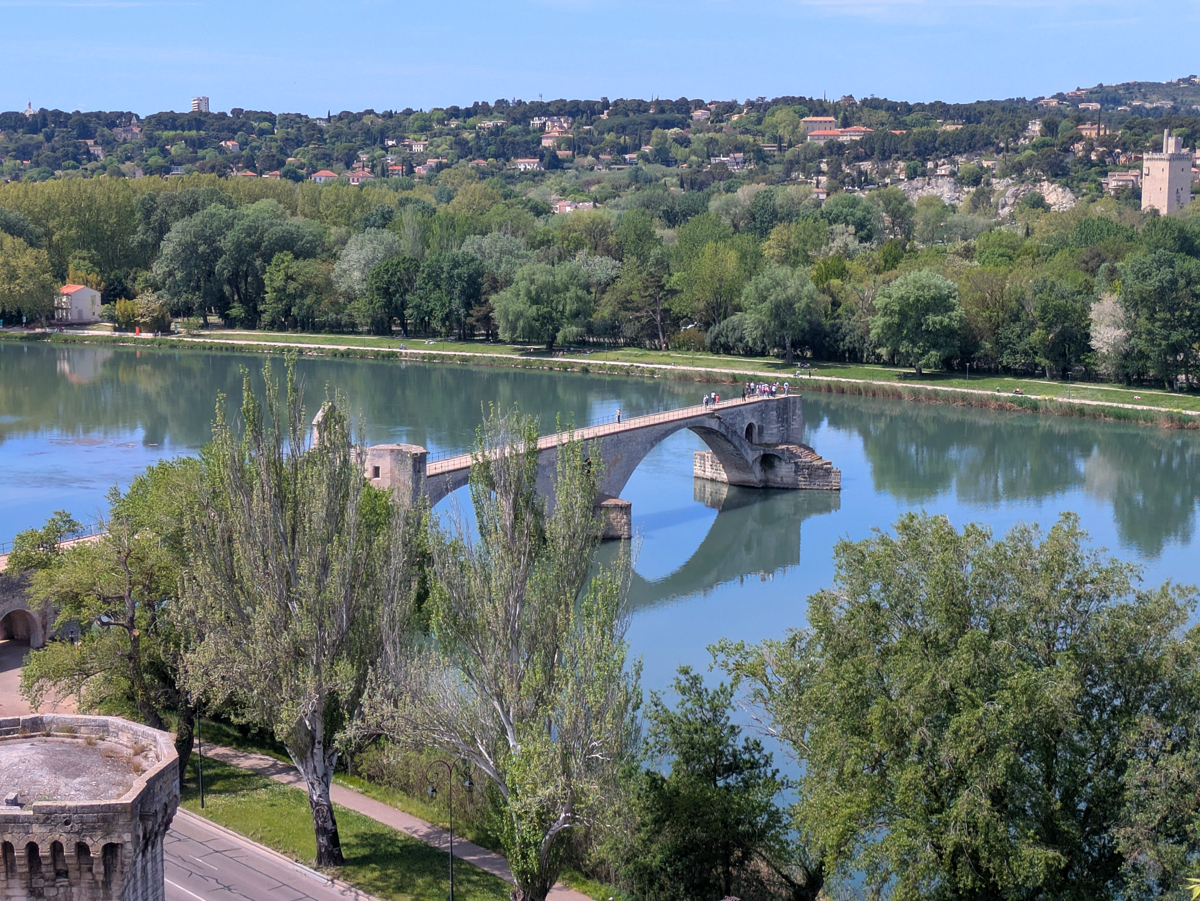
Today the bridge only has 3 arches and is 160 meters long. Over time and with wars and floods, the bridge collapsed. Several times it was repaired but whenever the river flooded parts would be destroyed. In 1669, after another flood, the bridge was left as it is today.
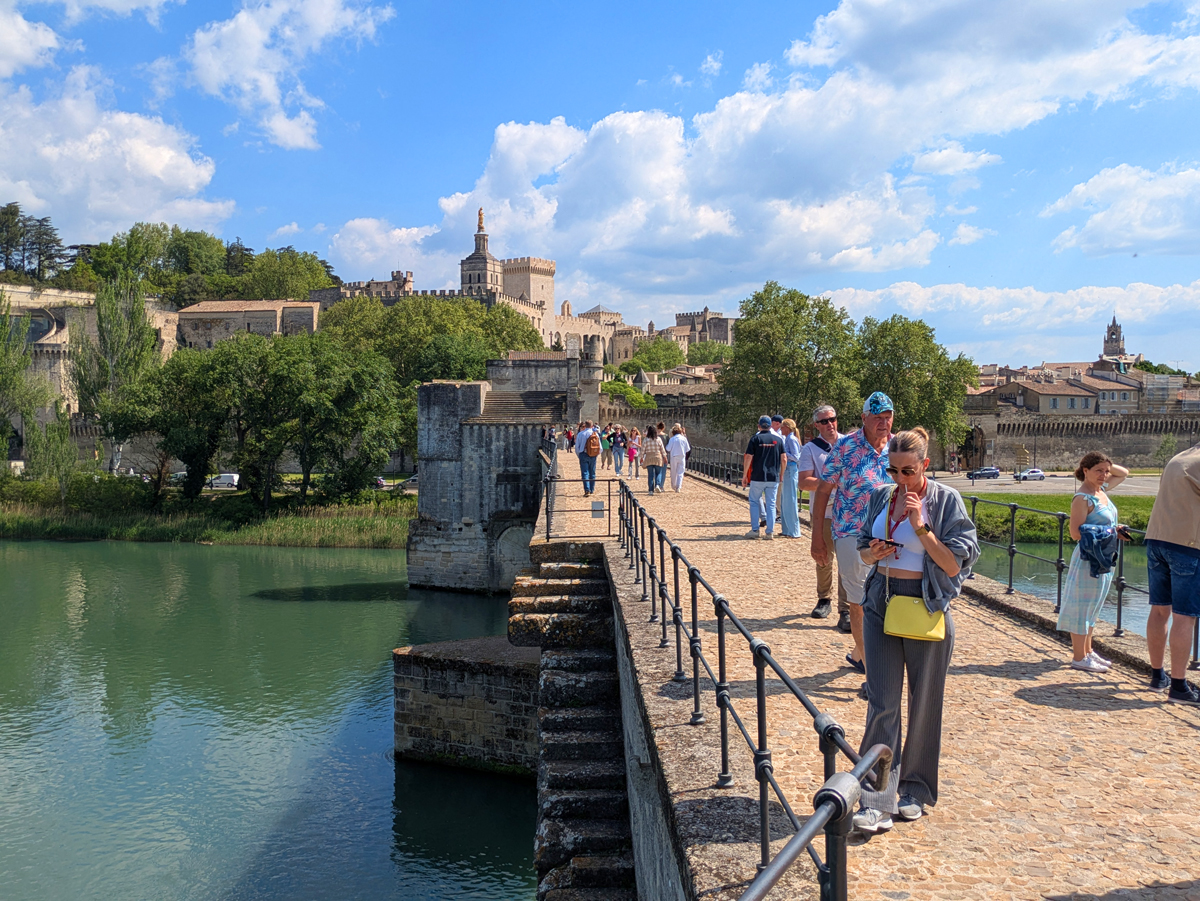
The bridge is famous for its history but also because it was the subject of a French children’s song called “sur le Pont D’Avignon”.
Visiting the Pont D’Avignon: the bridge is included in the ticket to the Palais des Papes.
3. Self-guided walks around the historic center of Avignon
If you pick up a map at the Tourist office (you can’t miss it, it is on the main street), you’ll notice that it has suggested walks around the city. I highly recommend doing them, doing so you’ll see corners of Avignon you’d likely never come upon yourself. Places where you’ll see more locals than tourists.
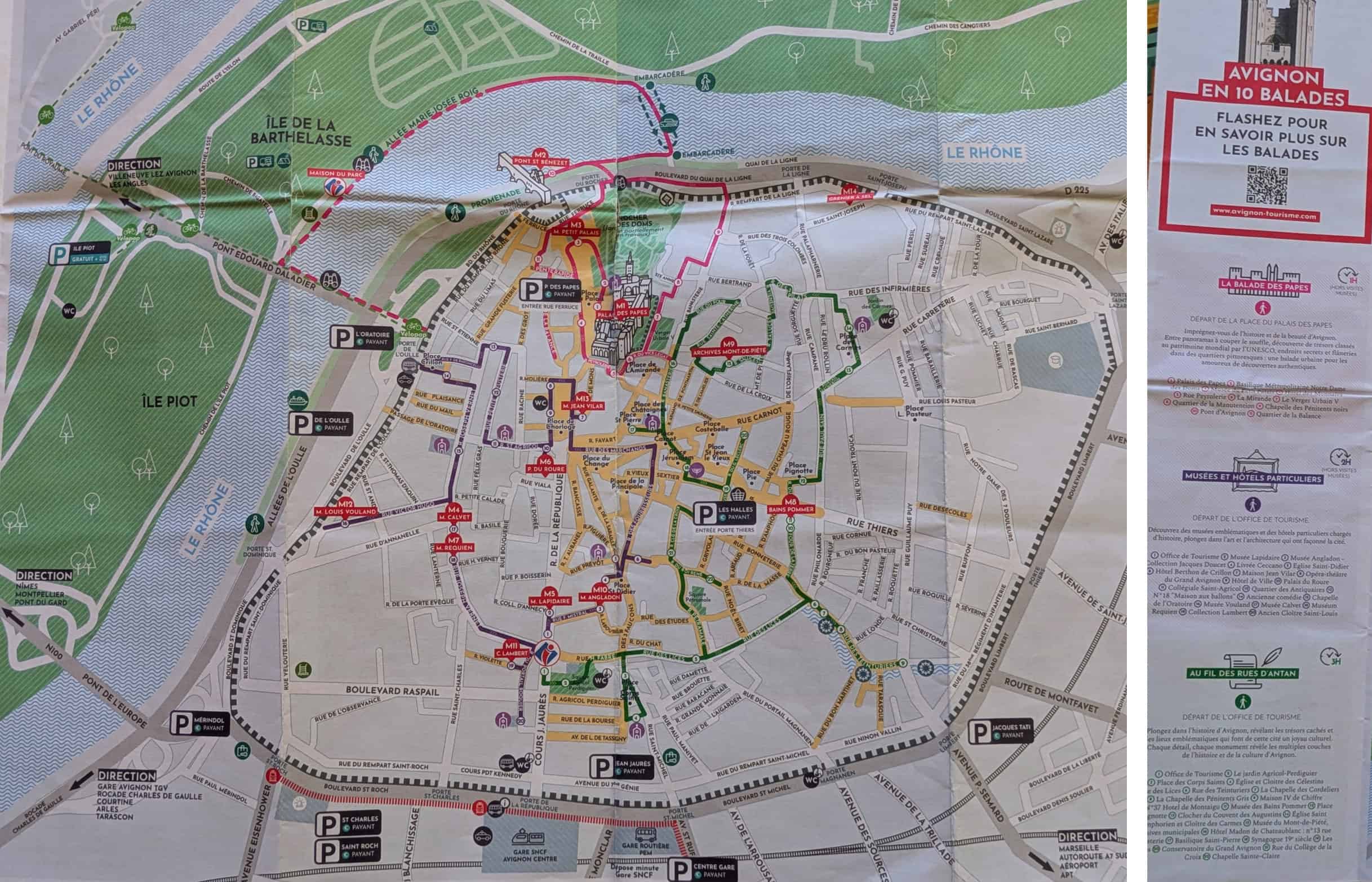
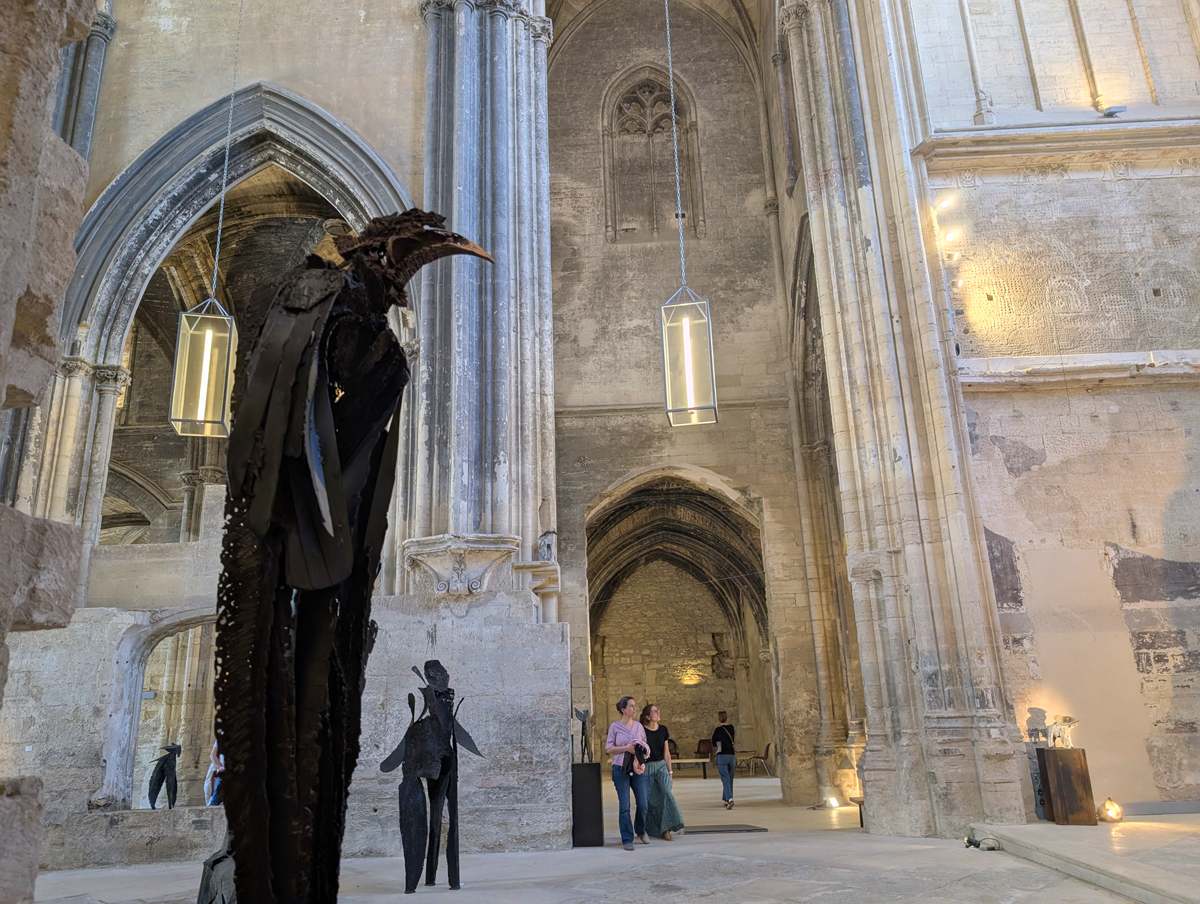
On the map you’ll see the green route, the red route and the purple route. Our favorite was the green route. You’ll see for example l’Église des Célestins (Church of the Célestins of Avignon), a church now used for art exhibitions. Rue des Teinturiers (street of the Dyers) is a small street with a canal and watermill. There’s another church there (Chapelle des Cordeliers) with art installations. There are many other such sites along this walk. It’s a great way to explore Avignon off-the-beaten path.
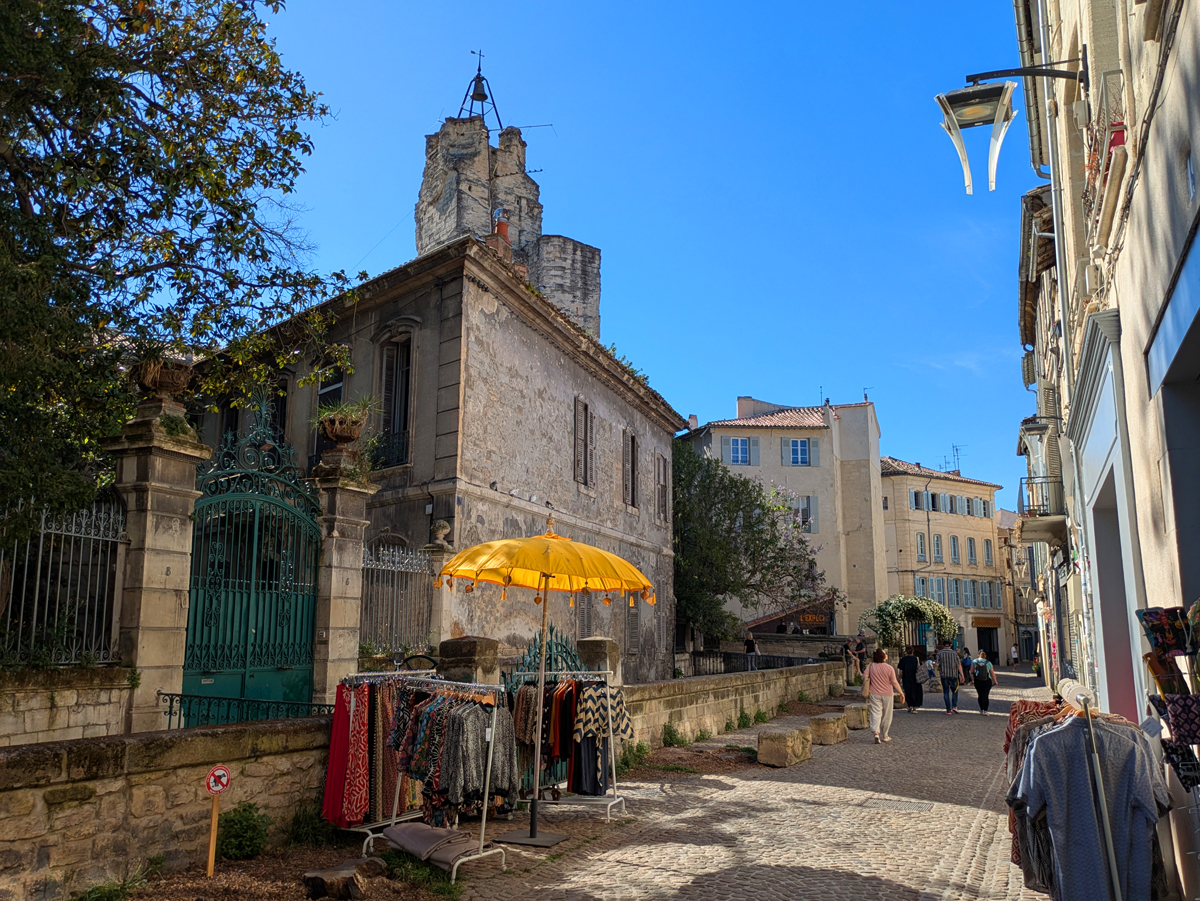
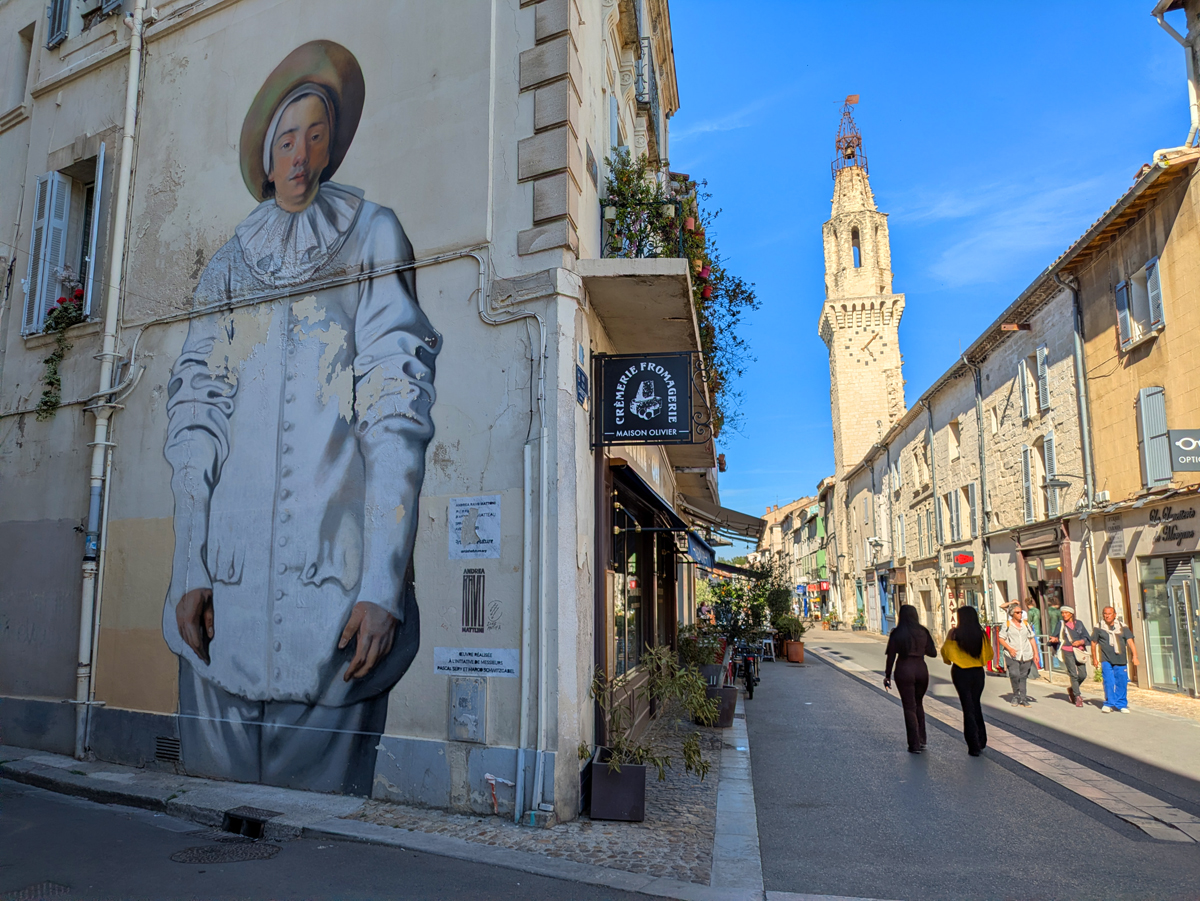
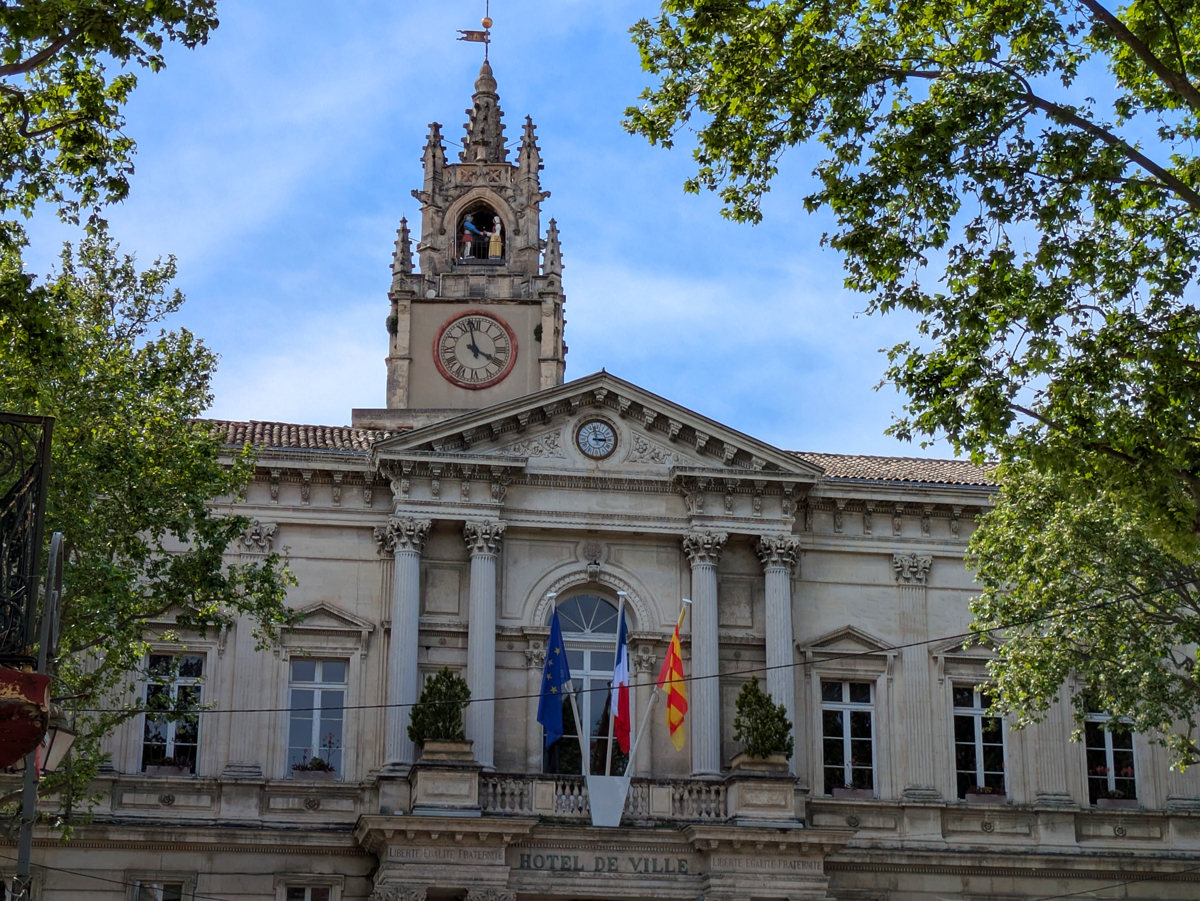
The Red route covers the more obvious highlights surrounding the Palais des Papes, taking you around the Palace so that you see it from different angles. On the recommended route is a ferry trip across the river, just so you get a different perspective on the Palace and Avignon (free. I’ll cover that below). You see a lot of other highlights such as the Theatre and the City Hall (don’t miss the figurines above the clock).
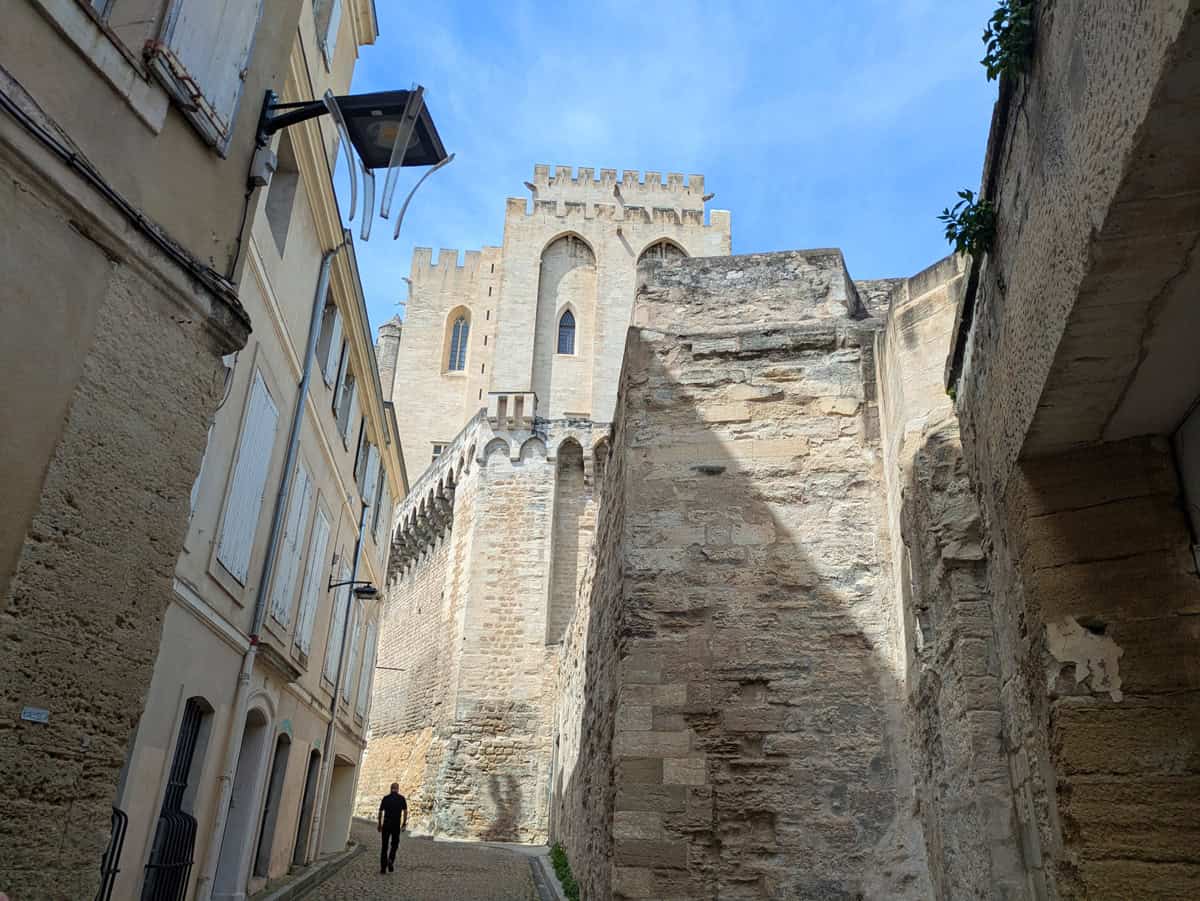
The Purple route covers most of Avignon’s museums. I’ll cover them in detail in the next section. But for the purposes of a stroll, this route is the least interesting of the three walks around the historic center.
4. The Free Museums of Avignon
Avignon has 6 very good museums that you can visit for free. All are very different but all are worth a visit.
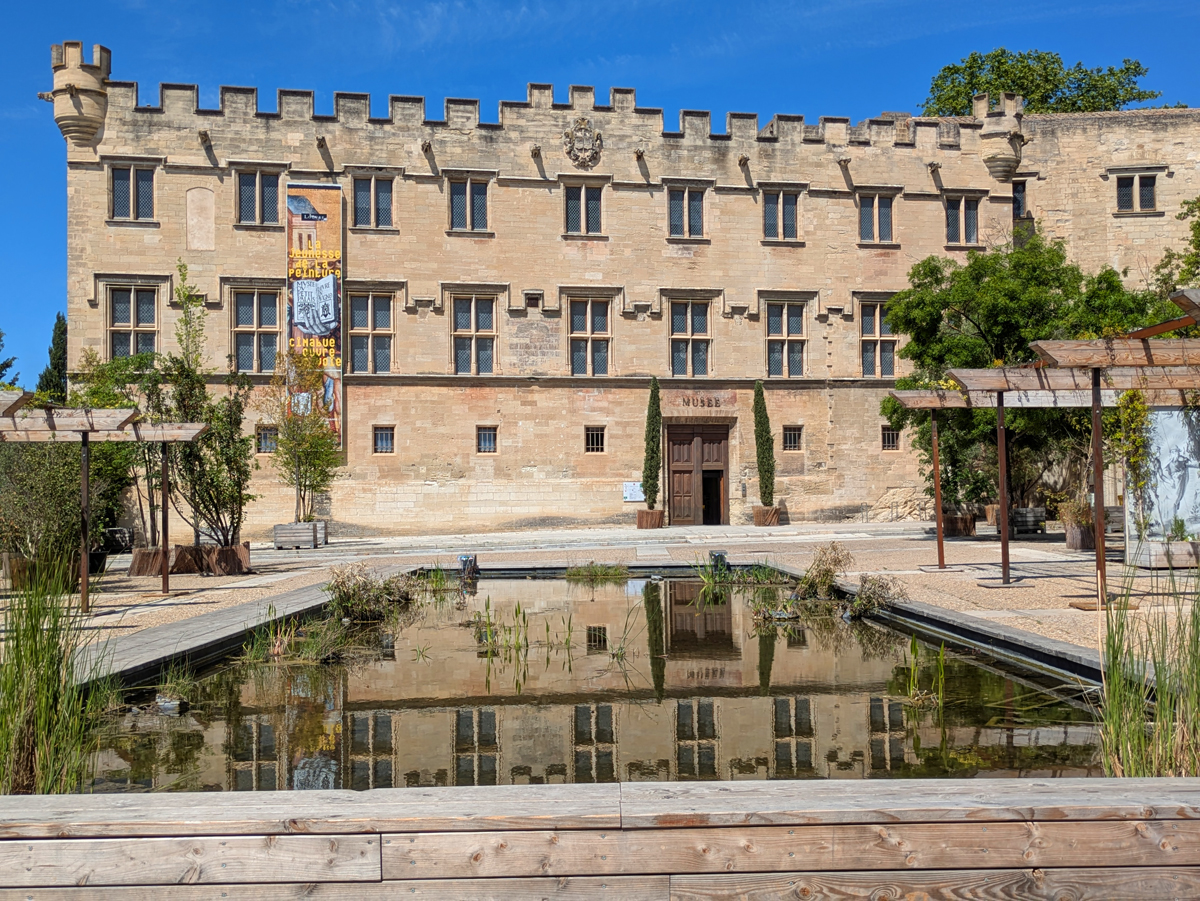
Musée du Petit Palais. An art museum located near the Pope’s Palace.
Musée Lapidaire. Full of sculptures, columns, tablets etc from Roman and Greek times. Very impressive.
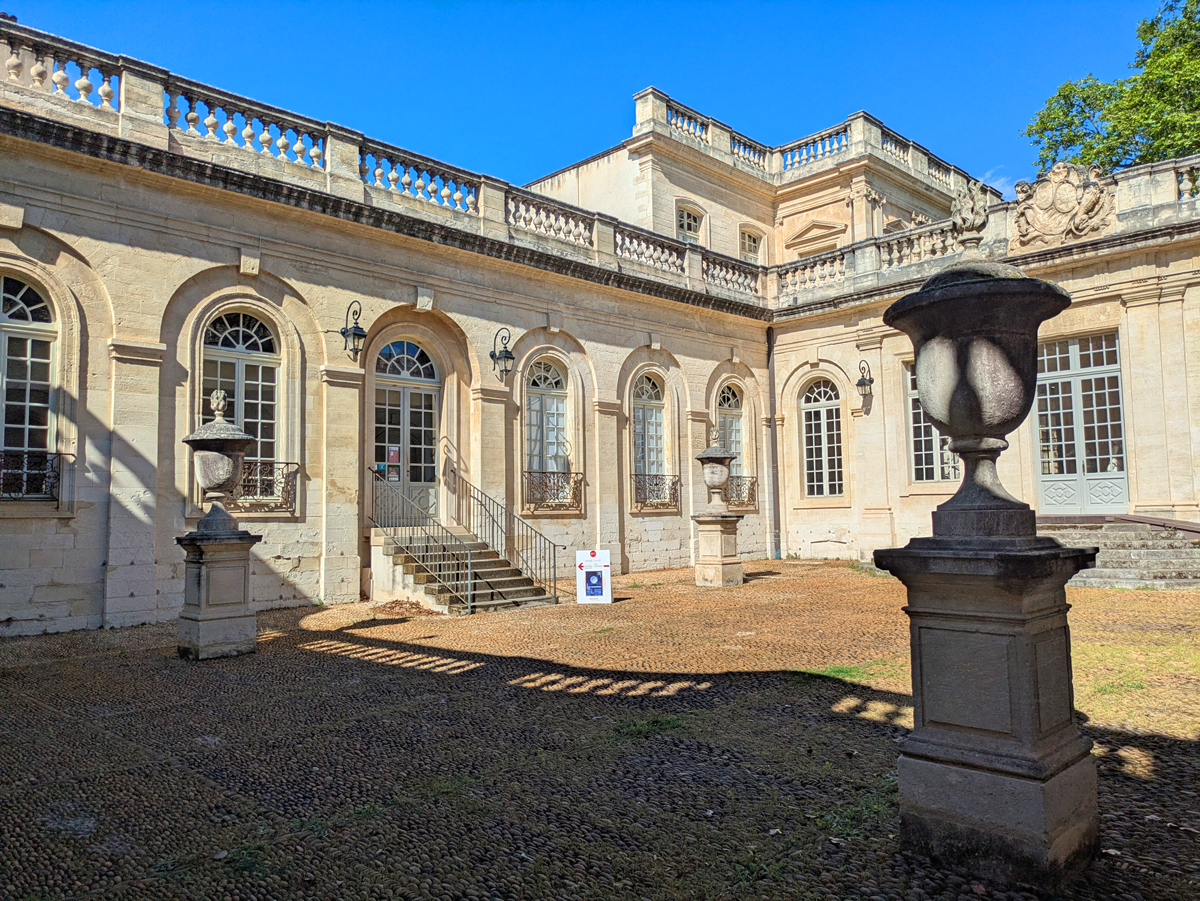
Musée Calvet. A collection of Egyptian, Greek and Roman artifacts as well as European paintings set in a beautiful palace.
The above are the “Big 3” in Avignon and should be prioritized. But the next 3 are also interesting in different ways.
Palais du Roure. A beautiful mansion showing off historic Provencal style…with a huge collection of bells throughout.
Musée Bains Pommer. A public bathhouse during the late 1800’s until 1972. Perfectly preserved. The subject doesn’t sound interesting but the museum surprised us. Excellent.
Musée Requien. A natural history museum showing off stuffed animals, fossils and botanical specimens. Children will enjoy it.
5. Grand Cafe Barretta
What would France be without a great meal sitting on an outdoor terrace?
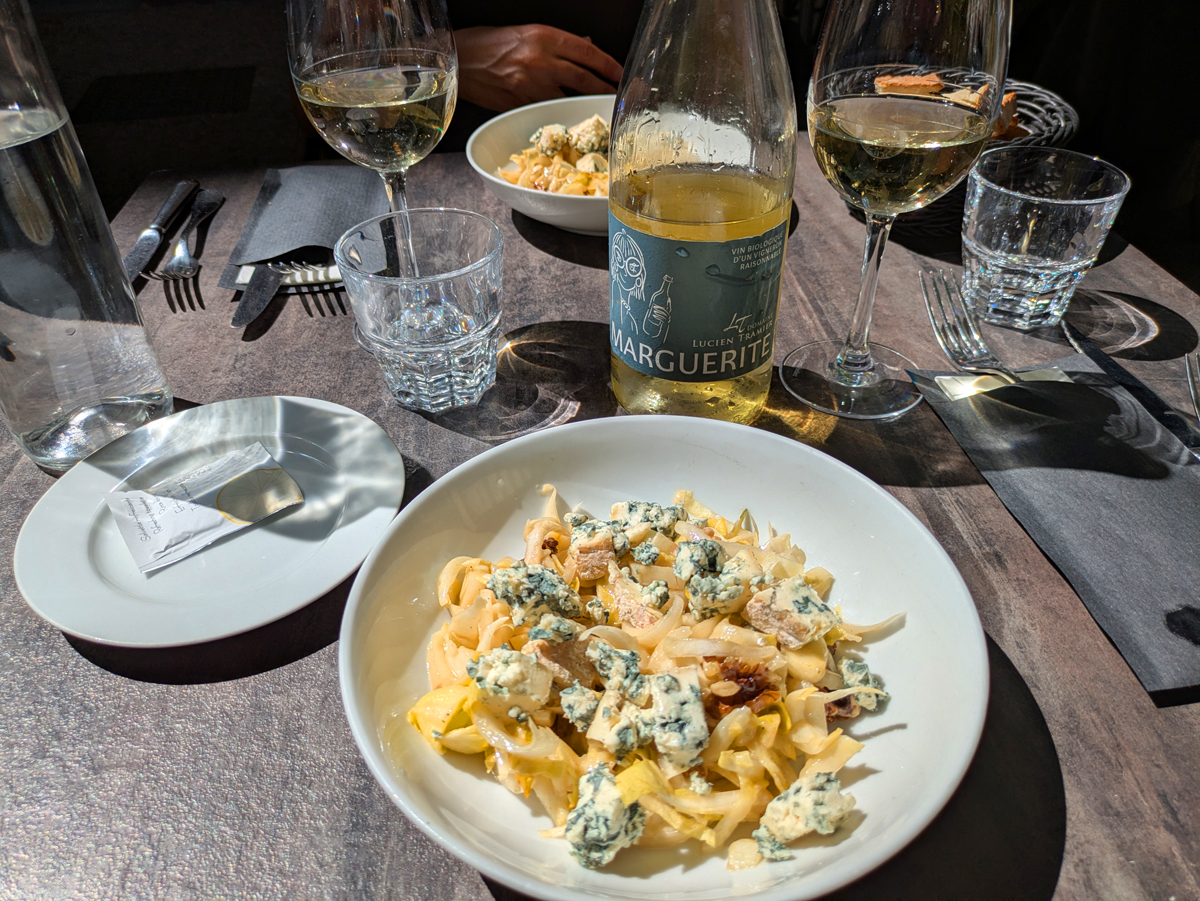
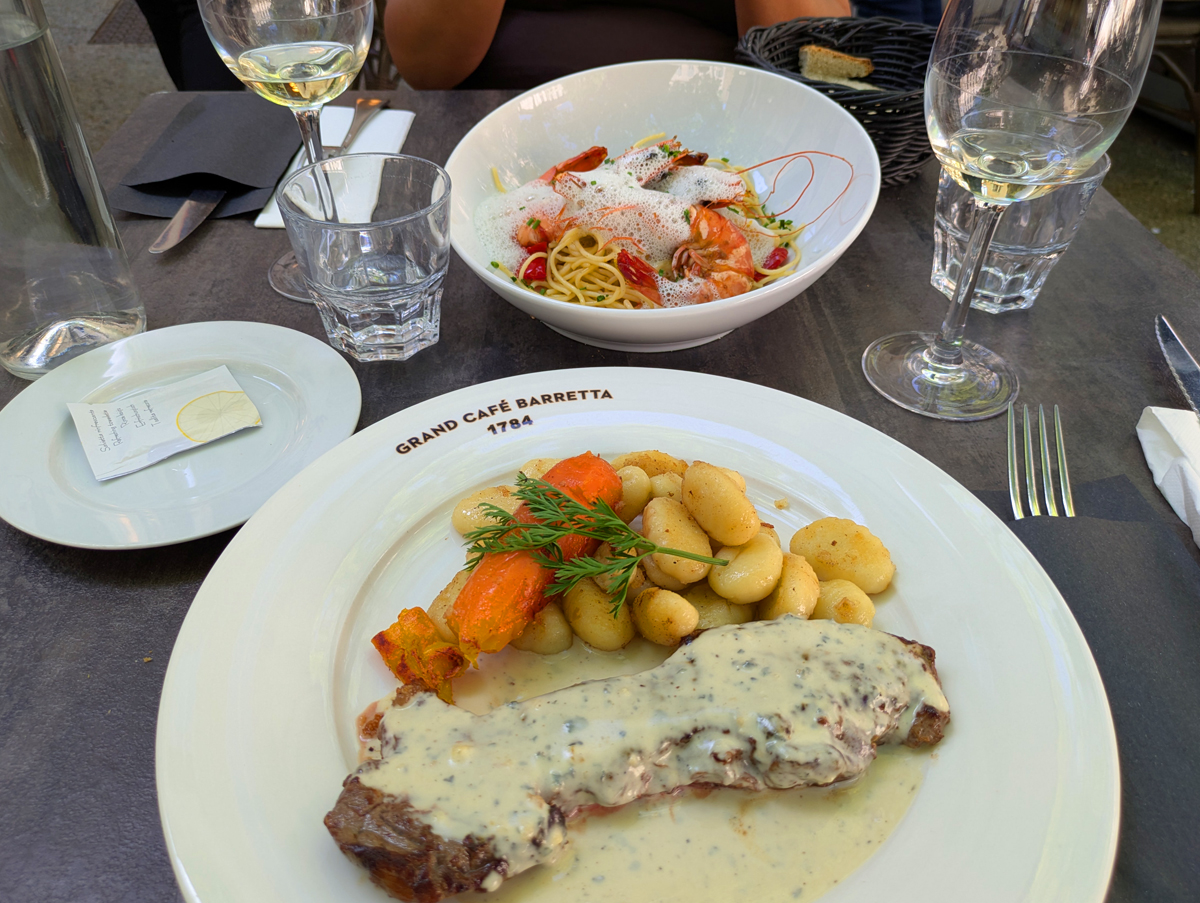
Le Grand Cafe Barretta was recommended to us by our Airbnb host and became our favorite place to eat out in Avignon, both because of the food and wine as well as for its location on a beautiful square.
Come here for lunch during the week and have a look at their mid-day special which typically includes an entrée, main course and dessert for 22 Euros. They also have a special wine menu with a list of wines at 20 Euros. So we’d sit there for hours, eating a 3 course meal and enjoying a nice bottle of wine. All in, with tip, the bill would come out to about 75 Euros for the two of us. It’s one of our everlasting memories of Avignon.
Note: you won’t get the same prices if you come in the evening and order off the menu. As I say, come for the lunchtime special which is listed in chalk next to the main entrance.
6. Cross the River
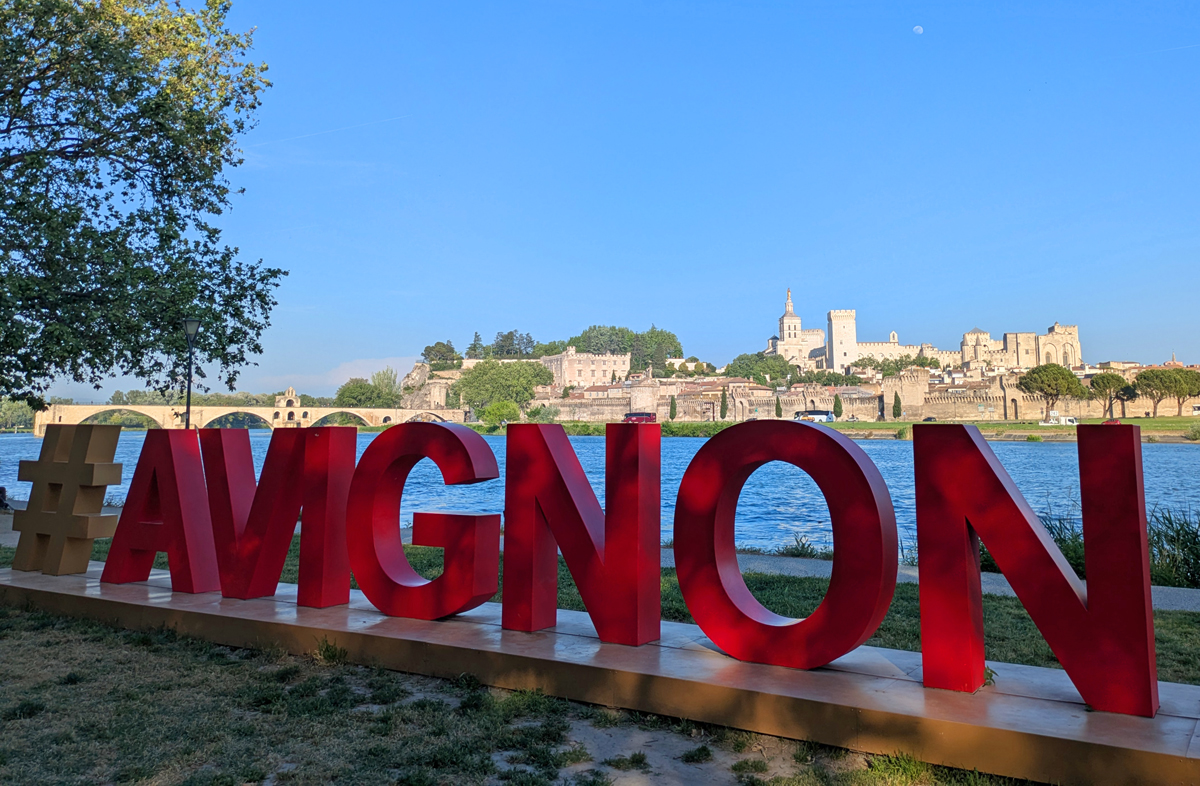
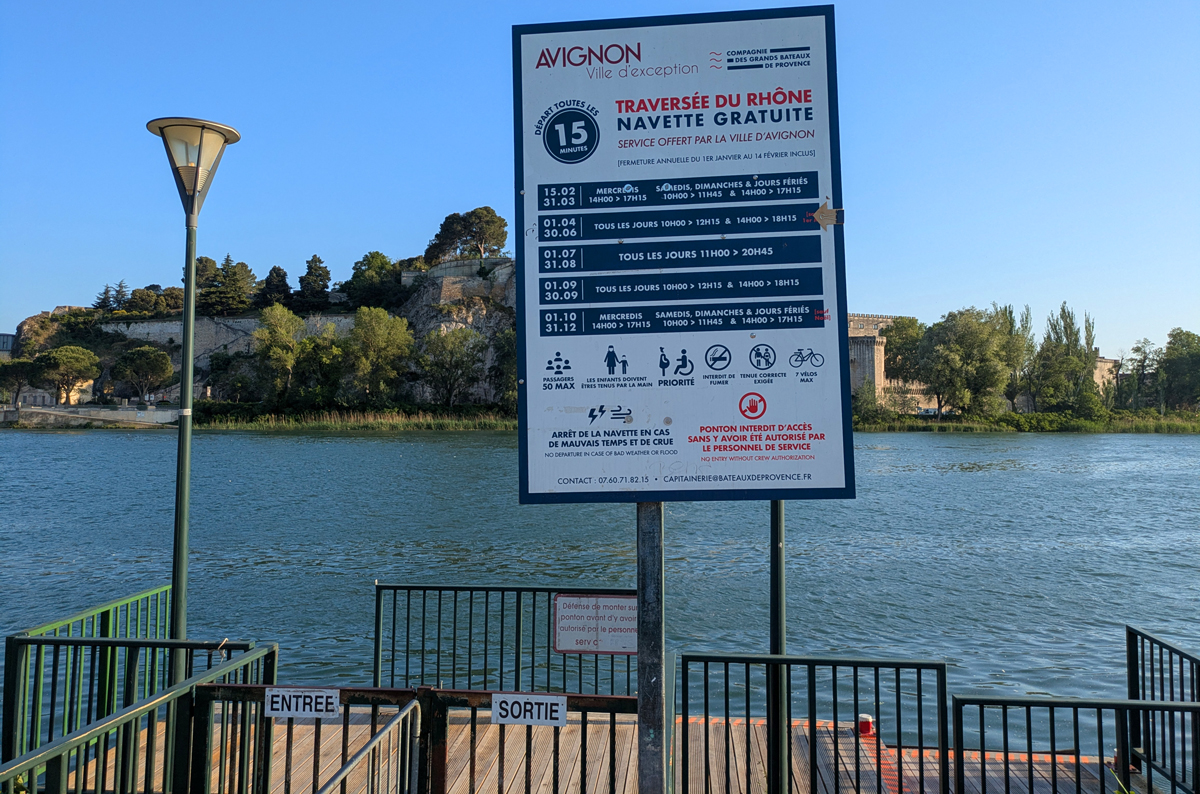
Sitting in the middle of the Rhone is an island (île de la Barthelasse). It’s a nice place to come for a walk along the promenade that runs along the shore, looking across at Avignon. You can walk across the bridge to get there or you can take the free ferry that takes you across*.
*Every 15 minutes, but it runs on different schedules depending on the time of year. It takes 5 minutes to cross the river).
7. See the Churches of Avignon
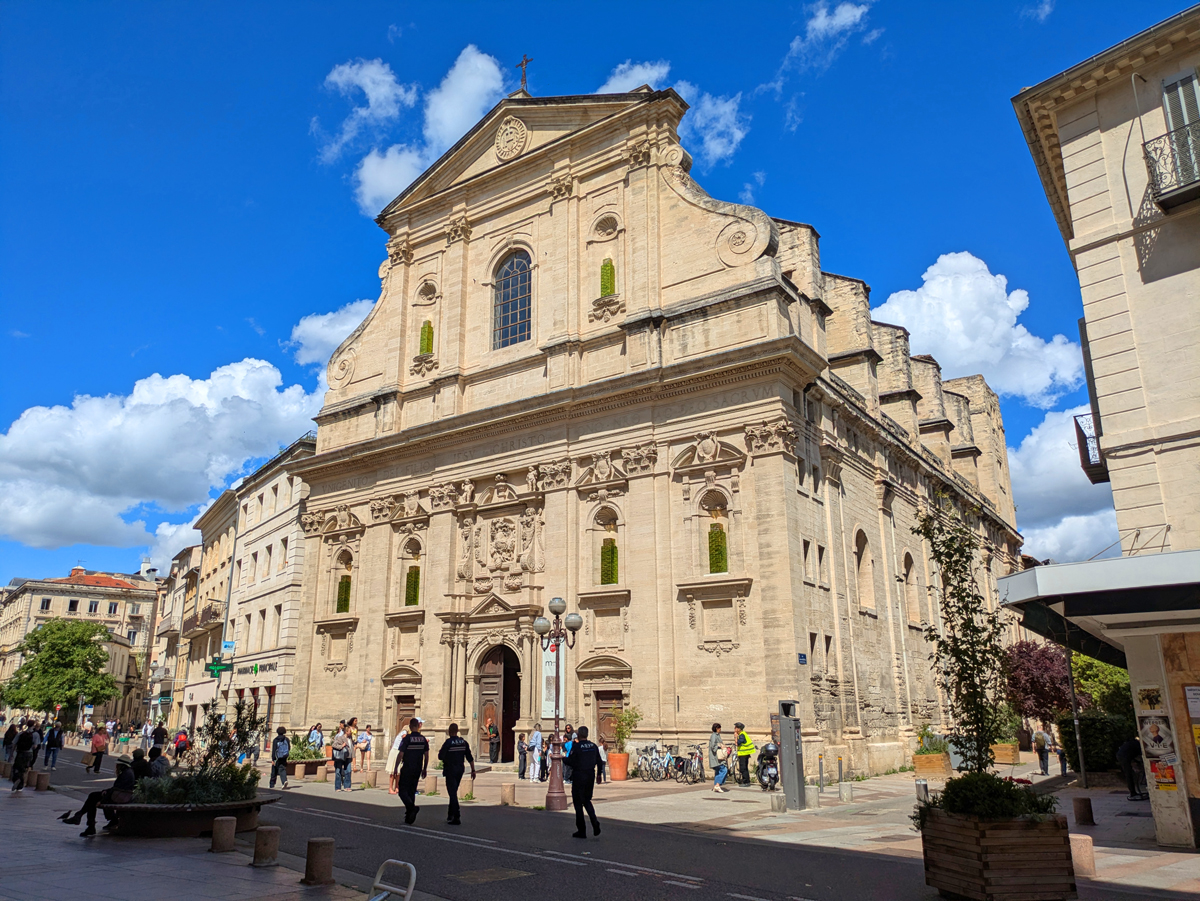
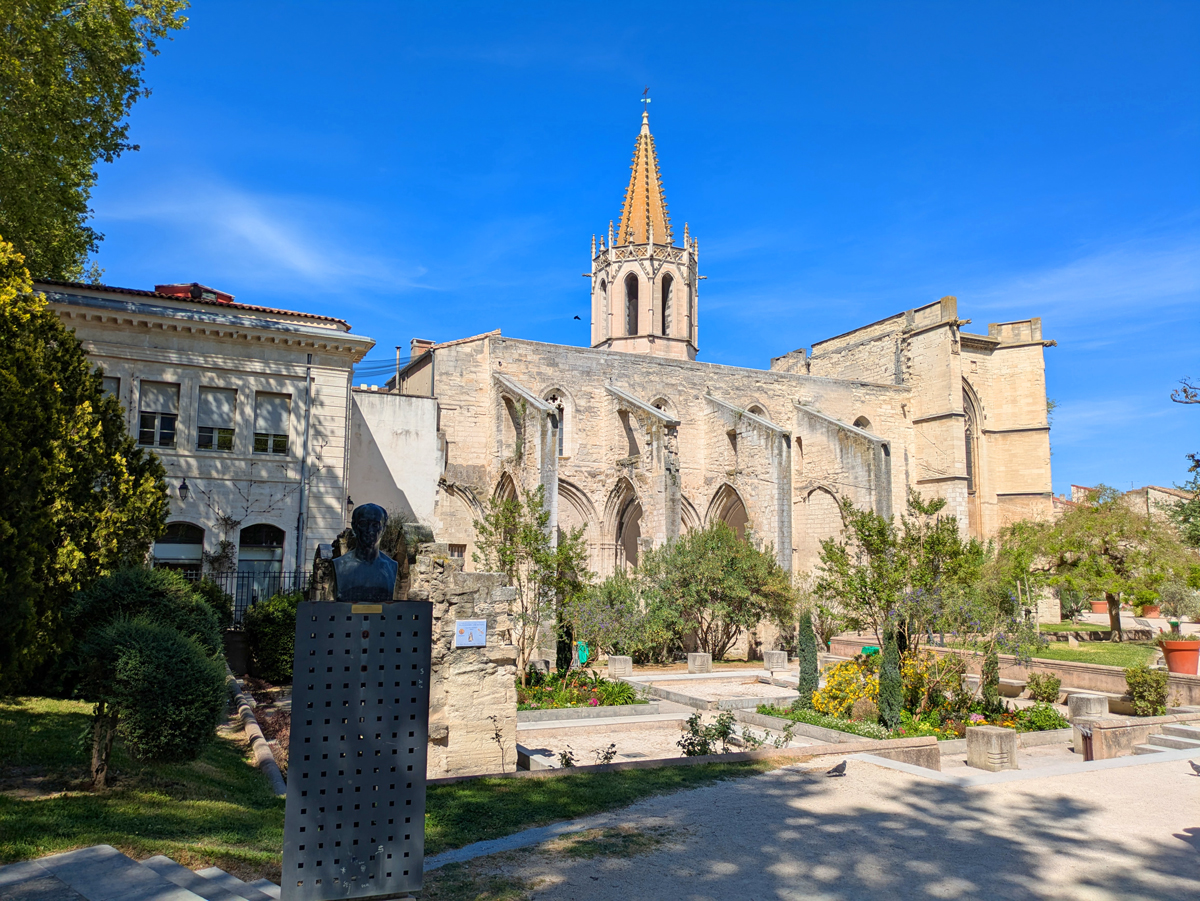
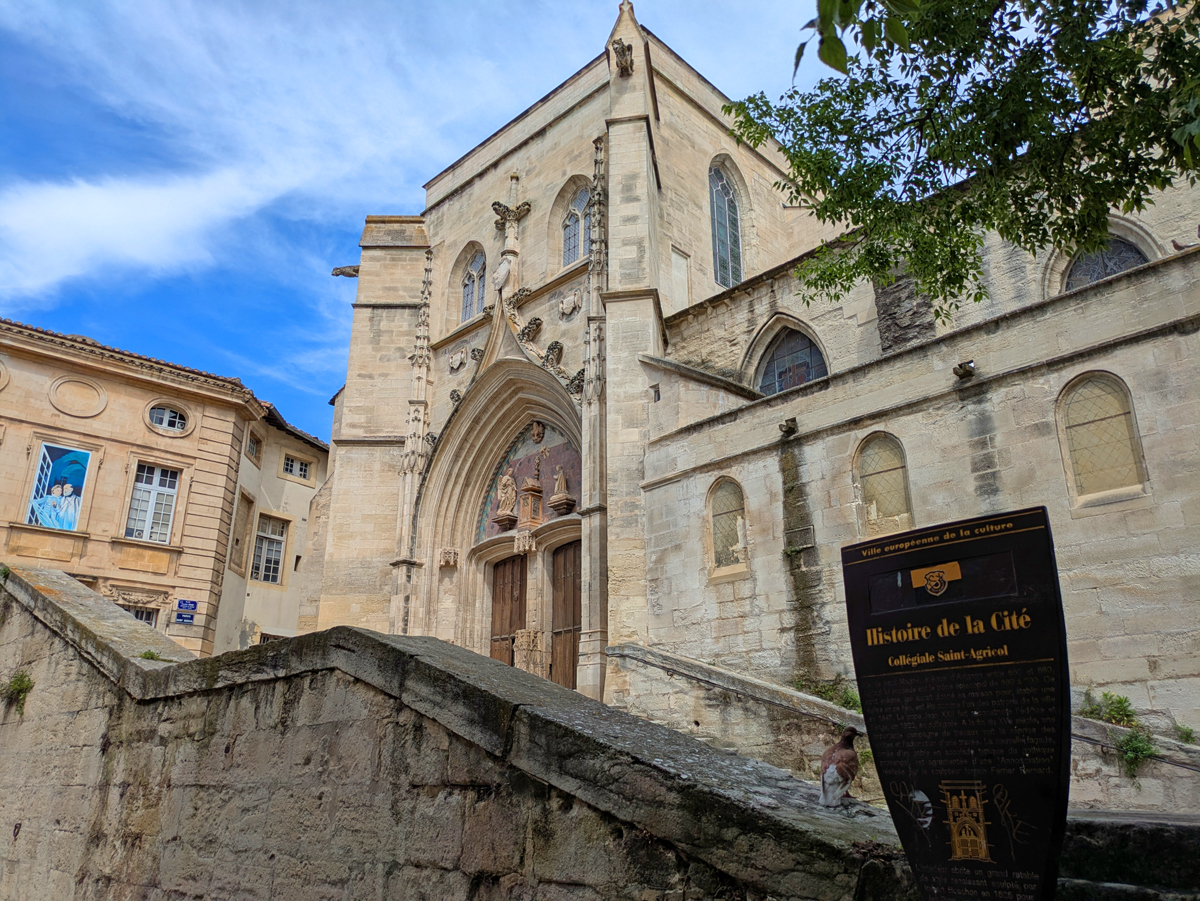
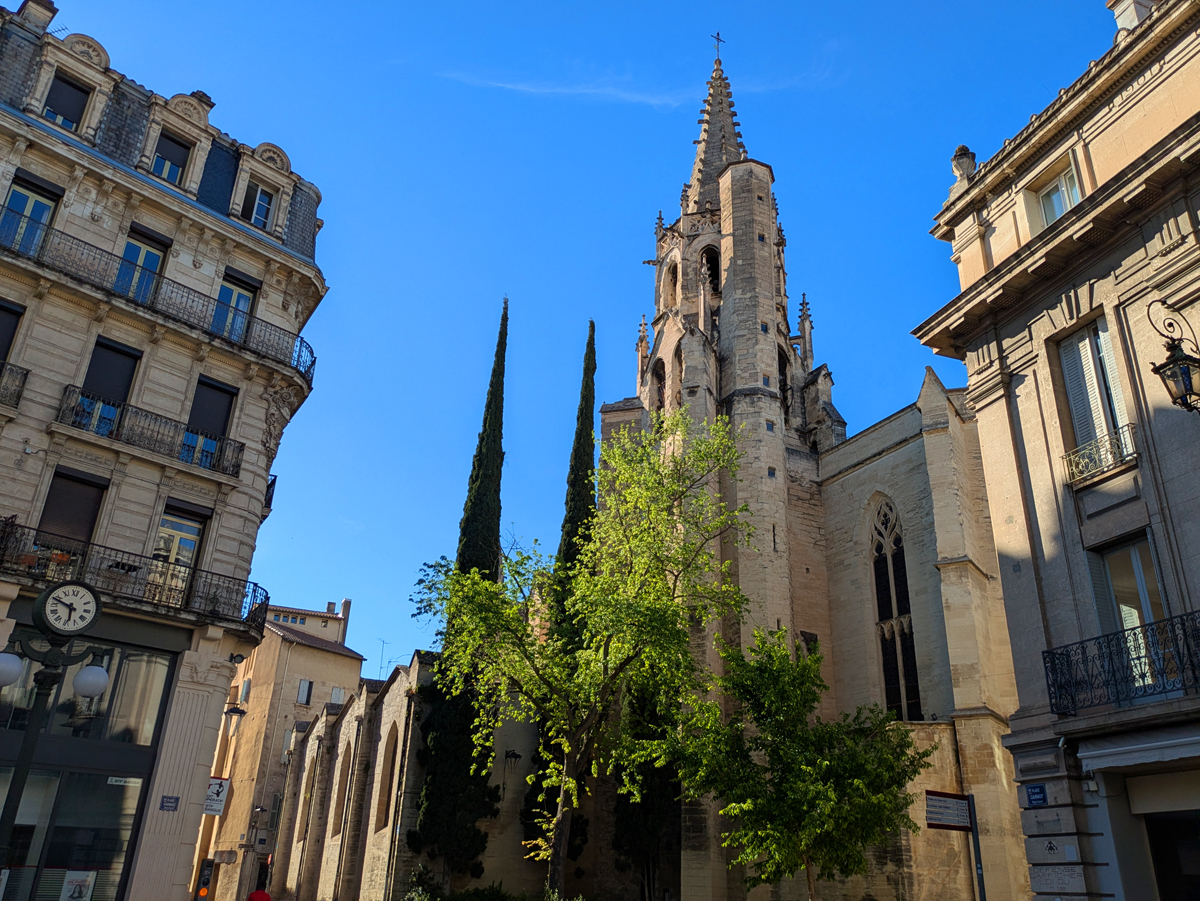
Avignon has a lot of churches for a town of its size. There’s the Eglise Saint Didier (right next to Café Grand Barreta which I mentioned above), Église Saint-Symphorien-les-Carmes (which you’ll come across on the Green walk I mention above), l’Église des Célestins and the Chapelle des Cordeliers (also on the Green walk, both no longer functioning as churches and usually the home of art exhibits). There’s Notre Dame des Doms at the Popes Palace which you can visit for free (it’s actually one of the least impressive religious buildings in Avignon). But my two favorites were Eglise Saint-Agricol and Basilique Saint-Pierre. Make sure you visit the hidden courtyard behind the latter church.
8. Walk around Avignon’s Ramparts
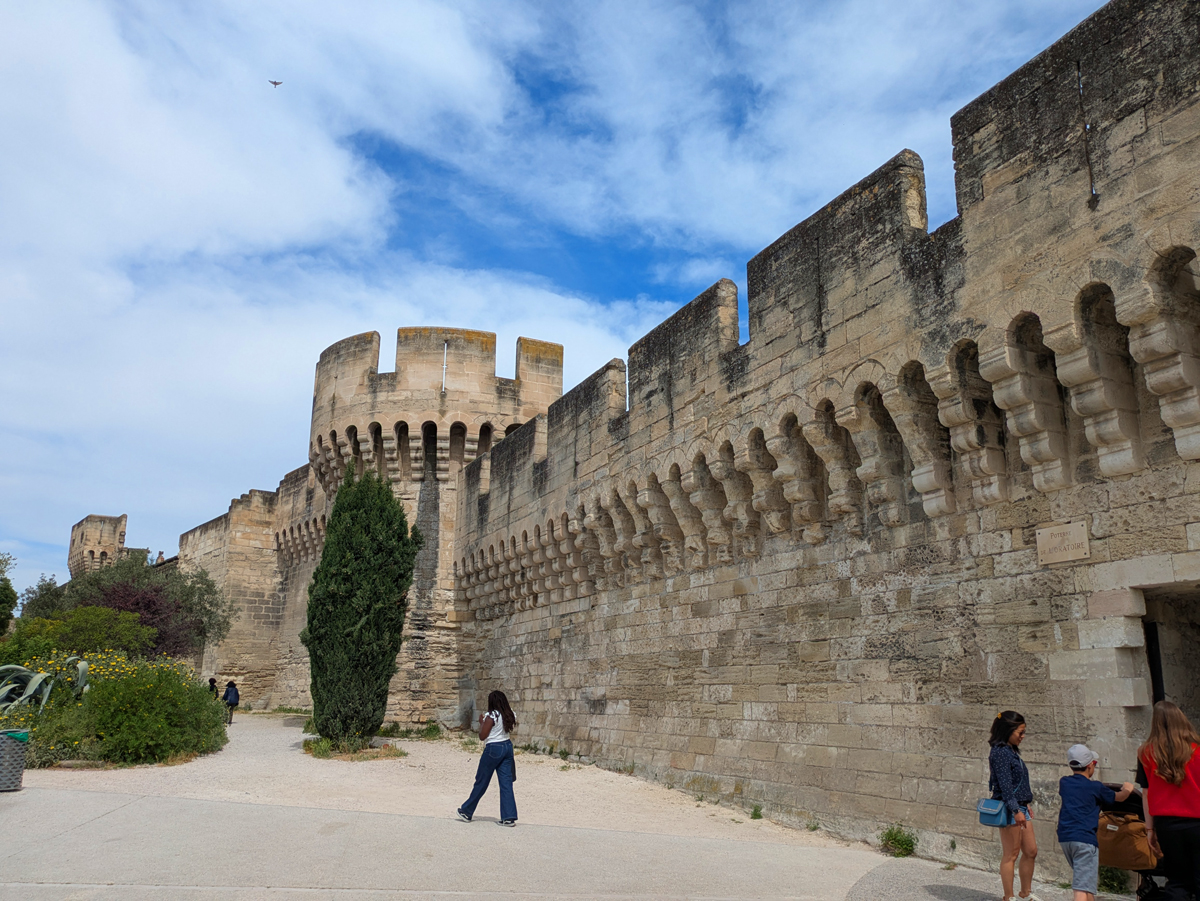
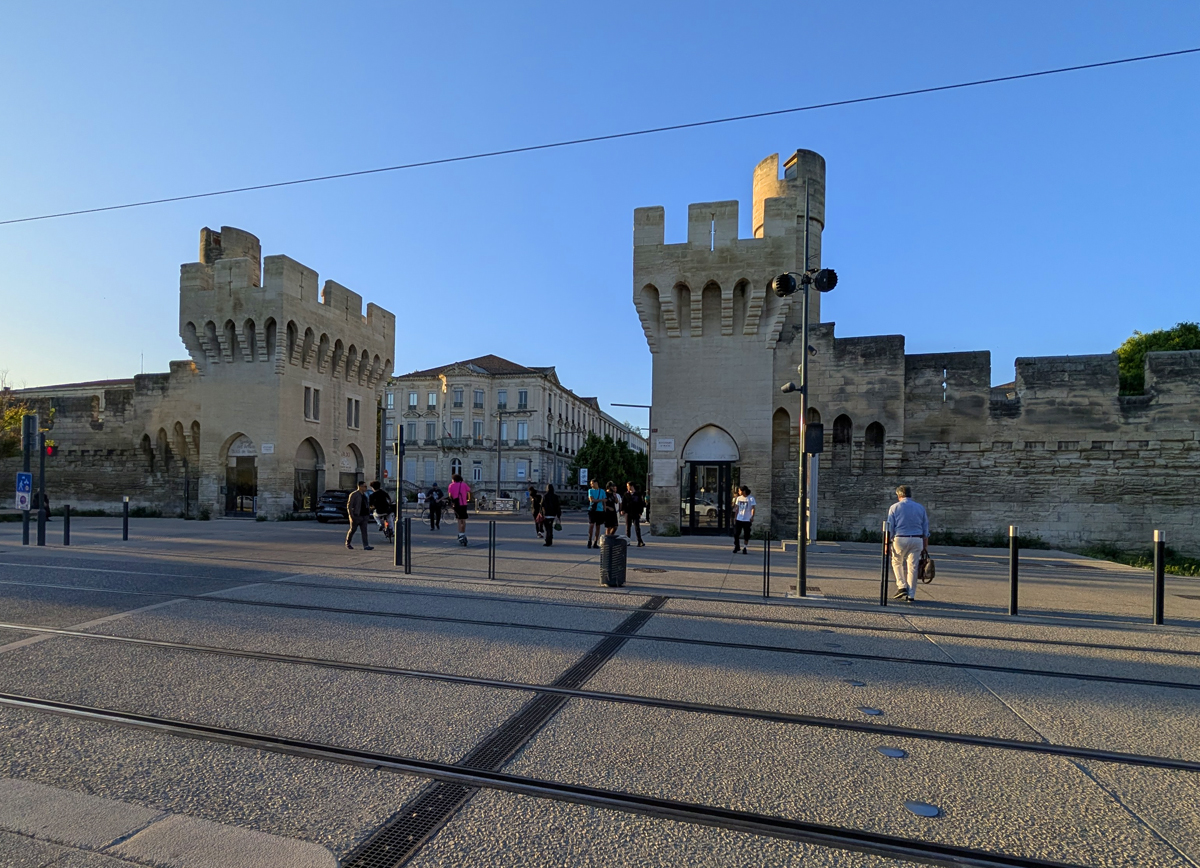
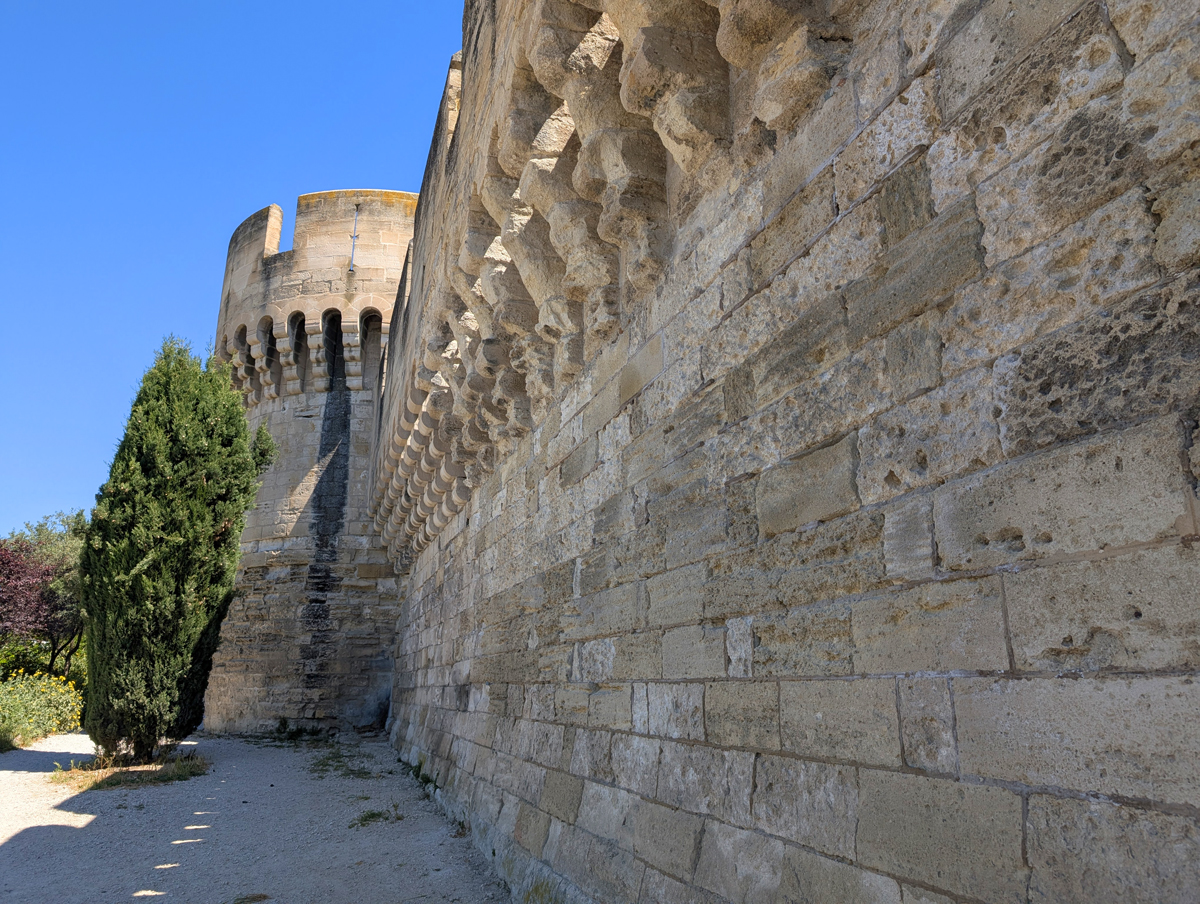
Avignon is basically a circle-shaped town ringed by defensive walls and towers. Dating back to the 14th century, they measure 4.3 km in total. Avignon’s ramparts are a UNESCO World Heritage site.
You can walk or bike around the circumference of the ramparts.
9. See Villeneuve-lès-Avignon
Across the Rhone, on the north bank of the river, is the town of Villeneuve-lès-Avignon.
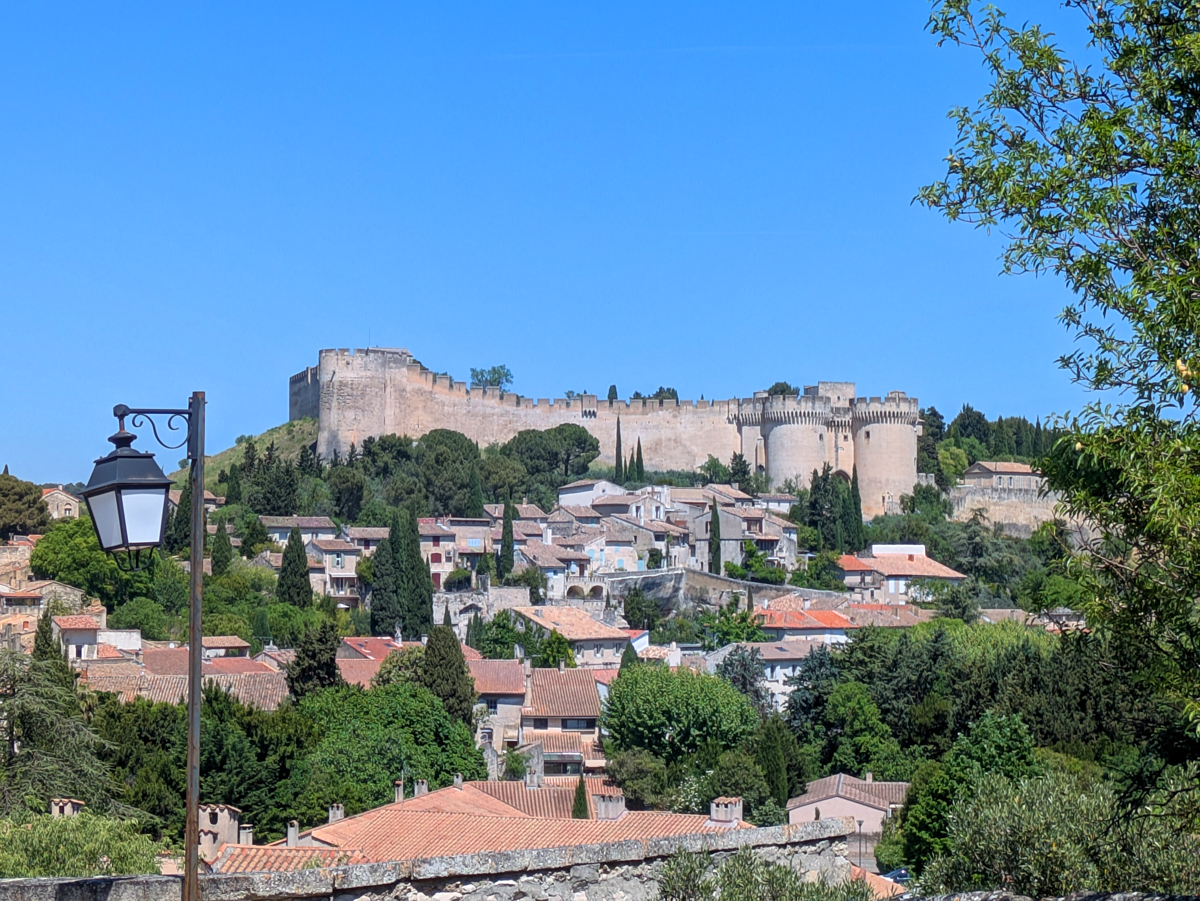
A town named Bourg Saint-André had existed here from early times, separated from Avignon by the wide Rhone. When the bridge was built (1177 – 1185) it led to tension, the inhabitants decided to build a wall around the town. For a long time Bourg Saint-André and Avignon would be at odds, first in the early 1200’s when Bourg Saint-André was annexed by Avignon and then later – in the late 1200’s – when Avignon came under the ownership of the King of Naples. By 1293 the town of Bourg Saint-André was renamed Ville Neuve-Saint-André-près-d’Avignon and was under the rule of the King of France while, on the other side of the river, Avignon was ruled by the King of Naples. This led to the building of two fortresses (today Philippe-le-Bel Tower and Fort Saint-André).
When the Papacy moved to Avignon in the early 1300’s it totally changed the dynamic of the two towns. Many Cardinals and Popes built palaces in Villeneuve, away from “dirty Avignon”. Both cities became rich and prospered together.
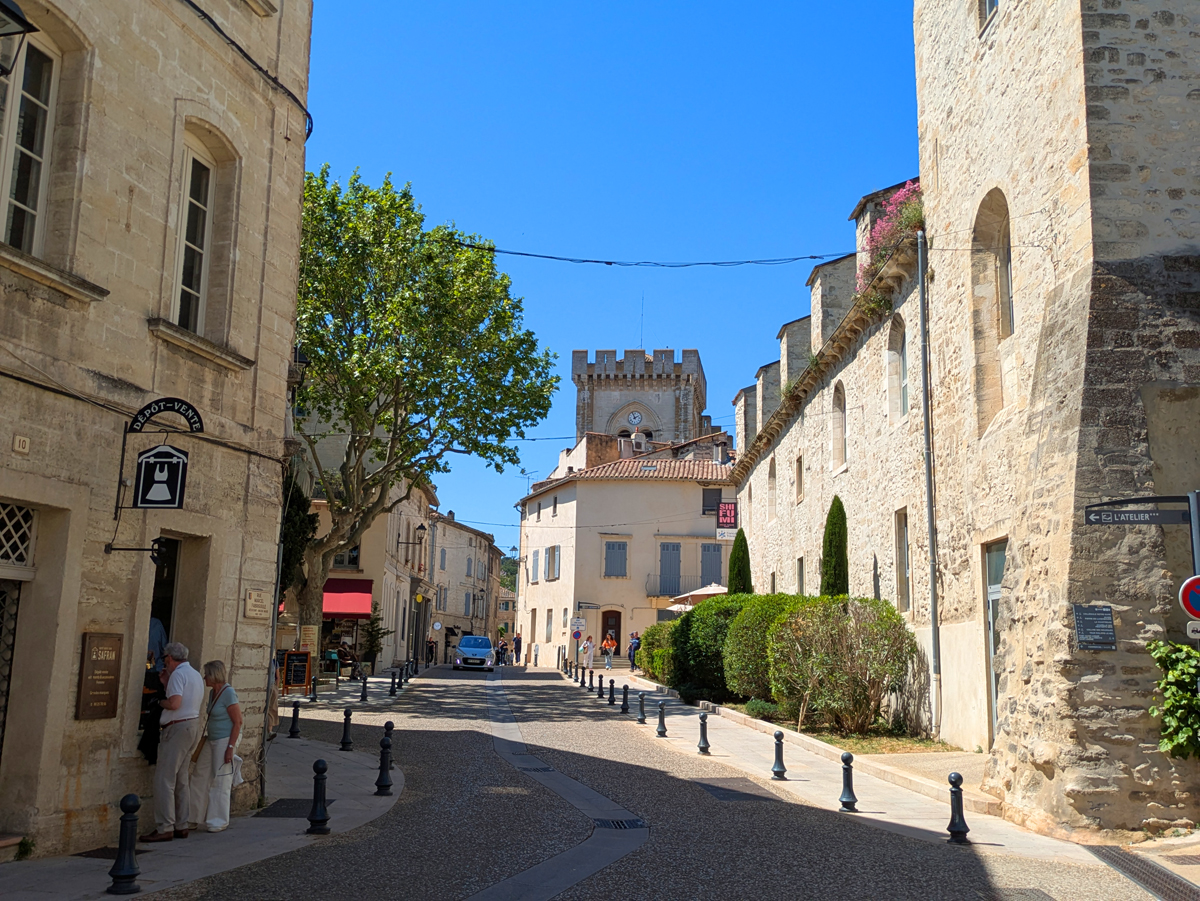
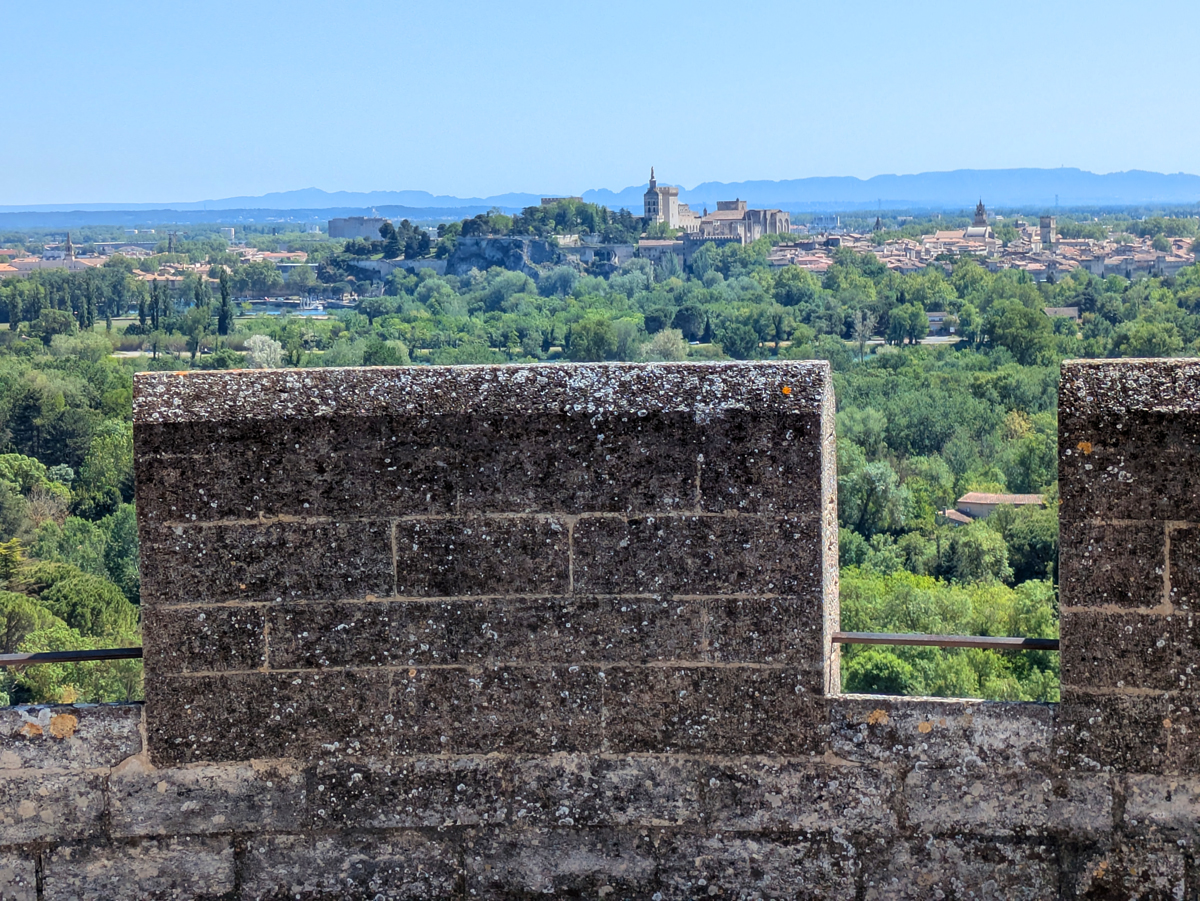
Today Villeneuve-lès-Avignon is a pretty town that’s definitely worth the visit from Avignon. What to see? Fort Saint-André is, in my opinion, not really worth the 7 Euro entry fee (although the views looking across towards Avignon are impressive). Two things very much worth visiting: La collégiale Notre-Dame (Collegiate Church of Notre-Dame) with its impressive cloister and La Chartreuse, an old monastery with a partly-destroyed church. Very impressive and it holds the tomb of Pope Innocent VI. Take the time to walk around the city center which is pretty and if you come on a Saturday morning there is a market.
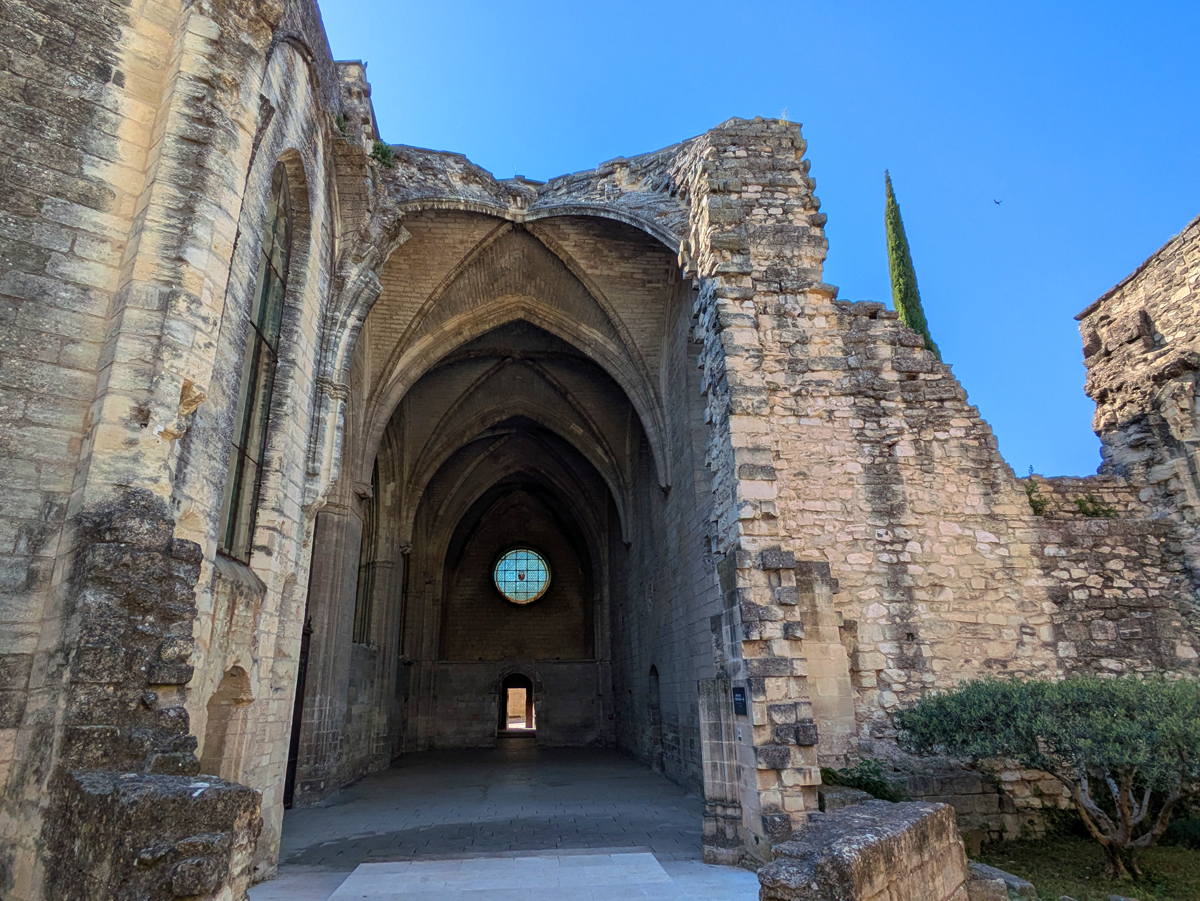
How to get there: you can walk to Villeneuve les Avignons in about 40 minutes from Avignon. OR Take the #5 bus from just outside the Avignon city walls (google Porte de L’Oulle). Cost is 2 Euros which you can pay the driver.
10. Use Avignon as a base for day trips in the region
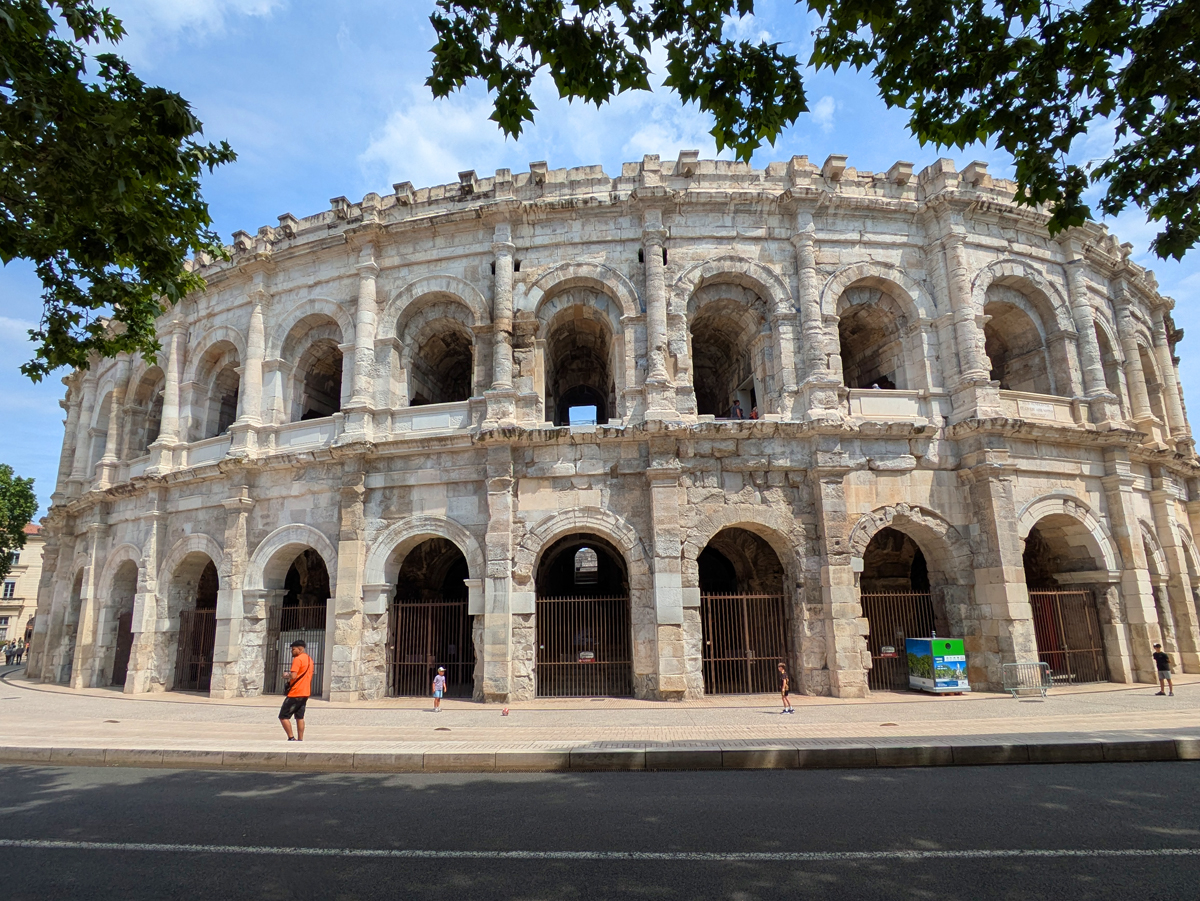
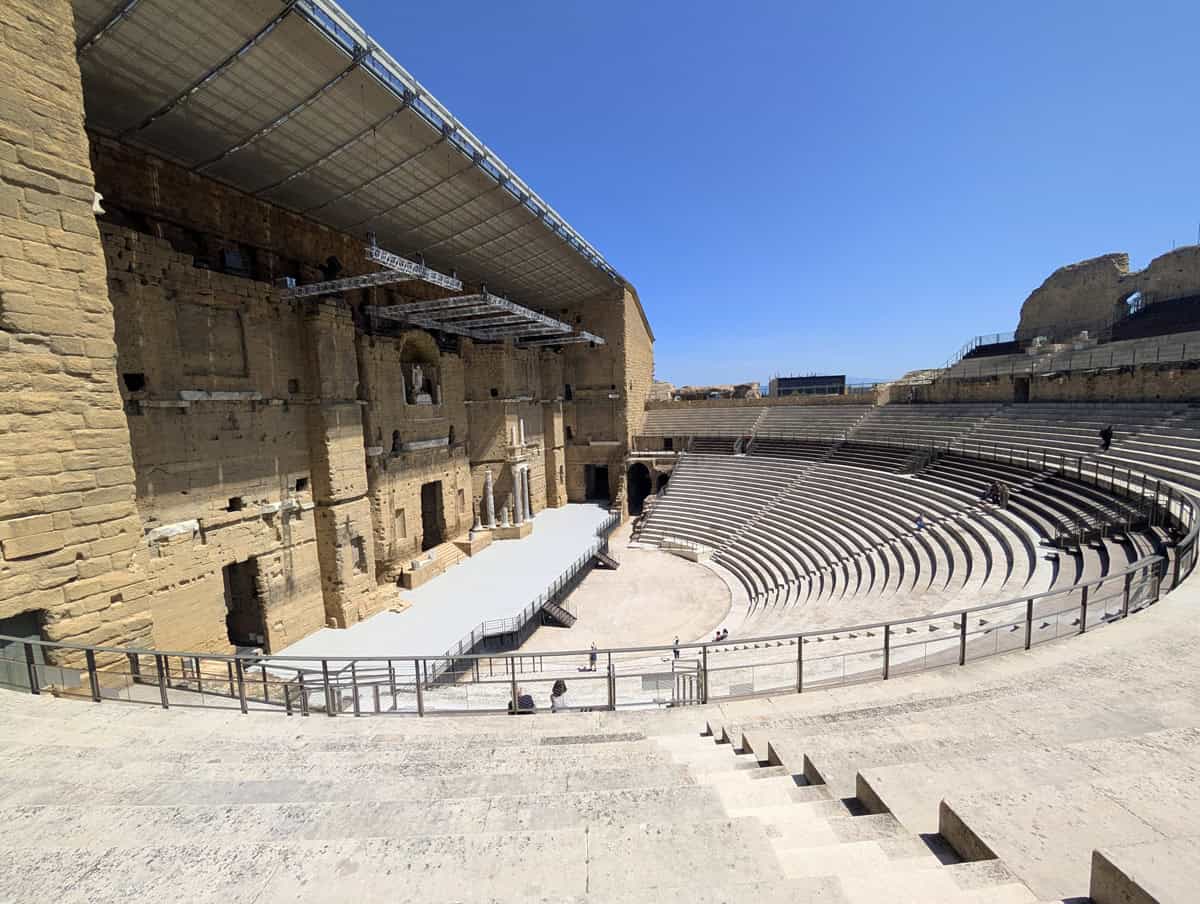
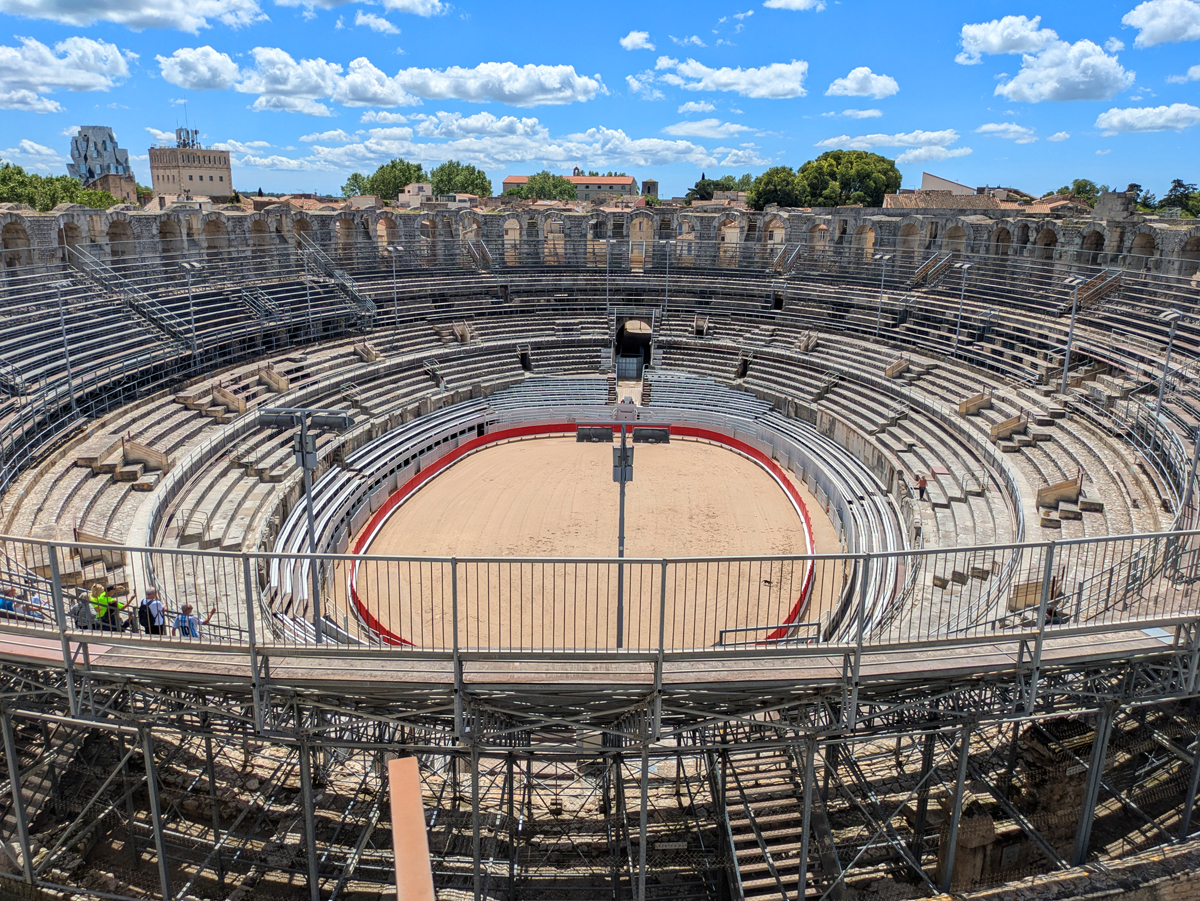
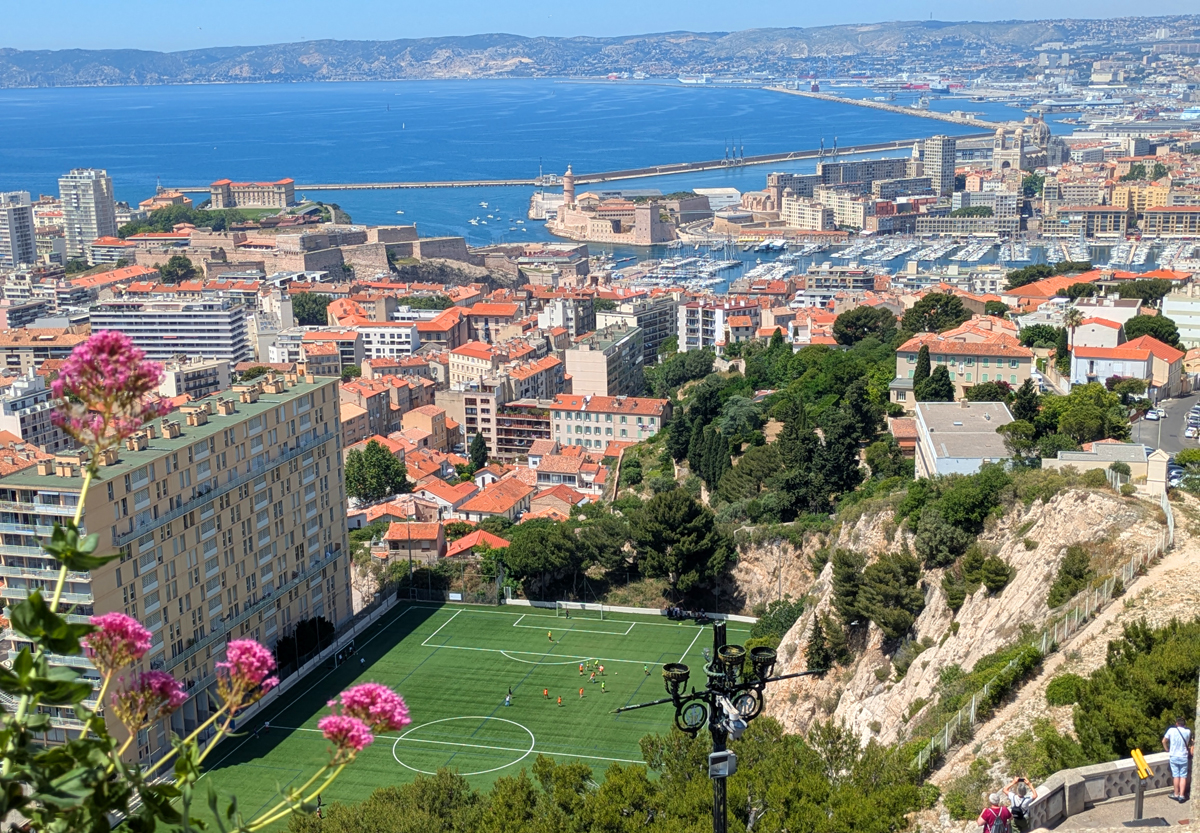
People may ask why we would choose Avignon as a base for a month. It’s easy: besides being a lovely town, Avignon makes for a great base (the best base in my opinion) to explore towns and cities in the region. While here we took the train from Avignon Center (just outside the city walls) to Orange, Nimes and Arles. Aix-en-Provence (by bus) and Marseille (by train) are also easy to get to from Avignon.
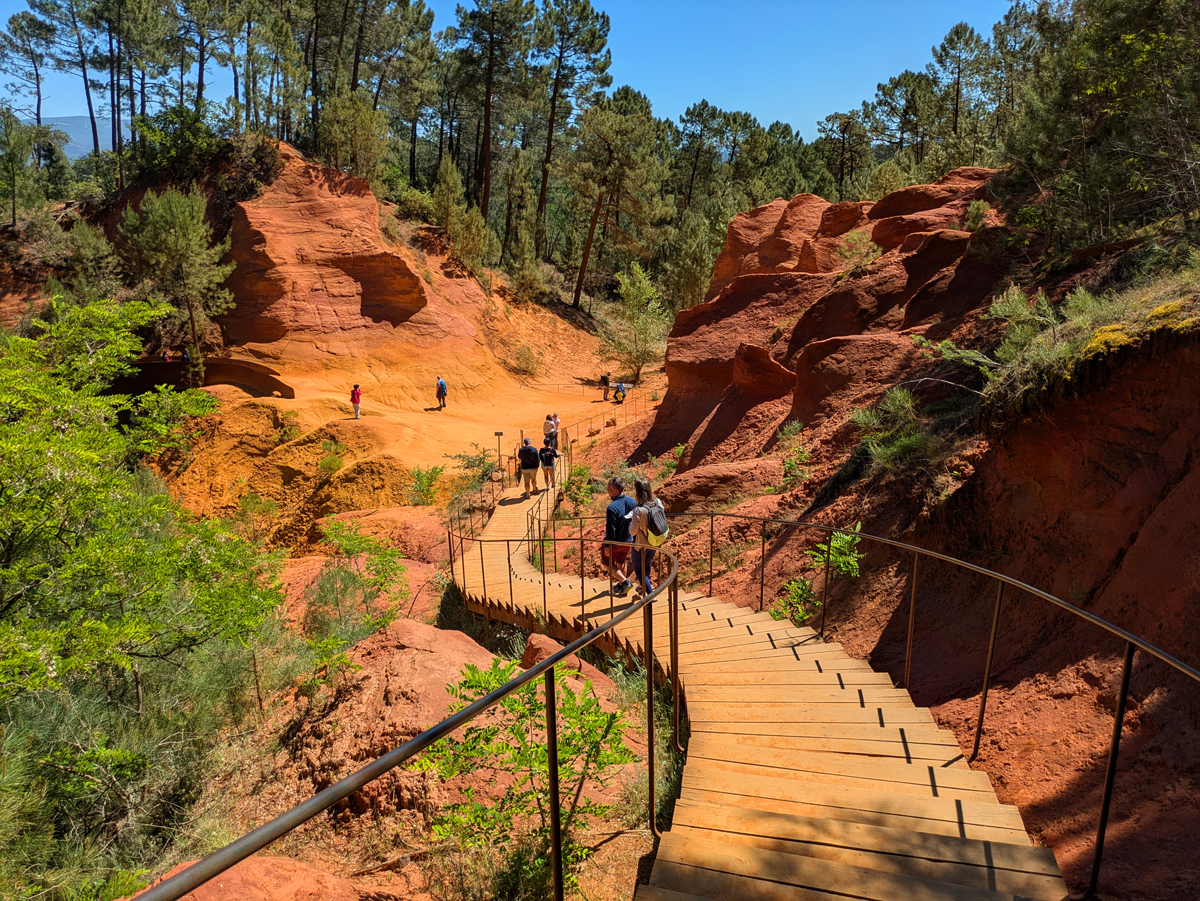
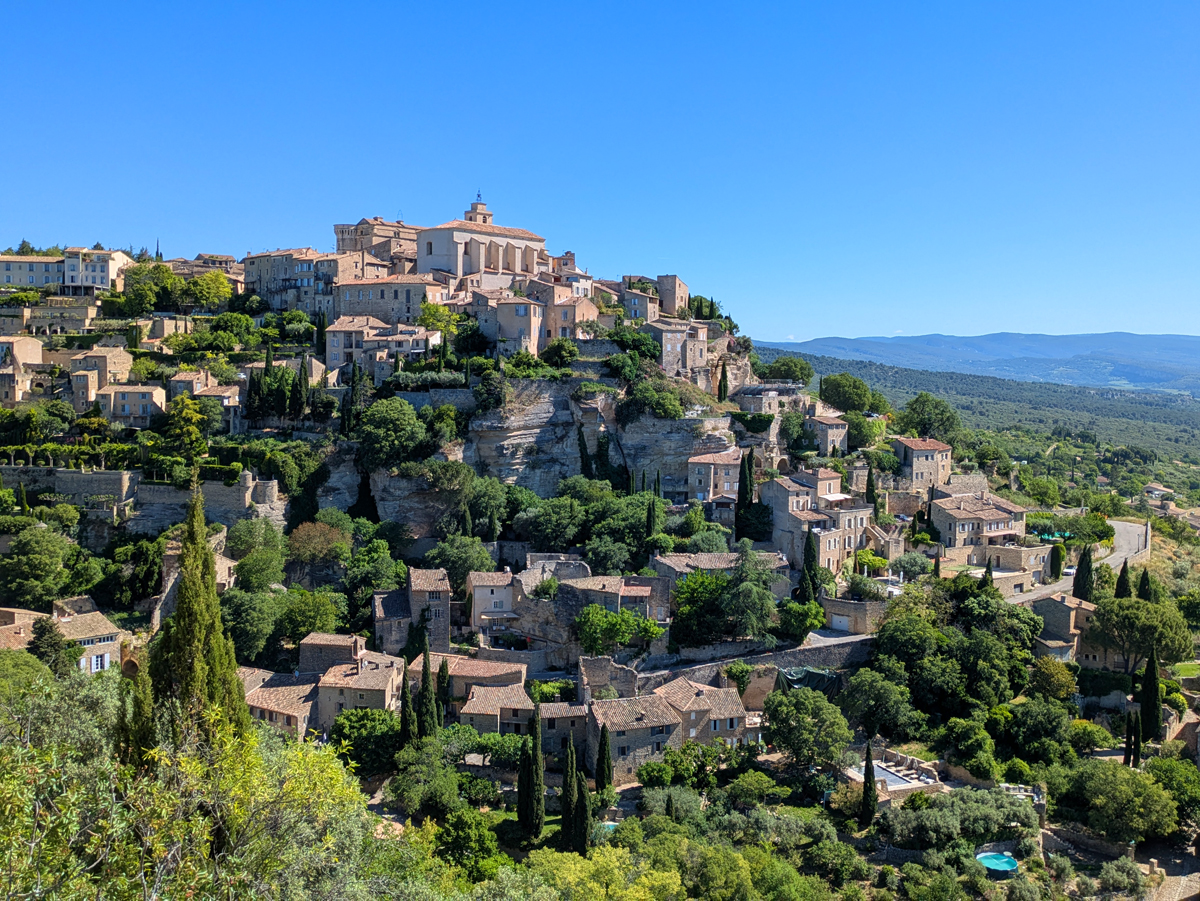
We also did a very good tour from Avignon: a full day tour taking us to some of Provence’s most beautiful towns (Fontaine-de-Vaucluse, Gordes, Roussillion, Les Baux de Provence, Saint-Rémy-de-Provence) as well as the Pont du Gard.
Related: May 2026: a 2nd month of full-time travels in France
Leave a Reply