What to See and Do in wonderful Lyon.
We spent 10 days getting to know Lyon. It’s a wonderful city with two rivers, an atmospheric old town, plenty of beautiful squares, and several hills giving you great views over the city. Lyon is the 3rd largest city in France but has a relaxed, almost provincial vibe. It’s a great walking city.
How long should you plan your visit to Lyon? I know 10 days isn’t feasible for most people. My opinion is that 3 full days is enough to explore the highlights of Lyon covering: 1) the Old Town and hilltop Fourvière (UNESCO World Heritage Sites), 2) Presqu’île (also UNESCO) and the Rhone river, 3) Croix-Rousse and the slopes leading to Presqu’île.
In this post I tell you what to see and do in Lyon and give you some itinerary suggestions.
Below: you can click on the map to enlarge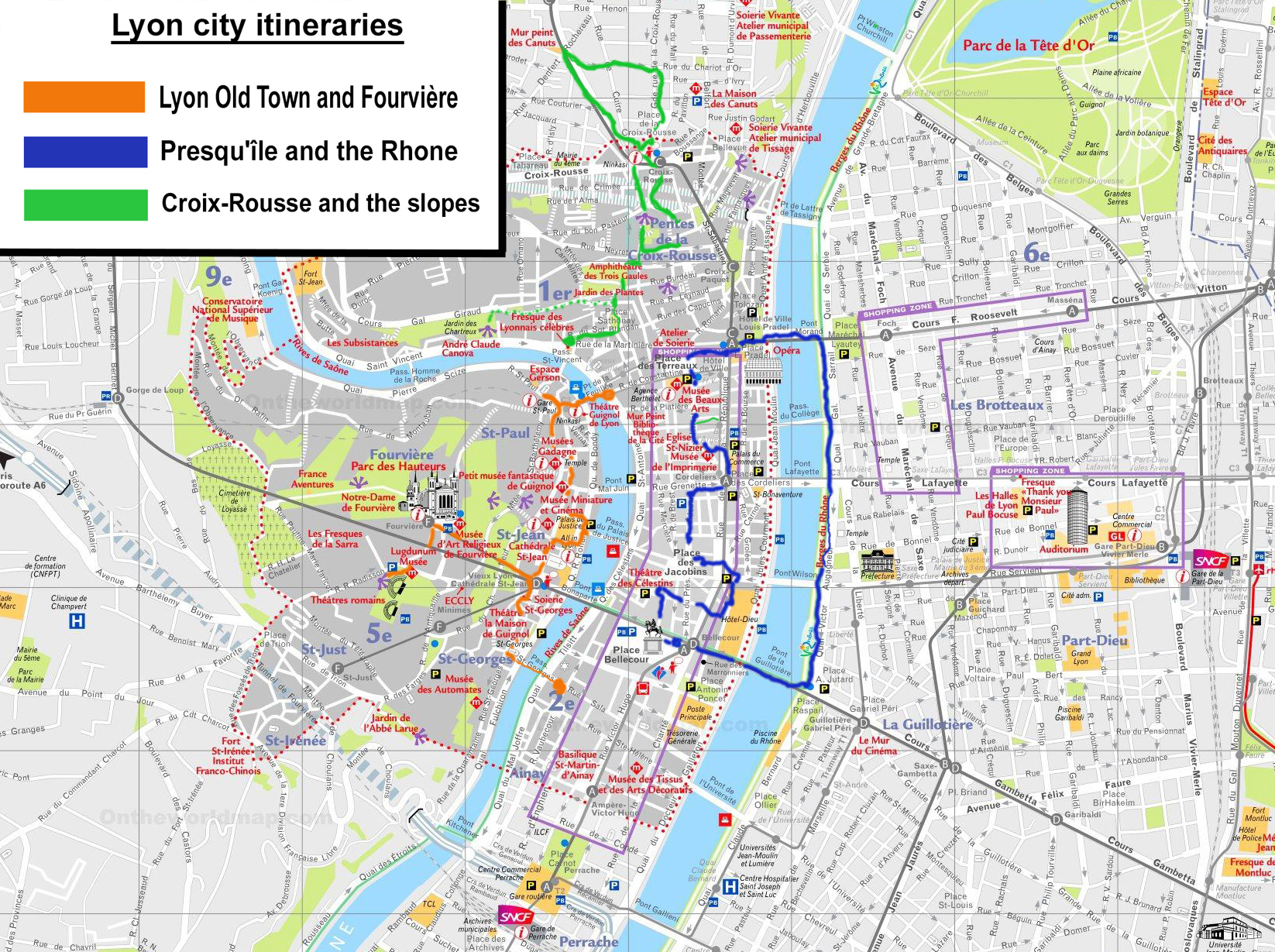
Lyon Old Town and Fourvière
The hilltop of Fourvière was where Lyon originated in 43 BC as the Roman city of Lugdunum. Below Fourvière, along the Saône river, is the Old town which grew after the Roman empire collapsed. Much of it was built in the 15th and 16th century in Renaissance style (following the Gothic style which was prevalent in France). Lyon’s Old Town today is one of Europe’s largest and best-preserved Renaissance neighbourhoods.
Despite that, the reality is that the Old Town and Fourvière don’t cover that much ground and can easily be explored in a day.
Here is how I would organize a visit (it’s how we did it).
The Old town has 3 districts: St-Paul, St-Jean and St-Georges.
Start in the St-Paul district. If coming from Presqu’île, cross the little red bridge called Passerelle Saint-Vincent. Even if not coming from Presqu’île, have a walk on the bridge for the views facing the Old Town.
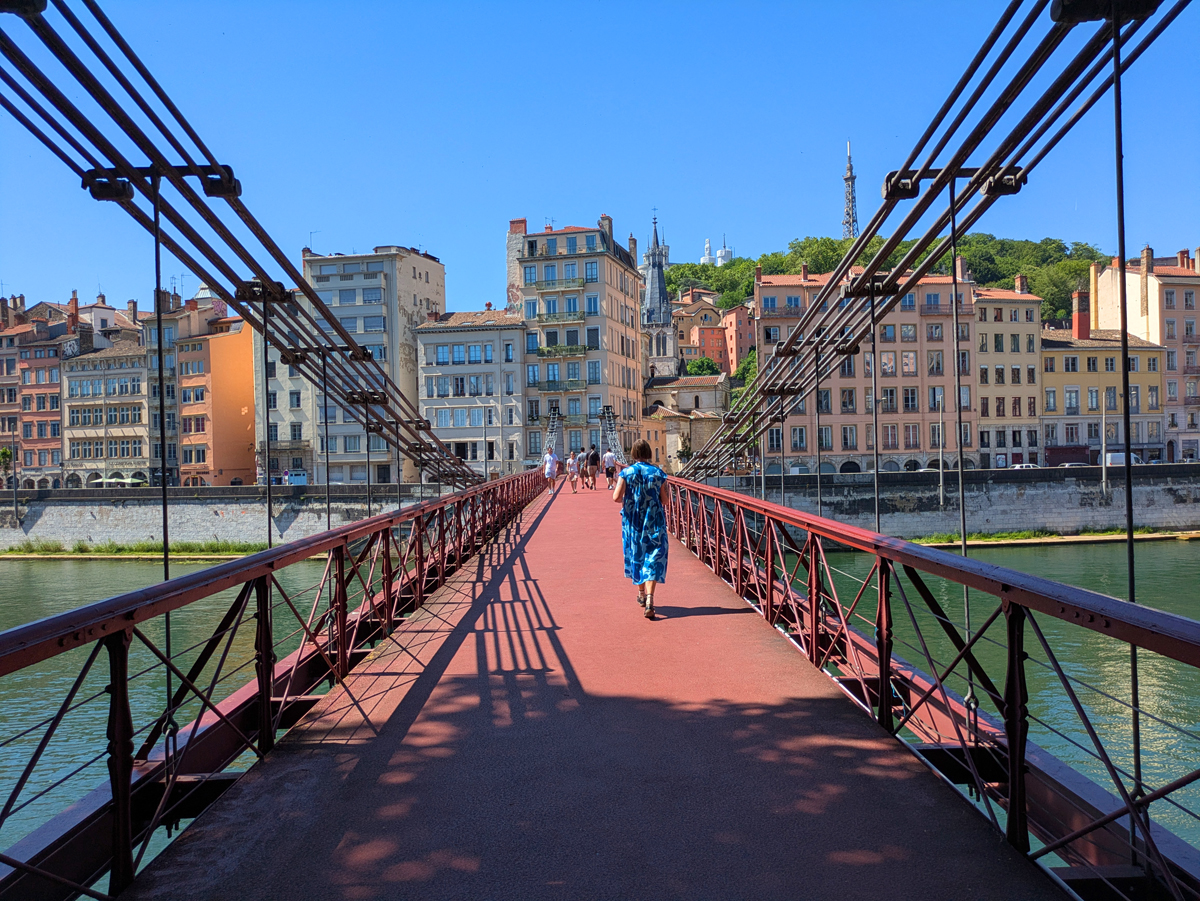
This district was named after the church here, église St-Paul. It is one of the “oldest churches”* in Lyon and in the Middle Ages was a self-sufficient micro-district surrounded by walls. During the Renaissance era, it became a trading area for commerce.
*An original church built in 549 was torn down, to be replaced by the current building constructed in the 12th century.
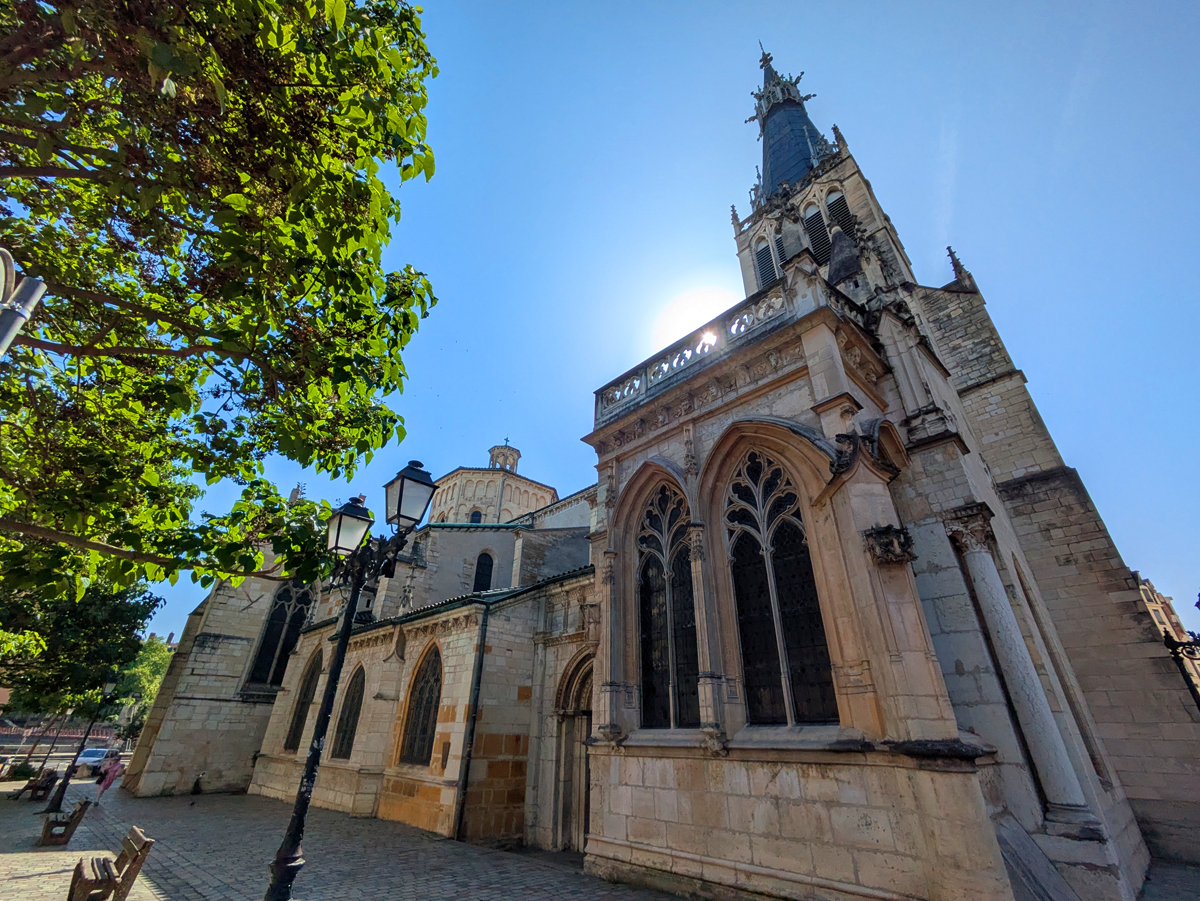
See the square, Place St-Paul. There’s a train station there that was the 2nd oldest train station in Lyon. Now it serves commuters from Lyon’s western suburbs.
Just off the square is the small Rue Juiverie. The street dates back to Roman times but takes its name from the Jewish community that lived and gathered here during the 13th and 14th centuries. The street is known for some beautiful buildings and famous residents (astrologer and physician Nostradamus lived on this street during the 16th century)
A few minutes walk will get you to Place du Change, a square dominated by the Loge du Change, a building that served as the city’s trading hub between 1750 and the early 1800’s. In 1803 it became a protestant church.
From Place du Change, continue along Rue St-Jean, the pretty pedestrian street that’s the heart of the Old Town.
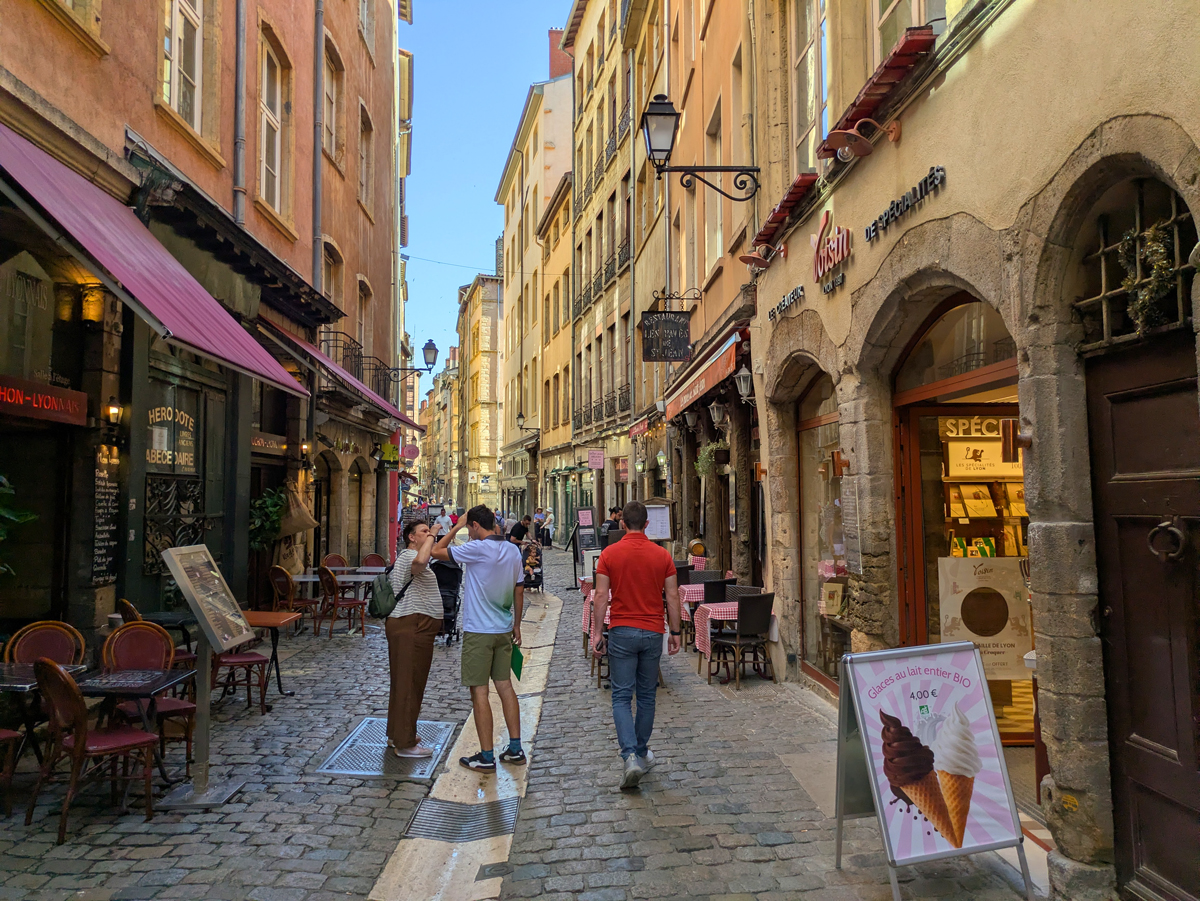
At #54 you’ll find Lyon’s longest traboule. What is a traboule? It’s a passage between buildings meant to help residents get somewhere faster. They’re often hidden and were used by fighters (example the French resistance in WWII) to escape from the streets. This one at #54 is the perfect example: it’s just another door on the street. But open it and go through and you’ll find a long passage through the building that will get you to the next block over.
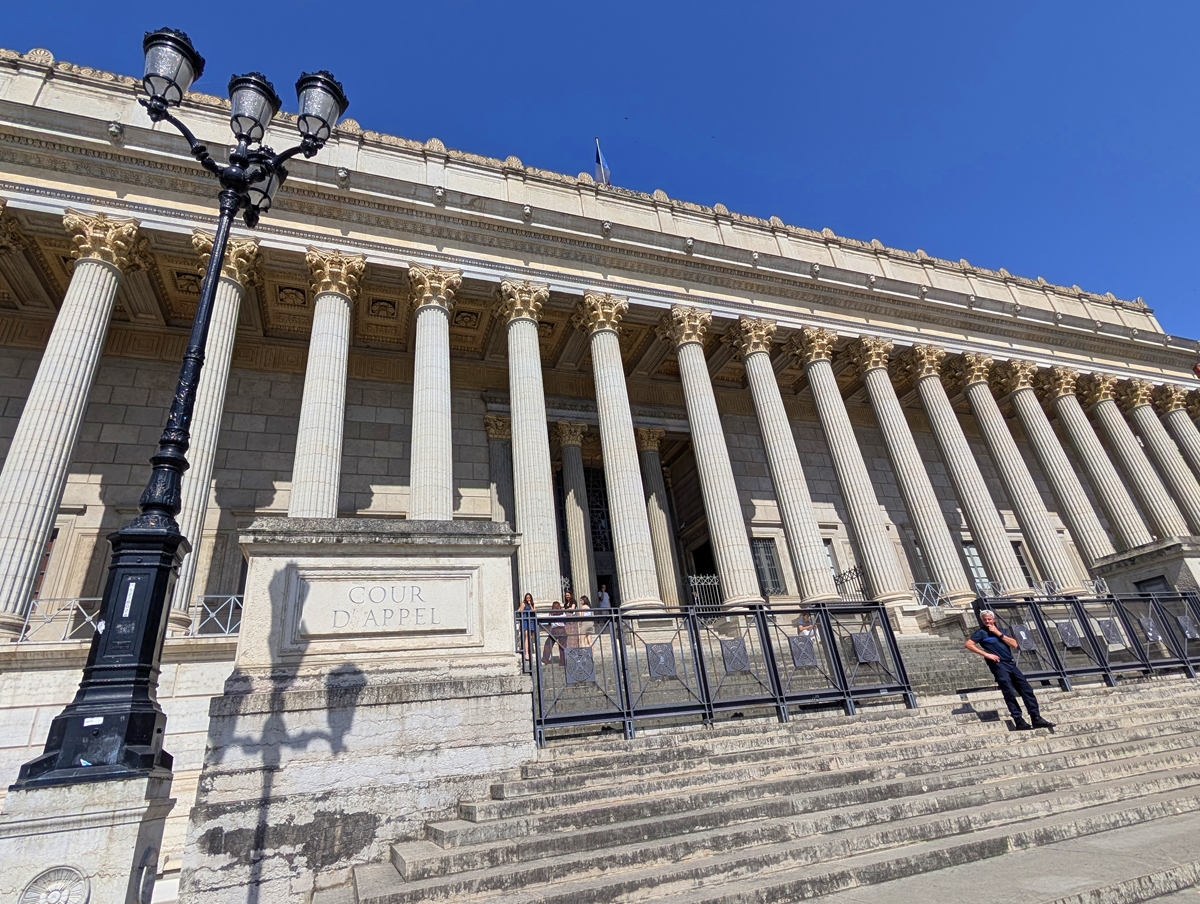
Head to the river for the Palais de Justice de Lyon. Construction of the building started in 1835 and was inspired by Greek and Roman architecture. It has served as a criminal court since then and has had some famous trials including that of Sante Geronimo Caserio in 1894 (he had stabbed and killed French President Sadi Carnot in Lyon), Charles Maurras in 1945 (sentenced to life imprisonment for complicity with the enemy) and Klaus Barbie “the Butcher of Lyon” in 1987 (sentenced to life imprisonment for crimes against humanity).
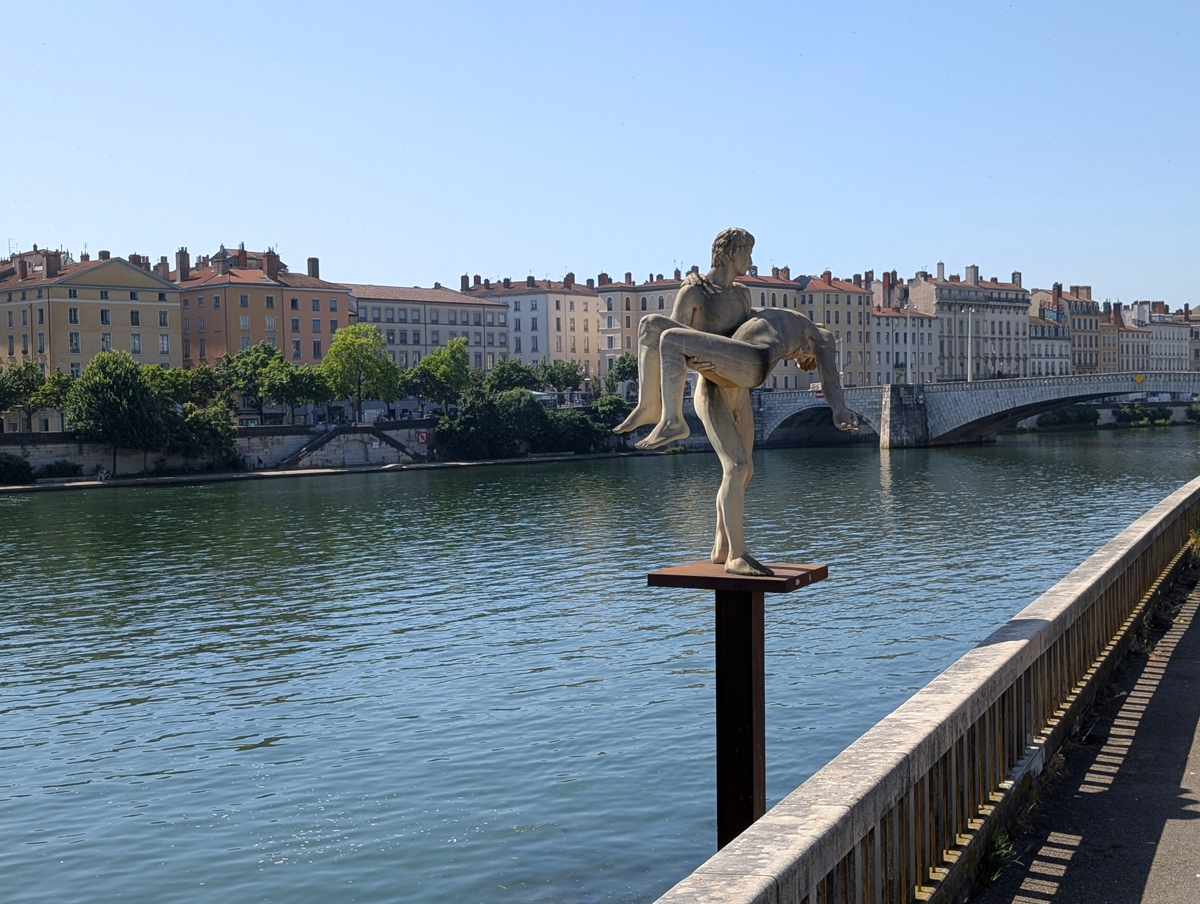
There are nice views of the river and the Old Town from the pedestrian bridge here.
Next to the Palais de Justice, with the Cathedral of St-Jean in the background, you’ll see the Jardin Archéologique. These ruins, some Roman and some from early Christian times, were discovered when excavating to extend the court building.
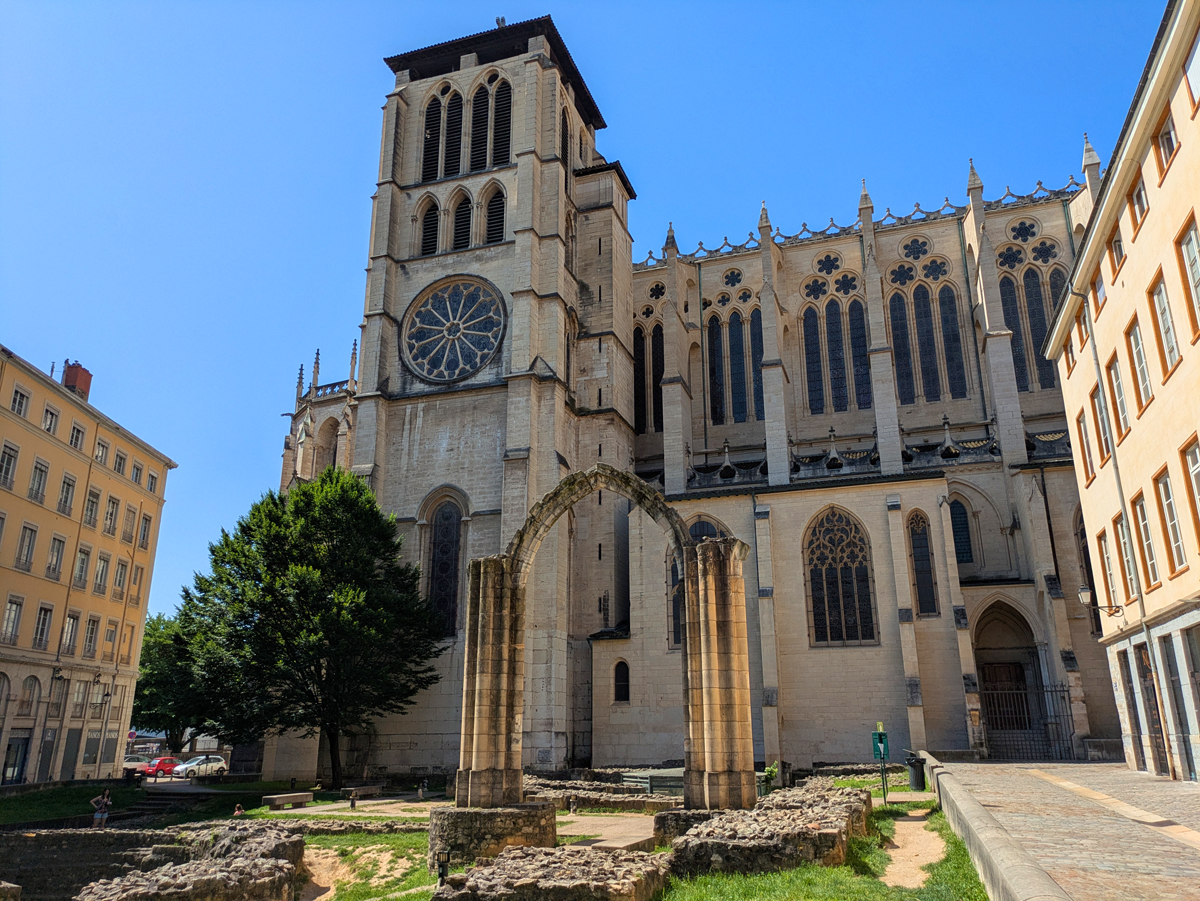
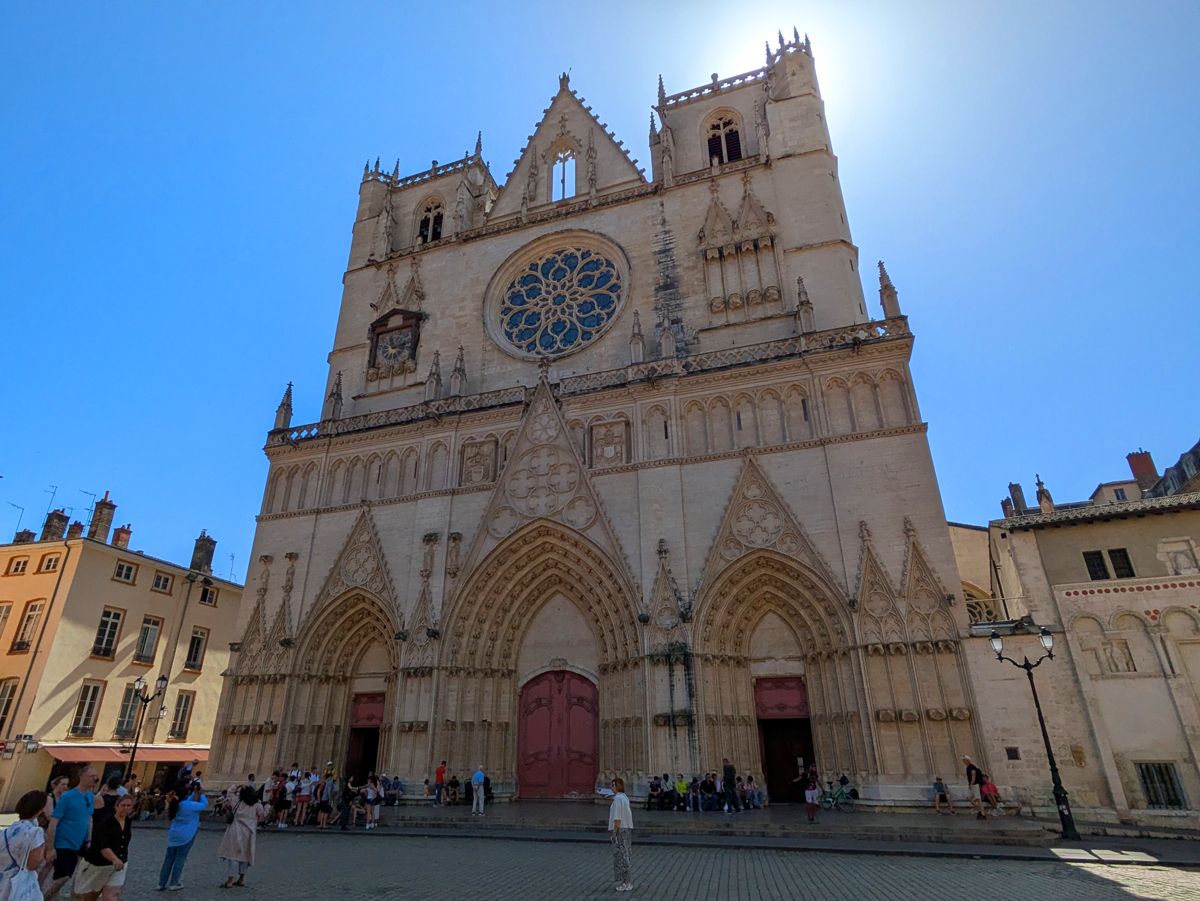
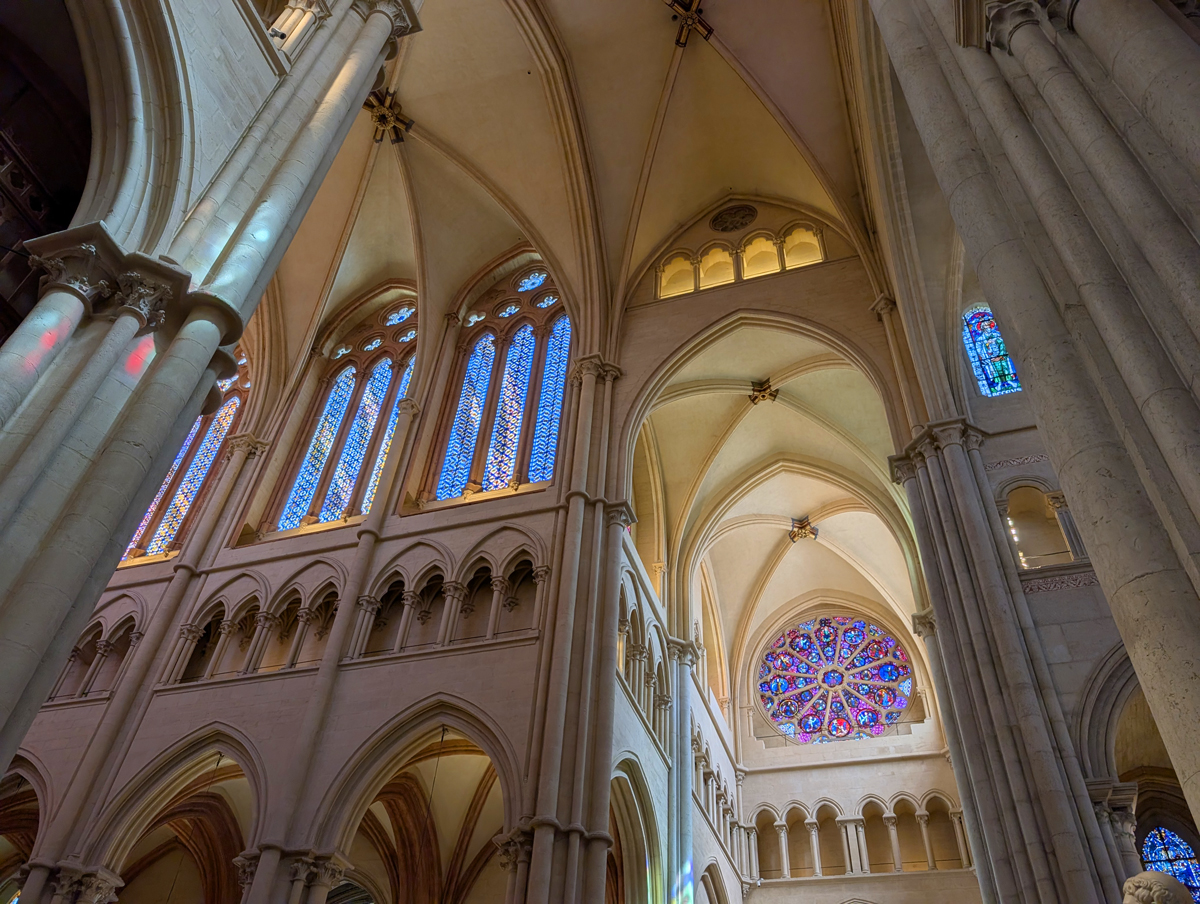
Cathédrale Saint-Jean. Built starting in the 12th century (but only completed in 1476), the cathedral was the seat of the archbishop of Lyon, which (because Lyon was the capital of Gaul), meant power over all the other archbishops in the region.
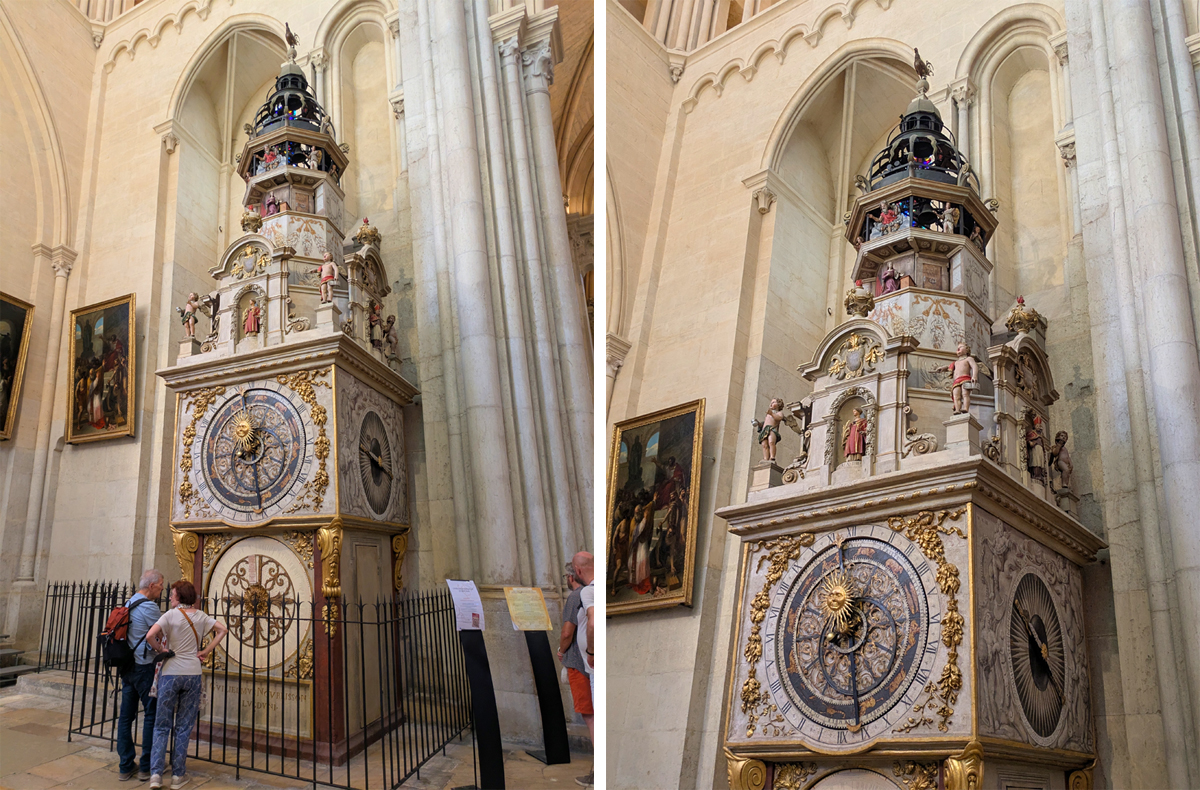
The cathedral is relatively simple with clean lines, high ceilings with beautiful stained glass and is famous for its 14th century Astronomical clock – built in 1379 it tells not just the time but the date as well listing all Christian holidays. It is said to be the oldest clock in Europe to have retained its original mechanism. More here on Lyon’s astronomical clock.
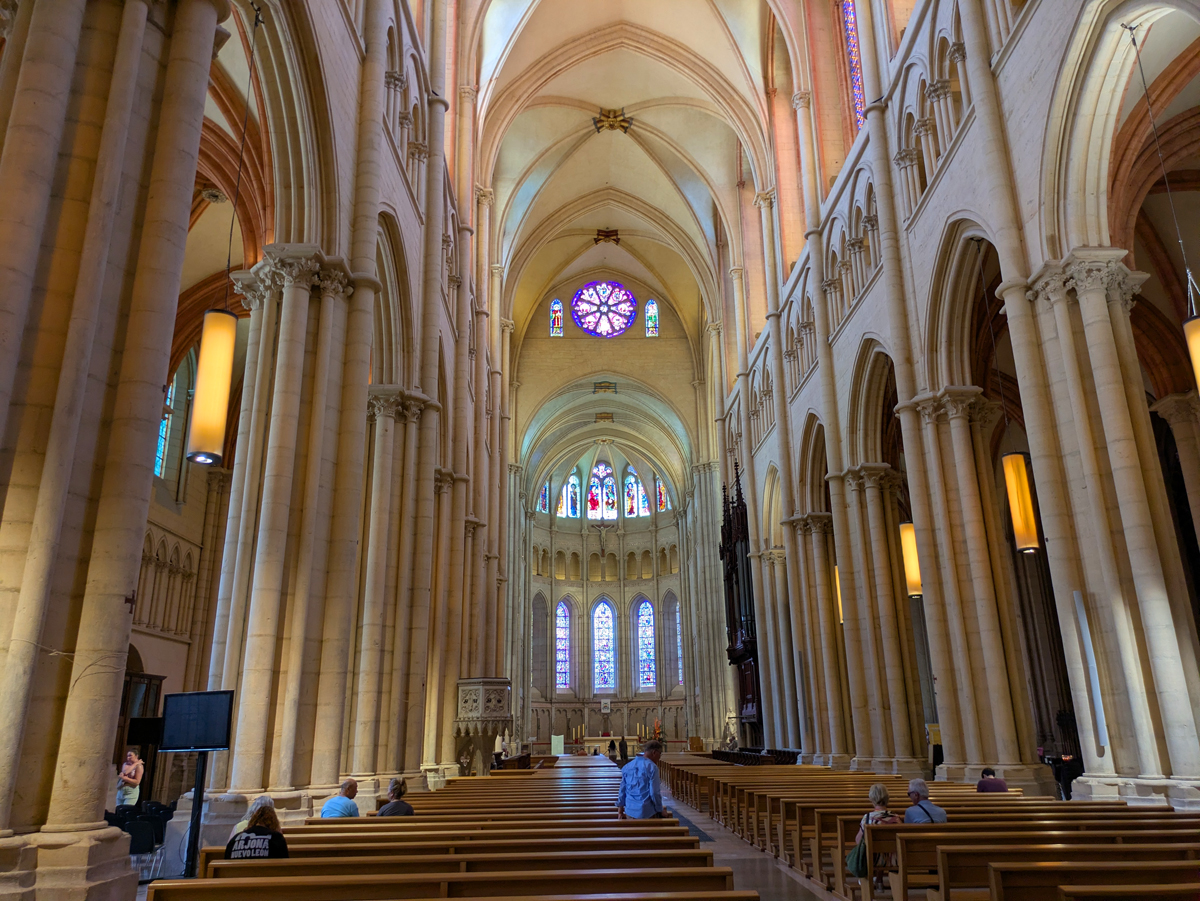
Note: Free entry into the Cathedral.
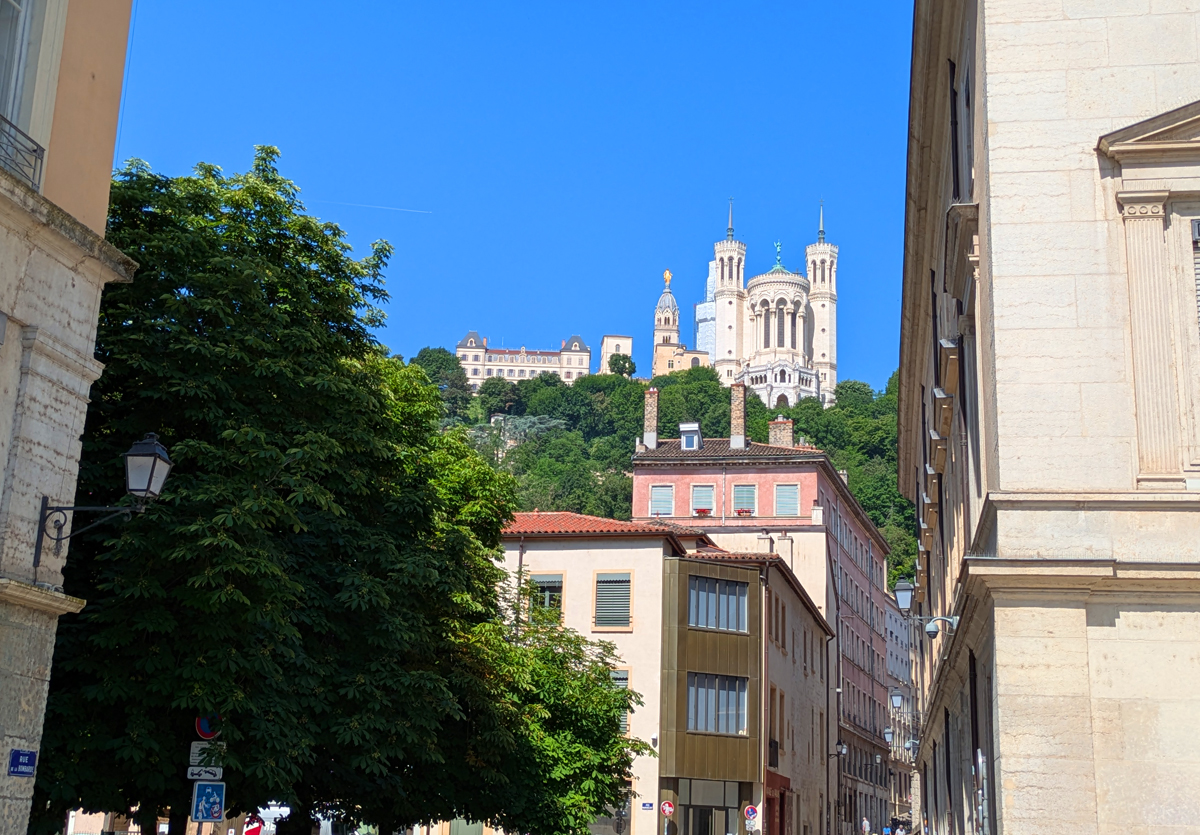
Take funicular up to basilica of Notre Dame de Fourvière. The funicular is steps from the Cathedral and takes about 2 minutes to go up Fourvière Hill (buy a return ticket which at the time of writing was 3.60 Euros) . You’ll come out of the funicular looking straight at the basilica.
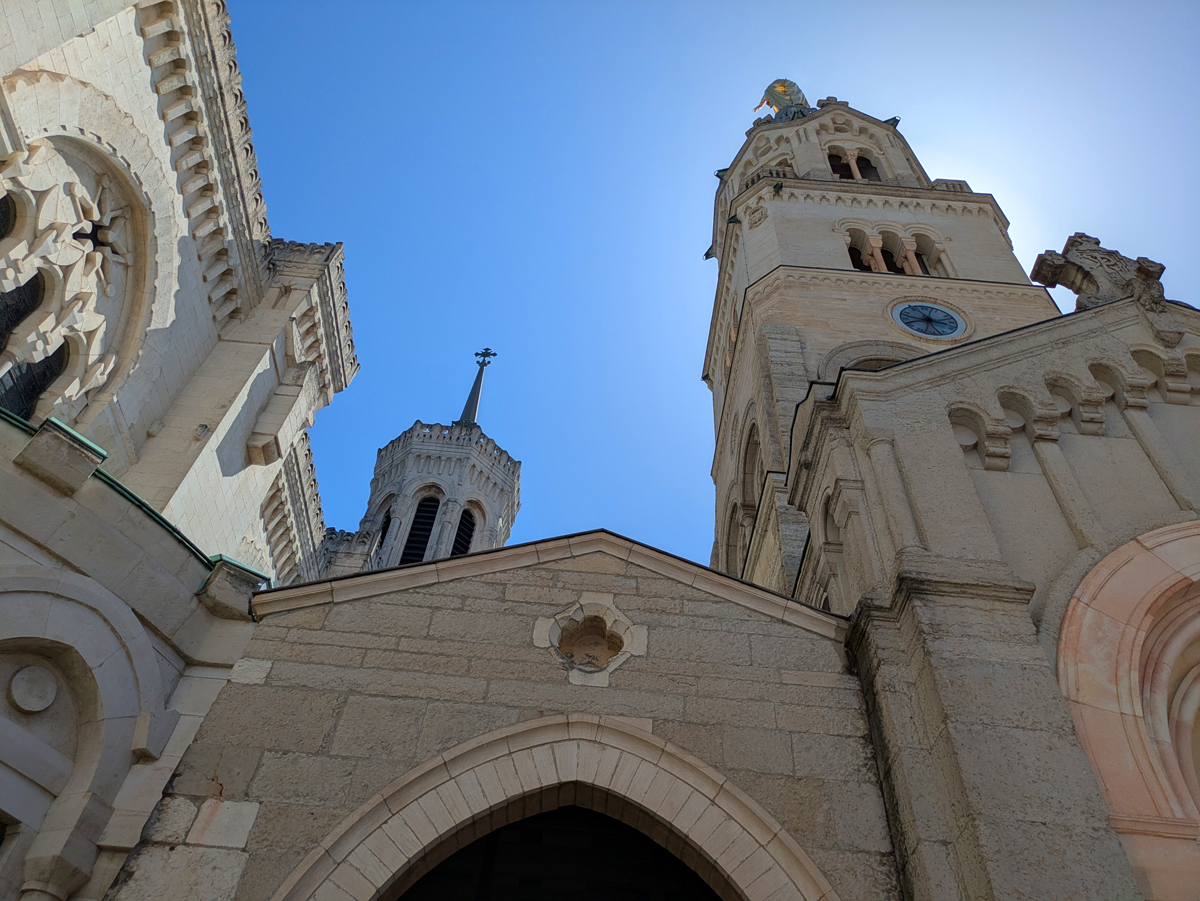
The Basilica of Notre Dame de Fourvière is spectacular. Built between 1872 and 1896 in a location where a Roman Forum once stood, it is dedicated to the Virgin Mary who was credited for turning back Prussian forces during the Franco-Prussian War (1870-1871).
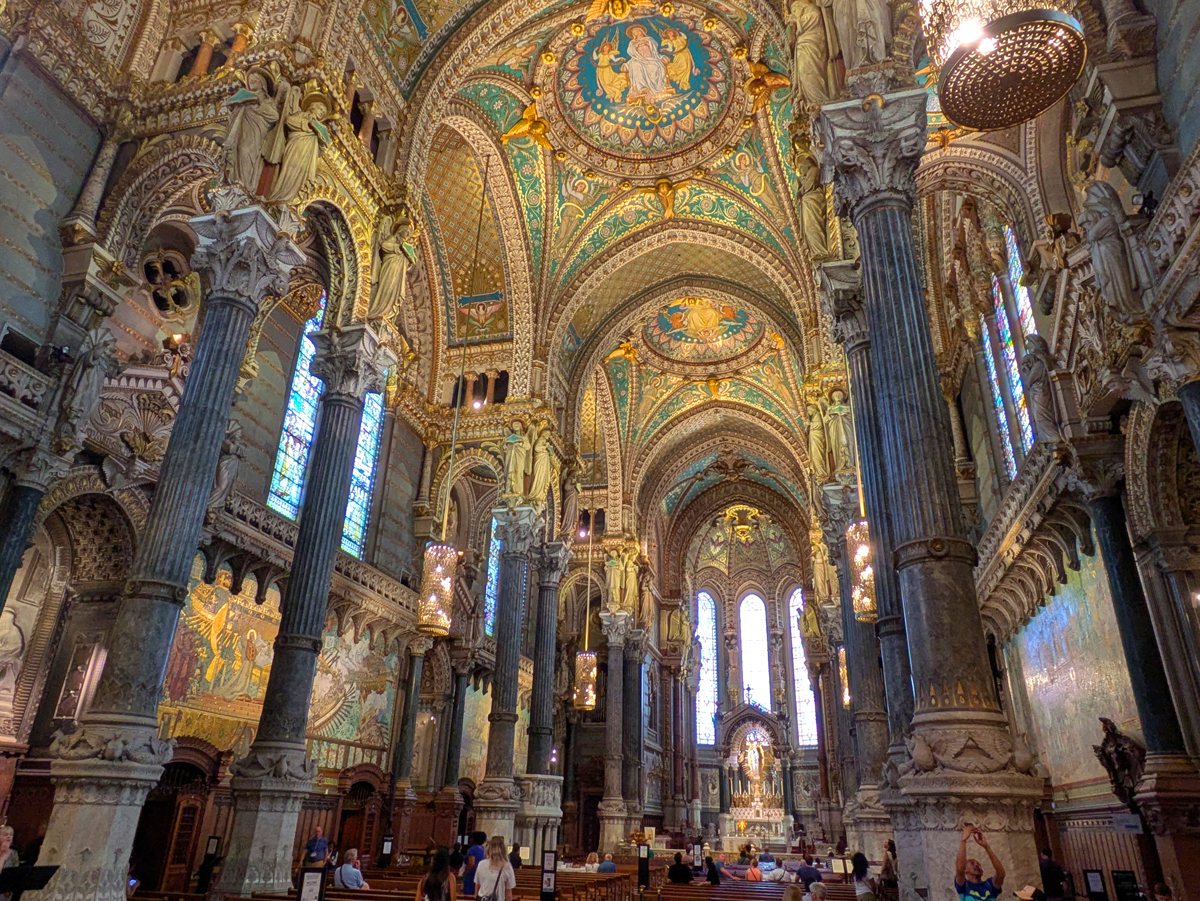
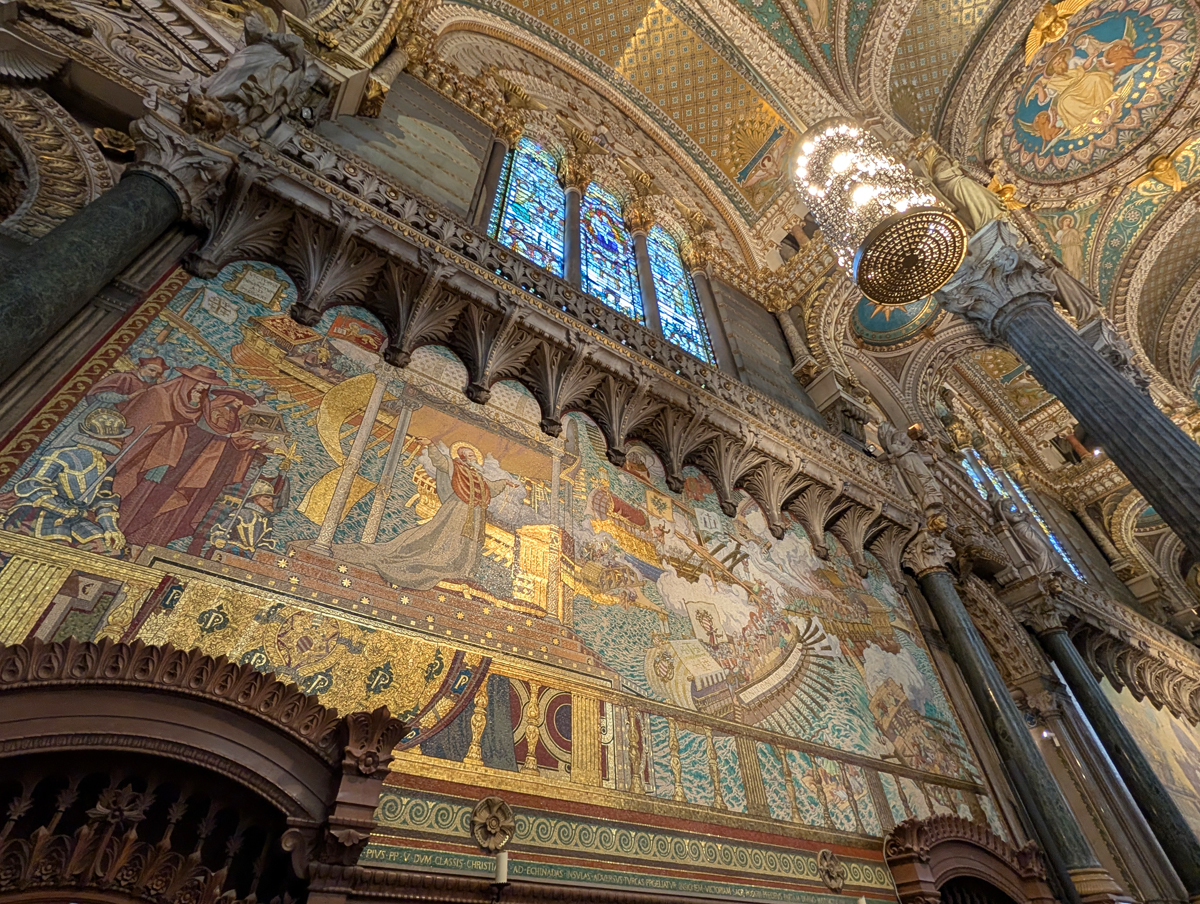
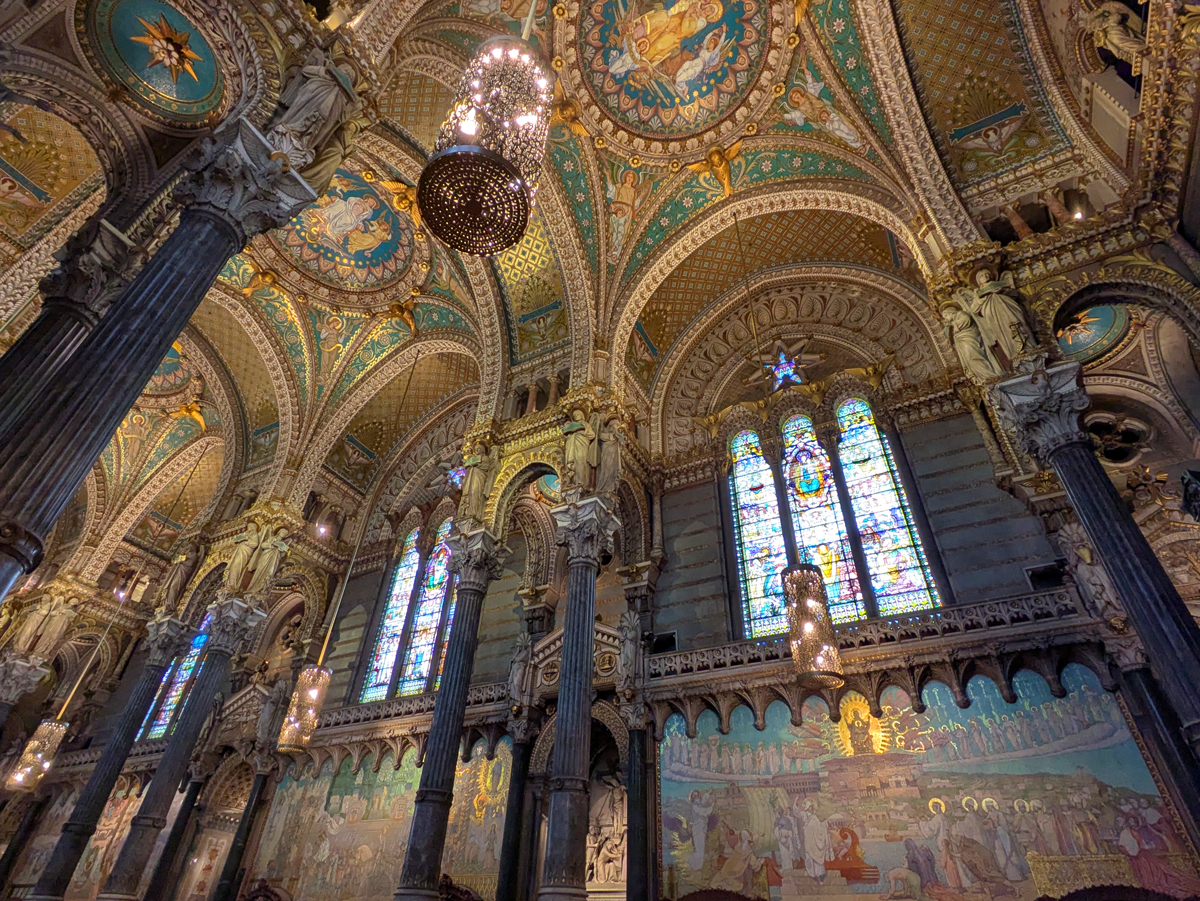
One thing you’ll notice is the style which is a mix of Romanesque and Byzantine. It was a weird choice because most churches during this period were built in Neo-Gothic style (note: you’ll see a Byzantine-inspired Cathedral and Basilica in Marseille as well. Reminds one of churches you’ll see in Eastern Europe).
Note: Free entry into the Basilica.
Back outside, make sure to walk around the basilica on both sides. There are some great viewpoints looking down on Lyon below.
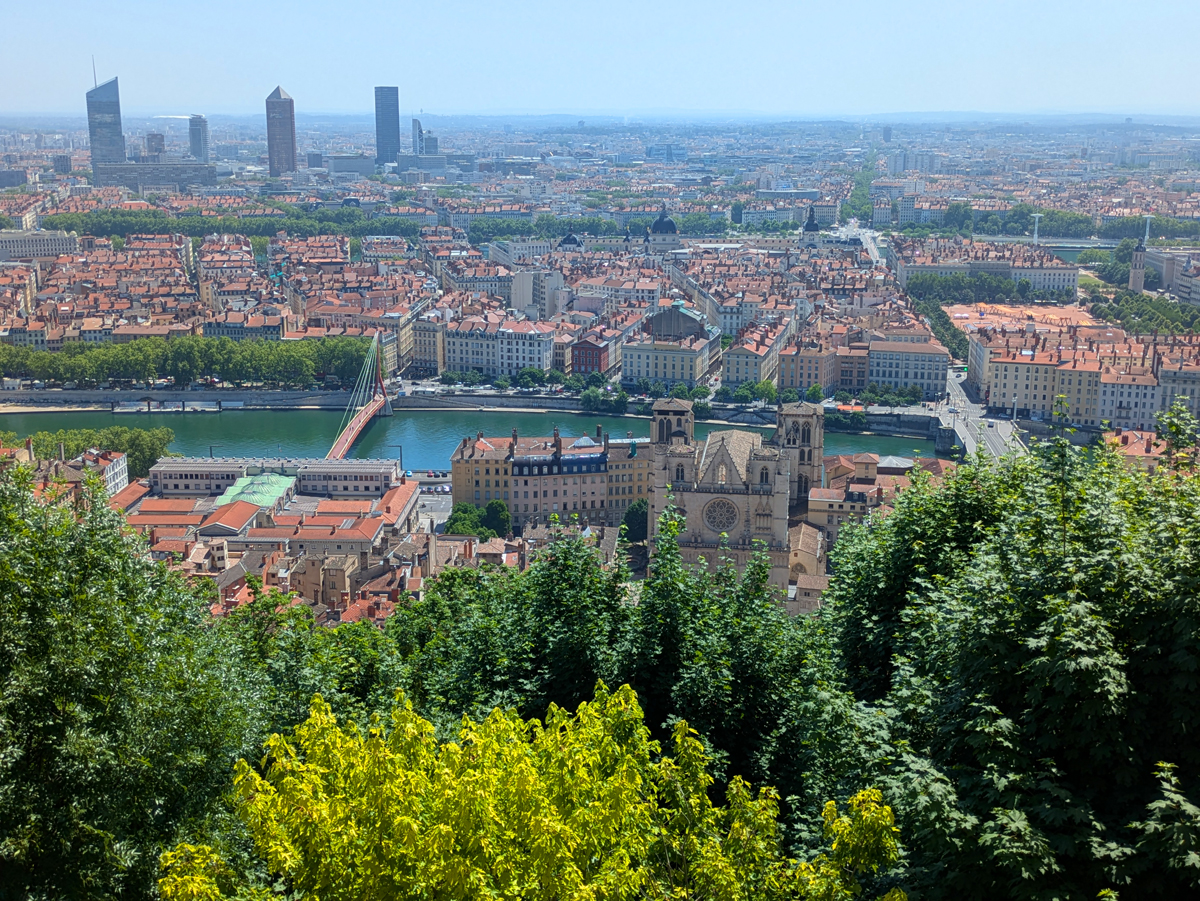
From there, walk to the Théâtre Gallo Romain (about 10 minutes away). This Roman theatre was built around 15 BC and could seat 10,000 people. Today it is still used for shows and concerts. It’s always impressive seeing Roman ruins and imagining what stood here over 2000 years ago.
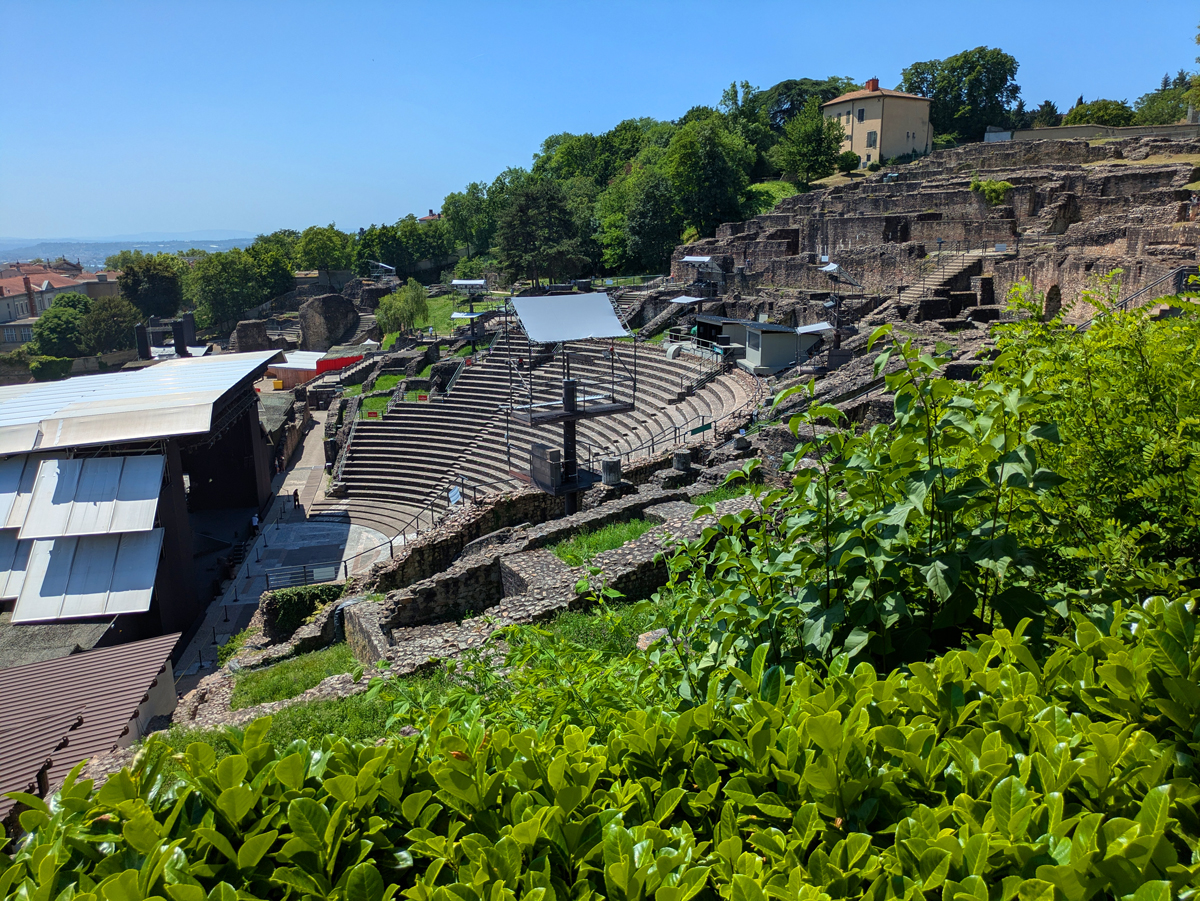
Once done, walk back to the funicular station. We looked for a way to walk down into town but it seemed complicated (and it was hot!). Taking the funicular back down is the easiest way.
Once back in the old town, have a peak behind the funicular station if you want to get a photo from a different angle.
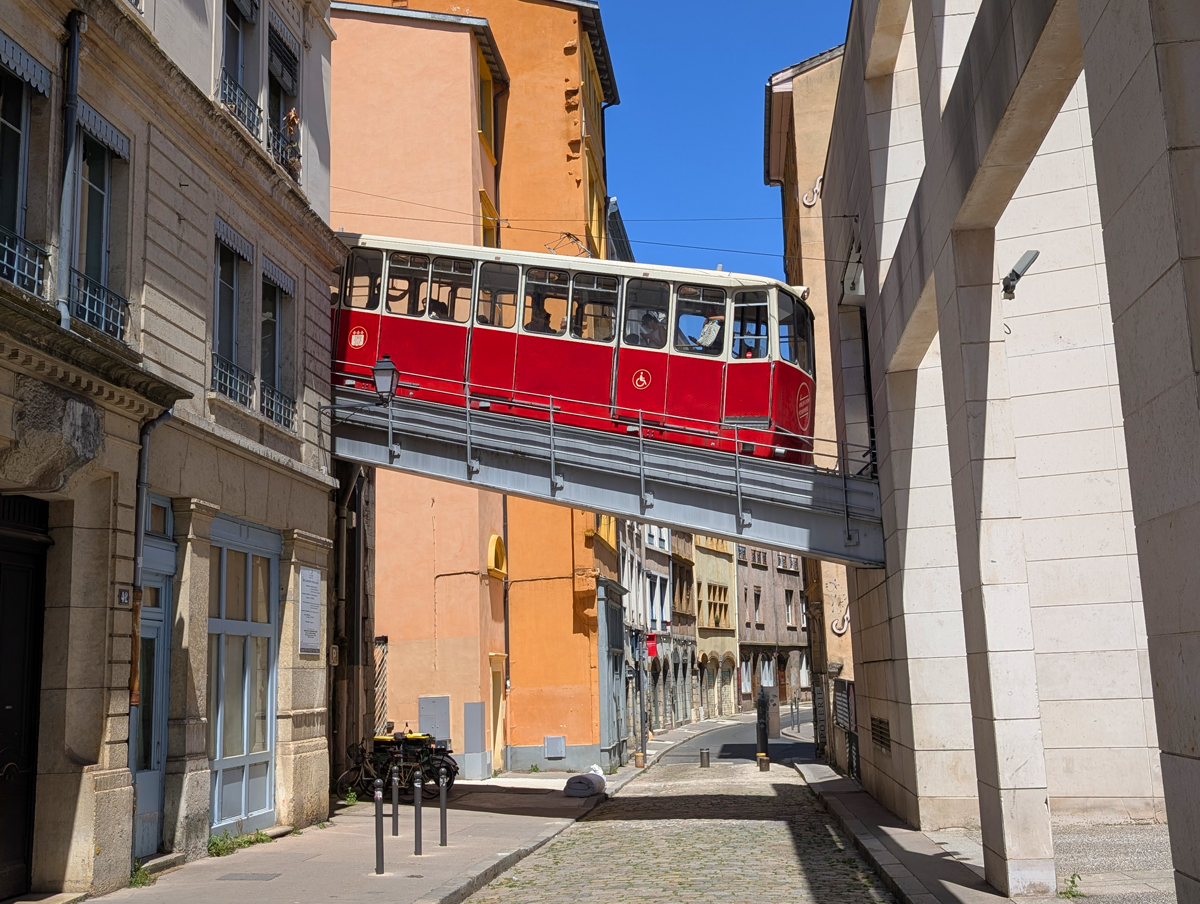
From here, take la Rue St-Georges. It’s a pretty street that’s quiet compared to la Rue St-Jean. You’ll see some nice old houses, cafés and stores and a short walk will take you to Église Saint-Georges de Lyon.
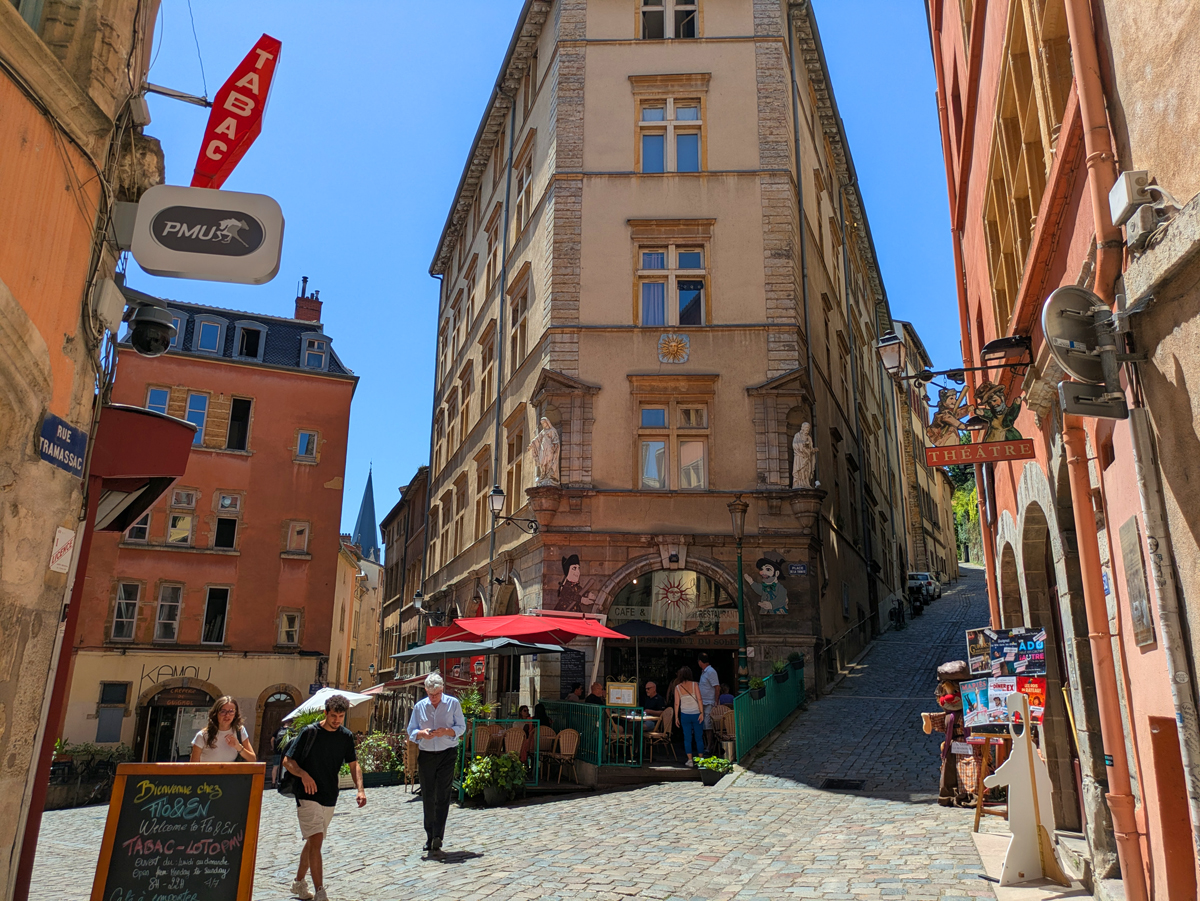
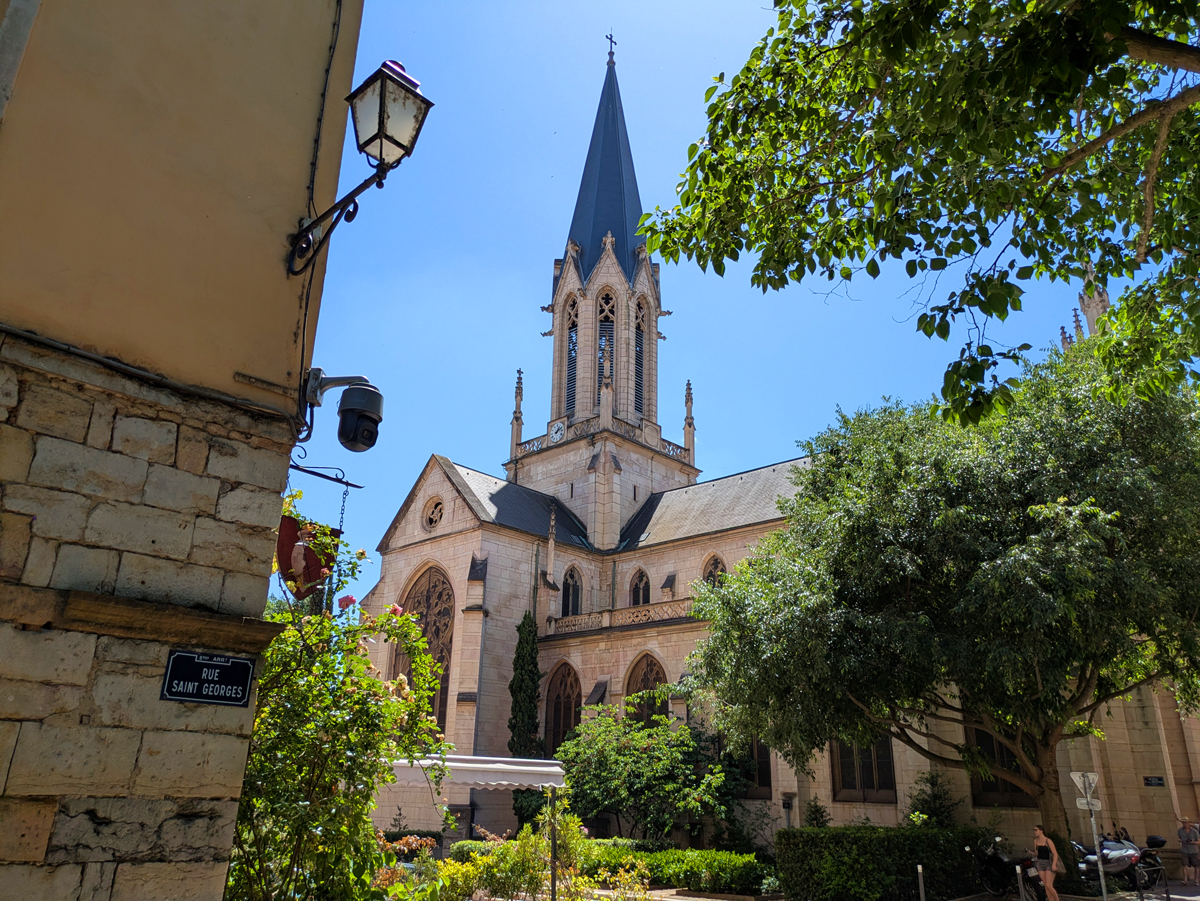
You’ve finished your walk of the Old Town here. Go to the river from here, crossing back over to Presqu’île over the red pedestrian bridge called Passarelle St-Georges. Some great views of the Old Town from here.
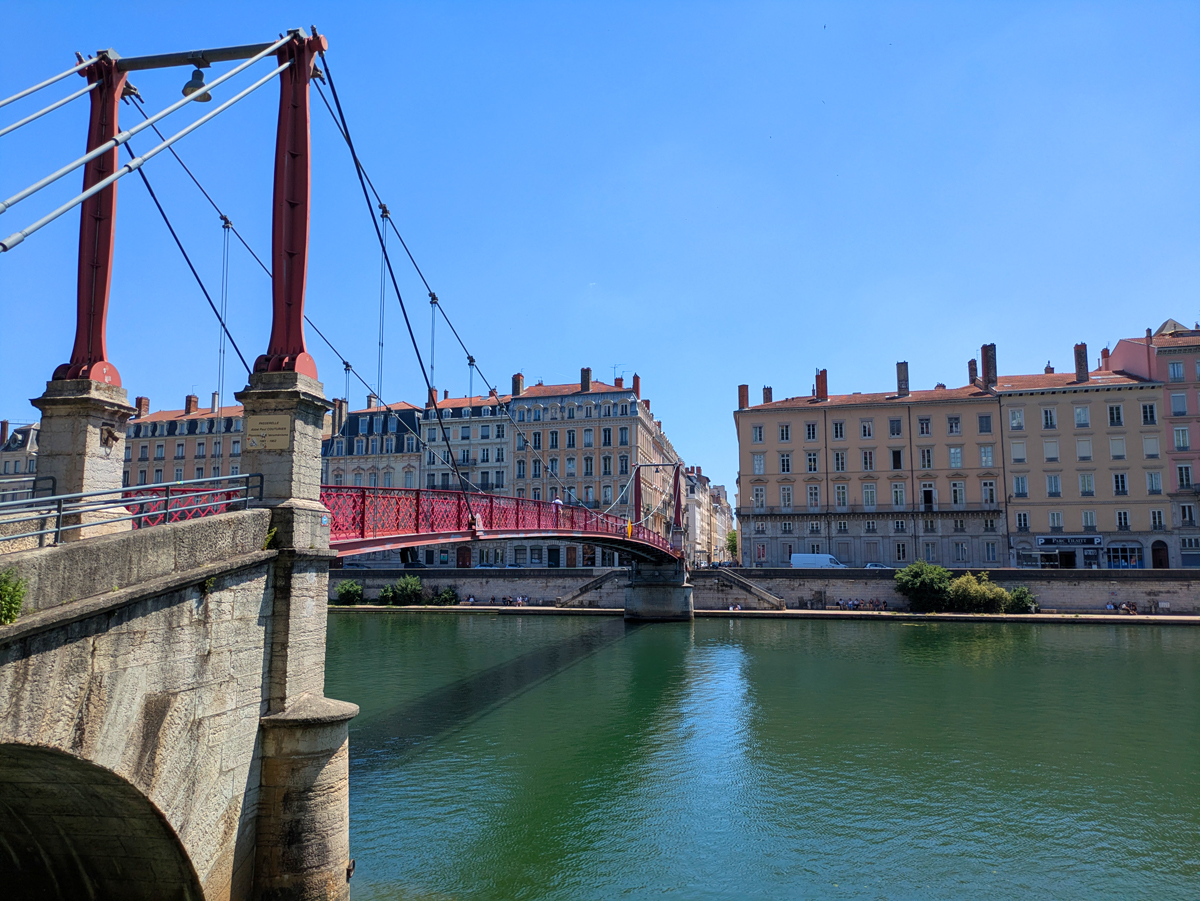
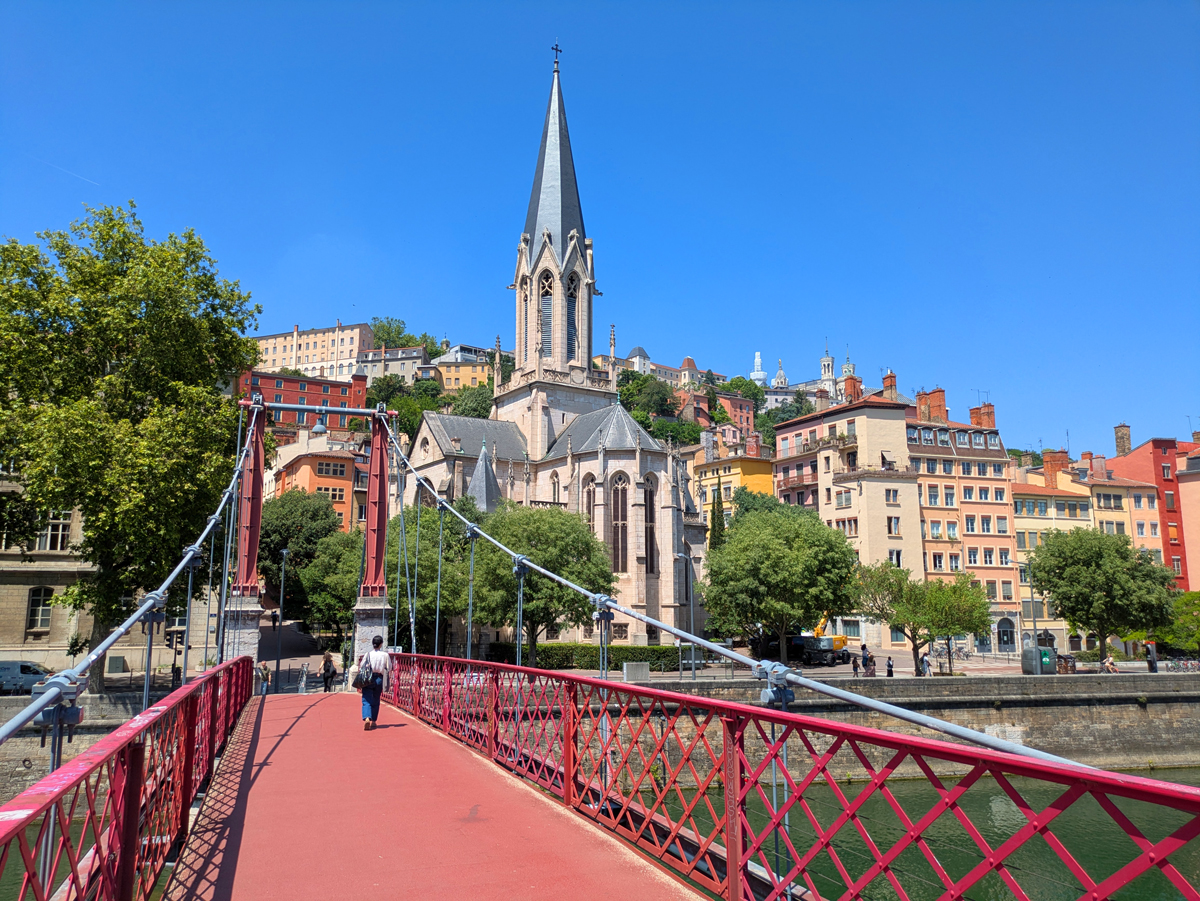
Note: if you want to continue exploring, you’re about 10 minutes away from the starting point for my itinerary of Presqu’île.
Presqu’île and the Rhone
Translated, “Presqu’île” means “almost island”. It is a peninsula with two rivers: the Saône on one side (facing the Old Town) and the Rhone on the other. Starting from the north of the peninsula where Place des Terreux is located (the square where you’ll find city hall) it’s 5 km to “la Confluence”, where the two rivers meet. You’re never far from a river in Presqu’île: the width between rivers is about 5 city blocks throughout. So there’s lots of rivers walks and views throughout…it’s one of the great things about Lyon.
The itinerary I have below is from south to north and is a natural extension of the itinerary I had above of Lyon Old Town and Fourvière. But you can just as easily do it north to south if you wish.
A bit of history: during Roman times, Presqu’île was mostly marshland and was used as the port of Lugdunum (as the Roman city was named). During the Middle Ages bridges were built, land was filled in, and Presqu’île started to attract merchants. It became what it is today: the civic and cultural hub of the city.
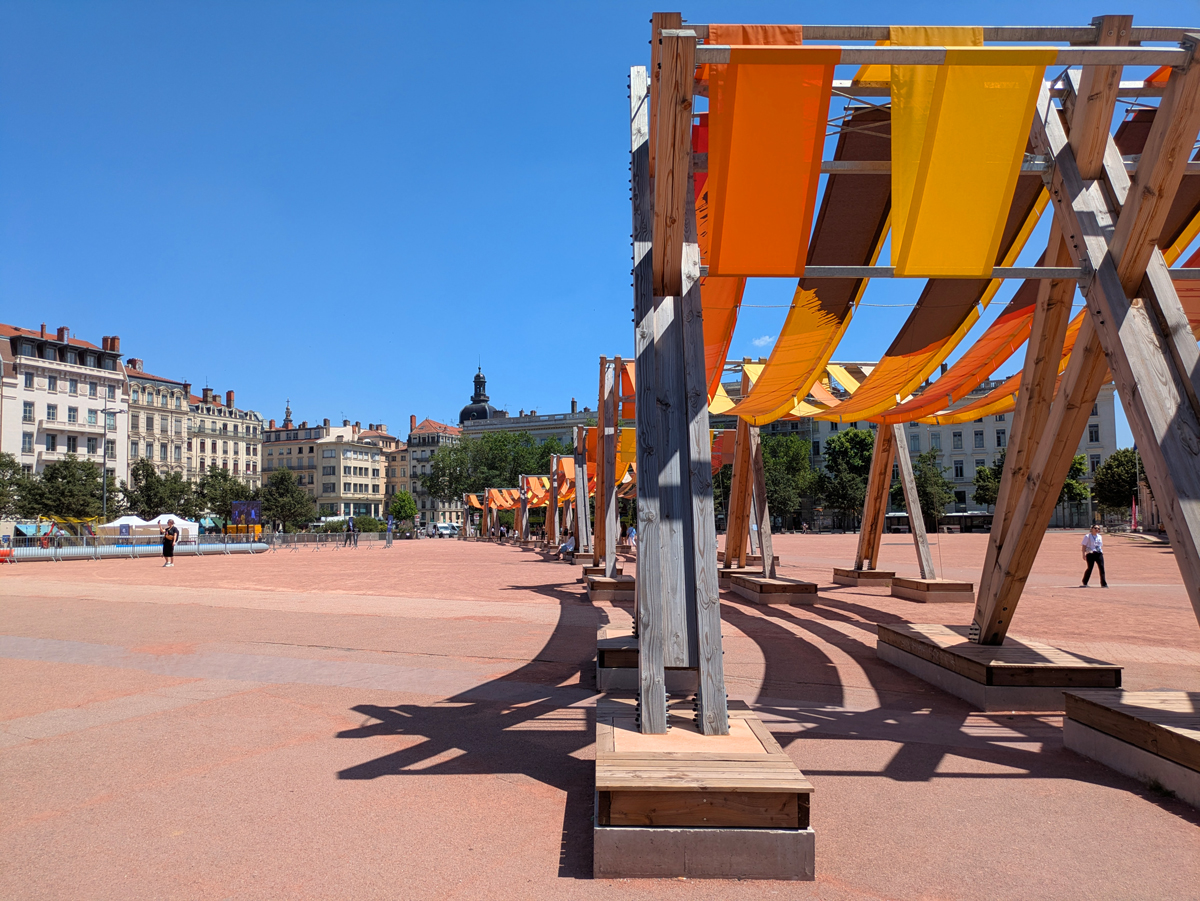
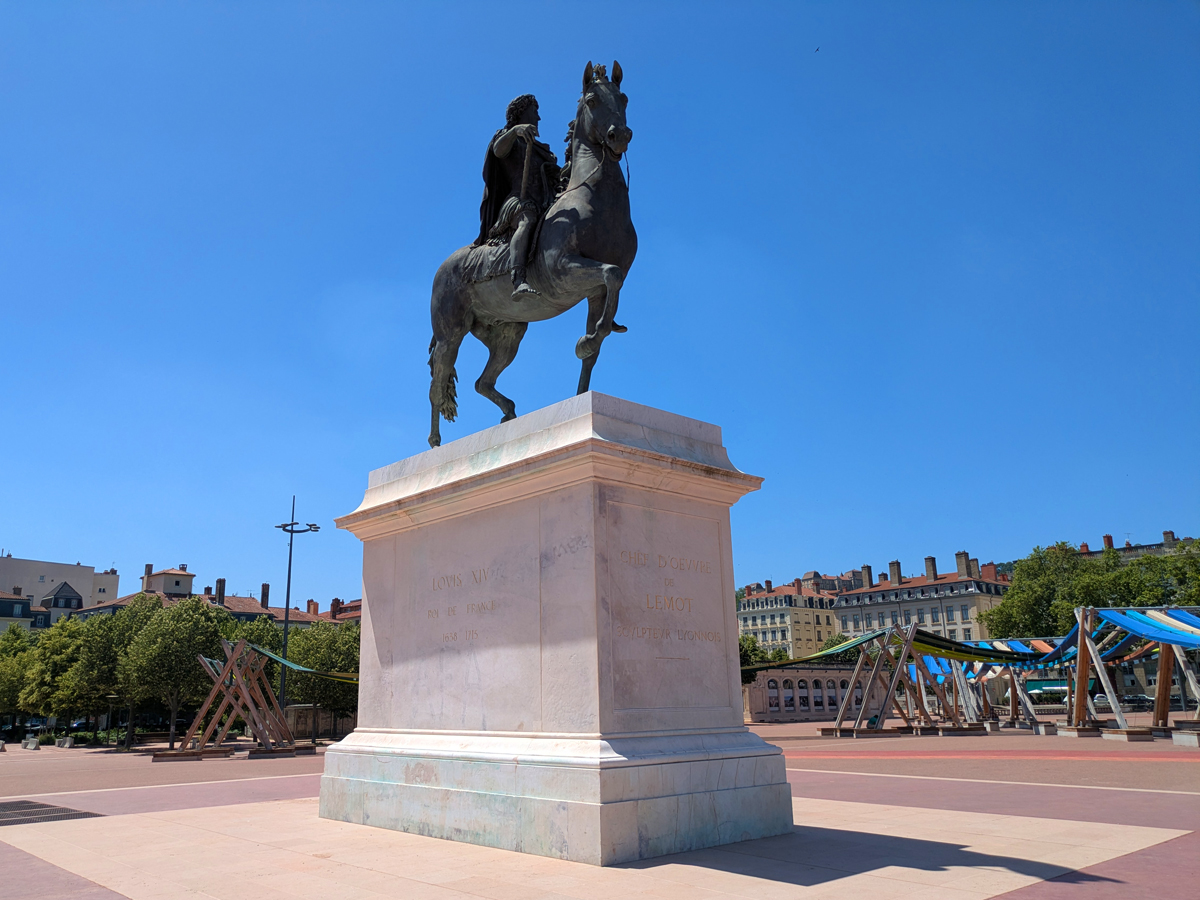
Place Bellecour is a good place to start. 500 metres long and between 220 and 280 metres wide, it is the biggest pedestrian square in Europe. It is geographically at the center of Presqu’île. In the center of the square is a statue of Louis XIV. The square is where a lot of civic events take place today.
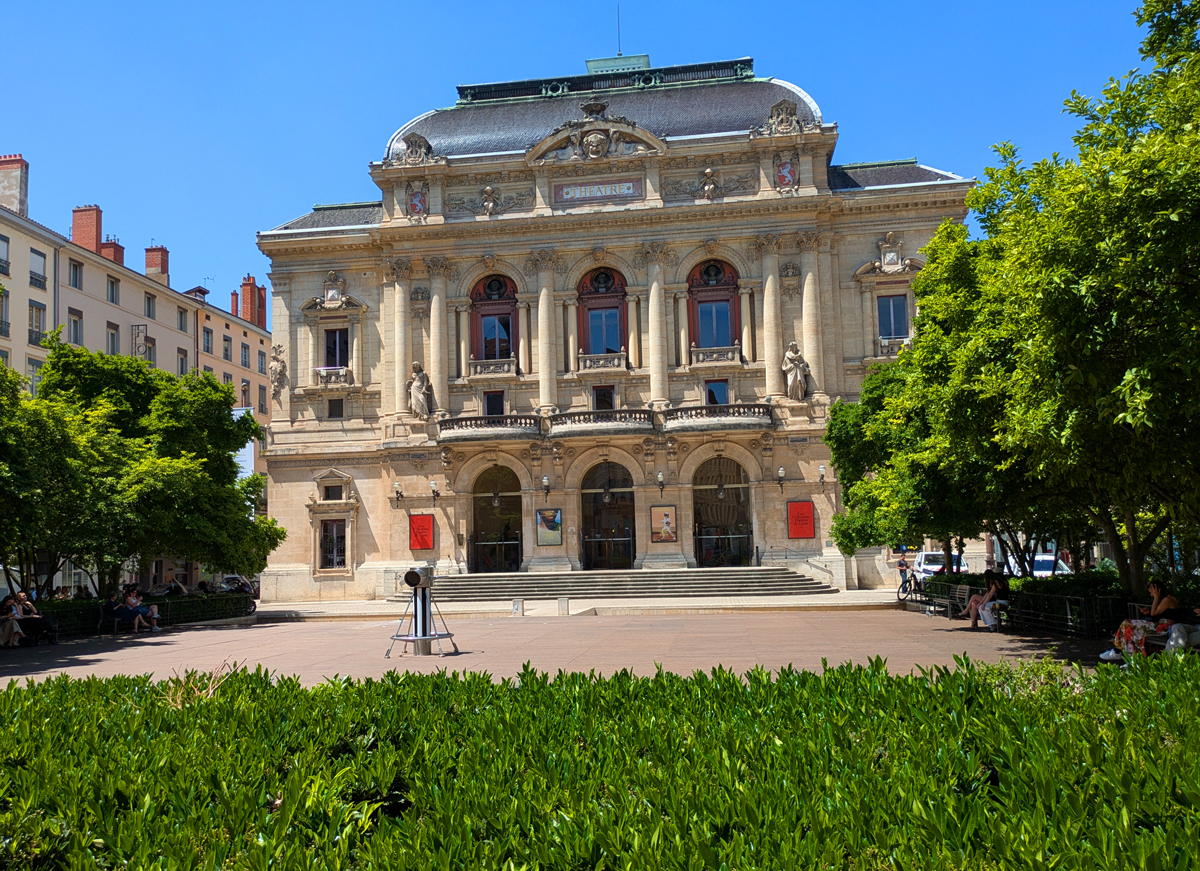
Just a short walk north you’ll find Place des Célestins and the city’s theatre. Inaugurated in 1877, it is one of the few theatres with over 200 years’ continual usage in France.
Walk across towards the Rhone and you’ll come across The Hotel-Dieu. It served as a medical research center and then as a teaching hospital. It is today a luxury hotel and shopping center that’s a popular place for locals (some of who we saw having a picnic or sharing a bottle of wine in the courtyard of the building).
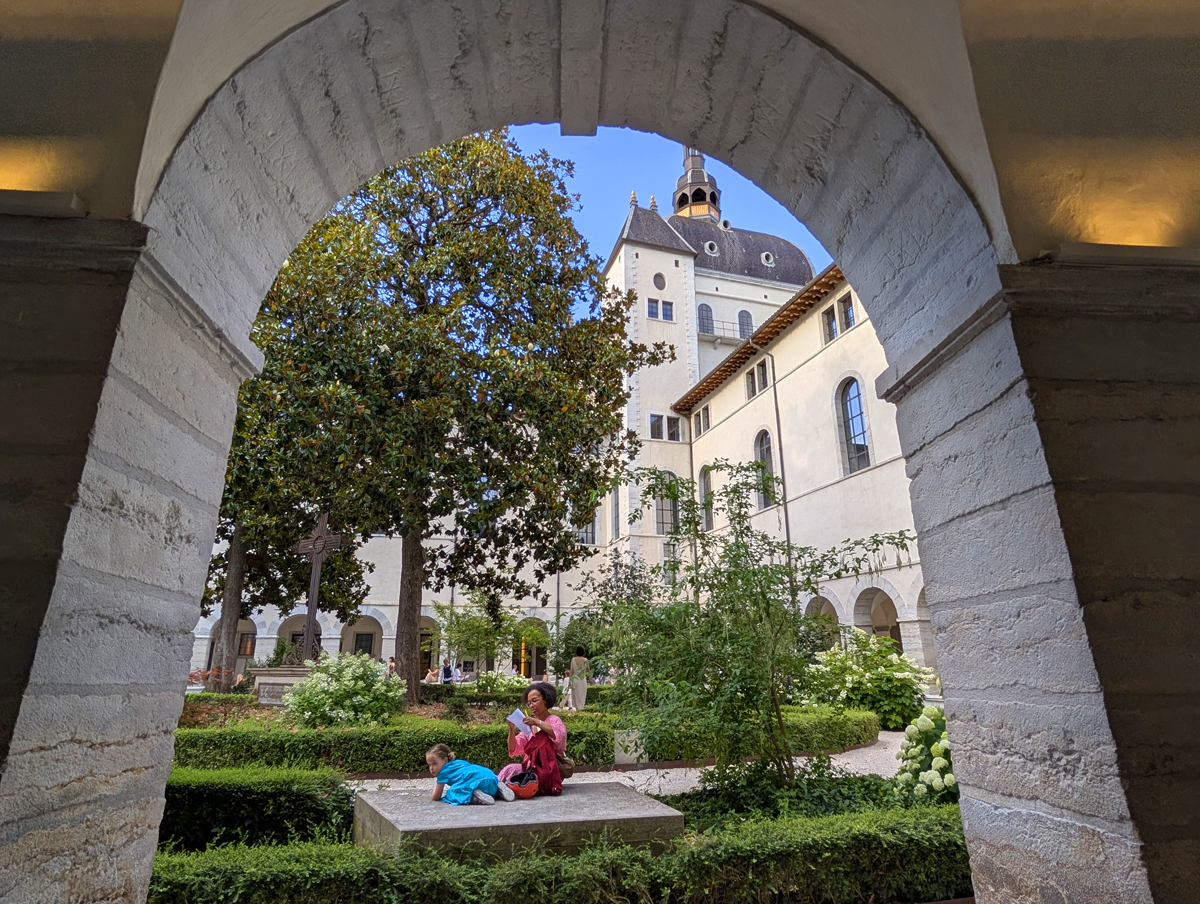
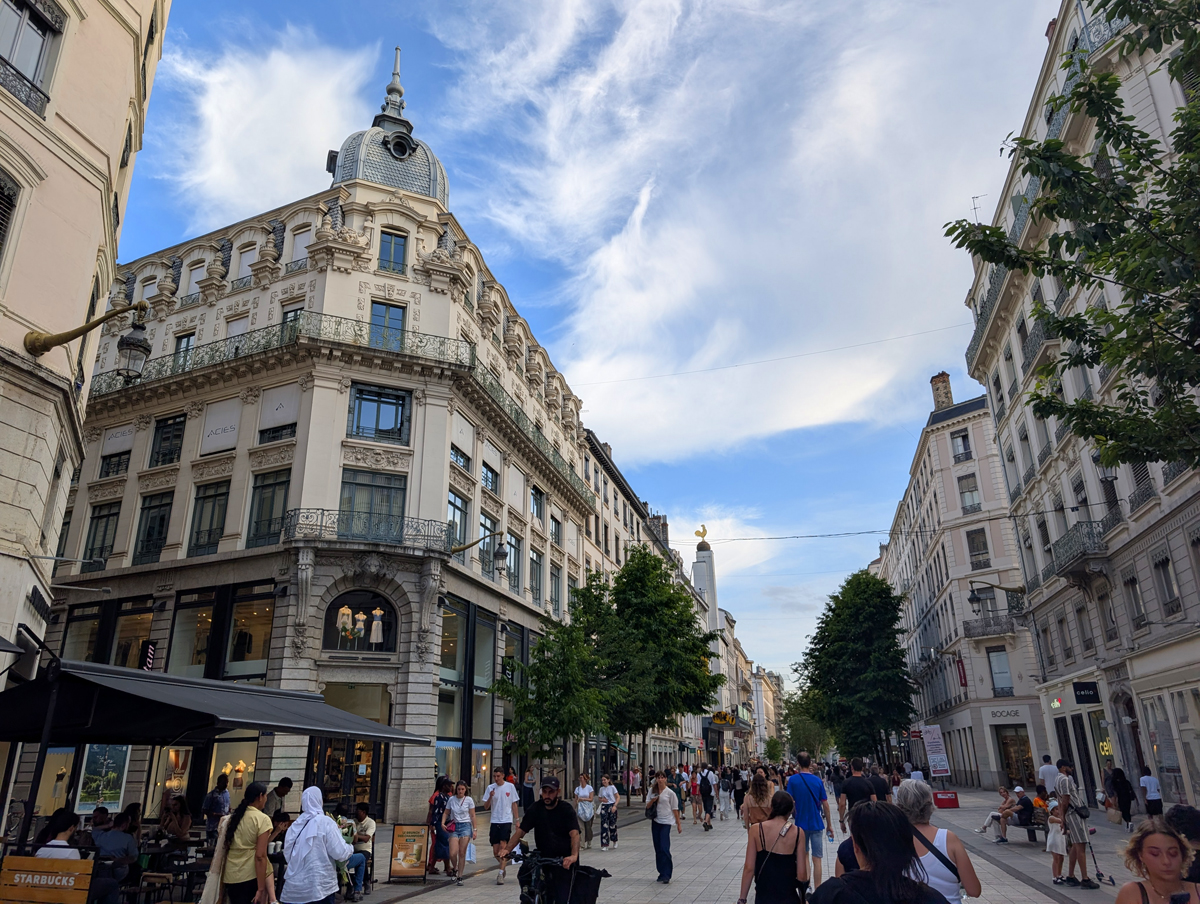
Almost right next to Hotel-Dieu is Place de la République, the heart of commercial Lyon. It’s a busy area with lots of large stores, restaurants etc.
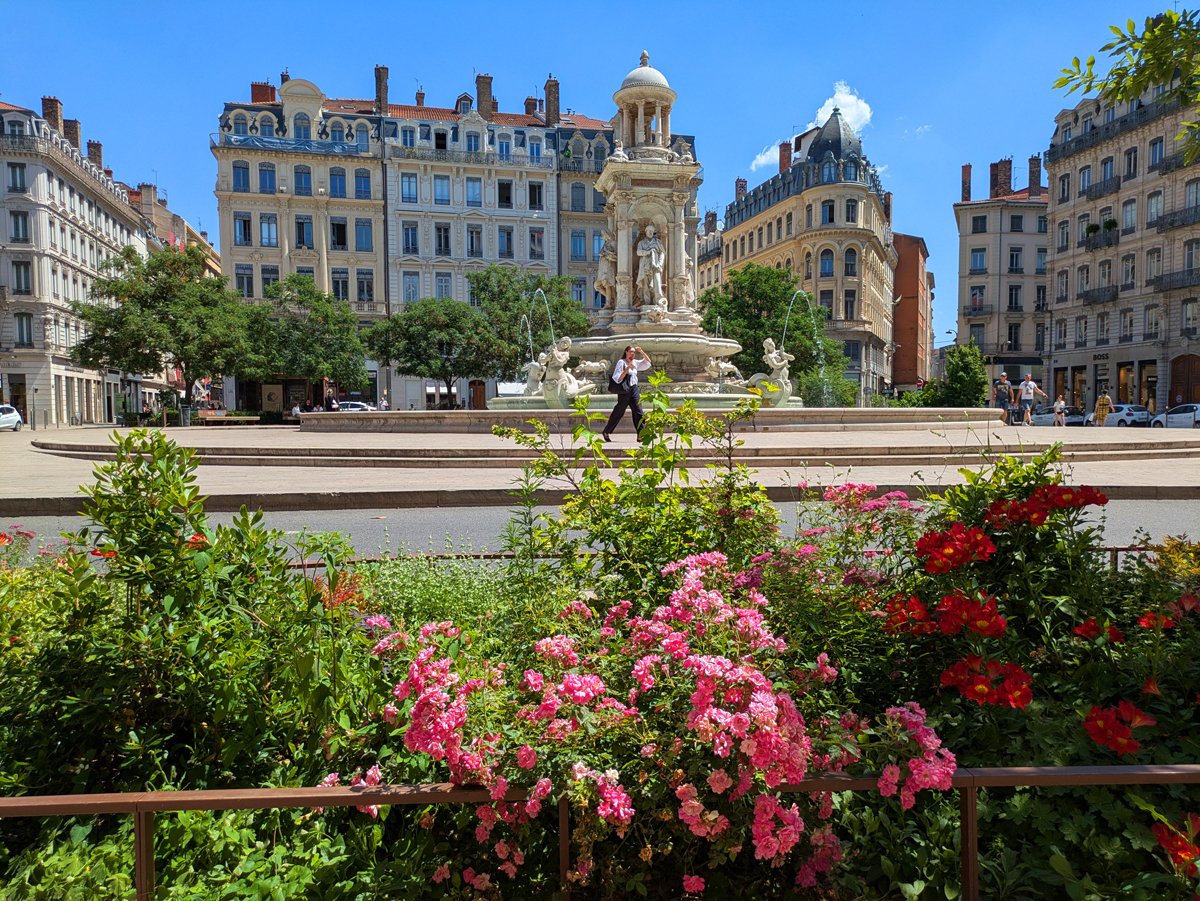
One of the prettiest squares in Lyon is the nearby Place des Jacobins. It is surrounded by beautiful classical buildings and a gorgeous fountain built in 1886.
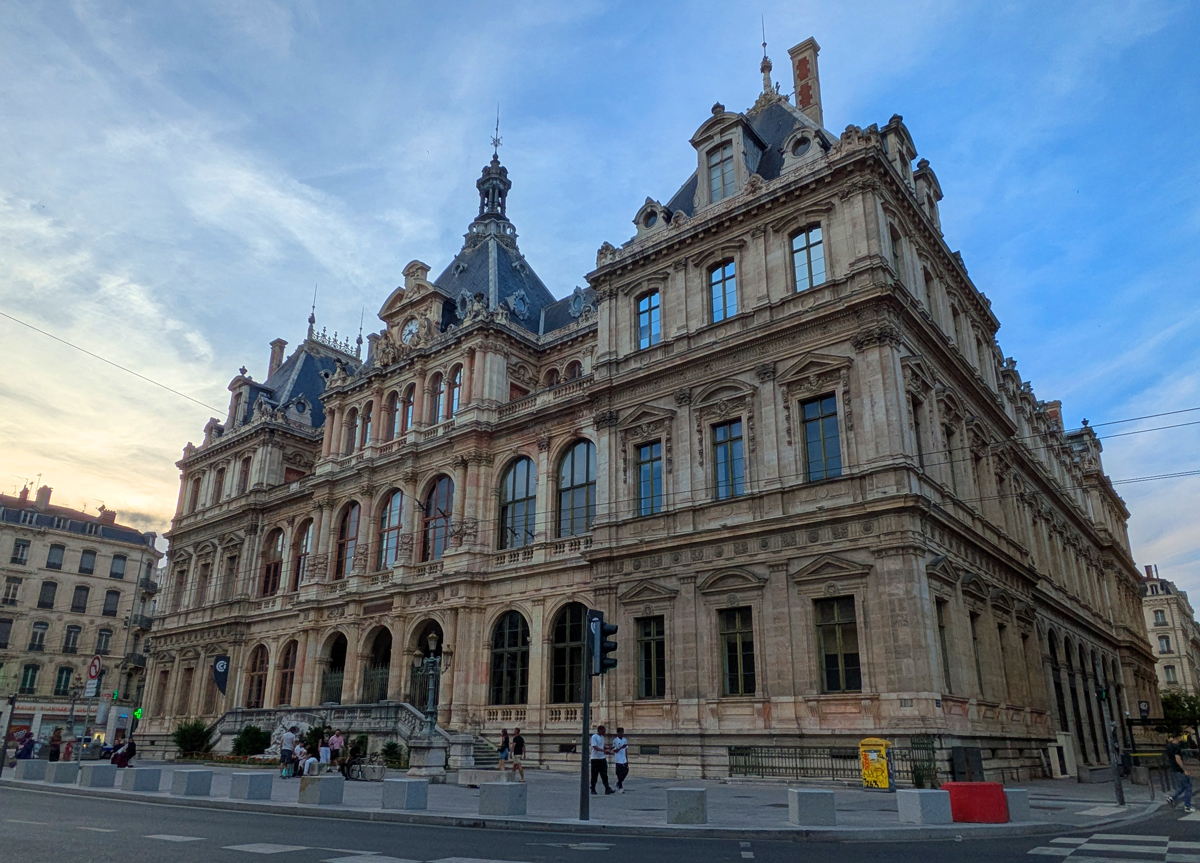
Walking further north, you’ll come across many gorgeous buildings including Palais de la Bourse. Built in 1860, it housed the Lyon stock exchange. It was in front of this building that French president Sadi Carnot was stabbed and killed by Italian anarchist Sante Geronimo Caserio on June 25, 1894 (the first French president assassinated while in office). Close by is Église Saint-Nizier. It served as the cathedral of Lyon prior to the building of Cathédrale Saint-Jean (which I covered in the Old Town section).
Place des Terreaux and City Hall. Place des Terreaux is Lyon’s most beautiful square. You’ll see a huge statue (made in 1894) by Frédéric Bartholdi, the same French sculptor who created the Statue of Liberty. Also here is the gorgeous City Hall, originally built in 1672. Lyon Town Hall is one of the most emblematic monuments in the city.
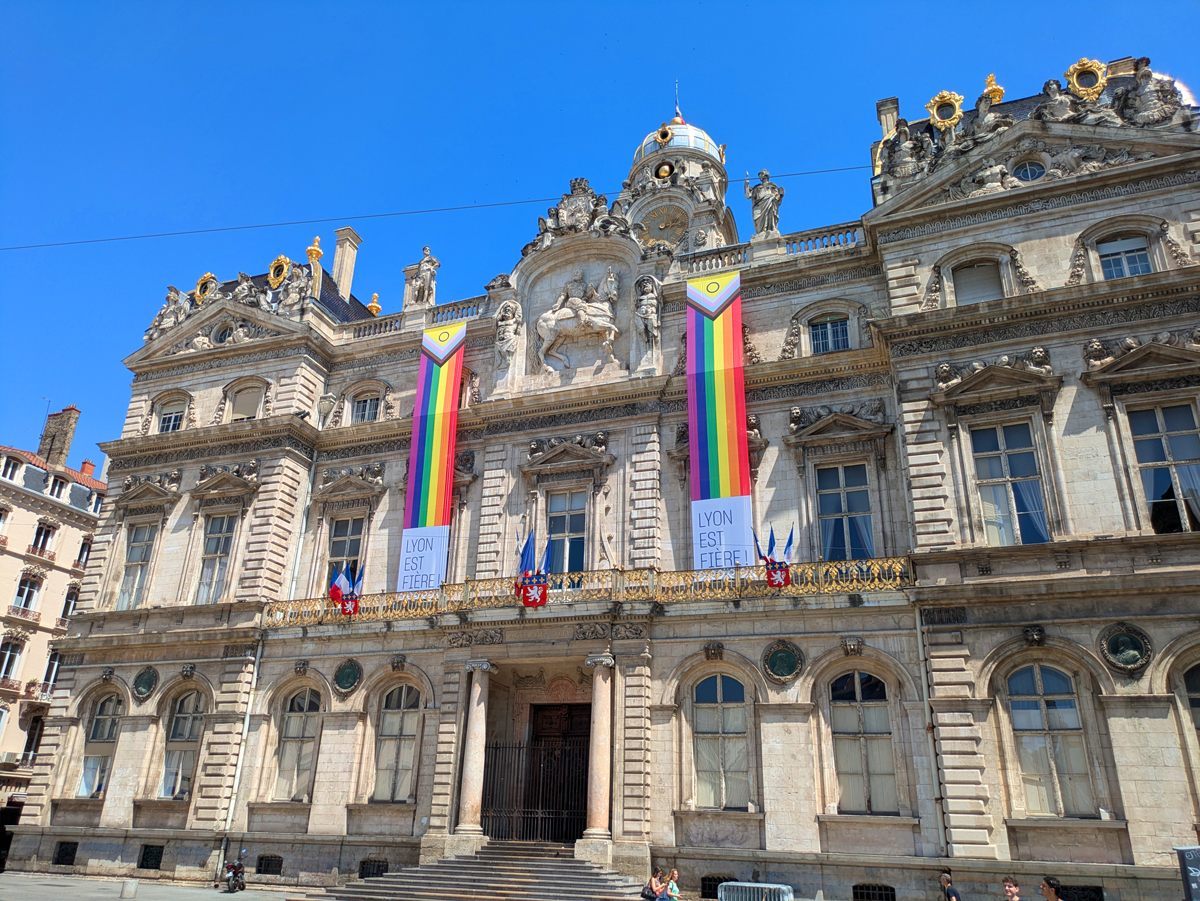
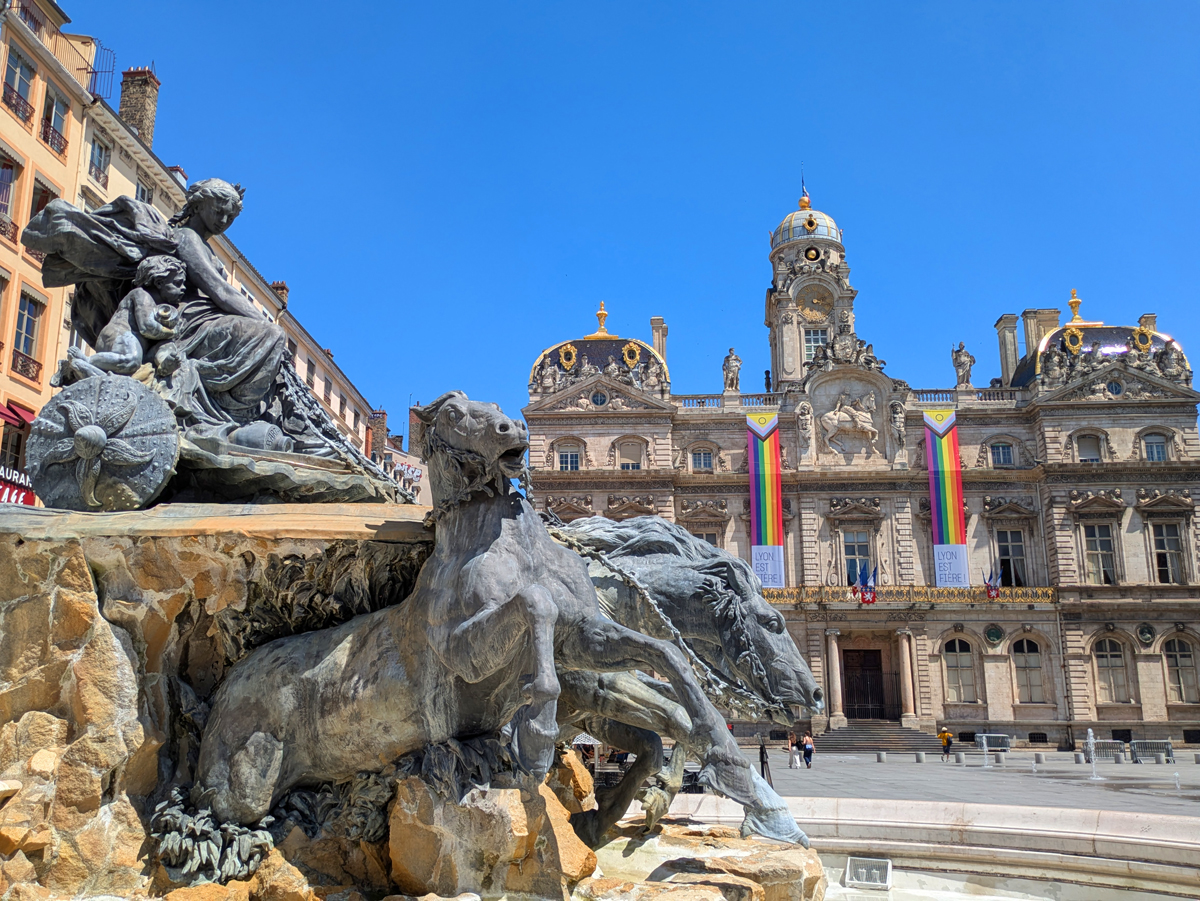
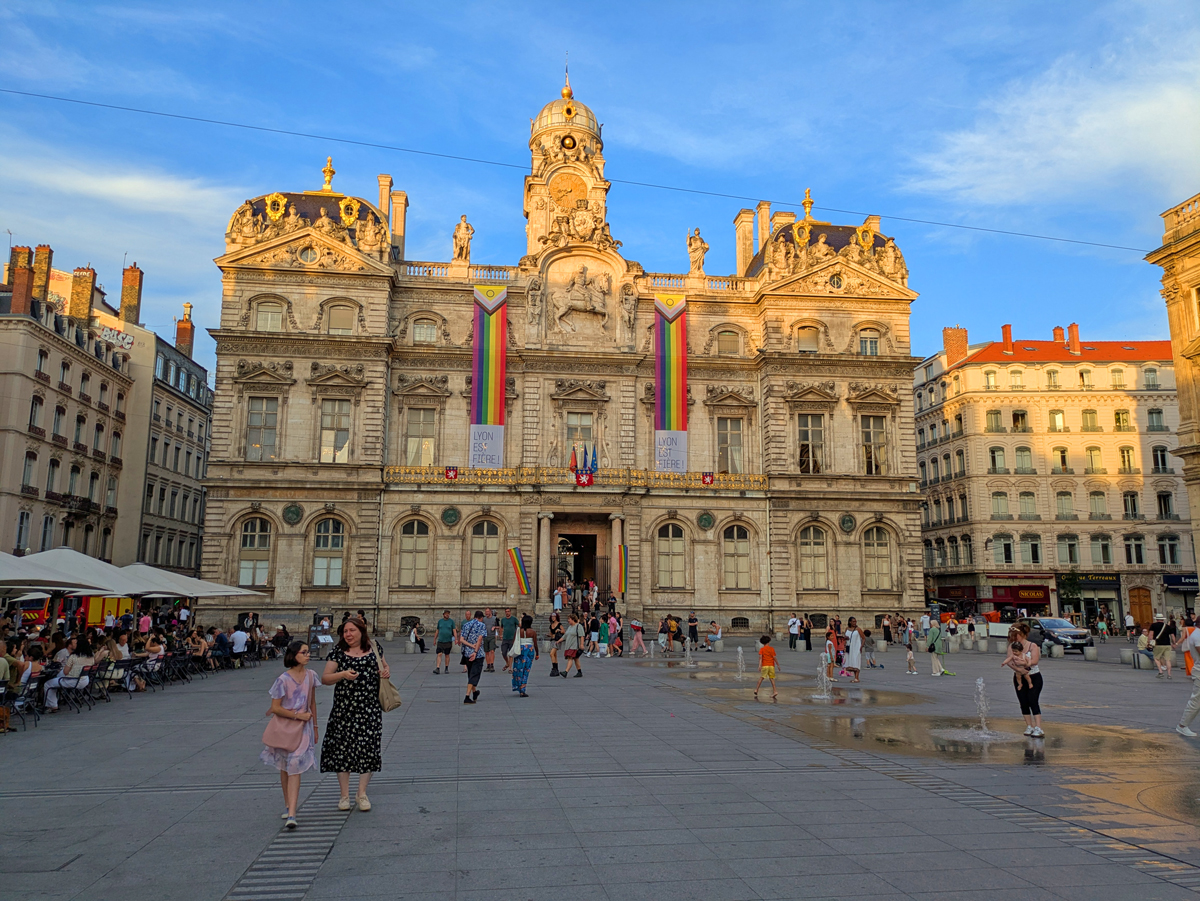
Behind Place des Terreaux you’ll find Lyon’s Opera House with its enormous glass dome.
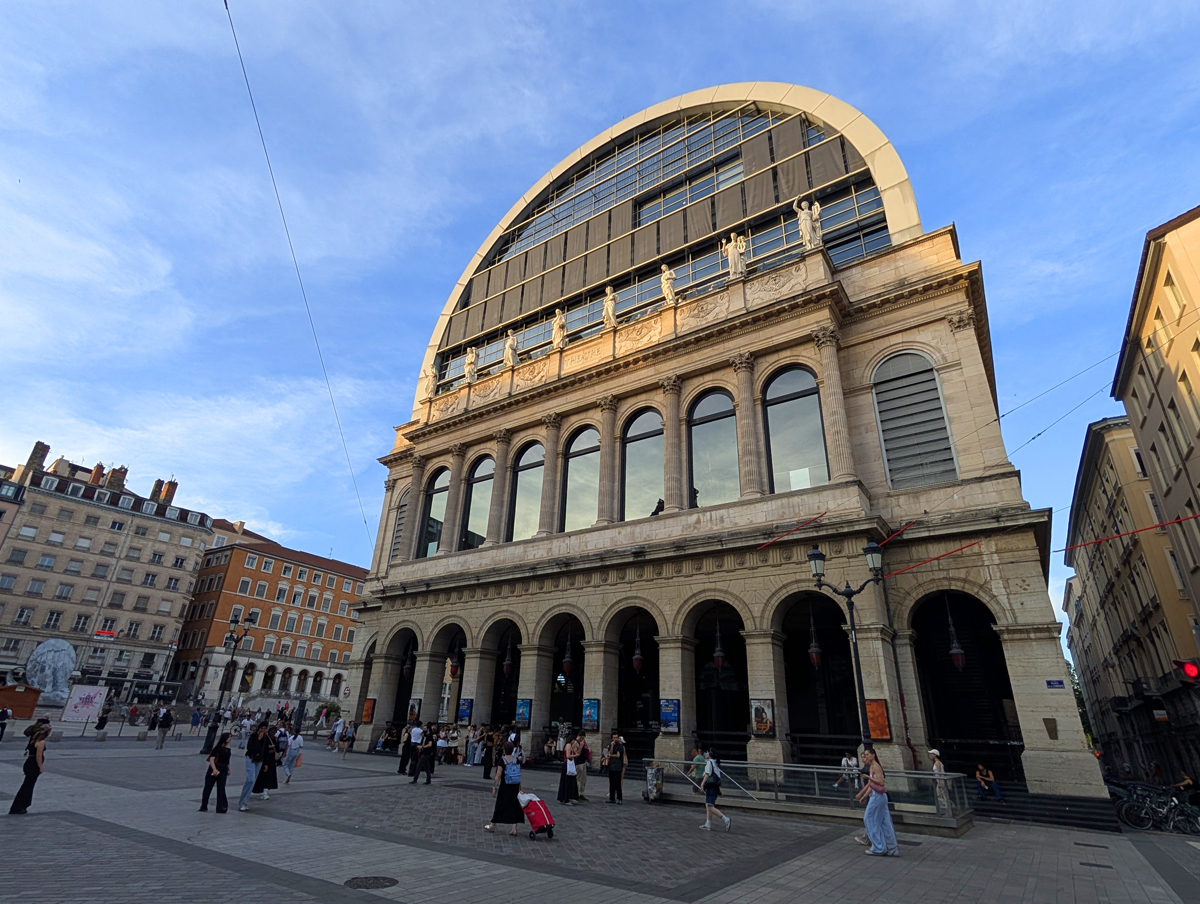
Walking between Place Bellecour and Place des Terreaux as I’ve spelled out above you’ll see many other beautiful buildings and squares. Presqu’île is full of them.
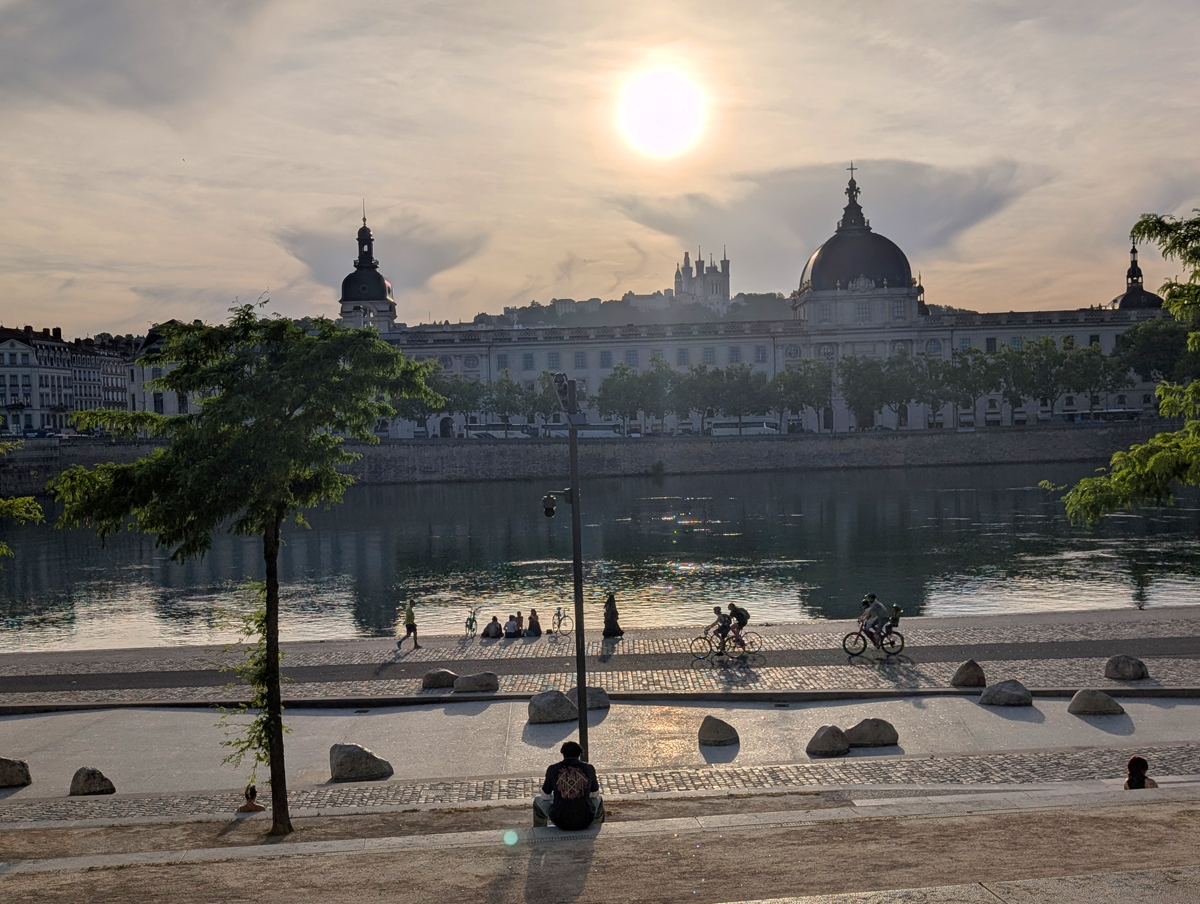
From Place des Terreaux, a great way to see another angle of Lyon is to walk along the Rhone river. Behind the Opera house is the Pont Morand. Cross that and then follow the promenade along the river heading back towards Place Bellecour. The Rhone is larger than the Saône river and you’ll see barges and boats docked on the river (some are permanent restaurants and you can go on board and have drink and food). There are bike trails, joggers and families just sitting on the banks of the river. There are also lots of great views of the monumental buildings of Presqu’île.
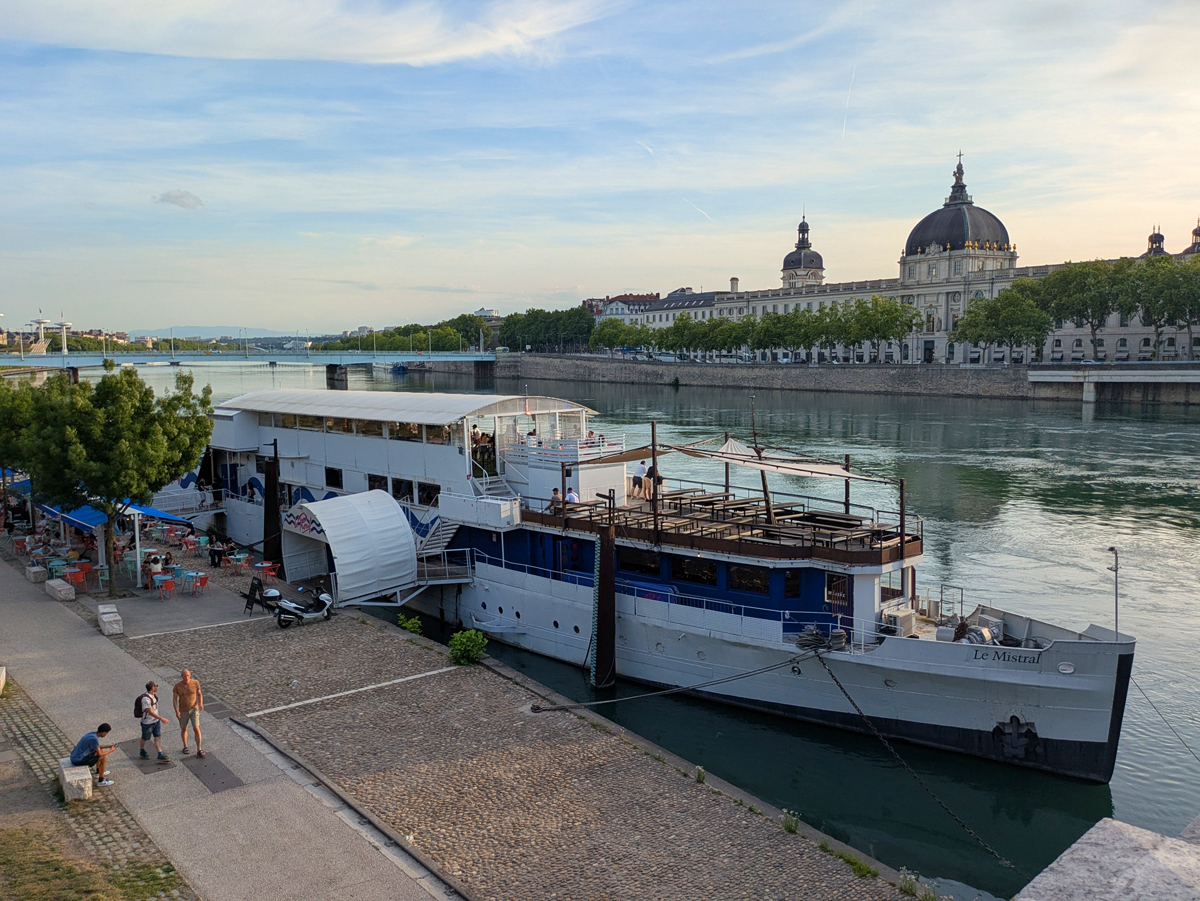
Continuing down the river, you’ll pass the views of Hotel-Dieu. From there, cross the river at Pont de la Guillotière. Following it, you’ll arrive back at Place Bellecour where you started this route.
Croix-Rousse and the slopes
Croix-Rousse is a neighbourhood on a hill overlooking Presqu’île. It is a pretty and trendy neighbourhood that reminds me of the Plateau Mont-Royal in Montreal (where I lived over 25 years): a place of parks, markets, views and hidden attractions.
The itinerary I have below requires some walking and shouldn’t be rushed. Croix-Rousse is more residential and spread out than the Old Town or Presqu’île. But you’ll see some beautiful things along the way.
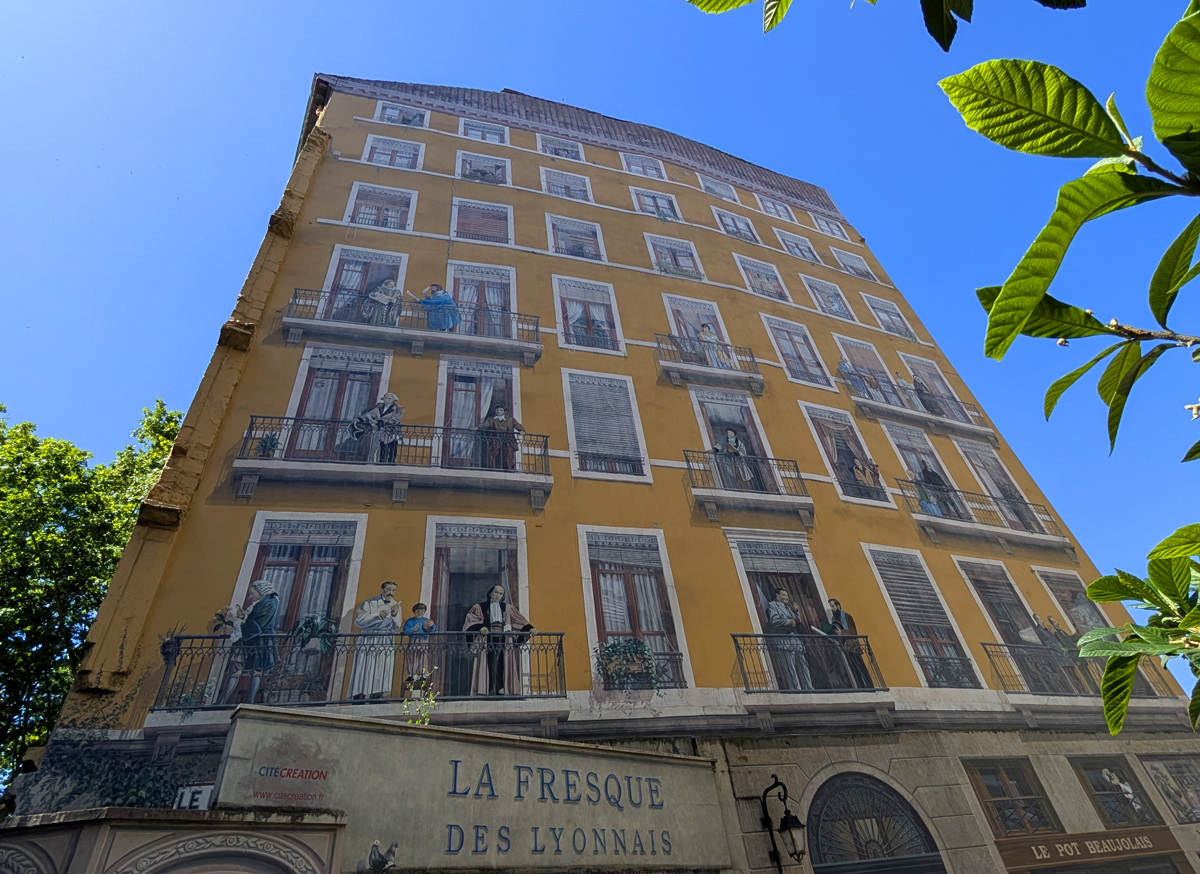
Start at Fresque des Lyonnais (about a 5 minute walk from Place des Terreaux and city hall). The huge fresco is one of the most photographed symbols of the city, a mural taking up the whole side of a building. It consists of 30 figures of Lyon, people who helped shape the history of the city over the last 2000 years.
Head towards Jardin de la Place Sathonay. This is a really pretty area of cobblestone streets and parks with lots of cozy restaurants. A favorite is Le Bouchon des Filles, also good is Restaurant Albert (where we ended up for a long lunch). The Jardin de la Place Sathonay itself is a pretty park and you’ll see fountains, sculptures of lions and stairs at the end…that marks your ascent into Croix-Rousse.
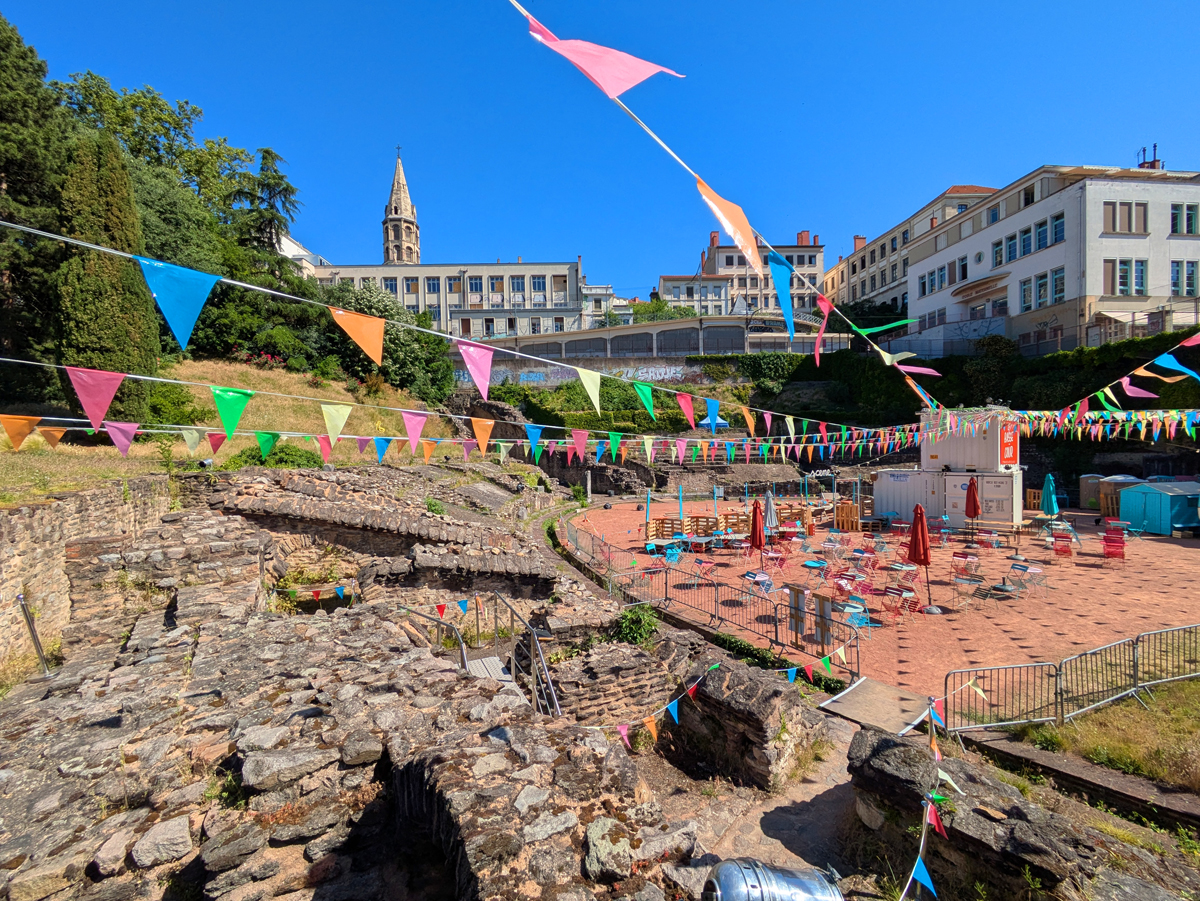
Climb the stairs, stay to your right, then cross the street to the green park on the other side. Follow the path up. It will lead you to Amphithéâtre des Trois Gaules (Amphitheater of the Three Gauls). There’s not much left today, but you still see the ruins of what was a Roman amphitheatre built in the year 19 AD.
Coming out of the park on the northeast corner, walk over a block. You’ll come to a little pedestrian street called Montée de la Grande-Côte. It’s actually the largest walkway up to Croix-Rousse. Work your way up, you’ll have views looking back such as the one below.
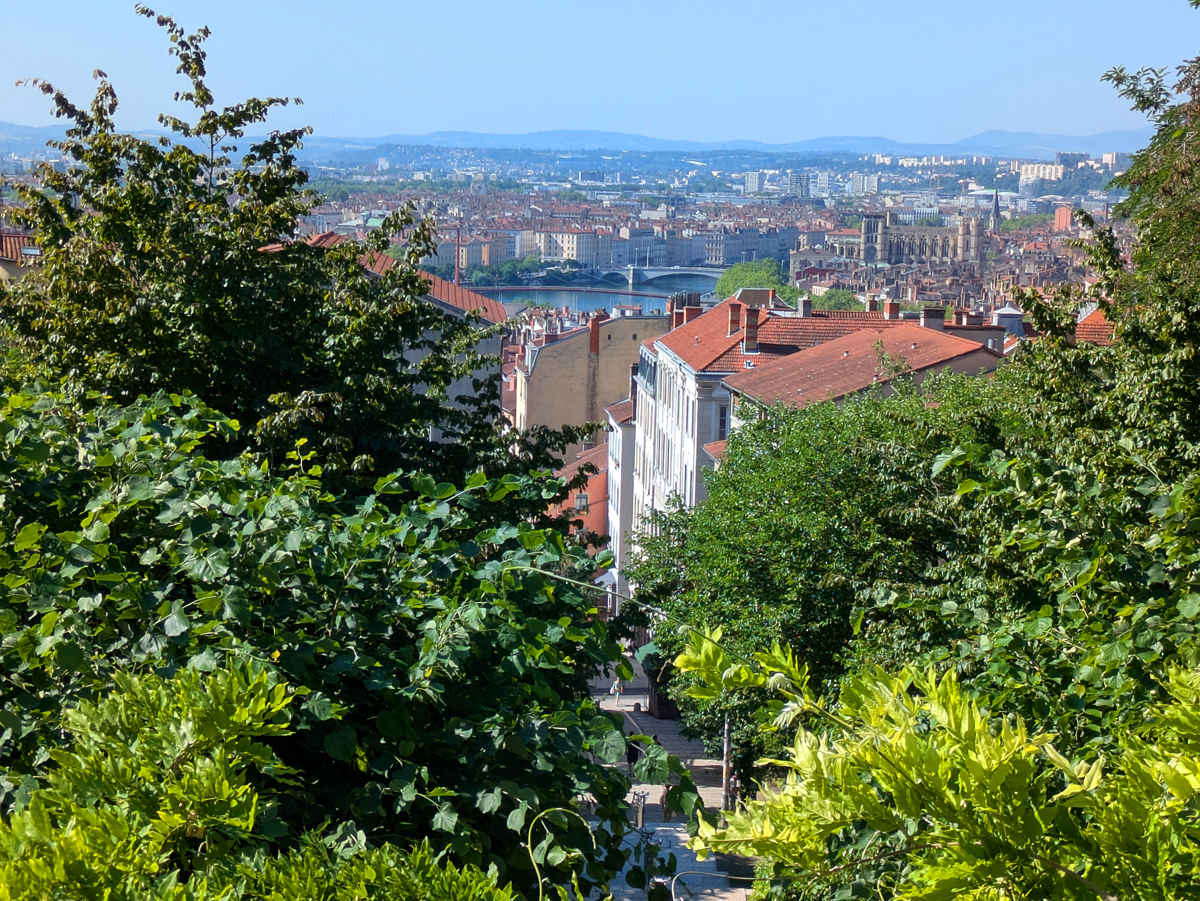
Up top, you’ll see the Croix-Rousse metro station. Across is a large square, Place de la Croix-Rousse. At the top of the square is a market that is open every day of the week. It feels like a small town market and typifies this area.
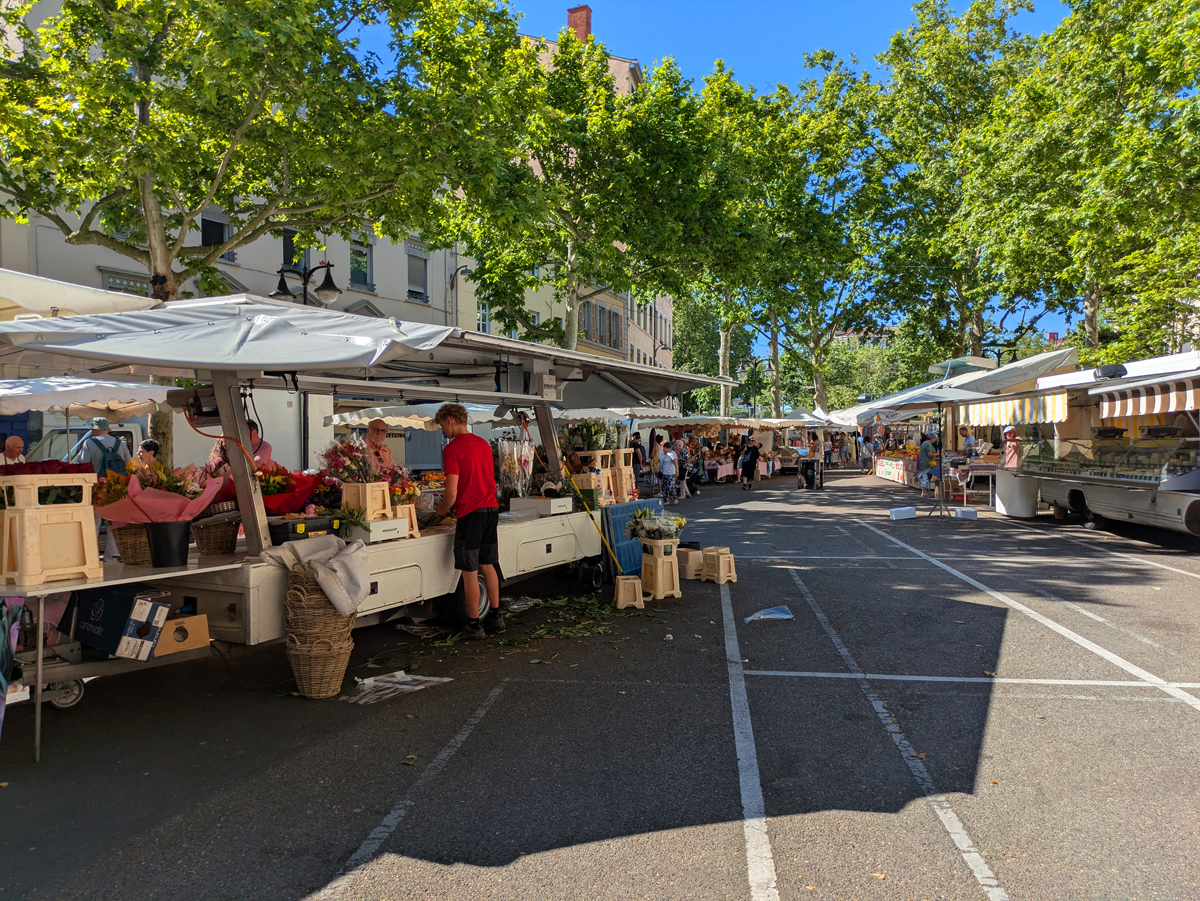
Walk up Grand Rue de la Croix-Rousse, you’ll see neighbourhood stores and restaurants. Stop anywhere for somewhere to eat or drink.
Note: if coming to Croix-Rousse on a Saturday, try to visit the Rosa Mir Garden. It’s one of the most unusual things you’ll see in Lyon and might remind you of Park Güell in Barcelona (the person behind the garden is Spanish so there might be a connection). It’s free to visit.
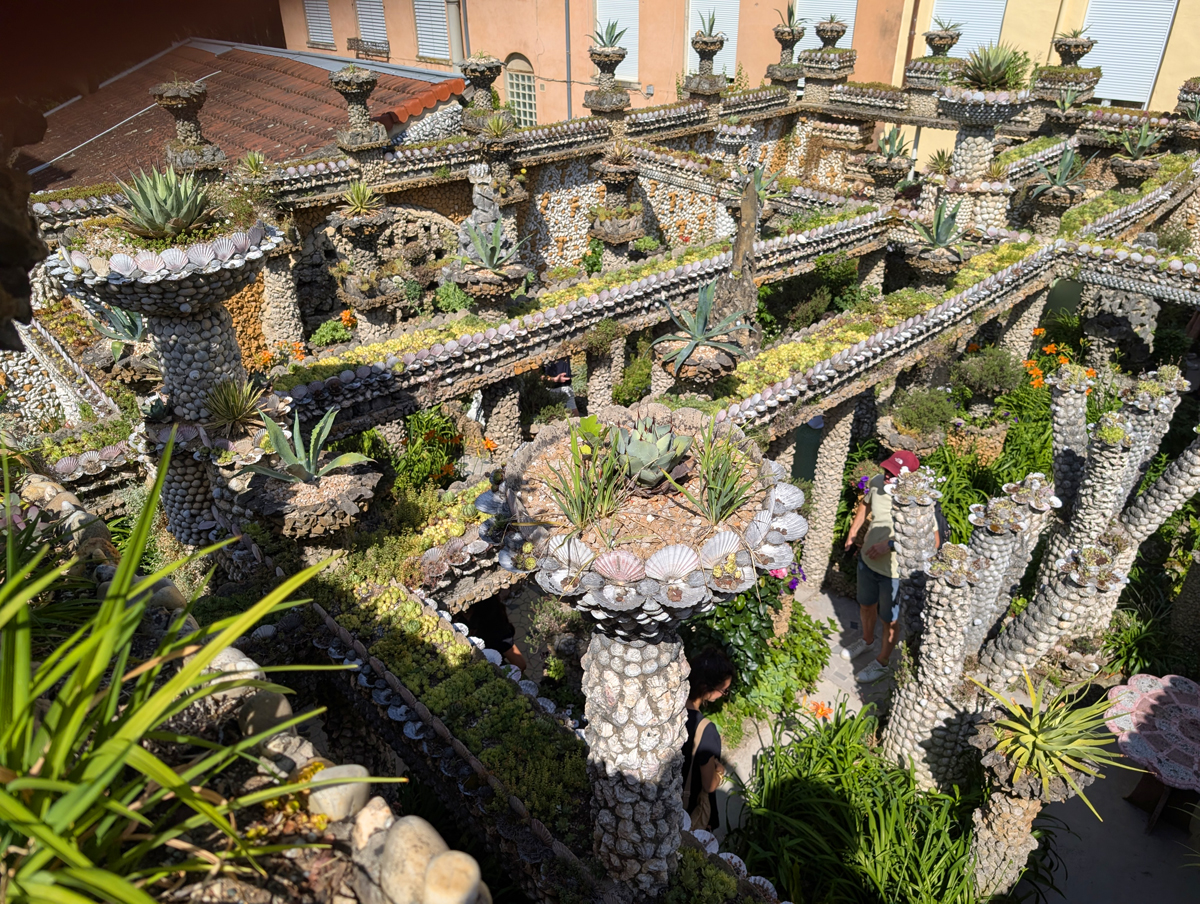
At Rue Calas turn left and head to Mur des Canuts.
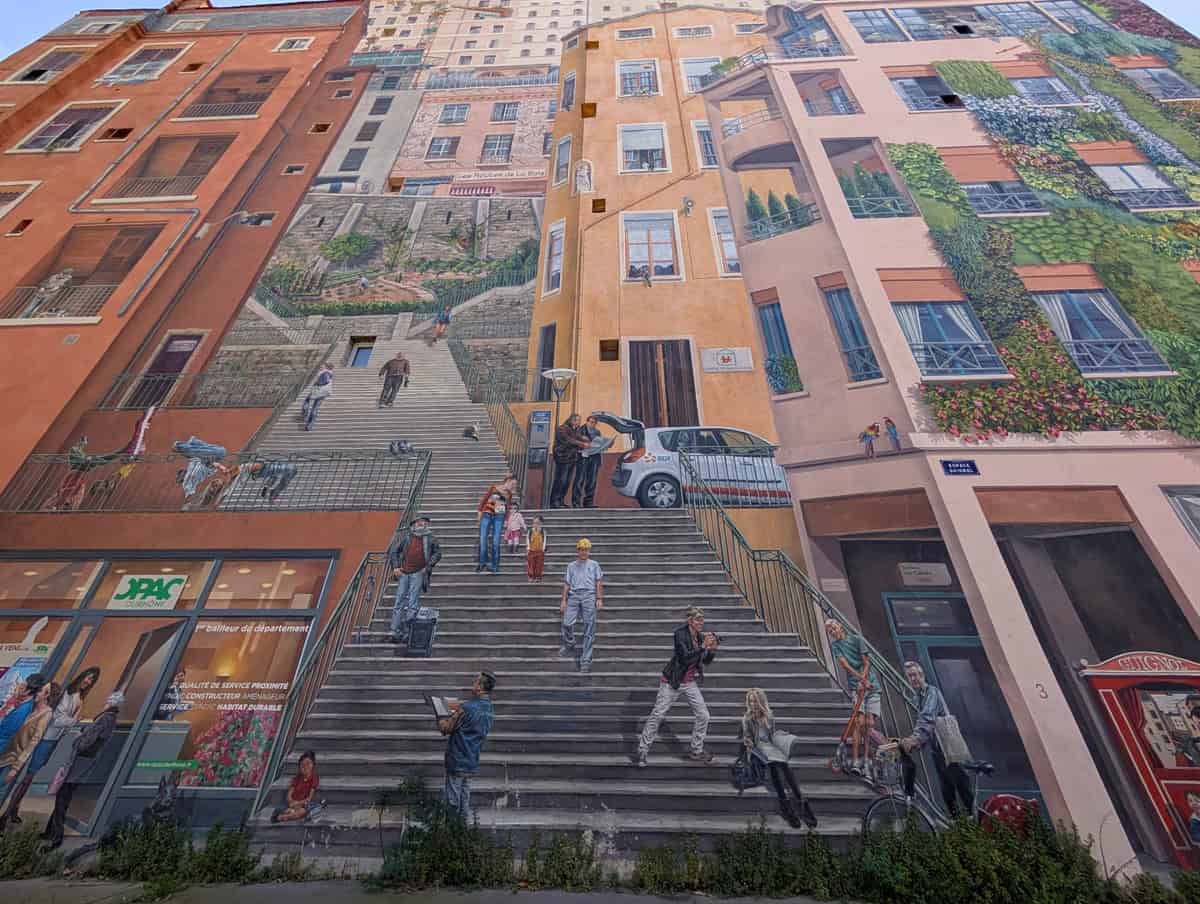
Croix-Rousse was known for its silk weaving in the 1800’s and the silk workers were known as “Canuts”. That’s why this huge mural (the largest in Europe) is named “Mur des Canuts”. It depicts the neighbourhood of Croix Rousse and its inhabitants. A very impressive mural.
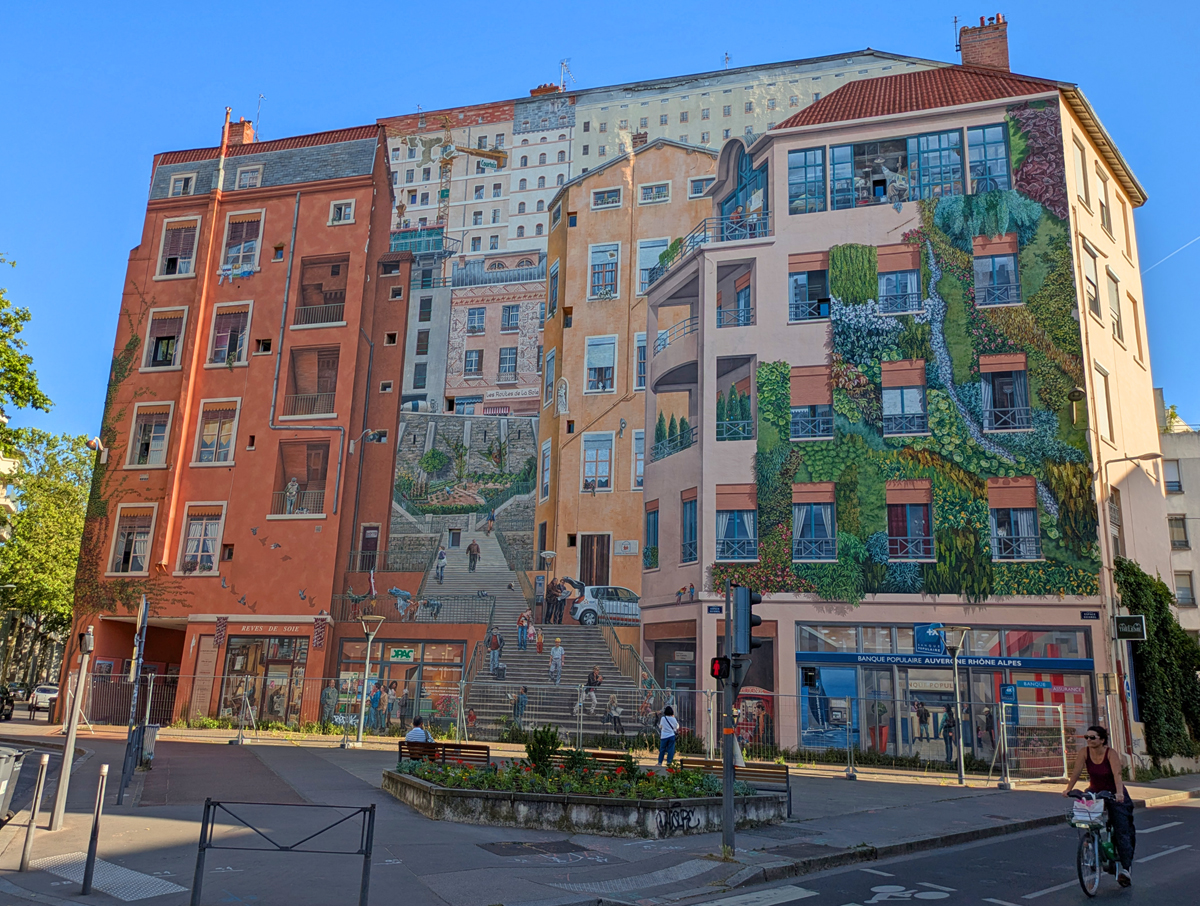
Head back towards Place de la Croix-Rousse on Boulevard des Canuts. You might see a few more murals and statues on the way.
Back at Place de la Croix-Rousse you’ll be heading back downhill…but not before seeing one of Lyon’s most photographed traboules*.
*I mentioned traboules up top but will remind you here: It’s a passage between buildings meant to help residents get somewhere faster. They’re often hidden and were used by fighters (example the French resistance in WWII) to escape from the streets.
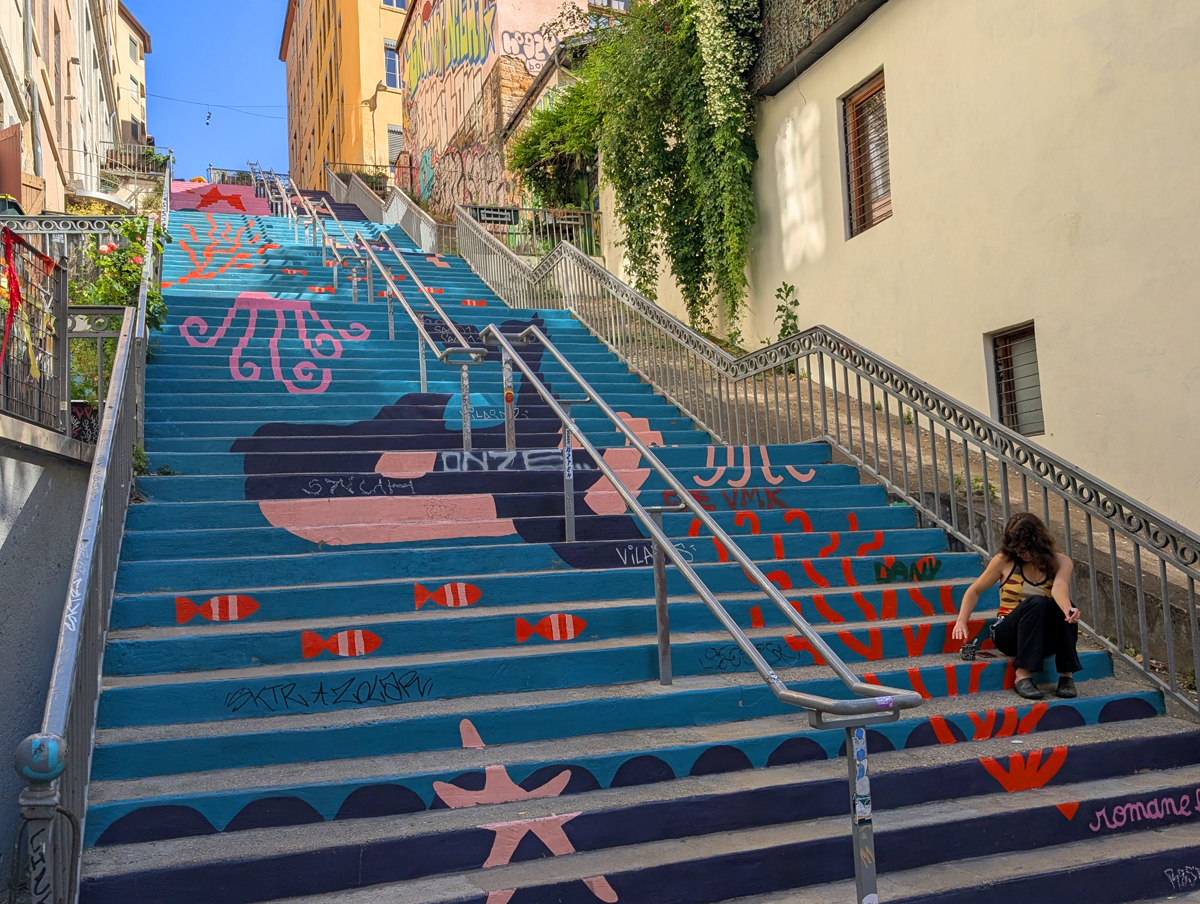
This time, go downhill a different way. Right across from Place de la Croix-Rousse is a small street called Rue des Pierres Plantees. Go there and follow it, it’ll lead to a little “balcony” with views, a descent under the balcony, then the path will split. Keep to your left and continue down. You’ll soon reach Rue Pouteau…go down and and continue down the stairs.
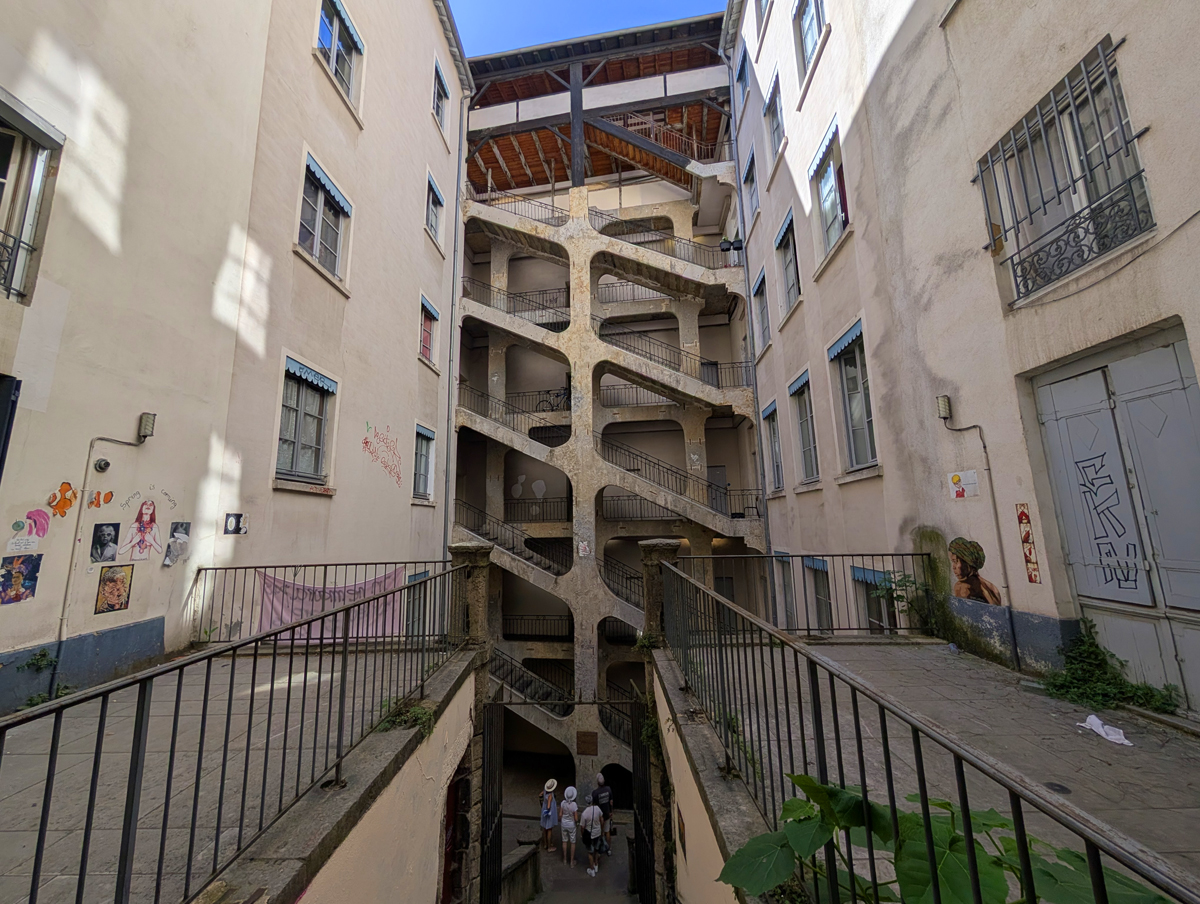
From here take a detour to your left. Walk a block up to Rue Imbert Colomè, at #29 on that street is the “Traboule et Cour des Voraces”. It’s the most photographed traboule in Lyon and takes an interesting journey through buildings.
*Note: The more interesting view of the Traboule is on the other side which is accessed on Rue Diderot. But finding the entrance is a bit more confusing so I suggest entering on the Imbert Colomè side. You can take the photo I have above when you’ve come up the other side.
Walk back along Rue Imbert Colomè until you hit the steps of Montée de la Grande-Côte.
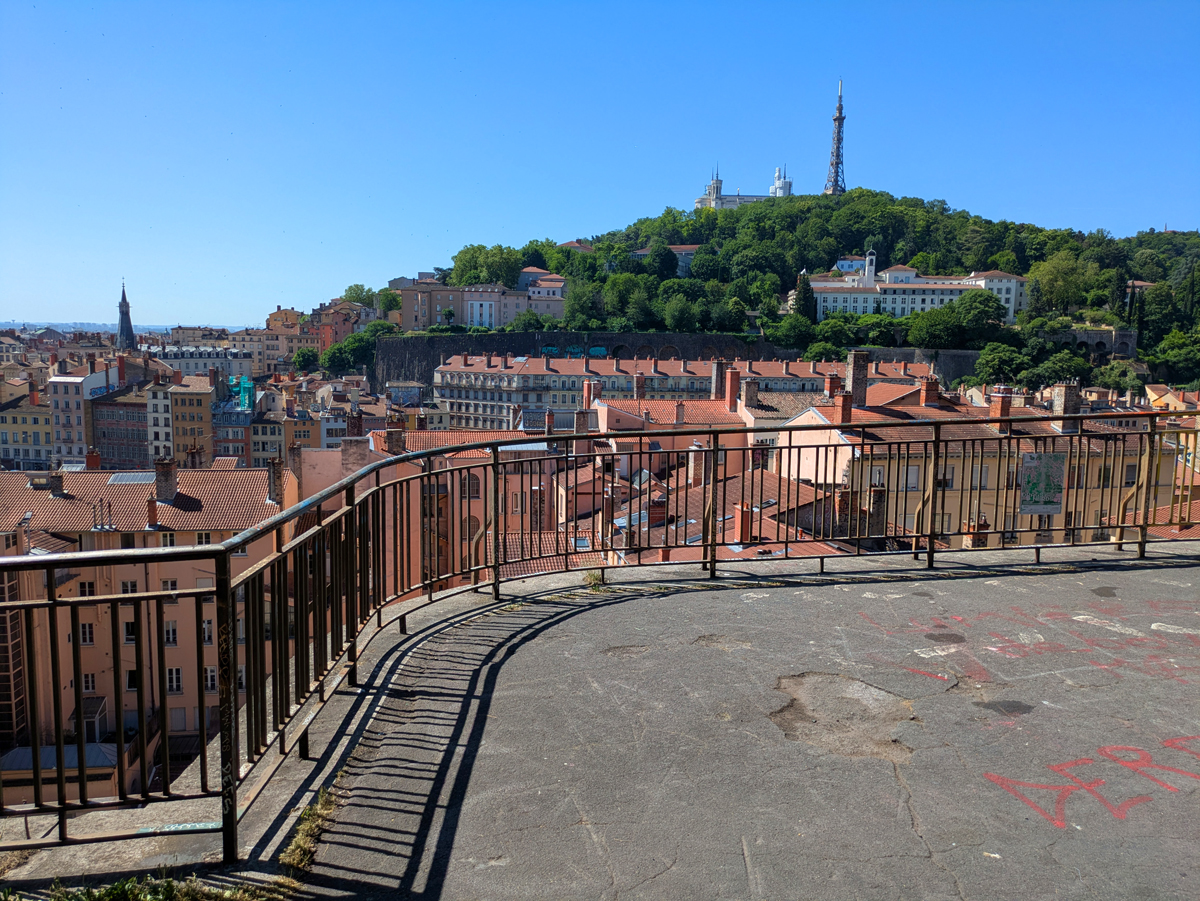
Note: If you have time and don’t mind doing a detour, we have a favorite spot for views. Google “Jardin des Chartreux”. You can get there when coming down through the park where Amphithéâtre des Trois Gaules is. When coming out the bottom end of the park, turn right. It’ll take about 10 minutes to get to a series of viewpoints over the Old Town and Saône river.
Summary
You can comfortably do the above in 3 days. In fact there is much more you can probably do. But the above are in my opinion the essential “must see and dos” for a visit of Lyon.
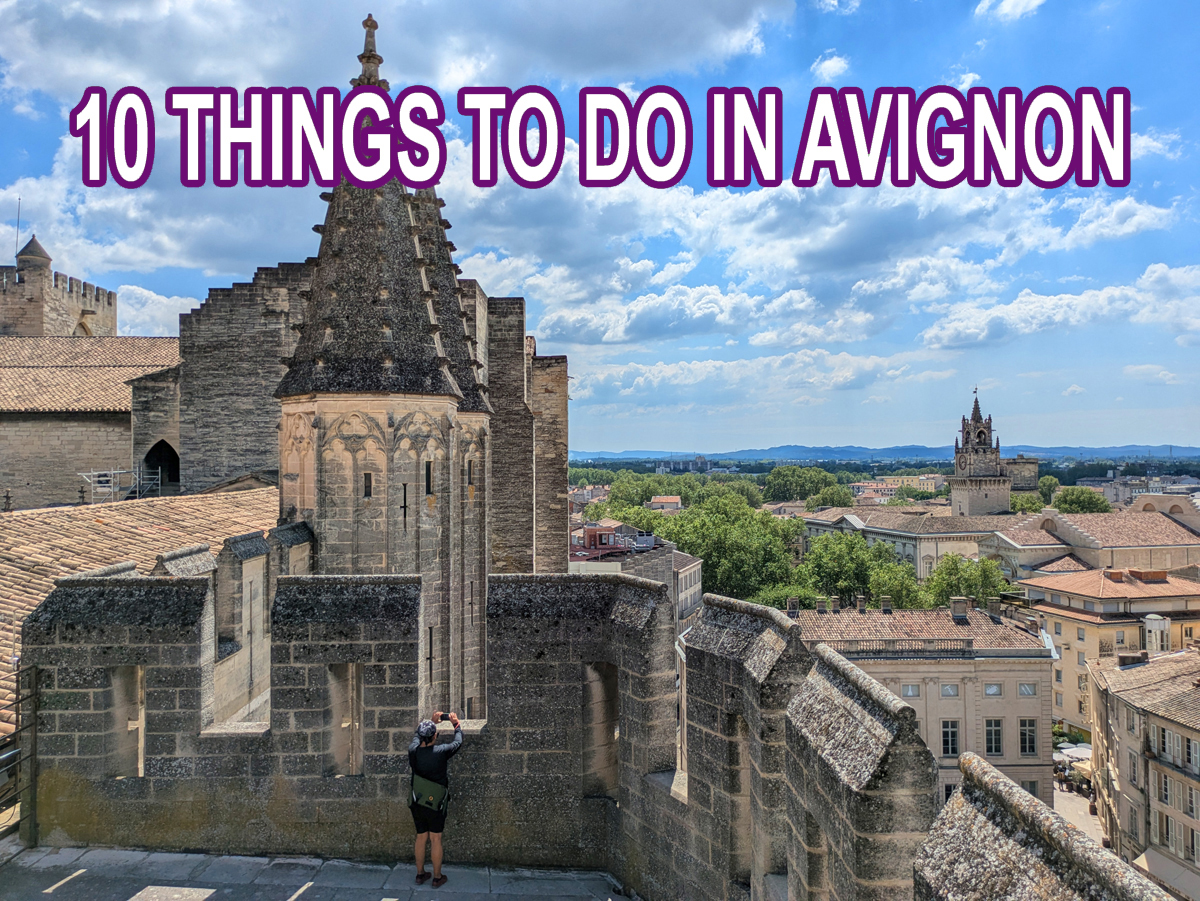
Related: 10 Things to Do in Avignon (Provence, France)
Leave a Reply