
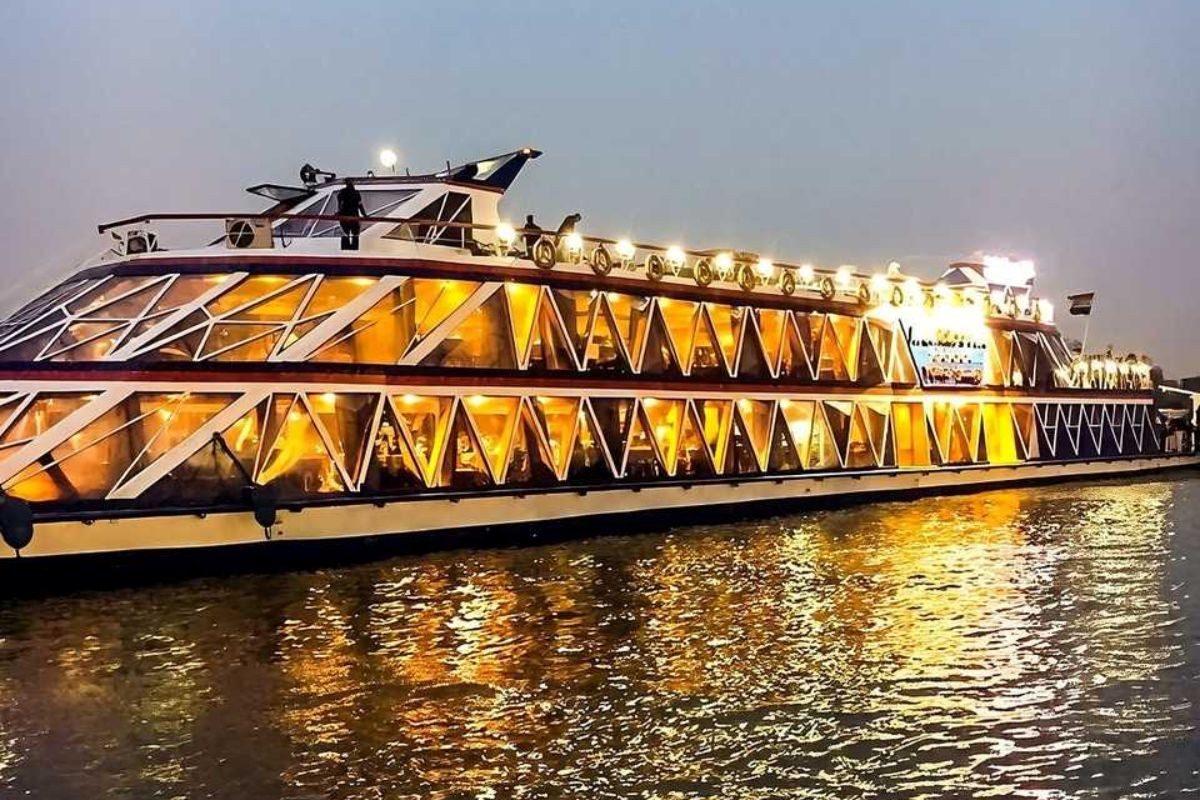
How to Choose a True Five-Star Luxury Nile Cruise.
Search for a luxury Nile River cruise, and you’ll find dozens of listicles ranking ships by adjectives like opulent, unrivaled, and iconic, with little explanation of why one vessel costs double another moored two berths away.
This editorial guide offers a selection framework for judging the full luxury Nile cruise experience: accommodation, service, dining, cultural access, itinerary quality, vessel scale, and booking transparency against criteria you can verify yourself. No ship here is recommended unless its specifications and itinerary can be checked against first-party documentation or a recent firsthand inspection. What follows is a way for couples, affluent families, mature travelers, and private groups to shortlist with confidence, along the classic corridor between Luxor, Aswan, and the temples of Upper Egypt that anchor every serious Nile itinerary.
What Makes a Luxury Nile Cruise Truly Five-Star?
A five-star luxury Nile cruise should be judged across the entire journey, not inferred from marble bathroom counters or a photographer’s wide-angle lens. Egypt’s hotel classification system awards stars locally, and that rating doesn’t always translate into an internationally recognized luxury river-cruise product.
It helps to separate three categories:
- A locally categorized five-star vessel, which may meet domestic hospitality standards without matching international benchmarks
- An internationally recognized luxury river-cruise product, operated to standards comparable with five-star hotel groups
- A boutique or private vessel, where luxury comes from privacy and personalization rather than scale
Core luxury indicators
The things that genuinely separate one experience from another are worth checking first:
- Cabin and suite dimensions
- Window configuration: standard, French balcony, or full private veranda
- Dining format and dietary flexibility
- Egyptologist guide quality and group size
- Staff responsiveness
Optional facilities
It matters too, but they’re a different category of decision:
- Spa and wellness rooms
- Pool size and deck space
- Elevator access
- Fitness and cinema rooms
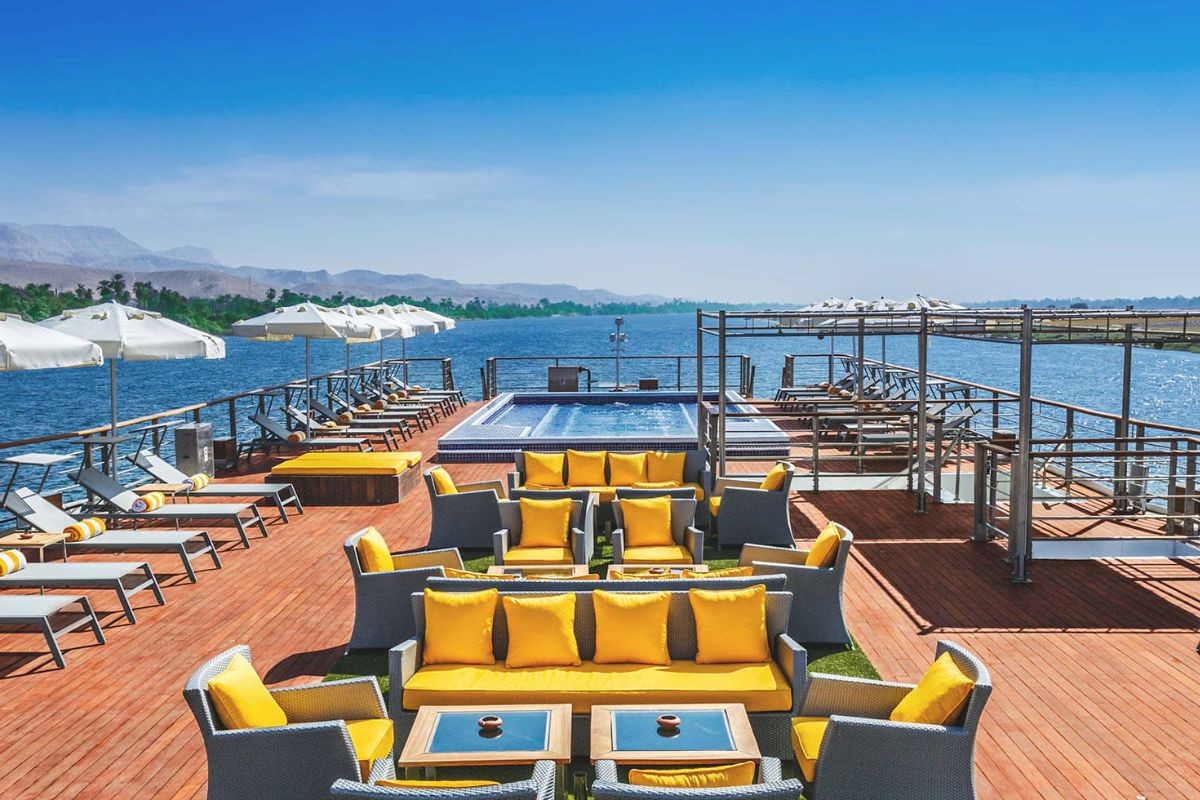
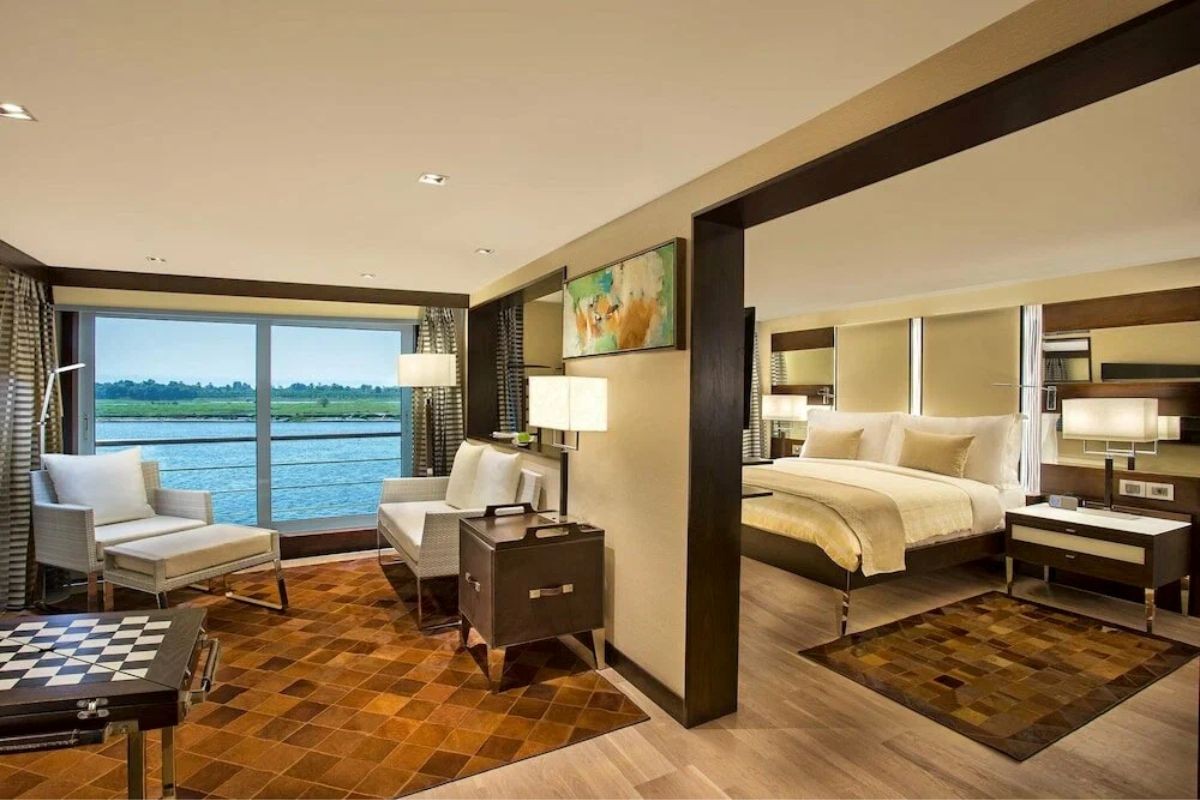
Official operator materials show how two premium Nile vessels can interpret luxury very differently. Sonesta Sun Goddess is an all-suite ship with 30 suites, each opening onto a private terrace, while Sonesta St. George I offers 57 rooms and suites with panoramic French windows that open to the outside rather than step-out balconies. Both provide five-star facilities, but one prioritizes private outdoor space and an all-suite layout, while the other delivers a larger, full-service onboard experience.
Luxury That Can Be Measured
The most useful way to evaluate a premium Nile sailing is to replace adjectives with a checklist: deck plan, cabin square footage, passenger capacity, crew numbers, dining format, accessibility, Wi-Fi policy, and exact inclusions.
| Five-star factor | What to verify | Warning sign |
| Service | Guide format and staff support | Vague VIP service |
| Dining | Buffet, à la carte, dietary options | No sample menu or policy |
| Facilities | Pool, spa, lift, shaded deck | Generic amenities list |
| Inclusions | Tickets, transfers, tips, drinks | Major costs added later |
There’s a particular pleasure in returning from a hot morning at the temples to a spacious suite with the curtains already drawn against the sun. That kind of comfort is easy to promise and much harder to actually deliver, which is exactly why the specifics matter more than the adjectives.
How to Evaluate a Luxury Nile Cruise
Finding the strongest fit among luxury Nile cruises is never a single-criterion exercise. Cabin size alone tells you nothing about guiding quality; a five-star dining room means little if the itinerary skips half the sites worth seeing.
A weighted framework makes the comparison more defensible than a gut impression. Treat this as a suggested editorial weighting, a starting point to adjust against your own priorities, not a fixed formula:
| Category | Suggested editorial weighting |
| Cabins and suites | 20% |
| Service and guiding | 20% |
| Dining and hospitality | 15% |
| Itinerary and cultural depth | 20% |
| Facilities and design | 10% |
| Privacy and passenger scale | 10% |
| Booking transparency | 5% |
A traveler seeking cultural depth might reasonably place greater weight on itinerary quality and less on facilities; a family with young children might do the opposite. Whatever the weighting, every score needs current evidence: official ship specifications, current deck plans, the published itinerary, clear inclusions and exclusions, and recent traveler feedback. Never award points for unsupported claims of exclusive access or white-glove service phrases that describe nothing measurable.
Among premium options on the market, the underlying business models differ sharply. Oberoi builds its reputation on boutique-scale intimacy vessels like Oberoi Zahra and Oberoi Philae, which pair low cabin counts 22 to 28 suites with tailored à la carte dining and dedicated wellness facilities. Mövenpick MS Royal balances international hotel standards with traditional cruise infrastructure, offering 56 cabins and 4 suites, flexible sailing durations, and full-service dining.
None of this makes one operator superior across the board; the strongest fit depends on which category matters most to the traveler asking. The same principle holds on other waters, where choosing among the best places to sail in Europe depends as much on the traveler as on the destination.
Choosing the Right Luxury Nile River Cruise for Your Journey
Choosing a luxury Nile River cruise means treating the ship and the route as a single decision. The classic corridor runs between Luxor and Aswan, calling at Karnak Temple, Edfu Temple, Kom Ombo, and Philae Temple, with most conventional itineraries passing through the Esna Lock.
Several distinct products get marketed under the same Nile cruise umbrella:
- Three- or four-night cruise portions covering the core route
- Longer four-, six-, or eight-night sailings with additional stops
- Full Egypt packages incorporating Cairo before or after the river segment
- Lake Nasser cruises, a genuinely separate product built around Nubian sites and Abu Simbel
A longer package doesn’t automatically mean more time at each site; inspect the daily itinerary rather than assume duration and depth move together. Travelers weighing these formats can also read how to choose among the best Egypt tour packages for a practical comparison of route, pace, and guiding style.

Route, Timing, and Cultural Access
Itinerary quality is measured in specifics: how many sites are visited, how much time is allocated at each, and whether guiding is shared with a group or arranged privately. Watch for vague special access claims not backed by a documented arrangement; a private viewing slot at the Temple of Horus or the Temple of Isis should be named in the itinerary, not implied by marketing copy. The question of shared versus private guiding mirrors the trade-offs in group tours vs independent travel, where pace and flexibility weigh as heavily as price.
Seasonality deserves a grounded answer rather than one universal month. October through April is generally favored for sightseeing comfort, though weather, festive-period demand, and personal heat tolerance should all be taken into account.
What Must Be Confirmed Before Paying
Premium pricing deserves premium transparency; confirm these specifics in writing before paying any deposit:
- Exact ship and cabin category
- Cabin dimensions and balcony type
- Cruise nights versus total itinerary nights
- Guide and excursion format
- Entrance fees, transfers, and domestic travel
- Meals, drinks, tips, and local payments
- Vessel-substitution policy and cabin guarantee terms
Always compare the final payable total, not the displayed rate, which rarely reflects real costs once dates and cabin categories are locked in. Working through this list early is part of planning a trip properly, rather than leaving questions until the deposit is due.
Final Word: Choose the Experience, Not the Five-Star Label
A sound decision rewards the complete experience: ship, cabin, service, guide, itinerary, dining, and transparency rather than a single flattering photograph or a locally awarded star rating.
The decision rule is simpler than any top-ten list:
- Choose a hotel-led ship, such as those in the Oberoi fleet, for service depth and wellness facilities
- Choose a newer international vessel, such as the Viking Osiris, for contemporary design and structured touring
- Choose a boutique motor vessel or dahabiya for privacy and a slower relationship with the river
A genuine five-star luxury Nile cruise is the one whose cabin size, guiding format, itinerary depth, and booking terms have actually been verified, not the one with the most convincing brochure. Whatever you’re after hospitality, cultural depth, boutique-scale privacy, or simply honest pricing the strongest option is always the vessel whose documented strengths match what you came to Egypt to experience. For a sense of how private, small-vessel luxury works beyond the Nile, a Turkish luxury gulet cruise shows why travelers who value privacy often prefer flexibility over scale.
Leave a Reply