
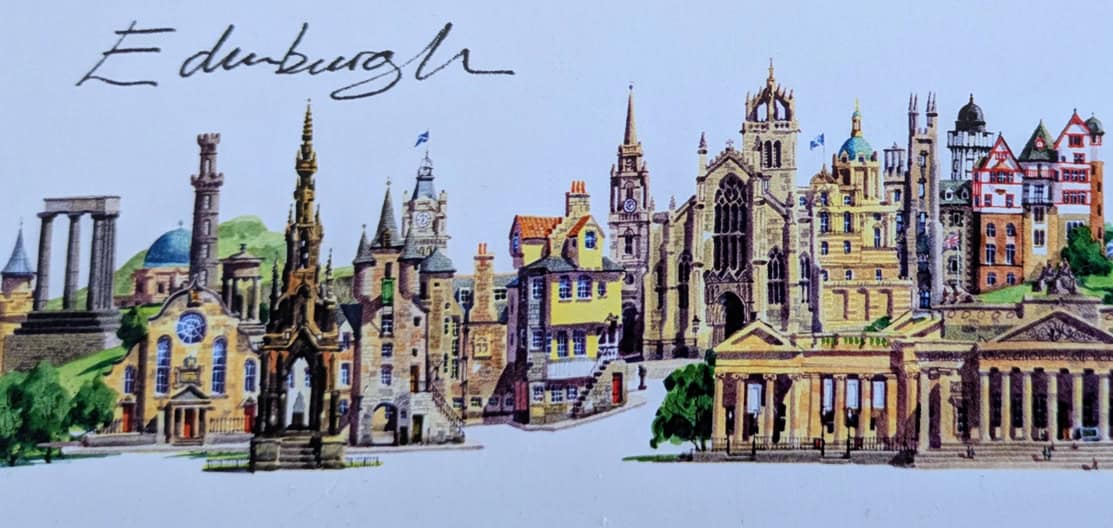
A month in Edinburgh (Scotland).
When going back to full-time travel, we paid special attention to where we would be in the summer. Summer is always the worst time for the full-time traveller: heat, hordes of tourists and high costs. Back in the old days (ie full-time travel 1.0, 2014 – 2020) we would spend summers in places like Lviv (Ukraine) or in the lesser-known neighbourhoods of Prague. The idea was to park ourselves somewhere that: 1) wasn’t overflowing with tourists, 2) wasn’t too hot, 3) wasn’t too expensive. In all honesty, we couldn’t stand summer in Europe and the idea was just to get through it until September came around.
We had an additional obstacle this summer: after 3 months in France, we had to be out of the Schengen zone.
That’s how we decided to spend the summer in the UK. We’ve never been to the UK and it’s always been on our “to do” list. So we reached out to a few people we knew who live here and asked them for recommendations. That’s how we came up with our itinerary: July in Edinburgh, August in York and September in London.
In this post I write about Edinburgh and cover our monthly costings. July also marked our 6th month since getting back to full-time travel. I write some thoughts on that.
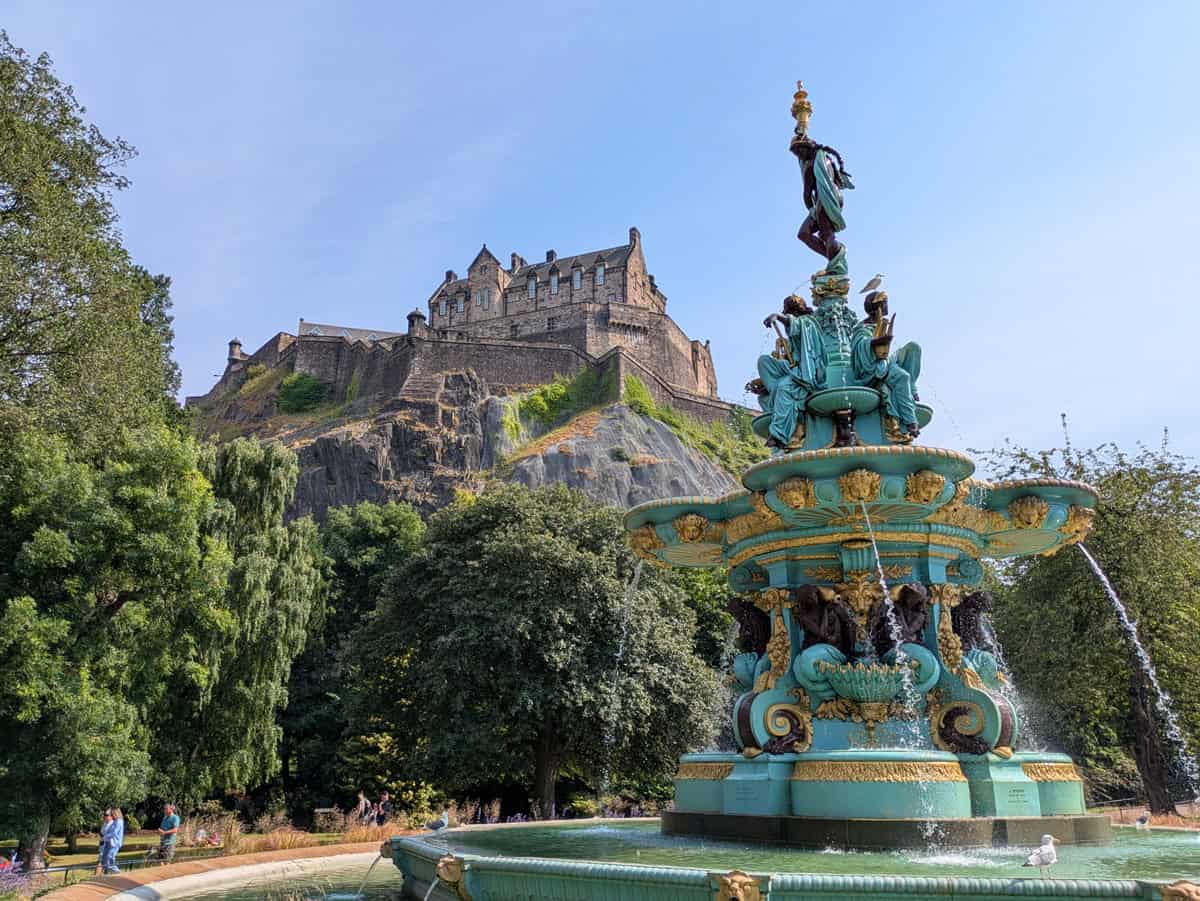
Edinburgh
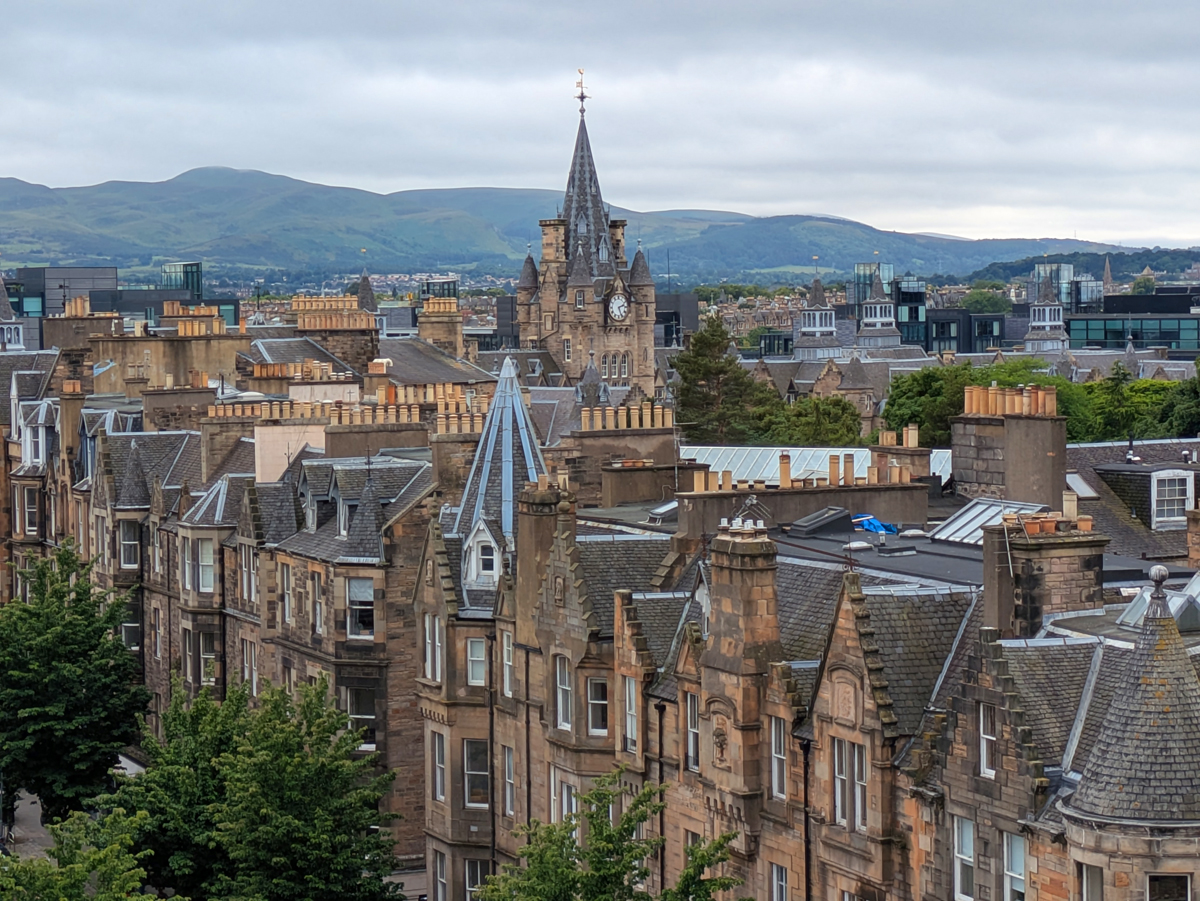
Edinburgh made for a great base for the month. Firstly, I have to say that the Scottish are very friendly people, among the friendliest that we’ve met on our travels. Charming, a good sense of humour, quirky and very helpful. We have some great memories of the interactions with locals we had here. Secondly, the weather was just great for us. After a month of heatwaves in Paris, we came to Edinburgh where temperatures hovered around the 20C mark. I’m sure the Scots hate having weather that’s this cool in the summer but for us it was a relief. Wind, grey clouds, rain, sun… the weather was all over the place and unpredictable. Thirdly, while Edinburgh was full of tourists (I’ll get to that), we did some day trips around the region and saw castles and lots of beauty and few tourists. Getting around Scotland by rail was easy and enjoyable.
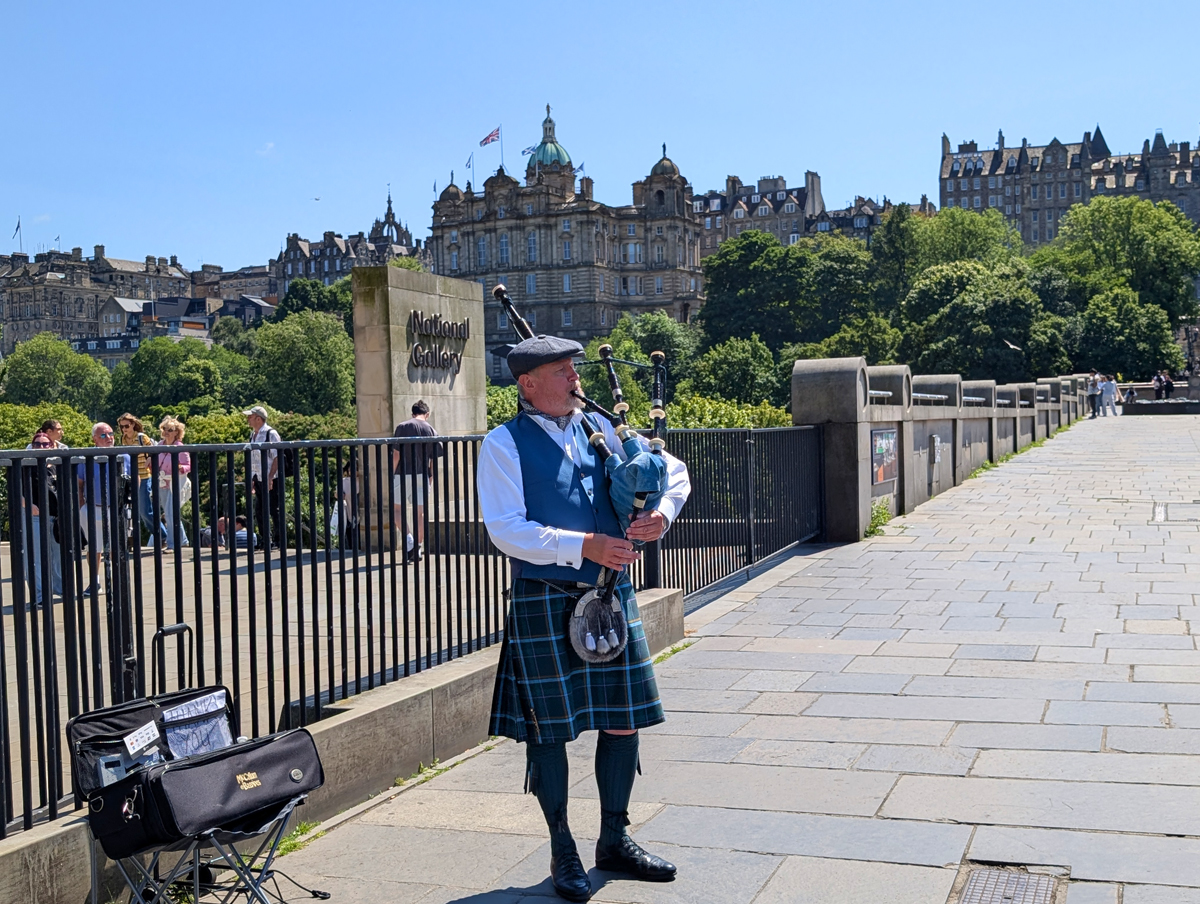
Highlights and Lowlights in Edinburgh and around
I’ll be writing a lot more about Edinburgh in coming posts. Below I’m just going to highlight a few things that pop to mind that might be helpful to others thinking of visiting Edinburgh.
- The geography of Edinburgh is peculiar and you can see why it was settled and it made for the perfect fortress-city. The old city is essentially built on a ridge, kind of like a spine, stretching from Edinburgh castle at one end of the ridge to the Palace of Holyroodhouse at the other end. Joining them together is a street called the Royal Mile. Many of the highlights (including St Giles’ Cathedral) are along this stretch. I’ll be honest: I absolutely hate the Royal Mile. Because of the geography, all the tourists visiting Edinburgh end up being funnelled through here. So you can expect tons of tourists, lots of kitschy souvenir stores and overpriced restaurants, street performers etc. I’ll be honest part 2: I didn’t like Edinburgh castle at all either (crowded and there’s honestly not that much to see). Edinburg castle is an incredible achievement and is absolutely stunning seen from below or from a distance…but not from within. It’s also very expensive (23.50 £/person). If you’re going to splurge that much for a castle I’d recommend Stirling Castle in the town of Stirling. I’ll be writing about both castles in the next little while.
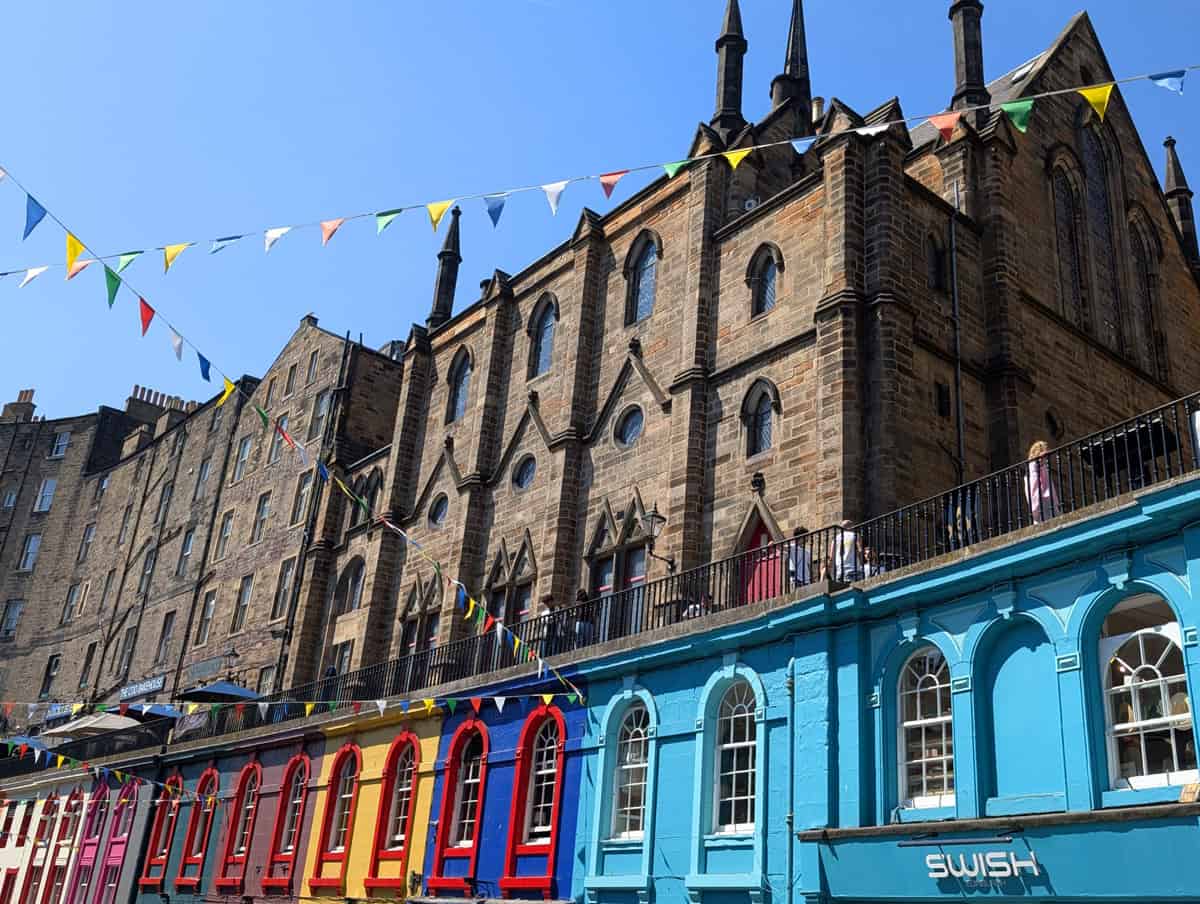
- The new town is connected to the old city with bridges going over a gully (where you’ll find some pretty city parks). The main street here is Princes Street where you have some great views looking across at the skyline of Edinburgh’s old city. The New town was conceived in the 18th century and is in a more typical grid pattern with larger avenues and squares. Wondering where to stay in Edinburgh? Knowing what I know now, I’d recommend somewhere in the southern end of the New Town.
- If you enjoy walks and nature, Edinburgh is wonderful. At the bottom end of the Royal Mile, next to Holyroodhouse Palace, is Holyrood Park which is made up of several hills. Many people walk up to Arthur’s Seat, the highest hill in the Park…but for the best views I recommend the Salisbury Crags. The two can easily be combined. I wrote about hiking up Arthur’s Seat and the Salisbury Crags here.
- Another pleasure to visit was Dean Village, about 15 minutes out of the center. You’d think yourself somewhere far from any capital city.
- Edinburgh has some wonderful and free museums for all tastes: The National Museum of Scotland, National Gallery of Scotland, Scottish National Portrait Gallery, Museum of Edinburgh and the Writers Museum were all very much worth a visit. Chances are you’ll have some rainy days in Edinburgh so you should keep some museums up your sleeve for rainy days.
I’ll be writing a detailed post on what to See and Do in Edinburgh. The above are just a few tips for people thinking of visiting the city.
Update: 30 Things to Do in Edinburgh
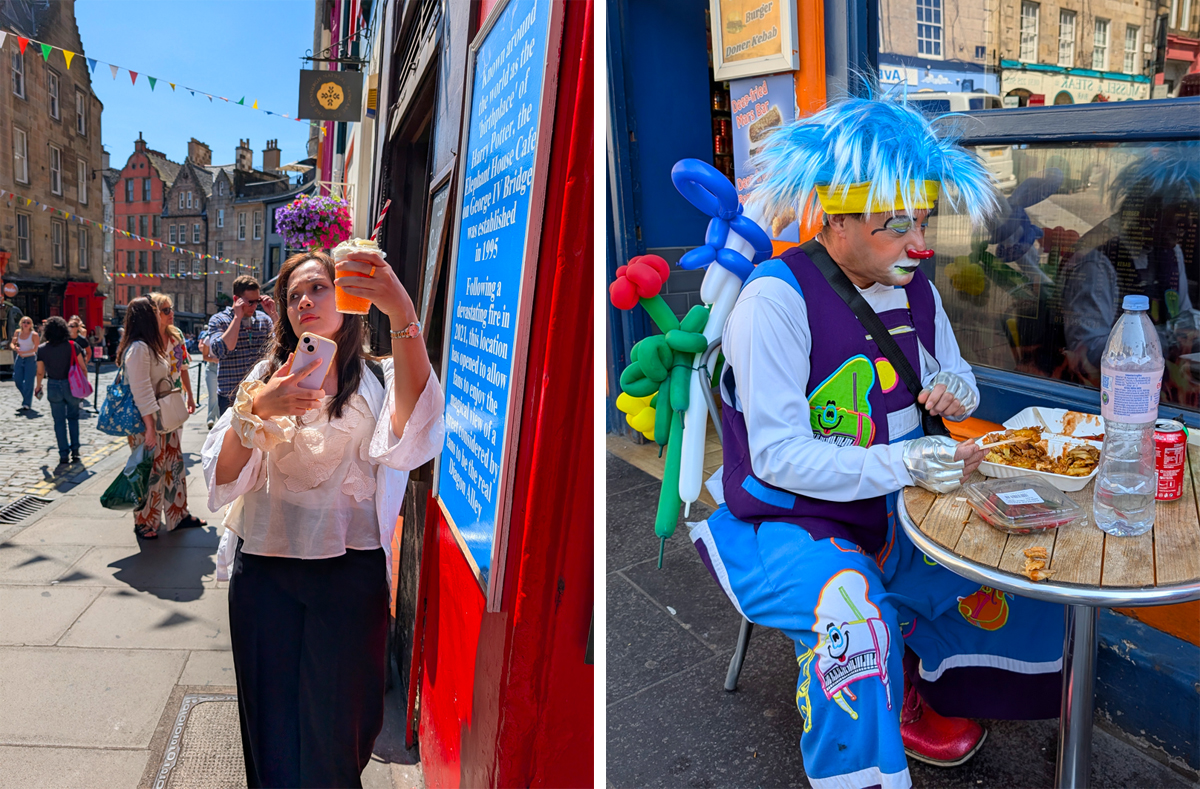
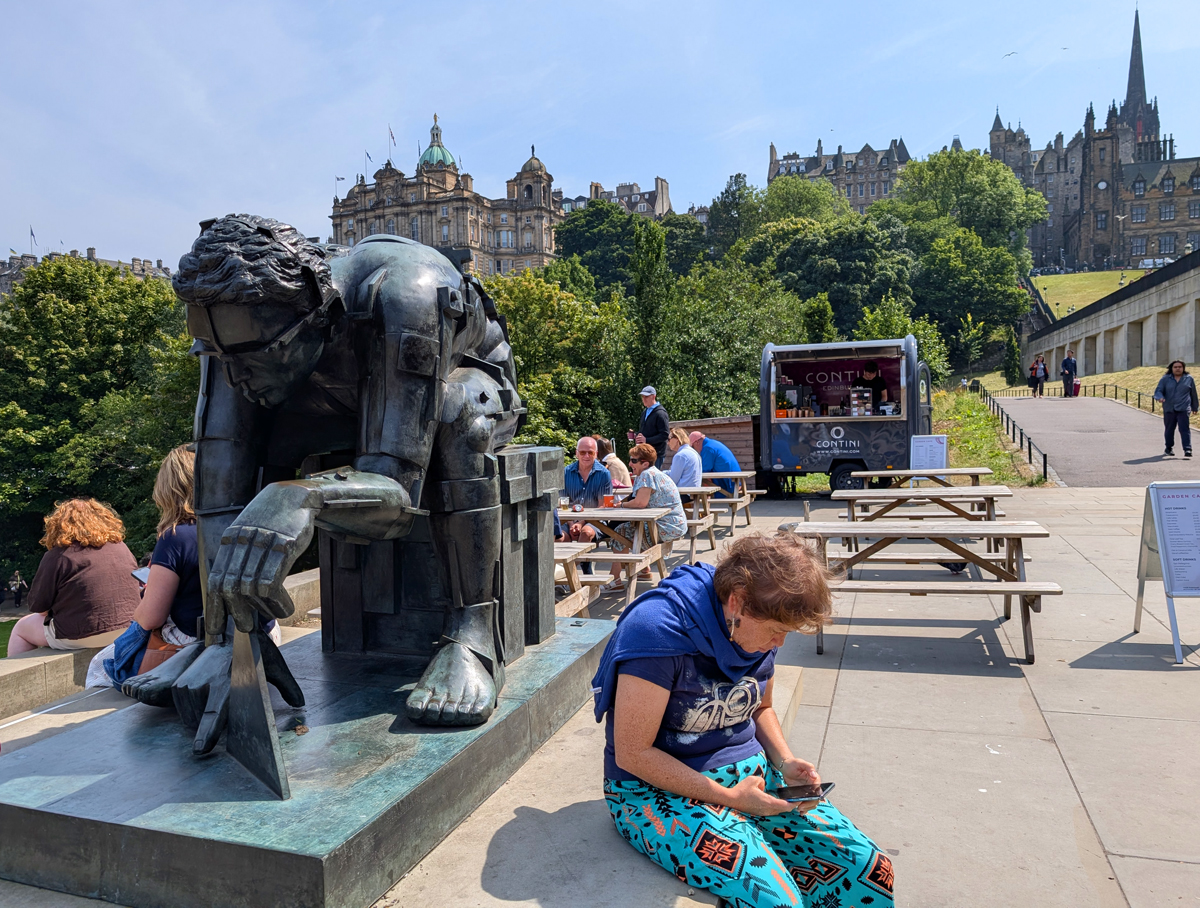
Below: Lissette always has an eye for people
A few notes/observations from our first month in the UK:
- There are a lot of tourists that come to Edinburgh. If you Google “where do most people visiting Edinburgh come from?” the results will come up as Americans, Germans and French making up the top countries. That doesn’t jive with our experience. We saw lots of Spanish tourists, Americans, Chinese and Indians. They made up the majority of tourists we saw. Maybe the stats are out of date?
- If you don’t like lots of tourists, August is the month to avoid. It’s when Edinburgh hosts the Fringe Festival, the world’s largest arts festival. Locals told us that Edinburgh is jam-packed at this time, especially the Royal Mile. Considering all the tourists in July, I can’t imagine how bad August must be.
- Is Glasgow worth a visit and how does it compare to Edinburgh? Glasgow is easy to get to from Edinburgh and I would recommend a day trip. But not more than that. I can’t say we were impressed by Glasgow.
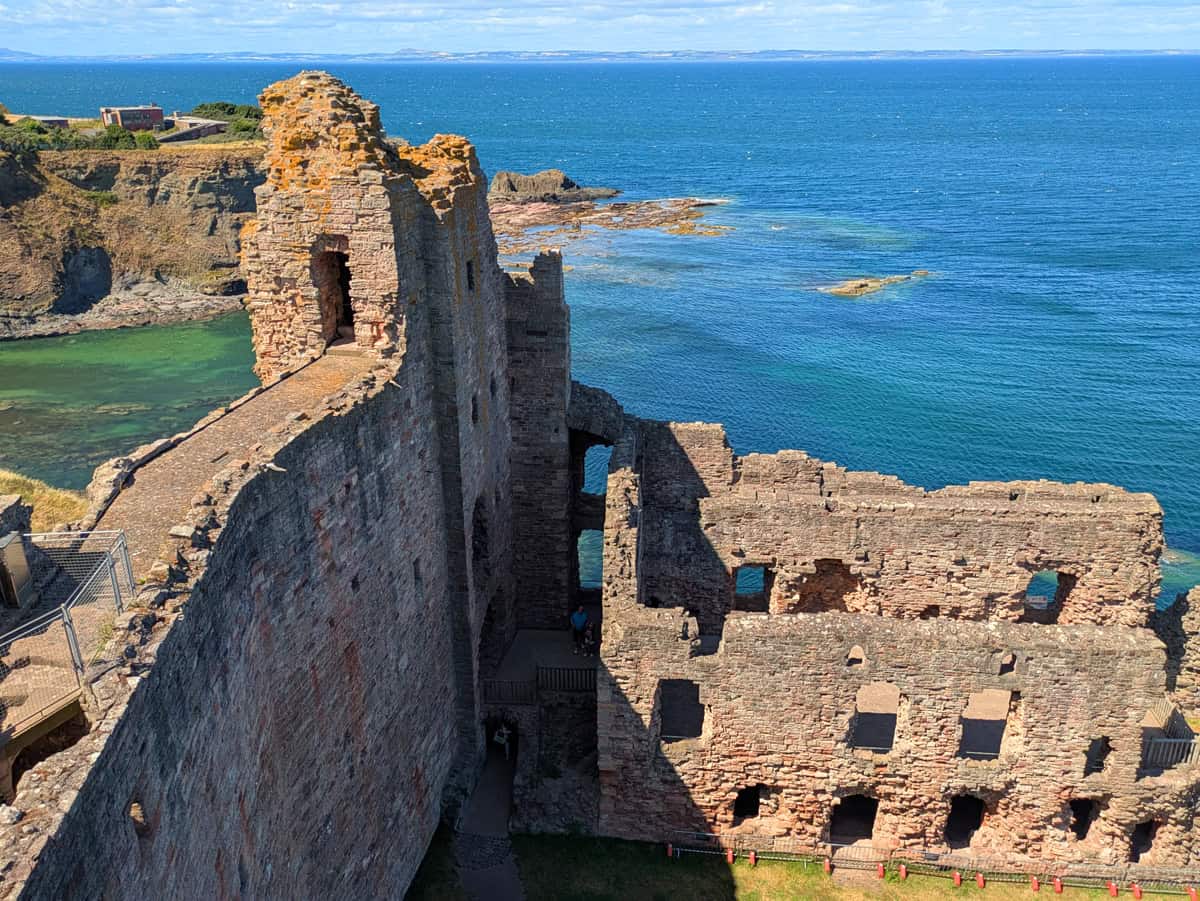
- More enjoyable (to us) were day trips to North Berwick (35 minutes from Edinburgh by train) and Stirling (50 minutes away by train). Both very pretty places with impressive castles.
- We’ve never stood as long for pedestrian crossings anywhere as we have in Edinburgh (or York, where we arrived yesterday). Why does it take so long for the pedestrian light to change in the UK? Locals don’t even bother, they know the pattern…
- More than anywhere, machines have replaced tellers at grocery stores. Another note about British supermarkets: very little in the way of fresh fruits and vegetables (very noticeable especially coming from France). A good health food store in Edinburgh was Real Food.
- An excellent Indian restaurant was Cilantro. Good value Greek at Great the Greek. Very nice bar for a drink is the Guildford Arms which is an institution.
- Scotrail for train schedules and tickets. We were impressed by the efficiency. Make sure to keep your tickets with you because you’ll be asked for it countless times.
- I spent a whole month with no cash in hand. You can pay with your card everywhere.
The above a few things that come to mind when recounting our first month in Edinburgh/UK. I’m sure more will surface in upcoming blog posts.
But summing it up, Edinburgh made for a great mid-summer base. Lots to see, great locals, and some fantastic day trips in the vicinity.
Next: costs for the month
The Cost of a Month in Edinburgh
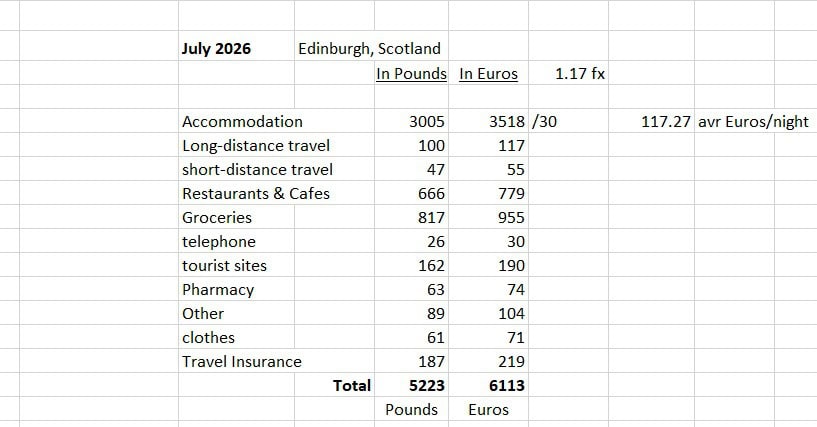
Edinburgh isn’t cheap and accommodation especially is quite expensive. I had originally thought of going in August but accommodation was double what we (ended up) paying for July. Which, as you’ll see, was expensive enough.
Accommodation
We stayed in this Airbnb in Edinburgh. Not recommended. It was one of a series of apartments we had booked back in January when planning out the first 6 months of our travels and thought it was going to be a good one. It wasn’t. The boiler wasn’t working when we arrived. The host sent over a plumber who told us what we already knew – it would have to be replaced.
You know what I’m fed up with? Hosts who put it on you to be there and to take care of plumbers, electricians etc. If you’re going to have work down on your property, be there in person. I shouldn’t have to supervise your shit. We’ve been through it too many times. So when we asked us “Can you be there for the plumber to replace the boiler?” we said “No”. The shower worked with an electric machine apart from the boiler. The boiler only took care of hot water for the heaters (which we didn’t need in summer) and for taps in the kitchen. We told him we could make due, that he could replace the boiler after we had left.
The apartment description makes it sound as if it is the host’s personal apartment and that they rent it when away. That’s not the case at all. There is no person named Rose, the apartment (along with 5 others) is administered by a couple who spend their time in Thailand. The apartment gets no love: it wasn’t clean, it smelled, it had no “basics” for renters. We spent 3 hours cleaning the apartment upon arrival (Lissette especially gets creeped out by other people’s dirtiness).
We’ve written about our Airbnb peeves before, especially the “professional” hosts who have 10 apartments to their name and who only care about making money and don’t make any effort on giving guests a decent experience.
The apartment accounted for more than half of our July costings.
Long Distance Travel
This category is made up of the day trips from Edinburgh to Glasgow, North Berwick and Sterling.
to Glasgow
33.60 £ return for both of us (that’s 16.80 each for a return trip, trip time about 1 hr 15 min)
To North Berwick
18.20 £ return for both of us (that’s 9.10 each for a return trip, trip time 35 minutes)
To Stirling
48.40 £ return for both of us (that’s 24.20 each for a return trip, trip time 50 minutes). We made the mistake here of booking 2 separate tickets (going and return) and I think that’s why it was so high. Try to book one ticket.
Total = 100 £
Short Distance Travel
There’s a very handy tram from the airport to the city center (approx. 40 min ride). Total 15.80 £, that’s 7.90 £each.
The rest were city buses which cost 2.40 £ (each) for a trip. Good to know: you can pay for your ticket on board the bus with your card.
Restaurants and Cafés
We ate our quite a bit in Edinburgh and, in the end, it didn’t cost much more than it ever did in France. But that’s also because we found a couple of nice places that were good value.
Cilantro restaurant – Indian restaurant. Really good! We ate there 5 times and it averaged 40 £ each time
Greet the Greak – for inexpensive Gyros. Average 14 £ for both of us when we ate there.
We had a whole bunch of other restaurant experiences including drinks at the Guildford Arms (vintage pub), Royal Café (vintage café. Pretty but not particularly impressive food) and stopped in a bunch of other places for beer or fish and chips (the Ship Inn in North Berwick in particular had very good fish and chips).
Tourist Sites
While there are some great Free museums as previously mentioned, tourist sites (mostly castles) can be quite expensive in Scotland:
Edinburgh castle – 47 £ for both of us (ie 23.50 £ each)
Palace of Holyroodhouse – 44 £ for both of us (ie 22 £ each)
St Giles’ Cathedral – 10 £ donation for both of us. Note: There’s no fee, but they suggest the 10 £ donation and they’re a bit pushy. But in September 2026 (next month) they’ll be introducing a mandatory 12 £ fee per person to enter.
Craigmillar Castle – 17 £ for both of us (ie 8.50 £ each)
Tantallon Castle in North Berwick – 17 £ for both of us (ie 8.50 £ each)
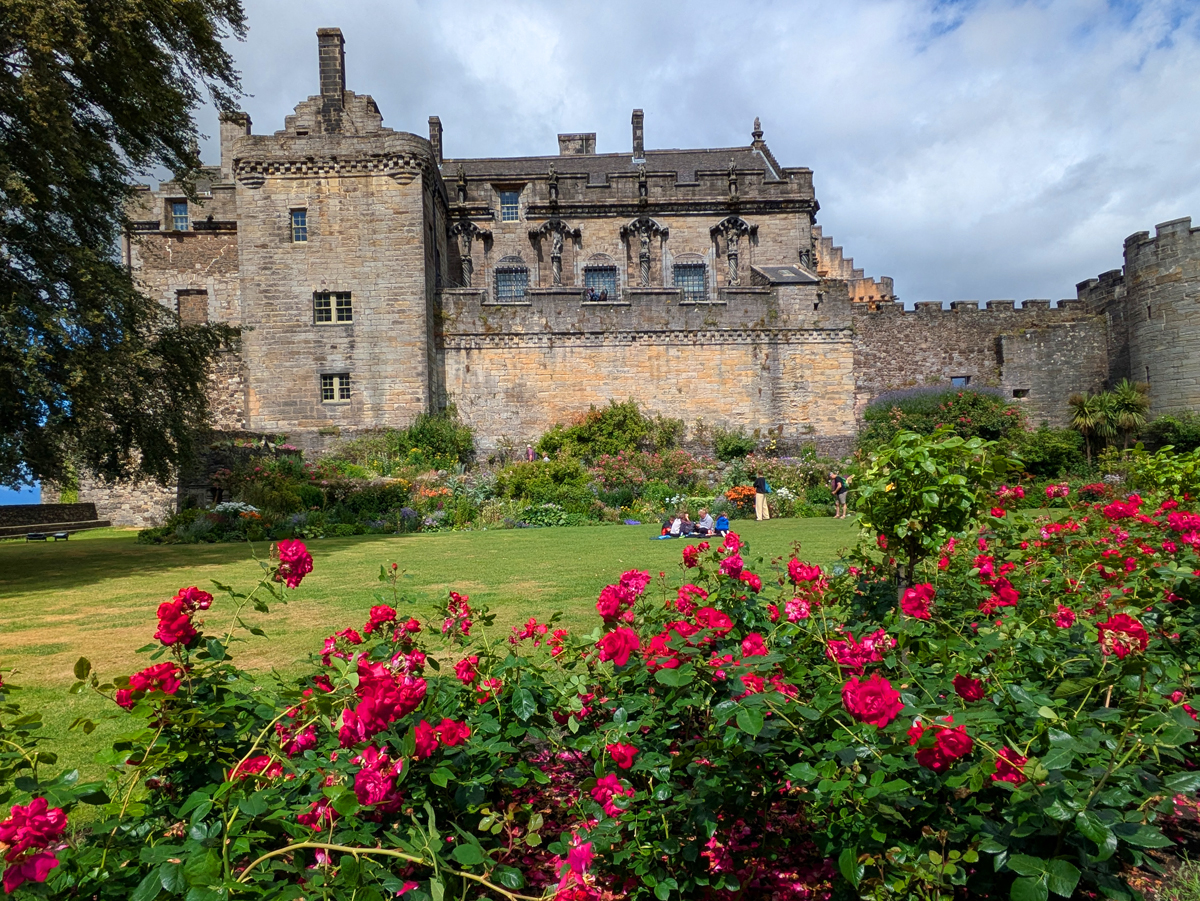
Stirling Castle in Stirling – 37 £ for both of us (ie 18.50 £ each)
Travel Insurance
July was the first month where we signed up for Expat Insurance. In Spain we have private insurance which covers us while in Spain as well as for 3 months outside the country. Having spent 3 months in France, we needed health coverage and, after asking other nomads what they use, ended up getting coverage with Genki. Very affordable at 110 Euros each/month*.
*When we travelled full-time from 2014 – 2020, we used Allianz for expat insurance. It would come out to about $150 CAD each/month at the time (about 90 Euros). But this time around I would get insane quotes from various companies that equated to about $1000 Euros/month for both of us. Genki specializes in Nomad insurance and gets great reviews, so it was the obvious choice.
Summarizing/analysing costs
The rest of our costings were pretty ordinary costings so I didn’t go into detail. But travelling the UK certainly isn’t cheap as you can see. When we travelled full-time from 2014-2020 (full-time travel 1.0 as I like to call it), our average cost/month was 2,700 US. See my post on How much does it cost to have a nomadic lifestyle? We were pretty focused on our budget at the time. This time around, especially this year, we’re splurging. I wrote about that here: FULL-TIME TRAVEL 2.0!
Can you still travel full-time for 2,700 US a month? I think so, depending on where you go. We’ll find out later in the year when we plan on being in Latin America.
Thoughts and Reflections on 6 months of full-time travel
On travelling full-time again
It’s been 6 months since we left Granada to travel full-time again and it’s gone very fast. Scarily fast. I’ve written about it before: while full-time travel isn’t always easy, it’s never boring. We see new things and have different experiences. Life is an adventure and we’re happy we’re back on the road.
Challenges? Being older than the 1st time around, the more tedious aspects of travel are more tedious. And that revolves mostly around packing, moving, checking into a new Airbnb apartment and – the most tedious – putting up with mediocre lodging and hosts. The level of care isn’t what it used to be. And it’s not about money because we’ve been a lot more generous with our budget this time around. When you’re staying a month in a disappointing apartment where the bed is uncomfortable, the kitchen isn’t very functional or the wifi is poor, it taxes you.
Another thing we’ve noticed: there are a lot more travellers these days then there used to be pre-Covid. When we travelled full-time (2014 – 2020) it just didn’t seem there there were so many travellers. Now places are packed with them and, being a bit older this time around, we sometimes get fed up. Sometimes I get tired of walking around a palace or a museum and I just want to sit somewhere and have a beer.
Other than that, we’re much better travellers than we were on our first go at full-time travel. We’re travelling lighter, we’re better organized, we’re more relaxed. We learned a lot from our previous experience travelling full-time.
What does the future hold?
There is one thing that nags at us. That’s the question of a future base. I’m going to be 60 in November, Lissette will turn 60 next year. Where would we go if something serious happened, either health-wise or if a major global event occurred? Where would we go? We’re Canadian citizens and could go back to Canada. But that’s probably the least appealing option. We’re residents of Spain, something we worked hard to achieve. We thought that would be our future base. It’s the whole reason we spent 5 years living in Spain. But truth be told, neither of us has a love for Spain. I wrote about that on our other blog.
So we feel like we’re a bit in limbo.
When we left Spain (and our lease) in February, we told ourselves that we’ll take the next 5 years to figure that out. But actually being in a position of having neither a home or a base, it’s been in our minds more than we thought. Maybe because the world seems increasingly to be going down the toilet. Somewhere in the next 5 years we’ll have to commit to a place and sign a long term lease. We can continue travelling after that but I think it’s important for both of us to have a place we can call home.
But really, as I say, the above is just a nagging background noise in our brains. The truth is that we’re living our dreams right now and don’t want it to end 👍
Related: A month in Paris
Would you ever consider Vancouver? I haven’t been there but it seems like a fantastic place with both urban life and nature nearby. Also decent climate for being Canada.
You seem to like Eastern/Central European cities, how about Ljubljana as a base? Considering that Prague is too expensive/touristy and Lviv too dangerous.
Hope you’re well RJA! I lived in Vancouver a while as a kid, great city. But is it VERY expensive now. If ever we decide to split our time between Canada and Mexico (a possibility one day) then it could be a base in Canada. But the cost is really prohibitive and we’d have to think hard about it.
A hard no to Ljubljana, not a favorite place of ours. Prague is a possibility; while the center is definitely over-touristed there are some great neighborhoods that are quiet with a mix of Czechs and foreigners. I guess the biggest thing, and this applies to France as well, is how can it be done? After 5 years working to get Permanent Residency in Spain starting over seems daunting. We’d have to research it and ask our lawyer about the process.
Or we suck it up and stay somewhere in Spain in close proximity to the French border…
How about Bilbao or thereabouts? I can’t remember you writing much about northern Spain. It might be more to your liking culture wise. Also more reasonable summers
We haven’t explored the northern coast RJA. It’s in our plans to visit 🙂
Hey Frank! I’ve only just clocked that you and Lissette are back on the road. Good for you! I am curious why you are restricted by Schengen rules, as a permanent resident of a Schengen country?
Hi Siobhan! Why? I don’t know. But it is the rule:
Schengen Visas vs. National Residence Permits/Visas
The 90/180-day rule applies strictly to visa-free travel across the Schengen Area. However, many individual Schengen countries offer national long-stay visas or residence permits that operate independently of the Schengen short-stay limits.
National residence permits override the 90/180 Rule, but only within that country. For instance, if you obtain a national permit (e.g. Portugal’s D7 Visa, D8 Visa, or Golden Visa), you are authorized to stay in that specific country beyond the 90-day limit.
It’s important to note that national visas do not automatically grant unlimited travel across other Schengen countries. Most national residence permits only allow up to 90 days in any other Schengen country within a 180-day period—just like a tourist. To stay longer in other Schengen countries, you would need to apply for a residence permit or national visa for that country.
This distinction is especially relevant for slow travelers, digital nomads, or second-home owners who split time between European countries.
That’s really interesting, and very good to know. We would like to settle in Prague one day, as our son has moved there permanently from Australia. There is no visa under which we could move ourselves, but we had presumed we could go to another Schengen country – for example, Spain – and scuttle sideways when permanent residency is granted. I am sure I would have eventually learned all of this anyway, but it is handy to know now that we must go back the drawing board. Hope you are both well! Cheers.
Honestly I didn’t know about this until about year 3 in Spain. But at least don’t have to go far now when doing the Schengen shuffle!
It sounds like Spain isn’t a fit after all this time, and you’re not excited about Canada – what about France? To me it seems like it could work.
Thanks for the comment William. It’s a possibility that we’re considering. We want to spend more time to make sure we feel the same way…also have to check with our lawyer to find out what the process is and if our Spanish residency will help in facilitating such a move. No place is perfect but I do think France might, in the long term, be a better solution for us 🙂