
7 Things to See in Arles (and others you can skip).
Provence is known for its Roman history and there are many towns with incredible Roman monuments. One of the most famous is Arles.
*The Best Roman towns in Provence in my opinion: Nimes and Arles (a very close 1st and 2nd) and Orange (3rd).
But there is more to Arles than Roman ruins, it also has a 12th century UNESCO World Heritage Site that has nothing to do with the Romans.
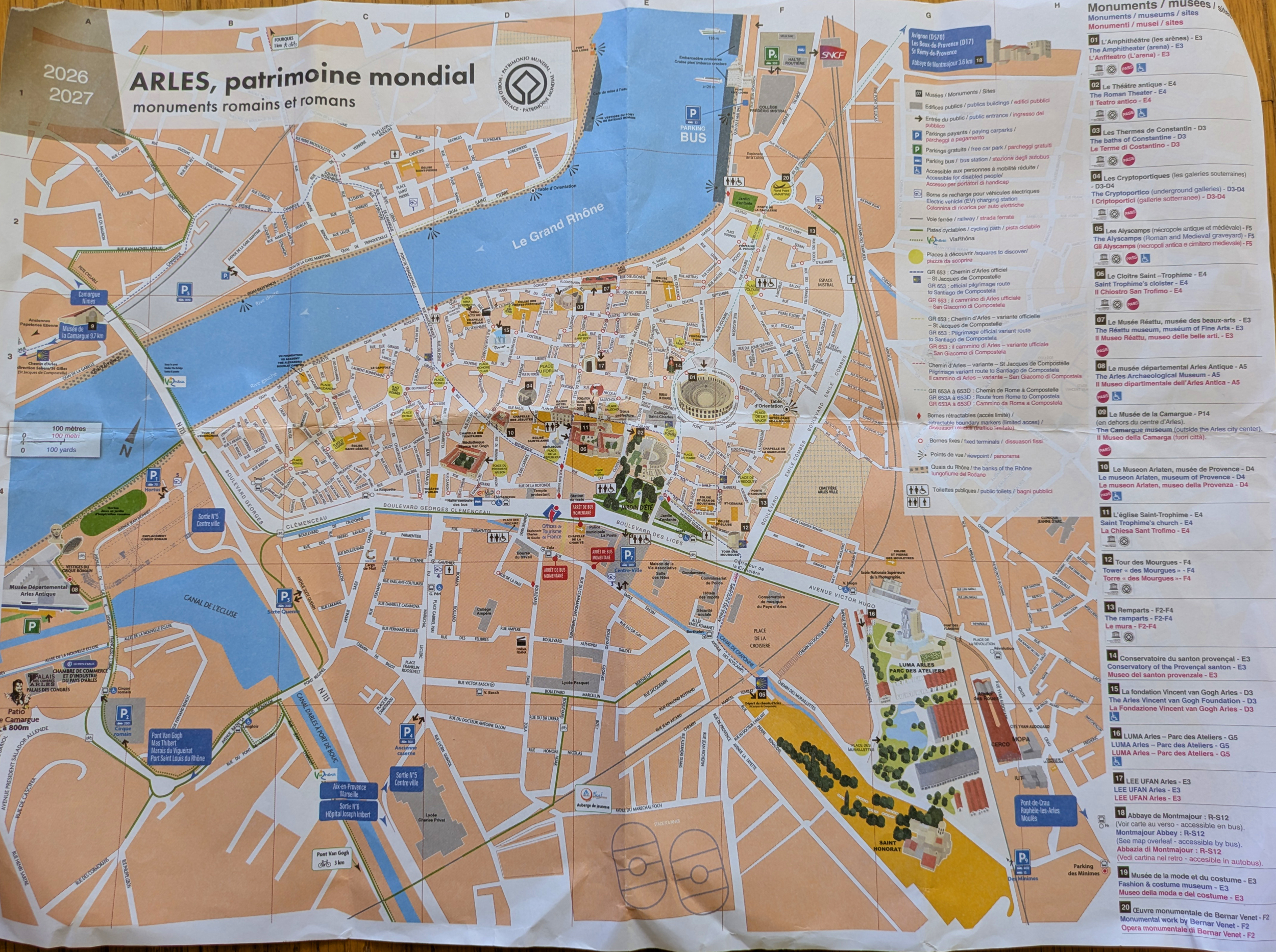
Arles is a city that’s very easy to see on a day trip: the old town is very compact and all the highlights are within a few minutes of each other (unlike Nimes where some of the highlights require a bit more walking). The old town is also close to the train station. It all makes Arles a city that’s easy to explore.
In this post I cover 7 things to see in Arles. I also cover a few things that I honestly think you can skip. More below.
7 Things to See in Arles
1. The Roman Amphitheatre
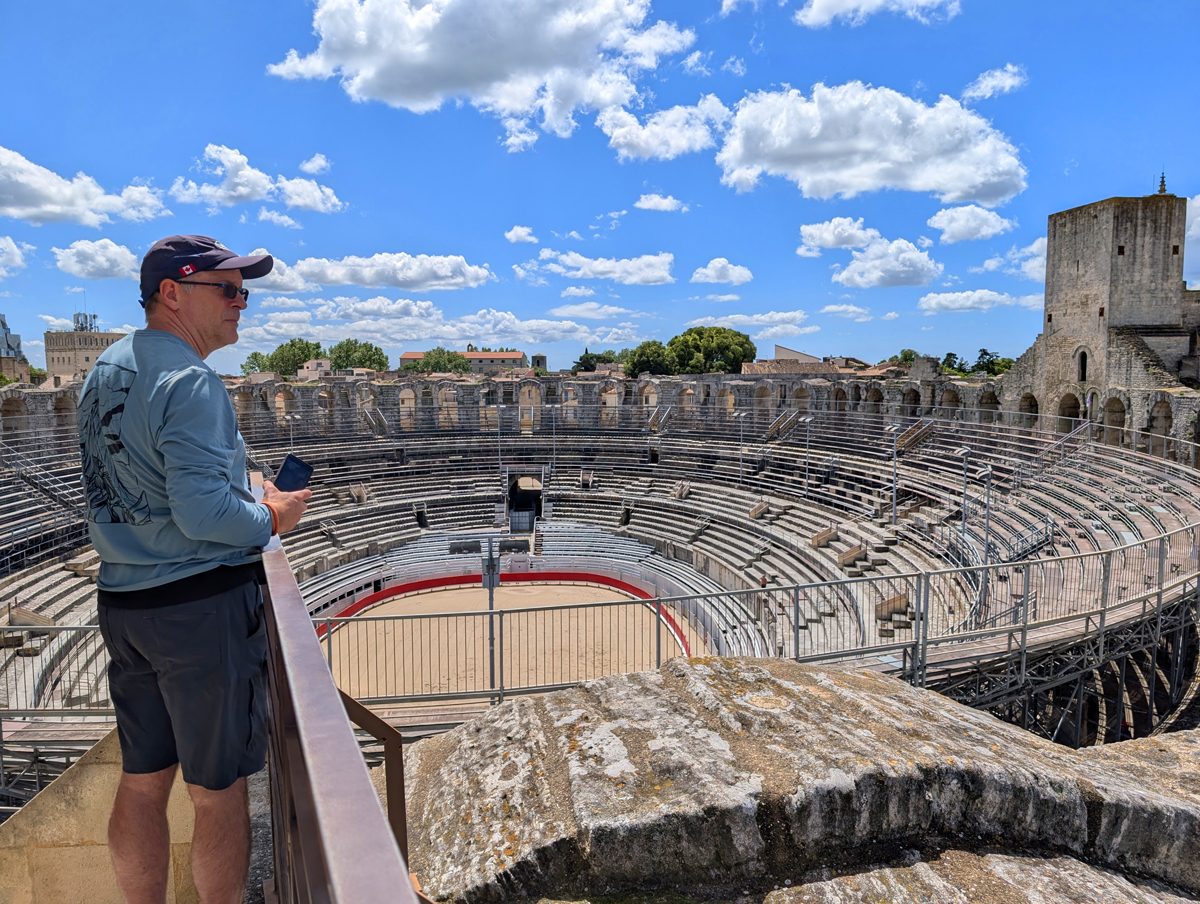
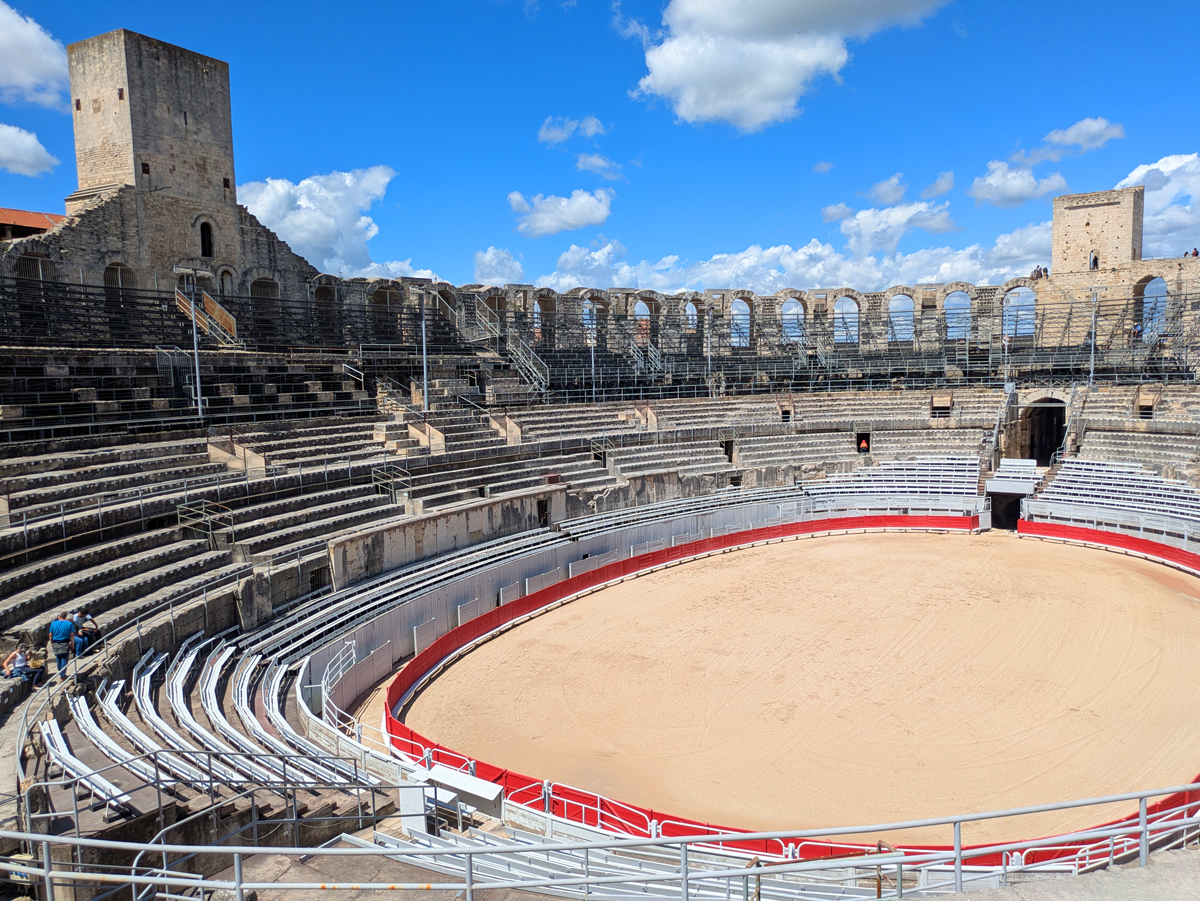
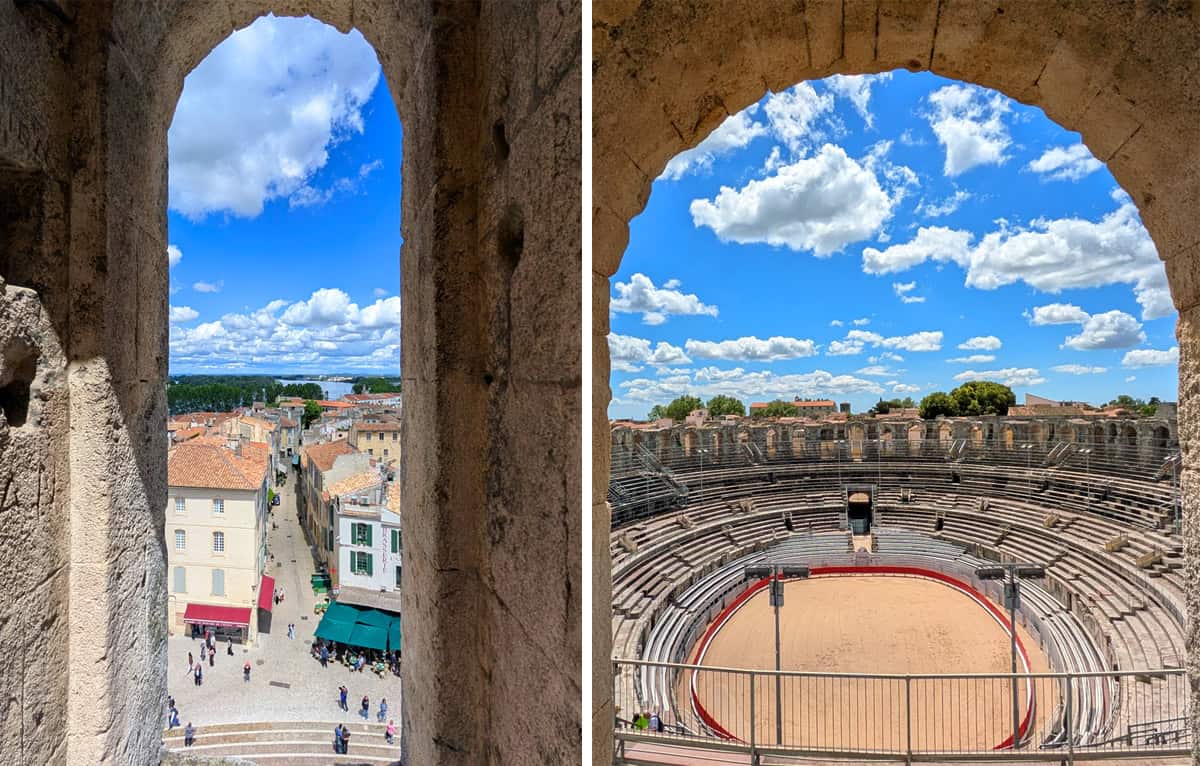
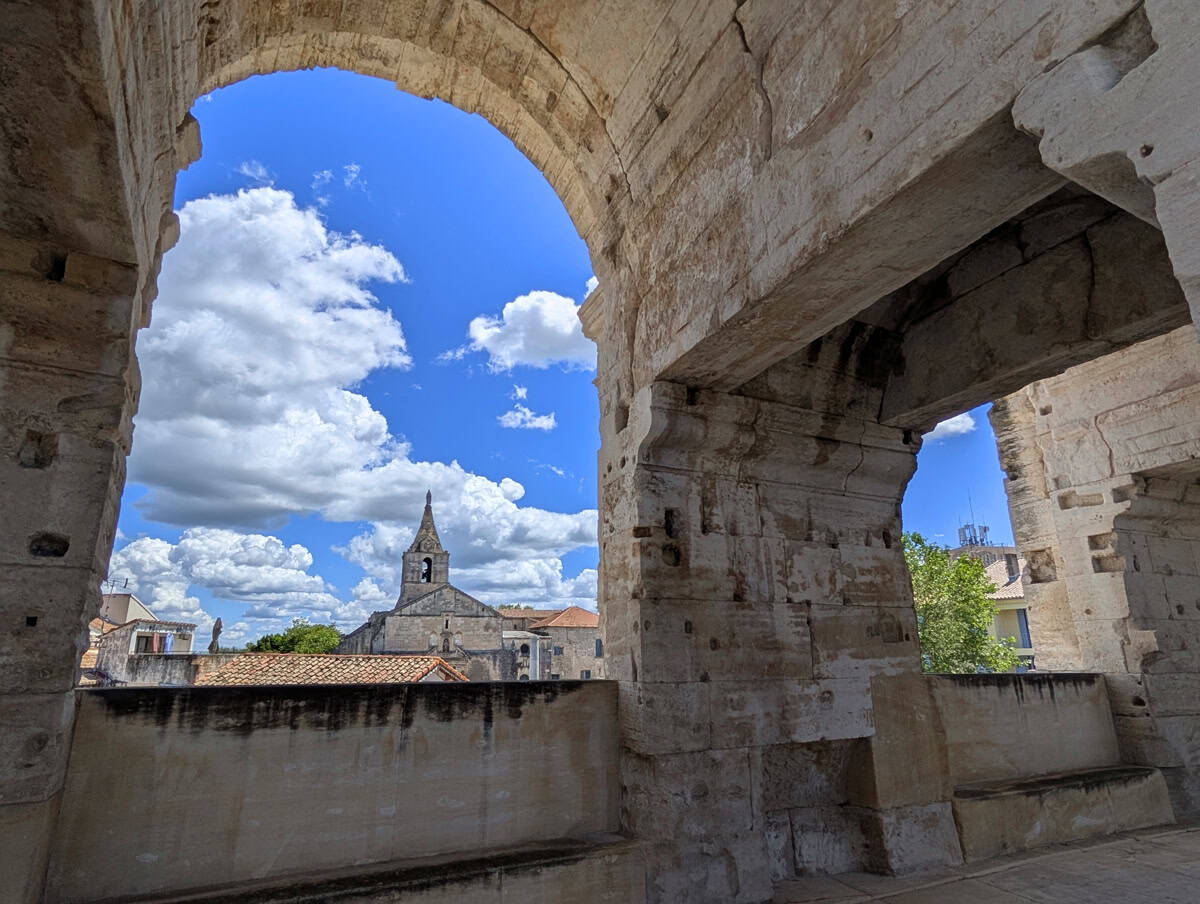
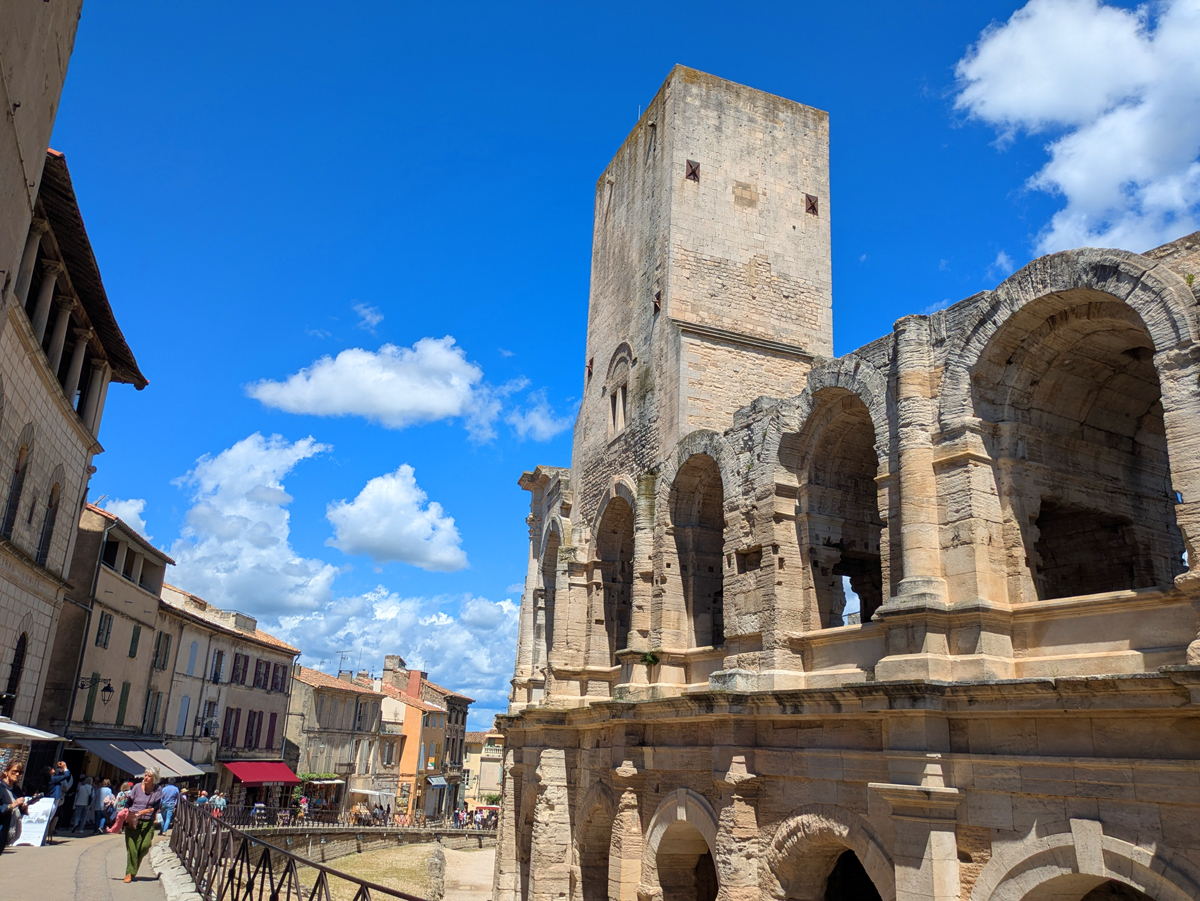
Arles’s Amphitheatre was completed in 80 AD, 8 years after the construction of the Colosseum in Rome (72 AD). It was actually inspired by the Colosseum. It measures 136 meters long, 107 meters wide and 21 meters high with two storeys of 60 arcades (all very similar to the Amphitheatre in Nîmes which was built about 20 years later).
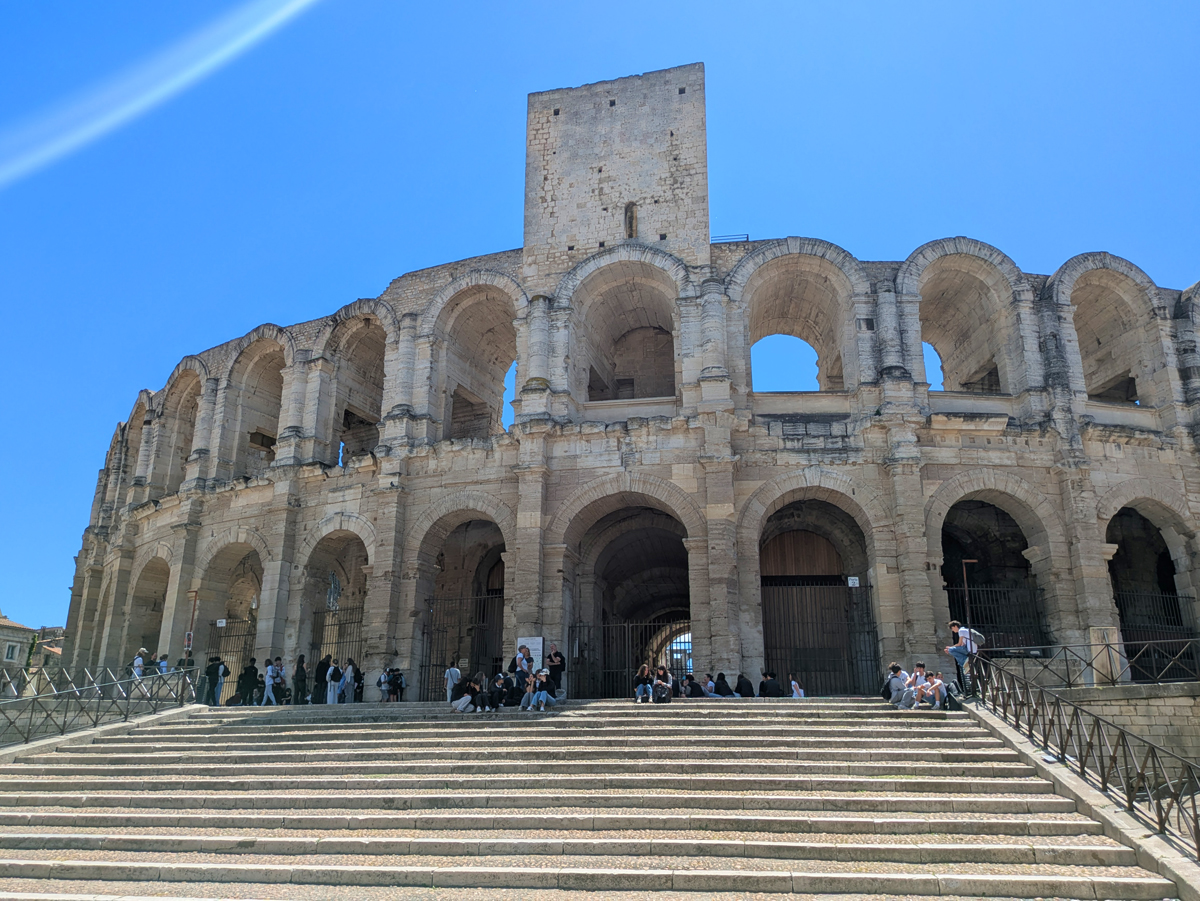
The Amphitheatre could accommodate up to 20,000 people along 33 rows. They’d come here to see Gladiator fights, hunts and shows. Under the sand-covered wooden floor of the arena was a system of trapdoors and elevators where animals and goods could be brought up.
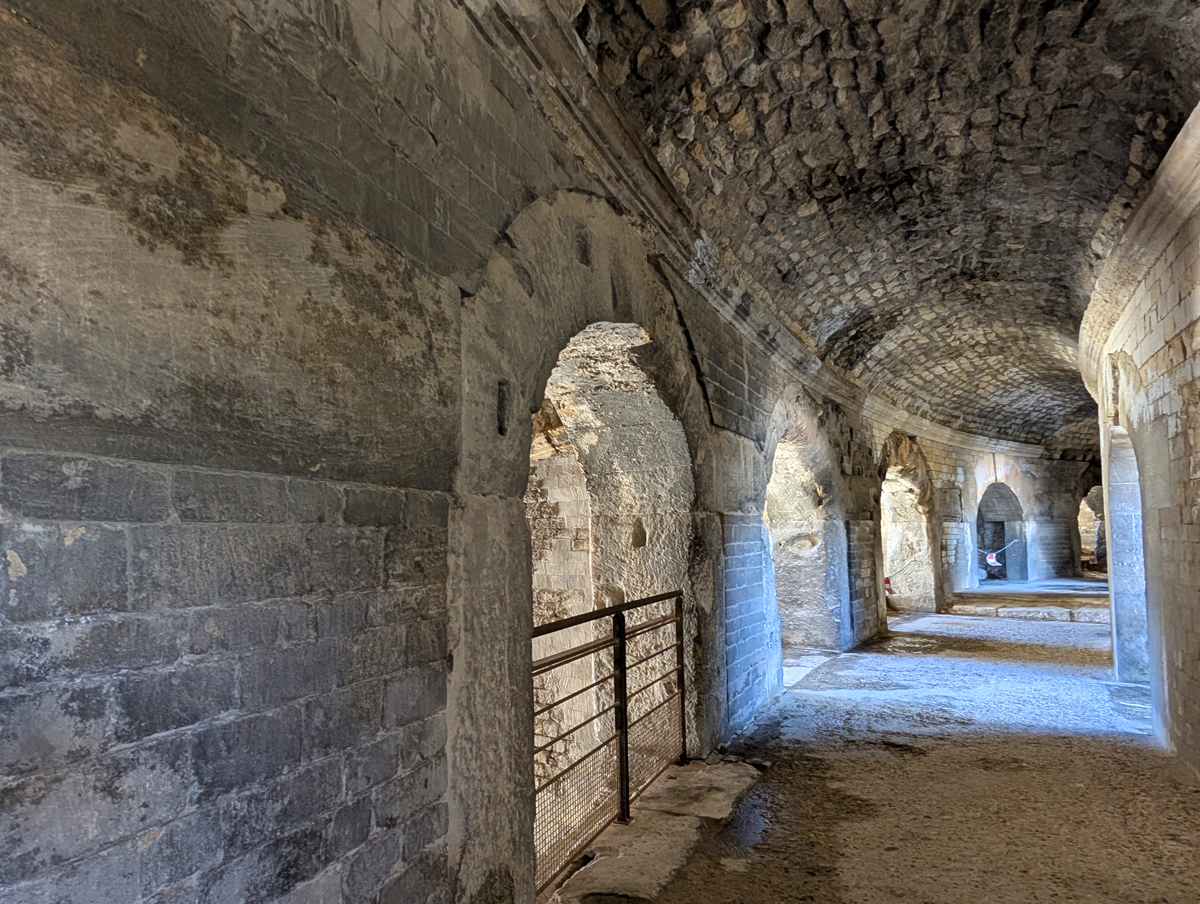
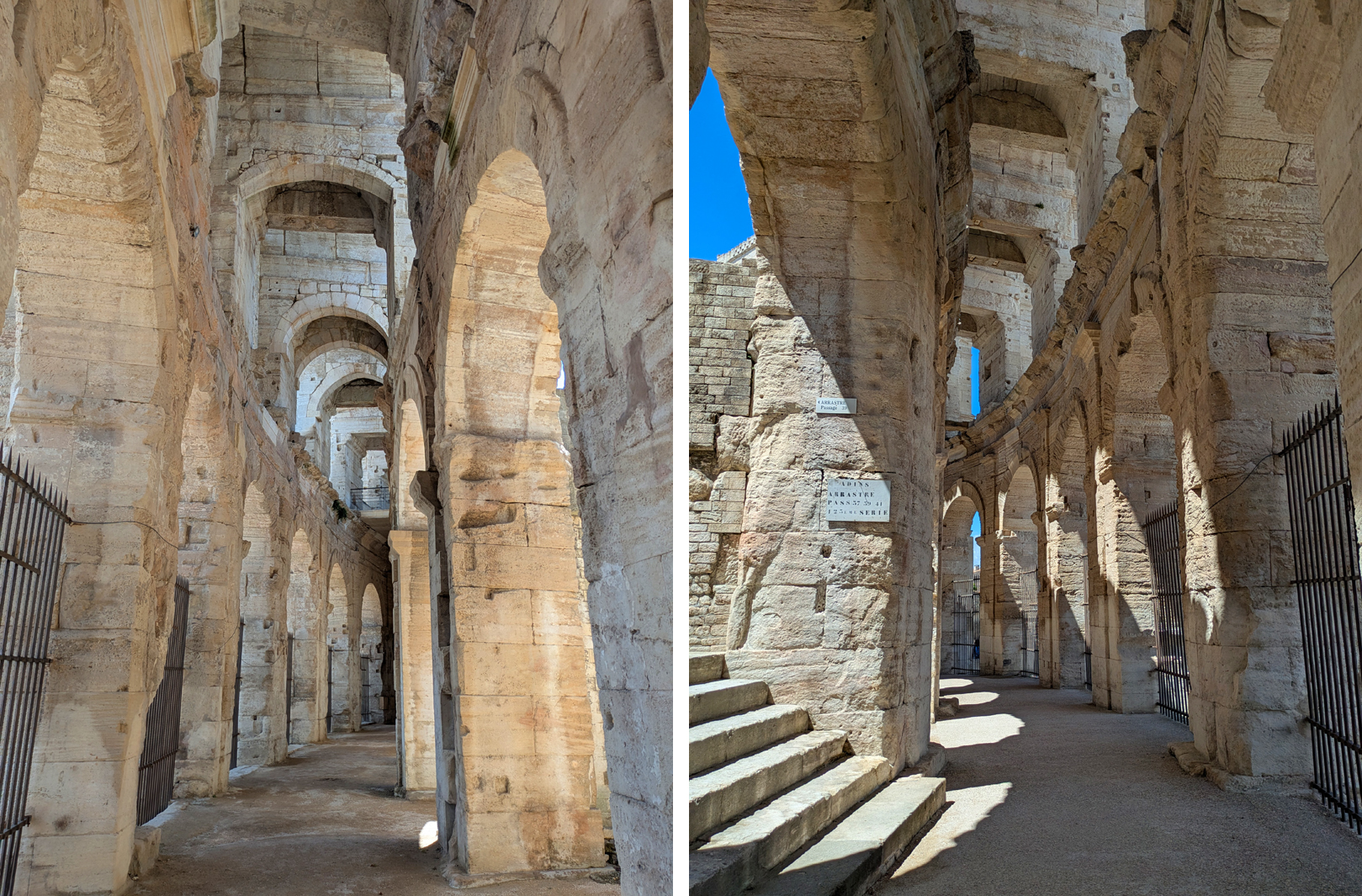
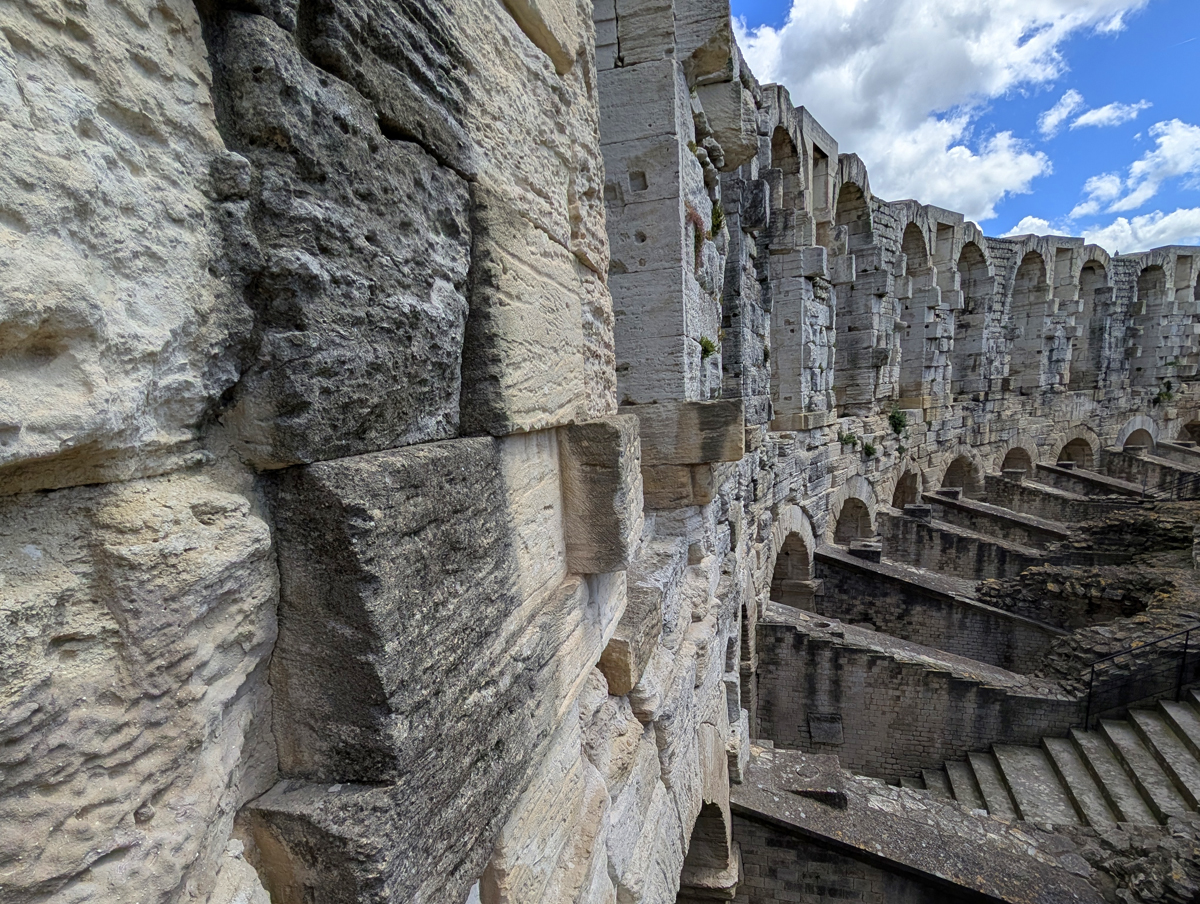
Again, just like in Nîmes, the Amphitheatre became a refuge from invaders during the Middle Ages. The arches were walled up and the arena transformed into a fortified city filled with houses and streets. The walls were used as defensive ramparts.
Today the Amphitheatre is used for live shows (concerts and bullfights) as well as Gladiator Re-enactments. You can see their current events here.
Cost: 11 Euros if Seeing the Amphitheatre alone OR 19 Euros if you purchase the Advantage Pass*.
*The Advantage Pass includes 6 highlights of Arles (the Amphitheatre, Theatre, the Cloister of St. Trophime, The Cryptoporticus Arles, the Baths of Constantine, and the Alyscamps). It also includes 4 museums, chief among them the Musee Departemental Arles Antique.
Should you get it? It depends how much you have time for. The Amphitheatre (11 Euros if paid individually) and the Cloister of St. Trophime (6 Euros) are MUSTS. The Roman Theatre is as well but it is free. So to make the pass worth your while you should want to add a museum (Musee Departemental Arles Antique is recommended) and/or a couple of extra highlights.
2. Roman Theatre of Arles
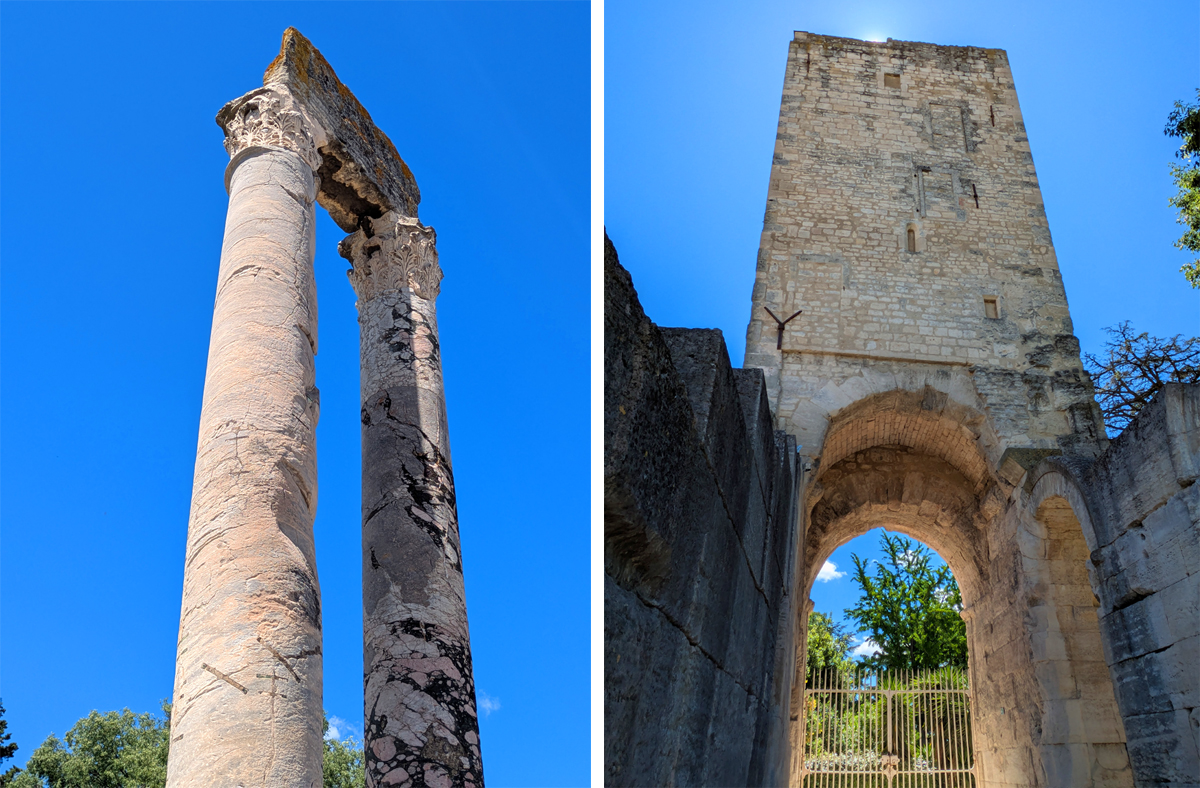
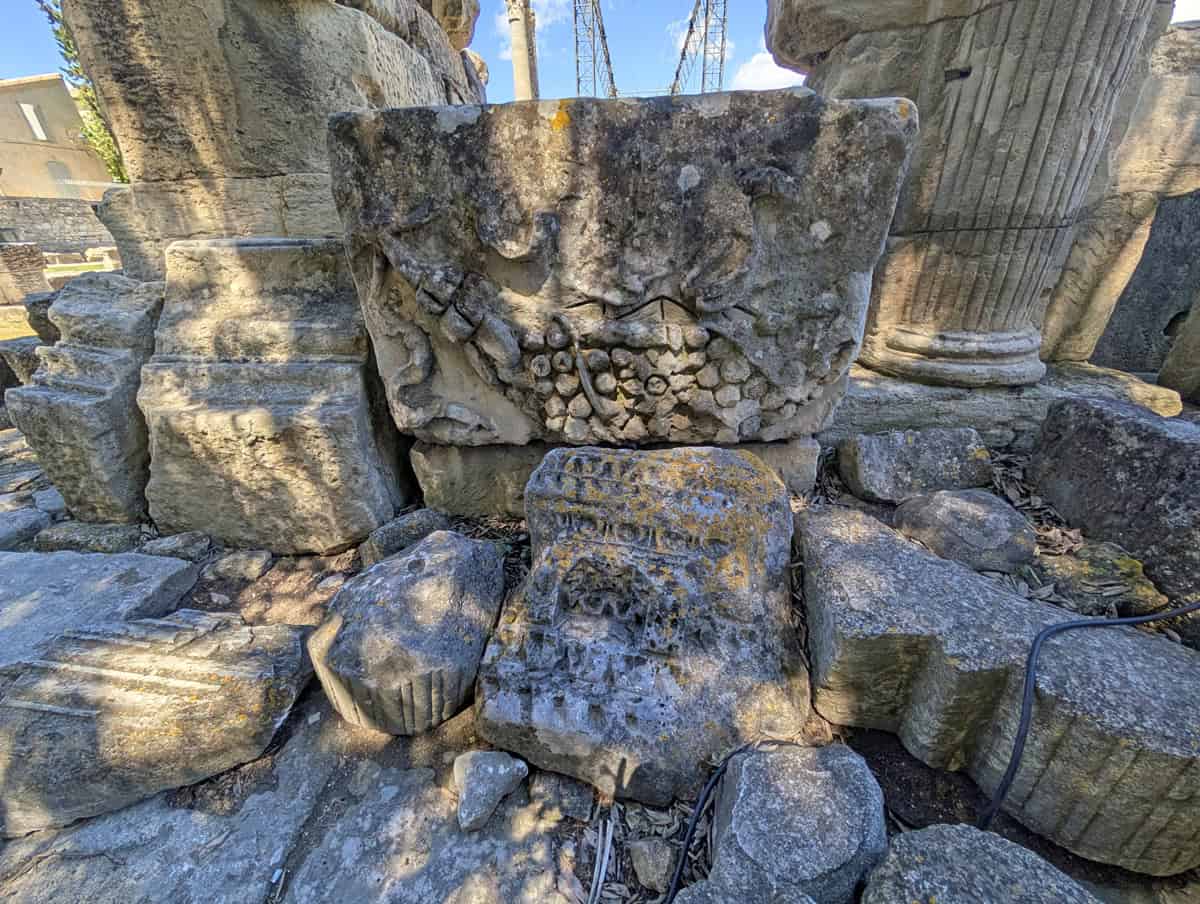
Built in the 1st century, the theatre was where spectacles such as opera, plays and comedy happened. The theatre you see today is only a fragment of what was here – Arles’s Roman Theatre could seat up to 8,000 people on 33 tiers of steps. It was as big as the theatre in Orange.
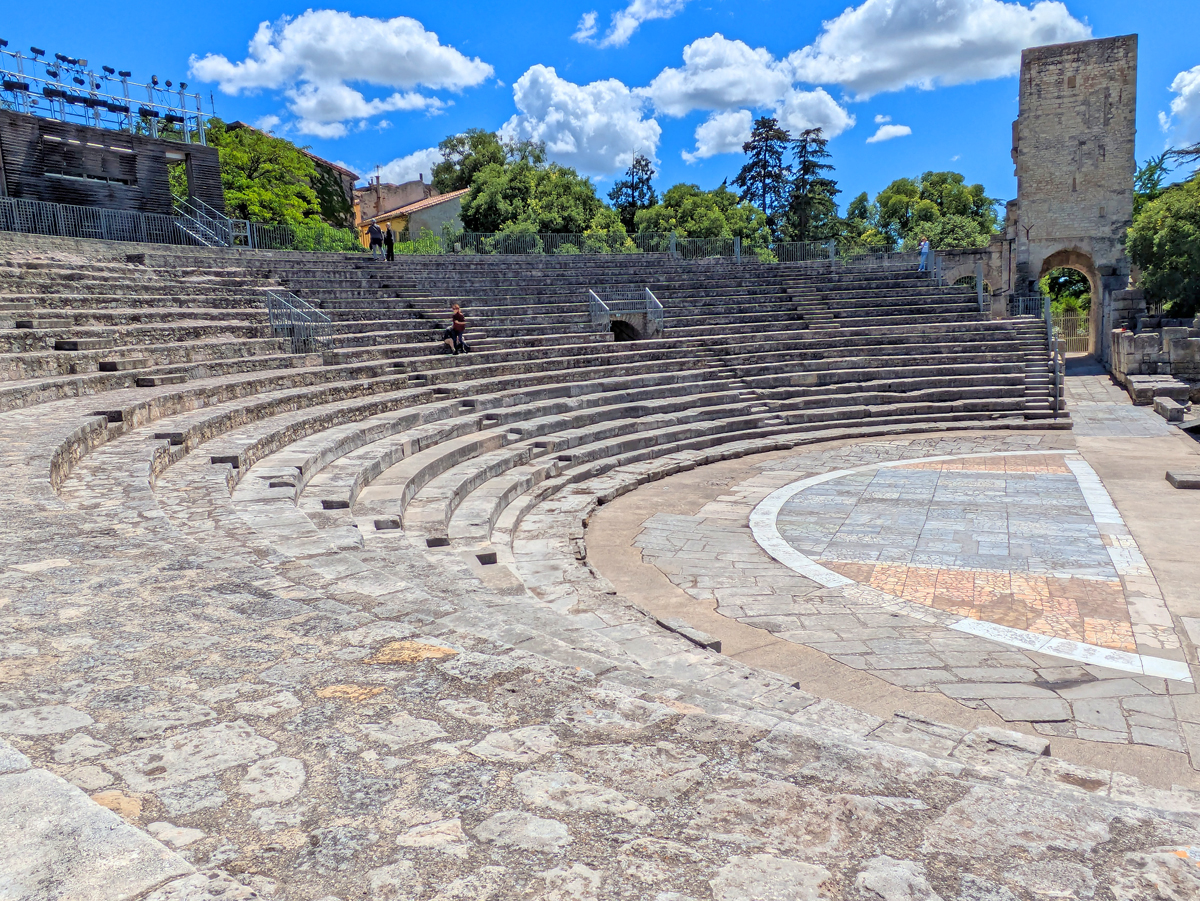
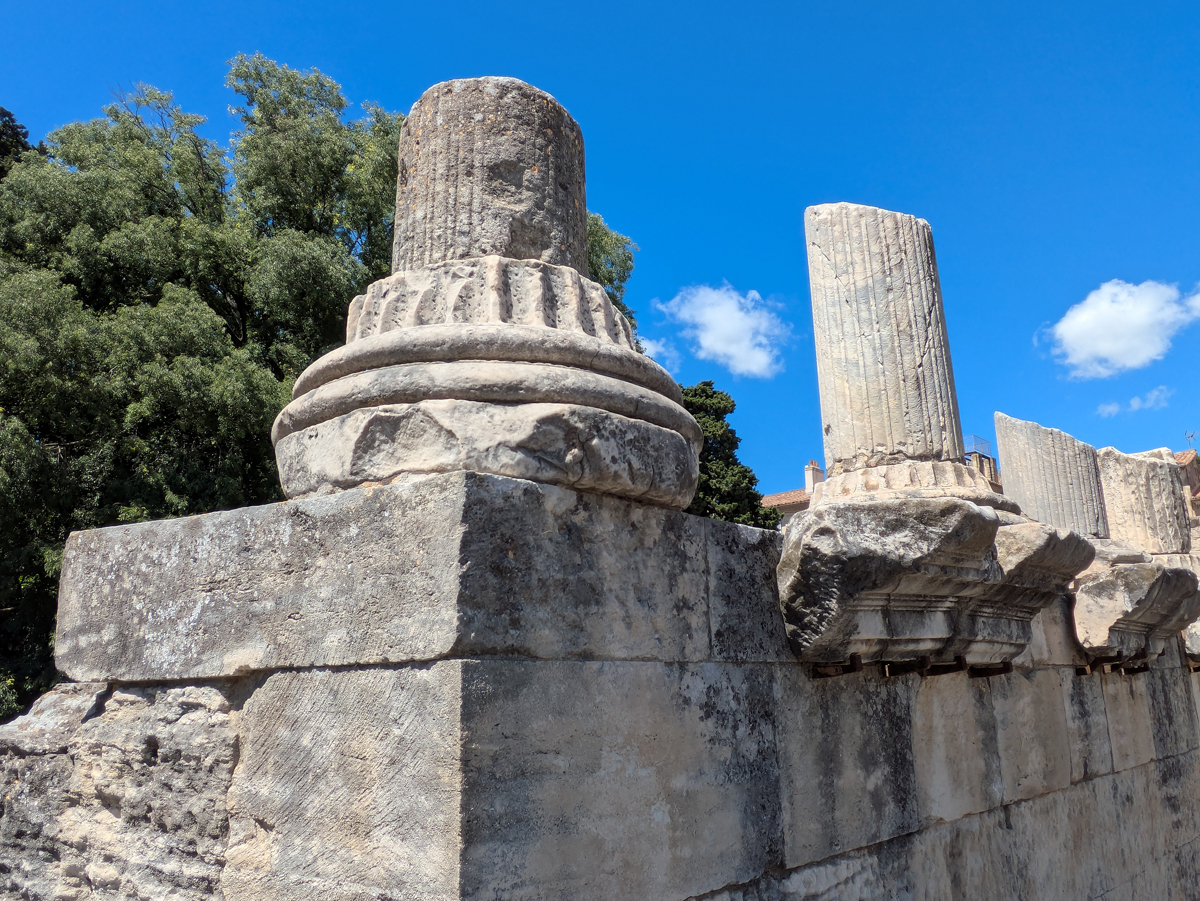
You’ll see various Roman ruins as you wander the grounds of the theatre. The more monumental artefacts are in the Musee Departemental Arles Antique and one of the most famous, the “Venus of Arles” (a representation of the goddess Diana) is in Paris’s Louvre Museum.
Free to visit and only a few minutes walk from the Amphitheatre.
3. Place de la Republique
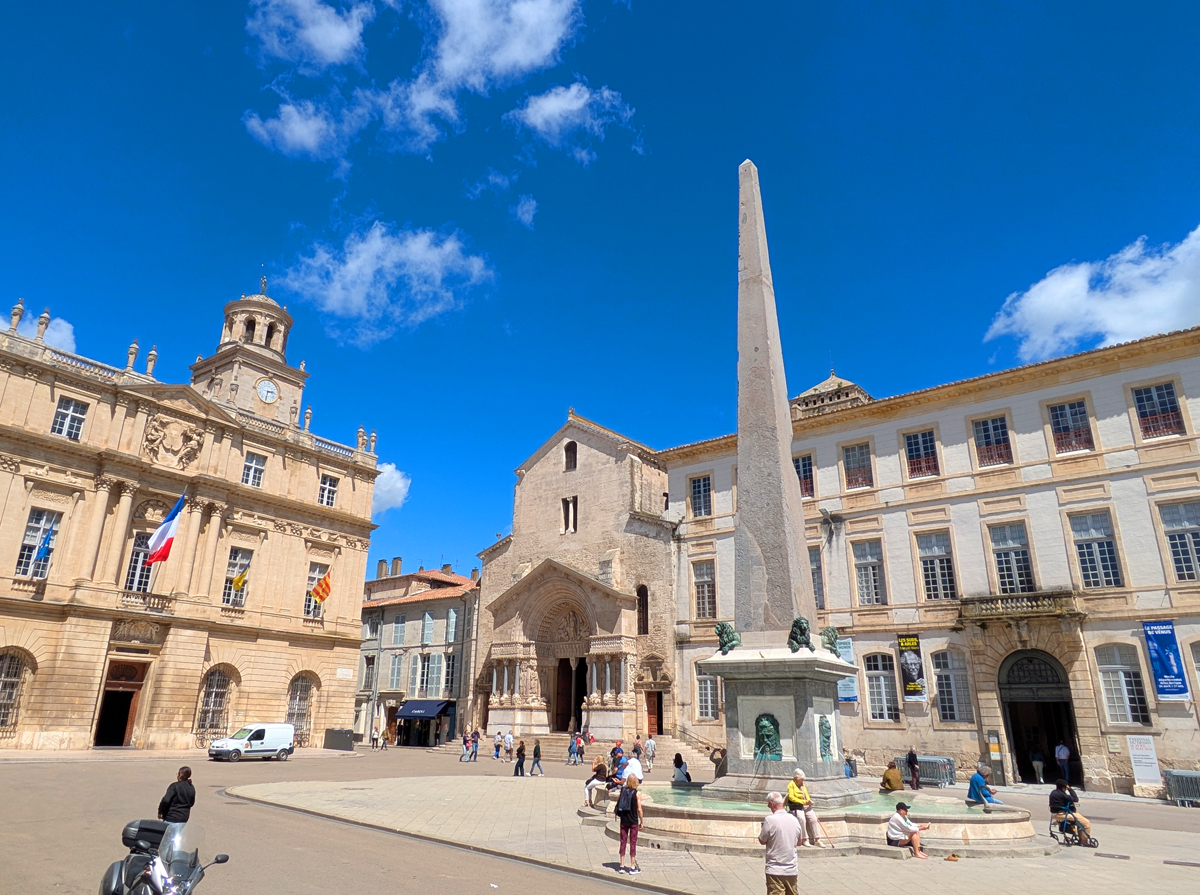
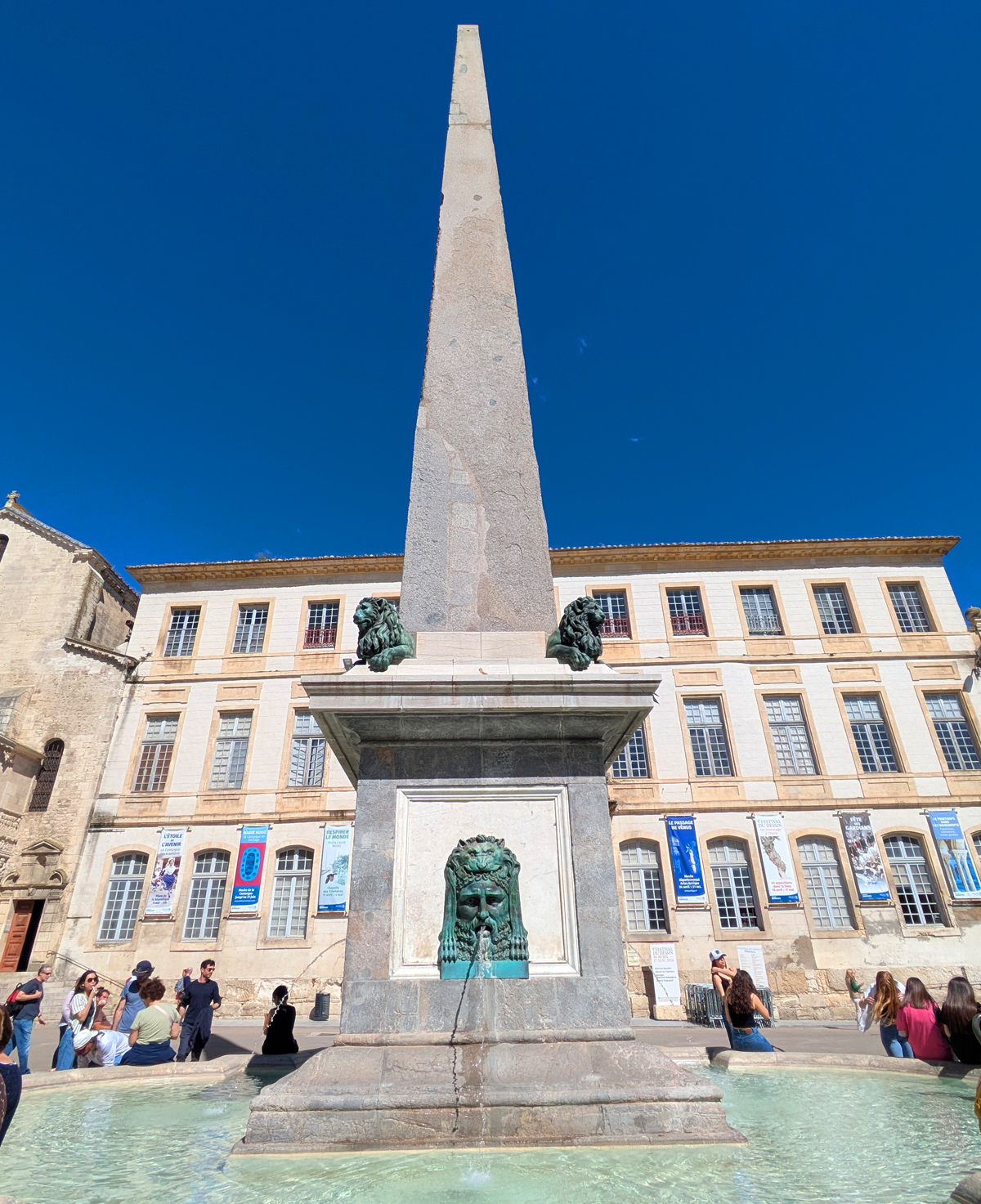
Just around the block (a few minutes walk) from the Roman Theatre is Arles’s main square: Place de la Republique. A beautiful square with a Roman Obelisk at its center (a stone pillar dating from the 4th century). Around the square you’ll find a few of the highlights I’ll be covering below, chief among them being the Church of St. Trophime (Cathédrale Saint-Trophime d’Arles), its cloister (a top highlight of Arles), and the Town Hall (which holds the Cyptoportico. I’ll cover that below as well).
4. Church of St. Trophime
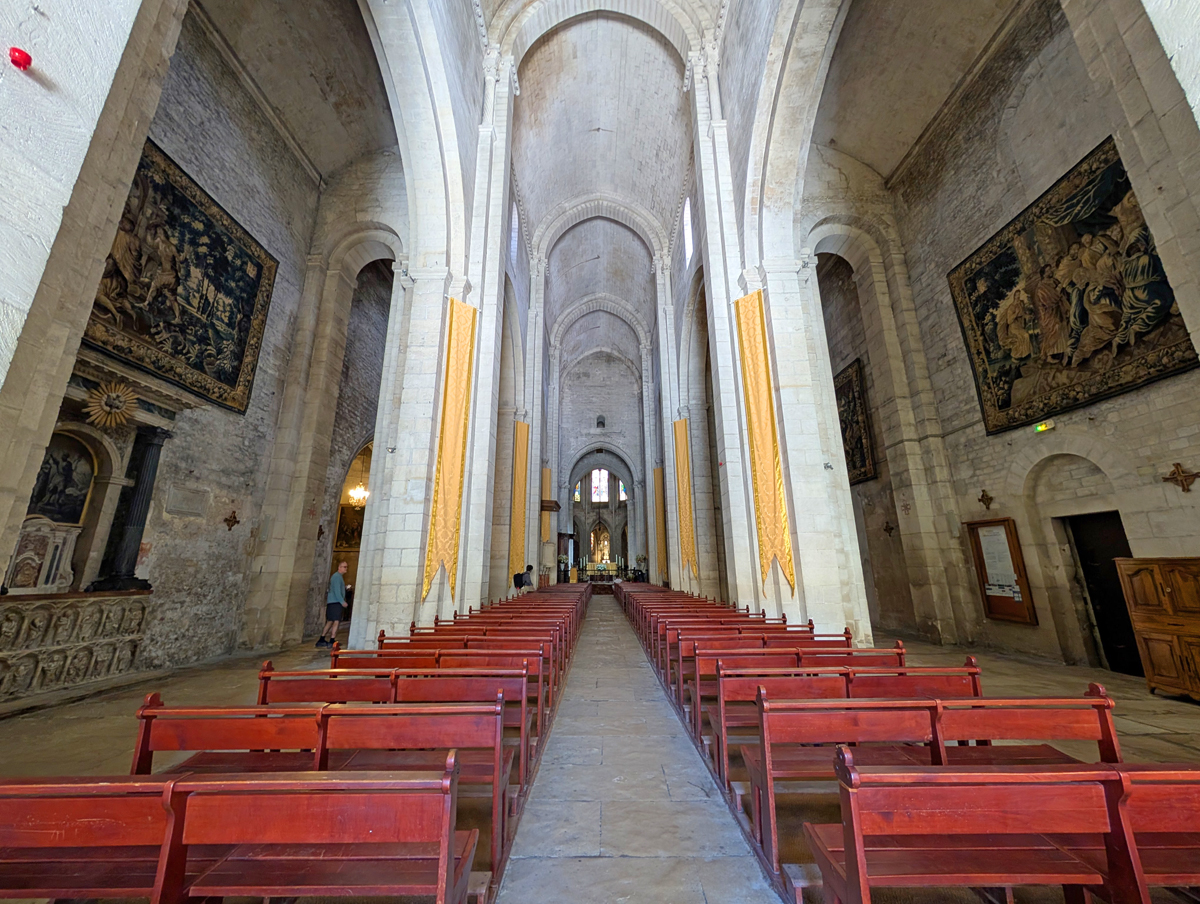
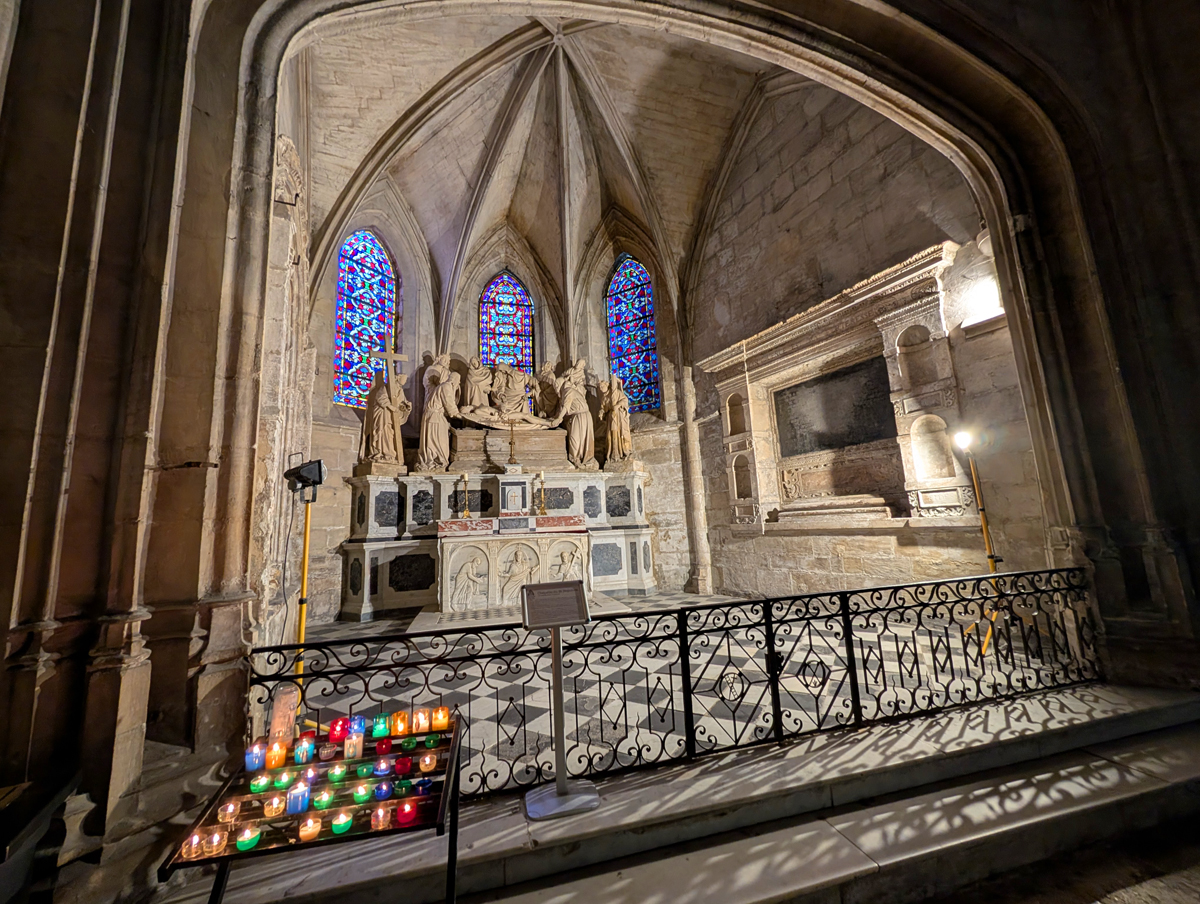
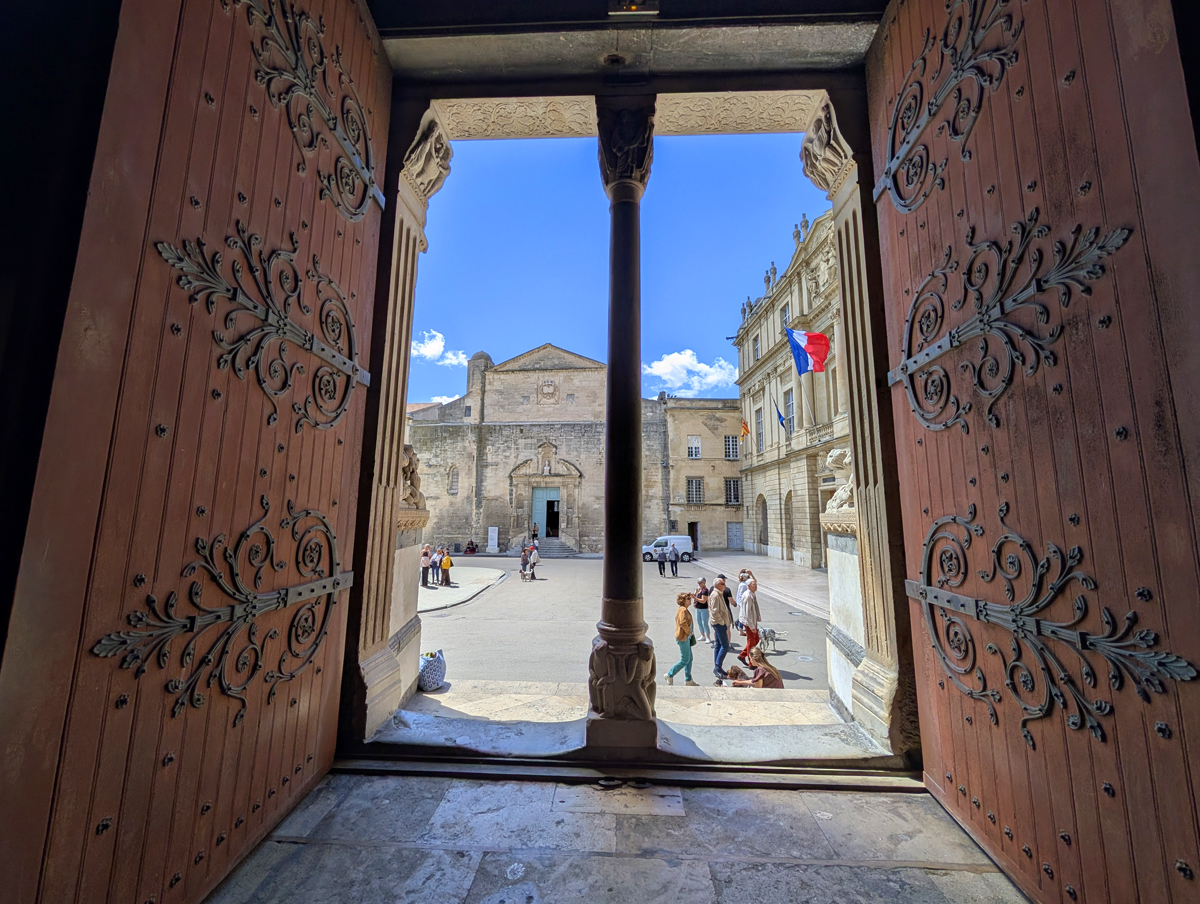
The highlight of St. Trophime is its cloister, which I’ll get to very soon. But the church (formerly a cathedral but decommissioned when the Bishopric moved to Aix-en-Provence) is worth a quick (and free) visit. It was built in the 12th century where a 5th century basilica stood, so there’s tons of history on this spot.
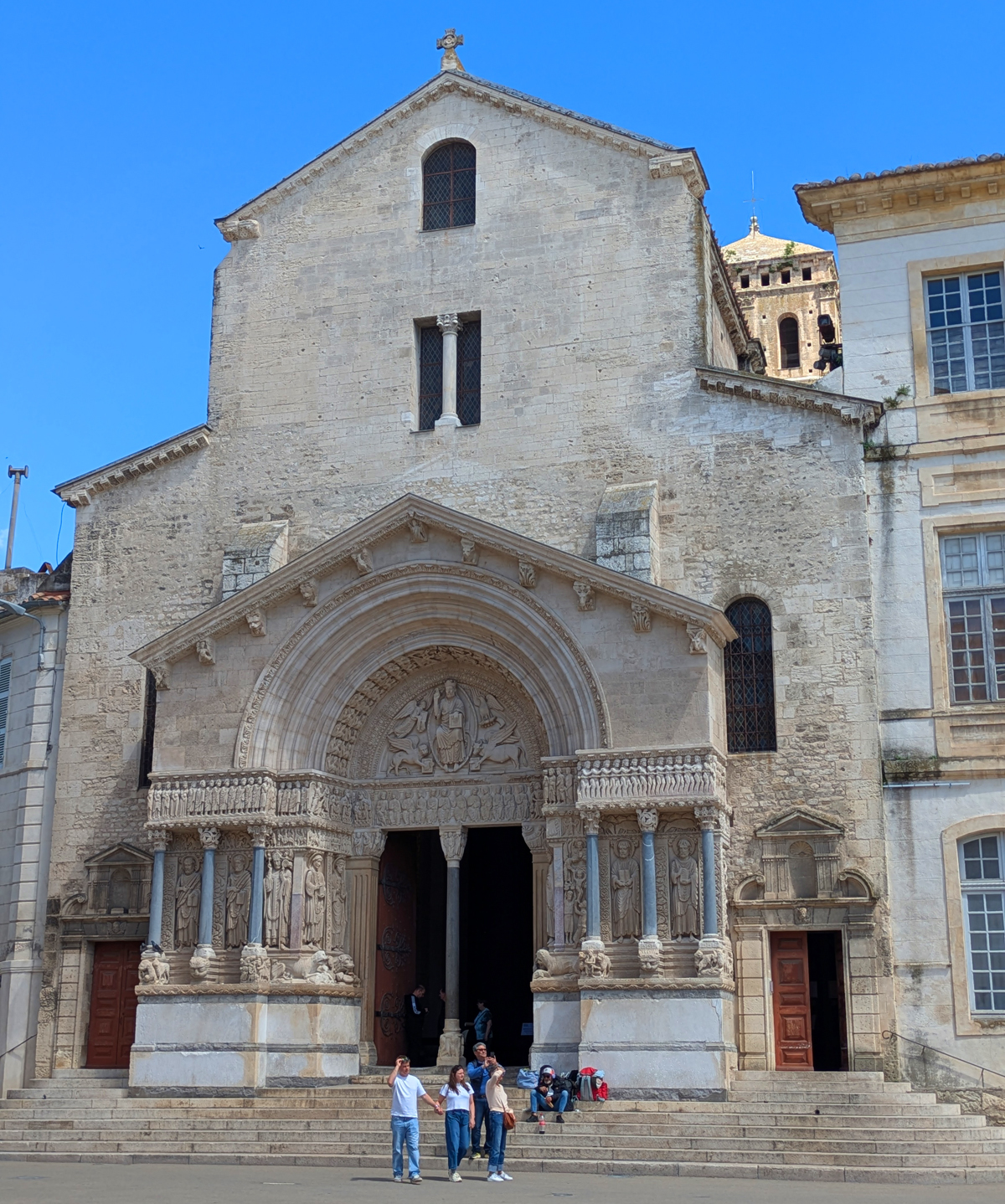
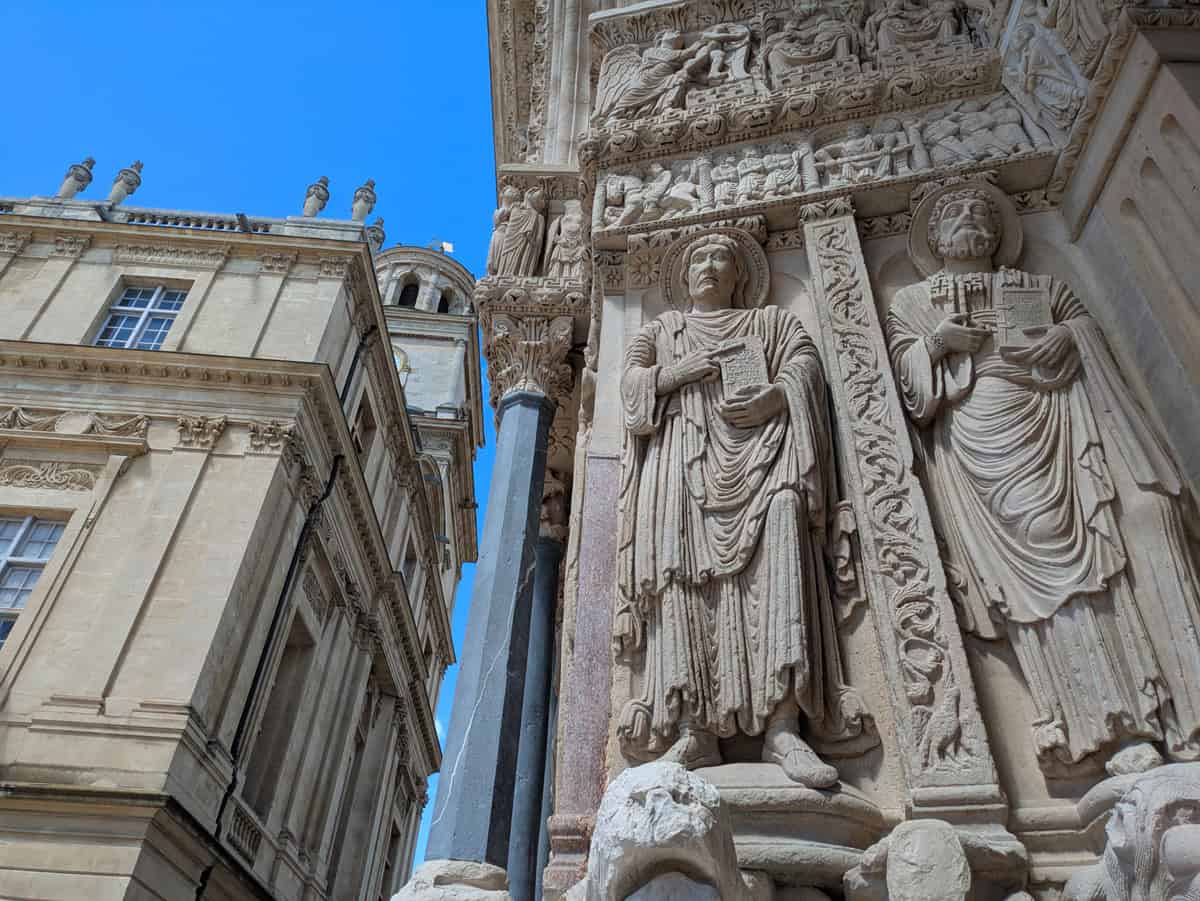
The church’s portal has some incredible sculptures, considered some of the best examples of Romanesque sculptural art. More here on the Church of St. Trophime.
Interesting fact: The Church of St. Trophime is an important pilgrimage site and the starting point of the Via Tolosana to Santiago de Compostela, Spain.
5. Cloister of St. Trophime
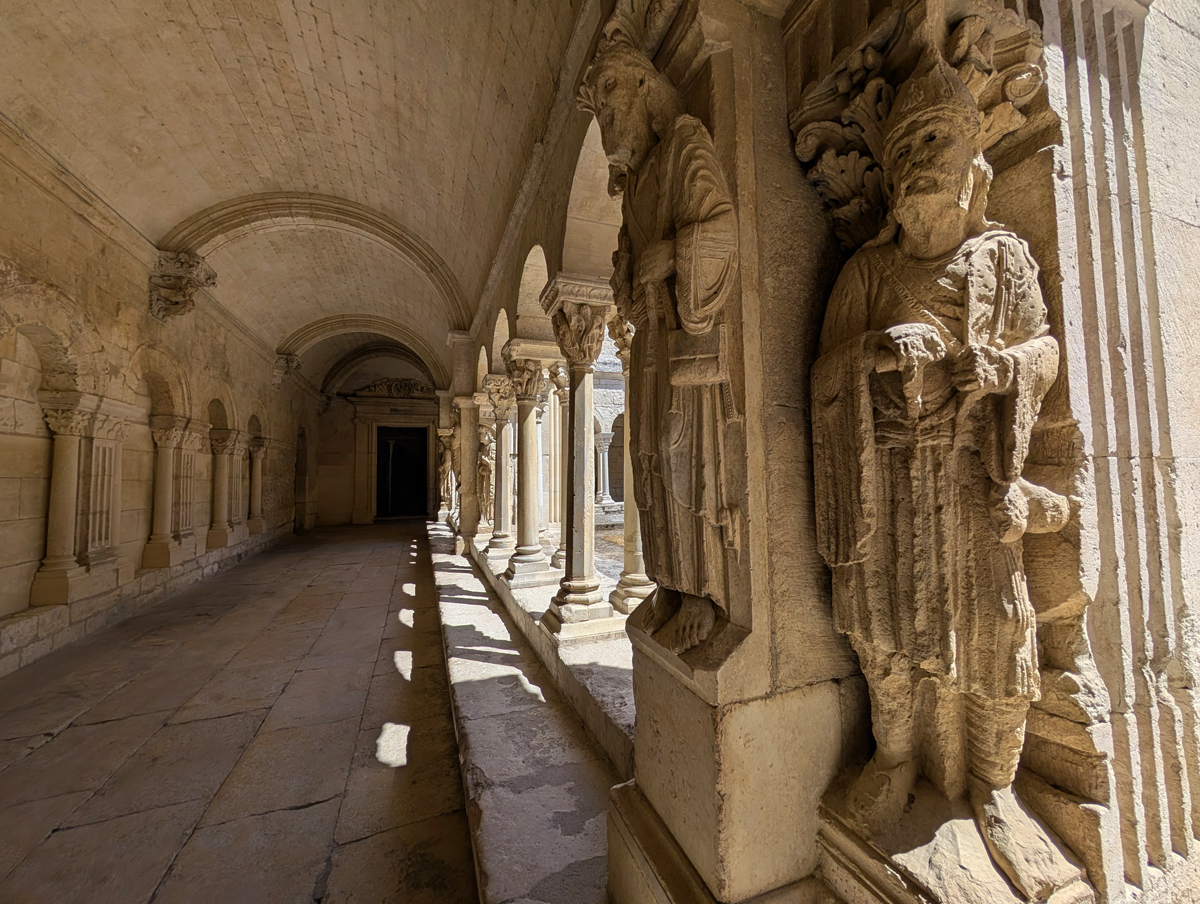
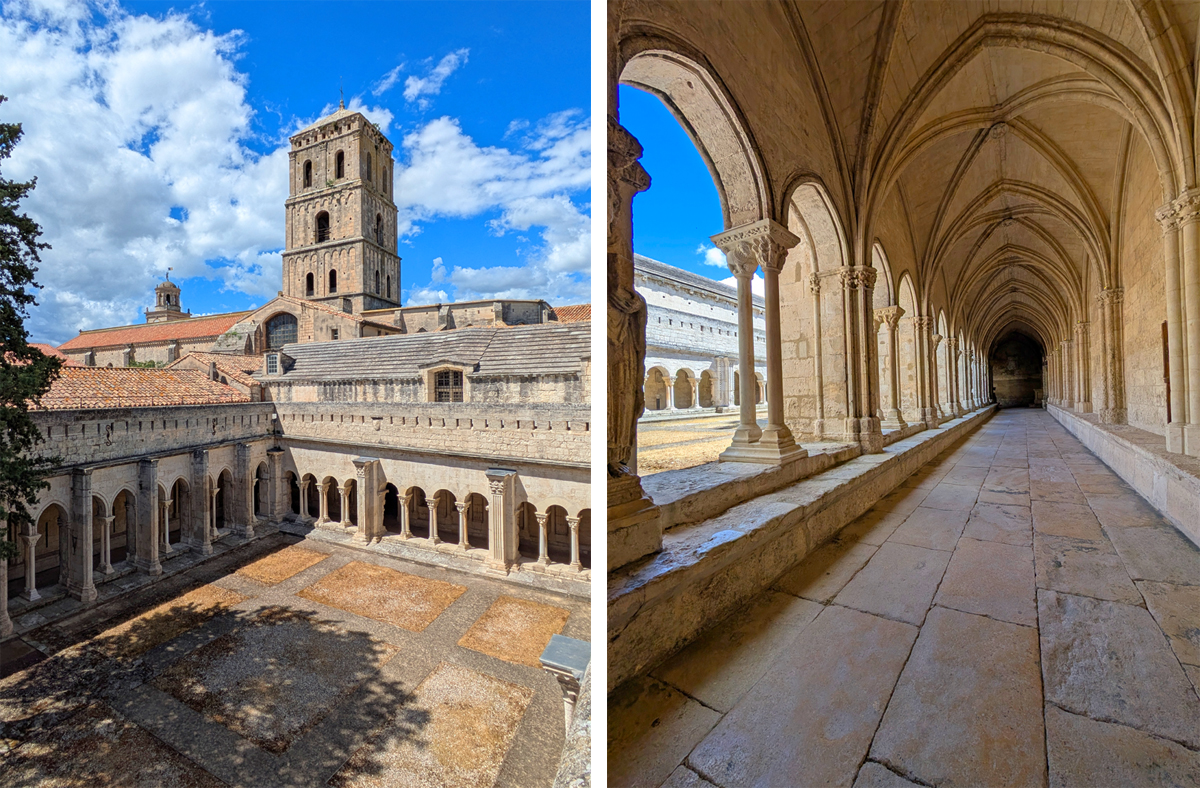
A UNESCO World Heritage Site, the sculptured columns of the cloister depict the Old and New Testaments. The northern gallery of the Cloister is the oldest, built in the second quarter of the 12th century in Romanesque style. The eastern gallery was built in the late 12th century in Gothic style and the southern and western galleries were built in the 1380’s and 1390’s (also in Gothic style). Together, in incredible detail and artistic beauty, they depict stories from the bible.
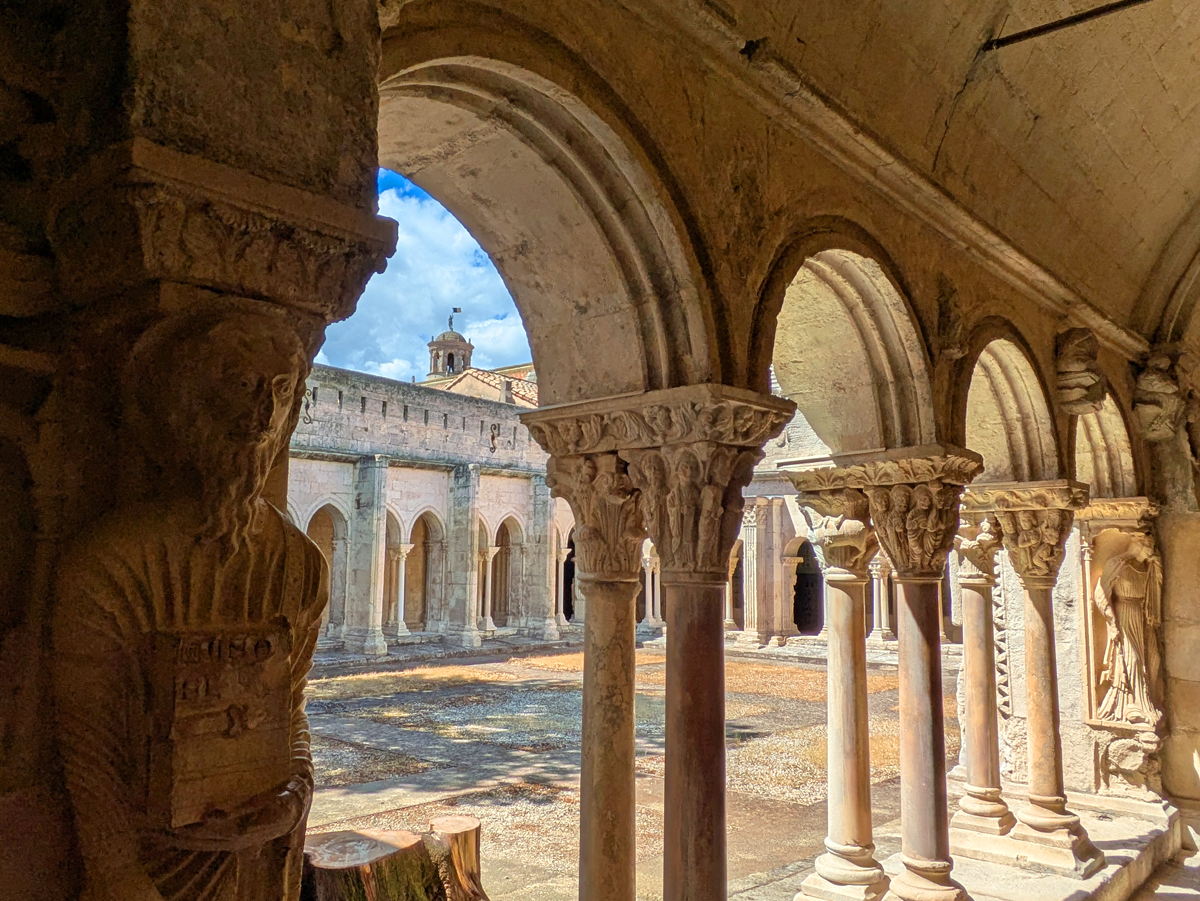
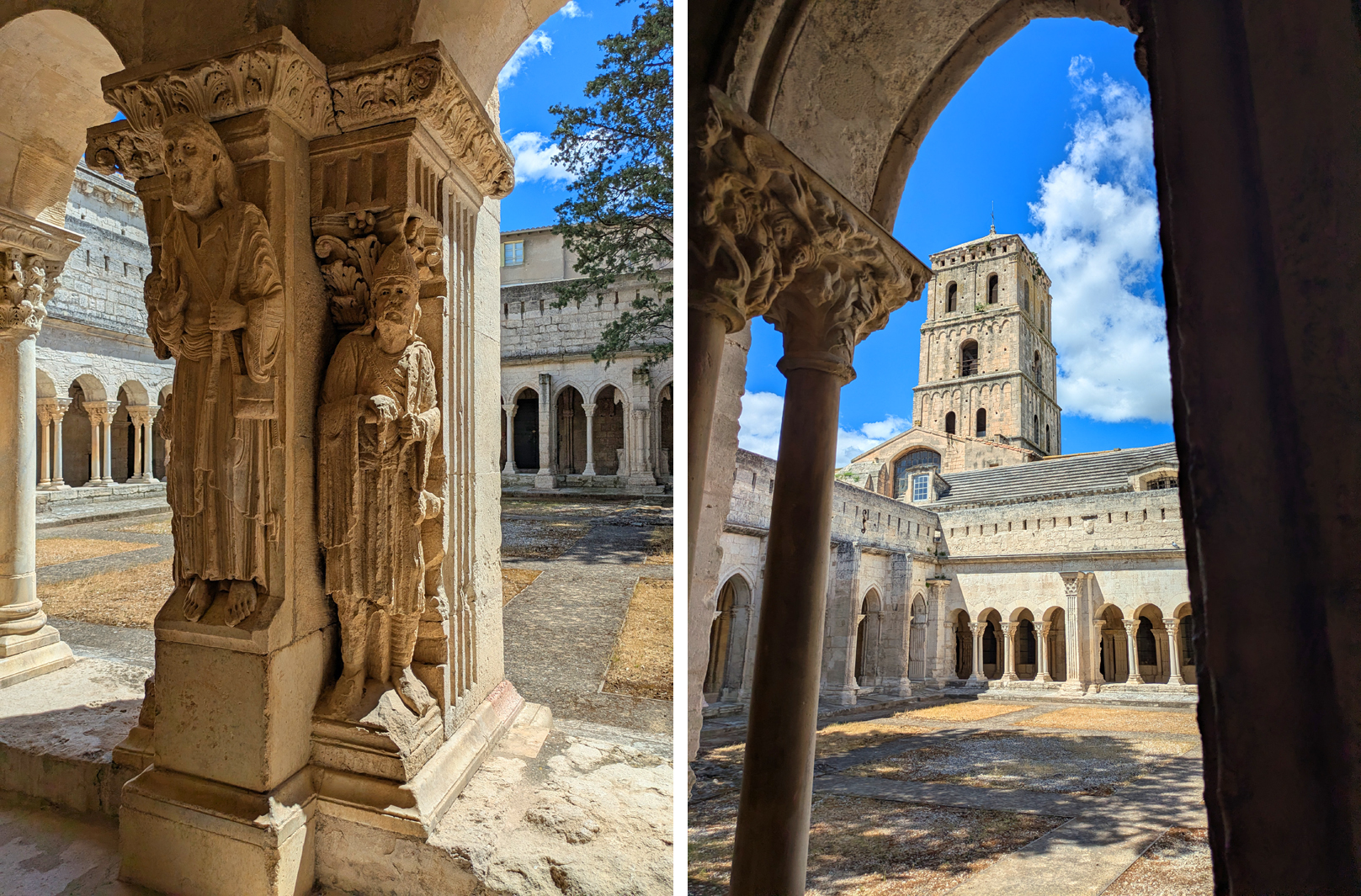
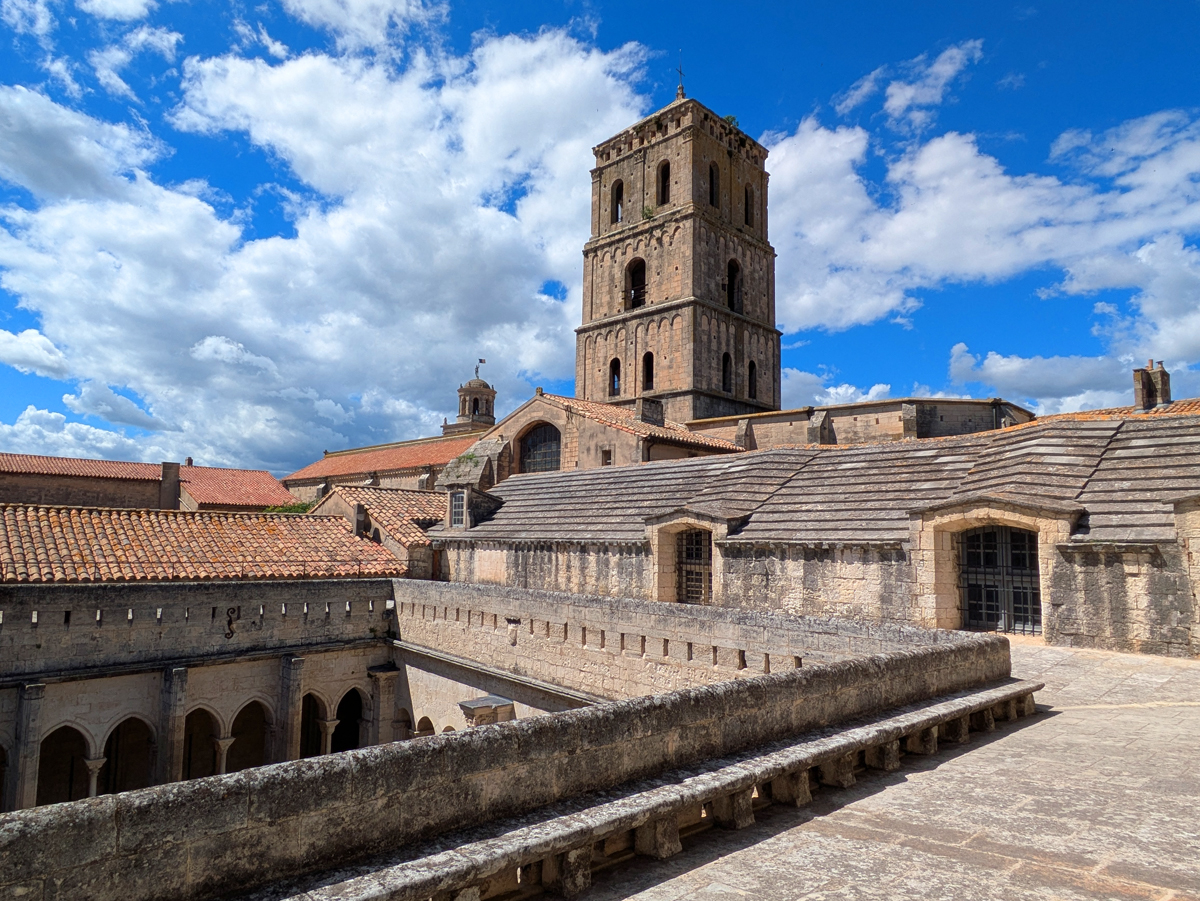
The art and the cloister of St. Trophime are incredible. We were very impressed. A “must-see” in Arles.
Cost: 6 Euros regular rate to see the cloister. Included in the Advantage Pass which I mentioned above (in the section on the Amphitheater).
6. Musee Departemental Arles Antique
If there is one museum to visit in Arles, it is this one. It covers Arles’s history, focusing on the Roman history. You’ll see Roman mosaics, sculptures (including one of Julius Caesar), a Roman river barge and scale models showing how the city, including the Amphitheatre and theatre, looked during Roman times. It is the #1 rated attraction in Arles on Trip Advisor. We unfortunately ran out of time and didn’t see it – in hindsight we should have had it higher on our list when planning out our itinerary.
Cost: 8 Euros but included in the Advantage Pass (which you should get if planning to visit the museum).
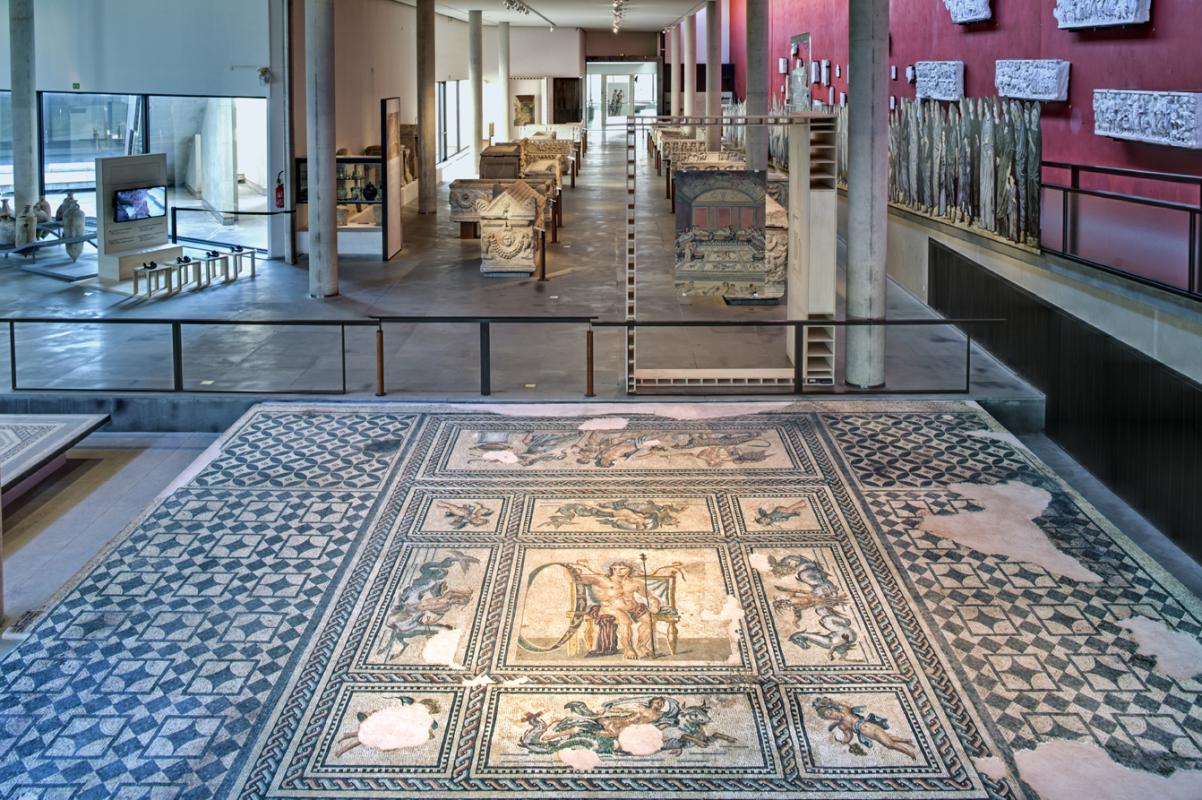
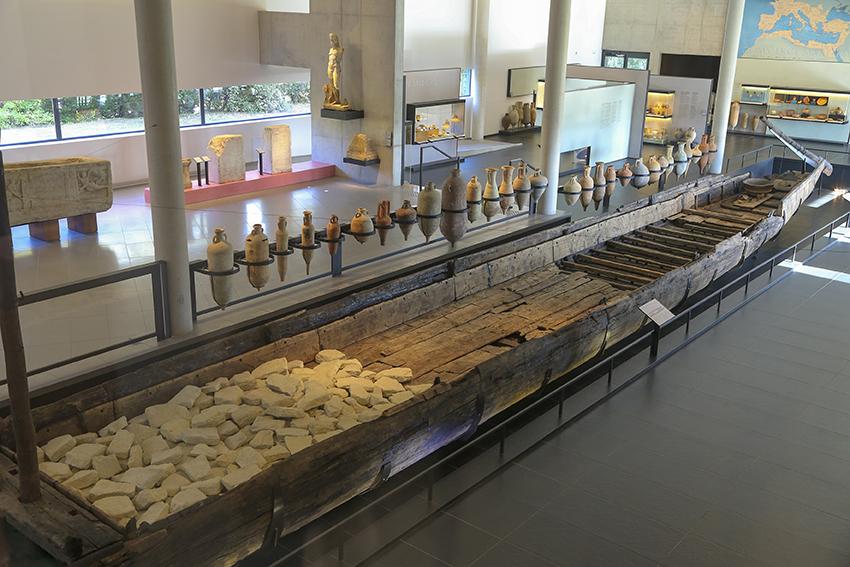
Photo Credits to Musee Departemental Arles Antique
7. A walk along the Rhone
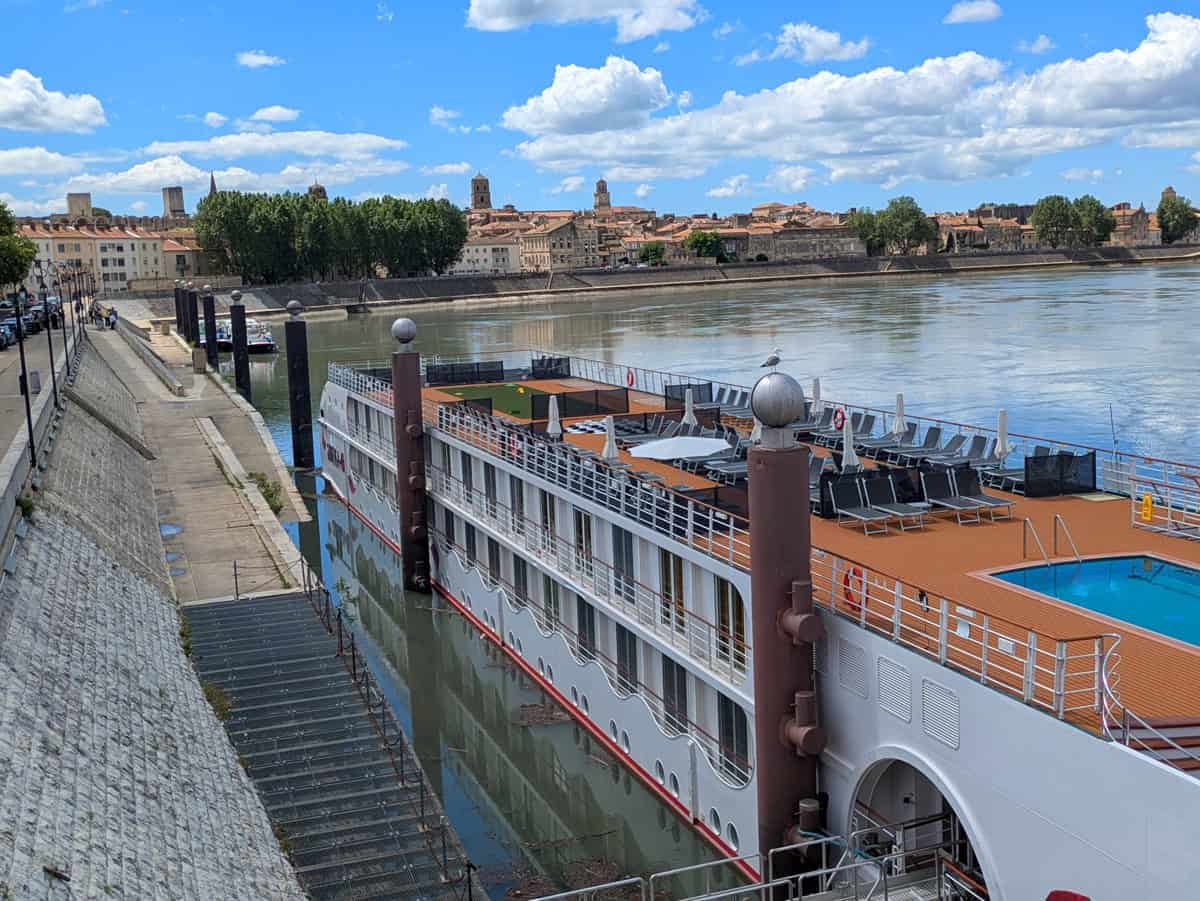
If you’ve taken the train to Arles or have parked north of the city center, you’ll be right next to the Rhone. You should take a few minutes to walk along the river bank.
The Rhone was important in making Arles an important economic and strategic hub. During Roman times, ships coming from the Mediterranean would dock here and their cargo transferred to river boats which would continue northwards into Gaul.
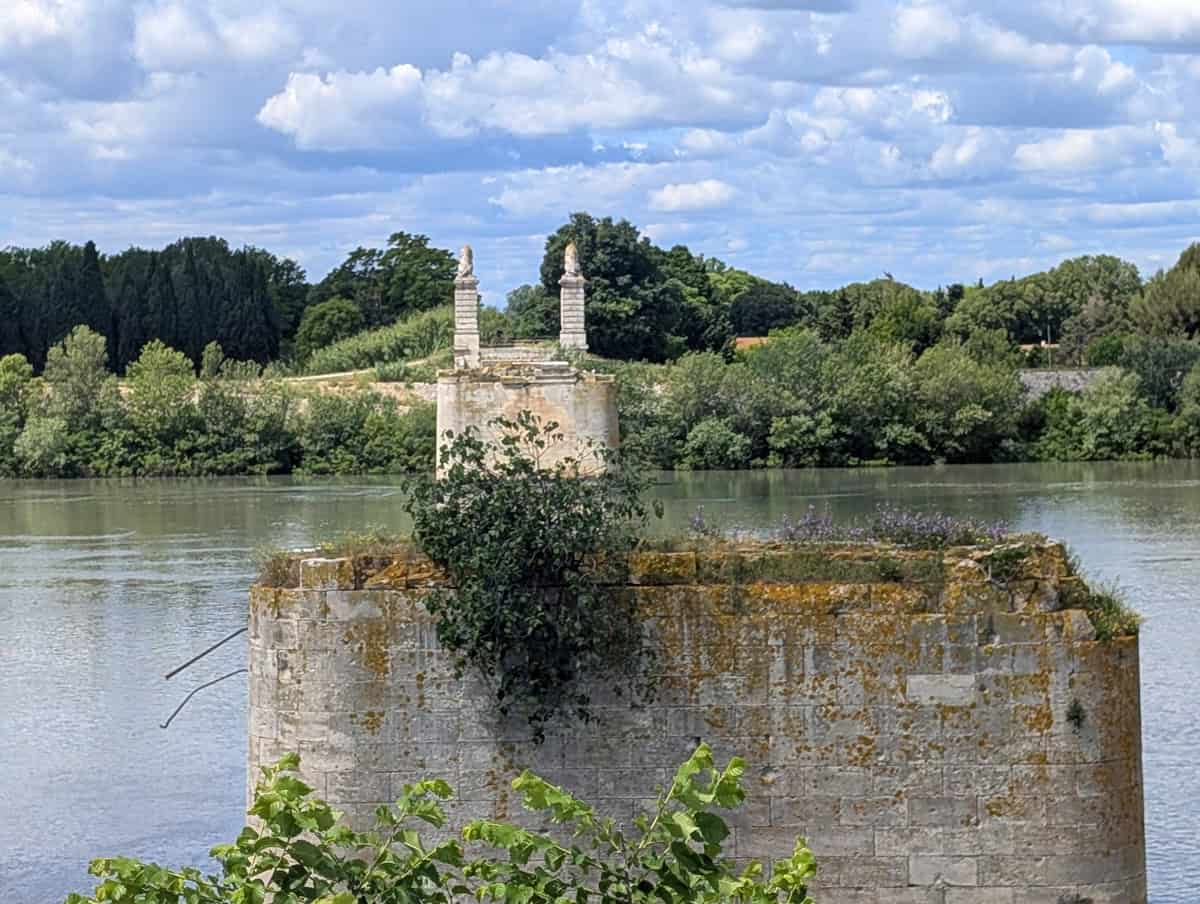
The river is a good spot to get good views of the skyline of the old town. Also interesting: you’ll see the remnants of the Pont aux Lions (Bridge of the Lions). This was a railway bridge that was bombed by the Nazis in 1944. It was never rebuilt.
Things you can skip in Arles
This is not to slam various highlights, but rather to help you prioritize what to see in Arles and to save you money. If you’ve bought the Advantage Pass then visit the places I’ve mentioned below…but if you haven’t, then you might want to re-think paying entries to the following.
The Cryptoporticus Arles
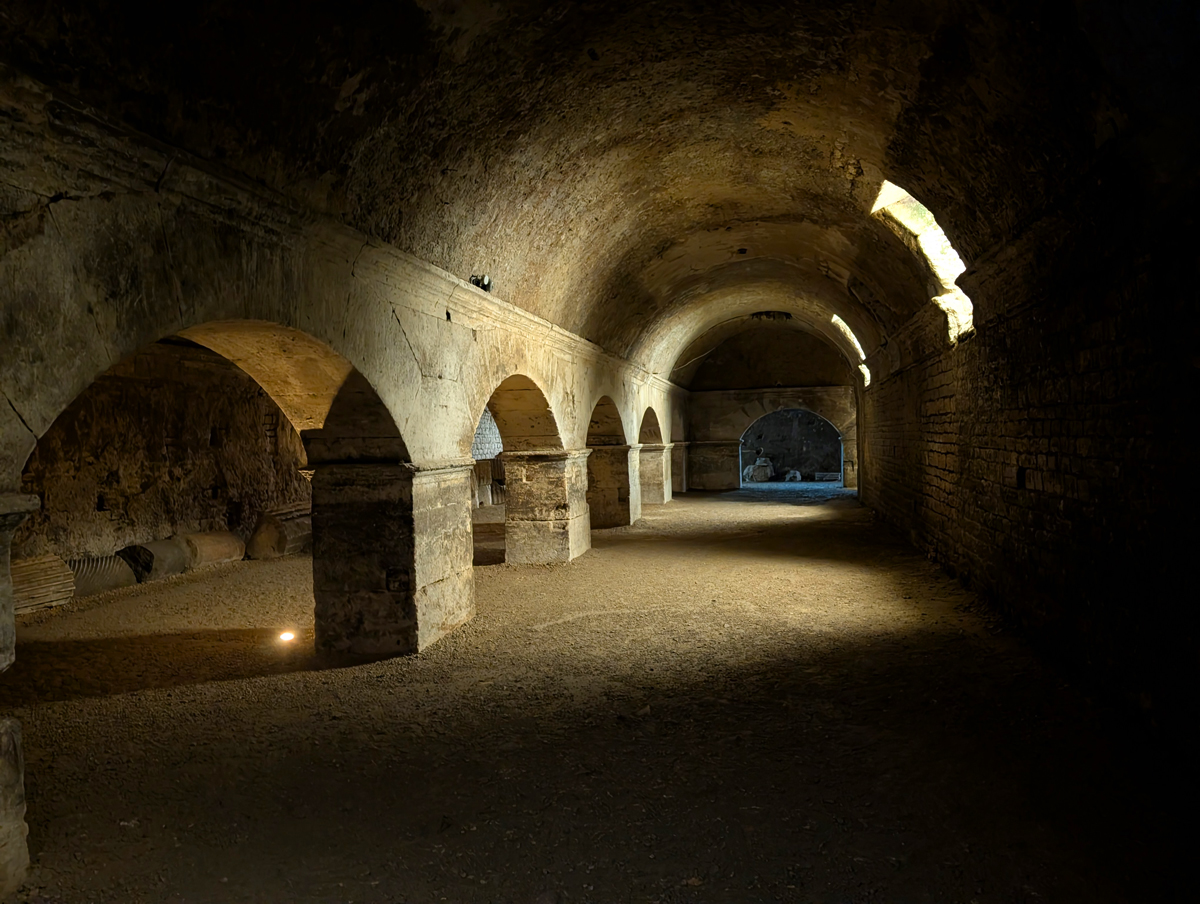
The history is interesting – the cryptoporticus is a huge underground structure that had several purposes; 1) to support and level the ground above (above it stood Place de la Forum as well as parts of Place de la Republique), 2) it was used as a massive storage space. It is an archaeological wonder. More on the Cryptoporticus Arles.
The reason I have it as a “skip” is that you don’t see anything except what you see in the photo below. It just looks like a big underground storage space. Visit it if you have the Advantage Pass (it’s included) but it’s not worth paying out 5 Euros/person.
Baths of Constantine
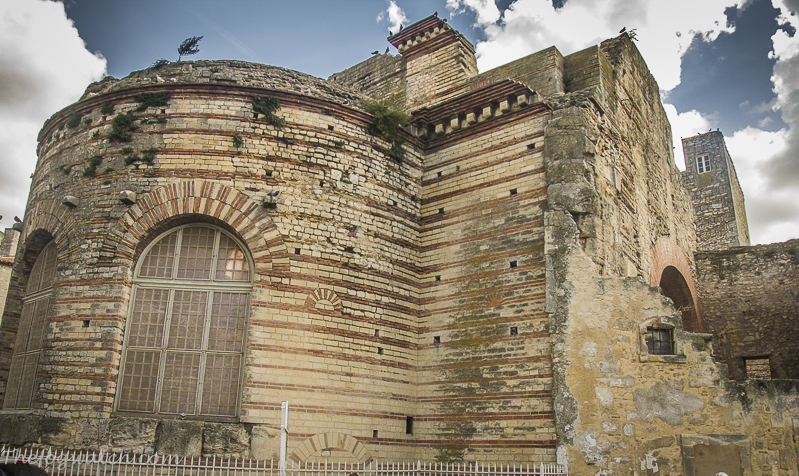
We pondered whether to visit (and pay) for the Baths of Constantine. These Roman baths were built during the reign of Constantine in the 4th century AD.
Today the baths are mostly ruins and get poor reviews on Trip Advisor. They cost 4 Euros/person and are a bit further from most of the highlights I’ve covered above. But just to be sure, I asked the attendant at the cryptoporticus whether the baths were worth it. “No. Not really” he replied.
Again, it’s covered by the Advantage Pass so if you’re in the vicinity you might want to visit. But based on what I heard/read, I wouldn’t recommend paying 4 Euros to see the baths.
Espace Van Gogh
In 1988, Vincent van Gogh lived with fellow artist Paul Gauguin. Mental illness and a fight with Gauguin led him to cut off a part of his ear. He ended up in the Hôtel-Dieu hospital in Arles which became the inspiration for this famous painting:
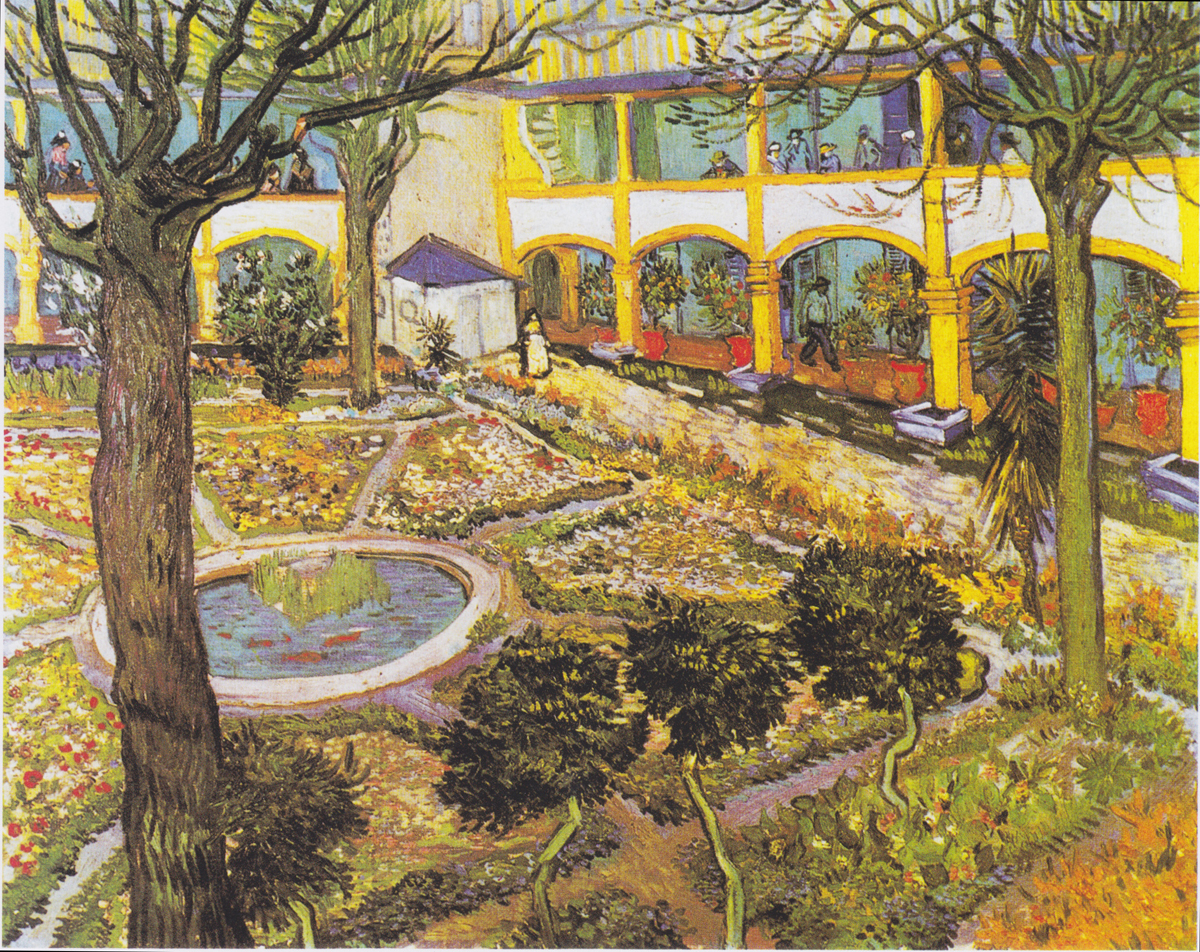
Image Credit to Wikipedia
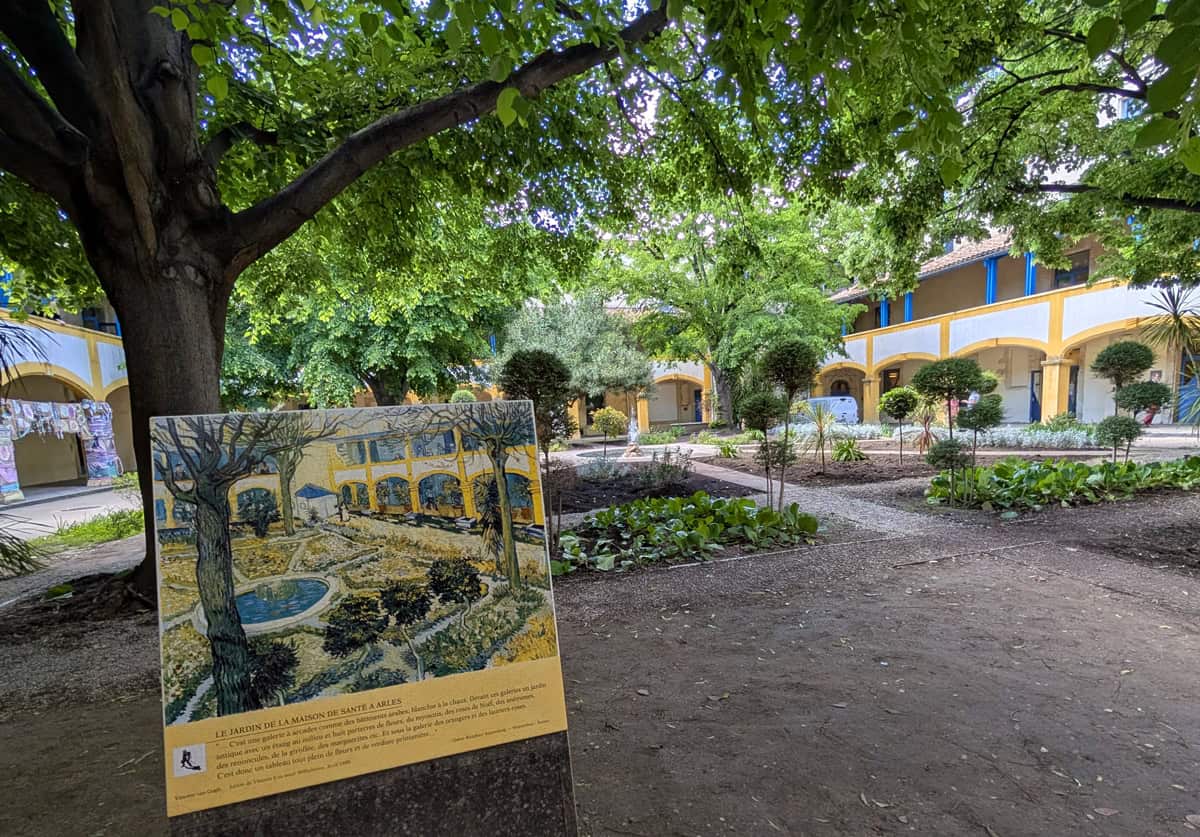
Today the hospital square looks much the same. But there’s not much to it except for stores selling Van Gogh souvenirs. Visit if you have an interest in retracing Van Gogh’s steps but don’t expect too much.
Practical Information on Visiting Arles
- Getting there. There are trains to Arles roughly every hour from Avignon (travel time 18 minutes) and Marseille (travel time 1 hour). See the SNCF website. From the train station, it’ll take you about 5 minutes to get into the old town and 12 minutes total to get you to the Amphitheatre. As I said, very convenient.
- Tours. If rushed on time, this tour from Avignon takes you through some of the highlights of Provence: Les Baux-de-Provence, Carrières de Lumières, Arles and Saint-Rémy-de-Provence.
- How much time do you need to visit Arles? If sticking to the basic “Top 3” highlights (the Amphitheatre, Theatre and Cloister) I would plan on about 3 hours. If wanting to add a museum and a couple of other highlights, 5 hours should do it.
Related: Marseille is worth a day trip…but nothing more
Related: 10 Things to Do in Avignon (Provence, France)

Leave a Reply