
Is Aix-en-Provence Worth Visiting?
I’ll admit that we were disappointed with Aix-en-Provence. After spending 10 days in Montpellier (really liked) and a month in Avignon (loved!), we looked forward to getting to know a different town in the region. So we booked 10 days in Aix-en-Provence. Aix gets a lot of positive press and I’ve even had recommendations from friends/acquaintances extolling the virtues of this town.
We just didn’t love Aix. In hindsight, how you feel about Aix might just depend on what you’re looking for and how much time you intend to spend (Note: we’re full-time travellers, so spending 10 days “living” somewhere is something we always do. But not every place makes for a great base)
I’ll cover all that in this post. I’ll also tell you why Aix-en-Provence might not be the best base to explore Provence.
Why Visit Aix-en-Provence? What to See and Do?
Rick Steves “Located north of Marseille in the foothills of the Alps, Aix may not have any blockbuster sights, but its old center offers a postcard-worthy square around every corner. It’s famous for its outdoor markets and handsome pedestrian lanes, as well as its cultivated, bon vivant residents. Nowhere else in France is l’art de vivre (the art of living) so stylishly displayed”.
His description is correct in many ways.
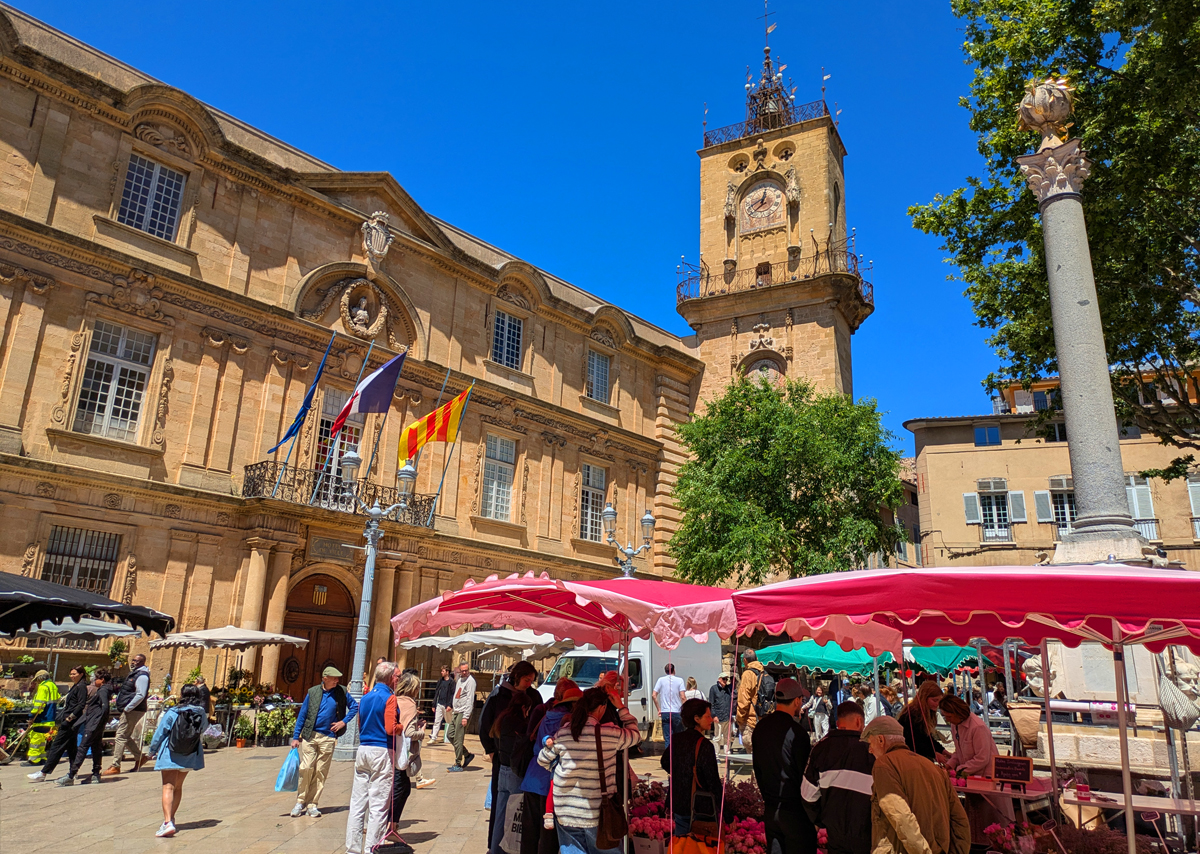
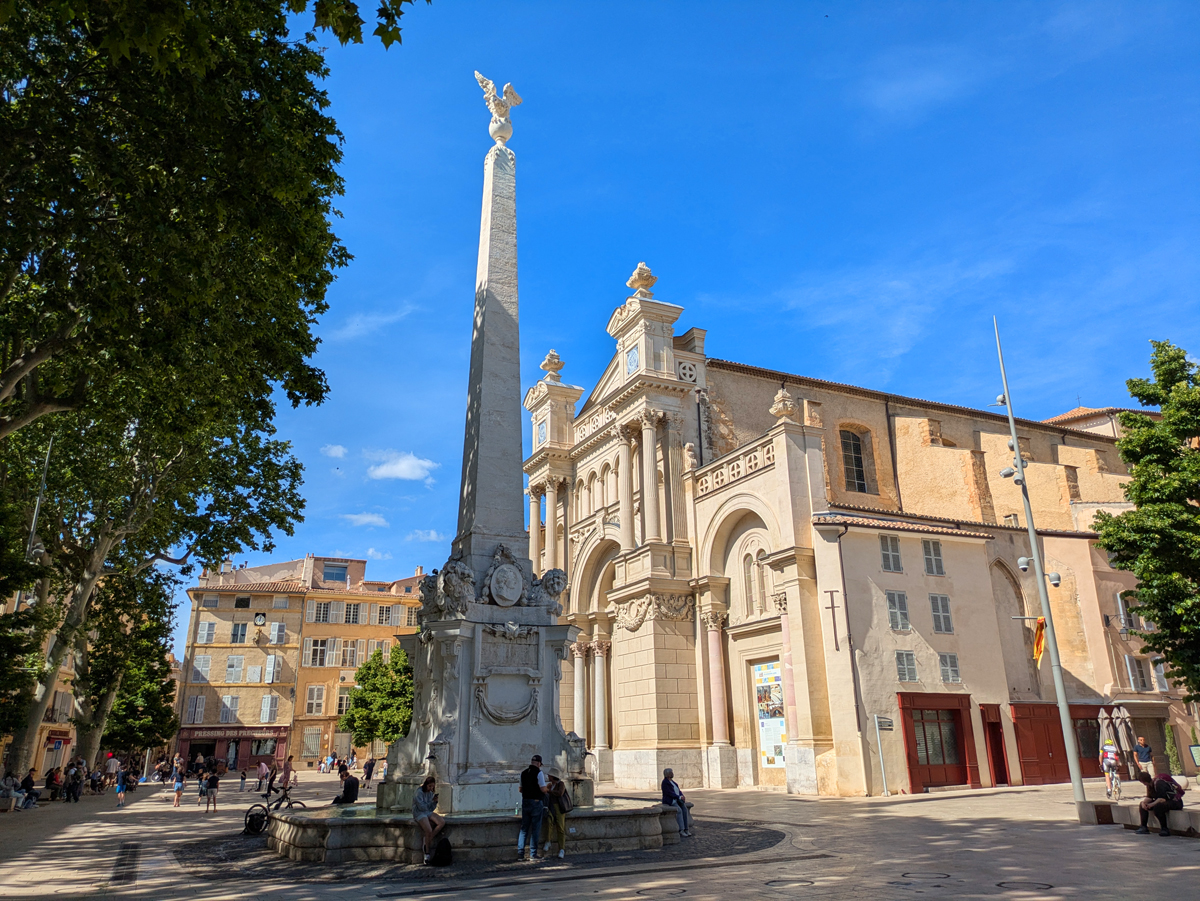
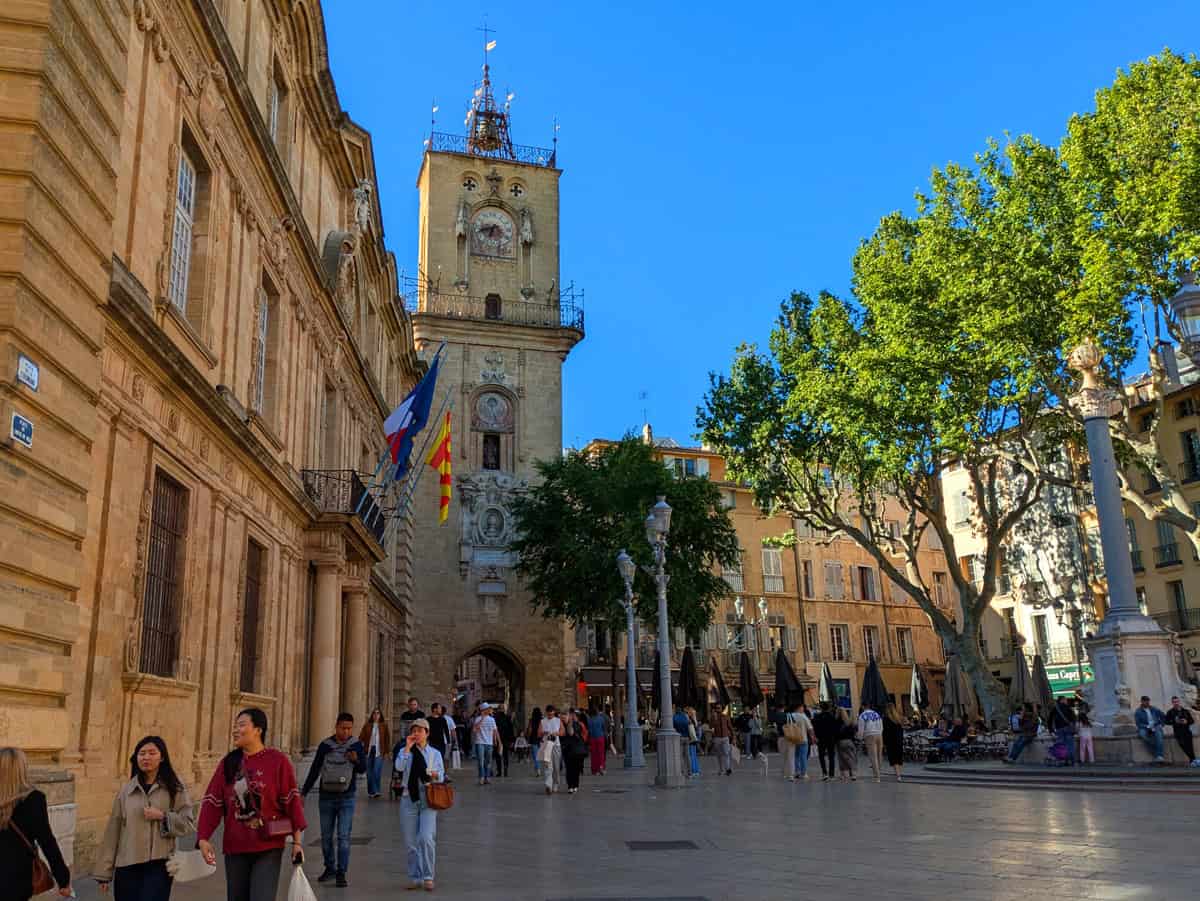
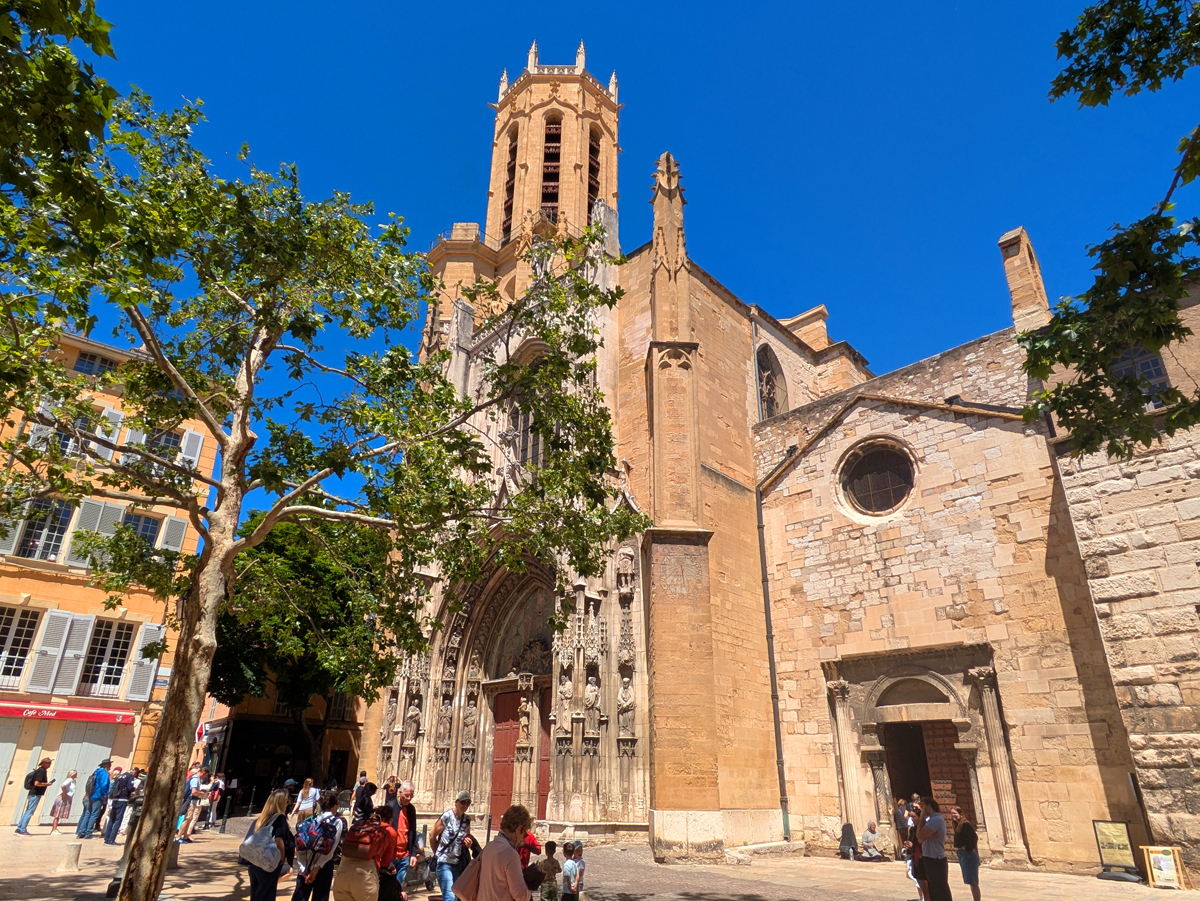
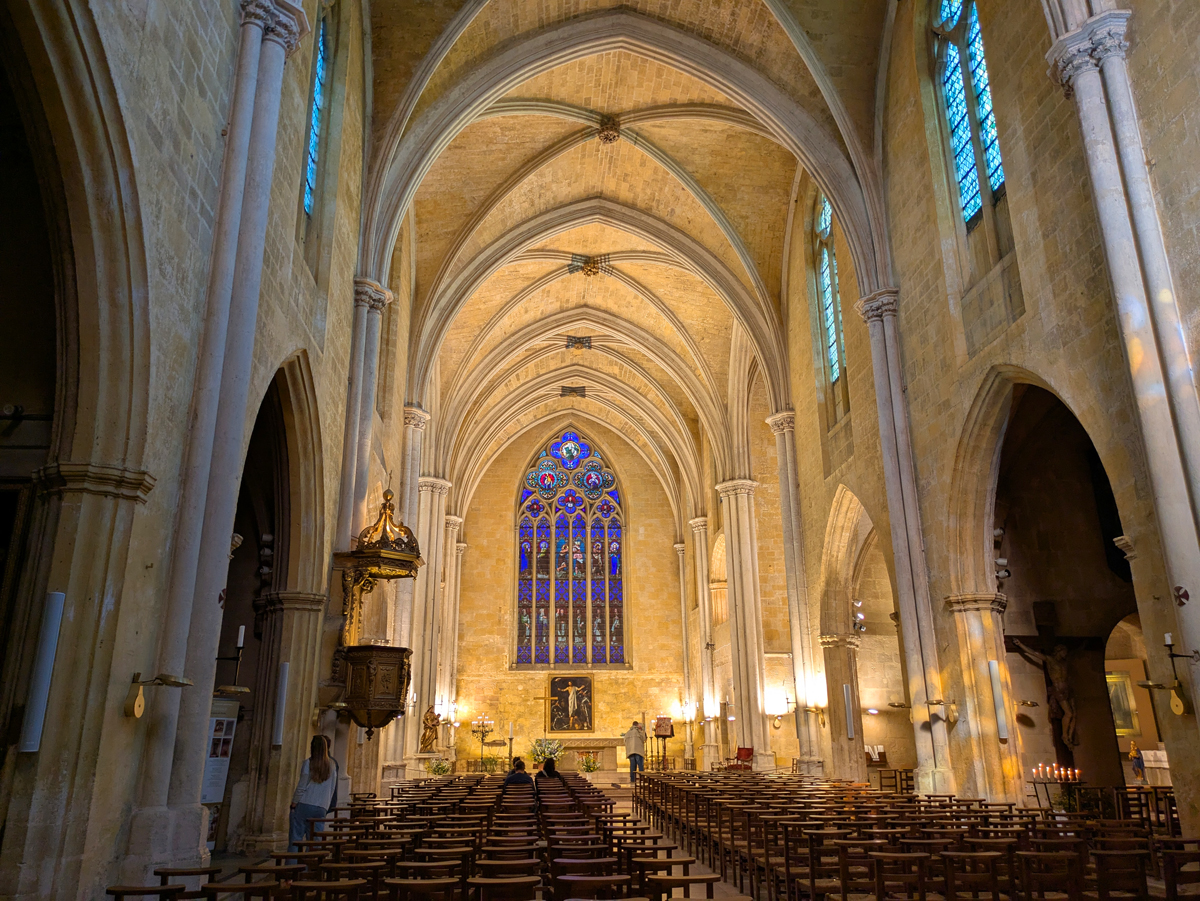
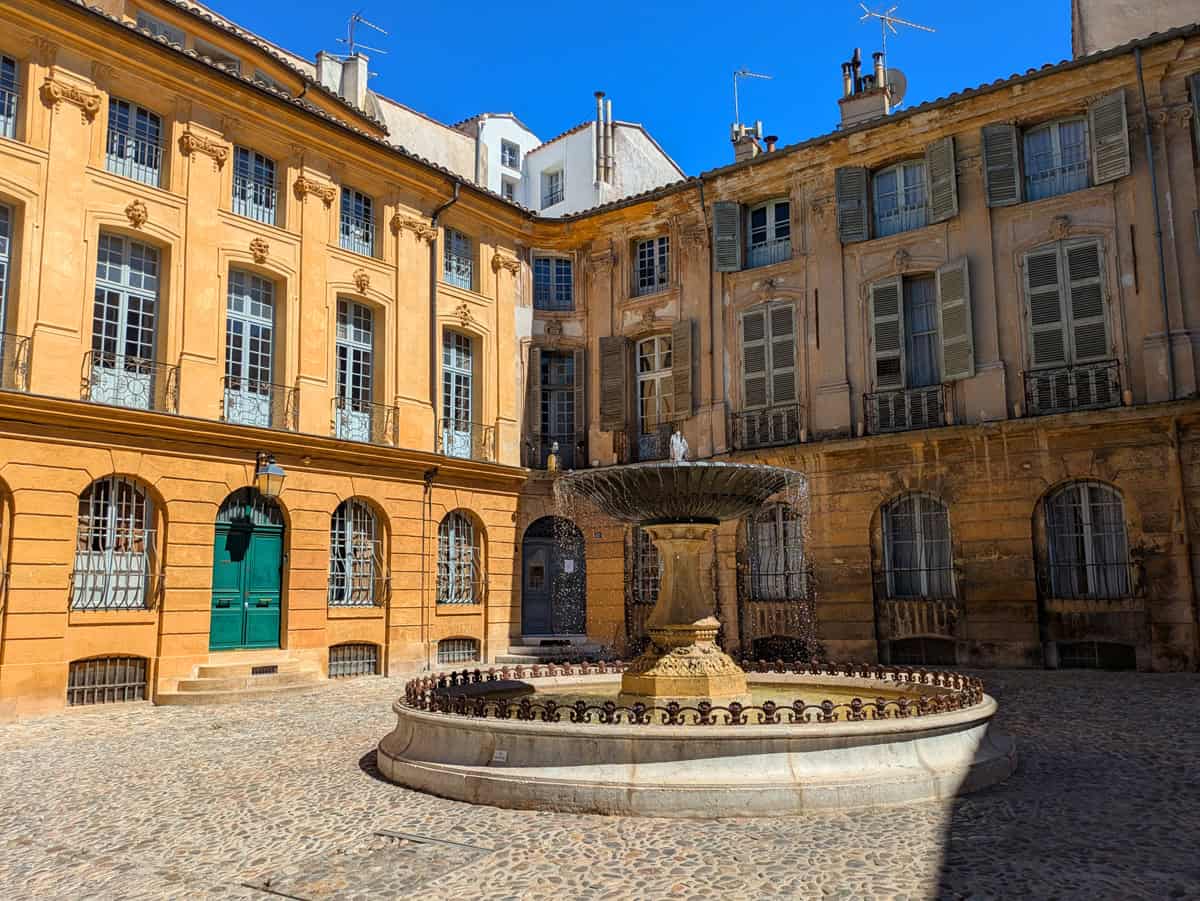
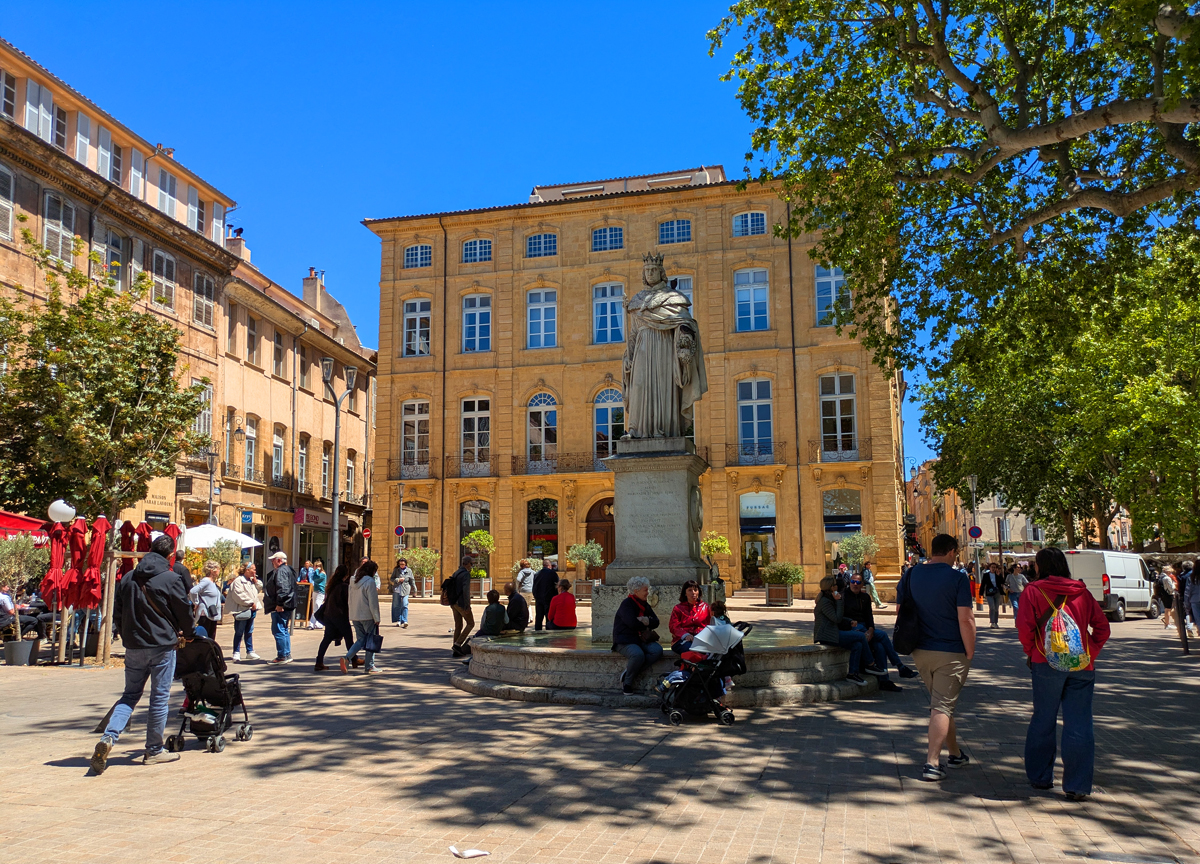
Aix-en-Provence presents itself as quintessential Provence with its markets, architecture, history, and geography. It’s true that it doesn’t have any blockbuster sights, but it is a pretty place with lots of squares featuring fountains, typical Provençal architecture (stone walls, colourful shuttered windows), pedestrianized alleyways and about 15 to 20 churches. Among its highlights, the Tour d’Horloge and Place Richelme (where you’ll see the town hall) are the most photographed spots in town.
Note: I’m including a tourist map of Aix. Follow the various coloured walking routes to explore the town.
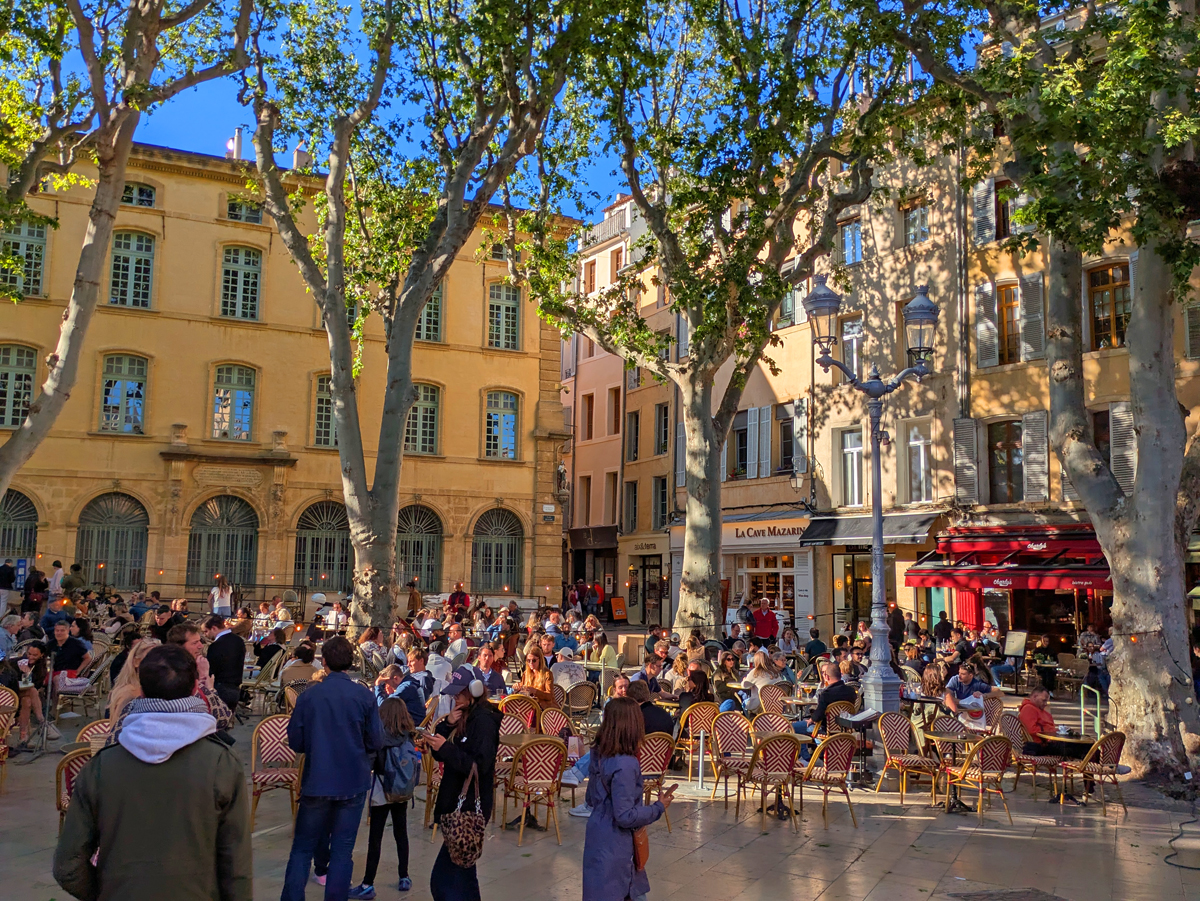
Eating and Drinking are a reason many come to Aix-en-Provence. The town has lots of restaurants and cafés, all filled to the brim with visitors (many coming in from nearby Marseille). At night, Place des Cardeurs – a huge square full of restaurants with outdoor seating – is the most happening place in town.
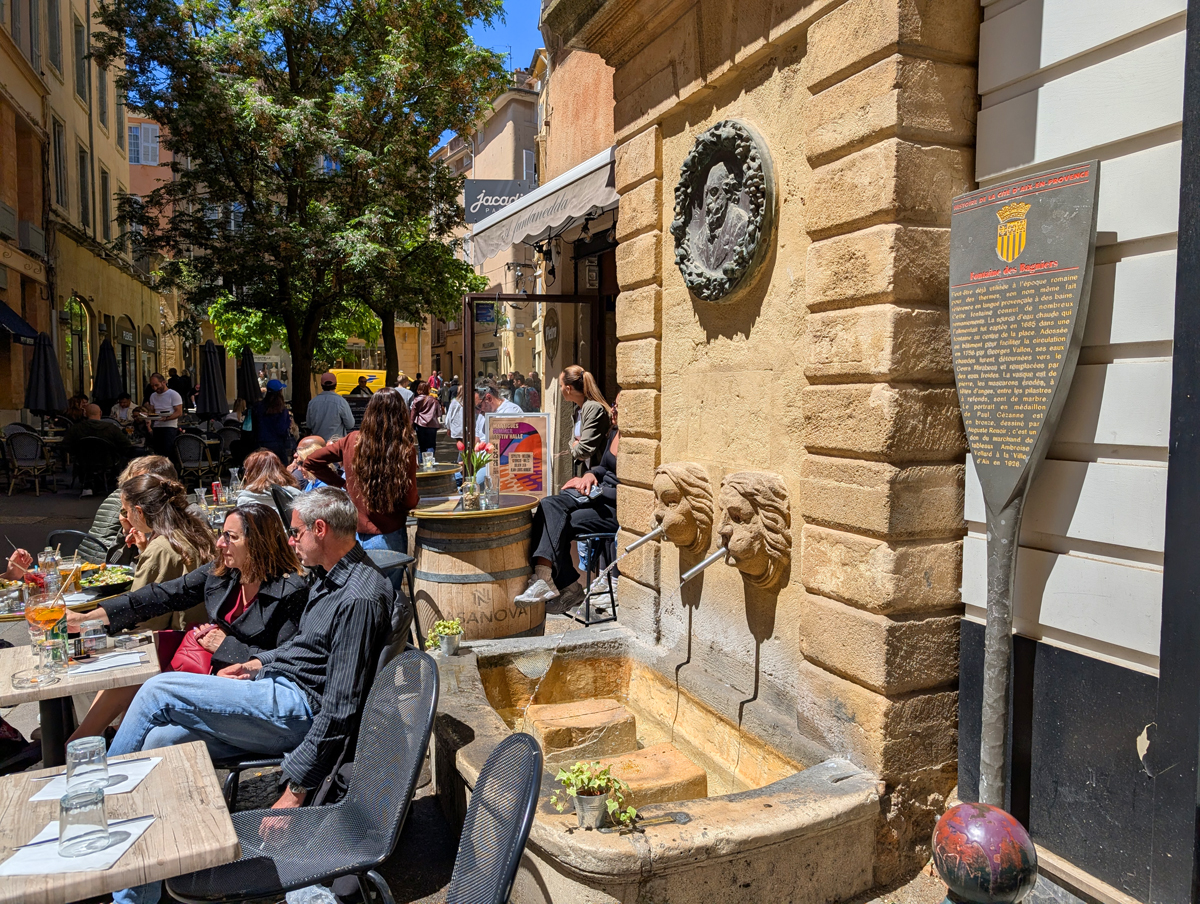
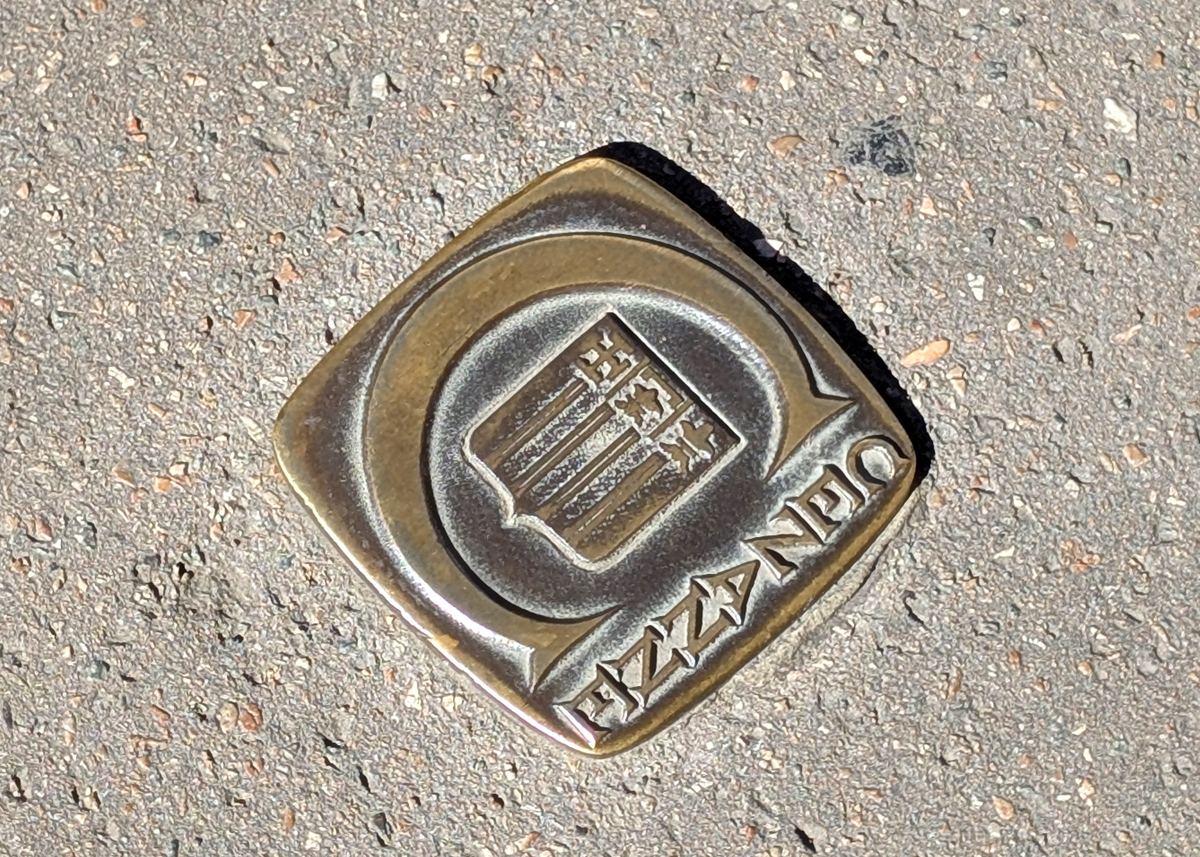
Claim to Fame: Aix-en-Provence is the hometown of Paul Cézanne, who became famous for his paintings of the area around Aix (he is widely known as the most famous Provençal landscape painter). You’ll see a statue of Cézanne in front of the tourism office and there’s a Paul Cézanne walking route (marked on the ground) that will take you past where he lived, went to school, where he hung out. The Musée Granet (the best museum in Aix) has about 10 paintings of Cézanne.
Below: works by Cézanne at the Musée Granet. Click to enlarge.
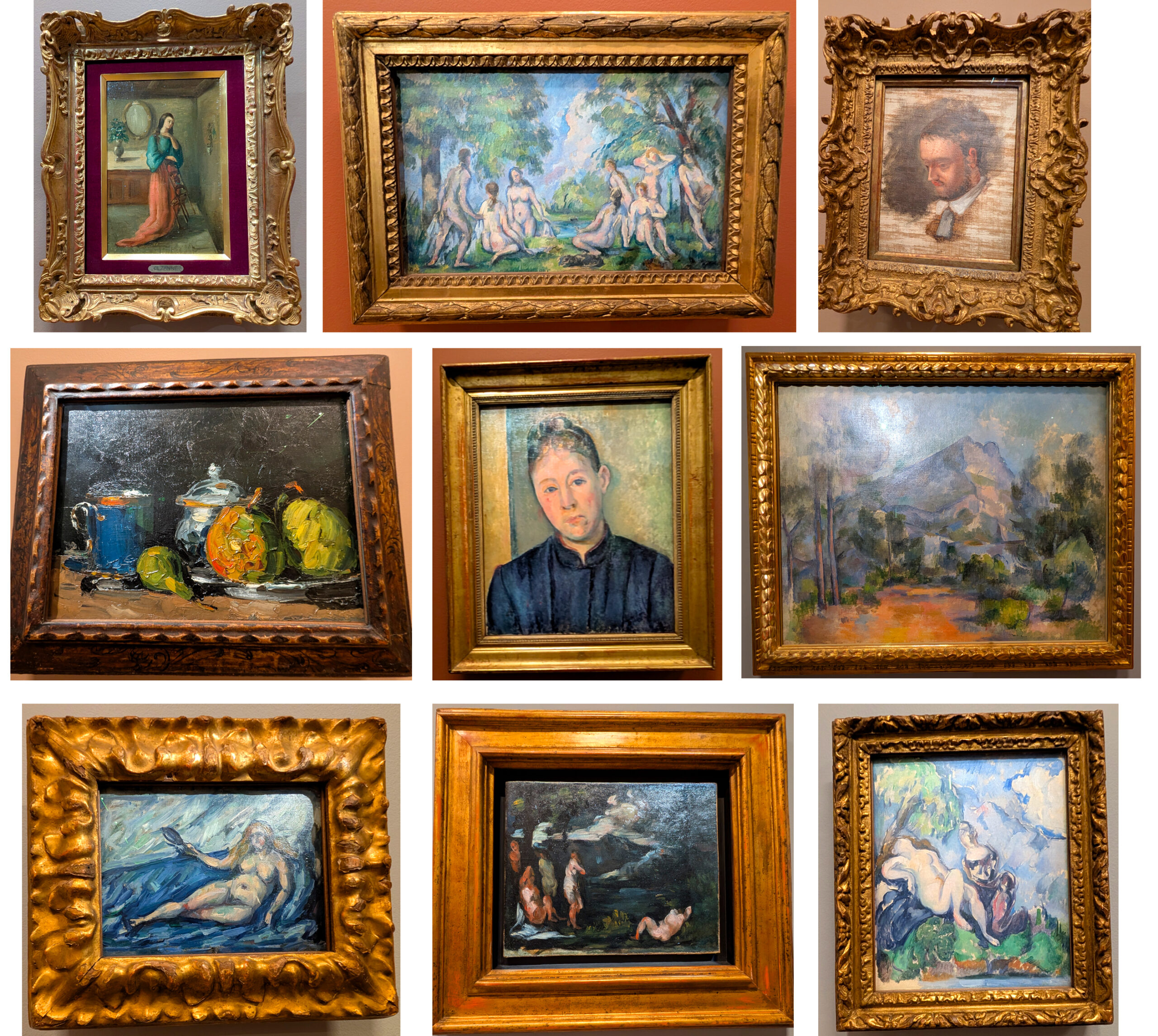
Note: Cézanne’s works were never popular in his lifetime and even in his hometown he was met with derision. In fact, the museum curator at Musée d’Aix (now Musée Granet) once declared that “As long as I live, no Cezanne shall enter the Musée d’Aix!” It was only after he became famous in Paris that Cezanne became accepted in Aix.
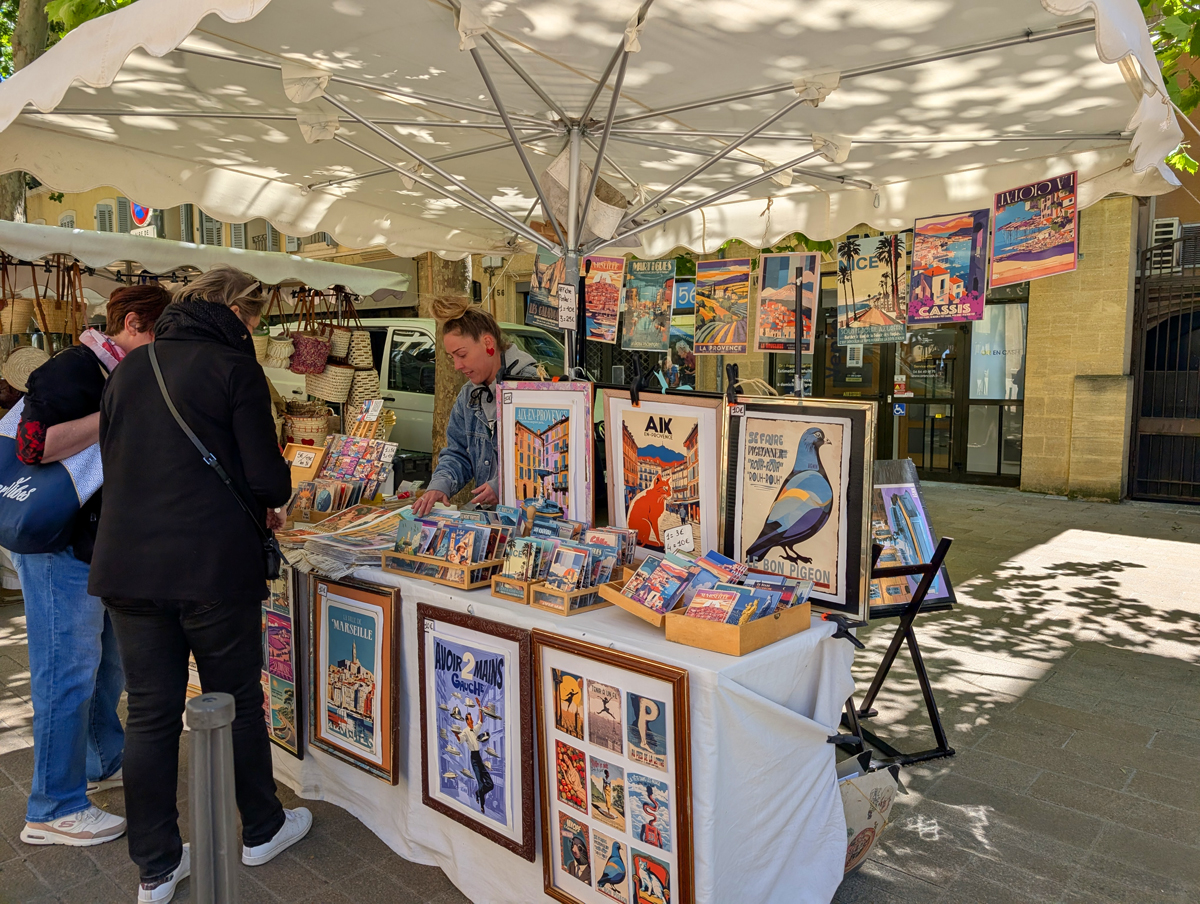
A few more photos of Aix-en-Provence:
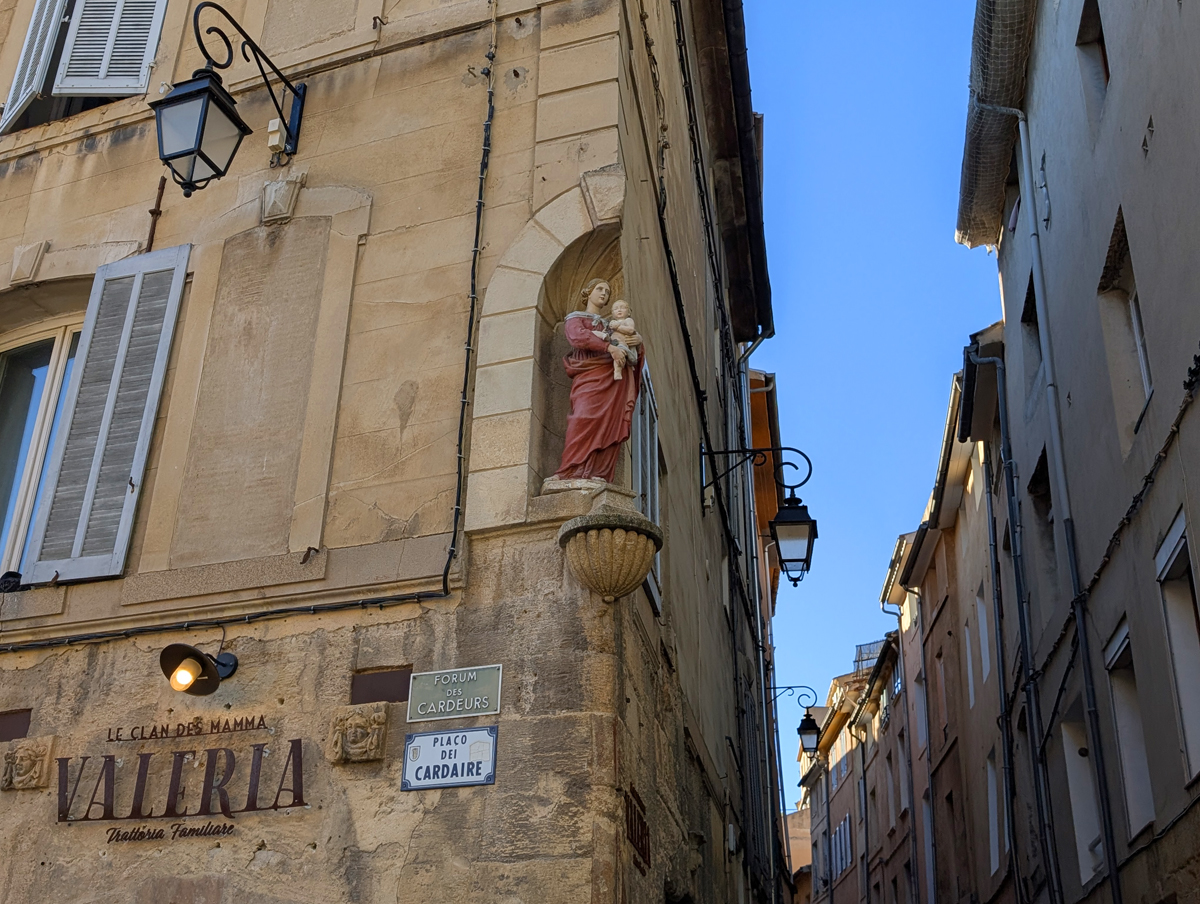
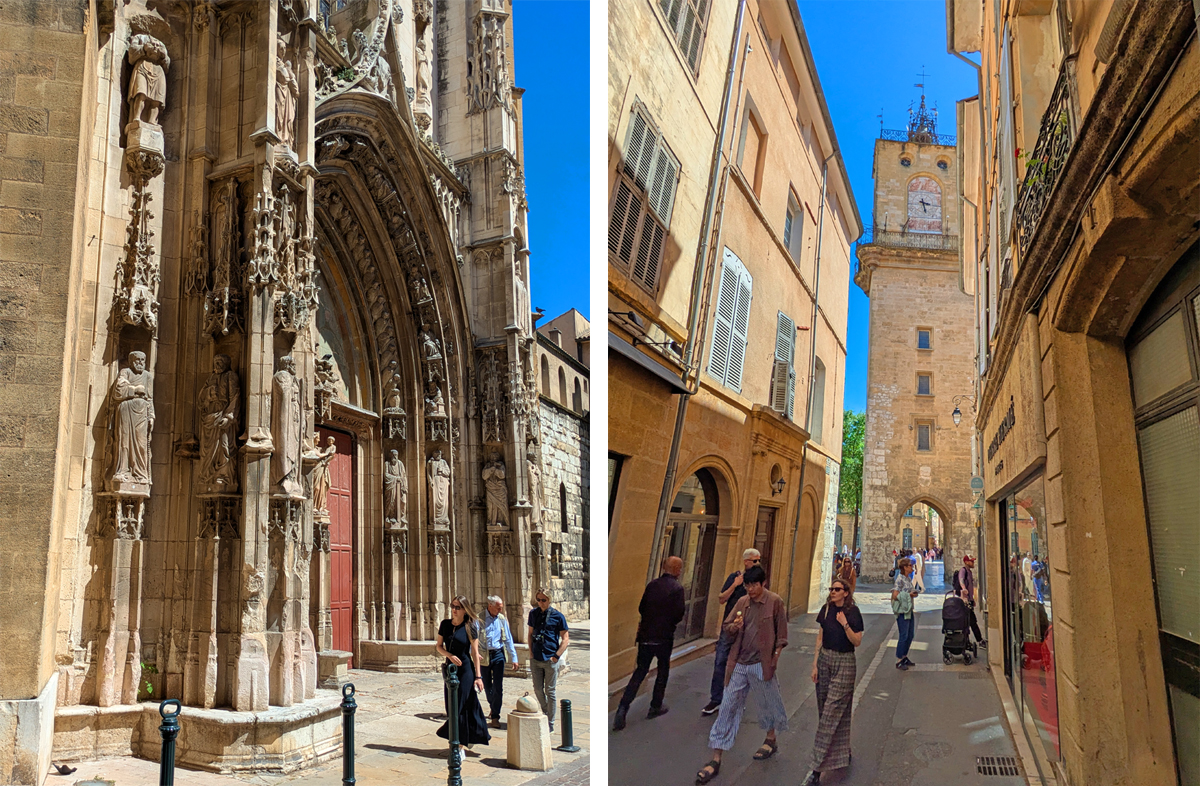
What makes a place worth visiting? Sometimes it’s the sights, sometimes it’s the vibe, the peacefulness or the genuineness of a place that makes it special.
Which brings me to the next section.
The problem with Aix-en-Provence
The problem with Aix-en-Provence is overtourism. For some reason (its proximity to Marseille?) this town is bursting at the seams with tourists.
Right in the middle of the Old Town is Place des Cardeurs, a huge plaza filled with generic restaurants and tacky bars that gets incredibly loud in the evenings with the sounds of people eating, drinking and getting increasingly intoxicated as the night goes on. I don’t know how the locals take it. We were there in May and I can’t imagine what it must be like in July or August.
Place des Cardeurs is the worst of Aix but you’ll see the symptoms of over-tourism everywhere: the Airbnb self-check in locks, the crowds in the streets, the overwhelming number of tourist-geared stores and the underwhelming/overpriced restaurants. We didn’t have much luck with restaurants in Aix*.
*One exception: Aux Delices du Liban, an exceptional Lebanese restaurant at good prices run by a friendly family.
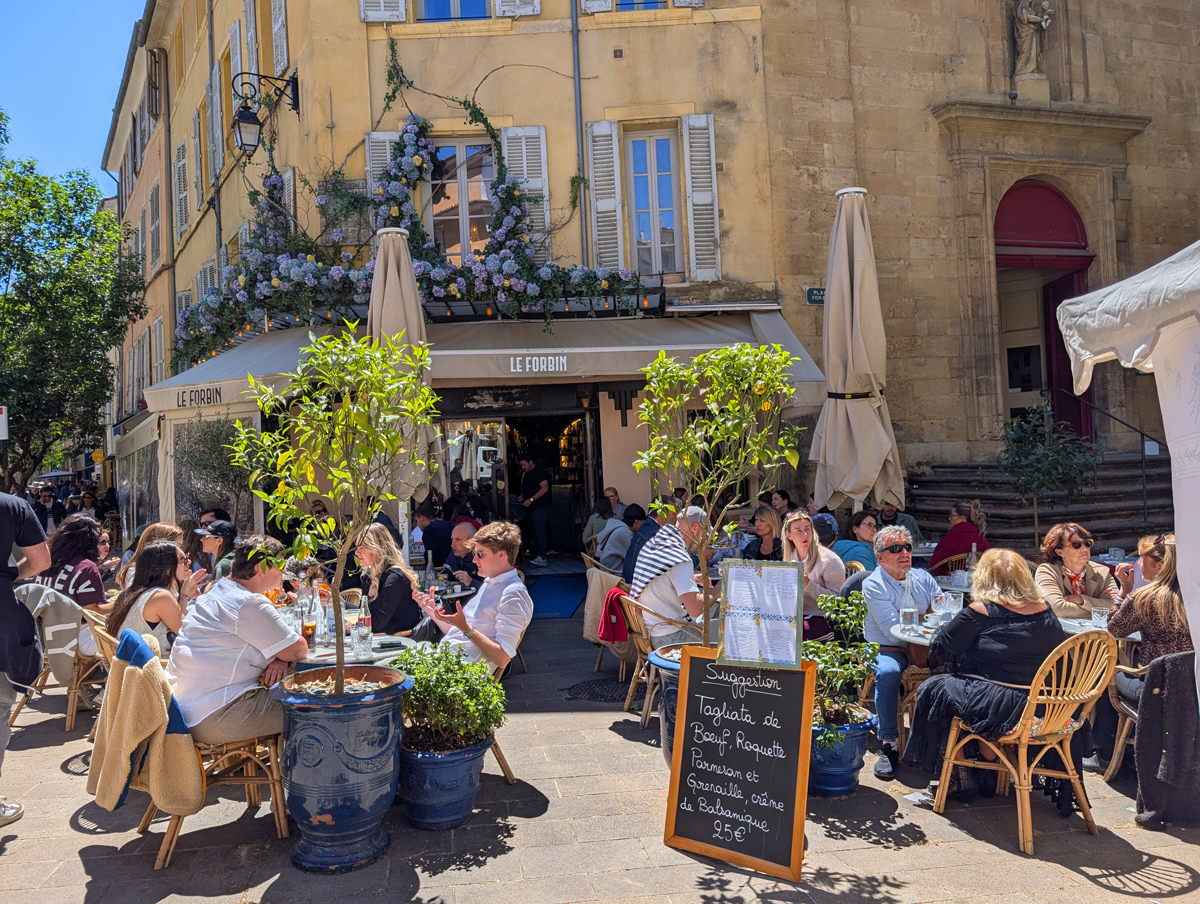
More about restaurants: In Avignon (where we stayed for a month) we had a couple of local bistros where we would have a “Formule Midi”: a set 3-course lunch at an affordable price. It would usually end up costing 75 Euros between us which included a bottle of wine. Eating out in Avignon was one of our favorite things, it wasn’t just tourists, there were an equal number of locals and service was always friendly. Our experience in Aix-en-Provence was the opposite: we didn’t find any “Formule Midi” that compared in either quality or pricing, felt that everyone around us was a tourist and just didn’t find the service friendly.
It was the overtourism that soured us on Aix.
I think we wouldn’t have felt that way if we had come for a night or two but 10 days was just too much.
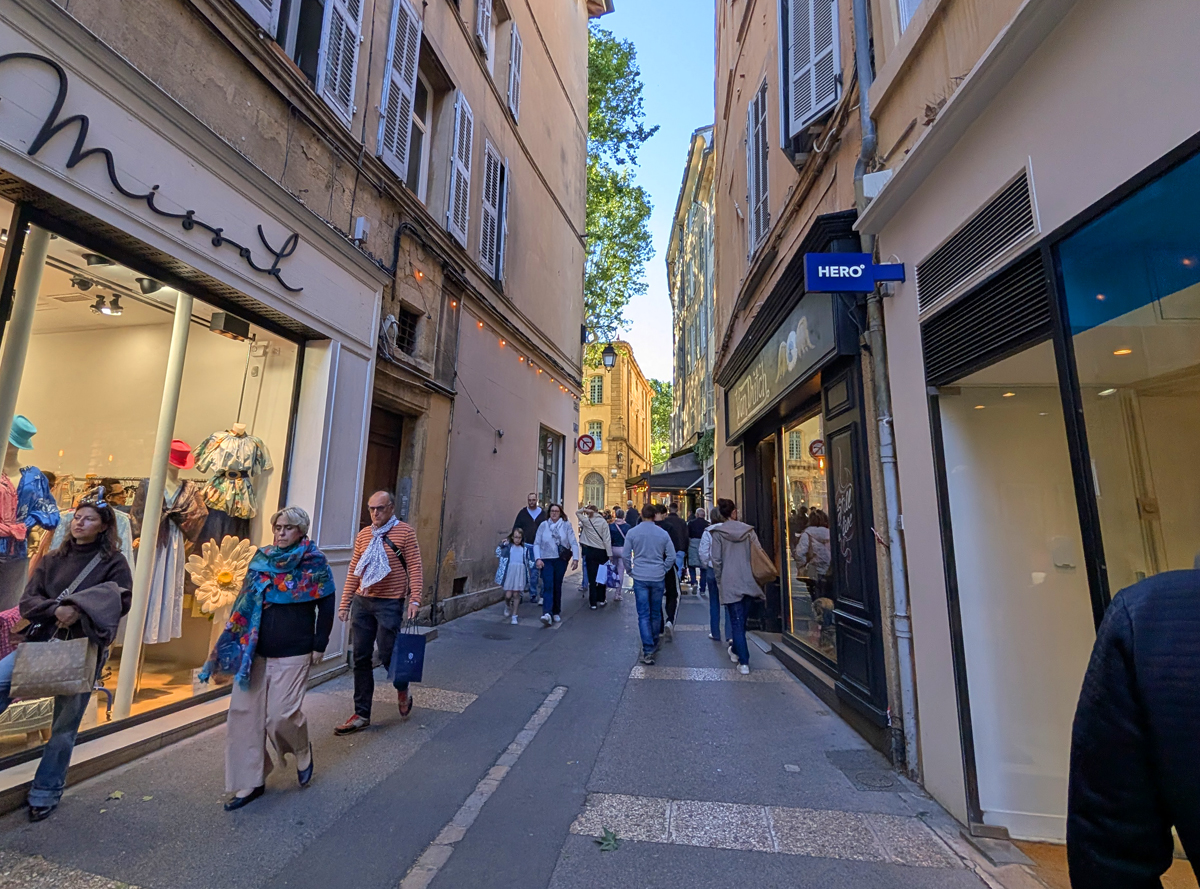
Why Aix-en-Provence might not be the best base in Provence
When people talk about using different bases in Provence, 3 places usually come up: Montpellier (not technically in Provence), Avignon, and Aix-en-Provence.
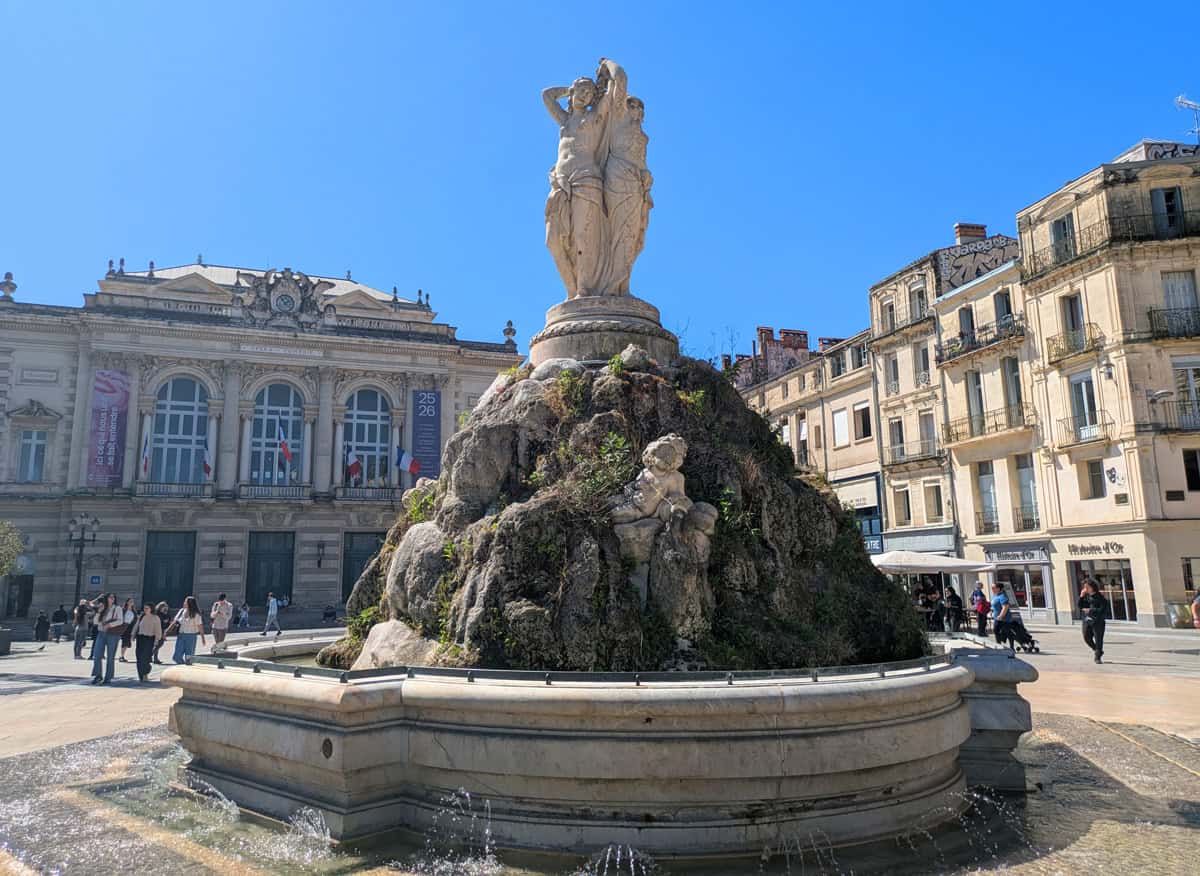
Montpellier (where we spent 10 days) makes for a great base to explore the Western side of Provence as well as parts of Occitanie: places like Nîmes, Arles, Béziers, and Sète. It is located on the main north-south train lines so you can easily navigate the region between the French/Spanish border and Western Provence. Montpellier itself is an attractive good-sized city with a lively vibe. A great base.
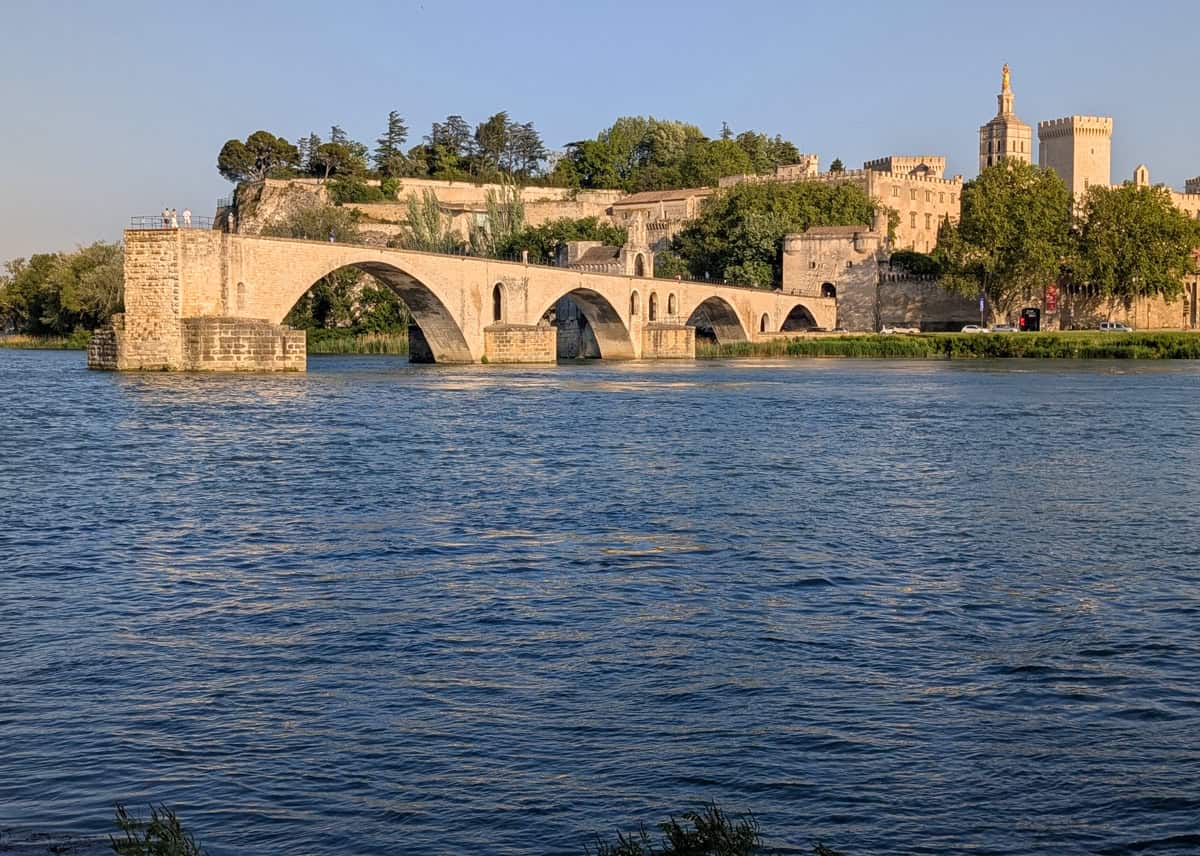
Avignon (where we stayed a month) is the ideal base to explore Provence, especially if you’re going to be using public transport. Geographically, it sits between most of the cities and towns of interest in the region. Like Montpellier, it also sits on the major train routes so you can go north (to Paris) and south (to Montpellier and beyond). While in Avignon, we had easy day trips by train to Nimes, Arles and Orange*, walked across the river to Villeneuve-lès-Avignon and took a tour that brought us to Fontaine-de-Vaucluse, Gordes, Roussillion, Les Baux de Provence, Saint-Rémy-de-Provence as well as the Pont du Gard. Besides that, Avignon itself is a beautiful town with lots to see. While it is touristy, it also felt like a “real” French town and we would do our groceries at the municipal market and sit at the bars and cafés just like the locals. We loved our month in Avignon.
Aix-en-Provence (where we spent 10 days) on the other hand is not as conveniently situated. It’s off the main train lines and away from the main points of interest in Provence. Really, the most convenient day trip if using public transport is Marseille (30 minutes away), any other town or city of interest is at least an hour away. I’d really recommend a car if deciding to spend an extended period of time in Aix-en-Provence (handy in exploring the Luberon villages like Gordes and Rousillion or Cassis and the Calanques National Park). Other factors: Aix-en-Provence has fewer highlights than either Montpellier or Avignon, feels more touristy (not sure if tourist numbers are higher than the other two but it feels like they would be) and is more expensive than either Montpellier and Avignon.
How I rank the three as bases: 1) Avignon, 2) Montpellier, 3) Aix-en-Provence.
Aix-en-Provence: what we would have done differently
Don’t get me wrong, Aix-en-Provence is worth seeing. But considering all the factors I mention above 10 days was just way too much.
If coming from Marseille and wanting a taste of inland Provence, Aix-en-Provence is the closest and most attractive option. But you won’t be the only one thinking that way which really is the problem with Aix…
Ideally, I would recommend 2 days if visiting Aix, add another day if intending to do a day trip to Marseille.
Your thoughts on Aix-en-Provence?
Related: 10 Things to Do in Avignon

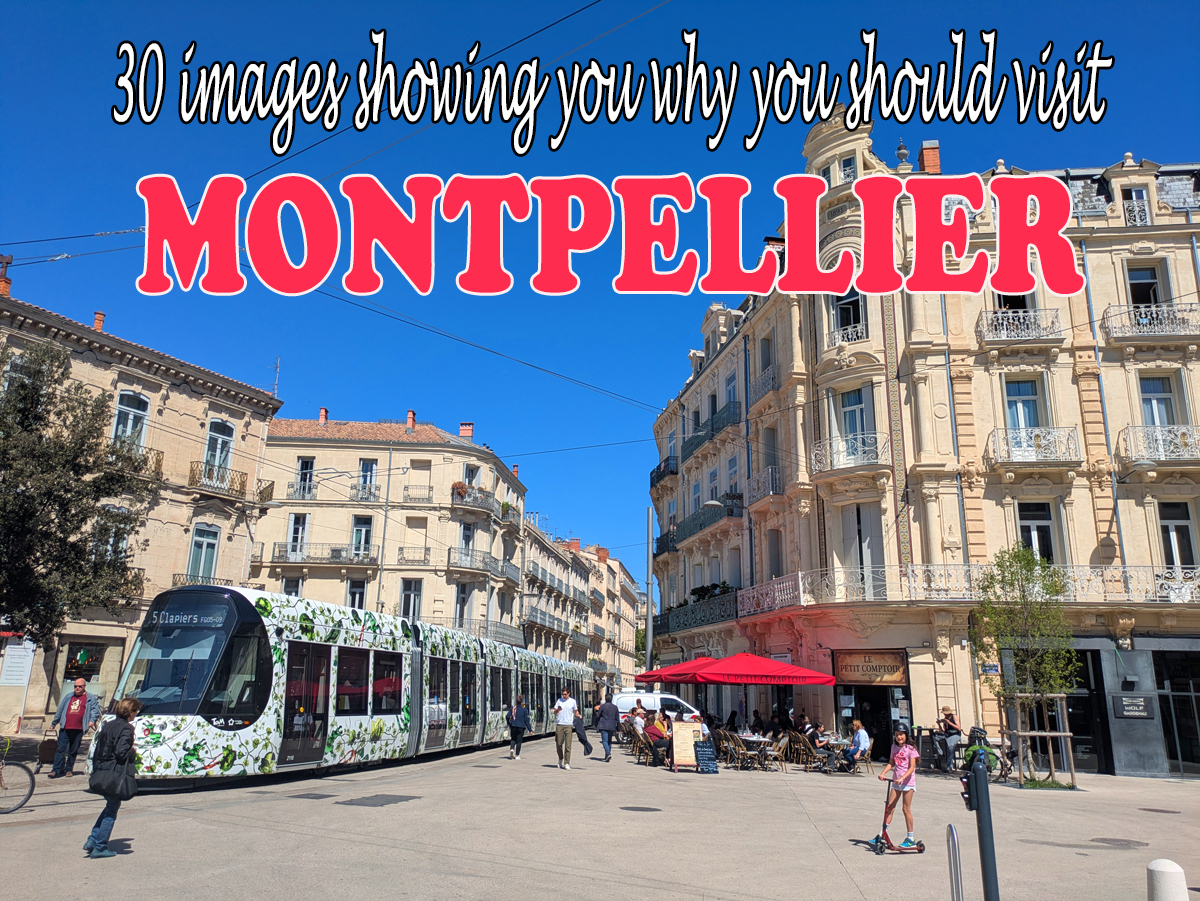
Related: 30 images showing you why you should visit Montpellier
Leave a Reply